
-
December 5, 2026
Event date:
-
December 23, 2026
Event end:
What to expect in 2026
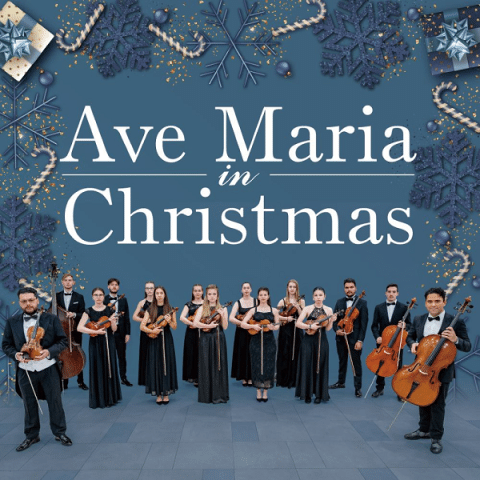
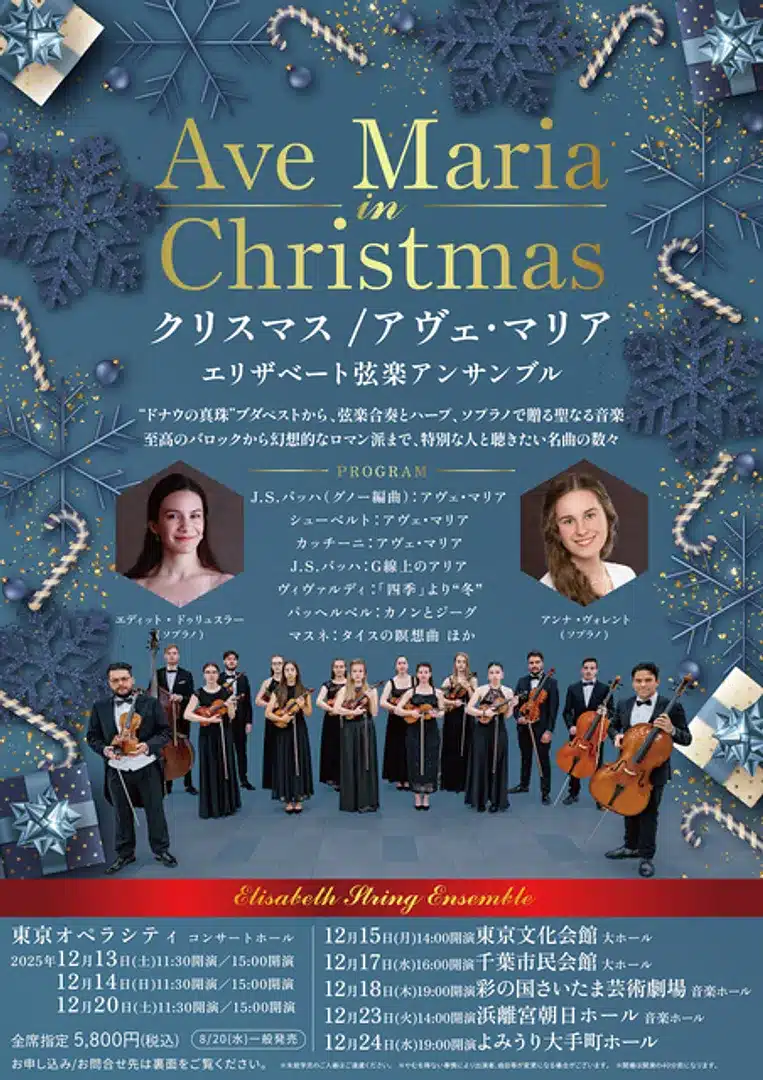
Christmas / Ave Maria ~ Elisabeth String Ensemble ~ 2026, Japan is a nationwide Christmas-season classical concert tour featuring the Elisabeth String Ensemble from Hungary together with soprano soloists Anna Volent and Hanna Takács. The concert series travels to major concert halls and cultural venues across Japan during December, creating a seasonal programme built around sacred vocal music, Baroque masterpieces and Romantic-era favourites.
The concert is part of a long-running Christmas programme that began in 2000 and has continued to attract audiences with a combination of familiar melodies and elegant chamber-orchestral arrangements. The 2026 edition presents the programme in its 26th year, combining the three famous Ave Maria settings with works by Bach, Vivaldi, Pachelbel and Massenet.
Three Ave Maria settings
Enjoy Your Event Stress-Free with Japan Travelo
Do you know? Planning events, festivals, concerts, and cultural experiences in Japan can be overwhelming. Japan Travelo brings everything together in one place, helping you manage your itinerary, transport, and accommodation with ease—so you can enjoy Japan without the stress of planning.
The central musical feature is a presentation of three famous Ave Maria works: J.S. Bach’s version arranged by Charles Gounod, Franz Schubert’s Ave Maria and the setting attributed to Giulio Caccini. Each version has its own character, allowing audiences to compare different approaches to the same devotional theme.
Elisabeth String Ensemble
The Hungarian Elisabeth String Ensemble provides the instrumental foundation of the concert. Its strings create a warm chamber sound suited to both the sacred vocal selections and the instrumental Baroque and Romantic repertoire.
Soprano voices
Anna Volent and Hanna Takács appear as featured soprano soloists. Their voices are combined with the strings and, in the programme concept, harp accompaniment to create a lighter and more intimate Christmas sound.
Winter classical masterpieces
The programme extends beyond the Ave Maria works with Bach’s Air on the G String, Vivaldi’s Winter from The Four Seasons, Pachelbel’s Canon and Gigue, and Massenet’s Meditation from Thaïs.
Christmas atmosphere
The concert is designed as a calm seasonal experience rather than a large theatrical Christmas production. The focus remains on acoustic music, familiar melodies, elegant string textures and the expressive voices of the soprano soloists.
Event dates
Christmas / Ave Maria ~ Elisabeth String Ensemble ~ 2026 will tour Japan from December 5, 2026 through December 23, 2026.
The supplied event period represents the wider concert tour rather than one continuous performance at a single location. Individual concerts are scheduled in different cities, with some locations hosting more than one performance during the tour period.
Tour format
The programme travels between Tokyo, Kanagawa, Saitama, Aichi, Osaka, Wakayama, Tochigi and other regional locations. Individual venues have their own start times, ticket arrangements and local access information.
Performance length
Individual concerts generally occupy a standard concert slot of approximately two hours, although the precise running time can vary by venue and local programme arrangements.
Seasonal timing
Because the tour takes place throughout December, visitors can combine the concert with Christmas illuminations, winter markets, seasonal shopping and sightseeing in the host city.
Visiting this event? Don’t miss out on these amazing activities and local experiences while you’re here.
Venue & festival site
This is a touring concert series rather than a single-site festival. Performances are held at major concert halls and cultural centres throughout Japan.
Tokyo Opera City Concert Hall
Tokyo Opera City Concert Hall: Takemitsu Memorial is one of the principal Tokyo venues associated with the programme. The concert hall is located in Nishi-Shinjuku and is designed for classical music performances with a large concert-hall acoustic.
Address: 3-20-2 Nishi-Shinjuku, Shinjuku-ku, Tokyo, Japan.
Tokyo Metropolitan Theatre
The Tokyo Metropolitan Theatre Concert Hall in Ikebukuro is another major Tokyo location. A published performance at this venue features the Elisabeth String Ensemble with Anna Volent and Hanna Takács.
Yokohama Minato Mirai Hall
The Main Hall of Yokohama Minato Mirai Hall hosts the tour in Kanagawa. Its concert-hall setting is particularly suited to the combination of strings, soprano and harp.
Regional cultural centres
The tour also visits venues including Westa Kawagoe in Saitama, Fenice Sakai in Osaka, Wakayama Prefectural Cultural Center and other regional concert halls.
Because this is a touring production, visitors should always confirm the specific venue printed on their ticket before travelling.
Full lineup
The published 2026 programme features the following principal performers:
- Elisabeth String Ensemble
- Anna Volent, soprano
- Hanna Takács, soprano
- Harp accompaniment as part of the concert arrangement
The Elisabeth String Ensemble is the core instrumental ensemble for the production, providing the string sound throughout the programme. Anna Volent and Hanna Takács provide the principal soprano performances, particularly during the Ave Maria selections and other vocal passages.
Elisabeth String Ensemble
The Hungarian ensemble is the principal performing group and forms the musical centre of the Christmas programme.
Anna Volent
Anna Volent appears as one of the featured soprano soloists, bringing a high, lyrical vocal presence to the sacred and Romantic repertoire.
Hanna Takács
Hanna Takács is the second featured soprano and shares the vocal programme with Anna Volent.
Harp
The harp adds another layer of colour to the ensemble sound, particularly during softer and more atmospheric passages.
The exact balance between the performers can vary slightly depending on the individual concert arrangement and venue.
Headliners & featured artists
The main attraction is the combination of the Elisabeth String Ensemble and the two soprano soloists.
Elisabeth String Ensemble
The ensemble comes from Hungary and is presented as a virtuoso string group connected with the musical tradition of Budapest. The 2026 tour continues its role as the central instrumental ensemble for the Christmas programme.
Anna Volent
Anna Volent provides the soprano voice for some of the programme’s most recognizable sacred melodies. Her role is particularly important during the three Ave Maria settings.
Hanna Takács
Hanna Takács shares the vocal spotlight and contributes to the concert’s devotional and lyrical repertoire.
Sándor Javorkai
The concert promotion also highlights violinist and concertmaster Sándor Javorkai, who is associated with the ensemble and its virtuoso performance tradition.
Featured instrumentation
The combination of strings, soprano and harp gives the concert a more intimate sound than a full symphony orchestra. This allows familiar Christmas repertoire to be presented with clarity and delicate instrumental detail.
Stages & performance areas
Unlike an outdoor festival, Christmas / Ave Maria uses conventional concert-hall stages.
Main concert stage
The central stage accommodates the Elisabeth String Ensemble and featured vocalists. Depending on the venue, the ensemble is positioned in a traditional chamber-orchestra configuration.
Vocal performance area
The soprano soloists perform from the main stage, allowing their voices to rise above the string accompaniment without requiring a large theatrical production.
Harp position
The harp occupies a supporting position within the ensemble and adds shimmering harmonic textures to selected arrangements.
Concert-hall acoustics
The production is designed around the natural acoustics of professional concert halls. This is particularly important for the string ensemble, soprano voices and quieter passages.
Each venue has its own stage dimensions, seating layout and acoustic character, so the visual experience can differ from city to city.
Stage-by-stage schedule
The tour does not use multiple festival stages. Instead, each performance follows a concert programme presented on one main stage.
Opening section
The performance introduces the audience to the string ensemble and establishes the calm winter atmosphere through Baroque and classical instrumental repertoire.
Ave Maria section
The three major Ave Maria settings form the emotional centre of the programme. Bach/Gounod, Schubert and Caccini provide three different interpretations of the familiar devotional text.
Instrumental highlights
The programme includes Bach’s Air on the G String, Vivaldi’s Winter from The Four Seasons and Pachelbel’s Canon and Gigue. These works provide contrasting tempos, textures and instrumental colours.
Romantic section
Massenet’s Meditation from Thaïs brings a later Romantic-era sound into the programme, providing a particularly lyrical contrast to the Baroque works.
Closing programme
The concert concludes with further seasonal and classical selections, although the exact order of individual pieces can vary by performance. The official programme should be checked for the specific venue and session.
Set times
Individual start times depend on the city and venue.
Published examples show both afternoon and evening performances during the tour. Tokyo Metropolitan Theatre, for example, hosts an afternoon performance, while Westa Kawagoe has an evening performance. Other venues also offer afternoon or multiple-session arrangements.
Afternoon concerts
Afternoon performances are convenient for families, older visitors and travellers who want to combine the concert with evening sightseeing or dinner.
Evening concerts
Evening performances create a particularly atmospheric Christmas experience, especially when combined with winter illuminations and seasonal activities in the host city.
Multiple performances
Some venues may offer more than one session on the same day. Tokyo Opera City, for example, has published both late-morning and afternoon performances for the tour.
Visitors should use the individual venue’s published start time rather than assuming every performance begins at the same hour.
Ticket types
The standard published ticket format for the tour is reserved seating.
Reserved seat
The standard ticket price for many performances is approximately $39 after converting the published Japanese price. Several venues list the same standard admission level.
Regional pricing
Some regional venues may offer different pricing. For example, the Wakayama performance has been listed at approximately $33, while the standard price at many other venues is approximately $39.
Venue-specific tickets
Some cultural centres sell tickets directly through their own box offices, while others use Ticket Pia or other authorized ticketing services.
Reserved seating
Seats are assigned rather than general admission, so visitors should check the available seating map when purchasing where seat selection is offered.
The dollar amounts are approximate conversions and may vary slightly depending on exchange rates and payment charges.
VIP & premium options
The 2026 tour does not advertise a conventional VIP package with backstage access, meet-and-greet opportunities or a separate hospitality lounge.
Preferred seating
The main premium consideration is the location of the reserved seat. Central positions with a direct view of the stage can be particularly useful for appreciating both the singers and ensemble.
Best acoustic positions
In a classical concert hall, seats around the central area can provide a balanced relationship between the soprano voices and string ensemble.
Venue differences
Because the tour visits many halls, seating categories and premium sections can vary by venue. Visitors should check the seating map of the specific performance rather than assuming every concert uses the same layout.
Event rules
Classical concert etiquette is an important part of the experience.
Arrival
Visitors should arrive at least 20 to 30 minutes before the published start time to allow time for ticket checks, finding seats and settling into the auditorium.
Late entry
Latecomers may be asked to wait outside the auditorium until an appropriate pause in the music before being escorted to their seats.
Mobile phones
Phones should be switched off or placed completely on silent. Screen use during the performance can distract both performers and nearby audience members.
Photography
Photography, video recording and audio recording may be restricted inside the auditorium. Visitors should follow the specific rules announced by each venue.
Children
Preschool children are not permitted at many of the published performances. For example, Tokyo Metropolitan Theatre and Westa Kawagoe listings specifically state that preschool children cannot enter.
Programme changes
Performers, repertoire and schedules can change because of circumstances affecting the touring production. Visitors should check the latest organizer or venue information before attending.
How to get there
Because the concert tours Japan, the best route depends on the selected performance.
Tokyo Opera City
Tokyo Opera City is accessible from Hatsudai Station on the Keio New Line and is also reachable from other Shinjuku-area transport connections.
Tokyo Metropolitan Theatre
The theatre is close to Ikebukuro Station, which is served by JR lines, Tokyo Metro, Tobu Tojo Line and Seibu Ikebukuro Line. This makes it one of the easiest venues for visitors staying in central Tokyo.
Yokohama Minato Mirai Hall
The hall is located near Minato Mirai Station and is convenient for visitors staying around Yokohama’s waterfront district.
Westa Kawagoe
Westa Kawagoe is approximately five minutes from Kawagoe Station’s West Exit, providing convenient JR and Tobu railway access.
Regional venues
For Osaka, Wakayama, Tochigi and other regional performances, visitors should follow the access instructions provided by the individual venue because each concert is independently located.
Public transport & parking
Public transportation is generally the easiest way to reach the concerts, particularly for performances in Tokyo, Yokohama and other major cities.
Rail travel
Japan’s extensive railway network provides convenient connections to most major concert venues. Visitors should plan around the specific station listed by their venue.
Tokyo
Ikebukuro, Hatsudai and Shinjuku-area venues are particularly well served by multiple rail and subway lines.
Yokohama
Minato Mirai Station provides direct access to Yokohama Minato Mirai Hall, making rail travel more practical than driving.
Parking
Parking availability varies considerably between venues. Visitors should not assume that the concert hall provides dedicated parking. Where parking is available, it can fill quickly around popular evening performances.
Winter travel
December evenings can be cold, so visitors using public transport should allow time for walking between stations and venues while carrying appropriate winter clothing.
Accommodation areas
Because this is a nationwide tour, accommodation depends on the chosen performance.
Tokyo
Shinjuku, Shibuya, Ikebukuro, Shinjuku West and central Tokyo are practical areas for Tokyo performances.
Yokohama
Minato Mirai, Sakuragicho and Yokohama Station are convenient for the Yokohama concert.
Kawagoe
Visitors attending the Kawagoe performance can stay around Kawagoe Station, which offers convenient rail connections and access to the historic city centre.
Osaka
The Osaka Station, Umeda, Namba and Osaka Castle areas provide good options depending on the location of the selected concert hall.
Nagoya
Sakae, Nagoya Station and central Nagoya are convenient bases for performances in the city.
Wakayama
Central Wakayama provides easy access to Wakayama Prefectural Cultural Center and is suitable for visitors extending their trip into the Kii Peninsula.
Food & drink
The concert tour provides an opportunity to combine classical music with seasonal dining in each host city.
Tokyo dining
Visitors can choose from Japanese cuisine, French and Italian restaurants, cafés, department-store dining and seasonal Christmas menus around Shinjuku and Ikebukuro.
Yokohama
The Minato Mirai area has restaurants, cafés and waterfront dining, while nearby Chinatown provides a particularly broad selection of food.
Kawagoe
Kawagoe is known for traditional sweets, cafés and local Japanese food, making it possible to combine the concert with a walk through the historic district.
Osaka
Visitors can enjoy takoyaki, okonomiyaki, kushikatsu and a wide variety of restaurants around the city’s major entertainment districts.
Winter refreshments
Hot drinks, desserts and seasonal sweets are especially suitable before or after an evening performance. Because food policies vary by venue, visitors should generally eat and drink outside the auditorium unless the venue specifically permits refreshments.
Accessibility
Accessibility arrangements vary according to the individual concert hall.
Wheelchair access
Major venues such as Tokyo Metropolitan Theatre, Tokyo Opera City and Yokohama Minato Mirai Hall provide accessibility facilities, but wheelchair seating can be limited and may require advance reservation.
Advance contact
Visitors requiring wheelchair seating, companion seating or other assistance should contact the specific venue before purchasing whenever possible.
Station access
Many of the major venues are close to railway or subway stations, reducing the amount of outdoor walking required.
Seating assistance
Venue staff can generally assist visitors with finding accessible routes and seating, although the exact procedures differ between locations.
Preschool restrictions
Visitors attending with young children should confirm the age policy for their specific performance, as several venues explicitly prohibit preschool-age children.
Best days to attend
There is no single best date for the entire tour because the same core programme travels between different cities and venues. The best choice depends on the visitor’s preferred location and concert atmosphere.
Opening performances
The earliest concerts of the tour provide an opportunity to experience the production near the beginning of its Japanese run.
Tokyo performances
Tokyo offers several opportunities to hear the programme in major professional concert halls. The city’s transport network also makes it easier to combine the concert with Christmas illuminations and sightseeing.
Yokohama performance
The Yokohama Minato Mirai Hall performance is particularly attractive for visitors who want to combine classical music with the waterfront’s winter atmosphere.
Evening performances
An evening concert can provide a particularly atmospheric Christmas-season experience because visitors can pair the performance with illuminated city streets, seasonal dining and nighttime sightseeing.
Late-tour performances
Performances toward the end of the tour can be convenient for visitors already travelling through the Kanto region or planning a Christmas-season trip around Tokyo and Saitama.
Previous year’s highlights
The Christmas / Ave Maria concert has a long history, having first been presented in 2000. The programme has continued to develop around the combination of sacred vocal music, strings and familiar Christmas-season classical repertoire.
Long-running Christmas tradition
The production has been presented for more than two decades, establishing it as a recurring seasonal classical concert rather than a one-off Christmas performance.
Elisabeth String Ensemble
The Hungarian ensemble has become closely associated with the production’s Christmas identity, bringing a distinctive Central European chamber-music character to Japanese concert halls.
Three Ave Marias
The recurring focus on Bach/Gounod, Schubert and Caccini creates a recognizable musical centre for the programme while allowing audiences to hear three different interpretations.
Baroque repertoire
Bach, Vivaldi and Pachelbel provide much of the instrumental foundation, with works such as Air on the G String, Winter and Canon and Gigue appearing as familiar concert favourites.
Romantic repertoire
Massenet’s Meditation from Thaïs adds a more lyrical Romantic-era dimension to the concert, complementing the soprano performances.
The 2026 programme continues these established elements while bringing the Elisabeth String Ensemble and featured sopranos to a broad range of Japanese cities.
Official tickets
Tickets for Christmas / Ave Maria ~ Elisabeth String Ensemble ~ 2026 are sold through Ticket Pia and individual venue box offices and authorized ticketing services.
Ticket Pia
https://t.pia.jp/pia/event/event.do?eventBundleCd=b2669503
The standard ticket price at many venues is approximately $39, while some regional performances have been listed at approximately $33. Individual venues may have their own sales conditions, so visitors should check the specific performance before purchasing.
The official ticket information should also be checked for seat availability, venue-specific restrictions, preschool-child policies and any changes to performers or programme.
Location
FAQ
What is the primary musical focus of the concert tour?
The program centers around three legendary settings of the Ave Maria alongside a curated selection of winter Baroque and Romantic classical masterpieces. It highlights the divine combination of soprano voice, strings, and harp during the December holiday season.
Are the performances enhanced with electronic sound amplification?
Concerts rely entirely on the natural, unamplified acoustic properties of the prestigious host halls to preserve the organic warmth of the instruments. This traditional approach allows listeners to experience the pure, raw resonance of human breath and string friction.
How can international visitors secure tickets for the tour?
Tickets are made available through major domestic Japanese ticketing platforms like Ticket Pia, convenience store terminals, and select regional box offices. Advance online reservation is strongly recommended due to high demand during the December holiday peak.
What should audience members wear when attending the tour?
Most attendees choose neat smart-casual attire or slightly dressy winter wear appropriate for a formal evening out at a cultural hall. Comfort is encouraged, but dressing up adds a special sense of occasion to the holiday outing.
Is photography or video recording permitted during the show?
All recording devices and cameras must remain completely turned off during the musical performances to respect artist copyrights and maintain hall quiet. Patrons are welcome to take commemorative photos in the lobby before the show or during intermission.
How long does a typical concert performance last?
A standard performance runs approximately ninety minutes to two hours, including a brief intermission halfway through the scheduled programme. This duration provides a rich, satisfying musical journey without fatiguing listener attention spans.
Are children permitted to attend the classical performances?
While classical music lovers of all ages are welcome, guests should note that performances are designed for a quiet, attentive audience environment. Patrons bringing younger children should verify specific age restrictions or family-friendly matinee availability for their chosen venue.

Leave a Reply