
-
December 13, 2026
Event date:
-
December 13, 2026
Event end:
What to expect
Concept of the event: COMITIA is an exhibition and sales event for original works only, where professional and amateur authors present and sell their manga and other works created by themselves. It is an independent comic magazine exhibition and sales event that has been held regularly since 1984 by the COMITIA Committee, a volunteer organization. Unlike general doujinshi events that allow fan works based on existing anime, manga and games, COMITIA limits participation to sousaku, meaning entirely original content, which creates a distinct culture of discovery and authorship.
COMITIA is typically held four times per year in Tokyo, and has grown into one of the largest original doujinshi events in Japan. The atmosphere is often described as the comic lovers con, because every table offers personal storytelling rather than parody. Visitors are referred to as participants, and those who come to view and purchase exhibits are called regular participants, which reflects the philosophy that the event is a place where individual artists and readers can meet directly.
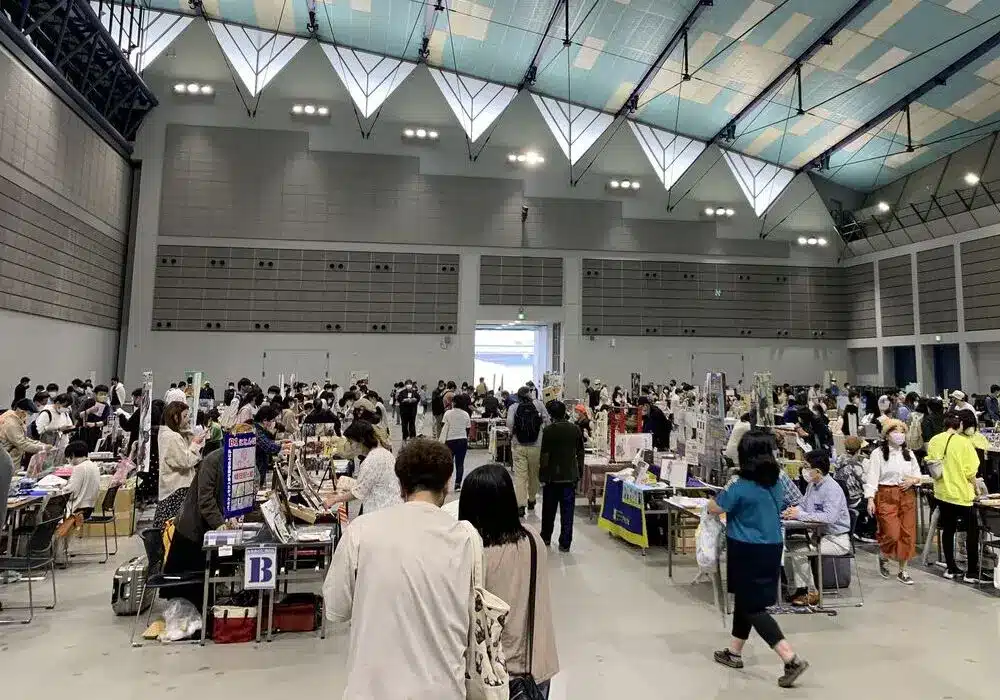
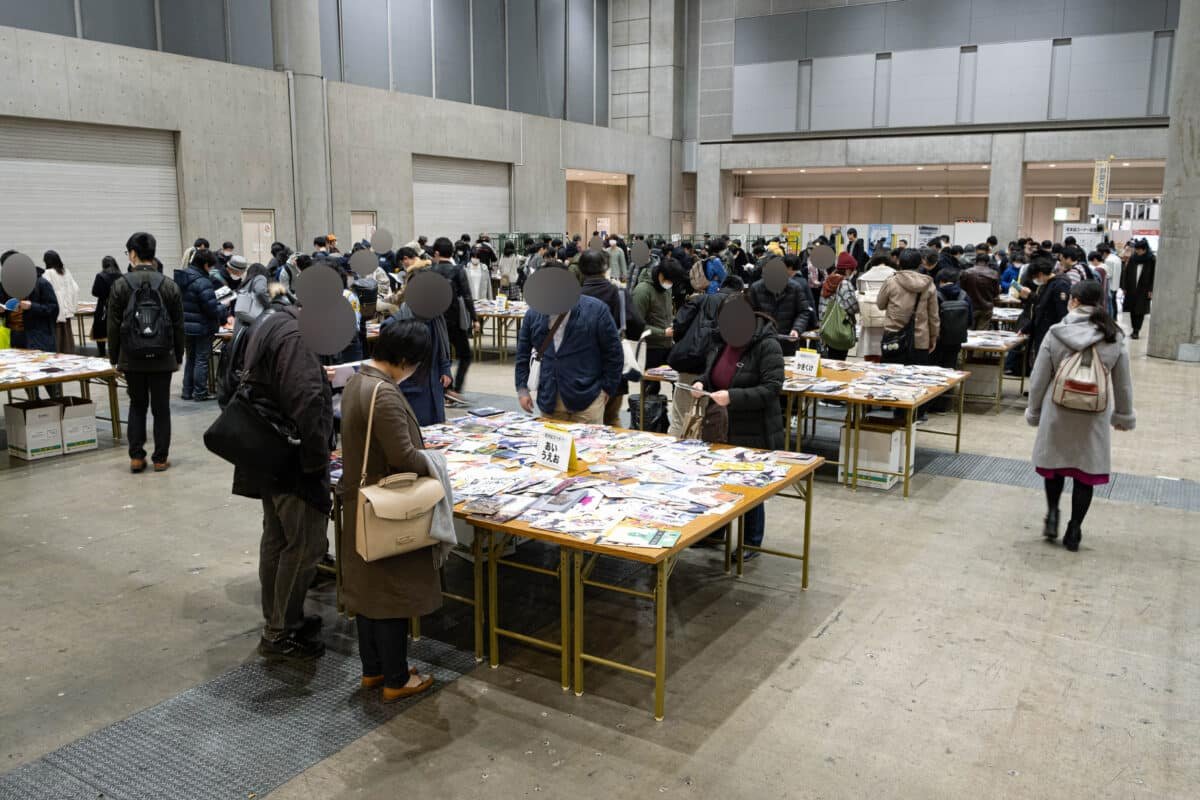
What you will see on the floor is rows upon rows of individual circles, each with a dedicated space that can sometimes be quite small but filled with carefully crafted books, art collections, novels, handmade goods, music, and experimental zines. Many circles use the event to debut a brand new title that was finished just days before, making each edition feel like a snapshot of current independent manga trends.
Enjoy Your Event Stress-Free with Japan Travelo
Do you know? Planning events, festivals, concerts, and cultural experiences in Japan can be overwhelming. Japan Travelo brings everything together in one place, helping you manage your itinerary, transport, and accommodation with ease—so you can enjoy Japan without the stress of planning.
Why it matters for creators and readers: For creators, COMITIA plays a significant role in the manga publishing industry and independent creator scene in Japan. Many mangaka started their professional careers after being scouted at COMITIA and still attend even after debuting. For readers, it is a chance to find artists you like before they become famous, to talk directly with authors, and to purchase works that will never be distributed in commercial bookstores.
Event dates
Main edition: Sunday, December 13, 2026, 11:00–16:00, COMITIA 158 at Tokyo Big Sight, East Halls 1, 2, 3, 7 and 8.
Catalog advance sales: From November 15, 2026 at participating bookstores.
Web catalog availability: November 14 to December 21, 2026, accessible with a code included in each catalog copy.
Free entry window: From 15:00 on the event day, everyone gets in free whether or not the catalog has sold out.
Next edition reference: March 14, 2027 in West Halls 1, 2, 3 and 4 is listed as the following Tokyo edition.
Visiting this event? Don’t miss out on these amazing activities and local experiences while you’re here.
Venue & event site
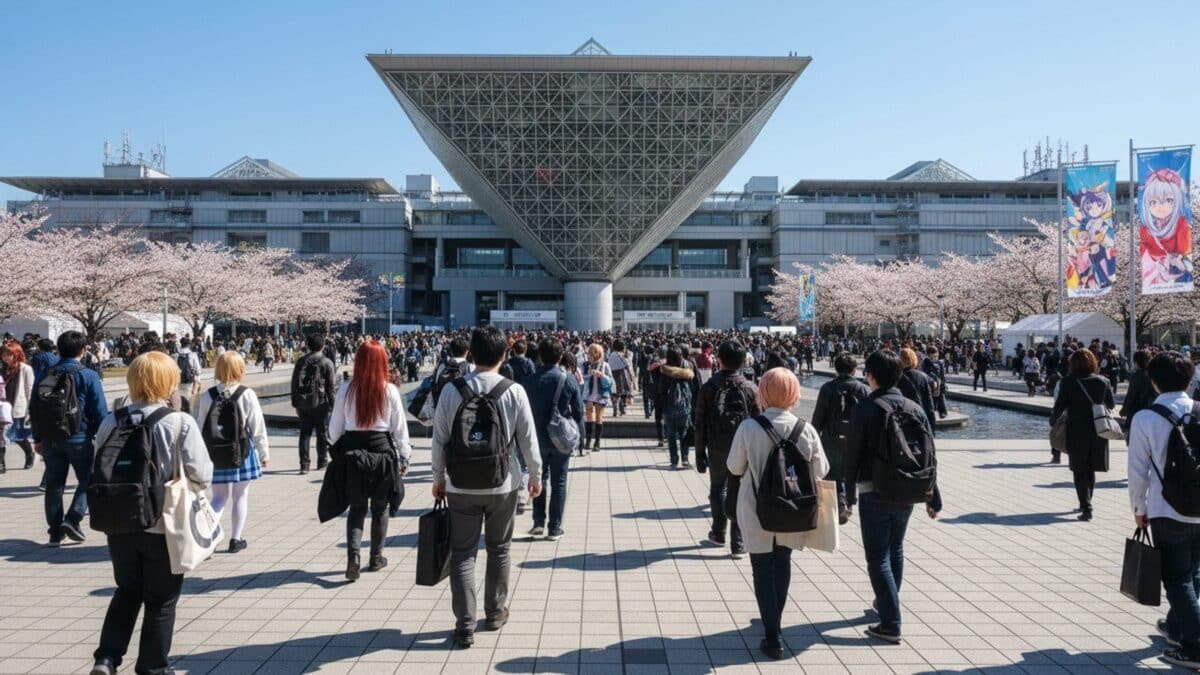
Venue overview: Tokyo Big Sight is formally known as Tokyo International Exhibition Center in Ariake, located at 3-11-1 Ariake, Koto-ku, Tokyo. The East Exhibition Hall consists of multiple halls connected by a central galleria, allowing them to be combined into one massive exhibition space. For this edition, East Halls 1, 2, 3, 7 and 8 are used, providing tens of thousands of square meters of flat exhibition floor suitable for thousands of circle spaces.
The East Hall design offers high ceilings, wide main aisles, and secondary cross aisles that help visitor flow. The layout places the catalog sales counter near the entrance, the general information desk inside the hall, and first aid and rest areas around the perimeter. The use of five halls means that the event can separate genres into blocks while still keeping the entire event walkable.
On-site amenities: Multiple halls can also be connected for combined use and are supported by barrier-free restrooms with facilities for people with disabilities, ostomate support, and a care bed available throughout the venue. Manual wheelchairs are available free of charge at the General Information counter on the second floor entrance hall of the Conference Tower, with additional wheelchairs also available at general information counters on the second floor of the East and South Exhibition Halls depending on event schedules. There are convenience stores, food courts serving curry, ramen, bento, and cafes inside Tokyo Big Sight, plus coin lockers, ATMs, and a rooftop terrace overlooking Tokyo Bay.
Operational notes: The organizer asks visitors to come by public transport and notes that car parks near the venue get very crowded. Arriving late at night or early in the morning is discouraged to avoid neighborhood disturbance and unsafe queuing.
Full technology programme
Programme philosophy: COMITIA does not run a conventional technology conference programme, but its creative production programme functions as an analogue for independent publishing technology. The programme is centered on original manga creation, self-publishing workflows, and direct sales.
Core exhibition: The core is the continuous exhibition and sales by circles throughout opening hours. Each circle presents its own works, often accompanied by large posters, sample books, and hand-drawn price lists. The programme encourages slow browsing, conversation, and discovery rather than stage-driven schedules.
Creation technology focus: Many exhibitors demonstrate modern tools for manga creation, including Clip Studio Paint for inking and toning, digital lettering pipelines, and color management for print. Discussions around paper stock selection, binding methods such as perfect binding and saddle stitch, and cost control for small print runs are common at the tables of printing service providers.
Industry integration: The programme includes informal editorial review areas where publishers scout and review talent, providing professional feedback loops that have historically led to commercial debuts. This mix of grassroots creation and professional observation has defined COMITIA since its inauguration in November 1984.
Key speakers & industry leaders
Organizational leadership: COMITIA is organized by the COMITIA Organizational Committee and other regional committees. The committee operates as a volunteer organization that has sustained the event since 1984.
Publishing scouts: Senior editors from major manga magazines, web manga platforms, and independent labels attend not as speakers on a stage but as active reviewers on the floor. Their presence is a key attraction for circles hoping to receive professional advice.
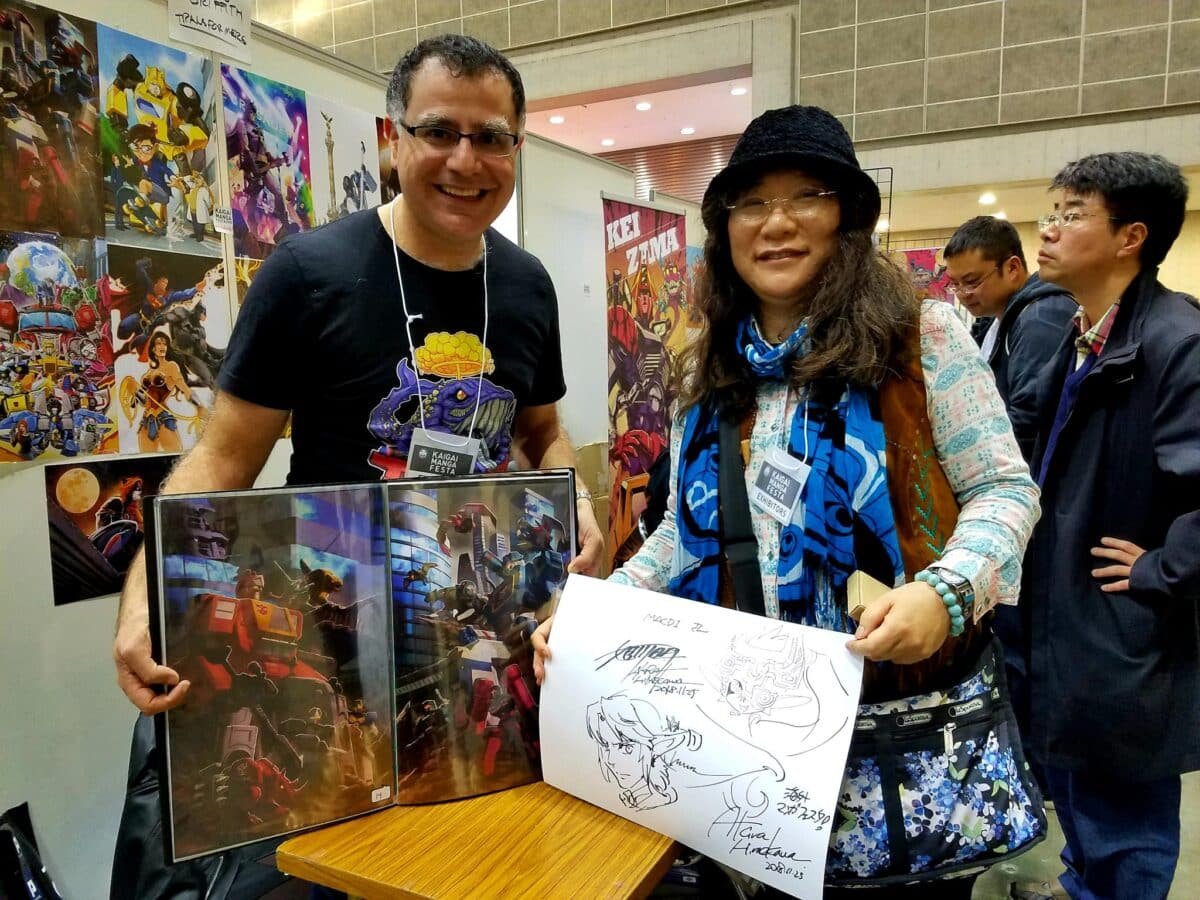
Creator leaders: Veteran creators who began their careers at COMITIA and now work professionally often return to sell new original works. These creators serve as role models for new participants and frequently share insights about sustaining a long-term creative practice.
Service providers: Heads of specialized doujinshi printing companies, bookbinding workshops, and logistics services that support self-publishers are present as key industry leaders, offering guidance on production quality and distribution.
Regional organizers: Leaders of regional COMITIA events in Hokkaido, Niigata, Nagoya, Kansai, Sendai, Fukushima and Kyushu network at Tokyo editions, contributing to the nationwide independent manga ecosystem.
Technology sectors & themes
Original manga as core sector: The dominant sector is original manga, covering all genres including slice-of-life, drama, science fiction, fantasy, horror, mystery, comedy, and avant-garde experimental works. Because fan works are prohibited, the thematic diversity comes from personal imagination rather than franchise trends.
Illustration and art books: A major sector includes full-color illustration collections, character design archives, background art books, and concept art for original worlds. These works often showcase advanced digital painting techniques and traditional media.
Text-based works: Original light novels, short story collections, critical essays, poetry, and research-based zines form a distinct sector, often paired with illustrations by the same author.
Handmade and craft: Handmade anime goods, figures, and art goods that are original designs are permitted, reflecting a broader maker culture within the doujinshi community.
Cross-media originals: Some circles present original games, music CDs, animation shorts, and video works that expand their manga universes, demonstrating how independent creators use multiple media to tell stories.
Zine and independent publishing culture: The overarching theme is independent comic magazine culture, emphasizing freedom of expression, direct creator-reader relationships, and the value of self-publishing as a cultural practice.
Sessions, talks & presentations
Table-based presentations: Most presentations happen at individual circle spaces. Creators explain their new releases, show original manuscripts, and discuss their creative process directly with visitors. This decentralized presentation model means there are thousands of micro-talks happening simultaneously.
Editorial feedback: Informal portfolio review sessions occur where editors provide critiques to creators who bring their works. These are not scheduled in a programme booklet but happen organically throughout the day.
Reading and discovery areas: Sample reading corners allow visitors to browse sample copies before purchase. The central galleria and rest areas often become impromptu meeting points for creators to exchange feedback.
Information desk announcements: The official information desk uses the public address system to provide guidance, lost item notices, and updates about catalog sales status and entry queues.
Community-driven sharing: The event supports informal mentorship between veteran and new creators on storytelling structure, panel composition, and distribution strategies.
Workshops & demonstrations
Live drawing demonstrations: Many artists perform live sketching, inking, and coloring demonstrations at their tables, allowing visitors to observe professional techniques up close. These demonstrations range from traditional dip pen work to full digital illustration on tablets.
Printing and production demos: Printing companies showcase binding options, paper samples, cover finishing such as foil stamping and spot UV, and color proofing workflows. These demos help creators understand how to achieve desired print quality within budget.
Catalog and web catalog tutorial: Staff demonstrate how to use Tia’s Magazine and the COMITIA Web Catalog to search circles, read circle cuts, and navigate the floor map. Each catalog copy carries a code for the web catalog, which lets you search circles and show the floor map.
First-time participant guidance: Guidance for first-time participants covers how to prepare manuscripts, create a circle cut, apply for circle registration, and manage sales on the day. The circle exhibition guide explains that you cannot join a circle by jumping in on the day of the exhibition.
Q and A support: Volunteers at the information corner answer questions about entry procedures, payment etiquette, and venue facilities, ensuring that newcomers can participate comfortably.
Ticket types & registration
Admission model: COMITIA uses a catalog-as-ticket system. You get in by showing the event’s catalog, Tia’s Magazine, one copy each, which you buy. The catalog takes the place of an entry fee and is your entry pass, and you show it again when you go back in.
Advance catalog purchase: $9.33 at bookstores from November 15, 2026. This price is converted from the official 1,400 yen advance price. The advance sales page recommends buying in advance because it costs less than on the day and allows smooth entry without queuing in the venue’s catalog sales line. Participating chains include Junkudo Ikebukuro main store, Melonbooks branches, animate branches, Mandarake branches, Toranoana Ikebukuro, Book1st branches, Shosen Grande and Shosen Book Tower, Manga-oh, Alice Books, and COMIC ZIN Akihabara.
Venue catalog purchase: $10.00 at the venue on the day, converted from the official 1,500 yen venue price. The catalog is sold from about 8:00 at the venue’s Catalog Sales counter. The FAQ notes that enough stock for sale on the day is set aside separate from advance copies, and if the catalogs for sale on the day sell out, a general entry ticket is sold on its own.
Children and free entry: Children aged 12 and under do not need one and get in free. From 15:00, everyone gets in free.
Circle registration: Circle participation requires advance application. You are asked for information such as the name of your circle, the genre of your works and a picture of your work that would be printed on the catalogue, also called a circle cut. Mail and online applications are accepted during the announced window, with spaces allocated by lottery when oversubscribed. On the day, circle admission begins earlier than general admission and involves handing in the circle ticket that came in the mail and receiving a different one for re-entry.
Startup & investor opportunities
Micro-publisher testing ground: Many doujin circles operate as micro-publishers and use COMITIA to test market response before scaling to commercial serialization, crowdfunding, or self-owned online stores. The low overhead of a single table allows rapid prototyping of story concepts.
Creative service startups: Small businesses offering printing, bookbinding, color correction, translation, and logistics for creators find customers among thousands of circles seeking to improve production quality.
Publisher investment in talent: Editorial departments attend explicitly to scout new IPs, providing a direct pathway from self-published debut to commercial magazine or web comic contract. This scouting system has historically supported career transitions from amateur to professional.
Collaborative venture formation: Writers, artists, designers, and composers meet to form new creative units and collaborative anthologies, often leading to new circles that exhibit at future editions.
Regional market expansion: Organizers of regional COMITIA events network to support creators who wish to exhibit across Japan, expanding their audience beyond Tokyo.
Exhibitors & technology companies
Circle exhibitors: Approximately 3000 circles exhibit original manga, illustration, novels, criticism, music, and goods. Each circle is listed in the catalog with its circle cut, genre, and block location.
Printing and manufacturing exhibitors: Major doujinshi printers display paper stock, cover finishes, special binding techniques, and provide quotes for small-lot printing, often offering event-only discounts.
Bookstore chain exhibitors: Chains that sell Tia’s Magazine in advance maintain a presence through catalog distribution, mail order services, and on-site support. These include animate, Melonbooks, Mandarake, Manga-oh, and Alice Books.
Creation tool providers: Companies producing manga creation software, drawing tablets, pens, screentones, and storage solutions have indirect presence through creator recommendations and demonstration artwork.
Support and distribution services: Companies offering ISBN acquisition, self-publishing distribution to bookstores, and overseas translation support exhibit their services to creators looking to expand beyond the event.
Networking & business meetings
Direct creator-reader networking: The open floor layout encourages slow browsing and conversation. Unlike large-scale fan events where queues dominate, COMITIA is designed for dialogue. Creators often keep sketchbooks for visitors to leave comments.
Editor-creator meetings: Informal business meetings happen at tables where editors leave business cards, feedback sheets, and contact information for follow-up. Many professional careers have started from a single conversation at a COMITIA table.
After-event community gatherings: Many creators organize off-site after-parties, review sessions, and critique meetings in nearby cafes and restaurants in Ariake, Odaiba, and Shimbashi. These gatherings extend networking beyond the exhibition hours.
Regional community linking: Regional COMITIA groups use Tokyo events to coordinate schedules, share operational know-how, and support creators who travel between regions.
Digital networking extension: The web catalog allows pre-event planning to identify circles to visit, bookmark favorites, and connect via social platforms linked in circle profiles, enabling continued interaction after the event.
Event rules & visitor information
Originality rule: Only original works are sold at COMITIA. The organizer’s English page for visitors says secondary works of copyrighted material such as fan art, fanzines, fan fiction and parodies may not be sold there.
Cosplay and filming: Cosplay is not allowed, and filming video is not allowed, including live commerce and streaming. The visitor guide states that filming and streaming video is prohibited.
Photography etiquette: For photos, the guide asks you to get permission first, including for a circle’s items and signs, and to keep other people out of the frame as far as you can. It asks you to take views of the hall from a distance so no one can be identified, and not to use flash or strong lights.
Age and content rules: Under an ordinance, people under 18 may not buy or look at adult works. Bring ID such as a passport, which may be used to check your age when you buy items with adult content.
Payment etiquette: Bring cash in small change. The English first-time guide says basically cash is exchanged at the venue and many circles do not have much change, so 100-yen and 500-yen coins and 1,000-yen notes help. The way each circle takes payment is up to that circle.
Re-entry and catalog integrity: Show your copy of Tia’s Magazine 158 to the staff at the entrance and again when you go back in. A catalog with only the cover cut out or taken apart is not valid for entry, so carry the whole book. If you forget it, you buy another on the day.
How to get there
Main access points: Tokyo Big Sight’s English access page gives about 3 minutes on foot from Tokyo Big Sight Station on the Yurikamome, and about 7 minutes from Kokusai-Tenjijo Station on the Rinkai Line.
Yurikamome route: The Yurikamome takes 23 minutes from Shimbashi to Tokyo Big Sight. This automated line offers scenic views of Tokyo Bay and connects to JR lines at Shimbashi.
Rinkai Line route: The Rinkai Line takes 14 minutes from Osaki, a stop on the JR Yamanote, Shonan-Shinjuku and Saikyo Lines, to Kokusai-Tenjijo. Trains run through onto the JR Saikyo Line, so you can go to Odaiba from a Saikyo Line station such as Shinjuku without changing trains.
From airports: From Haneda Airport, take Tokyo Monorail to Tennozu Isle then transfer to Rinkai Line, or take Keikyu Line to Shimbashi then Yurikamome. From Narita Airport, take Narita Express or Access Express to Osaki or Shimbashi then transfer.
On foot navigation: Follow signage from either station toward East Halls. The East Halls entrance is on the bay side of the complex, with clear numbering for Halls 1, 2, 3, 7 and 8.
Public transport & parking
Strong public transport recommendation: The visitor guide asks you to come by public transport and says car parks near the venue get very crowded and does not recommend coming by car or motorbike.
Parking details: Tokyo Big Sight has East Hall underground parking and outdoor lots, including reserved parking spaces prioritizing individuals with disabilities in certain areas of the East Building outdoor lots. The East Tower underground parking area may be unavailable due to renovation work. Expect long queues and high fees during major events.
Bicycle and motorbike: Bicycle parking is extremely limited and often full during major events. Motorbike parking is also restricted.
Queue management: The guide asks you not to arrive late at night or early in the morning. Queues for catalog sales start from around 8:00, and general entry queues build from mid-morning.
Accessibility of transport: Both stations have elevators, escalators, and barrier-free routes, but morning entry can be crowded, making movement challenging for wheelchairs during peak entry.
Accommodation areas
Ariake immediate area: Hotels within walking distance include Tokyo Bay Ariake Washington Hotel, Hotel Villa Fontaine Grand Tokyo Ariake, and Tokyo Bay Ariake Washington Hotel, ideal for early morning access to catalog sales.
Odaiba area: Resorts and business hotels with direct Yurikamome access, such as Grand Nikko Tokyo Daiba and Hilton Tokyo Odaiba, offer bay views and easy access to both Big Sight stations.
Shimbashi and Shinagawa hubs: These major transit hubs on Yurikamome and Rinkai Line routes offer a wide price range from capsule hotels to upscale business hotels, plus extensive dining options for after-event gatherings.
Budget planning: Japanese booking sites are often cheapest, and early reservation is advised because Tokyo Big Sight frequently hosts multiple exhibitions on the same weekend. Prices fluctuate significantly based on other events in the Ariake-Odaiba area.
Extended stay suggestion: Many visitors combine COMITIA with visits to nearby attractions such as teamLab Borderless, Odaiba Seaside Park, and Akihabara’s doujinshi shops to continue their manga exploration.
Accessibility
Barrier-free facilities: Tokyo Big Sight offers modern barrier-free facilities, elevators, and accessible restrooms, though extreme crowd density during morning entry can be challenging. Barrier-free restrooms with facilities for people with disabilities, ostomate support, and a care bed are available throughout the venue.
Wheelchair loan: Manual wheelchairs are available free of charge at the general information counter on the second floor entrance hall of the Conference Tower, 9:00 AM to 6:00 PM, no advance reservation required. Depending on event schedules, wheelchairs may also be available at general information counters on the second floor of the East and South Exhibition Halls.
Parking and movement: Reserved parking spaces prioritizing individuals with disabilities are available in certain areas of the East Building outdoor parking lots. The central galleria connecting the halls is level and spacious, facilitating wheelchair movement once inside.
Support for visitors: Staff at the information desk provide maps indicating accessible routes, priority rest areas, and first aid locations. The Tokyo Big Sight Facility Guide for Wheelchair Users PDF provides detailed information about wheelchair loan locations and accessible paths.
Crowd considerations: Visitors needing extra space are advised to enter after the initial rush or use the free entry period after 15:00 when crowds thin considerably.
Previous year’s highlights
Growth of the brand: COMITIA has grown from its inauguration in November 1984 to approaching its 160th Tokyo edition, maintaining its identity as a doujinshi heaven that focuses entirely on original works. Inaugurated in 1984 and now approaching its 140th edition, Comitia focuses entirely on doujinshi.
Operational resilience: With operations once threatened by repeated cancellations, the organizers launched a crowdfunding campaign to keep the event running into 2021, demonstrating strong community support for original creator culture.
Hall rotation: Previous editions have rotated between East Halls 1, 2, 3, 7 and 8 and West Halls 1, 2, 3 and 4 due to Tokyo Big Sight renovation and other large events, showing flexibility in venue usage while maintaining scale.
Regional strength: Regional editions such as Hokkaido COMITIA at Sapporo Convention Center, Michinoku COMITIA in Sendai and Fukushima, Gataket in Niigata, Nagoya COMITIA, Kansai COMITIA at INTEX Osaka and Kyoto Pulse Plaza, and Kyushu COMITIA have maintained steady participation, with scales ranging from 240 spaces to 1000 spaces.
Industry impact: Founded in November 1984, COMITIA plays a significant role in the manga publishing industry and independent creator’s scene in Japan, with many professionals continuing to credit COMITIA as their starting point.
Official registration & tickets
Official source: https://www.comitia.co.jp/ for schedule, catalog sales page, visitor guide, and FAQ, all in Japanese with English pages for first-time visitors and for visitors. The official COMITIA account on X provides latest information.
General admission tickets: No separate ticket system exists. Entry is by showing Tia’s Magazine, purchased at $9.33 in advance at bookstores or $10.00 at the venue on the day. The catalog takes the place of an entry fee and is your entry pass. Children aged 12 and under get in free. From 15:00, everyone gets in free even if catalogs for the day sell out.
Advance purchase locations: Junkudo Ikebukuro main store, Melonbooks branches, animate branches, Mandarake branches, Toranoana Ikebukuro, Book1st branches, Shosen Grande and Shosen Book Tower, Manga-oh, Alice Books, and COMIC ZIN Akihabara are listed as planned shops for advance sales. Mail order is available via animate, Toranoana, Melonbooks, Mandarake, Manga-oh and Alice Books.
Circle registration: Circle registration requires mail and online application with information such as circle name, genre, and circle cut. Participation fees vary by edition and include table space and catalog listing. Check the official COMITIA 158 page for exact fees and deadlines.
On-day flow: Catalog sales start around 8:00 at the venue. Circle admission begins around 9:00, followed by general admission. Keep the whole catalog book intact for re-entry checks.
Video
Location
FAQ
What exactly can I buy at COMITIA?
You can buy original doujinshi that are self-published manga created entirely from the author's imagination, with no parody of existing franchises. In addition to manga, you will find original illustration art books, novels, critical essays, handmade goods, music CDs, and small games that are all original works. This focus makes COMITIA ideal for discovering new stories and supporting independent creators directly.
How does the catalog entry system work?
Entry is controlled by showing Tia's Magazine, the official event catalog, which serves as your admission pass. You must present the complete book at the entrance and again for re-entry, and a copy with only the cover cut out is not valid. If you lose it or forget it, you must purchase another copy at the venue's catalog sales counter, where sufficient stock is reserved separately from advance sales.
Is cosplay, photography, or video allowed?
Cosplay is strictly prohibited at COMITIA, as stated on both Japanese and English visitor guides. Filming and streaming video is also prohibited, including live commerce activities. Photography of circle displays requires prior permission from the circle, and you must avoid including other people in the frame, using flash, or taking identifiable shots of the crowd.
What should I bring to make my visit smooth?
Bring cash in small denominations because many circles have limited change and prefer 100-yen and 500-yen coins and 1,000-yen notes. Bring a large bag or backpack for purchases, as many books are B5 size and heavy. Bring identification for age verification when purchasing adult content, and bring the whole catalog for entry.
How do I find circles I want to visit and navigate Tokyo Big Sight?
Use both the printed catalog and the COMITIA Web Catalog, which is accessible with a code inside each catalog and allows searching by circle name, author, genre, and location. The printed catalog contains maps, circle cuts, and block indexes that help you plan a route through East Halls. Arrive via Yurikamome to Tokyo Big Sight Station or Rinkai Line to Kokusai-Tenjijo Station and follow signage to East Halls.

Leave a Reply