



Overview
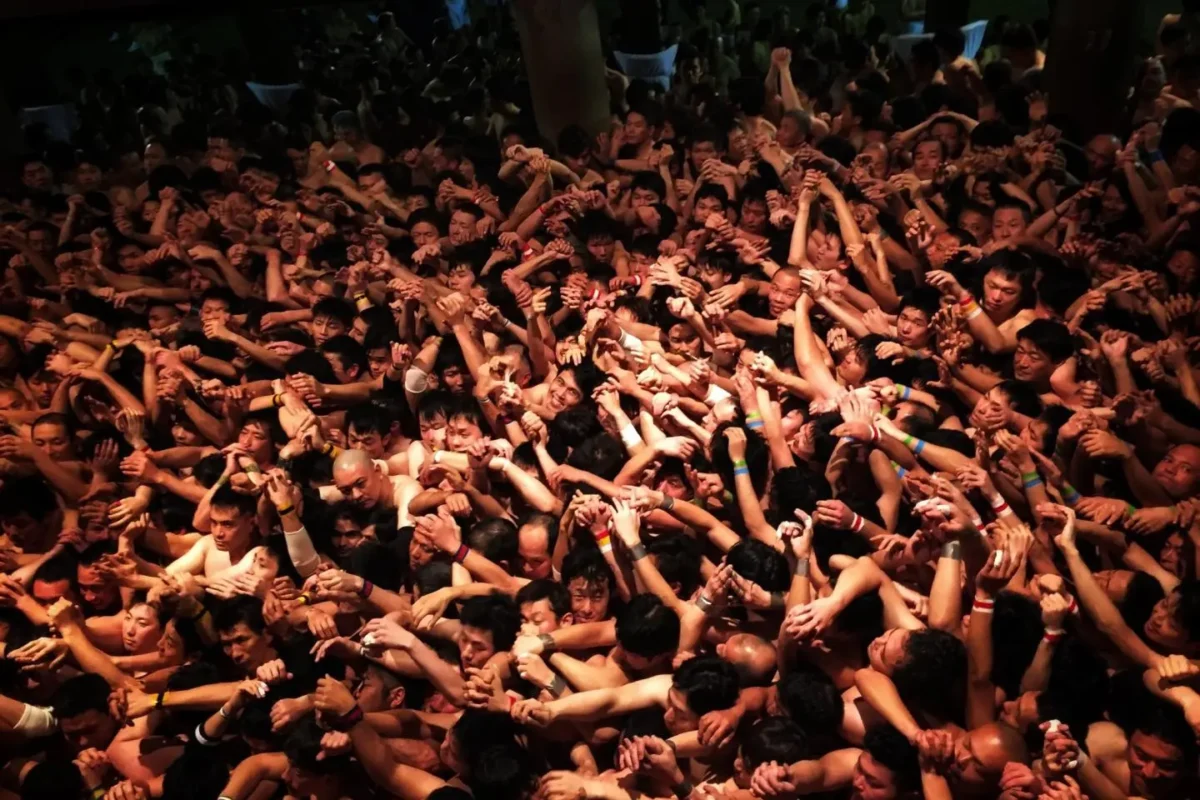
Brave the cold of February for the Saidaiji Eyo Hadaka Matsuri, also known as the Naked Man Festival, and considered one of Japan’s third oldest festivals and largest hadaka matsuri. Thousands of near-naked men clad only in traditional Japanese loincloths face the cold to compete for sacred offerings thrown to the crowds at the climax of this annual religious rite.
The most famous of the naked festivals is the Saidai-ji Eyo Hadaka Matsuri in the city of Okayama in western Honshu. This particular Hadaka Matsuri has blown up to legendary proportions. More than 10,000 loin-clothed participants gather at the Saidai-ji temple to vie for the title of the lucky man, an honor achieved by catching the shingi or sacred lucky sticks. The festival is formally known as Saidaiji Eyo and can be traced back to 1510, over 500 years ago, according to the temple.
Held at Saidaiji Kannon-in Temple, a historic temple in eastern Okayama City, the festival is recognized by the government since 2016 as an important folk cultural property. Participants begin by chanting Wasshoi Wasshoi and purifying themselves with cold water before the head priest throws the shingi into the darkened hall, triggering a frantic struggle believed to bring good fortune for the year ahead.
Enjoy Your Event Stress-Free with Japan Travelo
Do you know? Planning events, festivals, concerts, and cultural experiences in Japan can be overwhelming. Japan Travelo brings everything together in one place, helping you manage your itinerary, transport, and accommodation with ease—so you can enjoy Japan without the stress of planning.
The main events are free to watch, though you can advance reserve seating or standing in specially designated areas close to action. The retro shopping street of Gofuku-dori is open in full swing during the festival, also a warmer alternative to those who cannot or do not want to run in the festival.
Cultural Significance & Origins
The Naked Festival evolved from a ritual that started 500 years ago during the Muromachi Period when villagers competed to grab paper talismans, which were given out by a priest at the Saidaiji Kannonin Temple. Originally called Eyo, the term relates to ichiyo-raifuku, which means to withstand the harsh, cold winter and reach the warmth of spring.
In the early 16th century, worshippers at Saidaiji Temple would receive o-fuda paper talismans from priests that were said to bring protection. As numbers grew, competition for talismans became intense, and priests began throwing them into crowds. The talismans later changed from paper to wooden sticks called shingi, 20 cm length of timber meaning sacred wood, to make them more durable in the melee.
The loincloth tradition comes from purification rites. Nearly 10,000 men wearing only traditional loincloths called fundoshi or mawashi, a loincloth worn by sumo wrestlers, first purify their body with cold water, symbolizing purification of body and spirit before approaching sacred objects. The cold water purification, or mizugori, is essential Shinto-Buddhist practice.
The man who secures one of the two main shingi sticks is crowned the fukuotoko, the lucky man of the year, and is said to be blessed with great prosperity and fortune for the year ahead. The smaller kushigo sticks also bring a portion of luck. Historically, the fukuotoko was considered hero of the city until next festival.
Naked festivals are held in dozens of places throughout Japan every year, usually in summer or winter, but Saidaiji Eyo is the largest and most famous. It preserves concepts of communal endurance, renewal, and agricultural prayer for harvest, beginning as harvest festival aimed at inculcating agricultural interests in younger generations.
Traditions, Rituals & Customs
The festival follows a structured ritual progression from purification to battle.
Purification with Cold Water: Participants gather in loincloths and undergo cold water purification at temple wells and temporary pools. They pour buckets of freezing water over themselves chanting Wasshoi Wasshoi, purifying body and spirit before entering sacred grounds.
Shounen Hadaka Matsuri: Community youth version of naked festival for boys, held earlier in afternoon, teaching younger generations the tradition in safer, less crowded environment.
Mochi Nage and Gofukuzutsu Soudatsu: Traditional throwing of rice cakes and lucky goods into crowd, with participants competing to catch them, similar to main shingi battle but using mochi and small gifts, creating festive atmosphere.
Hounou Enbu Dance Performances: Dedicatory dance performances by local groups on stage in temple grounds, offering dances to deities for good fortune.
Eyo Daiko Drum Performances: Powerful taiko drum performances by Eyo Daiko group, performed at 6:30 PM and again at 7:30 PM, drumming to energize participants and build anticipation, with rhythmic beats echoing through temple.
Eyo Fuyu Hanabi Fireworks: Winter fireworks display along nearby Yoshii River, held at 7:00 PM, illuminating winter sky and providing entertainment for spectators who are not participating in naked battle. Fireworks are relatively rare in winter, making this special.
Shingi Touka Battle: The climax where thousands of men compete for sacred shingi sticks released into temple crowds. Just before 10:00 PM, all lights at main temple hall are cut, serving to stir anticipation to fever-pitch levels. At 10:00 PM, one hundred small kushigo sticks are released into crowd, before chief priest drops two coveted shingi sticks into crowds at bay from temple window. Crowds jostle to secure them, with frenzied struggle lasting up to an hour.
What to Expect at the Festival
Expect an intense, chaotic, and deeply spiritual winter night festival that is both thrilling to watch and physically demanding to participate in.
From mid-afternoon, the temple grounds become crowded with participants in fundoshi loincloths and spectators in heavy winter coats. The retro shopping street of Gofuku-dori is open in full swing, offering warm food, drinks, and souvenirs, serving as warmer alternative for those who cannot or do not want to run.
You will see community events from 3:20 PM including Shounen Hadaka Matsuri youth festival, Mochi Nage rice cake throwing, and Gofukuzutsu Soudatsu competitions, with crowds scrambling for thrown goods. Hounou Enbu dance performances from 5:40 PM feature local dancers in traditional costume.
At 6:30 PM and 7:30 PM, Eyo Daiko drum performances create thunderous atmosphere. At 7:00 PM, fireworks along Yoshii River light up sky, visible from temple grounds and riverbanks.
As night deepens, thousands of near-naked men pack into main temple courtyard, chanting and pushing to stay warm. The cold is severe, with breath visible, yet participants are steaming from cold water purification and body heat. Police and temple guards monitor safety, as surge of more than 10,000 nearly naked participants can cause dangerous pressure. Witnesses have described seeing naked people falling in avalanche in past editions.
At 10:00 PM climax, all lights at main temple hall are cut, plunging courtyard into darkness except for small lights. One hundred small kushigo sticks are thrown first, causing initial scramble, then two sacred shingi sticks are dropped by chief priest. The crowd erupts into frantic struggle, with men climbing over each other to secure sticks. The man who secures one is carried to a separate room where his loincloth is stamped and he is declared fukuotoko lucky man.
For spectators, specially designated reserved seating and standing areas close to action offer best views, while free areas on temple periphery are more crowded.
Date & Schedule
Event Dates: Late February 2027 (Dates TBD)
Typical Schedule Based on Previous Editions:
The festival is held on the third Saturday in February each year according to temple tradition, with proceedings beginning from mid-afternoon.
Afternoon Community Events:
3:20 PM: Shounen Hadaka Matsuri, Mochi Nage, Gofukuzutsu Soudatsu, Houzutsu Soudatsu community events. Youth naked festival, rice cake throwing, and lucky goods scrambling. Held in outer temple grounds.
Evening Dedicatory Events:
5:40 PM: Hounou Enbu dance performances. Dedicatory dances on main stage.
6:30 PM: Eyo Daiko drum performances. First taiko set.
7:00 PM: Eyo Fuyu Hanabi fireworks along nearby Yoshii River. Winter fireworks display.
7:30 PM: Eyo Daiko second drum performance.
Main Climax:
10:00 PM: Shingi Touka battle for the Shingi at the temple. All lights at main temple hall are cut just before 10:00 PM. One hundred small kushigo sticks released into crowd, followed by two coveted shingi sticks dropped by chief priest into crowds at bay. Battle continues until shingi are secured, often lasting 30 to 60 minutes.
Please note exact schedule is based on previous editions and confirmed by Saidaiji Kannon-in Temple closer to event.
Visiting this event? Don’t miss out on these amazing activities and local experiences while you’re here.
Main Events & Programme
Shounen Hadaka Matsuri: Youth version of naked festival for boys from elementary to high school age, held earlier in afternoon with less intense competition, teaching tradition. Participants wear fundoshi and compete for small lucky items.
Mochi Nage: Traditional rice cake throwing event where priests and temple officials throw mochi rice cakes into crowd from elevated platform. Catching mochi is said to bring good luck.
Gofukuzutsu Soudatsu and Houzutsu Soudatsu: Competitions where participants scramble for lucky goods and small wrapped parcels thrown into crowd, similar to shingi battle but with less intensity, warming up crowd.
Hounou Enbu: Dedicatory dance performances by local preservation societies, including traditional Japanese dances offered to temple deities. Dancers wear colorful kimono and perform on main stage.
Eyo Daiko: Two powerful taiko drum performances by local Eyo Daiko group, featuring large drums, energetic drumming, and synchronized movements. First performance at 6:30 PM and second at 7:30 PM, building energy for main event.
Eyo Fuyu Hanabi: Winter fireworks display along nearby Yoshii River, starting at 7:00 PM. Fireworks include standard chrysanthemum and peony shells, reflecting off river surface. Best viewed from riverbanks and temple approach.
Shingi Touka: The climax main event where thousands of men compete for sacred shingi sticks released into temple crowds. Just before 10:00 PM, all lights at main temple hall are cut, serving to stir anticipation to fever-pitch. At 10:00 PM, one hundred small kushigo sticks are released into crowd, before chief priest drops two coveted shingi sticks into crowds at bay. Crowds jostle to secure them, for acquiring one brings great prosperity and fortune for year ahead. Smaller kushigo brings portion of luck too. Man who secures shingi becomes fukuotoko lucky man.
Traditional Dress, Arts & Crafts
Fundoshi and Mawashi Loincloth: The essential traditional dress for participants. Nearly 10,000 men wearing only traditional loincloths called fundoshi, first purify body with cold water. The loincloth is white cotton, wrapped in traditional style similar to sumo wrestler mawashi, leaving participants near-naked in freezing winter to demonstrate endurance and purity. Participants also wear tabi socks or go barefoot.
Shingi Sacred Sticks: The sacred objects are 20 cm length of timber called shingi meaning sacred wood, made from willow wood, inscribed with temple seals and blessed by chief priest. One hundred smaller kushigo sticks are also made, approximately 10 cm long, serving as consolation prizes.
Taiko Drums: Eyo Daiko drums are large traditional taiko made from keyaki wood with cowhide heads, decorated with temple crests.
Fireworks Craft: Eyo Fuyu Hanabi fireworks are handmade by local pyrotechnic artisans, using traditional Japanese firework crafting techniques.
Gofuku-dori Shopping Street Crafts: The retro shopping street open during festival sells traditional crafts including Bizen pottery from Okayama, handmade fundoshi, and lucky charms featuring shingi motifs.
Temple Architecture: Saidaiji Kannon-in Temple itself is historic craft, with main hall where shingi are dropped featuring traditional wooden architecture.
Traditional Food & Local Specialties
Festival Food Stalls: Gofuku-dori shopping street and temple approach host stalls selling Okayama specialties. Dishes include Okayama barazushi scattered sushi for approximately 6 USD to 8 USD, ebi-meshi shrimp rice for approximately 7 USD, and kibi dango millet dumplings from Momotaro legend for approximately 3 USD to 4 USD.
Warm Foods for Winter: Due to February cold, stalls emphasize warm foods including oden hot pot with daikon and fish cakes for approximately 4 USD to 6 USD, amazake sweet sake for approximately 2 USD to 3 USD, yakisoba for approximately 5 USD, and ramen for approximately 7 USD to 9 USD.
Okayama Fruit: Okayama is known as fruit kingdom, with white peaches and Muscat grapes sold as fresh fruit cups for approximately 4 USD to 6 USD even in winter as preserved products.
Bizen Area Sake: Local sake from Okayama breweries including Miyashita Sake Brewery served hot for approximately 3 USD to 5 USD per cup, helping spectators stay warm.
Temple Area Snacks: Mochi from Mochi Nage event, roasted chestnuts, and taiyaki fish-shaped cakes for approximately 2 USD to 3 USD.
Location & Festival Areas
Primary Venue: Saidaiji Kannon-in Temple, 3-8-8 Saidaiji Naka, Higashi-ku, Okayama City, Okayama Prefecture 704-8116, Japan. Located in Saidaiji district of eastern Okayama City, approximately 20 minutes by train from central Okayama.
Temple Grounds Layout:
Main Hall Area: Central courtyard where Shingi Touka battle occurs, surrounded by temple buildings. Area where lights are cut before shingi drop. Reserved seating and standing areas close to action located here.
Outer Grounds: Area for Shounen Hadaka Matsuri, Mochi Nage, and dance performances, with stage setup.
Gofuku-dori Shopping Street: Retro shopping street leading to temple, open in full swing during festival, offering food, drinks, and warmer viewing alternative.
Purification Area: Temporary pools and wells where participants purify body with cold water before battle.
Yoshii River Banks: Area along nearby Yoshii River where Eyo Fuyu Hanabi fireworks are launched and viewed, approximately 10 minutes walk from temple.
Access Points: Temple approach from Saidaiji Station, with approach lined with stalls.
Getting to the Festival
By Train: Take JR Ako Line from Okayama Station to Saidaiji Station, approximately 20 minutes, cost approximately 3 USD to 4 USD. From Saidaiji Station, walk approximately 10 to 15 minutes east along Gofuku-dori shopping street to Saidaiji Kannon-in Temple. Trains run every 15 to 20 minutes but become extremely crowded on festival night.
From Central Okayama: Take streetcar or bus to Okayama Station, then JR Ako Line to Saidaiji. Taxi from central Okayama to Saidaiji costs approximately 15 USD to 20 USD.
By Car: Take Sanyo Expressway to Okayama Interchange, then Route 2 and Route 250 to Saidaiji area. Parking around temple is extremely limited and road closures occur from mid-afternoon on festival day. Use coin parking near Saidaiji Station for approximately 2 USD to 3 USD per hour and walk.
On Foot: From Saidaiji Station, follow crowd along Gofuku-dori shopping street directly to temple.
From Kansai: Take Shinkansen from Shin-Osaka to Okayama, approximately 50 minutes, cost approximately 40 USD to 50 USD, then Ako Line to Saidaiji.
Accessibility: Temple grounds are mostly flat but become very crowded and slippery from water purification. Wear sturdy waterproof shoes if spectating. Reserved seating areas have better accessibility than free standing areas.
Where to Stay Nearby
Saidaiji is a district of Okayama City, so most visitors stay in central Okayama.
Okayama Station Area: Business hotels such as APA Hotel Okayama Ekimae, Hotel Granvia Okayama, and Dormy Inn Okayama offer rooms for approximately 60 USD to 110 USD per night and are convenient for train to Saidaiji.
Saidaiji Area: Small business hotels and ryokans such as Saidaiji Grand Hotel and Hotel AreaOne Saidaiji offer rooms for approximately 50 USD to 80 USD per night and are within walking distance to temple.
Kurashiki Area: Hotels in nearby Kurashiki Bikan historical quarter including Kurashiki Ivy Square Hotel and Toyoko Inn Kurashiki offer rooms for approximately 70 USD to 120 USD, approximately 30 minutes by train to Saidaiji.
Budget Options: Hostels and guesthouses in Okayama such as KAMP Houkan-cho Backpacker Hostel and Okayama Guest House charge approximately 25 USD to 45 USD per night.
Ryokan Experience: Traditional ryokans in Okayama including Ryokan Miyoshino offer rooms with tatami and kaiseki dinner for approximately 100 USD to 180 USD per night.
Early booking essential as festival attracts over 10,000 participants plus thousands of spectators, filling Okayama hotels on festival night.
What Visitors Can Participate In
General Participation as Hadaka Man: Men aged 18 and over can register to participate as hadaka man in Shingi Touka battle, wearing only fundoshi loincloth. Registration required via Saidaiji Temple several weeks in advance, with participation fee of approximately 15 USD to 20 USD including fundoshi and insurance. Participants must undergo cold water purification.
Shounen Hadaka Matsuri: Boys can participate in youth version with parental permission, less intense and safer, with registration via local schools and community centers.
Mochi Nage and Lucky Goods Scramble: Anyone can participate in catching mochi and lucky goods thrown during community events from 3:20 PM, no registration required, standing in designated areas.
Spectator in Reserved Areas: Spectators can purchase advance reserve seating for approximately 35 USD or standing for approximately 4 USD to 7 USD in specially designated areas close to action for best views of Shingi Touka.
Gofuku-dori Shopping: All visitors can enjoy retro shopping street open in full swing during festival, offering food, drinks, and warm indoor rest areas.
Fireworks Viewing: Anyone can view Eyo Fuyu Hanabi fireworks along Yoshii River banks from 7:00 PM, free.
Photography: Photography allowed from spectator areas, though flash prohibited during Shingi Touka darkness period.
Things to Do Before or After the Festival
Okayama Castle: Visit Okayama Castle, known as Crow Castle due to black exterior, located in central Okayama near Korakuen Garden, one of Japan’s Three Great Gardens. Castle admission approximately 3 USD to 4 USD, combined with Korakuen approximately 5 USD to 6 USD.
Korakuen Garden: One of Japan’s Three Great Gardens, located adjacent to Okayama Castle, featuring ponds, teahouses, and seasonal beauty.
Kurashiki Bikan Historical Quarter: Take 15 minute train ride to Kurashiki to explore preserved Edo period canal area with museums, shops, and cafes.
Bizen Pottery Village: Visit Bizen, famous for Bizen-yaki pottery, one of Japan’s six ancient kiln types, with kilns and galleries approximately 30 minutes from Saidaiji.
Kibitsu Shrine: Visit Kibitsu Shrine, associated with Momotaro legend, located west of Okayama City.
Saidaiji Area Exploration: Explore Saidaiji district’s temples and retro shopping streets during daytime before festival.
Local Food & Restaurants
During Festival: Gofuku-dori shopping street offers full swing of food stalls and permanent shops.
Okayama Specialties:
Barazushi: Okayama’s signature scattered sushi with many ingredients, served at restaurants near Saidaiji Station for approximately 8 USD to 12 USD.
Ebi-meshi: Shrimp rice, local specialty with sweet and spicy sauce, for approximately 7 USD to 10 USD.
Kibi Dango: Millet dumplings from Momotaro legend, sold as souvenir for approximately 4 USD to 6 USD per box.
Near Saidaiji Temple: Restaurants along Gofuku-dori serve ramen for approximately 7 USD to 9 USD, udon for approximately 6 USD to 8 USD, and teishoku set meals for approximately 8 USD to 12 USD.
Okayama Station Area: Wide range of restaurants including izakaya, sushi, and international cuisine for approximately 10 USD to 20 USD per person.
Cafes: Cafes near Saidaiji Station serve coffee and cakes for approximately 4 USD to 6 USD, good for warming up before night events.
Convenience Stores: Lawson and FamilyMart near Saidaiji Station and temple approach sell onigiri for approximately 1 USD to 2 USD, hot drinks, and snacks.
Ticket Information & Access
Main Events Free to Watch: The main events including Shounen Hadaka Matsuri, Mochi Nage, Hounou Enbu dance, Eyo Daiko drums, Eyo Fuyu Hanabi fireworks, and Shingi Touka battle are free to watch from free standing areas in temple grounds. No ticket required for general spectator areas.
Reserved Seating and Standing: You can advance reserve seating in specially designated areas close to action for approximately 35 USD based on previous editions, converted from 5,000 yen. Reserved standing close to action costs approximately 4 USD to 7 USD based on previous editions, converted from 500 to 1,000 yen. Reservations via Saidaiji Temple website and Lawson Ticket.
Participation Fees: Men wishing to participate as hadaka in Shingi Touka pay participation fee of approximately 15 USD to 20 USD including fundoshi loincloth rental and insurance, registration required weeks in advance via temple.
Youth Participation: Shounen Hadaka Matsuri participation is free or low fee of approximately 5 USD to 10 USD for boys, via local schools.
Fireworks: Eyo Fuyu Hanabi fireworks viewing along Yoshii River is free.
Gofuku-dori Shopping Street: Access to shopping street is free, food and drinks pay-as-you-go.
Parking: No official temple parking during festival, use coin parking near Saidaiji Station for approximately 2 USD to 3 USD per hour.
Official Event Information
The festival is organized by Saidaiji Kannon-in Temple and Saidaiji Eyo Preservation Society.
Official Website URL as text: https://en.japantravel.com/okayama/naked-man-festival/1475
Saidaiji Kannon-in Temple Official URL as text: https://www.saidaiji.jp/
Okayama City Tourism Official URL as text: https://www.okayama-kanko.net/
Location Address as text: Saidaiji Kannon-in Temple, 3-8-8 Saidaiji Naka, Higashi-ku, Okayama City, Okayama Prefecture 704-8116, Japan
Phone Number as text: 086-943-1111 Saidaiji Kannon-in Temple, and 086-943-0822 Saidaiji Eyo Preservation Society
Access Information: 10 to 15 minutes walk from Saidaiji Station on JR Ako Line from Okayama Station, via Gofuku-dori shopping street. Eyo Fuyu Hanabi fireworks along nearby Yoshii River.
Government Designation: Recognized by government since 2016 as Important Intangible Folk Cultural Property.
Video
Location
FAQ
Can women participate in the Shingi Touka main battle and are there any restrictions?
Traditionally the Shingi Touka battle is limited to men wearing fundoshi loincloths, with women not permitted to enter main courtyard battle due to historical religious customs. However, women can participate in spectator events, Gofuku-dori shopping street activities, fireworks viewing, and some community events like Mochi Nage. In recent years, there have been discussions about inclusivity, but main battle remains male-only as of last editions.
Is the Hadaka Matsuri dangerous to participate in or watch as a spectator?
Participation carries inherent risk due to dense crowding, cold water purification, and intense jostling, with reports of participants becoming unconscious from pressure and cold in past editions. Police and temple guards monitor safety, and participants are advised to be physically fit and follow instructions. Spectator areas, especially reserved seating, are safer but still very crowded, so arriving early and wearing warm waterproof clothing is recommended.
What does the fukuotoko lucky man do after winning the shingi stick?
The man who secures one of the two main shingi sticks is carried to a separate blessed room where his loincloth is stamped with temple seal and he is declared fukuotoko lucky man of the year. He is believed to receive great prosperity and fortune for the year ahead and is considered hero of city until next festival. Historically, he was celebrated throughout Okayama and received gifts from community.
Do I need to reserve seating and what is the best spot to watch the Shingi Touka?
Free standing areas in temple grounds offer views but become extremely crowded and offer limited visibility due to dense crowd of over ten thousand participants. Advance reserve seating for about thirty five dollars or standing for about four to seven dollars in specially designated areas close to action provides much better views of main hall where shingi are dropped. Reservations are available via Saidaiji Temple website and Lawson Ticket and sell out quickly.
What should I wear as a spectator in February and are there warm alternatives?
February nights in Okayama are freezing, with temperatures near zero, so spectators should wear heavy winter coats, hats, gloves, and waterproof shoes as purification water makes ground wet. Gofuku-dori retro shopping street is open in full swing during festival and serves as warmer alternative with indoor shops, food stalls, and heated rest areas. Many spectators watch fireworks along Yoshii River then move to shopping street to warm up before ten at night main event.

Leave a Reply