
Overview
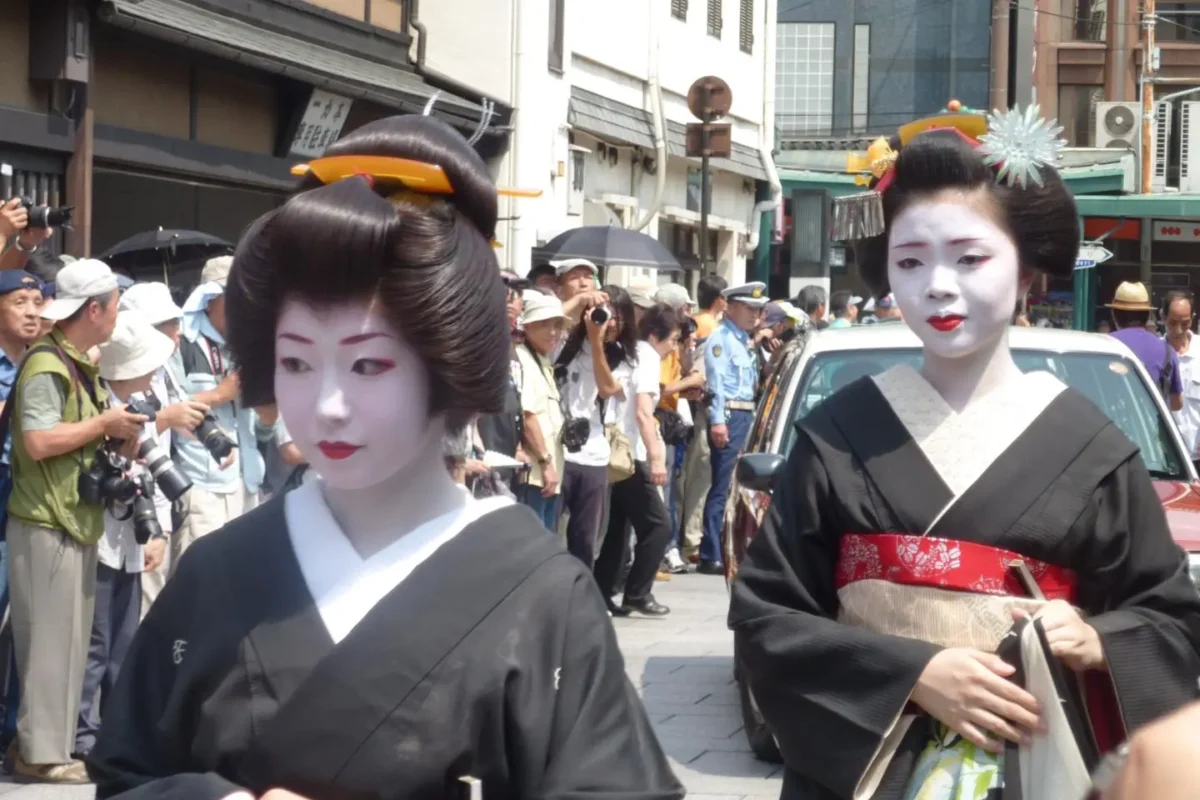
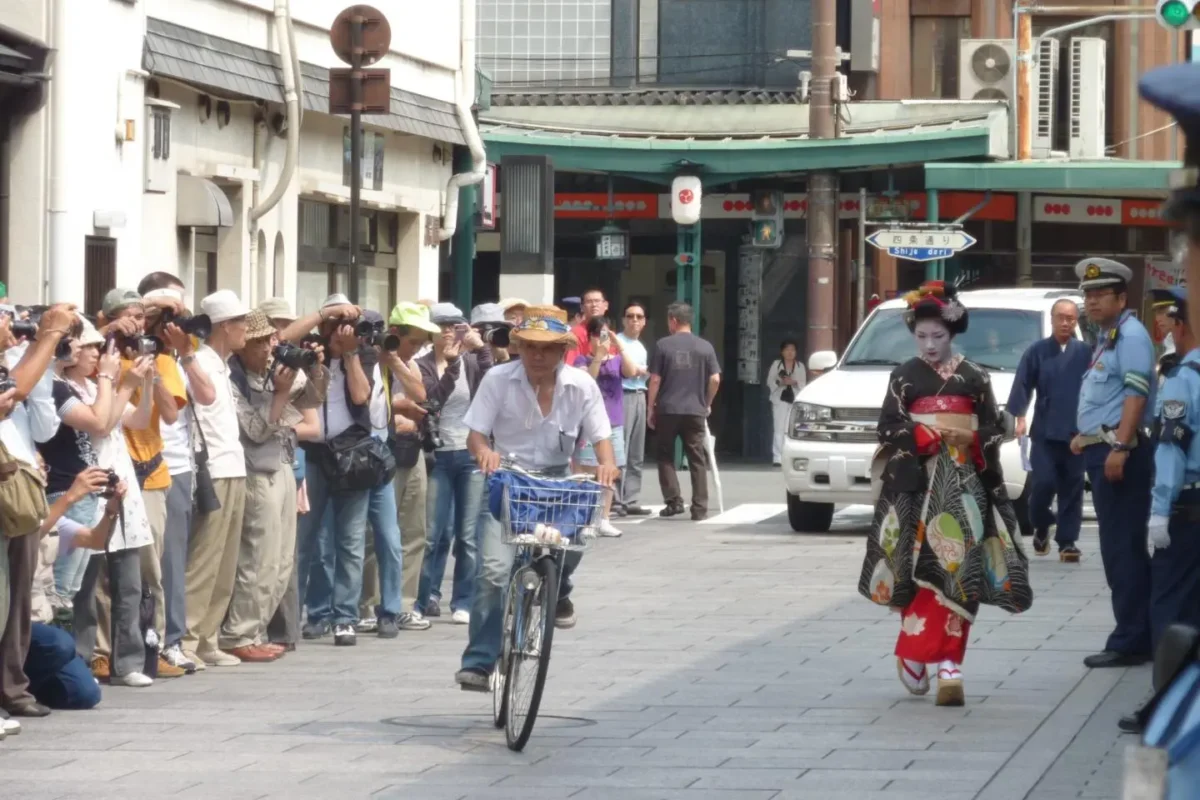
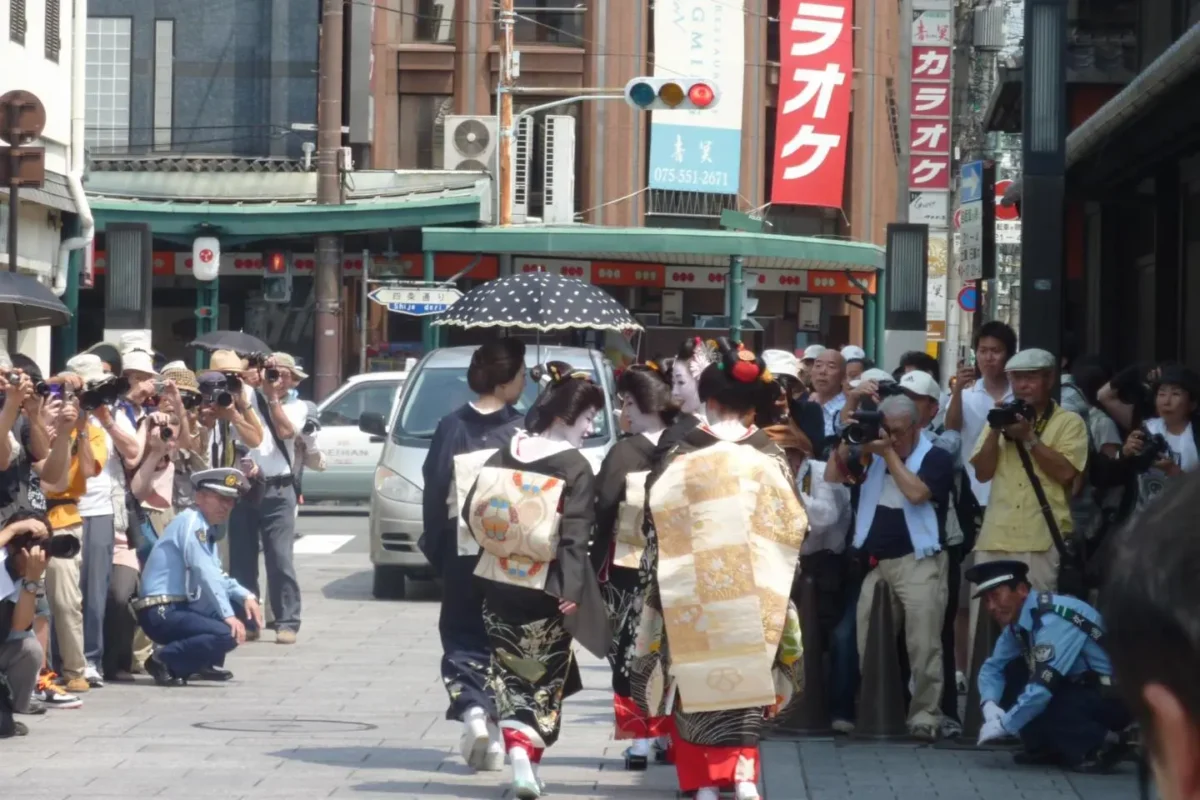
The first of August is a very special day in Kyoto’s Gion neighbourhood. Named after a term which designates the first day of the eighth month of the ancient Japanese calendar, Gion’s hassaku is a very rare chance to see many of the geiko, a local term in Kyoto for geisha, and maiko from Japan’s most renowned geisha district. Despite the hot and muggy weather, they will parade down the streets of Gion to offer tea house owners who supported them during the previous year a word of thanks and a small gift as a token of their gratitude.
Gion’s Hassaku is a traditional courtesy call event held in Gion Kobu, the main Hanamachi entertainment district in Kyoto. Geiko and maiko visit their masters as well as all the ochaya teahouses in the district to thank owners for their patronage and support during the year. This morning ritual transforms the usually quiet, exclusive streets of Gion into a living runway of exquisite kimonos.
Unlike stage performances such as Miyako Odori, Hassaku is not a show for tourists but a genuine internal business custom of the karyukai flower and willow world. However, because the geiko and maiko must walk between ochaya, okiya geisha houses, and teachers’ homes, the public can witness them in daylight, which is exceptionally rare since geiko and maiko normally work only in evening.
Enjoy Your Event Stress-Free with Japan Travelo
Do you know? Planning events, festivals, concerts, and cultural experiences in Japan can be overwhelming. Japan Travelo brings everything together in one place, helping you manage your itinerary, transport, and accommodation with ease—so you can enjoy Japan without the stress of planning.
The event is free to observe from public streets and offers an intimate glimpse into Kyoto’s geisha culture, its hierarchy, and its enduring respect for relationships.
Cultural Significance & Origins
Hassaku originated in farming communities. Farmers performed rituals on the first day of the eighth lunar month in hopes of an abundant harvest. In the old Japanese lunar calendar, the first day of the eighth month was called Hassaku, marking an important seasonal turning point when early rice harvest was celebrated and typhoon damage was feared. Offerings were made to ensure a plentiful harvest.
This agricultural rite was adopted by samurai, merchants, and later by entertainment districts as a day to show gratitude to patrons and teachers. In Kyoto’s hanamachi, Hassaku became a formal business New Year of sorts, second only to Shogyoshiki New Year ceremony in importance.
Connection to Karyukai: The karyukai flower and willow world is built on relationships of trust. Ochaya teahouses are exclusive stages where entertainment occurs. Unlike public restaurants, ochaya operate on the Ichigensan Kotowari principle, no first-time visitors without a reference. The ochaya does not employ geiko directly but hires them through the registry. Therefore, geiko and maiko depend entirely on ochaya owners, called okami-san, for work. Hassaku is their formal thank you, maintaining those vital relationships.
Teachers and Arts: Maiko and geiko also visit their arts teachers – Inoue Yachiyo, head of Inoue school of Kyomai dance, and teachers of shamisen, tea ceremony, and singing – to pay respects and demonstrate that they have not neglected training despite busy year. The morning of Hassaku, maiko and geiko visit their familiar teahouses and teachers of their arts, saying thank you for your support.
Continuity: The tradition was maintained even during challenging times, with reports such as wearing masks, taking ample precautions, geiko and maiko pay Hassaku respects during recent years, showing resilience of custom.
Traditions, Rituals & Customs
Hassaku follows a strict etiquette that reflects hierarchy within Gion Kobu.
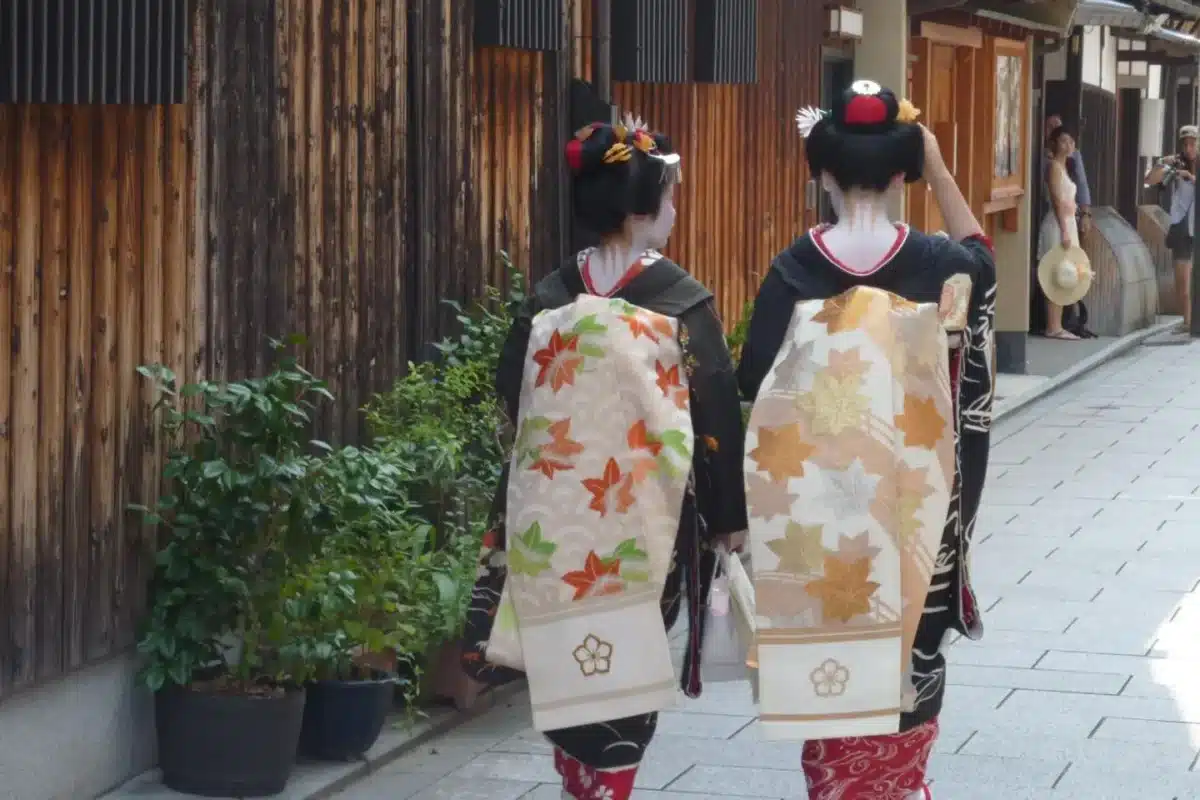
Formal Attire – Kuro Montsuki: On this day, geiko and maiko wear formal black kimono called kuro montsuki with five white family crests, the most formal attire in Japanese dress code. This is distinct from colorful dance kimonos. Maiko wear darari obi long hanging obi, while geiko wear shorter taiko obi. Their obi are also black with subtle embroidery. Hair is done in formal mage style with simple kanzashi hair ornaments.
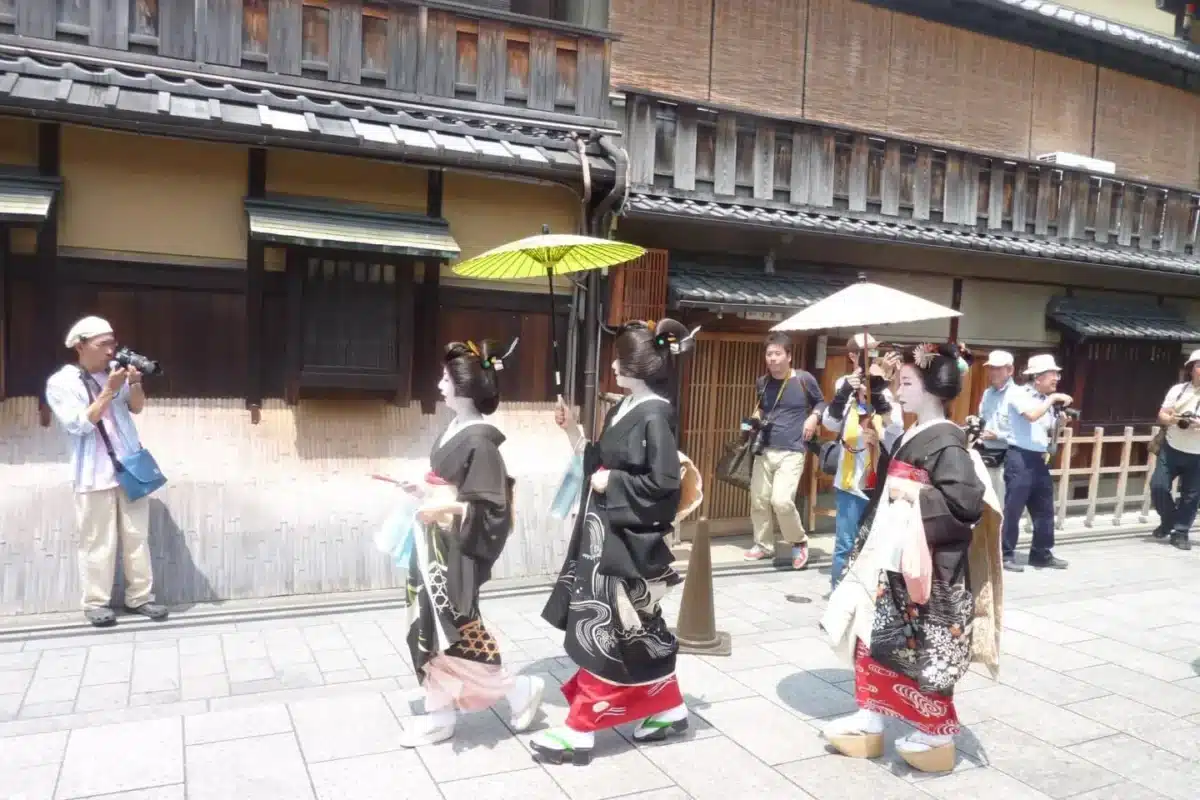
Courtesy Call Route: Starting early morning, each geiko and maiko, often in pairs of sisters from same okiya, walks in zori sandals from their okiya to each ochaya and teacher’s home. The route centers on Hanamikoji Street, the main street of Gion Kobu, and includes side streets with famous ochaya like Ichiriki-tei.
Gift and Greeting: At each ochaya, they bow deeply, offer verbal thanks, and present a small gift, often a box of sweets or seasonal item, as token of gratitude for support during previous year. The okami-san receives them at entrance, exchanges greetings, and offers encouragement for coming year. The exchange is brief but highly formal, with specific keigo polite language.
Visit to Inoue Yachiyo Residence: A key stop is in front of Inoue Yachiyo House, head of dance school. Here, geiko and maiko line up to pay respects, often photographed by media. This residence on Hanamikoji is iconic spot for photographers.
Return to Okiya: After completing rounds of all ochaya and teachers, they return to their okiya and change out of formal black into regular attire, resuming normal preparations for evening work.
What to Expect at the Festival
Visitors to Gion on this day can expect a quiet, elegant, and highly photogenic morning rather than a loud festival.
Rare Daylight Appearance: Geiko and maiko normally appear only after dusk, moving quickly between ochaya and often shielded by staff. On Hassaku morning, they appear in full daylight, walking slowly and gracefully, allowing public to appreciate details of kimono, obi, and makeup that are usually hidden by darkness. It is a very rare chance to see many geiko and maiko from Japan’s most renowned geisha district in one morning.
Hot and Muggy Conditions: Despite hot and muggy weather typical of Kyoto summer, they will parade down streets of Gion in heavy silk black kimono, white makeup, and tall okobo or zori. Their composure in heat adds to respect for their dedication.
Photography Opportunity: The streets of Gion, especially Hanamikoji Street, become lined with photographers, both professional and amateur, kneeling at edges to avoid blocking path. Geiko and maiko do not stop to pose, but walk at measured pace, allowing respectful photos from distance. Kyoto City posts manners signs warning tourists not to touch maiko and cautioning about taking photos, and visitors are expected to follow etiquette of not using flash and not blocking path.
Exclusive Yet Public: Ochaya interiors remain private. You will not see inside teahouses, but you will see entrance exchanges. The beauty is in observing a living business custom rather than staged performance.
Date & Schedule
Event Dates: Early August 2027 (Dates TBD)
Named after a term which designates the first day of the eighth month of the ancient Japanese calendar, Gion’s hassaku is held on the first day of August.
Based on previous editions, the festival is held annually on August 1st. For 2027, the event is listed as Early August 2027 Dates TBD, with the traditional date being August 1st.
Typical Schedule for August 1st:
- 8:00 AM to 9:00 AM – Preparation: Maiko and geiko finish makeup and dress in kuro montsuki formal black kimono at their okiya. Teachers prepare to receive visitors at homes and studios.
- 9:00 AM to 12:00 PM – Courtesy Calls – Aisatsu Mawari: Main event period. Geiko and maiko visit their masters as well as all ochaya teahouses in district to thank owners. They walk in small groups along Hanamikoji Street, side streets, and around Inoue Yachiyo residence. Peak viewing time is 9:30 AM to 11:30 AM when most participants are on streets.
- 12:00 PM to 1:00 PM – Conclusion: Rounds complete, geiko and maiko return to okiya. Streets return to normal, though some late stragglers may still be seen.
- Evening – Regular Work: In evening, geiko and maiko resume normal evening work in ochaya, now in regular colorful kimono for ozashiki banquets.
Exact timing may vary slightly by okiya, but morning window is consistent. Event takes place rain or shine, with umbrellas held by attendants in case of rain.
Visiting this event? Don’t miss out on these amazing activities and local experiences while you’re here.
Main Events & Programme
The programme is simple and centered on courtesy calls, without stage or market.
Aisatsu Mawari – Greeting Rounds:
- Participants: Geiko and maiko from Gion Kobu, the main hanamachi in Kyoto. Also includes participants from other hanamachi such as Pontocho, Miyagawacho, and Kamishichiken on same day, though Gion Kobu is most famous and centrally located.
- Route: Starts from okiya houses scattered around Gion, proceeds to ochaya teahouses along Hanamikoji Street, including famous Ichiriki Ochaya, then to Inoue Yachiyo House, then to other arts teachers’ residences. The route is not fixed but covers entire Gion Kobu district, approximately 500 meter radius.
- Duration: Each courtesy visit lasts 2 to 3 minutes at entrance, with bowing and gift exchange.
Inoue Yachiyo Residence Gathering:
- At Inoue Yachiyo House, many geiko and maiko gather at same time, creating best photo opportunity with multiple geiko and maiko in black kimono lined up. This location at north end of Hanamikoji is most popular with photographers.
No Stage Performance: Unlike other Kyoto events, there is no stage dance on Hassaku day itself, though some years small private performances may be held inside ochaya for owners.
Traditional Dress, Arts & Crafts
The dress code of Hassaku is itself a living art.
Kuro Montsuki Formal Kimono:
- Description: Formal black kimono with five white crests – three on back and two on sleeves – indicating highest formality. Made of smooth habutae silk, with subtle woven pattern visible up close. Both geiko and maiko wear same black color on this day, emphasizing equality in gratitude rather than rank through color.
- Obi: Maiko wear darari obi, extremely long hanging obi nearly touching ground, with black base and gold or silver embroidery of auspicious motifs like cranes or pine. Geiko wear taiko drum obi, shorter and more subdued, also in black with subtle patterns. The black obi is rare, worn only for Hassaku and other highly formal occasions.
- Undergarments and Accessories: White haneri collar, white tabi socks, zori sandals with low heels for geiko and okobo tall wooden clogs for maiko. Small black clutch bag.
Makeup and Hair:
- Shironuri White Makeup: Traditional white oshiroi foundation, with pink accents and red lips. On Hassaku, makeup is slightly more subdued than dance stage, emphasizing natural elegance.
- Mage Hair: Maiko wear wareshinobu or ofuku mage with seasonal kanzashi, but on Hassaku kanzashi are simple and formal, often small silver or pearl pieces. Geiko wear box-like taka shimada mage.
Craftsmanship:
- Kimonos: Hand-dyed and hand-woven by Kyoto artisans, costing 10,000 USD to 30,000 USD per formal set.
- Okiya and Ochaya Architecture: The wooden machiya townhouses with lattice windows and noren curtains are themselves traditional crafts, preserved as cultural properties.
Traditional Food & Local Specialties
While Hassaku is not a food festival, Gion offers distinctive Kyoto cuisine tied to ochaya culture.
Ochaya Cuisine:
- Kaiseki Ryori: Multi-course seasonal cuisine served in ochaya during evening banquets, prepared by specialized caterers called shidashiya. Features Kyoto vegetables, tofu, and seasonal fish. Prices extremely high, 200 USD to 500 USD per person, accessible only via ochaya introduction.
- Sweets for Gifts: Geiko and maiko bring small gift boxes, often containing Kyoto sweets such as yatsuhashi, warabi mochi, or yokan, to ochaya owners.
Public Food Options in Gion:
- Yatsuhashi: Triangle cinnamon rice dough with bean paste, sold on Hanamikoji, boxes from 5 USD to 15 USD.
- Matcha and Wagashi: Tea houses along Hanamikoji serve matcha with seasonal wagashi, 6 USD to 12 USD.
- Kyo Kaiseki for Public: Restaurants like Gion Sasaki, Gion Karyo offer kaiseki for public, lunch 50 USD to 120 USD, dinner 100 USD to 250 USD.
Summer Specialties Despite Heat:
- Hamo – Pike Conger: Summer delicacy in Kyoto, often served as hamo no otoshi blanched pike conger.
- Kakigori Shaved Ice: Sold at cafes to combat hot and muggy weather.
Location & Festival Areas
Main District: Gion Kobu, Higashiyama Ward, Kyoto City
Address: Hanamikoji-dori, Gion-machi, Higashiyama-ku, Kyoto 605-0074 Japan, centered around Hanamikoji Street and Inoue Yachiyo residence
Festival Areas:
- Hanamikoji Street: Main street of Gion Kobu, 400 meter long stone-paved street with preserved machiya, ochaya, and okiya. Central artery for greeting rounds. Northern section near Shijo-dori is most active.
- Inoue Yachiyo Residence: Located on Hanamikoji, residence of head of Inoue school of Kyomai dance, key gathering point.
- Ochaya Cluster: Side streets east and west of Hanamikoji, including streets with famous ochaya like Ichiriki-tei, Tama, and others. Many are not marked with large signs due to exclusive nature.
- Okiya Houses: Scattered around Gion, especially around Hanamikoji and adjacent streets, where maiko and geiko live and prepare.
Area Character: Gion Kobu is one of five hanamachi in Kyoto, along with Miyagawacho, Pontocho, Kamishichiken, and Gion Higashi. It is most famous and largest, with strict preservation rules for building facades and lattice work.
Getting to the Festival
Gion is in central Kyoto, easily accessible from all parts of city.
From Kyoto Station:
- City Bus 100 or 206: To Gion bus stop, 20 minutes, fare approximately 2 USD, then 3 minute walk to Hanamikoji.
- Keihan Line: To Gion-Shijo Station, 15 minutes, fare approximately 2 USD, then 5 minute walk to Hanamikoji.
- Taxi: Kyoto Station to Gion, 15 minutes, fare approximately 10 USD to 15 USD.
From Central Kyoto – Kawaramachi, Pontocho:
- Walking: 10 to 15 minute walk from Kawaramachi or Pontocho across Shijo Bridge to Gion.
- Hankyu Line: To Kawaramachi Station, then walk to Gion.
Final Approach:
- On Foot: Gion Kobu is pedestrian-friendly, best explored on foot. Hanamikoji Street is closed to cars during morning of Hassaku for safety, though not officially closed to all traffic.
- Bicycle: Bicycle parking available at Gion-Shijo Station, but bicycles must be walked on Hanamikoji during event.
Where to Stay Nearby
Staying near Gion allows early morning viewing without rushing.
Gion and Higashiyama Area:
- The Ritz-Carlton Kyoto: Luxury on Kamogawa River, 10 minute walk to Hanamikoji, rooms from 400 USD to 700 USD per night.
- Park Hyatt Kyoto: Luxury in Higashiyama, rooms from 500 USD to 900 USD per night, 10 minute walk to Gion.
- Piece Hostel Sanjo: Budget hostel, dorm beds from 25 USD, private rooms from 70 USD per night, 15 minute walk to Gion.
- Traditional Ryokan – Gion Hatanaka: Ryokan with maiko performance, rooms from 150 USD to 300 USD per night, located on Hanamikoji.
Downtown Kawaramachi and Pontocho:
- Mitsui Garden Hotel Kyoto Sanjo: Mid-range, rooms from 100 USD to 180 USD per night, 10 minute walk to Gion.
- APA Hotel Kyoto Gion: Budget business hotel, rooms from 60 USD to 110 USD per night.
Booking Advice: Early August is hot and muggy, but still high season for Kyoto tourism due to summer festivals. Hotels should be booked 2 to 3 months ahead for August 1st, especially those with Gion views.
What Visitors Can Participate In
Participation is limited to observation, as Hassaku is internal business custom, not public festival.
Respectful Observation: Visitors can stand along edges of Hanamikoji Street and side streets to watch geiko and maiko walk between ochaya. Do not block their path, do not touch kimono, do not use flash photography, and do not follow them into ochaya entrances.
Photography Etiquette: Photography from distance is tolerated, but close-up or intrusive photography is frowned upon. Kyoto City official travel guide cautions tourists about taking photos of maiko and geiko. Use telephoto lens from distance, kneel to keep path clear, and avoid shouting for attention.
No Direct Interaction: Do not ask geiko or maiko to pose, do not give them gifts, and do not attempt to enter ochaya. Their schedule is tight with many houses to visit.
Alternative Participation:
- Gion Corner Evening Show: For guaranteed maiko viewing, attend daily evening shows of Kyoto-style dance at Gion Corner, tickets 20 USD to 30 USD.
- Miyako Odori: In April, Gion Kobu’s geiko and maiko dance three times a day at Gion Kobu Kaburenjo, tickets 25 USD to 50 USD, more accessible than Hassaku.
Cultural Learning: Visit Gion Kagai Art Museum near Yasaka Shrine to learn about geiko culture, costumes, and history, admission approximately 8 USD.
Things to Do Before or After the Festival
Higashiyama and Gion offer many attractions to combine with morning Hassaku viewing.
Before Festival – Early Morning:
- Yasaka Shrine: 10 minute walk from Hanamikoji, shrine that is guardian of Gion, beautiful in early morning light, free.
- Kiyomizu-dera Temple: 20 minute walk uphill, famous wooden stage, opens at 6:00 AM, admission approximately 3 USD, good to visit before Hassaku crowds.
After Festival – Late Morning and Afternoon:
- Hanamikoji Shopping: After greeting rounds end around noon, explore pottery shops, tea shops, and yatsuhashi shops on Hanamikoji without crowds.
- Pontocho and Miyagawacho Hassaku: Other hanamachi also celebrate Hassaku on same day, so you can walk to Pontocho, 15 minutes away, to see geiko and maiko from that district doing similar rounds.
- Gion Museums: Visit Kagai Art Museum and Yasaka Hall to learn more about geisha culture.
- Higashiyama Temple Walk: Visit Kodai-ji, Entoku-in, and Kennin-ji temples, all within 15 minute walk from Gion.
Full Day: Combine morning Hassaku with afternoon visit to Arashiyama or Fushimi Inari, as Gion event finishes by early afternoon.
Local Food & Restaurants
Gion Area Dining:
- Gion Sasaki: Michelin-starred kaiseki restaurant, dinner courses from 150 USD to 300 USD, lunch from 60 USD to 120 USD, requires reservation.
- Gion Karyo: Kaiseki using seasonal ingredients, dinner 120 USD to 250 USD.
- Izuju Sushi: Famous for Kyoto-style sushi, especially saba-zushi mackerel sushi, 15 USD to 30 USD per set, 5 minute walk from Hanamikoji.
Casual Options:
- Gion Okariba: Yakitori and small plates, 10 USD to 20 USD per person.
- Gion Chikusa: Soba restaurant, bowls 8 USD to 15 USD.
- Cafes: % Arabica Kyoto Higashiyama, Inoda Coffee Gion branch, coffee and matcha sets 5 USD to 10 USD.
Street Snacks:
- Yatsuhashi Shops: Shogoin Yatsuhashi Honpo, Otabe, free samples and boxes 5 USD to 15 USD.
- Matcha Ice Cream: Gion Tsujiri, famous matcha parfait, 6 USD to 10 USD.
Ticket Information & Access
Admission: Free to observe from public streets.
Hassaku is free to watch from Hanamikoji Street and side streets. No tickets required for street viewing. Ochaya interiors are private and not accessible to public.
Related Paid Performances:
- Gion Corner: Daily evening dance shows at Gion Corner, Yasaka Hall, tickets based on previous editions 25 USD to 35 USD for adults, 20 USD for children.
- Miyako Odori: April dance performance at Gion Kobu Kaburenjo, tickets 30 USD to 55 USD for reserved seats, 15 USD to 25 USD for unreserved, based on previous editions where tickets were 4000 JPY to 7000 JPY which is approximately 27 USD to 47 USD.
- Gion Kagai Art Museum: Admission approximately 8 USD to 10 USD.
Access Notes:
- No Barriers: No official viewing stands, crowds gather along street edges.
- Accessibility: Hanamikoji Street is flat and paved, accessible for wheelchairs, but crowds during peak 9:30 AM to 11:30 AM make movement difficult. Arrive early for accessible spot near Inoue Yachiyo residence.
- Payment: Gion shops accept cash and credit cards. Small shops may be cash only.
If Pricing Not Announced for 2027: All USD prices based on previous editions.
Official Event Information
Event Name: Gion Hassaku Geiko Festival – Gion’s Hassaku – Hassaku in Gion
Organizer: Gion Kobu Kabukai – Gion Kobu Geiko and Maiko Association, with support from Gion Ochaya Association and Kyoto City
Venue: Gion Kobu, Hanamikoji-dori, Gion-machi, Higashiyama-ku, Kyoto 605-0074 Japan, centered around Hanamikoji Street and Inoue Yachiyo residence
Access: 5 minute walk from Gion-Shijo Station on Keihan Line, 10 minute walk from Kawaramachi Station on Hankyu Line, 3 minute walk from Gion bus stop.
Official Website URL as text: en.japantravel.com/kyoto/kyoto-gion-hassaku-geiko/7751 and assets.japantravel.com/kyoto/gion-hassaku/ and www.kyoto-kagai.jp
Contact: Gion Kobu Kabukai Office, Phone via Kyoto City Tourism Association.
Notes: Event is traditional courtesy call, not staged show. Photography etiquette must be observed. Event takes place rain or shine. Please check official Kyoto tourism website for any changes. All USD pricing based on previous editions.
Location
FAQ
What exactly is Hassaku and why do geiko and maiko wear black kimono?
Hassaku is the first day of the eighth month in the ancient Japanese lunar calendar, originally a farming ritual for abundant harvest that was adopted by Kyoto's hanamachi as a formal thank you day to patrons. Geiko and maiko wear formal black kimono called kuro montsuki with five white crests because it is the most formal attire in Japanese dress code, reserved for highly formal occasions like New Year and Hassaku, showing utmost respect to ochaya owners and teachers who supported them during the year.
Can tourists enter ochaya teahouses to see Hassaku greetings inside?
No, ochaya teahouses operate on Ichigensan Kotowari principle meaning no first-time visitors without a reference, and interiors are private business spaces not open to public. Visitors can only observe from public streets as geiko and maiko walk between ochaya and exchange greetings at entrances. To experience ochaya interior, you need introduction through hotel concierge or specialized tour operators offering rare access to private ochaya for maiko meeting experiences, which are separate from Hassaku.
What is the best spot and time to see geiko and maiko on Hassaku day?
The best spot is Hanamikoji Street, especially in front of Inoue Yachiyo House at north end near Shijo, where many geiko and maiko gather at same time for photos, and side streets with famous ochaya like Ichiriki-tei. The best time is 9:30 AM to 11:30 AM when most greeting rounds occur, so arrive by 9:00 AM to secure spot along street edge. Afternoon after 12:00 PM is too late as rounds finish and streets return to normal.
Is photography allowed and what etiquette should I follow?
Photography from a respectful distance is tolerated, but Kyoto City posts manners signs warning tourists not to touch maiko and cautioning about taking photos, so etiquette is crucial. Do not use flash, do not block their path, do not kneel directly in front of them, do not shout or ask them to pose, and do not follow them into ochaya entrances. Use telephoto lens, stay at edge of street, and avoid intrusive close-ups that disrupt their formal business custom.
How is Hassaku different from Miyako Odori and Gion Corner dance shows?
Hassaku is a genuine internal business custom where geiko and maiko thank patrons in formal black kimono, walking in daylight on public streets, not a staged performance for tourists. Miyako Odori in April and daily Gion Corner shows are public stage performances where geiko and maiko dance in colorful kimono for ticketed audience. Hassaku offers rare chance to see many geiko and maiko in daylight in authentic context, while dance shows offer guaranteed close-up viewing of dance arts in theater setting.

Leave a Reply