



-
July 1, 2026
Event date:
-
July 15, 2026
Event end:
Overview
The Hakata Gion Yamakasa 2026 brings one of Japan’s most thrilling and deeply revered cultural spectacles to the historic streets of Fukuoka City. Dating back nearly eight hundred years, this mid-summer festival turns the entire Hakata district into a high-octane celebration of community strength and spiritual devotion. Originating as a ritual to ward off a terrible epidemic, the gathering has evolved into an intense, competitive tradition that beautifully demonstrates the enduring camaraderie and resilience of local neighborhood districts.
Throughout the first half of July, the city takes on a unique festive atmosphere as massive, intricately decorated floats known as kazariyamakasa are displayed at key public locations. These towering structures, rising over thirty feet high, are handcrafted by master doll makers and depict dramatic scenes from classical folklore, ancient samurai battles, and modern popular culture. The stillness of these stunning stationary monuments contrasts sharply with the dynamic, sweat-drenched energy that builds as the community prepares for the highly anticipated racing phase of the celebration.
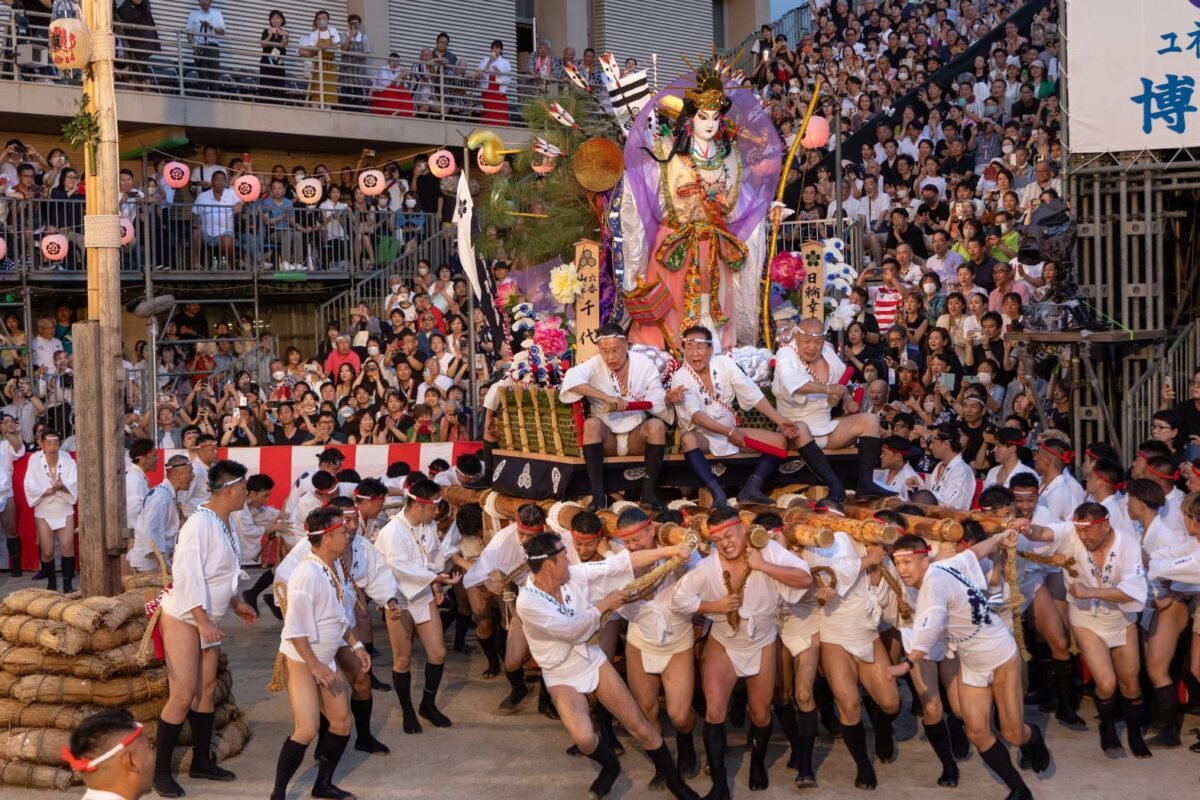
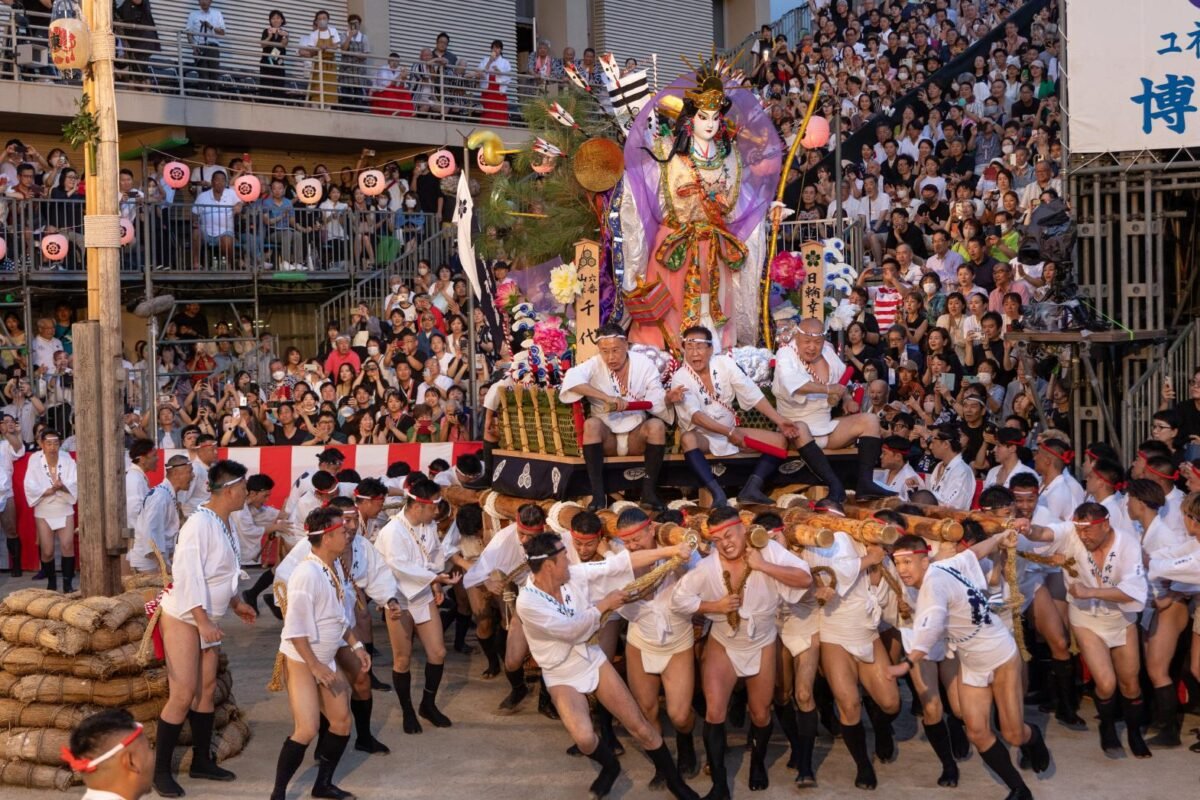
The festival reaches its legendary climax in the early morning hours of the final day with the thrilling Oiyama float race. As the dawn breaks, thousands of loincloth-clad men representing seven traditional neighborhood districts lift massive one-ton racing floats onto their shoulders. They charge through the narrow streets at breakneck speeds, navigating sharp corners and enduring continuous splashes of purifying water thrown by enthusiastic onlookers. The collective shouts of the runners and the thunderous beat of taiko drums combine to create an unforgettable, pulse-pounding sensory experience.
Enjoy Your Event Stress-Free with Japan Travelo
Do you know? Planning events, festivals, concerts, and cultural experiences in Japan can be overwhelming. Japan Travelo brings everything together in one place, helping you manage your itinerary, transport, and accommodation with ease—so you can enjoy Japan without the stress of planning.
Event Highlights
- The Oiyama Climax: Watch the breathtaking final race at dawn as neighborhood teams compete for the fastest time across a challenging five-kilometer course.
- Towering Display Floats: Admire the gorgeous stationary floats placed throughout the city center that showcase incredible Japanese craftsmanship and storytelling.
- Purifying Water Splashing: Experience the lively interactions between crowds and runners as spectators toss buckets of water to cool down the charging athletes.
- Kushida Shrine Dedication: Witness the dramatic opening moments of the race where each team enters the main shrine grounds with precise and powerful choreography.
Why Attend
This event offers an unmatched window into the raw, unyielding spirit of traditional Japanese neighborhood culture. It provides travelers, photography enthusiasts, and history lovers with a rare opportunity to see an ancient ritual performed with the exact same intensity, community pride, and authenticity as it was centuries ago.
Attending allows you to witness an incredible feat of human endurance and synchronized teamwork right up close from the sidewalk. The friendly atmosphere, the stunning artistry of the towering displays, and the pure excitement of the morning races make this a standout highlight for anyone visiting Kyushu during the summer season.
Date & Duration
- Event Date: July 1st to July 15th 2026
- Event Duration: Fifteen days of public display exhibitions followed by increasingly intense neighborhood time trials and early morning races
Visiting this event? Don’t miss out on these amazing activities and local experiences while you’re here.
Ticket Information
- How Tickets Are Sold: Free viewing is available to the public along the vast majority of the street route while exclusive grandstand seats inside the primary shrine venue are sold via an in-person ticket window in late June.
- Admission Type: Free open-air standing room across the entire public city course with limited paid seating areas inside the main shrine gates.
- Ticket Pricing: Free public street viewing options are available for everyone while premium reserved bleacher seats at the shrine starting line cost around 13 USD.
- Special Seating Options: Temporary elevated seating structures are set up inside Kushida Shrine to offer a perfect view of the highly technical starting maneuvers.
- VIP Options: Front-row positions along the primary city intersections provide the closest and most immersive viewpoints for watching the heavy floats swing around sharp turns.
Venue / Location
- City and Country: Fukuoka City, Japan
- Venue Name: Kushida Shrine and the surrounding streets of Hakata District
- Google Maps Address: 1-41 Kamikawabatamachi, Hakata Ward, Fukuoka, 812-0026, Japan
Contact Information
- Email: info@hakata-yamakasa.net
- Phone Number: +81-92-291-2951
- Official Website: https://en.hakata-yamakasa.net/
- Social Media Links:
- https://twitter.com/yamakasa_navi
- https://www.facebook.com/yamakasanavi
- https://www.youtube.com/user/hakatayamakasanavi
Getting There
- Nearest Airport: Fukuoka Airport is located approximately 3 miles away from the primary festival staging grounds.
- Nearest Train/Metro Station: Gion Station and Nakasu-Kawabata Station on the city subway line provide immediate access to the main venues.
- Bus Routes or Public Transport Options: Numerous local city buses run regular routes directly to the Hakata station area and the main shrine district.
- Parking Availability: Limited independent paid parking lots operate in the surrounding commercial areas though central street spaces are blocked due to heavy pedestrian crowds.
- Directions by Car: Approach the central district via the Fukuoka Urban Expressway taking the Gofukumachi exit and steering toward the historical Hakata neighborhood.
What is this event?
This gathering is an ancient summer festival that serves as a cornerstone of identity for the historic commercial district of Hakata in Fukuoka. It centers around a series of competitive time trials where neighborhood teams carry massive wooden platforms through the city streets.
The celebration blends religious purification rituals with an energetic display of physical strength and athletic coordination. It transforms the urban landscape into a dynamic historical arena where centuries-old traditions take center stage.
Why is it popular?
The festival is immensely popular because of its fast pace, dramatic visual elements, and the intense passion displayed by the neighborhood participants. It draws massive crowds of spectators who gather even in the pre-dawn hours to secure prime viewing spots along the race route.
Its fame is also driven by the spectacular contrast between the beautiful, towering art floats and the raw speed of the racing teams. The shared excitement of the runners and the crowds creates a uniquely powerful community bond that captivates everyone present.
Tips before you go
- Avoid eating cucumbers during your visit out of respect for the local tradition as the vegetable’s cross-section closely resembles the sacred emblem of the festival deity.
- Pack a quality raincoat or a wide-brimmed hat instead of an umbrella because umbrellas are strictly prohibited along the crowded race routes for safety reasons.
- Set multiple early alarms if you plan to see the final race as you will need to find a spot on the pavement well before the five in the morning start time.
- Position yourself near a major street corner if you want to see the most impressive displays of teamwork as the runners navigate the heavy floats around sharp turns.
- Wear sturdy closed-toe shoes that you do not mind getting wet since large amounts of water are continuously tossed onto the course.
Attendee Experiences
- The sight of thousands of runners charging through the morning mist while shouting in unison was one of the most powerful things I have ever seen.
- Standing on the street corner and getting splashed by the water while the massive floats flew past was an absolute thrill.
- The huge decorative floats scattered around the city shopping arcades are incredibly beautiful and look like giant museum pieces.
Video
Location
FAQ
What is the difference between the two types of floats seen around the city?
The festival features two completely distinct categories of wooden structures known as kazariyamakasa and kakiyamakasa. The kazariyamakasa are the massive decorative towers that stand over thirty feet tall and remain completely stationary at various public display points because they are far too heavy to be moved. The kakiyamakasa are the much smaller compact racing floats that weigh around one ton and are built specifically to be carried on the shoulders of the neighborhood teams during the high-speed time trials.
Why does the main final race start at such an unusual time in the morning?
The climactic Oiyama race begins precisely at forty-nine minutes past four in the morning to honor historical timing traditions and to ensure the intense physical run takes place during the coolest part of the day. Running before the summer sun rises helps protect the athletes from extreme heat exhaustion while they carry the immense weight of the wooden platforms. This early morning timing also creates a deeply mystical atmosphere as the first rays of dawn break over the historic neighborhood streets.
Are spectators allowed to help carry the heavy racing floats during the event?
No general spectators and international visitors are not permitted to assist with carrying the official floats because the race requires months of intense training and precise coordination to ensure public safety. The running slots are strictly reserved for registered members of the seven historical neighborhood districts who have grown up practicing these specific techniques. However visitors can fully participate in the festive energy by cheering enthusiastically from the sidewalks and helping the locals throw cooling water onto the passing runners.
What is the significance of the unique clothing worn by the participants?
The runners wear traditional festival attire consisting of a short cotton jacket called a happi and a traditional loincloth known as a shimekomi which allows for maximum freedom of movement during the intense run. The specific patterns and colors on the jackets change depending on which neighborhood district the runner represents allowing spectators to easily identify the teams. Additionally the colors of the headbands indicate the runner's specific role within the team hierarchy such as managing logistics or running directly under the float.
Is it easy to find food and refreshments during the early morning race?
While the independent street stalls do not typically open during the pre-dawn hours many of the convenience stores along the urban race route remain open all night to provide snacks and drinks. Additionally several local restaurants and breakfast spots in the Hakata district open their doors early on the final day to serve hot meals to hungry spectators after the race concludes. It is still a good idea to carry a bottle of water with you when you first head out to secure your viewing spot in the dark.

Leave a Reply