
-
January 2, 2027
Event date:
-
January 2, 2027
Event end:
Traditional Festival Clothing & Ritual Preparation
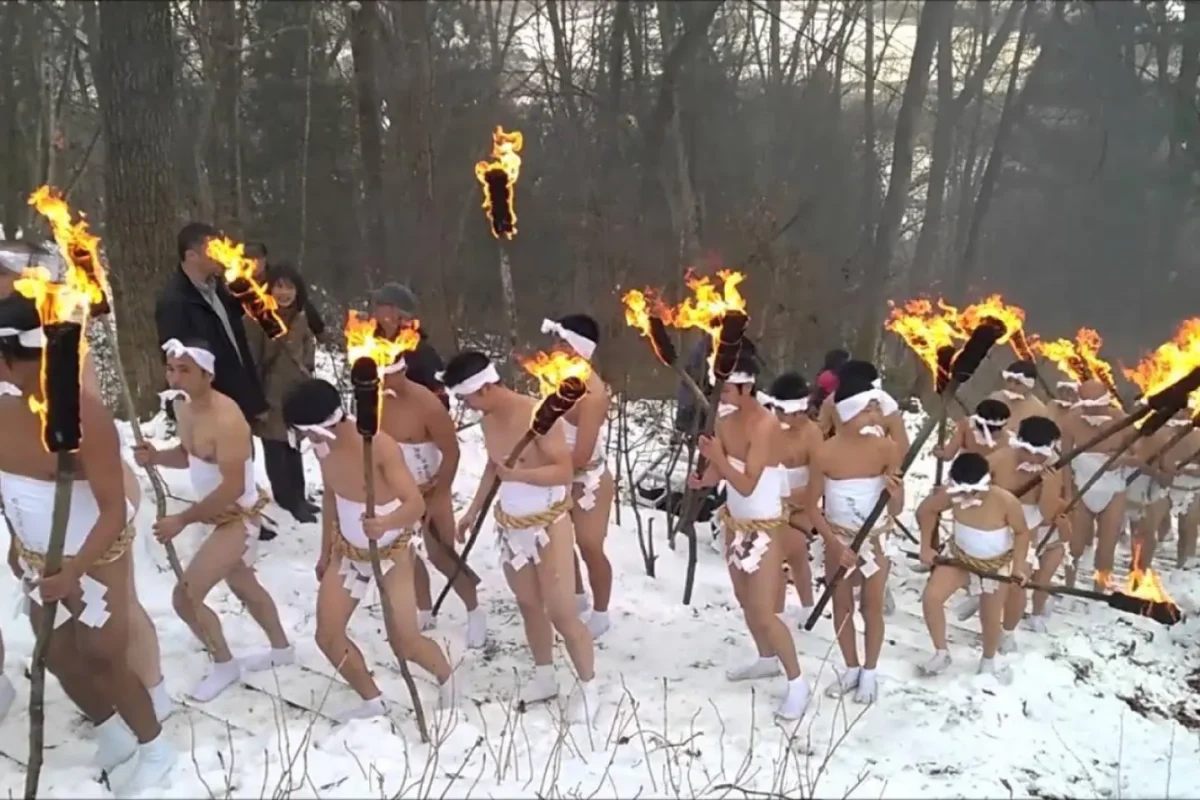
- Minimal traditional garments worn by participants to brave the freezing elements
- Specialized loincloths and traditional headbands identifying core ritual members
- Barefoot or straw-sandaled footing that heightens sensory connection to the cold earth
- Body purification routines involving cold water splashing prior to the mountain ascent
- Focused mental preparation fostering collective endurance and mutual support
Somin Bag & Its Meaning
The event finishes with the participants fighting over a pouch, a good luck bag. This sacred talisman represents ultimate prosperity, health, and divine protection for whichever household or individual manages to secure it. The bag contains powerful wooden charms and protective talismans consecrated by the shrine priests specifically for the new year.
Competing for the pouch is not merely a physical contest, but a sacred struggle reflecting the fierce battle to attain good fortune in life. The intense energy surrounding the bag elevates the emotional peak of the festival to an extraordinary level. Holding the prized talisman is believed to guarantee a year of abundance and safety.
Somin Bag Competition
The fight can last over an hour and is extremely fierce, many participants end up badly bruised up. Bodies collide in dense, swirling masses as dozens of determined individuals vie for control of the sacred talisman in the freezing night air. The raw intensity of the struggle demands immense physical stamina and unbreakable mental toughness from every competitor.
Enjoy Your Event Stress-Free with Japan Travelo
Do you know? Planning events, festivals, concerts, and cultural experiences in Japan can be overwhelming. Japan Travelo brings everything together in one place, helping you manage your itinerary, transport, and accommodation with ease—so you can enjoy Japan without the stress of planning.
Spectators watch in breathless silence and awe as the dynamic contest unfolds directly on the shrine grounds. The chaotic yet deeply traditional brawl represents the absolute climax of the winter purification cycle. Emerging victorious from this grueling test is considered a legendary feat of endurance.
Good Fortune, Health & Prosperity Traditions
The festival’s overarching purpose is to secure enduring health, agricultural abundance, and household safety for the community throughout the coming months. Every rigorous action, from the torchlit climb to the physical struggle, is offered as a petition for divine favor. Participants and villagers alike share a collective hope that the harsh austerities will ward off all future calamities.
Carrying home fragments of good fortune blessed during the rituals reinforces the social and spiritual fabric of Hanamaki. These time-honored traditions ensure that ancient agrarian prayers survive intact within a modernizing world. The promise of prosperity sustains the community’s dedication to this demanding winter rite year after year.
When & How Long
- Event Date: January 2nd 2027
- Event Duration: A one-day winter cultural observance culminating in overnight purification rituals
Visiting this event? Don’t miss out on these amazing activities and local experiences while you’re here.
Entry & Tickets
- How Tickets Are Sold: No admission tickets, pre-registration, or advance booking options are required to attend.
- Admission Type: Free Admission
- Ticket Pricing: Free Admission (Minimum price range: $0.00 USD, Maximum price range: $0.00 USD)
- Special Seating Options: No reserved seating arrangements, bleachers, or grandstands are provided for visitors.
- VIP Options: No VIP ticket tiers, exclusive fast-track passes, or paid private enclosures are offered.
How to Experience the Festival as a Visitor
Arriving well before evening allows travelers to acclimate to the freezing weather and secure a safe, unobstructed viewing spot near the shrine grounds. Observing the early mochi-making and priestly blessings provides essential context before the dramatic torchlit procession begins.
Visitors should remain warmly bundled and maintain a courteous distance as the high-energy events unfold into the night. Experiencing this raw, uncommercialized festival offers a rare window into authentic Japanese folk traditions.
Where It Takes Place
- City and Country: Hanamaki, Iwate Prefecture, Japan
- Venue Name: Koshio Shrine
- Google Maps Address: Dai 3 Chiwari-160 Yasawa, Hanamaki, Iwate 025-0011, Japan
Blessings from the Shinto Priest
The local Shinto priest performs sacred invocations over the gathered participants, sealing their commitment with solemn prayers. These formal blessings offer spiritual armor and divine favor as individuals prepare for the rigorous mountain climb ahead.
Receiving the priest’s purification wand wave completes the preliminary phase, transitioning the assembly from quiet reverence into active ritual participation. This vital step ensures that every climber enters the dark mountain trail spiritually protected.
Torch Procession Up the Mountain
After that, the participants walk up the mountain holding a torch and a blessing in their mouth to give them more determination. The glowing flames cut through the pitch-black winter night, creating a mesmerizing trail of fire against the dark forest backdrop. This dramatic ascent symbolizes the triumph of light and spiritual clarity over the darkness of ignorance and hardship.
As the procession winds higher along the narrow pathways, the synchronized footsteps and flickering lights forge a profound sense of unity among the climbers. The intense physical effort required to navigate the snowy slopes tests the endurance and mental focus of every single bearer. Reaching the upper shrine area marks a triumphant milestone before the final ceremonial climax begins.
- Glowing pine torches illuminating the steep, snow-covered mountain trails
- Sacred paper talismans held firmly between teeth to maintain silent concentration
- Rhythmic group movement upward through freezing night air and dense timberland
- Visual trails of fire winding along the darkened slopes of Mount Koshio
- Arrival at the summit platform where final purification rites take place
Event Contact Details
- Phone Number: 0198-31-2768
- Website: https://en.japantravel.com/iwate/hanamaki-souminsai/26563
Festival History & Somin Tradition
The Hanamaki Souminsai is an ancient and austere winter purification ritual deeply rooted in the traditional folklore of Iwate Prefecture. For centuries, local communities have gathered in the freezing depths of January to cleanse their spirits and pray for protection against misfortune. The festival serves as a powerful bridge connecting contemporary spectators with Japan’s historic mountain ascetic practices.
Passed down through generations, the event honors guardian deities and invokes spiritual resilience for the upcoming year. Participants endure harsh elements to fulfill sacred vows, preserving a rare cultural heritage that few modern travelers ever witness firsthand. The enduring legacy of the somin tradition highlights the profound spiritual bond between villagers and their sacred mountain landscape.
The observance carries profound symbolic weight, marking a spiritual reset for the entire community as winter reaches its peak. Elders pass down the intricate rules of the rituals to younger participants, ensuring the continuity of these historic customs. Witnessing this austere rite offers a humbling glimpse into Japan’s deep-seated spiritual relationship with nature and divinity.
Shinto Purification & Religious Significance
The core framework of the festival revolves around traditional Shinto concepts of spiritual cleansing, renewal, and warding off malevolent forces. By enduring physical hardships and fire-lit ascents, participants demonstrate absolute devotion and purity of intent. These sacred actions are believed to cleanse the soul of past transgressions and invite divine blessings.
Shrine grounds transform into sacred spaces where mortal concerns blend with ancient mythologies under the winter night sky. Priests officiate solemn rites that sanctify every stage of the journey, ensuring the spiritual integrity of the gathering remains uncompromised. The religious resonance of the event provides a vital psychological shield for the community against disease and disaster.
Koshio Shrine & Mount Koshio
- Historic shrine buildings nestled high on the forested slopes of Mount Koshio
- Sacred natural boundaries defining the holy precincts of the mountain sanctuary
- Panoramic winter vistas overlooking the snow-dusted valleys of Hanamaki City
- Ancient stone lanterns and torii gates marking the spiritual approach path
- Serene woodland settings that amplify the mystical atmosphere of winter rites
Mochi-Making & Opening Rituals
It’s a purification festival for the new year, it starts by making mochi (rice cake) and getting blessings from the local Shinto priest. The communal preparation of sacred rice cakes unites participants in a shared act of culinary devotion.
These freshly pounded offerings are dedicated to the altars before the main ceremonial movements begin, setting a harmonious and auspicious tone.
- Communal pounding of fresh rice to craft ceremonial New Year mochi
- Sacred altar presentations offering the newly made rice cakes to the resident deity
- Cleansing water rituals performed by attendees prior to entering the shrine core
- Initial gathering of participants within the main hall for spiritual grounding
Festival Atmosphere & Community Participation
- Packed crowds of passionate local residents and curious cultural researchers
- Electric tension filling the frosty night air as midnight climaxes approach
- Resonant chanting and encouraging shouts echoing across the mountain clearing
- Warm community hospitality offering hot drinks and comfort near the base facilities
- Shared sense of local pride uniting generations in the preservation of heritage
Best Viewing Points & Photography
- Lower shrine approach angles capturing the dramatic start of the torch procession
- Elevated vantage points along the mountain path framing lines of fire in the dark
- Safe perimeter spots around the main courtyard for observing the Somin bag struggle
- Long-exposure framing to capture the fluid motion of flickering torches at night
- Respectful distance positioning ensuring clear sightlines without blocking participants
- Wide lenses capturing the stark contrast of snow, fire, and historical architecture
Visitor Safety, Etiquette & What to Bring
- Wear heavy winter coats, thermal layers, hats, gloves, and insulated snow boots.
- Maintain a respectful distance from the active participants during intense physical struggles.
- Follow all safety barriers and instructions given by local shrine staff and security.
- Refrain from using intrusive flash photography that could blind or startle climbers.
- Keep personal electronic devices warm and protected against freezing temperatures.
- Carry cash currency for purchasing warm refreshments or local transit tickets.
- Pack a portable thermos with hot tea or water to combat the severe cold.
- Respect quiet sacred zones and avoid disrupting solemn prayer areas.
- Arrange private transportation or check rural bus schedules well in advance.
Video
Location
FAQ
What is the primary purpose of the Hanamaki Souminsai festival?
The festival functions as a rigorous New Year purification ritual designed to cleanse spirits and pray for good health and prosperity. Participants endure harsh winter conditions and physical competition to invoke divine protection.
When does the festival take place each year?
The traditional observance is held annually on January 2nd at Koshio Shrine on Mount Koshio in Iwate Prefecture. It marks an important historical milestone in the region's winter calendar.
What happens during the iconic torch procession?
Participants hike up the snowy mountain path holding burning torches and sacred paper talismans in their mouths. This silent, fire-lit ascent symbolizes spiritual clarity and the triumph of light over darkness.
What is the Somin bag competition?
Competitors engage in a fierce, physically demanding struggle in the freezing night air to capture a sacred good luck bag. Securing this prized talisman is believed to bring a year of immense prosperity and fortune.
How should visitors prepare for the freezing winter weather?
Attendees must wear heavy thermal layers, insulated snow boots, gloves, and hats to withstand sub-zero mountain temperatures. Bringing hand warmers and hot drinks is essential for staying comfortable during outdoor viewing.

Leave a Reply