
Overview
Kajiki’s Spider Fighting Festival, or Kumo Gassen, is a spider-fighting event that takes place in Kagoshima’s Aira city, in a tradition that dates back over 400 years. With arachnophobia, the fear of spiders, being commonly ranked as one of the biggest phobias of all time, alongside public speaking and enclosed spaces, Kajiki-cho is perhaps likely going to be the last place on Earth that arachnophobic Japanophiles will consider visiting. But perhaps the locals also hold the secret to dealing with such phobia.
Kumo Gassen, directly translated, means Spider Battles. The spiders, Argiope amoena, known in Japan as kogane-gumo or Kogane spider, are large, purple and yellow, and look capable of scaring any Muffet off her tuffet. The contenders are raised and trained in the homes of the owners and are affectionately known as Samurai Spiders. Some sources indicate that they are free to roam around the owners’ dwellings, although children and adults alike are very fond of their pets. Fighting two at a time in a round-robin-style tournament, the last spider standing is the winner.
This form of spider fighting is said to have been around as far back as the 16th century, dating from 1598 when samurai from the Shimazu clan reportedly used spider battles to pass time during the Korean invasions. When the men returned to Kagoshima, many continued to hold spider battles for money and amusement, making the activity popular among the general population, particularly in Kajiki. In 1914, townspeople decided to celebrate the practice by setting up the Kajiki Kumo Gassen in the format it still follows.
Enjoy Your Event Stress-Free with Japan Travelo
Do you know? Planning events, festivals, concerts, and cultural experiences in Japan can be overwhelming. Japan Travelo brings everything together in one place, helping you manage your itinerary, transport, and accommodation with ease—so you can enjoy Japan without the stress of planning.
Declared an Important Cultural Property by the Agency for Cultural Affairs in Japan, the festival is both a unique folk sport and a community gathering that showcases the gentle relationship between humans and spiders.
Cultural Significance & Origins
The spider fight itself has 400 years of history and is one of the most unusual folk traditions preserved in Japan. Its origin is traced to the Bunroku era, when Toyotomi Hideyoshi’s forces invaded Korea. Samurai from Satsuma, which is now Kagoshima, were stationed for long periods and reportedly held spider battles to relieve boredom and to gamble. The practice was known as Kumo Gassen and used Argiope spiders because of their large size, striking coloration, and docile nature toward humans.
The Kogane spider is remarkably docile and does not tend to bite large animals or humans even if handled roughly by children. This made it suitable as a pet and competitor. In Kajiki, which was the castle town of Yoshihiroko, the tradition was preserved by farming families who raised spiders in their homes, allowing them to roam freely to catch insects.
The modern festival was formalized in 1914 as a community event to celebrate this heritage. It was passed down from the time when Kajiki was a castle town to the present. Today it is divided into three divisions: the Superior Spider Competition which is a beauty contest judging spiders on size, color, and markings; the Spider Fighting Division with Youth and Adult Divisions; and the Championship Division.
The cultural significance extends beyond entertainment. In Kagoshima, spiders are considered beneficial creatures that protect crops from pests. Raising Samurai Spiders teaches children responsibility, respect for living creatures, and local history. The festival also reinforces community bonds, with children and adults participating together.
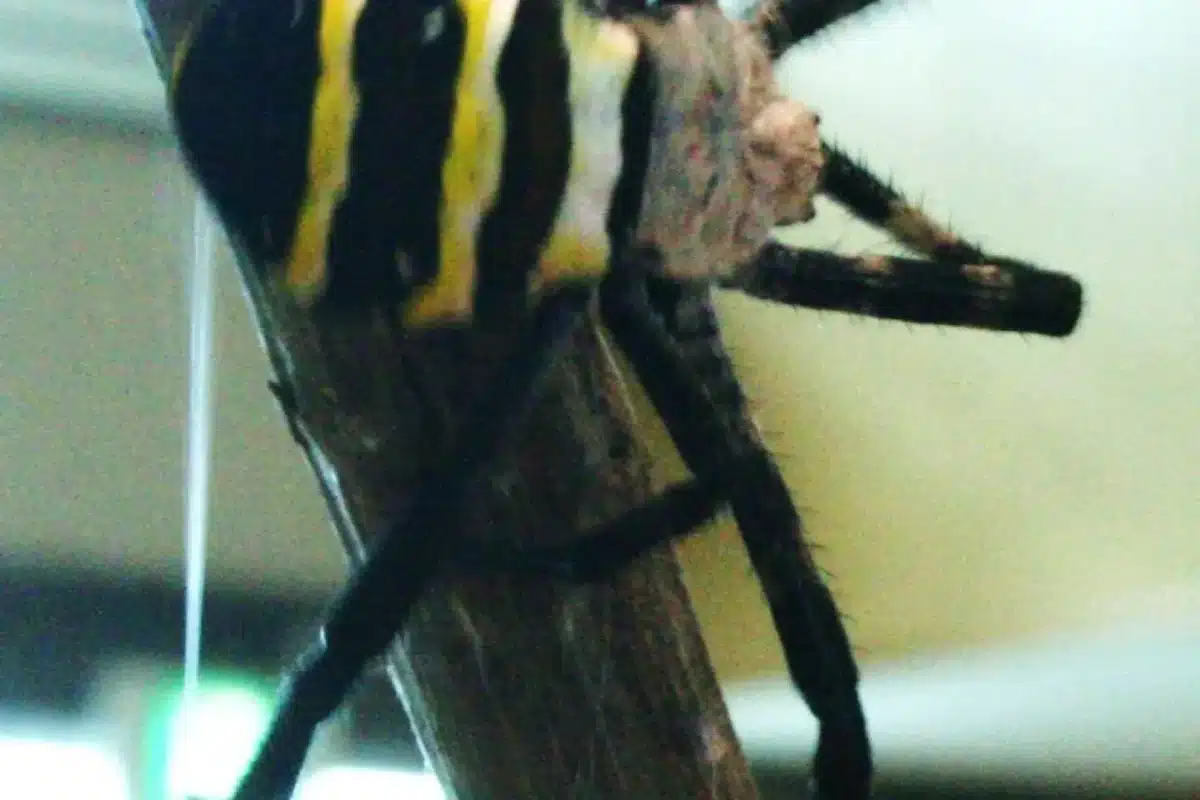
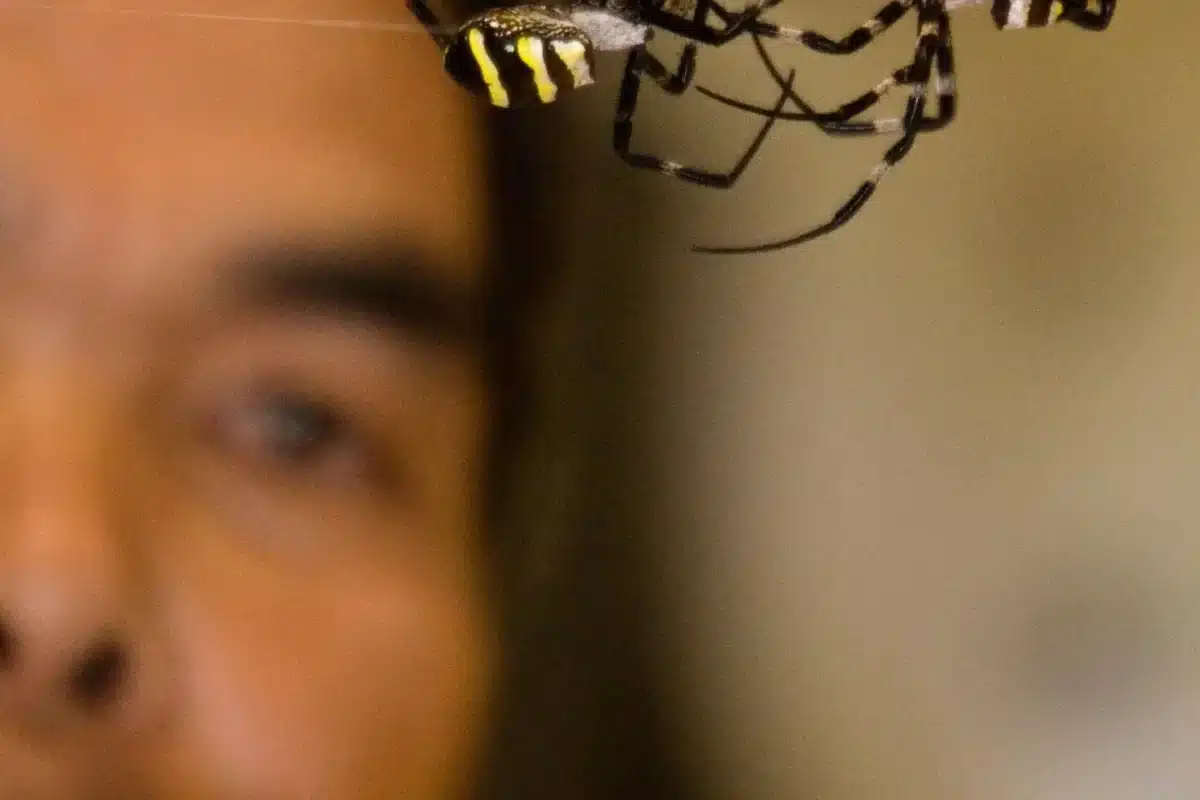
Affectionately named samurai spiders by organizers due to their fighting spirit, all are female and of the genus Argiope, a large orb-weaving species with distinctive yellow and black stripes. At the end of the afternoon, a panel of judges crowns the champions after a series of Kumo Gassen spider fights.
Traditions, Rituals & Customs
The festival follows precise traditional rules that prioritize spider safety and fair competition.
Spider Raising Tradition: Contenders are raised and trained in the homes of owners for weeks before the event. Owners catch wild Argiope amoena in grassy areas and hedgerows around Aira and Kajiki, then feed them flies and small insects to build strength. Some families allow spiders to roam around dwellings, although many keep them in small boxes with ventilation. Children are especially fond of their pets and handle them fearlessly.
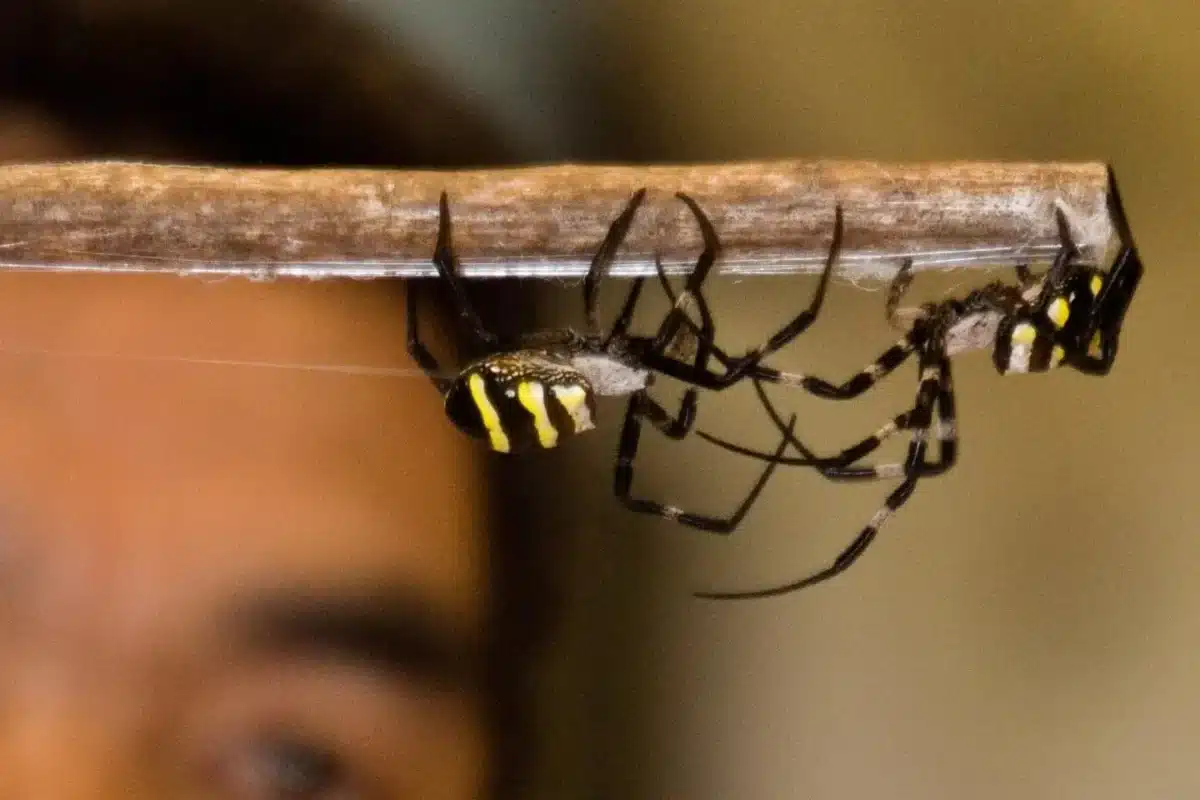
Competition Setup: One spider, designated as the Kamae or defensive position, is placed on the end of a stick, while another spider called the Shikake or offensive position is placed on the other end. The stick is a natural wooden rod approximately one meter long, held horizontally before referees on small raised platforms.
Winning Methods: There are three official methods of winning:
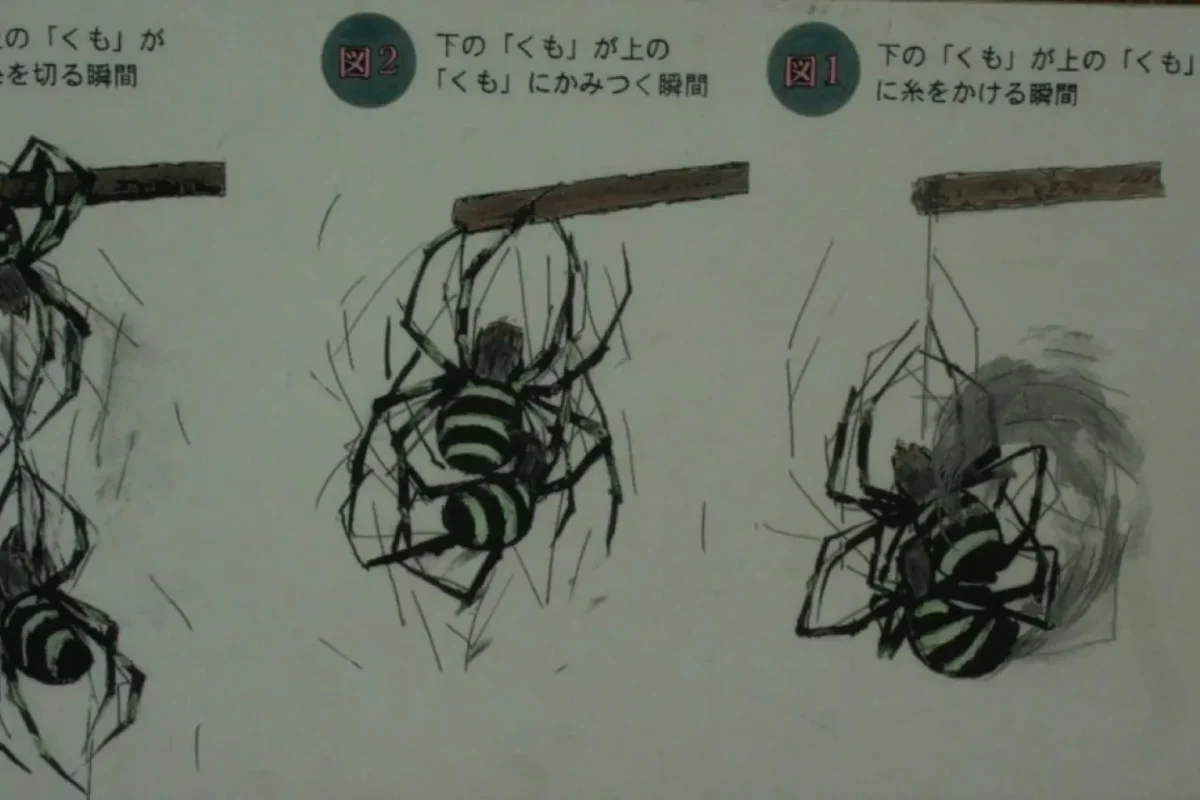
Bite Victory: The spider bites the rear end of the opponent first, judged by sharp-eyed referees watching closely.
Wrapping Victory: The spider spins a web on the other spider’s back or wraps the opponent in silk.
Thread Cutting Victory: When both have dropped down on threads to fight, one spider cuts off the thread or web of the hanging spider, causing opponent to fall.
Referee System: Many sharp-eyed referees sit around the crowded gymnasium, raised on small platforms with long sticks held horizontally before them. They watch the tiny and rapid fights closely and judge who bit first, who wrapped who, and who snipped whose line. Some fights are easier to call than others. If spiders get too aggressive, or if conversely they are just not that into fighting, referees use hands to either separate or coax spiders into action. Separating looks downright fool-hardy when first witnessed, but referees act on volunteer basis and look no more concerned than men handling caterpillars.
Non-Lethal Principle: Contrary to assumptions, spiders do not kill each other. They bite, but referee stops them before they hurt each other. Fights are stopped immediately after a clear win. All spiders are returned to owners after tournament, and many are released back into wild.
What to Expect at the Festival
Expect a lively, crowded indoor event that is far gentler and more humorous than the name Spider Fighting suggests.
The venue is the Aira City Hall Kajiki Branch Multipurpose Hall, also known as the Kajiki Welfare Centre and Amikake Square of Kajiki branch. The hall is packed with participants, families, and spectators sitting on floor around raised referee platforms. About half of owners are children, who demonstrate fearless handling of spiders, lovingly even. One group of eager boys may demonstrate how harmless spiders are by taking them out and allowing creatures to walk up arms, over necks, onto faces, and even right up over eyes onto heads.
The atmosphere is that of a school sports day combined with a pet show. Announcements are made in Japanese, with enthusiastic cheering from owner groups. Fights are rapid, often lasting only seconds, with referees calling winners quickly. When spiders are reluctant to fight, crowd laughs as referees coax them with gentle touches of sticks.
You will see the Superior Spider Competition beauty contest where spiders are judged on size, color vibrancy, and pattern. Large purple and yellow Argiope are displayed in clear cases.
Food stalls are limited inside hall, but outside there are small stalls selling Kagoshima snacks. The event is educational, with displays about spider species and history.
So do they just throw some spiders in a box and make them fight to death? That kind of sick question is quickly dispelled. There was and is much more to it, with care, affection, and respect for creatures evident throughout. At end of day, visitors leave satisfied with new-found appreciation for little creatures, certainly not the feeling expected from a fighting venue.
Date & Schedule
Event Dates: Mid – Late June 2027 (Dates TBD)
Typical Schedule Based on Previous Editions:
Morning Setup: 9:00 AM to 10:00 AM: Registration of spiders at Aira City Hall Kajiki Branch Multipurpose Hall. Owners bring spiders in small boxes, spiders measured and categorized. Beauty contest judging for Superior Spider Competition begins.
Opening Ceremony: 10:00 AM to 10:30 AM: Welcome by Aira City mayor and Kajiki Spider Battle Preservation Society. Explanation of rules and introduction of referees.
Fighting Tournament:
10:30 AM to 12:00 PM: Youth Division preliminary rounds. Children compete with their raised spiders in round-robin style.
12:00 PM to 1:00 PM: Lunch break. Attendees can visit outside food stalls and spider display area.
1:00 PM to 3:00 PM: Adult Division and Championship Division. Round-robin and knockout rounds. Referees on platforms judge bite, wrap, and thread cut victories.
3:00 PM to 3:30 PM: Finals and crowning of champions. Panel of judges crowns champions after series of Kumo Gassen spider fights. Awards presented for fighting champions and beauty contest winners.
Closing: 3:30 PM to 4:00 PM: Release of some spiders back to wild, closing remarks.
Please note final schedule is announced by Aira City and Kajiki Branch closer to event. Event may be cancelled in case of public health concerns as occurred in previous years over fear of spread of swine flu.
Visiting this event? Don’t miss out on these amazing activities and local experiences while you’re here.
Main Events & Programme
Superior Spider Competition Beauty Contest: Judging of Argiope amoena spiders on size, color, pattern clarity, and health. Spiders are displayed in clear containers. Judges include local elders and entomology enthusiasts. Winners receive trophies and recognition.
Youth Division Spider Fighting: Children from elementary to junior high school compete with their pet spiders. This division emphasizes education and participation over winning, with all children receiving certificates. Owners handle spiders with remarkable confidence, allowing them to walk on faces.
Adult Division Spider Fighting: Adult owners compete in more competitive matches. Spiders fight two at a time in round-robin-style tournament, last spider standing is winner. Matches use Kamae and Shikake positioning on sticks.
Championship Division: Winners from Youth and Adult divisions compete for overall champion title. Final matches are held on central raised platform with all referees observing.
Referee Demonstrations: Sharp-eyed referees demonstrate judging techniques including how to spot first bite, wrapping, and thread snipping. Explanations of how to safely separate spiders using hands.
Educational Displays: Displays about Argiope amoena biology, history of Kumo Gassen dating back 400 years, and preservation efforts. Information on why spiders are called Samurai Spiders and their role in Kagoshima culture.
Community Interaction: After tournament, owners allow visitors to hold spiders under supervision, demonstrating docile nature. Children show how spiders walk up arms and over necks without fear.
Traditional Dress, Arts & Crafts
Owner Casual Dress: Unlike many Japanese festivals, there is no formal traditional dress required. Participants wear casual clothes, with many children in school uniforms or casual summer wear. Some elderly participants wear traditional samue work clothes.
Spider Display Craft: Spiders are kept in handmade wooden boxes with washi paper ventilation screens, crafted by owners. Some boxes are decorated with calligraphy of spider names, often samurai-inspired names.
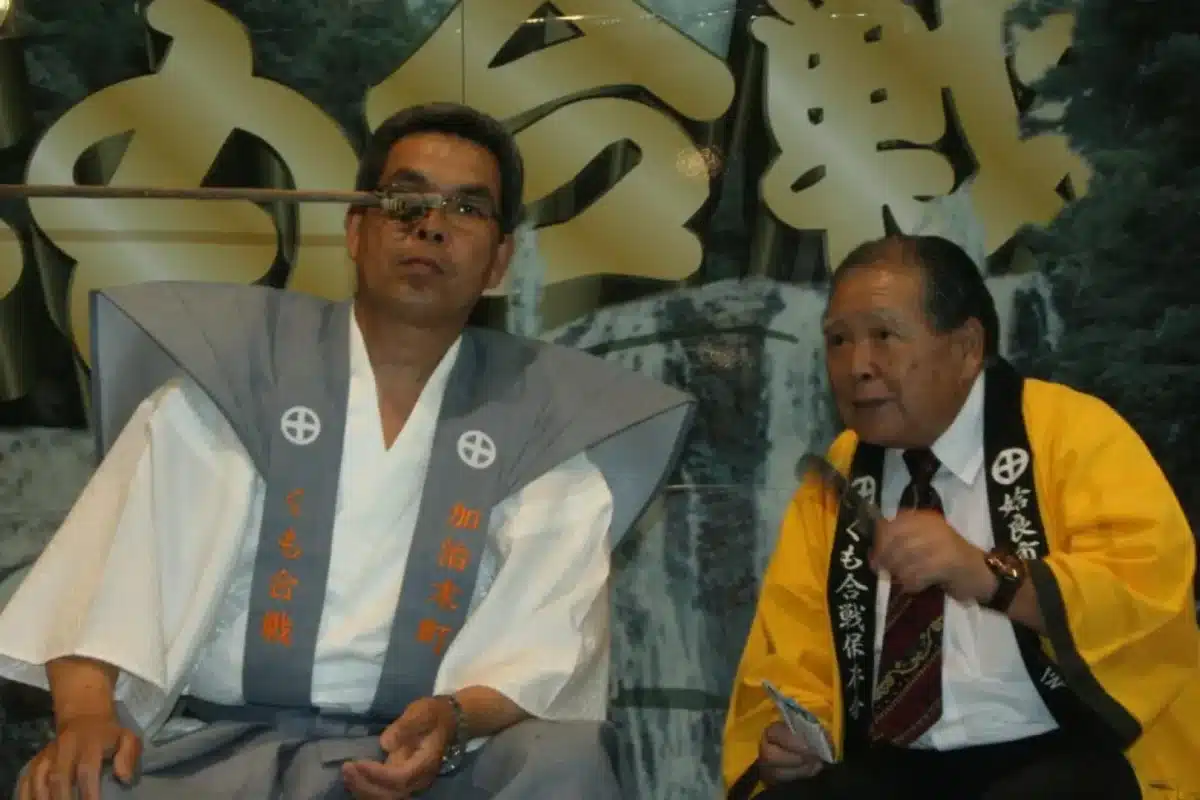
Referee Happi Coats: Referees wear matching happi coats with Kumo Gassen logo and Kajiki town crest.
Trophy Craft: Trophies for winners include small spider figurines carved from local camphor wood and certificates with sumi-e ink paintings of Argiope spiders.
Educational Art: Children create drawings and origami of spiders displayed around hall. Some schools produce posters about spider protection and beneficial insect role.
Preservation Society Banners: Traditional nobori banners with spider motifs and calligraphy reading Kumo Gassen hang around venue.
Traditional Food & Local Specialties
Festival Snacks: Outside the multipurpose hall, small stalls sell Kagoshima specialties including satsuma-age fried fish cakes for approximately 3 USD to 4 USD, karukan steamed yam cakes for approximately 2 USD to 3 USD, and imo-jochu sweet potato shochu tasting for approximately 3 USD to 5 USD.
Aira and Kajiki Local Foods: The Aira area is known for Kajiki beef, black pork from Kagoshima, and fresh vegetables from Kirishima foothills. Local restaurants near Kajiki Station serve Kajiki udon noodles for approximately 6 USD to 8 USD, satsuma ramen for approximately 7 USD to 9 USD, and buri yellowtail sashimi.
Spider Themed Sweets: Some stalls sell spider-shaped candies and cookies as novelty souvenirs for approximately 2 USD to 4 USD.
School Lunch Style: During lunch break, many families bring bento boxes. Convenience stores near Kajiki Station sell onigiri for approximately 1 USD to 2 USD and cold drinks.
Tea: Kagoshima is famous for green tea, particularly Chiran tea. Tea tasting stalls offer free samples and sales of tea packs for approximately 5 USD to 10 USD.
Location & Festival Areas
Primary Venue: Aira City Hall Kajiki Branch Multipurpose Hall, also known as Kajiki Welfare Centre and Amikake Square of Kajiki Branch, Kajiki-cho, Aira City, Kagoshima Prefecture 899-5241, Japan. The hall is located between Kagoshima city and Kagoshima Airport.
Venue Layout:
Main Hall: Large gymnasium-style hall with raised referee platforms arranged in circle, spectator seating on floor mats around platforms, registration tables at entrance, and beauty contest display tables along walls.
Outdoor Area: Small plaza outside hall with food stalls, spider catching demonstration area, and parking.
Display Corner: Educational display area with posters about spider history and species information.
Access Point: The Kajiki Welfare Centre is a 10 minute walk west of Kajiki Station on JR Nippo Main Line.
Town Context: Kajiki-cho is a former castle town of Yoshihiroko, now part of Aira City, located in central Kagoshima Prefecture. The town retains historic streets and is gateway to Kirishima mountain range.
Getting to the Festival
By Train: Take JR Nippo Main Line from Kagoshima-Chuo Station to Kajiki Station, approximately 30 minutes, cost approximately 3 USD to 5 USD. From Kajiki Station, walk west for 10 minutes to Kajiki Welfare Centre. Signs for Kumo Gassen are posted on festival day. From Miyazaki, take JR Nippo Line to Kajiki, approximately 2 hours.
From Kagoshima Airport: Kajiki is between Kagoshima city and Kagoshima Airport. From airport, take bus to Kajiki Station, approximately 20 minutes, cost approximately 3 USD to 4 USD, or taxi for approximately 15 USD to 20 USD.
By Car: Take Kyushu Expressway to Kajiki Interchange, then Route 10 to Kajiki. Parking at Kajiki Branch City Hall lot is free but limited, approximately 50 spaces. Additional temporary parking at nearby elementary school with free shuttle. Parking fills by 9:30 AM.
By Bus: Kagoshima Kotsu buses from Kagoshima City to Kajiki run hourly, approximately 50 minutes, cost approximately 4 USD to 6 USD.
On Foot: Venue is walkable from Kajiki Station through quiet residential streets.
Accessibility: Multipurpose hall is ground floor with flat access, wheelchair accessible. Accessible restrooms available in city hall building.
Where to Stay Nearby
Aira and Kajiki are small cities, so most visitors stay in Kagoshima City or near airport.
Kagoshima City Hotels: Business hotels such as APA Hotel Kagoshima-Chuo, Hotel New Nishino, and JR Kyushu Hotel Kagoshima offer rooms for approximately 60 USD to 100 USD per night and are 30 minutes train ride to Kajiki.
Kagoshima Airport Area: Hotels near airport including Airside Hotel Kagoshima and Hotel Kajiki offer rooms for approximately 70 USD to 110 USD per night, 15 to 20 minutes to venue.
Aira City Ryokan: Small ryokans and business hotels such as Hotel Kajiki and Aira City Hotel charge approximately 50 USD to 80 USD per night and are within walking or short drive to venue.
Kirishima Onsen Area: Hot spring ryokans in Kirishima, approximately 30 minutes by car from Kajiki, offer rooms with onsen baths for approximately 90 USD to 150 USD per night including dinner, popular for combining with festival.
Budget Options: Guesthouses and hostels in Kagoshima City such as Guesthouse Noka and Kago Hostel charge approximately 25 USD to 45 USD per night.
Early booking not as critical as larger festivals, but recommended if combining with Kirishima travel.
What Visitors Can Participate In
Spider Handling Experience: After tournament, owners, about half of them children, demonstrate how harmless spiders are and allow visitors to hold spiders under supervision. You can experience spiders walking up arms, over necks, and onto faces. Participation is voluntary and supervised.
Beauty Contest Voting: Visitors can vote in audience favorite category for Superior Spider Competition, judging spiders on appearance.
Educational Workshops: Learn how to catch and raise Argiope amoena spiders, including feeding, housing, and training techniques. Preservation Society members give talks on spider care.
Referee Experience: Under supervision, visitors can try holding judging stick and observing fight, learning how to spot bite, wrap, and thread cut victories.
Photography: Photography of spiders and fights is allowed without flash. Many visitors photograph children with spiders on faces. Ask permission before photographing children.
Question and Answer with Owners: Ask owners, especially children, about their love for spiders. Many owners proudly explain how they raise spiders freely roaming in homes.
Food Tasting: Participate in tasting Kagoshima specialties outside hall.
Things to Do Before or After the Festival
Kajiki Castle Ruins: Visit the small ruins of Kajiki Castle, former residence of Shimazu clan branch, located on hill near town center, 15 minutes walk from venue. Free access with views over Aira plain.
Kirishima Shrine: Take a day trip to Kirishima Jingu Shrine, one of Kagoshima’s most important Shinto shrines, located in mountains approximately 40 minutes by car from Kajiki, dedicated to Ninigi no Mikoto.
Kagoshima City: Explore Kagoshima City attractions including Sengan-en Garden, Sakurajima volcano ferry, and Museum of the Meiji Restoration. Sengan-en admission approximately 8 USD to 10 USD.
Sakurajima Volcano: Take ferry from Kagoshima Port to Sakurajima, an active volcano with hiking trails and hot springs, ferry cost approximately 2 USD to 3 USD.
Kagoshima Airport Area Shopping: Visit nearby shopping areas for Kagoshima souvenirs including Satsuma-yaki pottery, shochu, and brown sugar sweets.
Spider Habitat Walk: Walk around Kajiki’s grassy areas and hedgerows where Argiope amoena spiders are found in wild, especially along riverbanks and rice paddy margins.
Local Food & Restaurants
Near Venue: Small family-run restaurants near Kajiki Station serve Kagoshima specialties.
Kagoshima Black Pork: Restaurants such as Kurobuta no Yakata serve Kagoshima black pork tonkatsu for approximately 10 USD to 15 USD, shabu-shabu for approximately 15 USD to 20 USD per person.
Kajiki Local Eateries: Local eateries serve Kajiki ramen with thick pork broth for approximately 7 USD to 9 USD, udon with satsuma-age for approximately 6 USD to 8 USD, and bento boxes for approximately 5 USD to 7 USD.
Satsuma Cuisine: Try keihan chicken rice soup, a Kagoshima specialty, for approximately 8 USD to 10 USD, and satsuma-age.
Cafes: Cafes near Kajiki Station serve coffee and karukan cakes for approximately 3 USD to 5 USD.
Convenience Stores: Lawson and FamilyMart near Kajiki Station sell onigiri for approximately 1 USD to 2 USD, cold drinks, and Kagoshima green tea.
Izakaya: Evening izakaya near Kajiki Station serve imo-jochu sweet potato shochu for approximately 4 USD to 6 USD per glass and grilled fish.
Ticket Information & Access
Festival Admission: The Kajiki Spider Fighting Festival is free to enter and watch. No tickets are required to enter Aira City Hall Kajiki Branch Multipurpose Hall and observe fights, beauty contest, and educational displays. This free access has been maintained throughout its history as a community event.
Spider Registration: Owners who wish to enter spiders must register spiders on morning of event at registration desk. Registration is free and open to youth and adult divisions. Spiders must be female Argiope amoena caught in wild, not purchased.
Seating: Seating is on floor mats around referee platforms, first-come first-served. Arriving by 9:30 AM secures good viewing spot. Crowded gymnasium fills quickly with approximately 200 to 300 spectators.
Parking: Parking at Kajiki Branch City Hall lot is free. Temporary parking at nearby elementary school is free with shuttle.
Food and Drinks: Food stalls outside hall sell snacks for approximately 2 USD to 5 USD per item. Budget approximately 10 USD to 15 USD for lunch.
Transportation: Train from Kagoshima-Chuo to Kajiki costs approximately 3 USD to 5 USD one way. Bus from Kagoshima Airport to Kajiki costs approximately 3 USD to 4 USD.
Souvenirs: Small spider-themed souvenirs and Kagoshima products sold for approximately 2 USD to 10 USD.
Official Event Information
The festival is organized by Aira City, Kajiki Branch, and Kajiki Kumo Gassen Preservation Society.
Official Website URL as text: https://en.japantravel.com/kagoshima/kajiki-spider-fighting-festival-kumo-gassen/1525
Aira City Official Tourism URL as text: https://www.city.aira.lg.jp/
Kagoshima Visitors Guide Spider Festival URL as text: https://www.kagoshima-kankou.com/guide/10755
Location Address as text: Aira City Hall Kajiki Branch Multipurpose Hall, 2648 Kajiki-cho, Aira City, Kagoshima Prefecture 899-5241, Japan, also referred to as Kajiki Welfare Centre and Amikake Square
Phone Number as text: 0995-66-3145 Aira City Hall Kajiki Branch, and 0995-62-2111 Aira City main number
Access Information: 10 minute walk west of Kajiki Station on JR Nippo Main Line. Between Kagoshima city and Kagoshima Airport.
Preservation Society: Kajiki Kumo Gassen Preservation Society maintains tradition and provides referees.
Video
Location
FAQ
Are the spiders harmed or killed during the Kumo Gassen fights?
No, spiders are not killed and are rarely hurt, as sharp-eyed referees watch fights closely and stop them immediately after a clear bite, wrap, or thread cut victory. Referees use hands to separate spiders if they become too aggressive, and all spiders are returned to owners after tournament with many released back into wild. The festival is judged as a beauty and skill contest rather than a lethal battle.
Can visitors with arachnophobia attend and is it safe to handle the Samurai Spiders?
The festival can be challenging for those with strong arachnophobia as large purple and yellow Argiope spiders are displayed and handled openly. However, the Kogane spider is remarkably docile and does not tend to bite humans even when handled roughly by children, making it safe under supervision. Owners demonstrate harmlessness by letting spiders walk over faces and necks, but visitors can observe from distance without handling if preferred.
How do I enter a spider in the competition and what are the rules for winning?
Owners register spiders for free on the morning of the event at the multipurpose hall, with divisions for youth and adults, and spiders must be female Argiope amoena caught in wild. Winning methods are first bite to rear end of opponent, wrapping opponent in web, or cutting opponent's hanging thread when both drop on threads. Fights are conducted on a stick with one spider designated Kamae defensive and other Shikake offensive, judged by referees on raised platforms.
Is there an admission fee and how crowded does the venue get?
The festival is free to enter and watch with no tickets required, maintaining free community access throughout its history. The crowded gymnasium at Kajiki Welfare Centre holds approximately two to three hundred spectators sitting on floor mats around referee platforms, and fills quickly by mid-morning. Arriving by nine thirty in the morning secures good viewing, and free parking at city hall lot also fills early.
What else is there to do in Kajiki and Aira City around the festival?
Kajiki was the castle town of Yoshihiroko and offers Kajiki Castle ruins within fifteen minutes walk from venue, plus grassy areas where Argiope spiders live in wild along riverbanks. Day trips to Kirishima Jingu Shrine, Sakurajima volcano via ferry from Kagoshima, and Sengan-en Garden in Kagoshima City are popular. Local restaurants serve Kagoshima black pork, Kajiki ramen, and Chiran green tea, making it a good base for exploring central Kagoshima.

Leave a Reply