
Overview
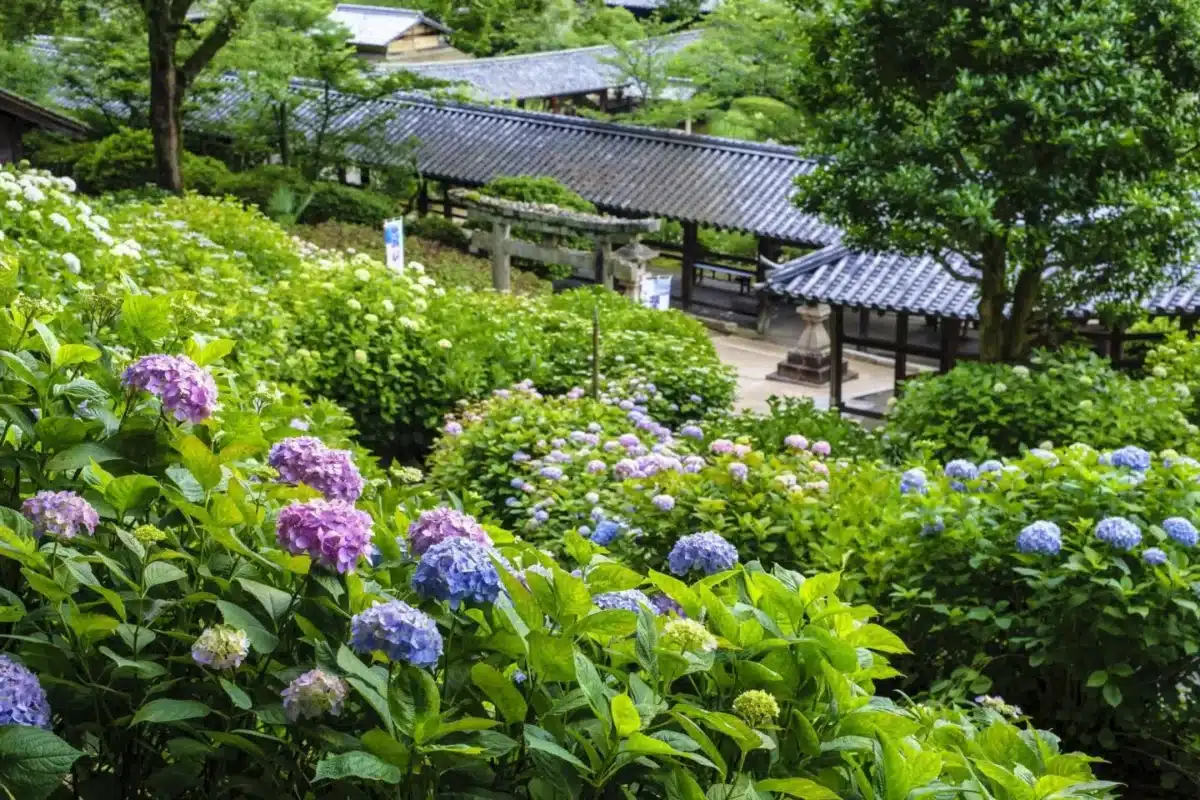
Kibitsu Shrine Hydrangea Festival is an exquisite seasonal celebration hosted within the historic and sprawling grounds of Kibitsu Shrine in Okayama. This sacred site, famously linked to the legendary Japanese folk tale of Momotaro, transforms into a vibrant tapestry of color each summer as approximately 1,500 hydrangea bushes bloom in brilliant shades of cerulean, soft pink, and deep purple. The festival offers a profound connection to Japan’s natural beauty, providing a serene environment where the ancient wooden architecture of the shrine harmonizes perfectly with the delicate, rain-kissed petals of the hydrangeas.
As visitors traverse the long, iconic wooden corridor of the shrine—a designated National Treasure—they are greeted by an immersive floral display that feels both timeless and ethereal. The festival celebrates the arrival of the rainy season, a time when the foliage is at its most lush and the shrine’s atmosphere becomes particularly contemplative. The gentle rustle of leaves, combined with the soft scent of damp earth and blooming flowers, creates an enchanting sensory experience that draws those seeking a peaceful retreat from the bustling pace of modern city life.
The festival serves as a cultural bridge, inviting both locals and travelers to partake in a tradition that highlights the deep respect for nature inherent in Japanese religious practices. Whether you are exploring the hidden nooks of the temple gardens, admiring the craftsmanship of the century-old halls, or simply pausing to appreciate the floral artistry, the festival offers an authentic glimpse into the spiritual and aesthetic heritage of the Bitchu region. It is a heartfelt, community-focused gathering that captures the fleeting, fragile beauty of summer in Japan.
Enjoy Your Event Stress-Free with Japan Travelo
Do you know? Planning events, festivals, concerts, and cultural experiences in Japan can be overwhelming. Japan Travelo brings everything together in one place, helping you manage your itinerary, transport, and accommodation with ease—so you can enjoy Japan without the stress of planning.
Event Highlights
- Admire a stunning collection of approximately 1,500 hydrangea plants in full bloom, showcasing a diverse spectrum of blue, pink, and purple hues.
- Experience the historic ambiance of Kibitsu Shrine, walking through its famous 360-meter-long wooden corridor adorned with seasonal floral beauty.
- Immerse yourself in the legends of the Momotaro folk tale while exploring the sacred grounds that served as the inspiration for this famous story.
- Participate in a tranquil, authentic Japanese cultural event that emphasizes quiet reflection and appreciation of nature in a historic setting.
Why Attend
This festival is perfectly curated for those seeking a genuine, unvarnished connection to Japanese spiritual heritage within an accessible and visually captivating outdoor environment. Attending provides an extraordinary opportunity to step away from the conventional tourist circuit and instead participate directly in a localized tradition that prioritizes collective memory, seasonal appreciation, and the quiet joy of garden aesthetics.
The gathering is ideally suited for families, cultural aficionados, and photographers eager to capture the sublime, moody beauty of a Japanese summer. The myriad benefits of attending include experiencing the welcoming, serene hospitality of the local Okayama community, enjoying the refreshing, verdant air of the shrine grounds, and gaining a comprehensive, intellectual, and emotional understanding of the deep-seated significance behind regional shrine customs.
Date & Duration:
- Event Date: Late June 2027
- Event Duration: Two days
Visiting this event? Don’t miss out on these amazing activities and local experiences while you’re here.
Ticket Information:
- How Tickets Are Sold: This event is open to the public, and no advance registration or formal tickets are required for entry.
- Admission Type: This is a free-access public event, welcoming all visitors on a first-come, first-served basis.
- Ticket Pricing: Free Admission
- Special Seating Options: There are no reserved seating areas as the event encourages fluid, meditative walking through the garden paths.
- VIP Options: No VIP packages or premium seating are available for this humble, community-oriented cultural celebration.
Venue / Location:
- City and Country: Okayama, Japan
- Venue Name: Kibitsu Shrine
- Google Maps Address: 931 Kibitsu, Kita Ward, Okayama, 701-1341, Japan
Contact Information:
- Official Website: https://en.japantravel.com/okayama/kibitsu-shrine-hydrangea-festival/71621
Accommodation Options:
Kibitsu Shrine is conveniently located within the greater Okayama metropolitan area, providing a wide array of lodging alternatives that cater to every type of traveler. Staying in central Okayama City grants visitors the luxury of proximity to the city’s major transportation hubs, allowing for an effortless commute to the shrine via the local JR Kibi line.
For those who prefer a more localized experience, there are several charming guesthouses and boutique hotels nestled within Okayama’s historic quarters. These accommodations offer a peaceful atmosphere that mirrors the tranquility of the shrine itself, while still placing guests within easy reach of the city’s vibrant culinary scene and renowned shopping districts.
Getting There:
- Nearest Airport: Okayama Momotaro Airport is the closest major transit hub, located approximately 15 kilometers from the shrine.
- Nearest Train/Metro Station: Kibitsu Station on the JR Kibi Line is the closest stop, located just a 10-minute walk from the shrine entrance.
- Bus Routes or Public Transport Options: Local bus services connect the city center to the shrine area, providing a convenient alternative for those traveling without a vehicle.
- Parking Availability: On-site parking is available for festival visitors, with the first 20 minutes provided at no cost.
- Directions by Car: Accessible via the Okayama Expressway with exit points at the Okayama Soja IC or the Sanyo Expressway via the Okayama IC.
Dining Recommendations
Breakfast Recommendations:
- Traditional coffee houses near Okayama Station offer a variety of classic morning sets including toast, eggs, and freshly brewed coffee.
- Local bakeries in the city center provide an array of artisanal Japanese breads and seasonal pastries perfect for a light morning meal.
- Upscale hotel dining rooms offer comprehensive breakfast buffets featuring both Western and traditional Japanese morning delicacies.
Lunch Recommendations:
- Casual eateries near Kibitsu Station specialize in udon noodles, a regional staple that is both comforting and authentic.
- Boutique cafes in the downtown area feature seasonal set menus that highlight locally sourced vegetables and fresh seafood from the Seto Inland Sea.
- Noodle shops throughout Okayama offer a variety of regional ramen styles that are highly regarded for their rich, savory broth profiles.
Dinner Recommendations:
- Izakaya establishments in central Okayama offer a lively atmosphere to enjoy a wide variety of small plates and regional sake.
- Upscale dining venues near the Okayama Korakuen Garden provide elegant evening meals with serene views of the city’s historic landscape.
- Family-friendly restaurants serve a diverse selection of Japanese-style western dishes and set meals perfect for groups and travelers.
Local Specialties to Try:
- Okayama’s famous white peaches, which are widely considered the finest in Japan and are often served in seasonal desserts.
- Demi-glace katsudon, a unique regional variation of the traditional pork cutlet bowl topped with a rich, savory demi-glace sauce.
- Fresh seafood from the Seto Inland Sea, including local favorites like mackerel and octopus, prepared in a variety of traditional styles.
What is this event?
The Kibitsu Shrine Hydrangea Festival is an annual floral celebration held at one of Okayama’s most historic and culturally significant sites. It highlights the blooming of 1,500 hydrangea bushes that adorn the shrine grounds during the peak of the Japanese rainy season.
The event serves as a contemplative space for visitors to witness the intersection of nature and spirituality. It is a cherished seasonal tradition that marks the transition of the landscape into lush, vibrant shades of blue and purple, inviting quiet appreciation from all who attend.
Why is it popular?
This festival is popular because it provides a serene, picturesque backdrop that is deeply rooted in local folklore and history. The setting at Kibitsu Shrine—a National Treasure—gives the simple act of flower viewing a majestic and historical quality that is rare to find elsewhere.
It is also highly valued for its accessibility and the relaxed, unhurried pace it encourages among visitors. The combination of the shrine’s iconic wooden corridors, the legend of Momotaro, and the ephemeral beauty of the hydrangeas creates a uniquely memorable experience for nature lovers and history enthusiasts alike.
Tips before you go
- Wear comfortable, non-slip walking shoes, as the shrine grounds can become damp and slightly uneven during the rainy season.
- Bring a portable umbrella or a lightweight raincoat, as intermittent showers are characteristic of the season and common during the festival.
- Aim to visit in the early morning to avoid the midday heat and to capture the best lighting for your photographs.
- Pack a small bag for your belongings to keep your hands free for using a camera or umbrella while navigating the corridors.
- Check the local weather forecast regularly leading up to the festival, as the bloom peak can shift depending on the specific rainfall patterns of the year.
Tips for First-Time Visitors
- Dedicate time to walking the full length of the 360-meter wooden corridor, as it offers the most iconic perspectives of the shrine’s architecture and the surrounding gardens.
- Take a moment to visit the Okamaden, or kettle hall, which is steeped in legends and adds a layer of mystical intrigue to your exploration of the shrine grounds.
- Engage with the peaceful atmosphere by keeping a quiet tone, as the shrine remains a functioning place of worship throughout the duration of the festival.
- Utilize the local train connections between Okayama Station and Kibitsu Station, as this is the most reliable and scenic way to reach the site without traffic concerns.
- Do not feel rushed; the beauty of the hydrangeas is best appreciated through slow, deliberate observation rather than hurried sightseeing.
- Be sure to explore the various varieties of hydrangeas planted throughout the gardens, as the diversity of shapes and colors is a highlight of the shrine’s horticultural efforts.
Attendee Experiences:
- The sight of the hydrangeas lining the ancient wooden corridor was absolutely breathtaking and unlike anything else I have seen in Japan.
- It was a very peaceful and meditative experience to walk through the shrine grounds during the soft morning rain.
- The historical atmosphere combined with the colorful flowers made for some of the most memorable photos of my entire trip.
Location
FAQ
What is the significance of the hydrangeas at Kibitsu Shrine?
The hydrangeas are planted throughout the sacred grounds to celebrate the arrival of the summer season and the beauty of the rainy period in Japan. They symbolize the fleeting transitions of nature, and their vibrant colors are considered a beautiful offering to the serene, historic atmosphere of the shrine.
Is there a specific dress code for visiting the shrine during the festival?
While there is no strict dress code, it is recommended to wear modest and respectful clothing appropriate for a religious site. Comfortable footwear is essential due to the nature of the shrine's walkways, and a light jacket or rain gear is advisable due to the potential for summer showers.
Can I participate in any traditional activities while visiting the festival?
Yes, many visitors choose to participate in simple acts of prayer or fortune-telling, such as drawing an omikuji, which are available on the shrine grounds. Additionally, some guests enjoy relaxing with matcha and traditional sweets, which are sometimes offered as a modest, authentic treat during the festival period.
Are the grounds accessible for visitors with limited mobility?
While the shrine is famous for its long wooden corridor, some parts of the garden may involve steps or uneven gravel paths that can be challenging for those with limited mobility. It is recommended to contact the shrine office in advance to inquire about the most accessible routes and any available assistance for your visit.
When is the best time of day to avoid large crowds?
The best time to experience the festival in tranquility is during the early morning hours, shortly after the shrine gates open. Visiting during weekdays is also highly recommended, as the weekends often see a higher number of local families and tour groups arriving to enjoy the flowers.

Leave a Reply