
Overview
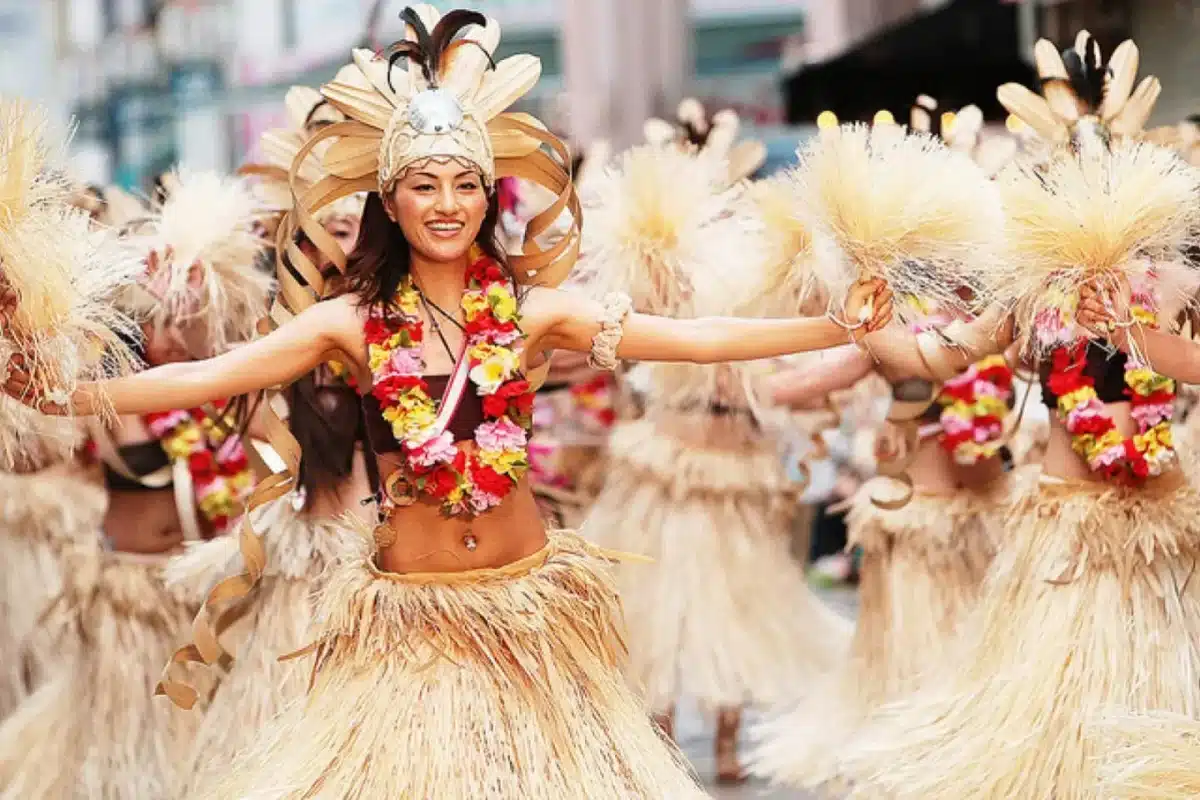
The Kochi Yosakoi Festival is one of Japan’s most energetic, colorful, and irreverent dance festivals, transforming the entire city of Kochi on Shikoku Island into a massive open-air stage. What began as a local revitalization effort has grown into the birthplace of a nationwide cultural movement, with over 18,000 dancers across nearly 200 teams performing at once. It is loud, gaudy, cheerful, ever-changing, and deeply representative of the spirit of Kochi.
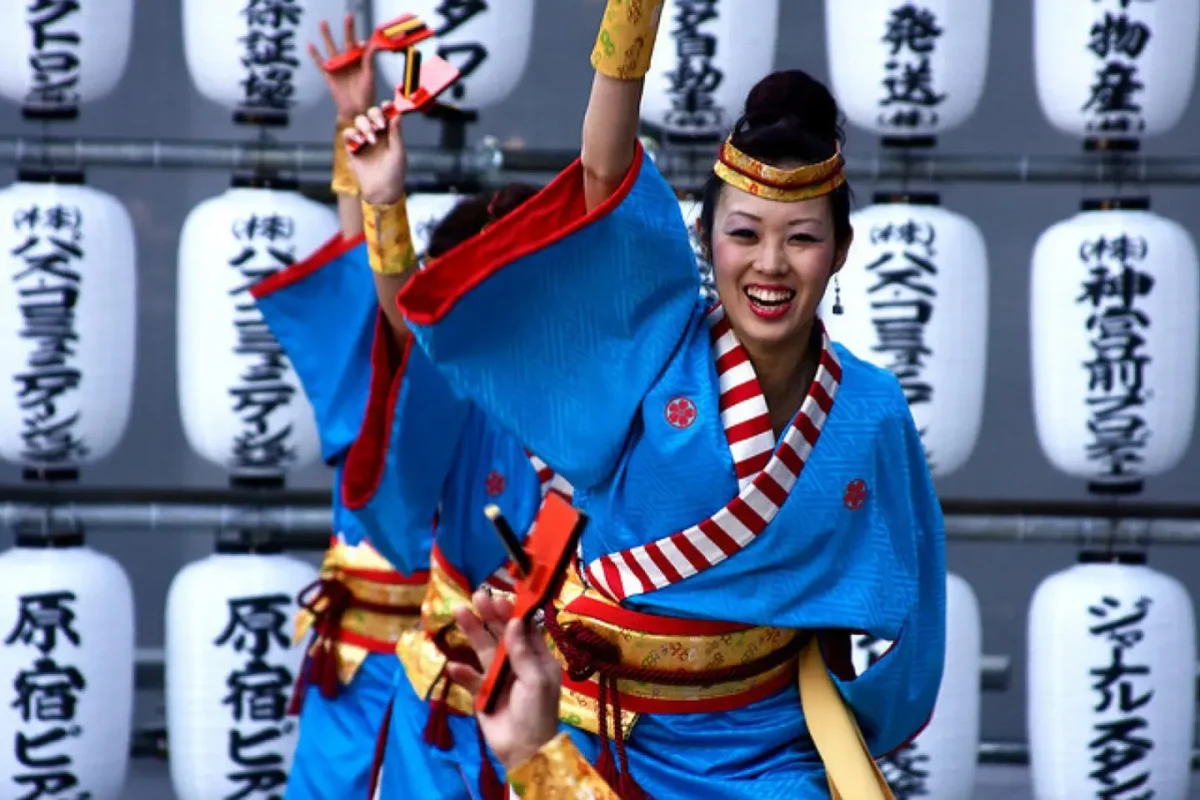
Unlike many traditional Japanese festivals that follow centuries-old religious rituals, Yosakoi is a modern creation built on freedom of expression. The core concept is simple and inclusive. Each team creates its own choreography, music, and costumes, with only two mandatory rules to follow. Every dancer must hold and clack small wooden clappers called naruko, and every piece of music must include a phrase from the original folk song Yosakoi Naruko Odori.
The festival is famous for its decorated trucks called jikata-sha that lead each team. These trucks are mobile DJ stages staffed by MCs and sound crews, blasting out original arrangements that range from traditional Japanese ballad and rock to samba, hip-hop, and big-Afro funk. The result is a carnival-like parade where no two teams look or sound alike, and where the women of the town are proudly front and center. Dancers of all skill levels and ages participate, organized by companies, neighborhoods, universities, and local izakaya pubs.
Enjoy Your Event Stress-Free with Japan Travelo
Do you know? Planning events, festivals, concerts, and cultural experiences in Japan can be overwhelming. Japan Travelo brings everything together in one place, helping you manage your itinerary, transport, and accommodation with ease—so you can enjoy Japan without the stress of planning.
Cultural Significance & Origins
Yosakoi does not have deep religious roots like many other Japanese matsuri. It was established in 1954 by the Kochi Chamber of Commerce and Industry as a way to pray for citizens’ prosperity, promote public health, and revitalize the downtown shopping districts in the aftermath of World War II.
The name Yosakoi itself is derived from an old Tosa dialect phrase Yosari Koi, which roughly translates to come at night. While the exact nuance is open to interpretation, the general sense celebrated by locals is let the good times roll, with a playful hint of nocturnal revelry. The official song, Yosakoi Naruko Odori, incorporates a folk melody that was originally a lullaby about a bird chasing away pests from rice fields.
The most important cultural innovation was the naruko. Originally a farming tool used to scare birds, these small wooden clappers with hinged flappers became the unifying symbol of the festival. By requiring every dancer to use them, the organizers created a common rhythmic thread that connects wildly different dance styles.
From this local initiative, Yosakoi culture exploded across Japan. Today there are over 200 Yosakoi festivals nationwide, including the massive Yosakoi Soran Festival in Hokkaido and Harajuku Omotesando Super Yosakoi in Tokyo. All of them trace their lineage back to Kochi City. The festival is now considered one of the three major festivals of Shikoku, alongside Tokushima’s Awa Odori and Niihama’s Taiko Festival.
Traditions, Rituals & Customs
Despite its free-and-easy style, Yosakoi has a set of beloved customs that give it structure.
The Naruko Rule: Every single dancer must carry naruko clappers. The sound of thousands of clappers clicking in unison is the signature soundscape of the festival. Teams often paint or customize their naruko to match their costumes.
The Music Rule: Every team’s musical arrangement must include a portion of the original Yosakoi Naruko Odori. Beyond that, creativity is unlimited. This rule ensures that even the most modern electronic track still carries the DNA of Kochi.
The Jikata-sha Truck: No team performs without its lead truck. The truck is elaborately decorated to match the team’s theme and carries massive speakers, a vocalist or MC, and musicians. The MC shouts encouragement, introduces the team, and hypes the crowd, functioning as the heart of the team.
Ribands and Awards: Especially skilled dancers are awarded ribands by judges for outstanding performance. Teams compete for numerous prizes, culminating in the Yosakoi Grand Prize and other top honors presented at the post-event ceremony. There is an overall winning team each year, and winning is a matter of immense local pride.
Team Formation and Fluidity: Teams are community-based. A company, a university club, a neighborhood association, or a group of friends from a local izakaya can form a team. Dancers are free to change teams each year, and serious teams spend most of the year choreographing and rehearsing the next year’s routine from scratch. You will never see the same Yosakoi twice.
What to Expect at the Festival
Prepare for an overwhelming assault on the senses in the best possible way. The city center becomes a continuous circuit of sound, color, and movement that runs from midday until late evening.
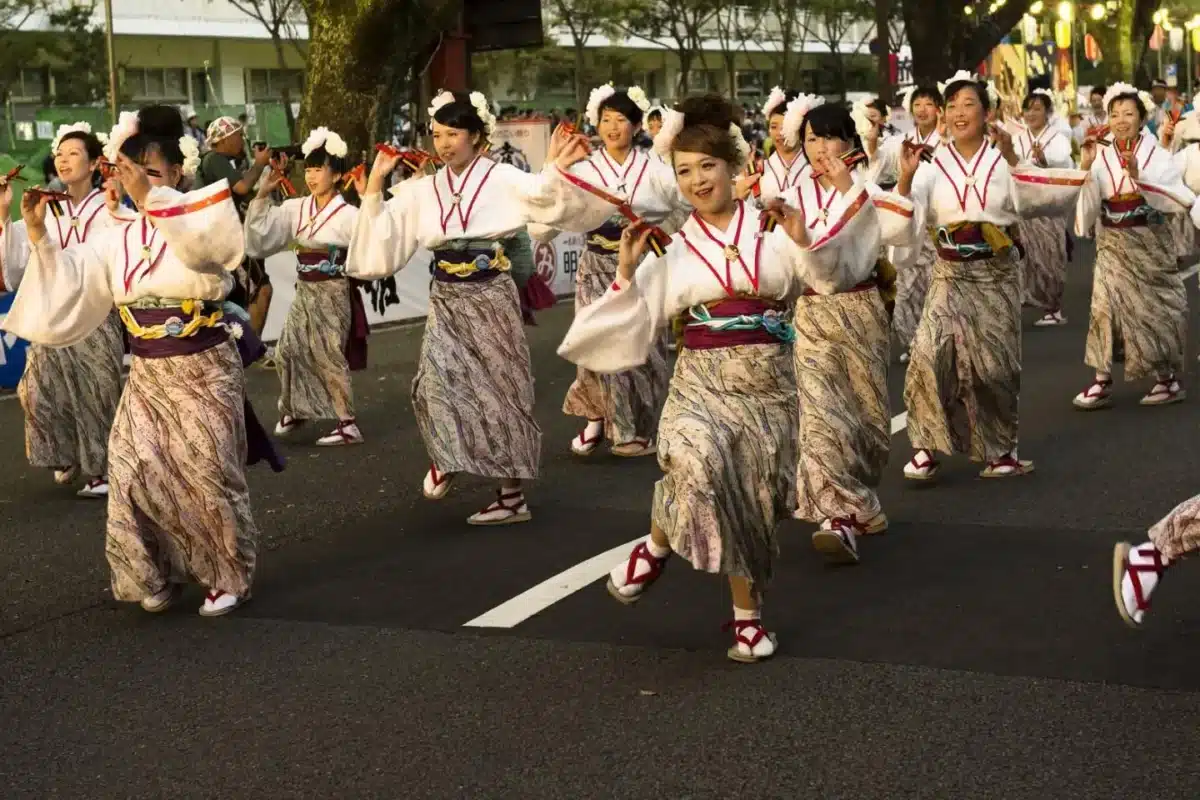
You will see costume designs that are fantastic and theatrical, ranging from kimono-inspired ensembles with bold modern prints to glittering carnival outfits, samurai armor reinterpretations, and avant-garde street fashion. Makeup is dramatic, often with face paint and hairpieces that tower above the crowd.
The dance itself is high-energy and athletic. Movements are large, expressive, and designed to be seen from a distance and from parade sidelines. Teams move in formation down long parade avenues, then perform more static, stage-oriented routines at competition venues. The combination of live shouting, recorded music, naruko clacking, and crowd cheering creates an incredibly loud and joyous atmosphere.
Crowds are dense but cheerful. Locals set up along the streets with drinks and fans, cheering for their favorite teams. The vibe is far less formal than many Japanese festivals. Spectators dance in place, clap along, and interact with performers. The decorated trucks add a club-like intensity with bass-heavy sound systems that you can feel in your chest.
Even if you know nothing about Yosakoi, the inclusivity is immediately apparent. Teams include children, elders, professional dancers, and complete beginners dancing side by side, all united by sheer enthusiasm.
Date & Schedule
Official Festival Period: Early – Mid August 2027 (Dates TBD)
The official structure follows the same pattern each year and spans four days including pre- and post-events.
Pre-Festival Eve: The festival traditionally opens with a pre-event celebration held at Chuo Koen also known as Central Park. This evening features welcome performances, team introductions, and a festive atmosphere as the city prepares for the main parade. Fireworks are often associated with this opening.
Main Festival Days: The two central days are the main carnival parade. Performances run continuously across multiple venues in Kochi City, typically from around 12:30 PM to 10:00 PM. All 9 competition venues and 7 performance venues operate during this period, including Otesuji, Obiyamachi, Harimayabashi, Kochi Castle, and Central Park.
Post-Festival and National Competition: The final day is the climax. It hosts the Yosakoi National Tournament, also called the post-festival show. This includes four main stages: Otesuji Kyoenjo Stadium with reserved seating, Chuo Koen Stadium, Kochi Castle Performance Hall, and Obiyamachi Performance Hall. The day features an opening ceremony at Kochi Castle, final competitive performances, and concludes with an awards ceremony and a grand finale fireworks display lasting approximately 90 minutes.
Visiting this event? Don’t miss out on these amazing activities and local experiences while you’re here.
Main Events & Programme
The festival program is city-wide, allowing visitors to move between venues.
Competition Stages: There are approximately 10 official competition stages where teams are judged. Key locations include Otesuji, Atago, Central Park, Kamimachi, Harimayabashi, Masugata, Umenotsuji, Saenba, and Kochi Station area. Otesuji Kyoenjo is the primary parade venue, a long, straight avenue where teams perform while advancing forward. This is where the main parade down Otesuji-dori Avenue takes place.
Exhibition Stages: In addition to judged venues, there are free exhibition stages where teams perform in a more relaxed setting. These include Yanagimachi, Hata, Obiyamachi Arcade, Kyomachi, Kochi Castle, and Kochi University areas.
Opening Ceremony: A formal opening is held at Kochi Castle, marking the start of the national competition segment.
Yosakoi National Contest: The most competitive portion, where top teams from Kochi and guest teams from across Japan perform for the grand prizes. This is held across four venues on the final day.
Grand Parade and Fireworks: The festival traditionally winds up with a grand parade and a massive fireworks show. The fireworks are launched over the city and serve as a celebratory closing to the intense dance marathon.
Street Practice: In the months leading up to the festival, especially on Sundays from spring to early summer, you can often see teams practicing their routines in the Obiyamachi shopping arcade.
Traditional Dress, Arts & Crafts
Yosakoi costumes are the opposite of uniform. They are a deliberate explosion of tradition mixed with pop culture, and this section is essential for understanding the festival’s visual identity.
Costumes: Each team designs new costumes every year. Fabrics are often sourced locally and feature Tosa washi paper patterns, indigo dyeing techniques from Kochi, and bright, saturated colors that represent the tropical nature of Shikoku. Themes can be based on Sakamoto Ryoma, a famous Kochi-born samurai, local legends like the shisa, ocean waves, yuzu citrus, or completely abstract concepts like galaxy or neon city. Women’s costumes often lead the design, reflecting the prominent role of women in the festival.
Naruko Craft: While standard naruko are plain wood, artisan versions are a major craft. Local craftsmen in Kochi create lacquered naruko, painted with Kochi’s famous Tosa lacquerware or decorated with coral and seashell motifs. Many visitors buy a pair as a souvenir, and teams often gift custom naruko to their members.
Jikata-sha Decoration: The art of decorating the lead truck is a competition in itself. Trucks are transformed into moving floats with hand-painted murals, lanterns, floral arrangements, and illuminated signs displaying the team name in bold calligraphy.
Accessories and Makeup: Hair is styled into elaborate updos with kanzashi hairpins, oversized bows, or colored wigs. Face paint and bold eye makeup are common, and many teams incorporate Tosa-style straw hats or modern headgear.
Traditional Food & Local Specialties
The festival takes place in the middle of Kochi’s food capital, and street stalls and local shops lean heavily into Tosa cuisine.
Katsuo no Tataki: This is Kochi’s signature dish and the number one food to try during the festival. Thick slices of bonito, quickly seared over a blazing straw fire so the outside is smoky and charred while the inside remains rare. It is traditionally served with raw garlic slices, green onions, and a ponzu sauce made with local yuzu.
Sawachi Ryori: A large platter-style feast unique to Kochi, featuring sashimi, sushi, tempura, and local mountain and sea delicacies arranged together on a single large plate, meant to be shared in a lively party setting.
Utsubo no Tataki: Grilled moray eel, another local specialty with a chewy, flavorful texture, often served with sweet-savory sauce.
Yuzu Products: Kochi is Japan’s largest producer of yuzu. During the festival you will find yuzu juice, yuzu sorbet, yuzu ponzu, and yuzu sake everywhere.
Imo Kenpi and Tosa Akaushi: For snacks, look for imo kenpi which are sweet potato crisps fried and coated in sugar, and dishes featuring Tosa Akaushi, a premium brown Wagyu beef from Kochi, as well as Bakushu-gyu beer beef raised on beer mash.
Festival yatai stalls also serve standard matsuri foods like yakisoba, takoyaki, and kakigori shaved ice, but with a Kochi twist using local ingredients.
Location & Festival Areas
The festival does not happen in a single park. It takes over central Kochi City, Kochi Prefecture.
The core festival zone stretches from Kochi Castle in the north to Harimayabashi Bridge in the south. The two main arteries are Otesuji Avenue, which is the primary long parade route and location of Otesuji Kyoenjo Stadium at 2-1-12 Otesuji, Kochi 780-0842, Japan, and the Obiyamachi Shopping Arcade, a covered arcade that becomes a performance stage.
Other critical areas include Chuo Koen, also known as Central Park, which hosts both competition and pre-event stages, the area around Kochi Station for the newest venue, and the Kochi Castle Performance Hall which offers a dramatic backdrop with the castle illuminated at night. Because venues are spread across the city, visitors can walk between them in 10 to 20 minutes, creating a natural city tour.
Getting to the Festival
Kochi is on Shikoku Island, accessible from major Japanese cities.
By Air: The closest airport is Kochi Ryoma Airport. From Tokyo Haneda, it is approximately 80 minutes. From the airport, a limousine bus runs to Kochi Station and Harimayabashi in about 30 minutes. Taxis are also available.
By Train: From Okayama on Honshu, take the JR Seto-Ohashi Line and Dosan Line on the limited express Nanpu or Shimanto to Kochi Station. The journey from Okayama is about 2.5 hours. From Osaka or Kyoto, travel to Okayama by Shinkansen first.
By Highway Bus: Overnight and daytime highway buses operate from Osaka, Kobe, Kyoto, Tokyo, and Hiroshima to Kochi Station, often at lower cost than trains.
Local Transport During Festival: During the main parade, large sections of Otesuji and surrounding roads are closed to traffic. The Tosaden Kotsu tram system, one of Japan’s few remaining streetcars, operates but with detours. Walking is the best way to move between venues. Rental bicycles are also popular. Arrive early for Otesuji seating as crowds build quickly.
Where to Stay Nearby
Kochi City has a full range of accommodation, but demand during Yosakoi is extremely high and hotels sell out months in advance.
Near Otesuji and Obiyamachi: Staying in central Kochi within walking distance of the main venues is ideal. Look for business hotels and city hotels around Harimayabashi, Obiyamachi, and Kochi Castle area. This allows you to return to your hotel to rest between performances.
Near Kochi Station: The area around Kochi Station offers larger hotels with more availability and easy tram access to Otesuji.
Alternative Cities: If Kochi City is fully booked, consider nearby cities. Nankoku City, Tosa City, and Ino Town are not far from Kochi City and you can take local trains to get into the center. Susaki and Nankoku also have business hotels at slightly lower rates.
Booking Tips: Book at least 6 to 9 months ahead. Many hotels require a multi-night minimum stay during the festival period. Consider a ryokan for a more traditional experience, or a guesthouse if you are traveling solo.
What Visitors Can Participate In
While the main parade is for registered teams, visitors have many participatory options.
Free Practice Sessions: Some teams open their final rehearsals to the public in Obiyamachi and allow visitors to learn basic naruko movements.
Naruko Dance Workshops: The Kochi City Information Center and Yosakoi Information Exchange Center often hold short workshops where you can learn the basic Yosakoi step and try clapping naruko. No reservation needed in many cases.
Support and Cheer: Audience participation is part of the tradition. Learn the standard kakegoe shouts like Yosakoi, Yosakoi and clap along. Teams love engaged crowds.
Volunteer: The festival association recruits local and international volunteers to help with venue management, guiding visitors, and distributing programs.
Join as a Guest Dancer: A few open-participation teams, often organized for tourists and expats, allow visitors to join for a single parade run if you apply well in advance through Kochi City tourism channels. This usually includes costume rental and a short training session.
Things to Do Before or After the Festival
Kochi Prefecture offers rich cultural and natural attractions that make a longer stay worthwhile.
Kochi Castle: One of only 12 original castles remaining in Japan. It overlooks the city and is beautifully illuminated during the festival period. The castle museum details the history of Tosa domain.
Hirome Market: A bustling indoor market near Obiyamachi where over 60 stalls serve katsuo no tataki, gyoza, craft beer, and local sake in a communal eating hall. It is packed with locals and izakaya teams during the festival.
Sunday Market: Kochi’s famous Sunday street market stretches for over a kilometer, selling fresh produce, knives, plants, and antiques.
Katsurahama Beach and Sakamoto Ryoma Memorial: Visit the beach where the famous samurai Sakamoto Ryoma gazed at the Pacific, and the adjacent Ryoma Memorial Museum.
Makino Botanical Garden: A stunning botanical garden dedicated to Dr. Tomitaro Makino, the father of Japanese botany, located on Mount Godaisan with panoramic views.
Shimanto River: A short trip west brings you to Japan’s last clear river, famous for its pristine water, canoeing, and submersible bridges.
Local Food & Restaurants
Beyond street stalls, Kochi City is known as a foodie city with exceptional local restaurants.
For Katsuo no Tataki: Try Myojinmaru at Hirome Market or near Katsurahama for authentic straw-seared tataki. Kuroson and Tosa Ryori Tsukasa are also highly regarded for traditional preparation.
Izakaya Culture: Kochi’s izakaya scene is legendary and directly tied to Yosakoi, as many teams are formed by izakaya staff. Try local chains around Obiyamachi for sawachi ryori and Tosa sake. Tosa no Okyaku style dining encourages sharing.
Hirome Market Stalls: An excellent budget option. You buy food and drinks from different stalls and eat at shared tables. Great for trying small portions of many Kochi specialties like yuzu kosho chicken, whale croquette, and citrus desserts.
Sake Breweries: Kochi has over 18 sake breweries. Look for Tosa sake brands like Suigei, Tosatsuru, and Mutemuka to pair with your meal.
Ticket Information & Access
The dance performances during the Yosakoi Festival are free to watch and do not require tickets. You can stand along any of the competition or exhibition venues and enjoy the full parade at no cost.
However, reserved seating tickets are available for visitors who want guaranteed comfortable viewing.
Otesuji Kyoenjo Performances: This is the main venue where seating is ticketed. Performances run over three days including the national competition on the final day. Tickets include daytime and nighttime options.
Types of Seating: For Otesuji Kyoenjo, options typically include general seating, wheelchair accessible area, parasol seating which includes shade, and group seating. For Central Park performances, there are S seats closer to the stage and A seats slightly further back.
Pricing from Previous Edition: Seating tickets are paid separately from free standing areas. Based on the last editions, pricing converted to USD is as follows. Night Seat Ticket at Otesuji Kyoenjo: from $50.00 to $55.00 per person. Daytime general seating: from $35.00 to $45.00 per person. S seats at Central Park: from $60.00 to $70.00. A seats at Central Park: from $40.00 to $50.00. Group seating packages: from $180.00 to $240.00 for four persons. Prices may vary slightly by sales platform.
Where to Buy: Seating tickets generally go on sale from late June. You can purchase online from Ticket Pia, Lawson Ticket, Holiday Travel, Klook, and KKday. Demand is high every year and tickets are very competitive. As a general rule, same-day tickets are not available, though unsold tickets may occasionally be sold on the day if available.
Access: Wheelchair areas are available but must be booked in advance. Free standing areas surround all reserved zones.
Official Event Information
Festival Organizer: Kochi Yosakoi Festival Organizing Committee and Kochi Chamber of Commerce and Industry
Official Website URL as Text: www.cciweb.or.jp/kochi/yosakoiweb/
Information Source Reference URL as Text: en.japantravel.com/kochi/yosakoi-festival/769
Contact for Ticketing and Tourism: Kochi City Tourism Association, Tel +81-88-826-7003, Email yosakoi@i-kochi.or.jp
Emergency and General Info: Kochi City Call Center and tourist information booths are set up at Kochi Station, Harimayabashi, and Obiyamachi during the festival.
Video
Location
FAQ
What is the Kochi Yosakoi Festival and what makes it different from other Japanese festivals?
The Kochi Yosakoi Festival is Japan's largest and most creative dance carnival, where nearly 200 teams perform original choreography with wooden clappers called naruko. Unlike traditional religious festivals, it was created in 1954 as a modern community revitalization project and celebrates freedom, individuality, and irreverence. Every team must include part of the folk song Yosakoi Naruko Odori but can arrange all other music and costume styles however they want, so no two performances are ever the same.
Do I need to buy tickets to watch the festival?
No, you do not need tickets to watch the festival, as all street parades and most stage performances are completely free to view from designated standing areas along the routes. Reserved seating tickets are sold only for those who want guaranteed, comfortable seating at prime venues like Otesuji Kyoenjo Stadium and Central Park Stadium. These tickets are highly competitive and go on sale in late June, but they are optional. Many visitors enjoy the entire festival without ever buying a ticket by arriving early to secure a good standing spot.
What are naruko and why are they so important?
Naruko are small wooden clappers originally used by farmers to scare birds away from rice fields, consisting of a wooden block with several small wooden slats that clack when shaken. They are the mandatory symbol of Yosakoi and every dancer must hold them while performing. Their rhythmic clicking creates the unifying sound of the festival across thousands of dancers, and they have become a beloved craft souvenir in Kochi, often decorated with bright colors, lacquer, or Tosa washi paper patterns.
Can tourists or first-time visitors participate in the dancing?
Tourists cannot join the main competitive parade without registering with an official team months in advance, but there are many accessible ways to participate. The city offers beginner workshops at the Yosakoi Information Exchange Center and Central Park where you can learn basic steps and naruko technique in under an hour. Additionally, some special international or tourist welcome teams accept short-term guest dancers, including costume rental and training, if you apply early through Kochi City tourism contacts.
Where are the best places to watch the festival for the full experience?
The best experience involves moving between venues to see different styles, but two spots are essential for first-timers. Otesuji Kyoenjo is the main long parade avenue where teams perform while marching forward with their massive decorated sound trucks, offering the most carnival-like atmosphere. Obiyamachi Arcade and Kochi Castle provide more intimate stage performances with dramatic backdrops, especially at night when the castle is illuminated. Central Park is ideal for the opening and closing ceremonies and national competition finals.

Leave a Reply