
What to expect in 2026
Kodai-ji Autumn Illumination is one of Kyoto’s best-known seasonal nighttime temple experiences, transforming the historic Kodaiji Temple grounds into a dramatic landscape of illuminated gardens, autumn foliage, ponds, bamboo and traditional architecture. The event combines the atmosphere of a Zen temple with carefully planned nighttime lighting, allowing visitors to experience the grounds after dark during the autumn season.
The official Kodaiji website confirms that the 2026 autumn special nighttime admission will operate during the autumn illumination season, with lighting beginning in the early evening and the temple remaining open into the night.
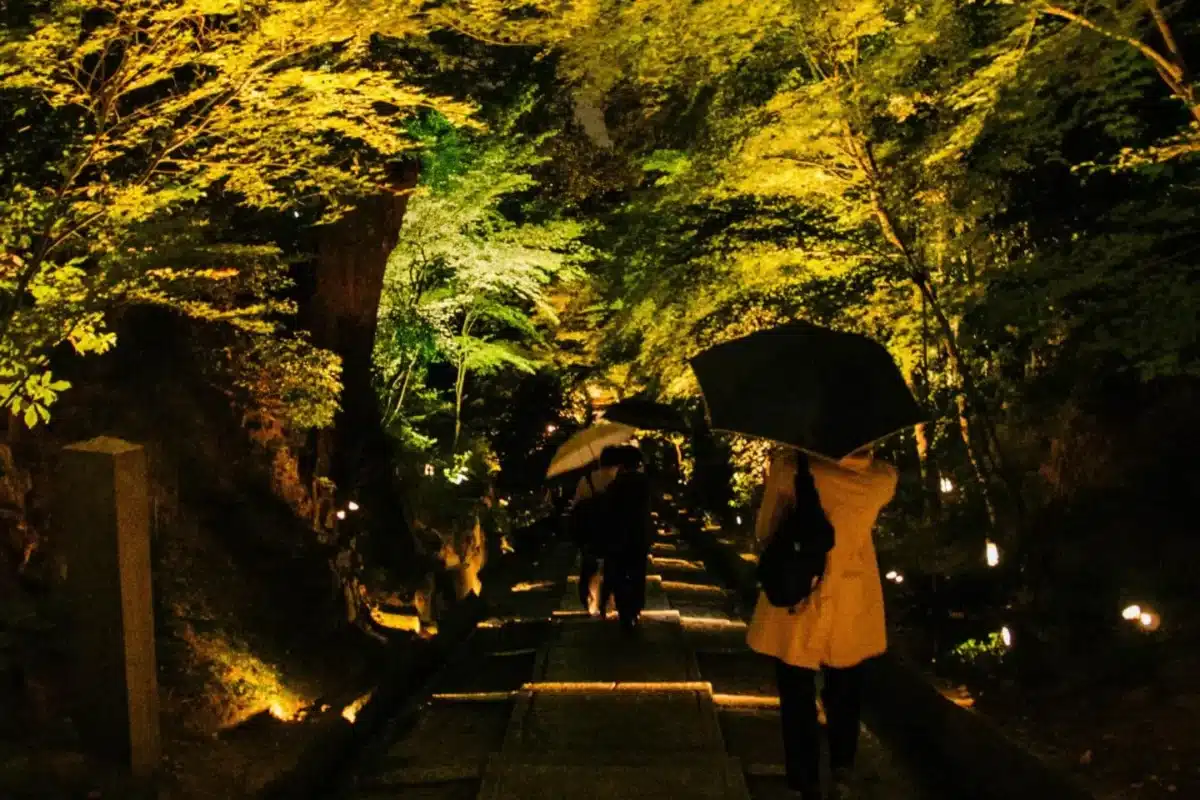
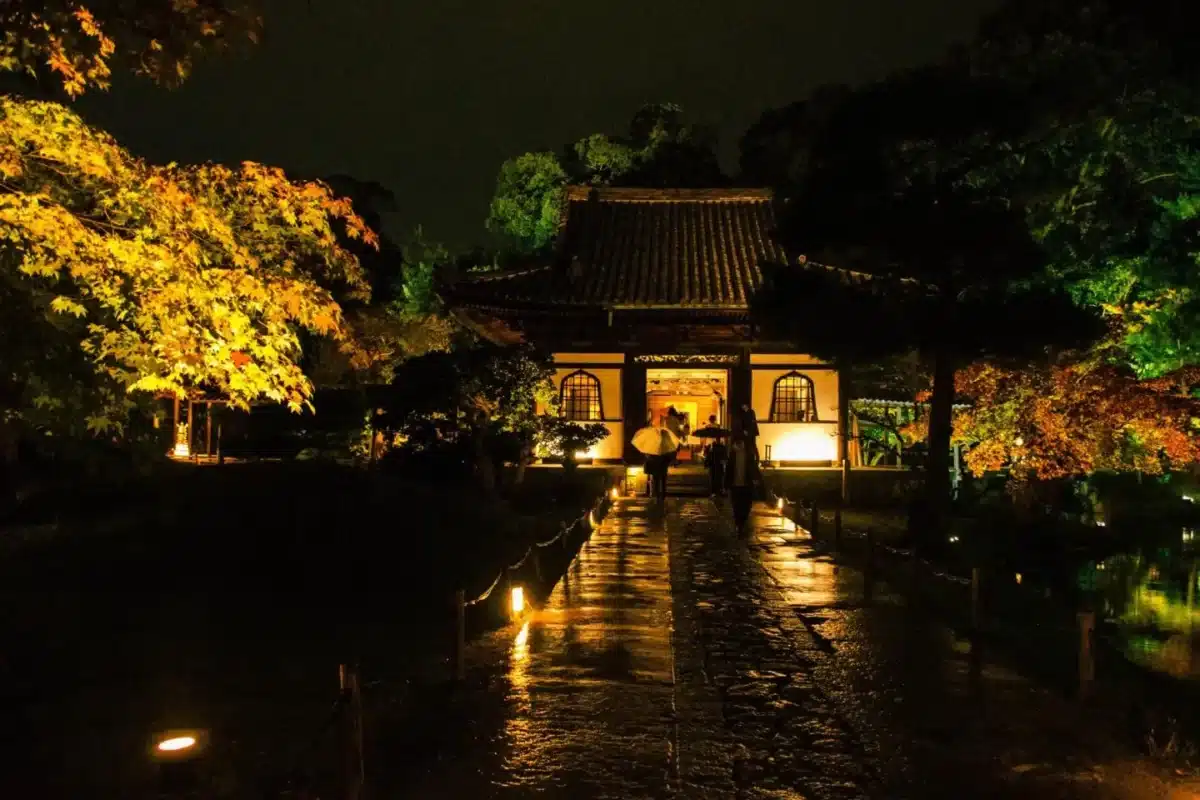
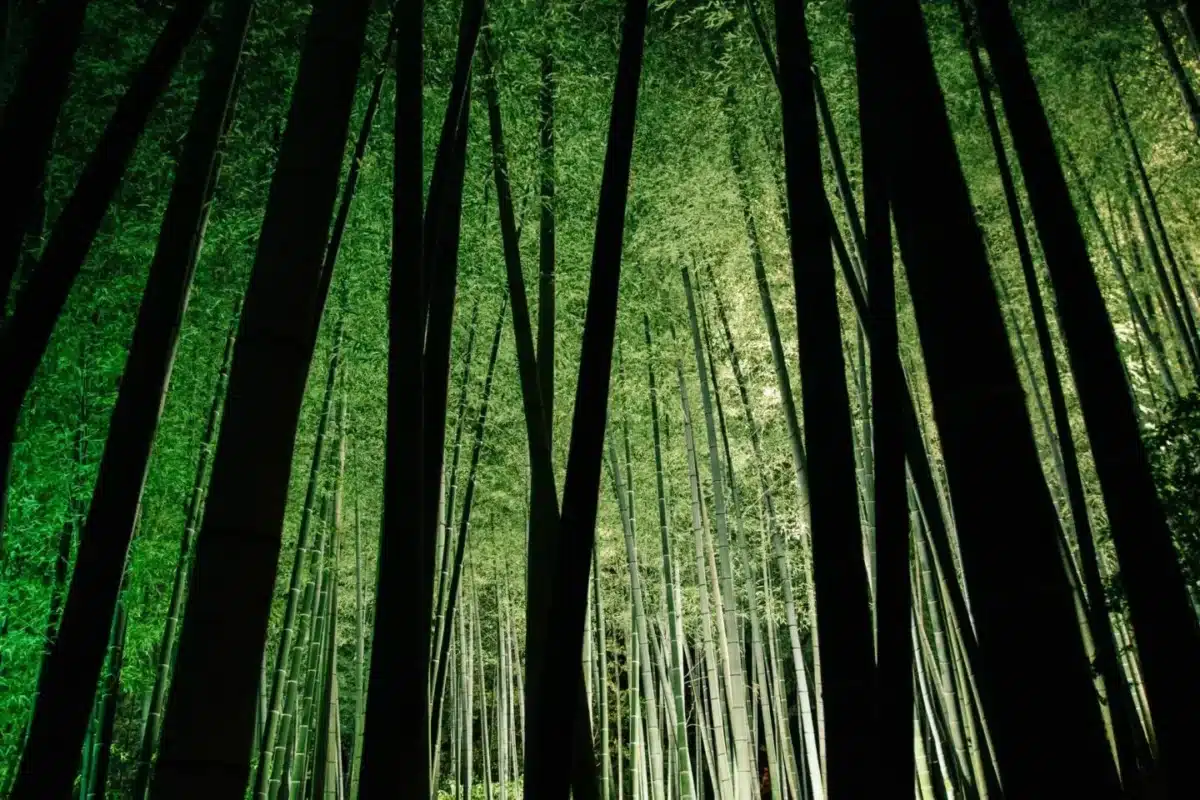
The illumination is particularly known for the way light interacts with Kodaiji’s gardens and Garyu Pond. Reflections in the water can mirror illuminated trees, buildings and surrounding scenery, while the bamboo grove takes on a completely different appearance after sunset. JapanTravel describes the autumn event as a seasonal light-up that brings new life to the historic temple and its gardens.
Enjoy Your Event Stress-Free with Japan Travelo
Do you know? Planning events, festivals, concerts, and cultural experiences in Japan can be overwhelming. Japan Travelo brings everything together in one place, helping you manage your itinerary, transport, and accommodation with ease—so you can enjoy Japan without the stress of planning.
Visitors can expect:
- Illuminated autumn foliage
- Reflective views across Garyu Pond
- Lighting around historic temple buildings
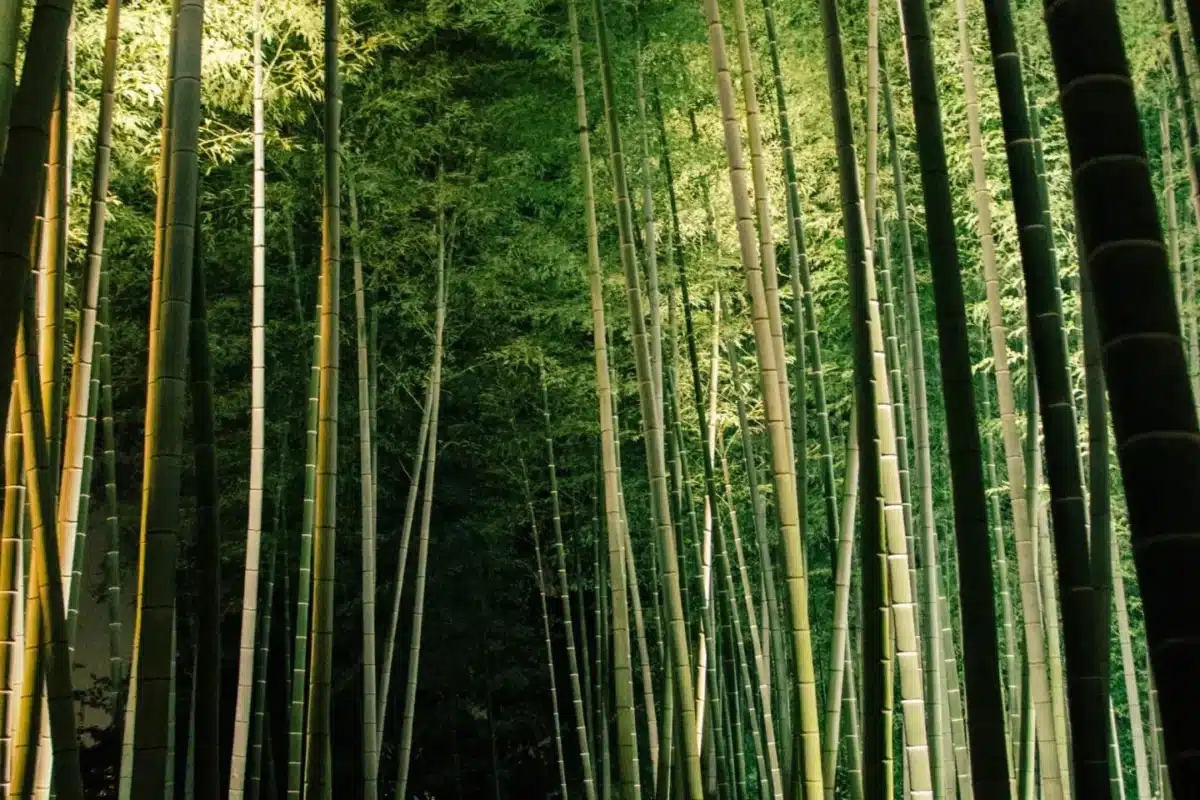
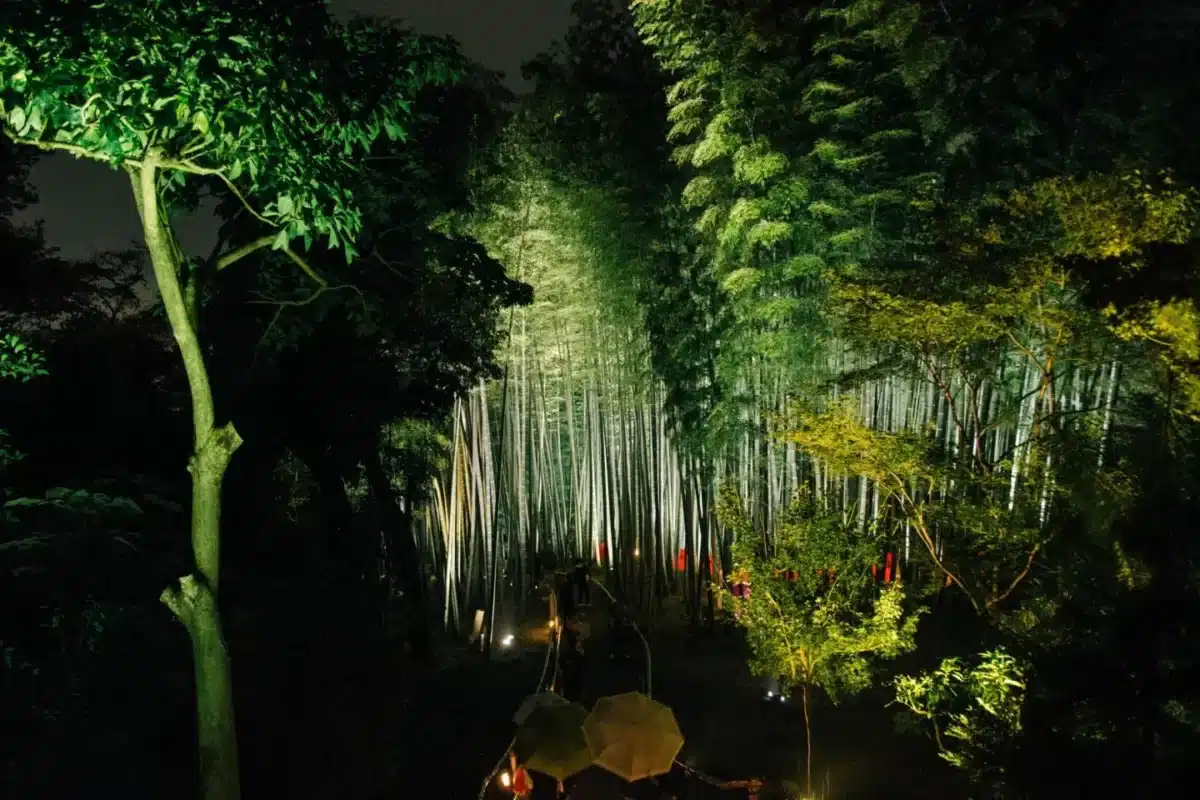
- The illuminated bamboo grove
- Traditional Japanese gardens after dark
- Seasonal cultural exhibitions
- Buddhist and Zen heritage
- Photography opportunities
- Evening walks through the temple grounds
- Nearby Higashiyama attractions and historic streets
The experience is different from a modern light festival because the lighting is integrated into an important historic temple complex. The architecture, gardens and natural landscape remain central to the experience.
Event dates
Late Oct – Mid December 2026 (Dates TBD)
The supplied event period is retained for this listing. The official Kodaiji website currently confirms an autumn special nighttime admission period within this general seasonal window, although the final dates should be checked with the temple before visiting.
The official temple information describes the autumn special nighttime admission as an annual seasonal programme extending into the evening, with illumination beginning in the early evening and final admission later at night.
Because the event is closely connected with the autumn foliage season, the appearance of the gardens can change throughout the festival period. Visitors should check current official information and foliage conditions when planning their visit.
Visiting this event? Don’t miss out on these amazing activities and local experiences while you’re here.
Venue & event locations
The principal venue is Kodaiji Temple in Kyoto’s Higashiyama district.
Kodaiji was established by Kita-no-Mandokoro, also known as Nene, in memory of her husband Toyotomi Hideyoshi. The temple was founded with support from Tokugawa Ieyasu and has preserved important historic buildings and gardens.
Kodaiji Temple grounds
The main temple precinct contains the gardens, historic structures, pathways and ponds used for the illumination experience.
Garyu Pond
The pond is one of the most visually important areas of the nighttime event. Reflections of trees, architecture and lighting can create a mirror-like seasonal scene.
Garyu Corridor
The illuminated corridor and surrounding landscape form another major part of the nighttime route. The official Kodaiji illumination information specifically highlights Garyu Pond and Garyu Corridor in connection with the autumn programme.
Bamboo grove
The bamboo area is particularly atmospheric after dark, with illumination emphasizing the vertical lines of the bamboo and creating a contrasting experience from daytime sightseeing.
Entokuin
Nearby Entokuin Temple is closely associated with the Kodaiji complex and sometimes participates in seasonal nighttime admission programmes. Visitors should check the current combined-ticket arrangements and individual opening information before visiting.
Kodaiji Sho Museum
The nearby Kodaiji Sho Museum provides an additional cultural experience connected with Kodaiji’s artistic and historical heritage. Its exhibition programme can extend beyond the main temple illumination season.
Full holiday programme
Kodai-ji Autumn Illumination is primarily a seasonal temple illumination rather than a conventional holiday festival with concerts and commercial entertainment.
The core programme revolves around nighttime access to the temple grounds and the presentation of the gardens and historic architecture through carefully designed lighting.
Nighttime temple admission
Visitors enter the temple precinct during the special evening opening period and follow designated routes through the illuminated grounds.
Autumn garden illumination
The gardens are lit to emphasize autumn vegetation, water, stone arrangements and traditional landscape design.
Pond reflections
Garyu Pond provides one of the central visual features, with the illuminated landscape reflected on the water.
Bamboo illumination
The bamboo grove becomes an atmospheric part of the evening route, offering a strong contrast between dark foliage and carefully positioned lighting.
Historic architecture
Buildings including Kaisan-do, Otama-ya and the historic tea houses form part of the temple’s cultural landscape. Several of Kodaiji’s surviving structures are designated Important Cultural Properties.
Seasonal exhibitions
Kodaiji and its associated museum spaces may present special exhibitions or cultural displays during the autumn season. The exact 2026 exhibition programme should be checked separately from the illumination admission.
Main attractions & highlights
Autumn foliage
The changing leaves are the natural centerpiece of the event. Red, orange and yellow foliage becomes particularly striking when illuminated after sunset.
Garyu Pond reflections
The reflective surface of Garyu Pond can reproduce the illuminated trees and garden landscape, producing one of the most recognizable views associated with Kodaiji’s nighttime autumn season.
Bamboo grove
The illuminated bamboo grove provides a completely different atmosphere from the temple’s open garden spaces and is one of the most photographed sections of the route.
Historic temple buildings
The illumination provides an opportunity to see Kodaiji’s traditional structures after dark while learning about the temple’s connection with Nene and Toyotomi Hideyoshi.
Zen gardens
Kodaiji’s garden design combines ponds, rocks, vegetation and architectural viewpoints. Lighting allows visitors to appreciate the landscape from a different perspective than during daytime admission.
Seasonal atmosphere
The combination of autumn leaves, evening darkness, temple architecture and carefully positioned illumination creates a distinctly Kyoto atmosphere.
Markets, decorations & themed areas
Kodai-ji Autumn Illumination does not operate as a traditional Christmas-style market or large commercial light festival. Instead, its themed areas are created through the temple gardens, natural scenery and cultural architecture.
Illuminated garden areas
The principal decorative element is the lighting itself, which emphasizes trees, garden features and historic structures.
Bamboo area
The bamboo grove forms a natural themed section of the nighttime route.
Water and reflection area
Garyu Pond provides a visual focus where the surrounding illumination can be reflected across the water.
Temple architecture
Historic buildings become part of the visual composition without being converted into commercial decorations.
Nearby Higashiyama streets
The wider area around Kodaiji contains traditional restaurants, shops, tea houses and cultural attractions. Visitors can combine the illumination with an evening walk through the historic district.
Events & entertainment schedule
The illumination itself is the principal scheduled attraction, and visitors should not expect a concert-style programme.
Temple opening
The grounds remain accessible into the evening during the special nighttime admission period.
Lighting begins
The temple’s official information states that the autumn illumination begins lighting in the early evening.
Garden viewing
Visitors follow the designated route through the temple gardens, viewing the illuminated foliage, pond, architecture and bamboo.
Cultural viewing
Historic buildings and seasonal exhibition spaces provide opportunities to learn about Kodaiji’s history and artistic traditions.
Evening sightseeing
After leaving the temple, visitors can continue through the surrounding Higashiyama district, where traditional streets and nearby temples provide additional cultural sightseeing opportunities.
Exact daily programming, if any special ceremonies or exhibitions are scheduled, should be confirmed through the official temple information.
Admission & ticket information
The 2026 official Kodaiji admission information lists standard admission at $5.50 USD for adults and $2.75 USD for students, based on the published ¥800 adult and ¥400 student rates and an approximate exchange rate. Groups of 30 or more are listed at approximately $4.80 USD per person.
Adult admission
Approximately $5.50 USD.
Student admission
Approximately $2.75 USD.
Group admission
Approximately $4.80 USD per person for groups of 30 or more.
Children
Children of elementary-school age and younger can be admitted without the standard admission charge when accompanied by an adult, subject to the temple’s conditions.
Combined admission
The official temple information also lists a discounted combined admission covering Kodaiji and Entokuin at approximately $8.30 USD. Availability and conditions should be checked for the current season.
During the nighttime illumination, the daytime and nighttime admission system is not treated as a separate re-entry ticket. The official information states that visitors cannot leave the grounds and then re-enter using the same admission ticket.
Special experiences & activities
Nighttime garden viewing
The primary special experience is seeing Kodaiji’s historic gardens under illumination rather than in normal daylight.
Reflection photography
Garyu Pond provides opportunities to photograph illuminated trees and architecture reflected across the water.
Bamboo grove photography
The illuminated bamboo grove creates strong vertical compositions and a very different atmosphere from the daytime landscape.
Temple heritage
Visitors can combine the light-up with an exploration of Kodaiji’s connection to Nene, Toyotomi Hideyoshi and the early Edo-period history of Kyoto.
Tea culture
The broader Kodaiji and Entokuin complex offers tea-related cultural experiences at certain times. Visitors interested in participating should check current reservations and schedules separately. The Entokuin complex, for example, publishes information on matcha experiences and special tea gatherings.
Museum visit
The Kodaiji Sho Museum can add an artistic and historical dimension to the visit, particularly when its seasonal exhibition programme complements the temple experience.
Family & children’s activities
The illumination can be suitable for families, particularly for children interested in temples, gardens, autumn scenery and nighttime photography.
Illuminated gardens
Children can experience the traditional garden landscape in a visually different setting after dark.
Bamboo grove
The illuminated bamboo provides a memorable visual experience for younger visitors.
Historic architecture
Parents can introduce children to Japanese temple architecture and stories connected with Kodaiji’s history.
Cultural sightseeing
The surrounding Higashiyama district offers additional temples, traditional streets, shops and restaurants that can be incorporated into a family itinerary.
Parents should remember that the temple is a historic religious site rather than an amusement park. Children should remain close to accompanying adults and follow staff instructions, especially around ponds, stairs and crowded paths.
Event rules
Visitors should follow the temple’s normal visitor rules as well as any temporary instructions introduced during the illumination.
Respect the temple
Kodaiji remains an active Buddhist temple and visitors should behave respectfully throughout the grounds.
Stay on designated paths
Do not enter garden areas, planted sections or restricted spaces for photography.
Photography etiquette
Photography should not obstruct pathways or other visitors. Tripods and large equipment may be restricted in crowded areas.
Protect the gardens
Do not touch plants, rocks, architectural features or decorative installations.
Observe quiet areas
Keep noise levels appropriate for a historic temple environment.
Follow staff instructions
Temporary routes and restrictions may be introduced when visitor numbers are high.
Re-entry
The official illumination information states that visitors cannot leave and then return using the same ticket.
How to get there
Kodaiji is located in Kyoto’s Higashiyama district, close to several major cultural attractions.
From Kyoto Station
Visitors can take a city bus toward the Higashiyama area and get off near Higashiyama Yasui, followed by a walk toward Kodaiji.
From Shijo
Visitors arriving through the central Kyoto shopping district can use the Keihan or Hankyu railway areas and continue by bus or on foot.
From Higashiyama Yasui
The official Kodaiji access information identifies Higashiyama Yasui as a useful bus stop, followed by approximately a seven-minute walk east toward the temple.
By taxi
A taxi from Kyoto Station takes approximately 15 minutes under normal traffic conditions, although evening congestion can increase travel time.
Walking
Kodaiji can also be incorporated into a Higashiyama walking route connecting nearby attractions such as Yasaka Shrine, Maruyama Park and other historic temples.
Public transport & parking
Public transportation is strongly recommended for the autumn illumination because Higashiyama becomes particularly busy during Kyoto’s autumn sightseeing season.
City buses
Bus routes from Kyoto Station and central Kyoto serve the Higashiyama area, with Higashiyama Yasui being one of the closest useful stops.
Rail connections
Keihan Shijo Station and Hankyu Kyoto-Kawaramachi Station provide access to the wider Higashiyama area, followed by a bus or walk.
Walking
Walking is often practical for the final section of the journey and allows visitors to experience Kyoto’s historic streets.
Private cars
The official Kodaiji information advises visitors to avoid private automobiles because the surrounding streets are narrow and parking capacity is limited.
Bus parking
Kodaiji operates parking arrangements for buses, but advance reservation is required. The temple’s current information notes that bus parking conditions and charges can change during nighttime illumination periods.
Accommodation areas
Higashiyama
Staying in Higashiyama provides the most convenient access to Kodaiji and allows visitors to explore the district in the evening.
Gion
Gion is close to Kodaiji and provides access to traditional streets, restaurants and cultural attractions.
Kawaramachi
Kyoto-Kawaramachi is useful for visitors seeking a central location with extensive restaurants, shopping and transport connections.
Kyoto Station
The station area provides a large selection of accommodation and convenient connections to the rest of Kyoto.
Yasaka Shrine and Maruyama Park area
Staying around this part of eastern Kyoto places visitors within walking distance of several major seasonal attractions.
For the illumination, staying closer to eastern Kyoto can reduce the need for late-evening bus travel after the temple visit.
Food, drinks & seasonal specialties
The area around Kodaiji and Higashiyama contains numerous restaurants, tea houses, cafés and traditional Japanese food shops.
Matcha
Matcha and Japanese sweets are a natural complement to a temple-focused Kyoto itinerary. Nearby tea experiences can provide a more traditional setting for sampling powdered green tea.
Kyoto seasonal cuisine
Restaurants in Higashiyama commonly feature seasonal vegetables, tofu, yuba and other ingredients associated with Kyoto cuisine.
Japanese sweets
Wagashi shops and cafés around the historic district offer sweets that pair well with green tea.
Tofu and yuba
These ingredients are strongly associated with Kyoto’s traditional Buddhist-influenced culinary culture.
Evening dining
Because the illumination finishes late in the evening, visitors should check restaurant closing times in advance, particularly if they plan to eat after leaving the temple.
Accessibility
Kodaiji is a historic temple complex, so accessibility conditions differ from those of a modern purpose-built attraction.
Historic pathways
Visitors should expect slopes, steps, uneven surfaces and traditional pathways in parts of the temple grounds.
Crowded periods
Autumn evenings can become crowded, particularly around popular viewing points and narrow sections of the route.
Mobility planning
Visitors using wheelchairs or mobility aids should contact the temple in advance to discuss current accessible routes and any areas that may be difficult to reach.
Public transport
Bus access can be convenient, although boarding conditions vary depending on the vehicle and crowd levels.
Rest opportunities
Visitors who need regular breaks should plan a shorter route and use nearby cafés or designated resting areas where available.
Best days & times to visit
The best time to experience the illumination depends on whether the visitor prioritizes atmosphere, photography, foliage or avoiding crowds.
Early evening
Arriving around the beginning of the nighttime illumination allows visitors to see the transition from daylight to illuminated scenery.
Later evening
Later visits can provide a darker atmosphere and stronger lighting effects, although popular sections may remain busy.
Weekdays
Weekday evenings can be more manageable than the busiest weekend periods, although Kyoto’s autumn season can attract substantial visitor numbers throughout the week.
Peak foliage period
Visitors seeking the strongest autumn colors should monitor local foliage conditions because peak color varies from year to year.
Photography
Photographers should allow extra time around Garyu Pond and the bamboo grove, where reflections and lighting can create particularly strong compositions.
The official Kodaiji information confirms that lighting begins in the early evening and that final admission continues later into the night during the special autumn period.
Previous year’s highlights
Previous editions of the autumn illumination have established Kodaiji as one of Kyoto’s best-known nighttime temple experiences.
The defining attraction has consistently been the combination of autumn foliage and illumination across the temple’s gardens. JapanTravel specifically highlights the way Kodaiji’s reflective pool can mirror the autumn colors and lighting, creating a dramatic nighttime landscape.
The bamboo grove has also remained a major attraction, with nighttime lighting giving the narrow forest a very different character from daytime sightseeing.
Kodaiji’s historic architecture adds another layer to the experience. Surviving structures including Kaisan-do, Otama-ya, Kasa-tei and Shigure-tei are important examples of the temple’s early heritage and several are designated Important Cultural Properties.
The wider Kodaiji complex has also offered seasonal exhibitions and cultural experiences. The nearby Kodaiji Sho Museum continues to present rotating displays connected with the temple’s artistic and religious heritage.
The surrounding Entokuin complex can provide an additional cultural stop, with its own gardens, exhibitions and tea experiences. Visitors combining the two sites can experience both nighttime illumination and traditional Japanese cultural activities in the same Higashiyama district.
Official event information
The official source for the latest 2026 illumination information is Kodaiji Temple official website (https://www.kodaiji.com/). The temple’s official event page provides the current autumn nighttime admission period, opening information and admission conditions.
The official Kodaiji illumination guide also explains the temple’s seasonal nighttime programmes and identifies the autumn period as a special evening opening featuring illuminated gardens and the Garyu Pond and corridor area.
The JapanTravel event page supplied for this listing is Kodai-ji Autumn Illumination on JapanTravel (https://en.japantravel.com/kyoto/kodai-ji-autumn-illumination/16526). Because the event dates can change from season to season, the official Kodaiji information should be treated as the final source for the 2026 programme.
Video
Location
FAQ
What is the historical significance behind the establishment of Kodai-ji Temple?
The temple was founded in 1605 by Kita-no-Mandokoro (commonly known as Nene) to console the spirit of her late husband, Toyotomi Hideyoshi. Hideyoshi was one of the most powerful unifiers of feudal Japan during the Sengoku period. Nene lived out her final years here, leaving behind a rich legacy of art, architecture, and personal devotion.
Are advanced ticket reservations required to attend the autumn illumination event?
General evening admission tickets are conveniently purchased directly at the temple entrance gate upon arrival without needing pre-booking. Visitors simply join the standard walk-up queue to enter the grounds during evening operational hours. Arriving shortly before the evening gates open helps minimize waiting times.
What specific historic structures on the temple grounds are designated cultural properties?
Several original buildings survived past fires and are officially designated as Important Cultural Properties by the Japanese Government. These include the Otama-ya mausoleum, the Kaisan-do hall, the Kangetsu-dai bridge pavilion, and the rustic tea houses Kasa-tei and Shigure-tei. They represent peak architectural achievements of the Momoyama period.
How can travelers easily reach Kodai-ji Temple using public transportation from central Kyoto?
Visitors can take a city bus from Kyoto Station and get off at the Higashiyama Yasui bus stop, followed by a short seven-minute walk. Alternatively, taking the Keihan Main Line to Gion-Shijo Station places travelers within a pleasant fifteen-minute stroll through historic shopping streets. Walking from the station allows visitors to enjoy the traditional ambiance of the Higashiyama district.
What weather conditions and clothing preparations should evening visitors anticipate?
Late autumn evenings in the Higashiyama Mountains turn quite chilly, with temperatures dropping significantly after sunset. Visitors must wear warm coats, scarves, and comfortable walking shoes suitable for stone paths and temple steps. Dressing in adequate layers ensures a comfortable and fully immersive illumination experience.

Leave a Reply