
Overview
The Kokura Gion Taiko Festival, known locally as Kokura Gion Daiko, is a frenzy of community drumming that transforms the historic castle town of Kokura in Kitakyushu City, Fukuoka Prefecture, into a thunderous open-air stage. It is one of northern Kyushu’s most powerful and inclusive traditional events, boasting over 400 years of history and recognized as a nationally designated Important Intangible Folk Cultural Property.
Unlike the elegant float parades of Kyoto’s Gion Festival, Kokura’s version is nicknamed Taiko Gion for its intense focus on drum performance. The entire city participates. Everywhere you look there are festival juggernauts with drums mounted on them, being pulled this way and that through shopping arcades, castle grounds, and neighborhood streets. The sound is hypnotic, not because the drumming is monotonous but because the people of Kokura collectively have a huge repertoire of rhythms.
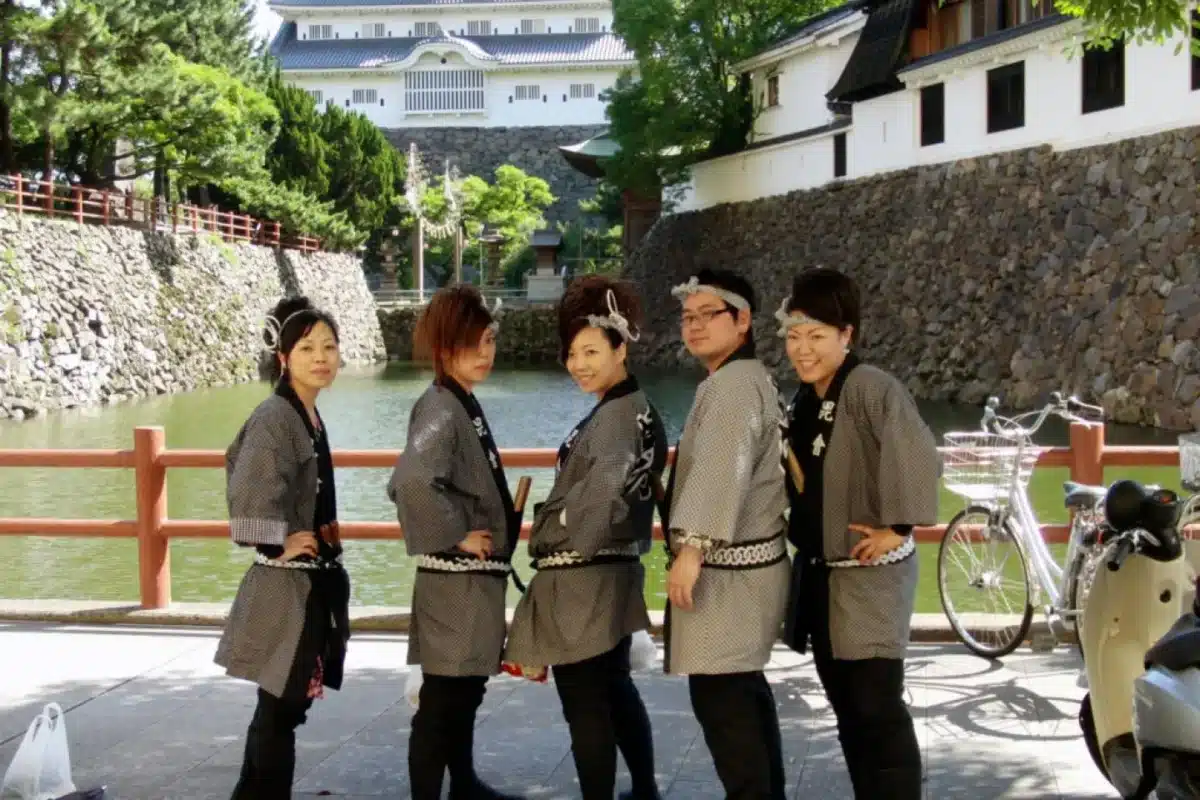
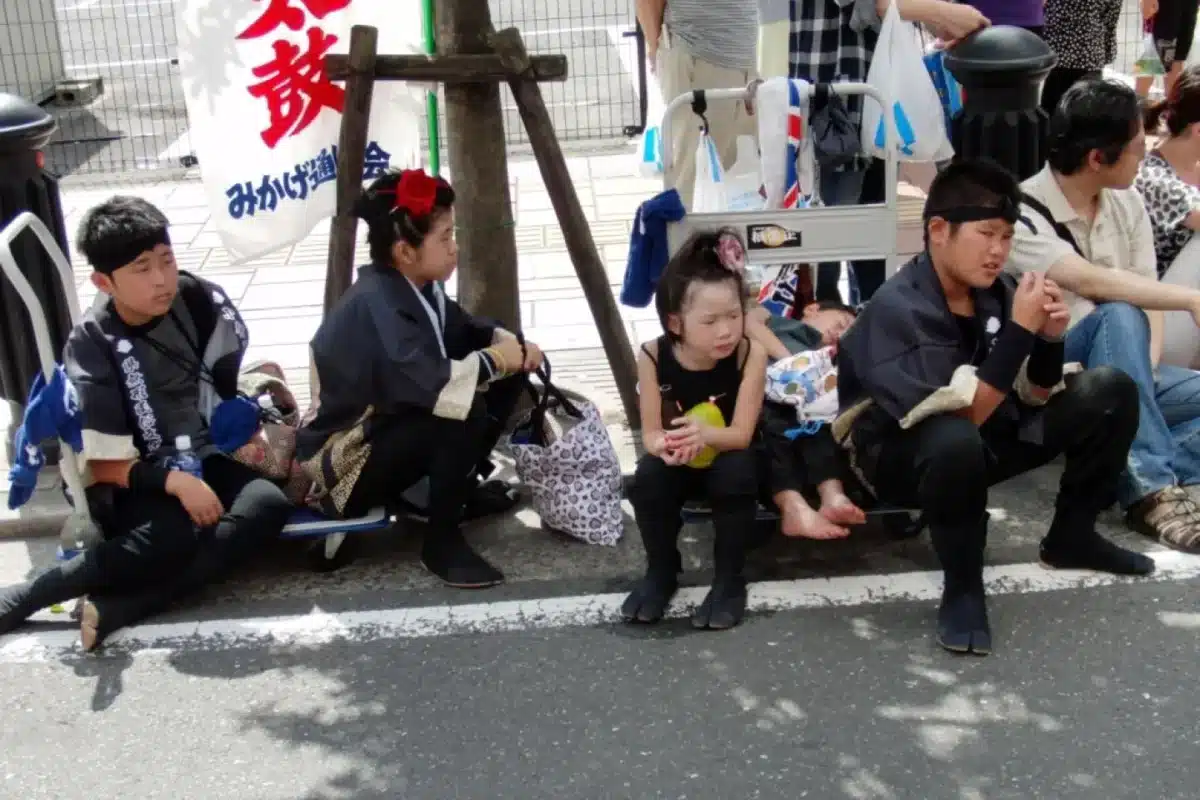
The festival is held in and around Kokura Castle, which sits in a large grassy park in the heart of the city. The castle tower itself becomes a viewing platform for the spectacle below, where row upon row of yatai food stalls line the perimeter and paths. At its core, the festival is about community solidarity in the form of mass cultural participation and creation. Groups of men, women, and children representing a single city community dress in identical leggings, jikatabi split-toe shoes, and happi coats bearing their local crest. As evening wears on, a frenzy takes hold, and drummers take turns on each side of the drum, switching places with a flourish to the piercing rhythm of tiny cymbals called jangara or kane.
Enjoy Your Event Stress-Free with Japan Travelo
Do you know? Planning events, festivals, concerts, and cultural experiences in Japan can be overwhelming. Japan Travelo brings everything together in one place, helping you manage your itinerary, transport, and accommodation with ease—so you can enjoy Japan without the stress of planning.
What makes it truly special is its inclusivity. Alongside neighborhood teams of lifelong residents, there are often groups of foreigners from all over the world putting on very creditable performances, welcomed as part of the local community.
Cultural Significance & Origins
The Kokura Gion Festival traces its roots to the early Edo period. In 1618, Hosokawa Tadaoki, the feudal lord who built Kokura Castle, began the Gion festival as the annual grand festival of Yasaka Shrine, located inside the castle grounds, to offer prayers for peace, prosperity, and the calming of plague and for the well-being of the castle town.
This origin mirrors the original Gion Festival of Kyoto, which began as a purification ritual to appease spirits believed to cause epidemics. The Kokura version evolved with a distinct local character centered on taiko drums. It was the first taiko drum event in Japan to be designated as an intangible folk cultural asset, a testament to its historical and artistic value.
For centuries, the belief has persisted that the Gion drums prevent summer troubles. The rhythmic sounds of the taiko drums symbolize wishes for peace, bountiful harvests, thriving businesses, and family safety. The festival has continued uninterrupted, except for brief periods, as the spiritual anchor of Kokura. Each neighborhood association maintains its own drum float, its own rhythms passed down through generations, and its own happi coat crest. The collective maintenance of these traditions is seen as a duty of local identity.
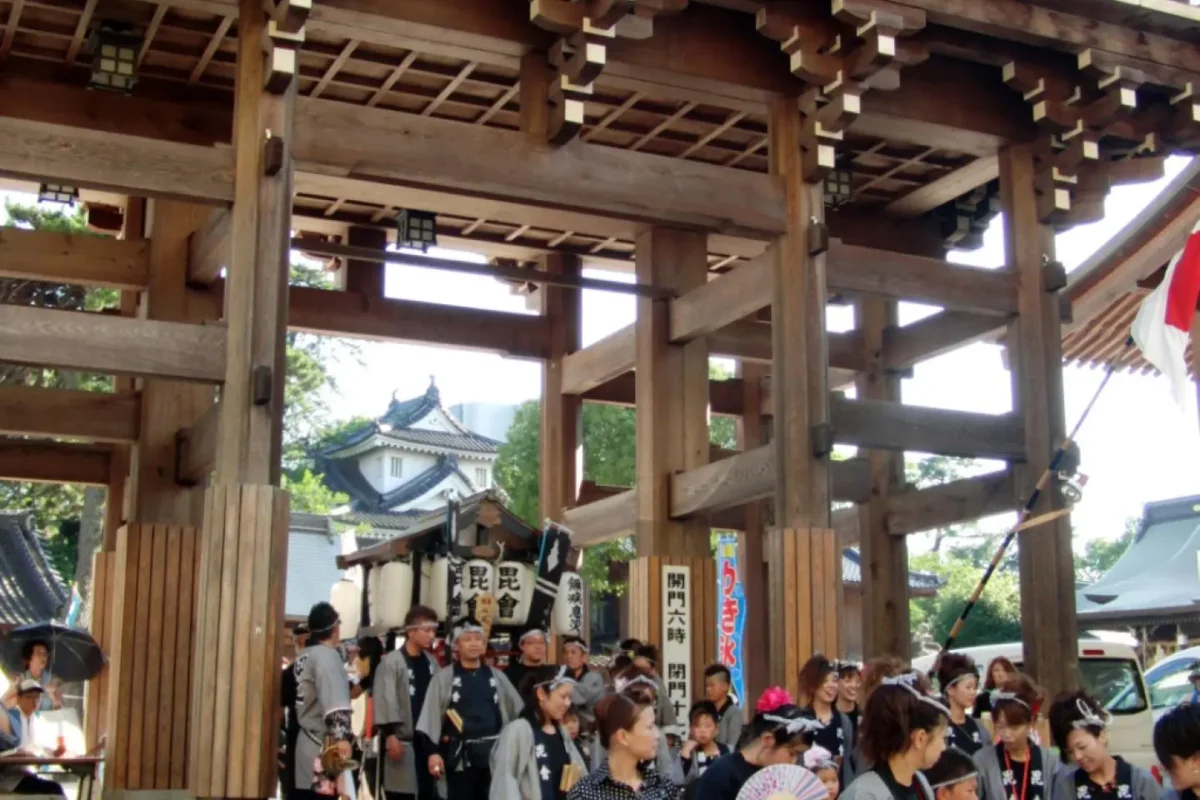
The shrine at the center, Yasaka Shrine inside Kokura Castle, remains packed during the festival with people watching traditional drama with heroes clad in bright kimono and ferocious masks, sword-fighting in slow motion to the sound of drum and flute, linking martial heritage with musical devotion.
Traditions, Rituals & Customs
The festival’s traditions are centered on two unique drumming styles and community parade customs.
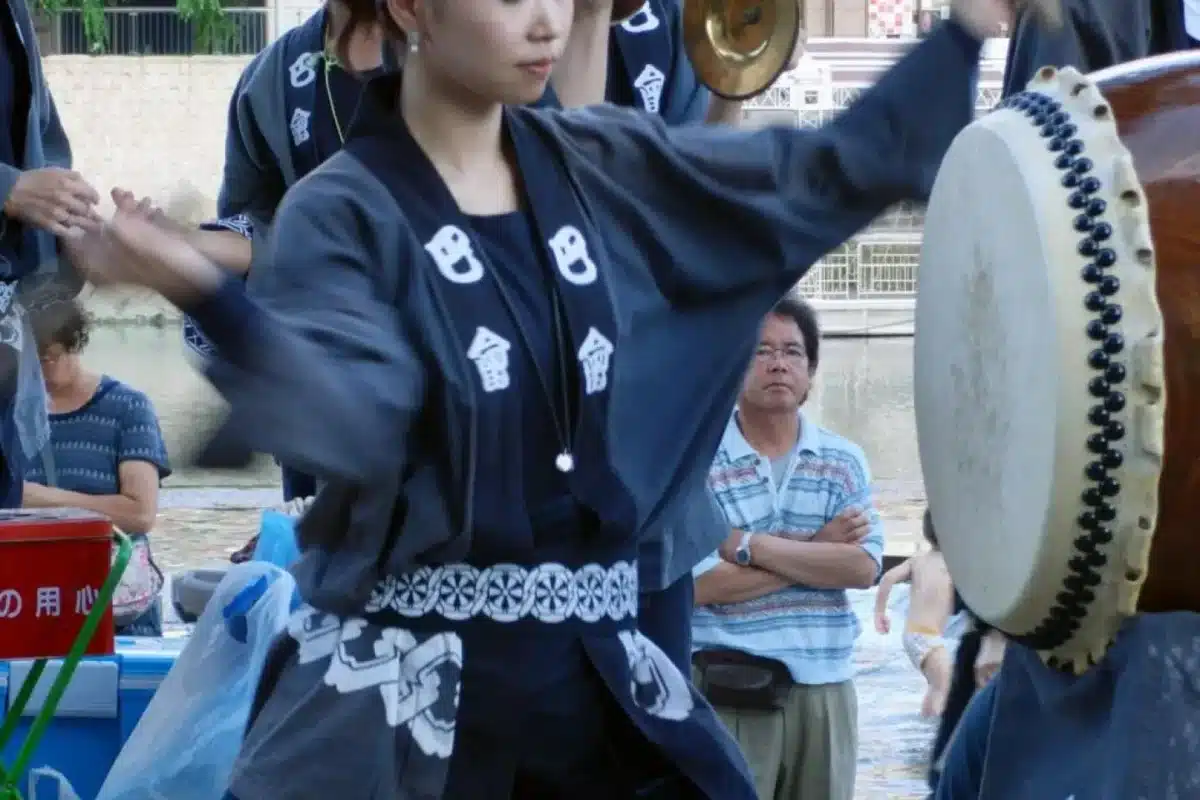
Double-Sided Drumming: What sets Kokura Gion Daiko apart is its rare double-sided drumming technique. Taiko drums are attached to both the front and back of Dashi floats. Two drummers face each other on opposite sides of the same drum, playing interlocking rhythms and taking turns with acrobatic switches. This requires extraordinary coordination and stamina, and is rarely seen elsewhere in Japan.
Mawari Taiko and Sue Taiko: There are two main performance forms. Mawari Taiko is the parade style, where drums are mounted on floats and beaten by drummers while the platforms are pulled through the city streets. The floats are pulled by children and adults shouting in unison. Sue Taiko is the stationary style, where drums are set on stages at places like Kokura Castle Otemon Plaza and struck in competitive showcases. Both are accompanied by the piercing sound of small cymbals called jangara that set the tempo.
Yoi Gion Float Parade: The festival traditionally kicks off with Yoi Gion, where floats carrying drums parade around Kokura Castle and the area around Uomachi Gintengai shopping arcade. The floats are decorated with lanterns, embroidered banners, and Shinto rope, and are considered offerings to the gods.
Community Uniform: Every participating group wears matching attire. This includes jikatabi, leggings, and a happi coat with the local crest or chonaikai neighborhood association name. The uniformity emphasizes that the individual represents the community, not themselves.
Children’s Role: Children play a crucial role as pullers of the floats and as performers. The sound of children’s calls pulling the floats, mixed with drums and gongs, is considered the quintessential sound of Kokura’s summer.
What to Expect at the Festival
Prepare for an immersive, loud, and deeply local experience that is far less touristy than many of Japan’s major festivals.
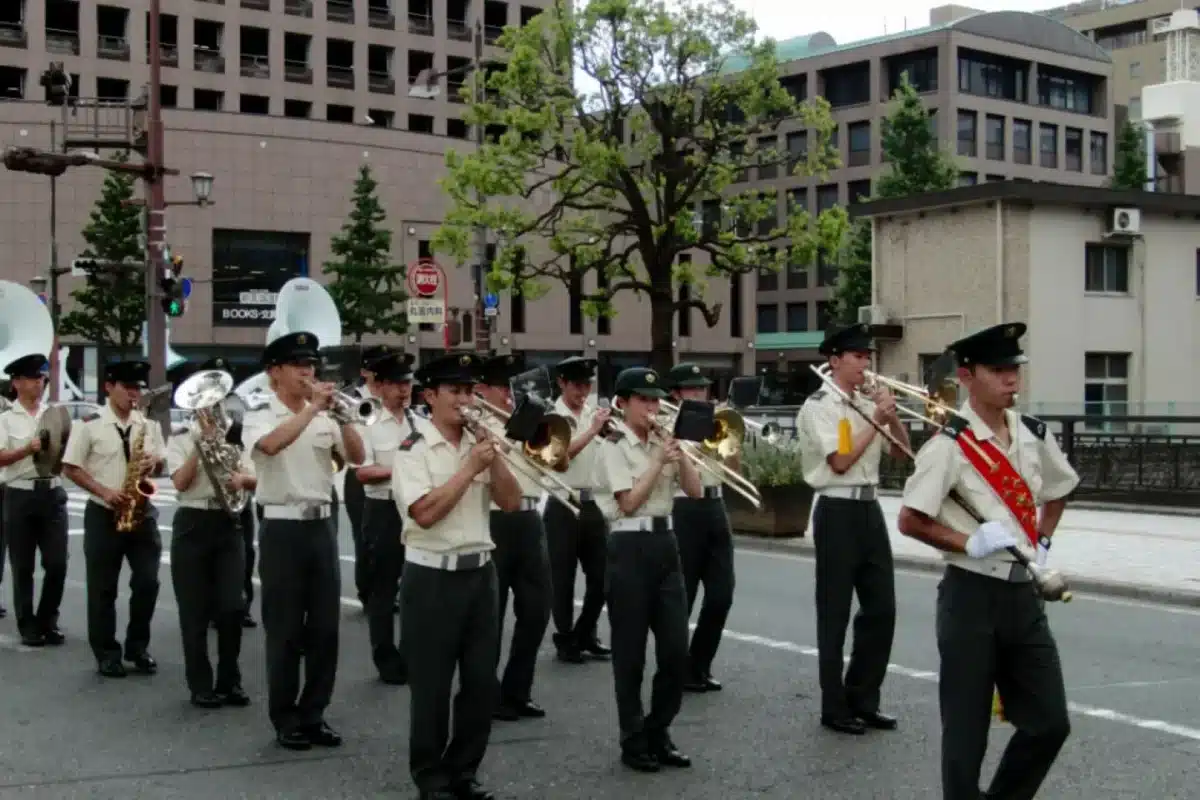
During the day, you will encounter men in festival clothes gathered in car parks around decorated wagons with drums on them, preparing for the evening. The general throbbing of drums from the direction of Kokura Castle builds steadily. As you walk toward the castle, you may encounter a marching band of local community groups or the Self-Defense Forces band, led by troupes of girls in yukata playing Japanese pop hits with a swaggering marching tempo.
Inside the castle park, the atmosphere is that of a massive neighborhood fair. Yatai stalls sell tasty snack foods like yakiudon, which is Kokura’s own original fried noodle dish, karaage, and shaved ice, alongside children’s toys. Industrial-strength fans are set up to cool audiences watching traditional performances in front of the shrine inside the castle walls.
As evening falls, groups of drummers assemble, setting up taiko drums on simple stands in front of their floats. The drumming begins simultaneously across multiple locations, creating a city-wide polyphony. You can wander from one group to another, each with its own rhythm and energy. The frenzy intensifies after dark, with flourishes, synchronized stick work, and call-and-response shouting. Between performances, you will find groups sitting quietly under trees in small urban parks, drinking beer with their drum wagon parked on the street, a perfect expression of local community relaxation amid the excitement.
The viewing is intimate. You stand mere feet from the drummers, feeling the vibration of the drums in your chest.
Date & Schedule
Location: Kokura Castle
Official Period: Mid-July 2027 (Dates TBD)
The Kokura Gion Festival is traditionally held over three days from the third Friday through Sunday of the peak summer festival season. While exact times for the 2027 edition will be announced closer to the event, the program consistently follows this historic three-day structure.
Day One – Yoi Gion Evening Parade: The festival kicks off on Friday evening with the Yoi Gion float parade. Floats carrying drums parade around Kokura Castle and the Uomachi and Kyomachi areas. This is a moving parade where the drums are played while being pulled through the city streets, starting in the late afternoon and continuing into the night.
Day Two – Children’s Competition and City Performances: On Saturday, the focus is on the next generation. A children’s drumming competition is held at Kokura Castle Otemon Plaza, showcasing the talents of students junior high age and younger. Simultaneously, drum performances and float processions are held throughout the city of Kokura, in shopping arcades and neighborhood squares.
Day Three – Grand Taiko Competition: Sunday culminates in the massive adult drumming showcase, the competitive drumming segment where neighborhood teams perform their most refined rhythms in front of judges at Kokura Castle and surrounding stages. This is the climax, where the most experienced drummers display their double-sided technique and stamina, continuing until around 10 PM.
All events are free and centered within walking distance of JR Kokura Station.
Visiting this event? Don’t miss out on these amazing activities and local experiences while you’re here.
Main Events & Programme
The program is concentrated around Kokura Castle but spreads throughout central Kokura.
Yoi Gion Float Parade: Floats carrying taiko drums are pulled along on the streets on floats, with drummers beating as they walk. This opening parade establishes the festival route and blesses the shopping districts.
Kodomo Taiko Competitive Drumming: The children’s taiko competition at Otemon Plaza in Kokura Castle. Teams of elementary and junior high school students in matching happi coats perform traditional rhythms passed down from their neighborhoods. Judging is based on rhythm accuracy, spirit, and coordination.
Otona Taiko Grand Competition: The adult competition where each chonaikai neighborhood association performs. Groups of up to a dozen drummers per float compete for honors. The highlight is the double-sided drumming where two players on one drum alternate at high speed.
Yasaka Shrine Ritual Performances: Inside the castle walls, in front of Yasaka Shrine, traditional kagura dance and historical drama performances are held with heroes in bright kimono and ferocious masks, accompanied by drum and flute.
City-wide Street Performances: Throughout the three days, smaller stages in Uomachi Gintengai, Kyomachi Gintengai, and along the Murasaki River host continuous Sue Taiko performances where drums are stationary and audiences can watch up close.
Community Marching Bands: Local bands, including brass bands and traditional music groups, parade between taiko stages, adding variety to the soundscape.
Traditional Dress, Arts & Crafts
The aesthetic of Kokura Gion is working-class festival wear elevated to ceremonial art.
Happi Coats and Crest: Each neighborhood team wears a happi coat bearing its unique crest or logo. These coats are often indigo-dyed with white lettering, though some teams use bold reds and yellows. The coats are short, allowing freedom of movement for drumming, and are treasured, repaired over many years.
Drum Floats – Dashi: The floats themselves are the main craft. They are wooden wagons, often several meters long, decorated with paper lanterns, carved wooden panels, and Shinto shimenawa ropes. Two taiko drums are mounted, one on each end. Some floats are over 100 years old, maintained by local carpenters. The drums are made from cowhide stretched over wooden bodies, tuned by rope tension.
Jangara Cymbals: The small, hand-held brass cymbals that lead the rhythm are hand-forged and produce a piercing, high-pitched tone that cuts through the deep boom of taiko. Players often have personalized grips wrapped in cloth.
Jikatabi and Leggings: Drummers wear traditional split-toe work shoes called jikatabi with rubber soles for grip on asphalt, and tight leggings that allow for wide stances during double-sided drumming. This attire connects the festival to its roots as a townspeople’s festival rather than a samurai one.
Taiko Bachi: The drumsticks are thick, heavy wooden bachi, often made from Japanese white oak. Expert drummers have a distinctive flourish when switching places, tossing and catching bachi in mid-air.
Traditional Food & Local Specialties
Kokura is a renowned food city, and the festival yatai stalls reflect its unique local cuisine.
Kokura Yakiudon: This is Kokura’s soul food and a must-try during the festival. Unlike regular yakiudon, Kokura’s version uses dry, chewy noodles stir-fried with a savory sauce, topped with bonito flakes and pickled ginger. It was invented in Kokura after the war and is sold at almost every stall around the castle.
Tanga Market Delicacies: The nearby Tanga Market, known as Kitakyushu’s kitchen, supplies the festival with fresh ingredients. Look for stalls selling nuka-miso pickled vegetables called nukazuke, a Kokura specialty.
Hakata Ramen and Motsunabe: While technically from Fukuoka City, these Kyushu staples are ubiquitous. Motsunabe offal hot pot stalls are popular for groups sharing after drumming.
Yakitori and Karaage: Grilled chicken skewers and Japanese fried chicken are standard festival fare, often seasoned with local yuzu kosho citrus pepper.
Kakigori and Beer Gardens: Due to the mid-summer heat, stalls selling kakigori shaved ice with local strawberry or matcha and temporary beer gardens serving ice-cold draft beer are packed.
Shiroya Bakery Specialties: Kokura is famed for Shiroya Bakery’s cream-filled spongecake omelettes called Sunny Pan, sold at stalls near the castle. These sweet, soft cakes are a favorite of children watching the drums.
Location & Festival Areas
The festival area spreads within walking distance of JR Kokura Station, making it exceptionally easy to navigate without transport.
Kokura Castle and Katsuyama Park: The main hub. Address is 2-1 Jonai, Kokurakita Ward, Kitakyushu, Fukuoka. The castle tower square hosts the main stage and Otemon Plaza competition area. The park’s grassy areas and paths are lined with yatai stalls. The castle itself is open for viewing, allowing visitors to enjoy the spectacle from high above.
Uomachi Gintengai and Kyomachi Gintengai: These covered shopping arcades are among the oldest in Japan and become parade routes during Yoi Gion. The arcades provide shade during the day and amplify the drum sounds in the evening.
Yasaka Shrine Inside Castle Walls: Located within the castle grounds, this is the spiritual center where rituals and traditional dramas are performed. The shrine is packed with spectators during these performances.
Murasaki River and Riverwalk Kitakyushu: The riverbank area near the castle hosts additional stages and offers a cooler evening breeze.
Kokura Station Area: The plaza outside JR Kokura Station and Nishi Kokura Station serves as secondary parade routes and gathering points for neighborhood floats before they proceed to the castle.
Getting to the Festival
Kitakyushu is a major transport hub in northern Kyushu, easily accessible from across Japan.
By Shinkansen: Take the Sanyo Shinkansen from Osaka, Hiroshima, or Hakata to Kokura Station. Kokura Station is served by all Sakura and Mizuho services. From Tokyo, take the Tokaido-Sanyo Shinkansen with one transfer, total journey about 5 hours.
By Air: The closest airports are Kitakyushu Airport and Fukuoka Airport. From Kitakyushu Airport, a bus to Kokura Station takes about 45 minutes. From Fukuoka Airport, take the subway to Hakata and Shinkansen to Kokura, about 30 minutes total.
By Ferry: As noted in historical reports, night ferries run from Matsuyama in Shikoku to Kokura, arriving early morning, a scenic route that brings you directly into the festival city.
Local Access: From JR Kokura Station, it is about 10 minutes on foot to Kokura Castle. From JR Nishi Kokura Station, it is about 8 minutes. The entire festival area is walkable, and roads around the castle are closed to traffic during the festival. The city’s monorail and buses operate with detours. Walking is the best way to follow the drum floats.
Where to Stay Nearby
Kitakyushu City has a wide range of accommodation, but hotels fill quickly during the festival.
Near Kokura Station: The area around Kokura Station offers the most options, from business hotels like Toyoko Inn and APA Hotel to higher-end options like Rihga Royal Hotel Kokura. Staying here puts you within a 10-minute walk of all venues and close to Uomachi’s restaurants and bars.
Near Kokura Castle and Riverwalk: Hotels in the Katsuyama and Riverwalk area offer views of the castle and immediate access to the main stages. These include Hotel Crown Palais Kokura and Station Hotel Kokura.
Mojiko Retro Area: For a more atmospheric stay, consider the Mojiko Retro district, about 15 minutes by train from Kokura. This historic port area has boutique hotels in preserved buildings and offers a quieter retreat after the drumming frenzy.
Booking Tips: Book at least 4 to 6 months ahead for the festival weekend. Many hotels offer festival packages that include a map of performance spots and earplugs. Business hotels in the area typically range from $60.00 to $120.00 per night during festival season, while luxury hotels range from $150.00 to $250.00.
Alternative: If Kokura is fully booked, consider staying in Hakata or Fukuoka City, about 20 minutes away by Shinkansen, and commuting.
What Visitors Can Participate In
The Kokura Gion Taiko Festival is exceptionally participatory and welcoming.
Watch and Cheer Up Close: Unlike many festivals with barriers, you can stand directly beside the drum floats and follow them as they parade. Cheering, clapping, and shouting kakegoe encouragement is expected and appreciated.
Foreigner Teams: There is a well-known tradition of foreigner teams composed of international residents and visitors. These teams practice in advance and perform alongside local teams, wearing matching happi coats. Contact the Kokura Gion Daiko Preservation and Promotion Association well in advance if interested.
Workshops: During the day, free taiko workshops are sometimes held in Katsuyama Park where children and adults can try hitting a small taiko drum and learn the basic rhythm pattern under the guidance of local drummers.
Carrying Lanterns and Pulling Ropes: Younger children can often join the rope-pulling teams for the floats in their own neighborhood, especially in the daytime children’s parade. Ask at your hotel or local information booth for neighborhood associations accepting guest pullers.
Yukata Rental: Wear a light summer yukata as many local girls do. Shops in Uomachi arcade rent yukata sets for the day, enhancing the festive feeling and making you blend in with the crowd.
Evening Socializing: The most authentic participation is joining locals sitting quietly under a tree after their performance, drinking beer and discussing the drumming. A simple greeting and compliment on their performance often leads to a shared drink and invitation to their neighborhood’s next performance.
Things to Do Before or After the Festival
Kokura and Kitakyushu offer rich industrial heritage and natural beauty.
Kokura Castle and Garden: Explore the castle itself, reconstructed in 1959, with exhibits on the Hosokawa clan and panoramic views from the top floor. The adjacent Japanese garden, Kokura Castle Garden, is a serene strolling garden.
Mojiko Retro District: Visit the historic port of Moji, with its preserved early 20th-century buildings, the Mojiko Retro Observatory, and the Kanmon Straits Museum. Take a short ferry across the Kanmon Strait to Shimonoseki.
Tanga Market: Explore Kitakyushu’s kitchen, a bustling covered market selling fresh seafood, nukazuke pickles, and local snacks. Perfect for breakfast before the festival.
Mount Sarakura Night View: Take the cable car and slope car up Mount Sarakura for one of Japan’s top three night views, overlooking the illuminated city and strait.
Tobata Gion Yamagasa: If you extend your stay, Kitakyushu’s other major Gion festival, Tobata Gion Yamagasa, features 10-meter-tall floats with embroidered banners by day and pyramids of 309 lanterns by night, recognized as UNESCO Intangible Cultural Heritage.
Kokura Castle & Park Market: If visiting outside the main festival, check if the large bread festival or other markets are being held across from Kokura Castle, featuring local bakeries like Shiroya.
Local Food & Restaurants
Beyond yatai stalls, Kokura has a distinctive food scene known as Kokura Gourmet.
Kokura Yakiudon Shops: For authentic yakiudon, try Oimatsu or Kurogane near Kokura Station, where the dish is served on hot plates with generous toppings. Price ranges from $6.00 to $9.00.
Yakitori and Kakuuchi: Kokura is famous for its kakuuchi, standing bars where you buy drinks from a liquor store and drink on the spot. The Uomachi area has many yakitori shops serving chicken grilled over charcoal with salt or tare sauce. Budget $15.00 to $25.00 per person with drinks.
Tanga Market Restaurants: Small eateries inside Tanga Market serve teishoku set meals with grilled fish, miso soup, and nukazuke. A typical set costs $8.00 to $12.00.
Hakata Ramen: Try Kokura’s take on tonkotsu ramen at shops like Ryukyu Ramen or Sanraku. Bowls range from $7.00 to $10.00.
Shiroya Bakery: Do not miss Shiroya Bakery Kokura branch for their famous Sunny Pan omelette bread and other cream-filled breads, priced from $1.50 to $3.00 each.
Riverwalk Dining: The Riverwalk Kitakyushu complex next to the castle has a variety of restaurants with views of the castle, offering everything from Italian to traditional Japanese, ideal for a sit-down meal between drum performances.
Ticket Information & Access
The Kokura Gion Taiko Festival is completely free to watch and enjoy.
Admission: All street parades, competitive drumming segments at Kokura Castle Otemon Plaza, and shrine performances are free. There are no tickets required for general viewing. You can follow the drum floats through the city, watch from the castle park, or stand in shopping arcades at no cost.
Reserved Seating: There is generally no paid reserved seating system like at larger festivals. Viewing is on a first-come, first-served basis around the competition stages. Some small paid seating areas may be set up for special guests, but the vast majority of space is open.
Pricing from Previous Editions: Since the festival is free, ticket price is $0.00 for all public areas. If you choose to enter Kokura Castle tower during the festival for a high view, castle admission from previous editions is $3.50 for adults, $2.00 for high school students, and $1.50 for elementary students. These prices are converted to USD and may vary slightly.
Access: The festival area spreads within walking distance of JR Kokura Station. No special access passes are needed. The area is wheelchair accessible, though crowds can be dense in the evenings. Information booths are set up at Kokura Station and Kokura Castle during the festival.
Contact: Kokura Gion Taiko Preservation and Promotion Association at +81-93-562-3341 for inquiries about participation or schedule details.
Official Event Information
Festival Name: Kokura Gion Daiko Festival, also known as Kokura Gion Taiko Festival or Kokura Gion Matsuri
Location: Kokura Castle, 2-1 Jonai, Kokurakita Ward, Kitakyushu, Fukuoka Prefecture
Designation: National Important Intangible Folk Cultural Property, first taiko festival to receive this designation
Organizer: Kokura Gion Daiko Preservation and Promotion Association
Official Website URL as Text: https://en.japantravel.com/fukuoka/caught-up-in-a-frenzy-of-drumming-the-kokura-gion-festival/605
Additional Official Information as Text: www.kokura-castle.jp/overview-en/ and crossroadfukuoka.jp/event/kokura-gion-daiko/
Contact Phone as Text: +81-93-562-3341
Video
Location
FAQ
What is the Kokura Gion Taiko Festival and why is it called Taiko Gion?
The Kokura Gion Taiko Festival is a 400-year-old summer festival in Kitakyushu City that originated in 1618 as the grand festival of Yasaka Shrine inside Kokura Castle to pray for peace and health. It is called Taiko Gion because unlike other Gion festivals that focus on floats, its central element is the performance of taiko drums mounted on Dashi floats, with a unique double-sided drumming technique where two drummers play opposite sides of the same drum simultaneously.
Do I need tickets and where is the best place to watch the drumming?
No tickets are needed as all parades and competitions are free to watch from public areas around Kokura Castle, Uomachi Gintengai, and city streets. The best places to watch are Kokura Castle Otemon Plaza for the formal competitions where you can see the double-sided technique up close, and the Uomachi shopping arcade for the moving parade where you can follow floats at close range and feel the drums vibrate.
What is double-sided drumming and what makes it so rare?
Double-sided drumming is a technique unique to Kokura where a single taiko drum is mounted with one head facing forward and one facing backward on a float, and two drummers stand on opposite sides playing interlocking rhythms and switching places with acrobatic flourishes. It is rare because it requires perfect synchronization, immense stamina, and trust between partners, as they must avoid colliding while playing at high speed. This technique was the reason it became the first taiko festival designated as an Important Intangible Folk Cultural Property.
Can tourists participate in the Kokura Gion Taiko Festival?
Tourists cannot join official neighborhood competition teams without long-term membership, but the festival is exceptionally inclusive for spectators and offers participatory options. Visitors can join free daytime taiko workshops in Katsuyama Park, rent a yukata to blend in with locals, and in some years join special international teams composed of foreign residents that perform alongside local teams. The most common participation is following the floats, cheering, and socializing with teams during their breaks in small parks.
What else should I eat and do around Kokura Castle during the festival?
Beyond the yatai stalls selling Kokura yakiudon and karaage around the castle park, you should explore Tanga Market for nukazuke pickles and fresh seafood, try a kakuuchi standing bar in Uomachi for yakitori and local sake, and visit Shiroya Bakery for its famous Sunny Pan cream omelette bread. Before or after drumming hours, you can climb Kokura Castle tower for a panoramic view of the festival, stroll the adjacent Japanese garden, or take a short train ride to Mojiko Retro for its historic port buildings and night views of the Kanmon Strait.

Leave a Reply