
Overview
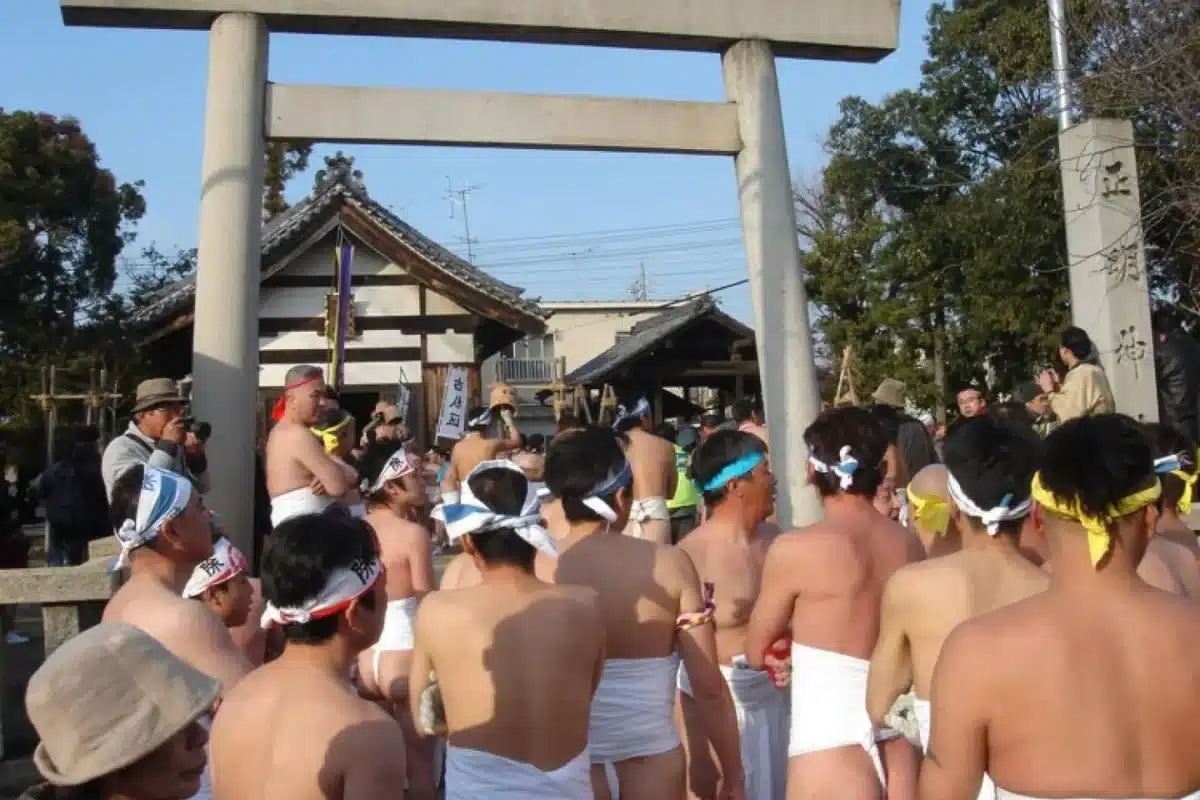
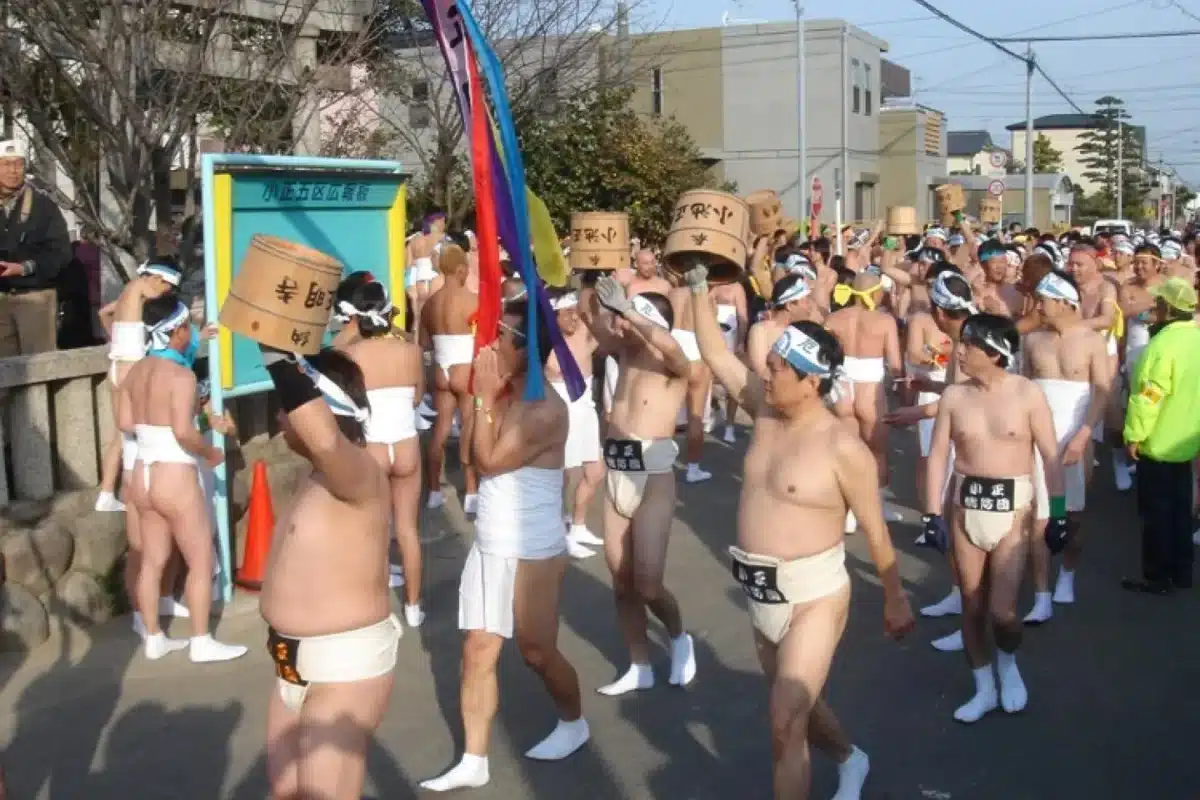
The Konomiya Hadaka Matsuri, formally known as Naoi Shinji, is one of Japan’s oldest, wildest, and most famous naked festivals. Held at Owari Okunitama Shrine, commonly called Konomiya Shrine, in the sleepy township of Konomiya, Inazawa City, just west of Nagoya City, this is a ritual where thousands of men wearing almost nothing brave freezing conditions to drive out bad luck and welcome in good fortune.
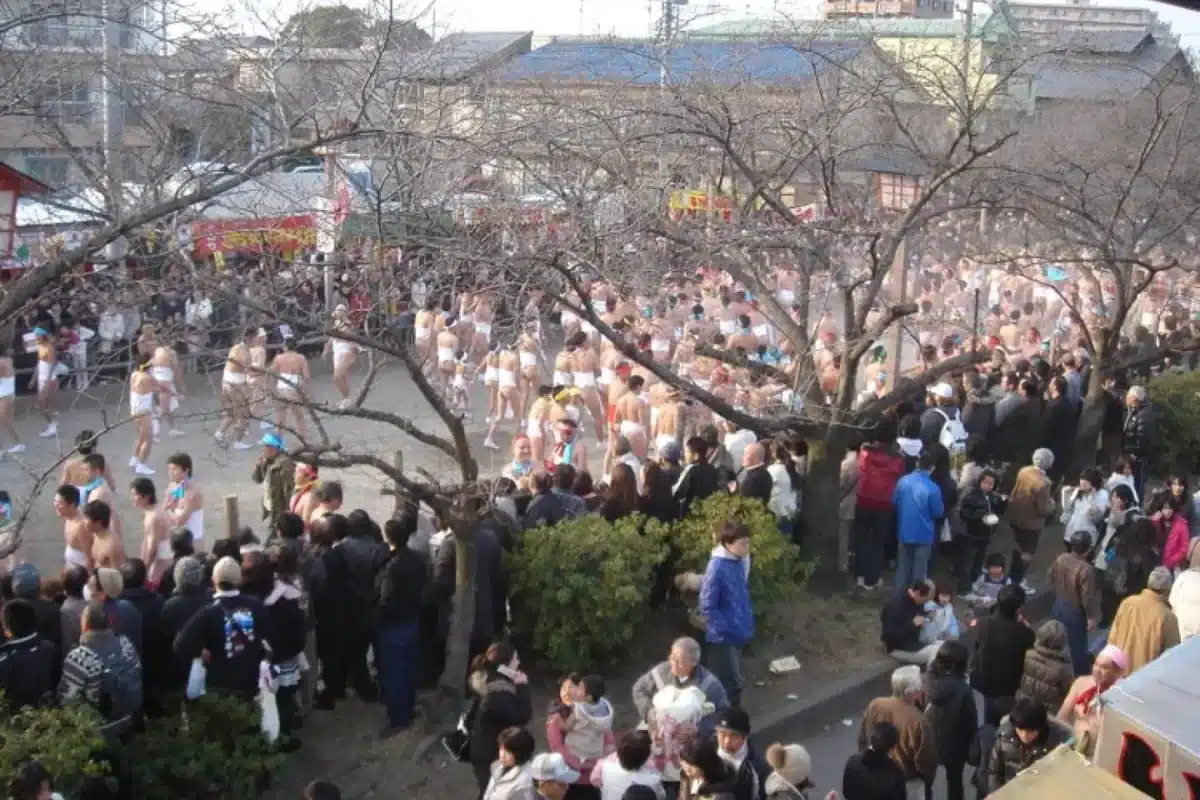
There are lots of naked people running wild in the streets. Hundreds of them, streaking through town, and hundreds of thousands of spectators, young and old, male and female, fully clothed against the cold, encouraging them on. Naked festivals are held in various places around the country, but the Inazawa Konomiya Naked Festival is considered one of the oldest and most dramatic, drawing massive crowds to the precincts of the ancient shrine despite its extreme nature.
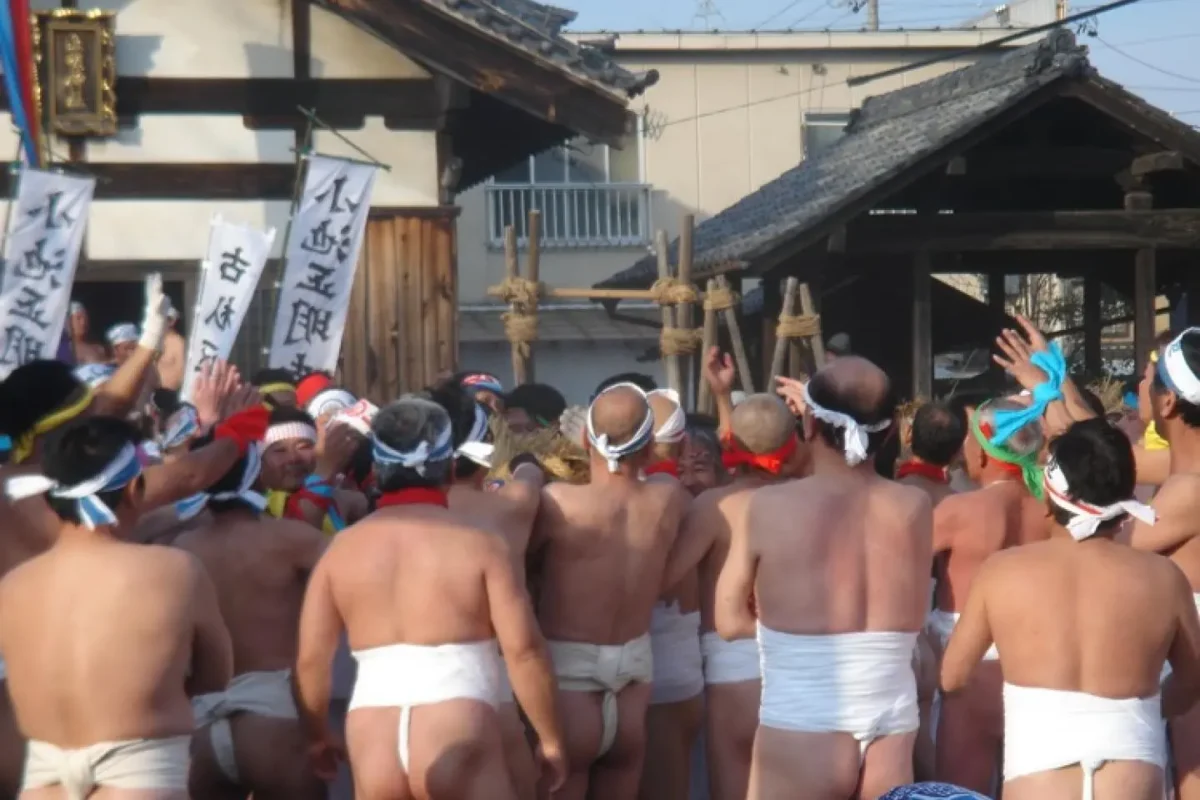
Only men traditionally participate in the main scramble, dressed only in light white cotton fundoshi loincloths and white tabi socks, with colored cotton headbands called hachimaki. The only other participants are the priests and the central figure known as the Shin Otoko, or God Man. As with all Japanese festivals, there are plenty of food and drink stalls set up around the area, sake flows freely, and there are many great photo opportunities. It is raucous, riotous, sacred, and utterly unforgettable.
Enjoy Your Event Stress-Free with Japan Travelo
Do you know? Planning events, festivals, concerts, and cultural experiences in Japan can be overwhelming. Japan Travelo brings everything together in one place, helping you manage your itinerary, transport, and accommodation with ease—so you can enjoy Japan without the stress of planning.
Cultural Significance & Origins
The Konomiya Hadaka Matsuri has a history spanning over 1,200 years, making it one of the longest continuously observed rituals in Japan.
Its origin dates back to the Nara Era. In the year 767, Emperor Shotoku ordered the governors of all districts and the kokubun-ji provincial temples to offer invocations to dispel evil spirits, plagues, and disease that were affecting the land. In Owari Province, presently Aichi Prefecture, the governor visited the Owari Shosha Shrine, Konomiya Shrine, to perform a purification rite called Naoi Shinji to drive away evil spirits and calamities.
In its earliest form, the ritual involved villagers grabbing a passing traveler, often enticed with seeming acts of kindness, and dragging him into the shrine to be offered as a sacrifice to absorb the community’s misfortune. Due to its brutality and occasional riots, the festival was outlawed by the ruling Owari Clan in 1744. In the early Meiji period, it was reinstated minus the violence, and the nudity aspect that was popular in other festivals at the time was added, transforming it into the Hadaka Matsuri we know today.
Today the festival’s purpose remains the same as it was 1,200 years ago. It is celebrated to drive out bad luck, known as yaku, and welcome in good luck. Participants, especially men of ages considered unlucky in Japanese tradition, such as 24 and 42, join to purify themselves. The Shin Otoko acts as a human scapegoat, absorbing all the bad luck of the community before being driven out of town. After more than a millennium, the core belief endures that physical contact with the sacred man can transfer misfortune away.
Traditions, Rituals & Customs
The festival unfolds in several distinct ritual stages, each with its own customs.
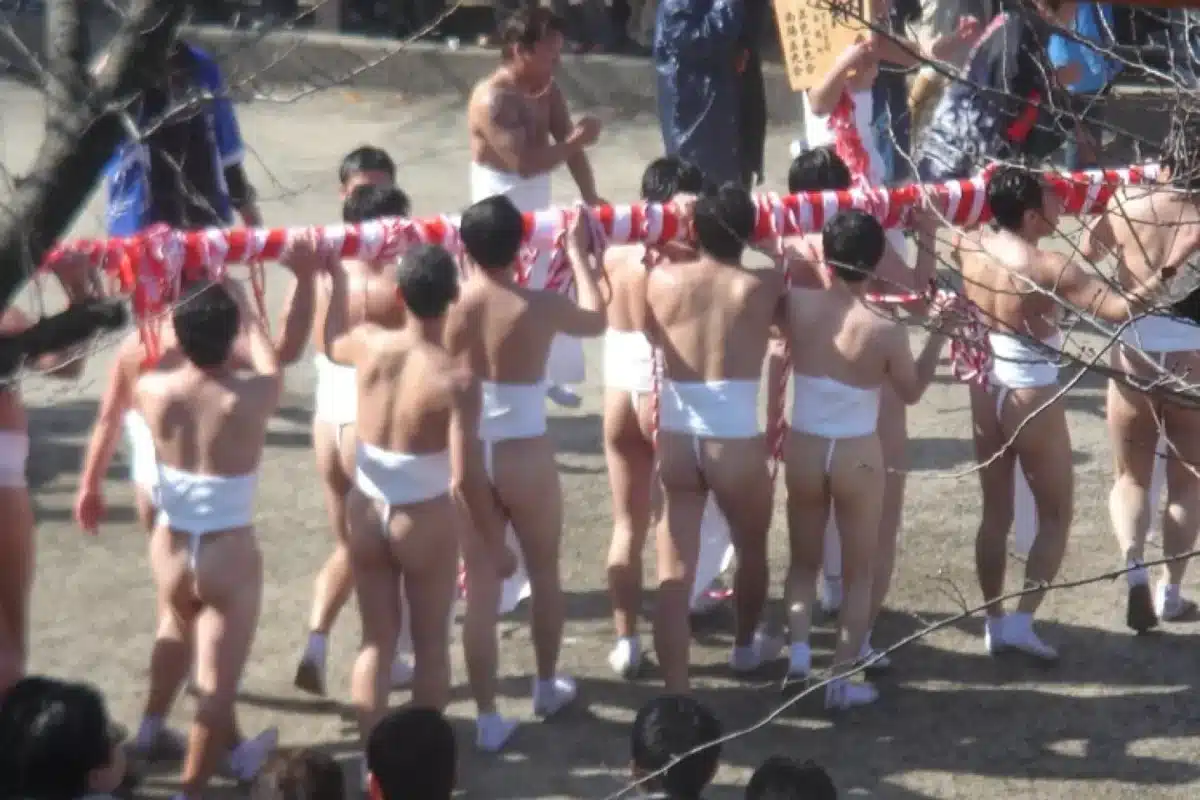
Naoi Zasa Offering: Groups of participants carry colorful portable shrines called naoi zasa mounted on long bamboo poles called sasa. These poles are covered in ribbons and decorated with strips of cloth squares called naoigire on which townswomen have written prayers for the coming year. The groups chant Washoi, Washoi, Washoi as they carry the poles through the streets toward the shrine. The poles are adorned through rigorous exercise and sake drinking to warm up against the cold.
Purification with Cold Water: As the groups of near-naked men pass certain points, spectators and shrine attendants splash them with buckets of ice-cold water. This is part of the purification process called misogi. Despite the freezing temperature, the men continue shouting and spinning their poles, with steam rising from their bodies.
Spinning and Hurling the Poles: As they approach the passageway to the shrine, participants step up their performance. They begin to spin the bamboo poles at high speed before planting the pole in the ground and scrambling up as close to the top as they dare while the crowd shrieks approval. Finally, they sprint toward the shrine’s torii gate and hurl the pole with all their might toward waiting priests within the shrine grounds. Successfully delivering the pole is considered good luck.
The Shin Otoko God Man: The climax centers on one lucky soul chosen each year to be the Shin Otoko. This man is selected from among volunteers, often those who have had particularly unlucky years. For days leading up to the festival, he is kept in solitude and prayer, subsisting on nothing but thin rice gruel, and is kept in near isolation for spiritual purification. On the day, he gets completely shaven, even his eyebrows are removed, and he is stripped naked. He is blessed by priests before being let loose.
The Scramble and Touch: Thousands of fundoshi-clad men await the arrival of the Shin Otoko, chanting and soaked with cold water. When he appears, the entire mass rushes toward him, crushing together in an intense scramble. The goal is to touch, slap, or hit him, thereby passing their bad luck onto the God Man and bringing luck to themselves. His entourage of protectors can do little but hurl more cold water to try to control the crowd. After battling the masses, the Shin Otoko makes his prayers at the shrine.
Naoigire Cloth Strips and Mochi Burial: The colored headbands worn by participants are torn into strips later in the day. Receiving one or two of these strips, called naoigire, is said to bring good fortune. Cloth strips are sold for a small offering, traditionally around 100 yen each, to ward off bad luck. After the scramble, the Shin Otoko’s wounds are tended to and he prepares for a late-night ritual where he buries an ashen mochi rice cake into which he has transferred the accumulated misfortune of the town, before being driven out of town, taking all the bad luck with him.
What to Expect at the Festival
Expect a visceral, loud, and chaotic experience that is both sacred and profane.
The streets of Konomiya are lined with spectators cheering the near-naked participants, reaching out to touch them for luck. As the groups pass, you will hear constant shouts of Washoi and see sake being shared among participants to maintain courage against the cold. Towards the end of the day, there can be rather embarrassing moments when the loincloths of the more inebriated start to come undone, adding to the raucous atmosphere.
The atmosphere intensifies as sunset approaches. The number of fundoshi-clad men grows to several thousand, all shouting, steam rising from their bodies in the cold air. Buckets of cold water are cannoned around by priests and volunteers. When the Shin Otoko appears, his ritually shaven head catching the floodlights in the dark, the crowd surges as one consciousness toward him. The crush is intense, with elbows digging, men hurling themselves from fences, crowd-surfing over heads, all trying to make contact.
Photography is excellent throughout, but the main scramble is extremely crowded and physical. Spectators should keep a safe distance unless participating. Food and drink yatai stalls are everywhere, offering warm sake, grilled meats, and fried snacks, allowing you to warm up between events.
Recent editions have also seen historic changes. After 1,250 years as a men-only festival, organizers have allowed women to participate in certain ceremonies of the festival, such as carrying bamboo poles in dedicated groups, marking a significant evolution while preserving the core Shin Otoko scramble.
Date & Schedule
Location: Owari Okunitama Shrine, Konomiya Shrine, Inazawa City, Aichi Prefecture
Official Period: Late Feb – Early March 2027 (Dates TBD)
The Konomiya Hadaka Matsuri is traditionally held annually on the 13th day of the first lunar month, also referred to as the second moon of the old calendar. Because it follows the old lunar calendar, the date on the Gregorian calendar shifts every year, typically falling in late February to early March.
Typical Program Structure for 2027 Edition: While exact times for 2027 will be confirmed closer to the event, the schedule consistently follows this pattern based on previous years.
Morning to Afternoon: The festival begins in the early afternoon with the gathering of participant groups across Inazawa City. Groups carrying naoi zasa bamboo poles parade through the streets toward Konomiya Shrine, chanting and being purified with cold water. Pole spinning and hurling rituals take place at the shrine approach.
Mid-Afternoon Main Ceremony: Around 15:00, the main ceremonies begin at Owari Okunitama Shrine, with prayers and preparation for the Shin Otoko.
Evening Climax: As evening falls and temperature drops further, the thousands of hadaka men gather inside the shrine grounds awaiting the Shin Otoko. His appearance and the subsequent scramble to touch him is the highlight, occurring after sunset and lasting for over an hour.
Late Night Closing Rite: At around 03:00 on the following morning, the secretive Naoi Shinji rite is performed where the Shin Otoko buries the ashen mochi cake carrying the town’s misfortune outside the town, officially closing the festival.
Visiting this event? Don’t miss out on these amazing activities and local experiences while you’re here.
Main Events & Programme
Naoi Zasa Parade: The daytime procession where groups of men in fundoshi carry bamboo poles decorated with prayer cloths through Konomiya town to the shrine. This involves chanting, spinning poles, and cold water purification.
Mikoshi and Shrine Rituals: Portable shrines are carried and prayers are offered at Konomiya Shrine to dispel evil spirits. Priests perform purification rituals for the Shin Otoko and for the crowd.
Pole Hurling Competition: Participants hurl their decorated poles toward the shrine’s inner precincts where priests receive them. Distance and form are cheered by spectators.
Shin Otoko Appearance and Scramble: The central event where the shaven, naked Shin Otoko runs a course through the shrine grounds, chased by thousands of fundoshi-clad men eager to touch him. This is the most intense and crowded portion.
Naoigire Distribution: After the scramble, torn strips of the participants’ headbands are distributed or sold as lucky charms to ward off bad luck.
Naoi Shinji Night Burial: The final secret rite in the early hours where the Shin Otoko, after having absorbed the community’s bad luck, buries a mochi rice cake mixed with ash, symbolizing the removal of misfortune from the town.
Women’s Participation Ceremony: In recent years, a dedicated ceremony has been introduced where women’s groups can participate in carrying offering poles, a historic first after 1,250 years.
Traditional Dress, Arts & Crafts
The dress code is minimal but highly symbolic.
Fundoshi and Sarashi: Participants wear only a white cotton fundoshi loincloth, traditionally made from sarashi bleached cotton, tightly wrapped to allow freedom of movement while maintaining modesty. White tabi socks with rubber soles are worn for grip. No other clothing is permitted for the main participants.
Hachimaki Headbands: Colored cotton headbands are worn, each group choosing a distinct color. These headbands are later torn into strips called naoigire which become lucky charms. The act of tearing and giving away the headband is considered generous and lucky.
Shin Otoko Appearance: The Shin Otoko is completely naked and completely shaven, including eyebrows, symbolizing rebirth and purity. His bare, vulnerable appearance contrasts with the mass of loincloth-clad men.
Naoi Zasa Craft: The bamboo poles are themselves folk crafts. Long bamboo is selected and decorated with colorful ribbons, paper streamers, and prayer cloths handwritten by local women. The craftsmanship of balancing the pole while spinning is a skill passed down.
Prayer Cloths: The small cloth squares on which prayers are written are an important craft. Townswomen write wishes for health, safe childbirth, business success, and good harvests, which are then attached to the poles and offered to the shrine.
Traditional Food & Local Specialties
The festival takes place in Aichi, a region famous for its unique miso-based cuisine, and yatai stalls reflect this.
Miso Nikomi Udon: Thick udon noodles stewed in a rich, dark hatcho miso broth, served bubbling hot in an earthen pot, perfect for warming up in the cold.
Miso Katsu and Tebasaki: Pork cutlet covered in sweet red miso sauce and Nagoya-style fried chicken wings seasoned with pepper and sesame, both staples at festival stalls.
Kishimen and Doteni: Flat noodles in light broth and beef sinew stewed in miso, hearty dishes that provide energy for participants.
Atsukan Sake and Amazake: Hot sake served from stalls is consumed liberally by participants to ward off cold and boost courage. Sweet, low-alcohol amazake is also offered to spectators.
Oden and Yakiimo: Simmered fish cakes and vegetables in broth and roasted sweet potatoes, popular winter festival foods that warm hands and stomachs.
Inazawa Specialties: The area is known for ginkgo nuts and seasonal vegetables. Look for ginnan skewers and fresh produce from local farms sold at the market stalls near Konomiya Station.
Location & Festival Areas
The festival is centered entirely on Konomiya Shrine and its surrounding streets.
Owari Okunitama Shrine Konomiya Shrine: The main venue. Address is 1-1-1 Konomiya, Inazawa City, Aichi Prefecture. The shrine grounds include the main hall, the approach lined with torii, and the inner courtyard where the Shin Otoko scramble takes place. The shrine is normally a quiet, sleepy shrine, transformed during the festival.
Konomiya Station to Shrine Approach: The road from Meitetsu Konomiya Station to the shrine, about six minutes walk, becomes the main parade route. This street is lined with spectators, yatai stalls, and participants gathering.
Naoi Shinji Pole Ground: An open area in front of Inazawa Station and in front of the shrine where poles are raised and spun before being hurled.
Tennogawa Area and Surrounding Streets: Side streets around the shrine are closed to traffic and become gathering points for different neighborhood groups, each with its own banner and chant.
Getting to the Festival
Inazawa City is located just northwest of Nagoya City, making it easily accessible as a day trip.
By Train: Take the Meitetsu Nagoya Main Line from Meitetsu Nagoya Station to Konomiya Station. It is then a six-minute walk to Konomiya Shrine. Alternatively, take JR Tokaido Main Line to Inazawa Station and walk about 15 minutes or take a local bus. During the festival, extra trains are operated and stations are extremely crowded.
By Car: Driving is not recommended. Roads around Konomiya Shrine and Konomiya Station are closed to traffic during the festival, and parking is extremely limited. Public transport is strongly advised.
From Central Nagoya: The journey from Nagoya Station to Konomiya Station is approximately 15 to 20 minutes by Meitetsu limited express.
On Foot During Festival: Once in Konomiya, all venues are within a 10-minute walk. The main scramble area inside the shrine has limited capacity and is controlled by police and volunteers. Arrive early to secure a viewing spot.
Where to Stay Nearby
Inazawa City has limited accommodation, so most visitors stay in nearby Nagoya City.
In Inazawa City: A few business hotels near Inazawa Station and Konomiya Station offer basic rooms. These sell out months in advance for the festival, often requiring reservations nearly a year ahead.
In Nagoya City: Nagoya Station, Sakae, and Fushimi areas offer a huge range of accommodation from luxury hotels to budget hostels and capsule hotels. Staying in Nagoya allows you to enjoy the festival and return to the city for evening dining. The train connection makes it easy to return late, though note that trains are packed after the festival ends.
Booking Tips: Hotels near Konomiya Station are highly competitive due to the festival drawing nearly 300,000 spectators in some years. If you wish to stay within walking distance, book as early as possible. Many visitors choose to stay in Nagoya and arrive early morning to secure a good viewing position.
Ryokan Experience: For a more traditional experience, consider a ryokan in Inazawa or nearby Ichinomiya City, where you can warm up with a hot bath after a cold day watching the festival.
What Visitors Can Participate In
While the main Shin Otoko scramble is traditionally for men and requires prior registration through neighborhood associations, visitors have several participatory options.
Spectator Touching for Luck: Spectators lining the parade route are encouraged to reach out and touch the fundoshi-clad participants as they pass. Touching is believed to bring good fortune, and participants often welcome it.
Naoigire Lucky Strips: Purchase or receive torn strips of headbands called naoigire. These cloth strips to ward off bad luck are traditionally sold for a small offering of $1.00 and are considered powerful charms to carry for the year. Priests also bestow them with English explanations in recent years.
Women’s Groups: Since 2024, women’s groups have been officially allowed to participate in certain ceremonies, including carrying offering poles in dedicated groups. Inquiries can be made through Konomiya Shrine for those interested in joining these historic new groups.
Wearing Festival Gear: Visitors can purchase small fundoshi or headbands as souvenirs and wear them over clothes to join the festive spirit, though full participation in fundoshi requires registration.
Prayer Offerings: Write a prayer on a cloth square and attach it to a group’s naoi zasa pole before it is carried to the shrine. Many groups welcome contributions from visitors.
Food and Sake Sharing: Join locals at yatai stalls, sharing hot sake and cheering together. The atmosphere is inclusive despite the extreme nature of the main ritual.
Things to Do Before or After the Festival
Inazawa and western Aichi offer many cultural stops to combine with the festival.
Konomiya Shrine Exploration: Visit the shrine outside festival hours to appreciate its 1,300-year history in peace. The shrine grounds include ancient trees and auxiliary shrines dedicated to protection from disease.
Inazawa Planting and Ginkgo: Inazawa City is famous as a major producer of ornamental plants and ginkgo. Visit local nurseries and the Sobue Ginkgo area, especially beautiful in autumn.
Nagoya Castle and Atsuta Shrine: Combine your trip with Nagoya’s main attractions. Nagoya Castle, with its golden shachihoko, and Atsuta Shrine, one of Japan’s most important shrines housing the Kusanagi sword, are both easily accessible.
Toyota Commemorative Museum and SCMaglev Park: For modern attractions, the Toyota museum and the SCMaglev and Railway Park in Nagoya offer fascinating industrial heritage.
Kisogawa River and Sobue Beach: The nearby Kisogawa River offers pleasant riverside walks and seasonal flower fields.
Local Food & Restaurants
The Nagoya area’s distinctive cuisine, known as Nagoya Meshi, is a highlight.
Nagoya Meshi in Inazawa: Near Konomiya Station, small restaurants serve Nagoya specialties like miso katsu, hitsumabushi grilled eel, and tebasaki chicken wings. Expect to pay $8.00 to $15.00 for a set meal.
Yatai Stalls at Festival: During the festival, yatai stalls are the main dining option, serving yakisoba, takoyaki, oden, and hot amazake. Budget $3.00 to $6.00 per item.
Miso-based Dishes: Try miso nikomi udon at local shops like Yamamotoya style restaurants. A bubbling pot costs around $9.00 to $12.00.
Sake Breweries: Aichi has many sake breweries. Look for local brands like Kuheiji and Nito to accompany your meal, priced around $5.00 to $8.00 per glass.
Nagoya Station Area: If staying in Nagoya, the underground shopping mall Esca and the area around Nagoya Station offer countless restaurants serving Nagoya specialties late into the evening after the festival.
Ticket Information & Access
The Konomiya Hadaka Matsuri is free to watch for all visitors.
Admission: Viewing the parades, pole hurling, and the Shin Otoko scramble from the public areas of Konomiya Shrine and surrounding streets is free of charge. There is no ticket required for general standing areas. This festival draws up to 10,000 participants and hundreds of thousands of spectators, and all can watch for free.
Paid Charms: The only costs are optional. Cloth strips called naoigire to ward off bad luck are traditionally sold for a small offering. Based on previous editions, pricing is $1.00 per strip. These are sold at stalls within the shrine grounds.
Access Information: Konomiya Shrine is a six-minute walk from Meitetsu Konomiya Station. The shrine grounds open early, but the main scramble area has limited capacity and is controlled. Arrive at least three hours before the main afternoon ceremony to secure a good viewing spot. For the late-night Naoi rite, access is restricted to priests and the Shin Otoko.
Facilities: Temporary toilets, information booths, and first aid stations are set up around Konomiya Shrine during the festival. Police manage crowd control due to the intense crush during the scramble. English information is sometimes available at the tourist information booth near the station.
Contact: Konomiya Shrine at 0587-23-2121 for inquiries about participation and schedule.
Official Event Information
Festival Name: Konomiya Hadaka Matsuri, formally Naoi Shinji, also known as Owari Okunitama Shrine Hadaka Matsuri
Location: Owari Okunitama Shrine, Konomiya Shrine, 1-1-1 Konomiya, Inazawa City, Aichi Prefecture
Designation: Important Intangible Folk Cultural Property of Aichi Prefecture, with over 1,250 years of history
Organizer: Konomiya Shrine and Konomiya Hadaka Matsuri Preservation Association
Official Website URL as Text: en.japantravel.com/aichi/naked-in-konomiya/545
Additional Official Information as Text: japan.travel/en/spot/1588/ and aichinow.pref.aichi.jp/spots/detail/39/
Contact Phone as Text: +81-587-23-2121
Video
Location
FAQ
What is the Konomiya Hadaka Matsuri and why do men participate nearly naked?
The Konomiya Hadaka Matsuri, formally Naoi Shinji, is a 1,200-year-old purification ritual held at Konomiya Shrine in Inazawa to drive out evil spirits and bad luck. Men wear only white fundoshi loincloths because minimal clothing symbolizes ritual purity and vulnerability, allowing them to more effectively transfer their misfortune to the Shin Otoko God Man. The tradition of nudity was added in the Meiji period, building on earlier ascetic practices where exposure to cold was believed to strengthen spiritual power.
Who is the Shin Otoko and how is he chosen?
The Shin Otoko, meaning God Man, is one man selected each year from volunteers to act as a human scapegoat who absorbs all the bad luck of the community. He is chosen by the shrine and must undergo several days of solitary confinement, eating only thin rice gruel, and complete ritual purification including being completely shaven of all body hair and eyebrows. On festival day, he runs naked through the shrine grounds while thousands of participants try to touch him to transfer their misfortune, after which he prays at the shrine and later buries a mochi cake carrying the town's bad luck outside town.
Can women and tourists participate in the festival?
Historically the main scramble was men-only, but after 1,250 years, organizers have allowed women to participate in certain ceremonies such as carrying offering poles in dedicated groups, marking a significant modern evolution. Tourists cannot join the main Shin Otoko scramble without prior registration through a local neighborhood association, but they can participate as spectators by touching participants for luck, purchasing naoigire lucky cloth strips, writing prayers on cloth squares to be attached to poles, and joining the festive atmosphere at yatai stalls. The shrine welcomes international visitors and sometimes provides English explanations.
What are naoi zasa poles and naoigire strips?
Naoi zasa are long bamboo poles decorated with colorful ribbons and prayer cloths on which townswomen write wishes for the coming year, carried by groups of fundoshi-clad men chanting Washoi. Participants spin and hurl these poles toward priests at the shrine as an offering, and successful delivery is considered good luck. Naoigire are strips torn from the participants' colored headbands after the rituals, which are distributed or sold as charms believed to ward off bad luck and bring good fortune for the year.
Is the festival free and what should I wear as a spectator?
The festival is completely free to watch from all public areas around Konomiya Shrine and the streets from Konomiya Station to the shrine, with no tickets required for general standing. As a spectator, you should wear very warm clothing, including heavy coat, gloves, hat, and waterproof shoes, as the event takes place in freezing conditions and involves standing outside for many hours, plus cold water splashing from purification rituals. Many locals wear traditional yukata under coats or warm jackets, but priority should be warmth and comfort due to the intense cold and crowded conditions.

Leave a Reply