
-
October 22, 2026
Event date:
-
October 22, 2026
Event end:
What to expect in 2026
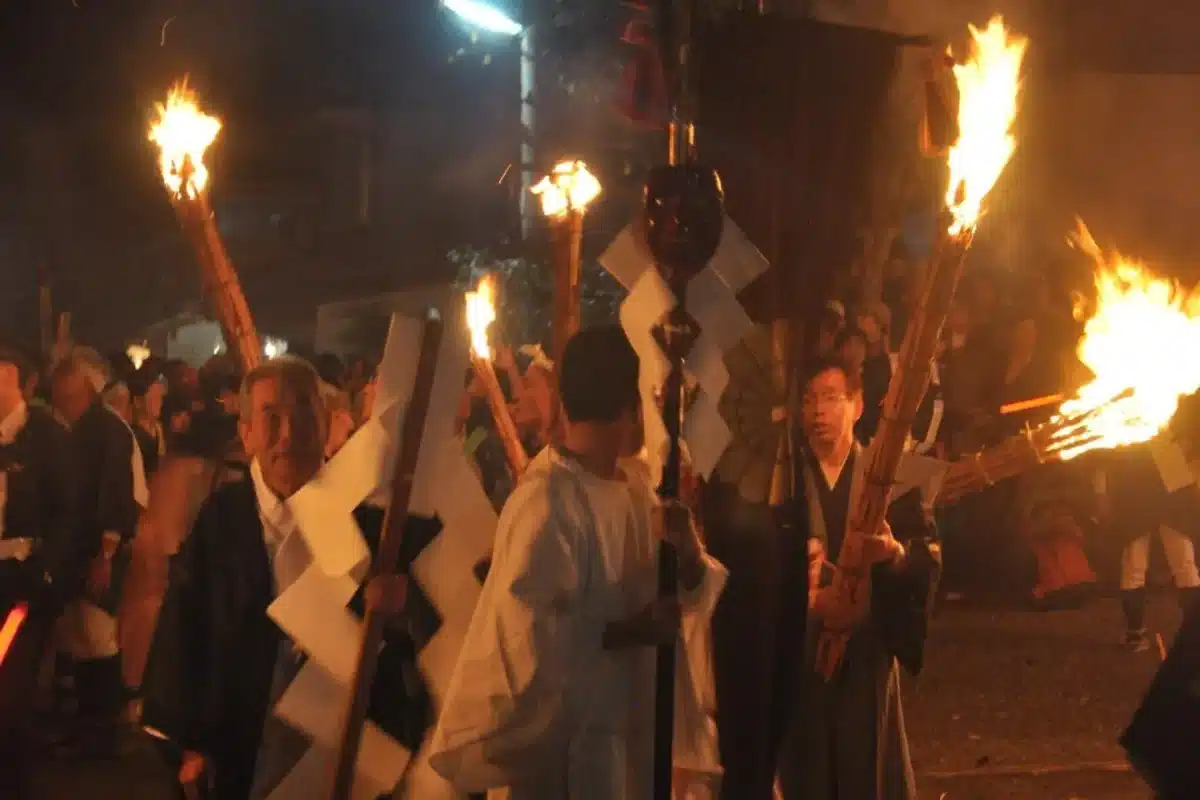
The Kurama Fire Festival 2026 is one of Kyoto’s most dramatic traditional festivals, transforming the mountain village of Kurama into a spectacular procession of fire, torches, shrine rituals and traditional community ceremonies. Held at Yuki-jinja Shrine and along the narrow streets of Kurama, the festival preserves a tradition associated with the relocation of Yuki Daimyojin from the Imperial Palace area to Kurama more than a thousand years ago.
The 2026 festival is scheduled for Thursday, October 22, 2026. The main activities begin in the evening, with watch fires and torches gradually filling the village with light. Kyoto’s official tourism information describes the event as one of the city’s three great unusual festivals.
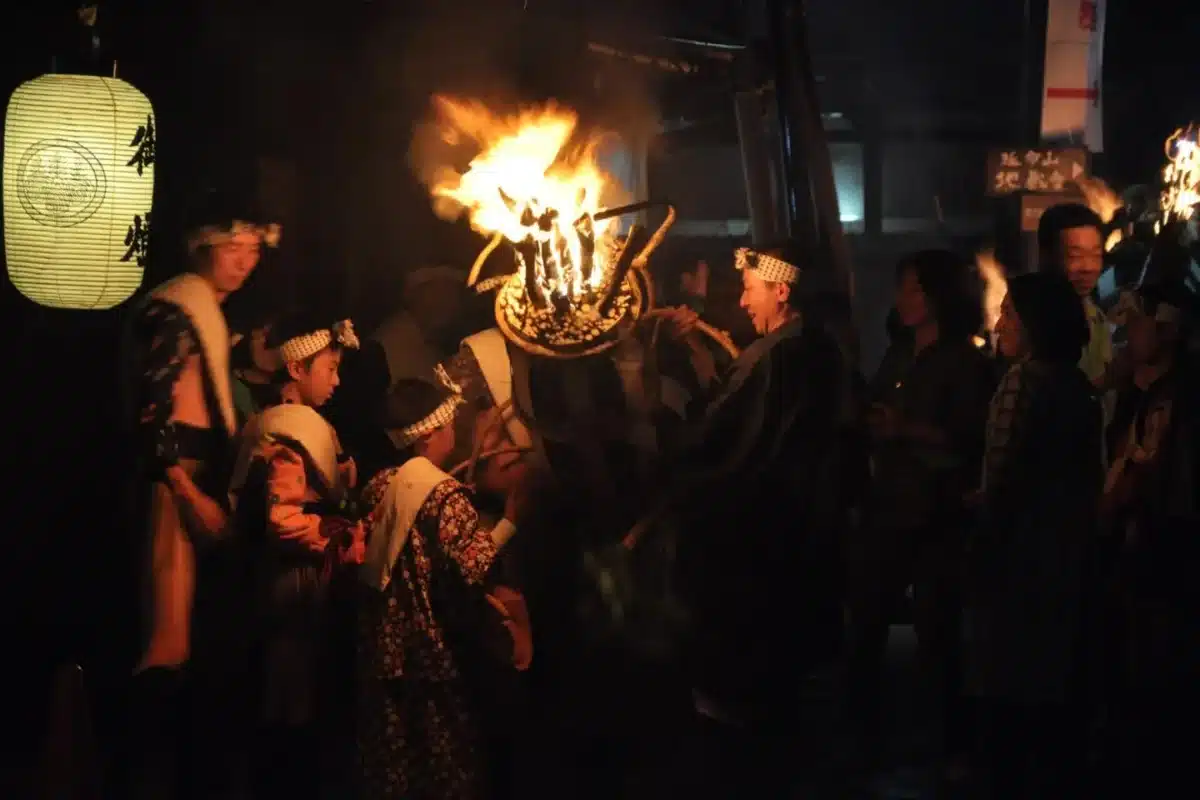
Visitors can expect a distinctly local atmosphere rather than a conventional stage festival. The village itself becomes the setting, with residents participating in the procession and religious ceremonies. More than 250 pine torches are traditionally used, ranging from smaller handheld torches to enormous examples that can weigh as much as 80 kilograms.
Enjoy Your Event Stress-Free with Japan Travelo
Do you know? Planning events, festivals, concerts, and cultural experiences in Japan can be overwhelming. Japan Travelo brings everything together in one place, helping you manage your itinerary, transport, and accommodation with ease—so you can enjoy Japan without the stress of planning.
The festival develops throughout the evening. Smaller torches appear first, followed by increasingly large processions, the gathering of participants near Yuki Shrine and the movement of the mikoshi, or portable shrines, through the village.
Because Kurama is a small mountain settlement, the festival is also known for very heavy visitor demand. The streets are narrow, the railway has limited capacity and the combination of fire, crowds and darkness requires visitors to follow local instructions carefully.
Event dates
Confirmed festival date
Thursday, October 22, 2026
Main festival hours
The principal program begins around 6:00 PM and continues late into the night. Kyoto tourism information indicates that the evening progresses through the torch processions, shrine ceremonies and mikoshi procession, with the main festival traditionally continuing toward midnight.
Festival location
Yuki-jinja Shrine and the surrounding Kurama village streets in Sakyo Ward, Kyoto.
Weather
The festival is traditionally held even in wet weather. Visitors should nevertheless check the latest official information before travelling because severe weather can affect individual arrangements or access.
The event is not structured around a conventional ticketed timetable, so visitors should arrive early enough to find a suitable viewing position before the main processions become extremely crowded.
Visiting this event? Don’t miss out on these amazing activities and local experiences while you’re here.
Venues & festival locations
Yuki-jinja Shrine
Yuki-jinja Shrine is the principal religious venue for the Kurama Fire Festival. The shrine stands at 1073 Kurama-Honmachi, Sakyo-ku, Kyoto, at the base of Mount Kurama. It is closely associated with the history and religious identity of the festival.
The shrine itself dates back to the early history of Kyoto and is surrounded by ancient cedar trees and historic buildings. Kyoto Travel notes that some of the cedar trees in the shrine precincts are more than 800 years old.
Kurama village
The surrounding village is an essential part of the festival rather than simply an access route to the shrine. Bonfires are lit outside homes and businesses, while torch bearers move through the narrow streets toward the shrine.
Kurama Kaido and surrounding streets
The streets around the shrine become part of the procession route. These narrow lanes provide many of the memorable views of the festival, but they can become extremely congested.
Yuki Shrine approach
The approach toward the shrine provides important views of the torch procession. The area around the shrine becomes particularly busy as the festival progresses and the larger torches gather.
Full cultural programme
The Kurama Fire Festival is fundamentally a Shinto religious and community ceremony rather than a commercial entertainment festival. Its program combines fire rituals, procession, traditional clothing, chanting, shrine ceremonies and mikoshi transportation.
The evening traditionally develops through several stages.
Watch fires
Fires are lit around the village, creating a dramatic illuminated route. These fires form an important visual element of the festival and signal the beginning of the evening’s activities.
Torch lighting
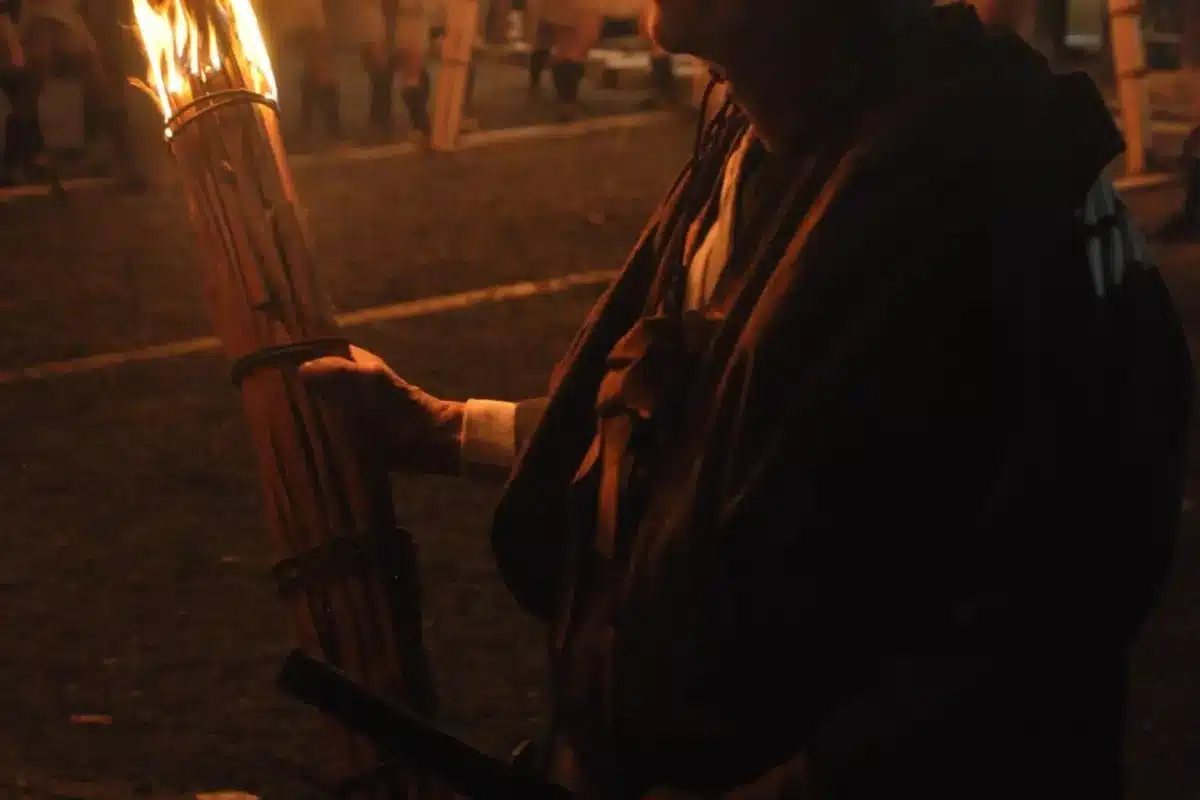
Participants prepare and light pine torches of different sizes. The torches range from relatively manageable examples to huge ceremonial torches requiring considerable strength to carry.
Torch procession
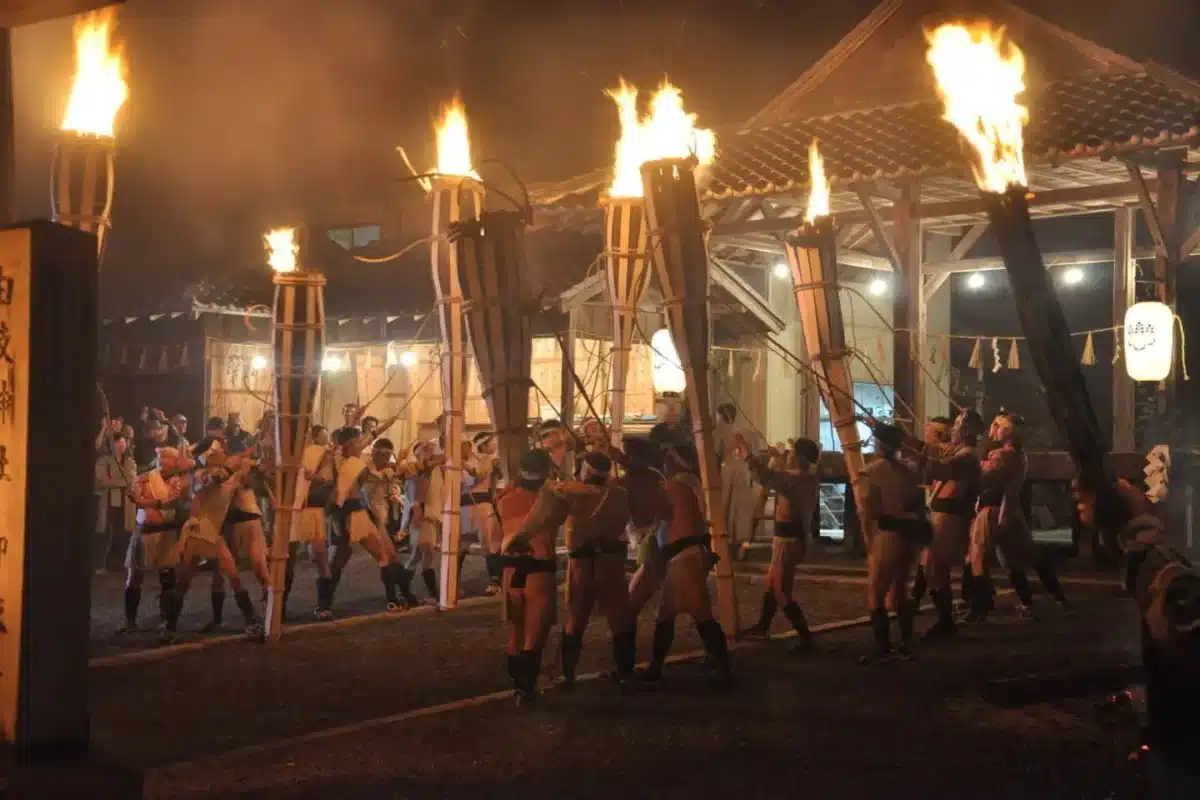
Torch bearers proceed through Kurama toward Yuki Shrine. The increasing number and size of the flames gradually transform the village into a moving corridor of fire.
Shrine ceremonies
Religious ceremonies take place at Yuki Shrine as the procession develops. Visitors should remember that these are sacred rites rather than performances staged specifically for tourists.
Mikoshi procession
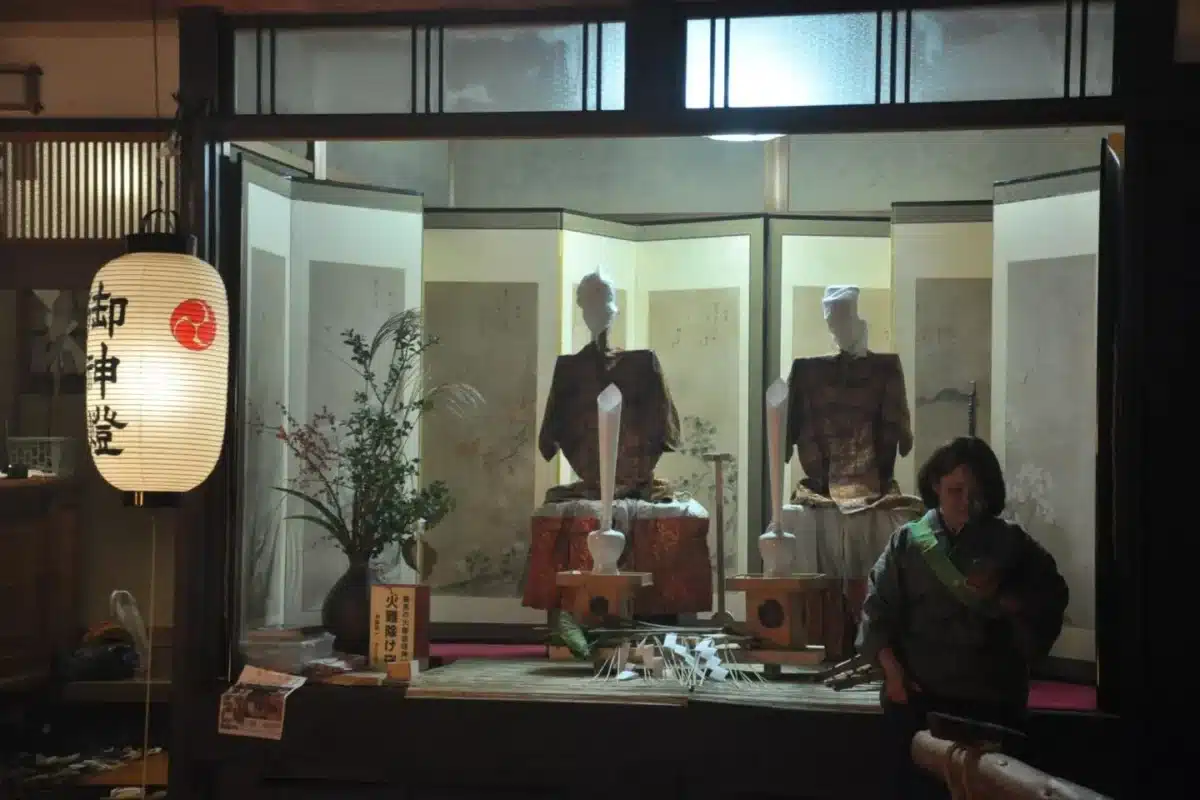
Later in the evening, the festival shifts toward the transportation and procession of portable shrines. The mikoshi are carried through the village as part of the central religious ceremony.
Featured traditions & performances
Taimatsu torches
The enormous pine torches are the defining visual symbol of the festival. Kyoto Travel reports that some can weigh up to 80 kilograms, making their transportation an impressive demonstration of strength and coordination.
Traditional festival clothing
Local participants traditionally wear distinctive festival clothing associated with the Kurama community. The clothing helps distinguish the event from modern tourist festivals and emphasizes its historical character.
“Saireiya, Sairyo” calls
The powerful calls of the participants form part of the soundscape of the procession. Kyoto’s official tourism information specifically describes the village filling with the energetic voices of participants alongside the flames.
Mikoshi carrying
The portable shrines are carried through the village during the later part of the ceremony. This is one of the most important transitions in the festival program.
Fire and shrine rituals
The festival combines fire with Shinto ceremony, making the flames more than a visual attraction. They are connected to the religious and historical story preserved by the community.
Historical & heritage highlights
The origins of the Kurama Fire Festival are traditionally traced to the year 940, when Yuki Daimyojin was transferred from the Imperial Palace area to Kurama. According to the traditional account, villagers welcomed the deity with torches and fires.
The modern festival preserves elements of that historical memory through the use of fire, procession and community participation.
Yuki-jinja Shrine itself has deep historical connections with Kyoto. It was established to protect the northern part of the ancient capital from harmful influences and today remains one of the principal cultural landmarks of the Kurama area.
Kurama also has a strong connection with Japanese cultural legends. The wider area is associated with the legendary warrior Minamoto no Yoshitsune, who is traditionally said to have trained on Mount Kurama during his childhood.
For visitors interested in Japanese heritage, the festival offers a rare opportunity to see a traditional rural community ceremony taking place in its historic environment rather than inside a modern event venue.
Events & activities schedule
Early evening
Watch fires and smaller torches begin to appear throughout the village. Visitors should already be in position because movement becomes increasingly difficult as the crowd grows.
Torch procession
Different groups of participants carry torches through the streets toward Yuki Shrine. The sight becomes increasingly dramatic as larger torches join the procession.
Gathering at the shrine approach
Participants and torches gather around the approach to the shrine. This is one of the most visually impressive parts of the evening.
Mikoshi ceremony
The portable shrines become the focus as the festival moves from the torch procession toward its principal religious rites.
Village procession
The mikoshi are carried through the village, accompanied by traditional calls and ceremonial activity.
Late-night conclusion
The principal festival activities continue late into the night. Visitors should plan their return journey in advance because transport options are limited after the main crowds begin leaving.
Ticket types & entry options
The Kurama Fire Festival is a public traditional festival and does not operate like a conventional paid music or cultural festival with general admission tickets. The festival itself is generally free to watch from public areas.
Festival admission
Free.
Reserved seating
There is no standard reserved grandstand or conventional festival seating system. Visitors normally watch from designated public areas along the village streets.
Transportation tickets
Visitors are responsible for their own railway or other transportation costs. The Eizan Railway provides the principal rail connection to Kurama.
For visitors travelling around Kyoto, the Eizan Railway 1-Day Ticket is currently listed at approximately $8.10 for adults and $4.10 for children based on the published Japanese fare converted approximately to U.S. dollars.
Paid cultural experiences
Any separate temple, shrine, sightseeing or guided experiences in the wider Kurama area may have their own admission charges and should be checked separately.
Guided tours & cultural experiences
A guided experience can be useful for visitors who want more historical context because the festival is built around religious customs and local traditions that may not be immediately obvious to first-time visitors.
Guided walks around Kurama can introduce visitors to Yuki-jinja Shrine, Kurama-dera Temple, Mount Kurama and the area’s historical associations.
Yuki-jinja Shrine visit
The shrine is the central cultural site connected with the festival and is particularly important for understanding the religious background of the event.
Kurama historic village walk
A walking tour through the village can help visitors understand how the festival uses residential streets, shrine approaches and traditional buildings as part of the ceremony.
Kurama-dera Temple
The temple is another major cultural attraction in the area. Kyoto Travel describes Kurama as a destination associated with the legendary training of Minamoto no Yoshitsune.
Kurama and Kibune sightseeing
Visitors staying longer can combine Kurama with neighboring Kibune, another northern Kyoto destination known for its shrine, mountain scenery and riverside dining.
Special ceremonies & celebrations
The festival’s most important ceremonies are religious rather than theatrical.
Yuki Daimyojin tradition
The entire event is connected with the historic transfer of Yuki Daimyojin to Kurama. The annual festival preserves the memory of that event through fire and procession.
Sacred fire
Fire has a central ceremonial role, with torches and watch fires forming a continuous visual connection between the village and shrine.
Mikoshi procession
The movement of the portable shrines is one of the festival’s major ceremonial moments. The mikoshi are treated as sacred objects and should not be approached or touched by visitors.
Community participation
One of the defining features is the involvement of Kurama residents. The festival remains deeply connected to the local community rather than being designed solely as a visitor attraction.
Festival rules
Visitors should treat the Kurama Fire Festival as a religious ceremony and follow instructions from organizers, shrine staff and local authorities.
Do not touch sacred objects
Torches, mikoshi and other festival equipment are part of the ceremony. Visitors should never touch or interfere with them.
Stay within permitted viewing areas
The streets are narrow and crowded. Visitors should not block the procession or stand in areas restricted by organizers.
Follow crowd-control instructions
Temporary restrictions can be introduced as the crowd grows. Follow police, railway staff, shrine officials and festival organizers.
Be careful around fire
The festival involves numerous open flames and very large torches. Keep a safe distance and avoid loose clothing or belongings that could come close to the flames.
Photography
Photography is permitted where conditions allow, but visitors should avoid obstructing participants or using equipment in a way that interferes with the ceremony.
Respect residents
Kurama is a small residential community. Visitors should avoid blocking entrances, creating excessive noise outside designated areas or leaving rubbish behind.
How to get there
The most practical way to reach the Kurama Fire Festival is by public transportation.
From Kyoto Station
Travel from Kyoto Station toward Tofukuji on the JR Nara Line, then transfer to the Keihan Railway for Demachiyanagi. From Demachiyanagi, transfer to the Eizan Railway and take the Kurama Line to Kurama Station. Kyoto Travel gives the Eizan journey from Demachiyanagi to Kurama as approximately 30 minutes.
From Demachiyanagi
The Eizan Railway Kurama Line runs directly toward Kurama. Kurama Station is the final station on the line and is the principal railway gateway to the festival.
From central Kyoto
Visitors should allow considerably more time than on an ordinary sightseeing day because the festival attracts large crowds and trains have limited capacity.
Japan’s official tourism information also recommends train travel for reaching the festival area.
Public transport & parking
Public transportation is strongly recommended. Kyoto City specifically advises visitors to use public transportation for the festival.
Eizan Railway
The Eizan Railway is the key transport connection between central Kyoto and Kurama. On the festival evening, demand can be exceptionally high, so visitors should expect crowded trains and queues.
Kurama Station
After arriving at Kurama Station, visitors continue on foot toward the village and Yuki-jinja Shrine.
Parking
Visitors should not rely on driving to the festival. Kurama is a compact mountain settlement with limited road capacity, and festival-day traffic controls can restrict vehicle access.
The shrine itself does not function as a normal visitor parking destination. Because of the crowds and narrow streets, public transportation is the practical choice.
Return journey
Plan the return journey before the festival reaches its late-night stages. Large numbers of visitors may leave at roughly the same time, creating queues at Kurama Station.
Accommodation areas
Staying outside Kurama can make the visit considerably easier because visitors can arrive by train and avoid attempting to drive into the mountain village.
Kyoto city centre
Areas around Kyoto Station, Shijo, Kawaramachi and Sanjo provide a large selection of hotels, guesthouses and other accommodation. These areas also offer convenient connections to Demachiyanagi.
Demachiyanagi
Staying around Demachiyanagi is particularly convenient for the festival because it provides direct access to the Eizan Railway connection toward Kurama.
Northern Kyoto
Accommodation around the northern Kyoto area can provide a quieter base for visitors who want to combine the festival with Kurama, Kibune and other mountain destinations.
Kurama and Kibune
There are traditional inns and smaller accommodation options in the wider Kurama and Kibune area. Availability can be limited, particularly around major festival periods, so advance planning is advisable.
Kyoto Station area
For visitors combining the Kurama Fire Festival with a wider Kyoto itinerary, the Kyoto Station area provides practical rail connections and a broad range of accommodation choices.
Video
Location
FAQ
What historical event does the Kurama Fire Festival commemorate?
The festival marks the historic 940 transfer of the guardian deity Yuki Daimyojin to Mount Kurama to protect Kyoto. Villagers lit early fires to guide the divine procession safely to its new shrine home.
When do the primary public torch activities officially begin?
While morning Shinto rites take place earlier in the day, the main public spectacle starts right at sunset around 18:00. At this precise moment, watch fires and neighborhood torches are lit simultaneously across town.
Who carries the massive pine torches through the village streets?
Children begin the procession with small handheld torches, while adult men bear massive logs weighing up to 80 kilograms. Participants wear traditional loincloths and braided rope skirts while shouting energetic festival chants.
What is the best way for travelers to reach Kurama village?
Visitors should take the Keihan line to Demachiyanagi Station and transfer to the Eizan Electric Railway heading to Kurama Station. Using public trains is mandatory because local roads face strict vehicle bans during the event.
What essential safety rules should spectators follow during the event?
Attendees must stay behind police cordons to avoid flying sparks from heavy torches and keep pathways clear. Observers are also strictly prohibited from touching any sacred festival implements, drums, or shrines.

Leave a Reply