
-
October 14, 2026
Event date:
-
October 15, 2026
Event end:
What to expect in 2026
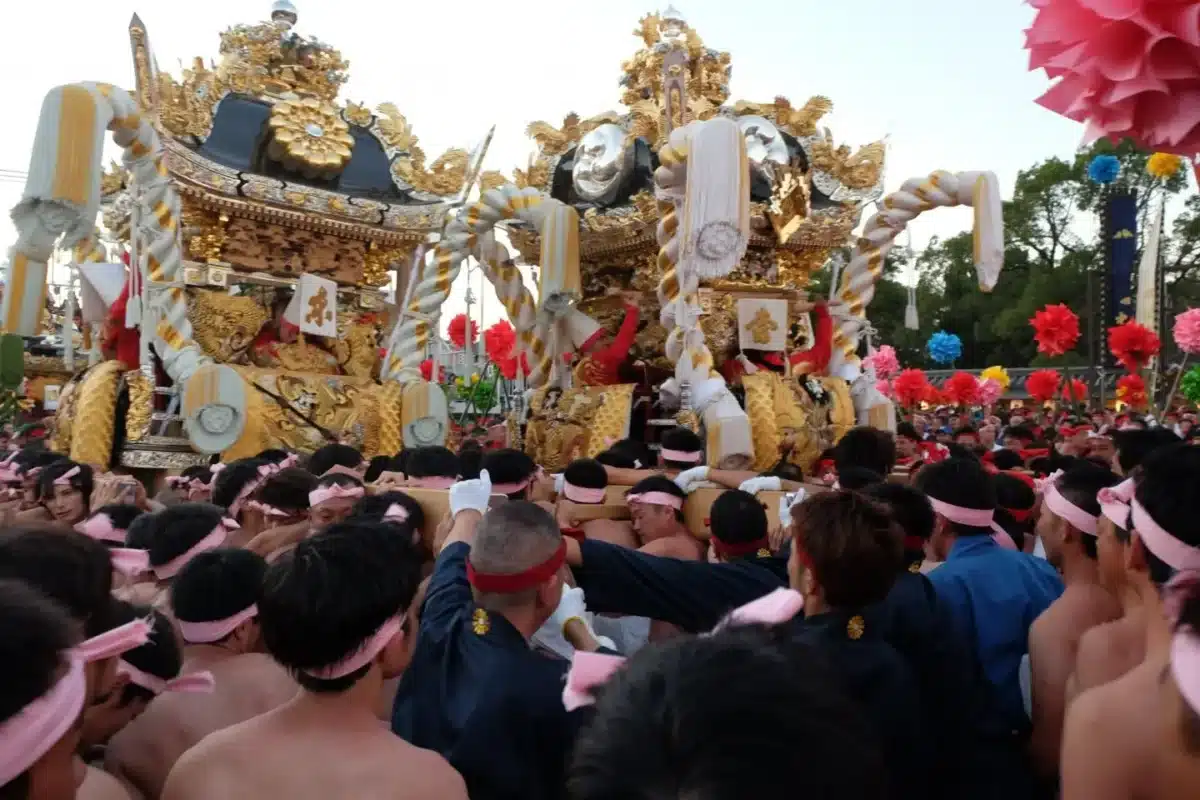
Nada no Kenka Matsuri 2026 is one of Hyogo’s most dramatic traditional festivals, held at Matsubara Hachiman Shrine in Shirahama, Himeji. Also known as the Nada Fighting Festival, the autumn celebration is famous for its enormous decorated festival floats, powerful processions and the ritual clashing of three mikoshi, or portable shrines.
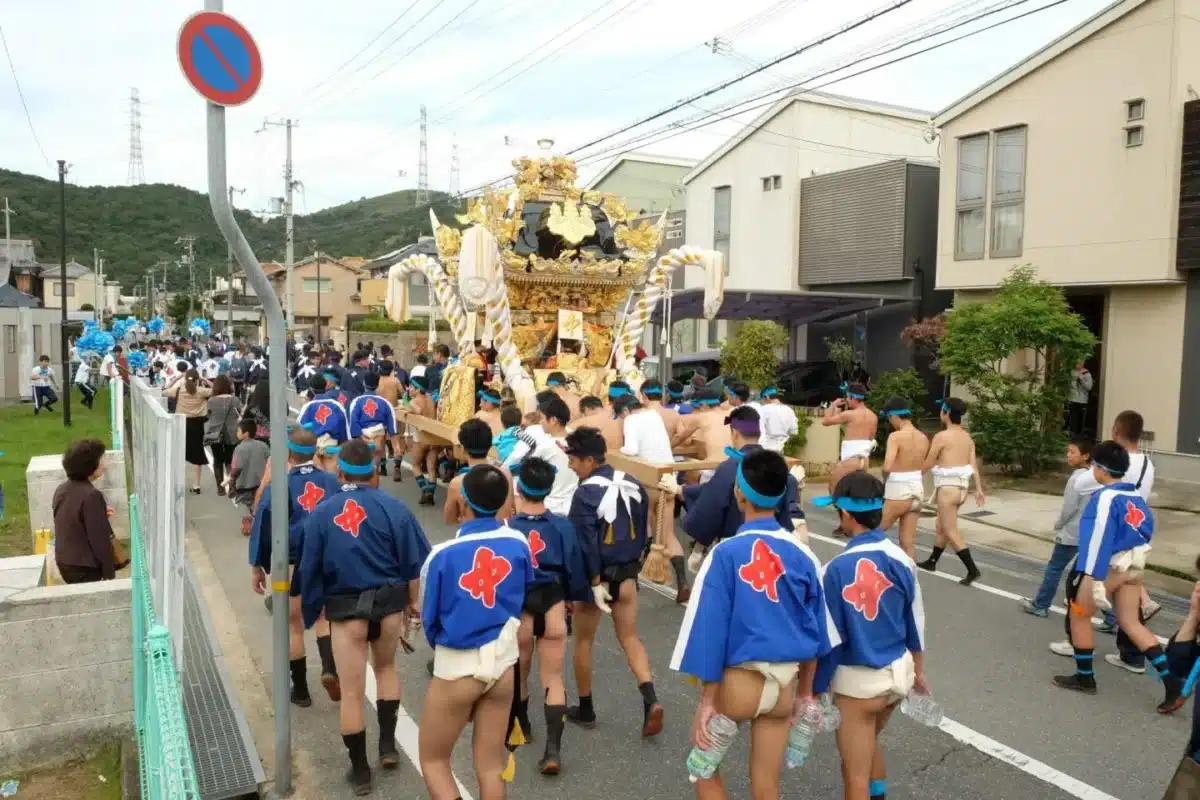
The festival takes place over two days, with each day offering a different cultural experience. The first day is known for the arrival and presentation of seven beautifully decorated yatai floats representing local communities. These floats are richly ornamented with wood carvings, metalwork and embroidered decorations, and their movement through the streets creates an impressive procession.
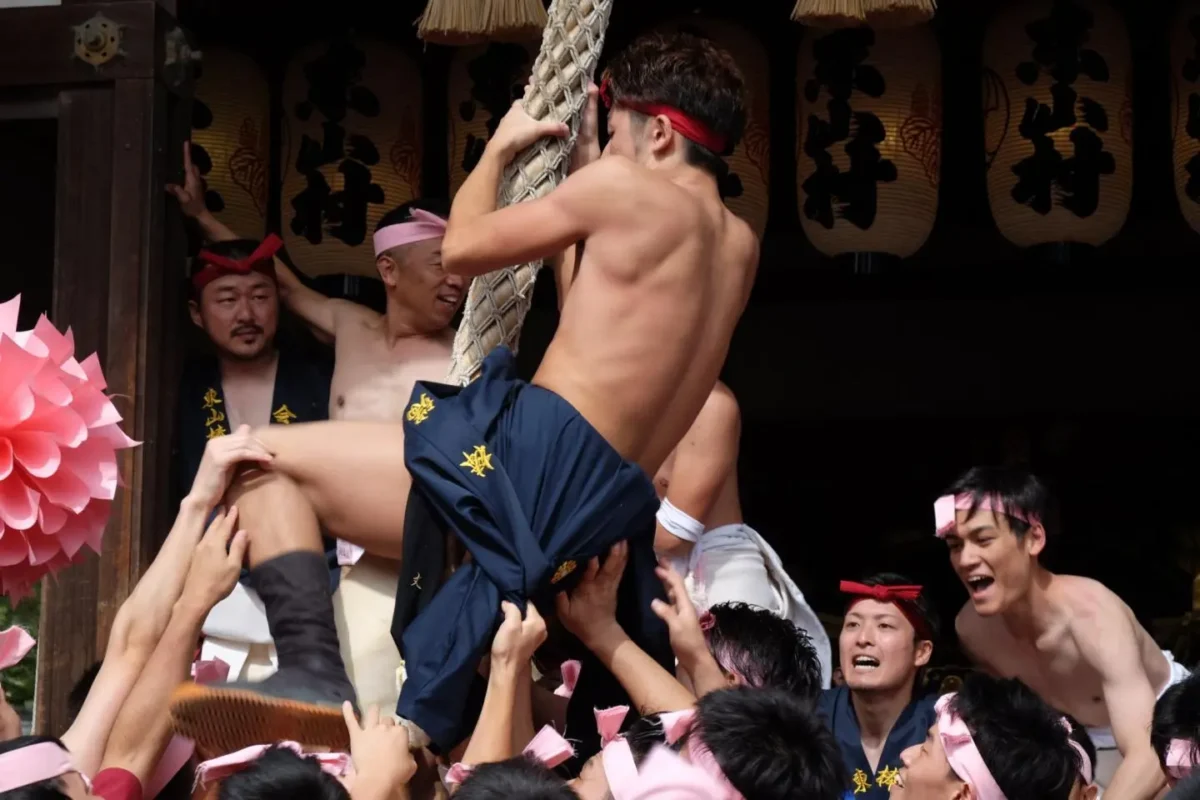
The second day contains the festival’s most famous rituals. Participants perform purification ceremonies before the main procession, followed by the movement of the mikoshi and yatai toward Otabiyama. The three mikoshi are brought together in a dramatic ritual in which they are repeatedly collided and jostled by their bearers.
Enjoy Your Event Stress-Free with Japan Travelo
Do you know? Planning events, festivals, concerts, and cultural experiences in Japan can be overwhelming. Japan Travelo brings everything together in one place, helping you manage your itinerary, transport, and accommodation with ease—so you can enjoy Japan without the stress of planning.
The festival’s name refers to this intense competition between the portable shrines. The ritual is not a modern sporting contest but part of the religious and traditional character of the annual autumn festival.
Seven local communities participate, each associated with its own yatai. The festival therefore combines religious ceremony with strong neighborhood identity and competition.
Visitors should expect extremely large crowds, loud taiko drums, chanting, elaborate costumes, decorated floats and energetic processions. The event is best suited to travelers interested in traditional Japanese festivals and local cultural heritage rather than visitors looking for a quiet shrine visit.
The main spectacle can also involve movement between Matsubara Hachiman Shrine and the Otabiyama area, so comfortable footwear and advance planning are recommended.
Event dates
Nada no Kenka Matsuri 2026 takes place on October 14 and October 15, 2026.
The two days have distinct roles within the festival:
- October 14: Yoimiya, or festival eve, centered on the seven yatai floats entering Matsubara Hachiman Shrine.
- October 15: Honmiya, the principal festival day featuring purification rituals, mikoshi processions, the major mikoshi-clashing ritual and the Otabiyama procession.
The festival traditionally takes place every year on October 14 and 15. The official festival website and tourism organizations confirm the 2026 dates.
The exact timing of individual ceremonies can change according to the progress of the festival. Published schedules are approximate rather than guarantees of exact starting times.
Visitors attending both days will experience the festival’s full progression from the decorated yatai processions through to the major rituals on the second day.
Visiting this event? Don’t miss out on these amazing activities and local experiences while you’re here.
Venues & festival locations
The main venue is Matsubara Hachiman Shrine in Shirahama, Himeji City, Hyogo Prefecture.
Matsubara Hachiman Shrine
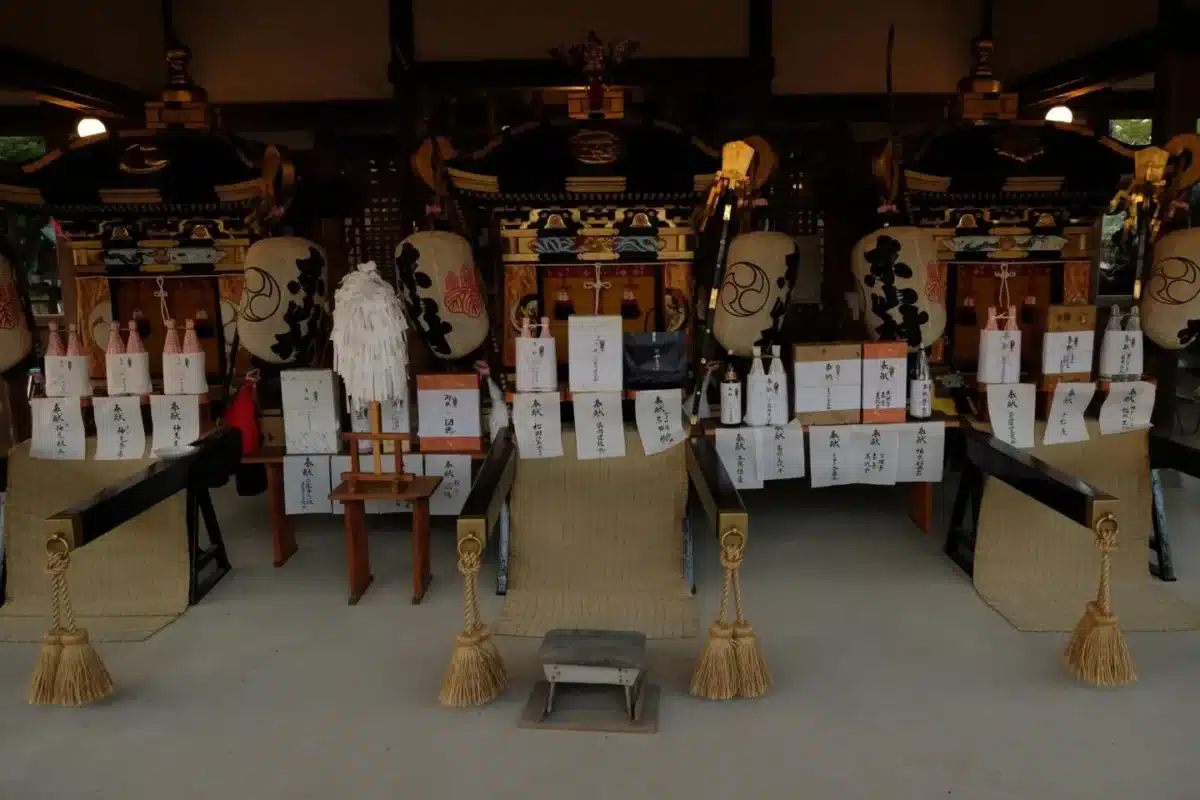
Matsubara Hachiman Shrine is the religious center of the festival and the starting point for many of the principal ceremonies. The shrine grounds become particularly busy as the participating communities bring their decorated yatai into the precinct.
Shirahama streets
The surrounding streets are used for processions and movement of the floats. These areas allow visitors to experience the festival outside the shrine itself.
Otabiyama
Otabiyama is the mountain area where the major second-day procession and associated rituals take place. The seven yatai travel toward the Otabiyama area as part of the festival’s main religious procession.
Shirahama coastal area
The festival also incorporates a purification ritual connected with the sea. The traditional Shio-kaki ceremony takes place at Shirahama Beach as part of the second day’s preparations.
Because the festival moves between different locations, visitors should not expect all activities to occur inside the shrine grounds.
Full cultural programme
Nada no Kenka Matsuri combines Shinto ceremonies, decorated floats, music, processions and the mikoshi rituals that have made the festival internationally recognizable.
The first day focuses heavily on the seven yatai.
Each participating district brings its ornate float to the shrine. The floats are decorated with elaborate carvings, gold and silver details and embroidered curtains, making them important examples of local craftsmanship.
The second day begins with purification and formal shrine activities before the communities arrive for the main programme.
The cultural programme includes:
- Seven decorated yatai floats
- Shrine ceremonies
- Purification rituals
- Sea purification
- Taiko and festival music
- Mikoshi processions
- Mikoshi Awase
- Otabiyama procession
- Yatai Neri-awase
- Traditional costumes
- Community participation
The festival combines religious observance with spectacular physical movement. The crashing of the mikoshi is the most dramatic moment, but it forms only one part of a much larger traditional programme.
Featured traditions & performances
The seven yatai are among the most visually impressive features.
Each yatai represents one of the participating communities and is decorated with elaborate craftsmanship. Their carved wooden details, metallic ornamentation and embroidered curtains distinguish them from ordinary parade floats.
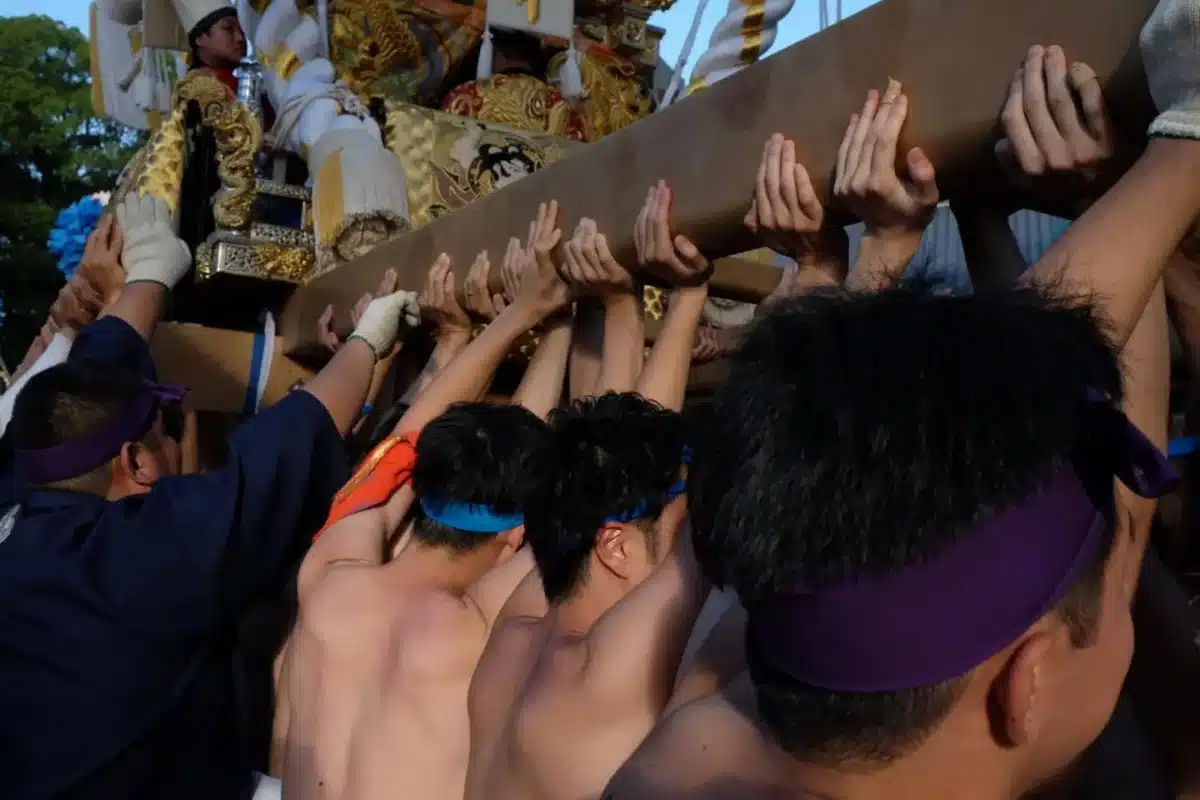
The yatai are carried and maneuvered through the streets by groups of local participants. Their movement is accompanied by traditional festival music and taiko drums.
The second major tradition is Mikoshi Awase.
Three mikoshi are carried by designated groups of men and brought into a physical contest in which the portable shrines are slammed against one another. The competition continues until one mikoshi is lifted above another, marking the end of that particular contest.
The participants are organized by age. The three mikoshi are associated with different age groups, with younger participants carrying the lightest mikoshi and older participants carrying the heaviest.
This age-based organization is an important part of the festival’s community structure.
Historical & heritage highlights
Nada no Kenka Matsuri is the autumn grand festival of Matsubara Hachiman Shrine and is deeply connected with the cultural history of the Shirahama area.
The festival has become famous for its unusual combination of beautifully decorated floats and physical mikoshi rituals. It is regarded as one of Japan’s major “fighting festivals,” a category referring to traditional festivals where portable shrines or floats are deliberately brought into forceful contact.
The festival also preserves the craftsmanship of the seven yatai.
Their decoration demonstrates the importance of woodworking, metalwork, textile decoration and local artistic traditions. Visitors interested in Japanese festival architecture can therefore appreciate the yatai as cultural objects as well as vehicles for the procession.
The festival has been designated an Important Intangible Folk Cultural Property at the local prefectural and city level, reflecting its importance as a traditional cultural practice.
The festival’s connection with the sea, mountain and shrine also reflects the geographical character of the local community.
Events & activities schedule
The 2026 programme is divided into the festival eve and the main festival day.
October 14 – Yoimiya
The first day centers on the seven local districts bringing their yatai toward Matsubara Hachiman Shrine.
The official schedule gives approximate arrival and shrine-entry times for each district. The yatai arrive progressively through the late morning and afternoon, followed by their movements out of the shrine precinct later in the day.
Visitors can use this day to appreciate the individual floats, decorations and procession traditions.
October 15 – Honmiya
The second day begins with early-morning purification activities.
The official schedule lists a traditional Oharai-style purification around the shrine and Otabiyama area, followed by Shio-kaki at Shirahama Beach.
The seven communities then bring their yatai into the shrine before the main procession toward Otabiyama.
The principal afternoon procession includes the mikoshi, religious officials and the seven yatai.
The exact progress can vary, so published times should be treated as approximate.
Ticket types & entry options
Nada no Kenka Matsuri is a public traditional festival rather than a conventional ticketed entertainment event.
There is generally no standard admission ticket required to experience the public festival atmosphere. Visitors can watch the processions and ceremonies from appropriate public viewing areas.
Current 2026 event information describes the festival as free to visit and watch from public areas.
There are therefore no standard general admission, VIP or premium ticket categories for the main festival.
Visitors should budget separately for:
- Transportation
- Accommodation
- Food and drinks
- Souvenirs
- Optional local activities
No standard paid festival admission price is available to convert into USD because the main public festival is free to watch.
Crowd-control measures may restrict access to particular areas, especially around the mikoshi rituals. Free admission does not guarantee access to every position along the procession route.
Guided tours & cultural experiences
A guided tour is not required to experience the festival, but the event can be easier to understand with local cultural context.
The terminology surrounding the festival can be unfamiliar to first-time visitors. A guide can explain the difference between yatai and mikoshi, the significance of the seven participating communities and the role of purification rituals.
Useful cultural experiences include:
- Learning about Japanese mikoshi traditions
- Understanding the history of yatai floats
- Observing shrine etiquette
- Learning about Shinto purification
- Exploring the relationship between the shrine, sea and mountain
- Understanding the age-based organization of participants
Visitors should make sure any private tour allows sufficient time for the festival’s moving programme. The most important rituals do not all occur at one fixed location.
Special ceremonies & celebrations
The purification ceremonies are important parts of the festival and provide context for the dramatic events that follow.
On the second day, traditional purification activities take place in the early morning. The festival also includes the Shio-kaki ceremony at Shirahama Beach, connecting the religious programme with the sea.
The arrival of the seven yatai at Matsubara Hachiman Shrine is another important ceremonial moment.
The main celebration then develops into the Otabiyama procession.
The mikoshi are carried toward the mountain area where the famous clashes take place. The yatai also participate in their own energetic competition and movement.
The physical intensity of these rituals should not obscure their religious purpose. They form part of an annual shrine festival involving community participation, purification and traditional worship.
Festival rules
Visitors should treat Nada no Kenka Matsuri as an active religious festival rather than a staged performance.
Important visitor guidelines include:
- Follow instructions from police, shrine officials and festival staff.
- Remain behind designated barriers.
- Do not enter the procession route.
- Never attempt to touch or interfere with a mikoshi or yatai.
- Keep a safe distance from moving floats and portable shrines.
- Do not obstruct participants.
- Follow temporary traffic restrictions.
- Respect photography restrictions.
- Keep children under close supervision.
- Wear suitable footwear for crowded and uneven areas.
The mikoshi clashes can be physically intense, and spectators should never attempt to move closer simply to obtain a better photograph.
The large crowds also mean that visitors should agree on a meeting point if traveling with a group.
How to get there
Matsubara Hachiman Shrine is located in Shirahama-cho, Himeji City.
The easiest public-transport access is through Shirahamanomiya Station on the Sanyo Electric Railway. The shrine is a short walk from the station.
Visitors coming from central Himeji can travel from Himeji Station toward Shirahamanomiya Station.
Himeji is also easily reached from Osaka and Kyoto by rail, making the festival accessible as a day trip from other parts of the Kansai region.
Travelers should allow additional time during the festival because pedestrian traffic, temporary road closures and crowd-control measures can affect normal routes.
The Otabiyama area is farther from the shrine and requires additional walking.
Public transport & parking
Public transportation is strongly recommended.
Shirahamanomiya Station provides the closest convenient railway access to Matsubara Hachiman Shrine, and the shrine can be reached with a short walk.
Special railway arrangements may be introduced during the festival, including additional services or special stops, depending on the operator’s schedule.
Parking near the main festival area is limited, and visitors should not expect convenient parking directly beside the shrine.
Temporary traffic restrictions can also make driving less practical.
The best approach is generally:
- Travel by train to Shirahamanomiya Station.
- Walk to Matsubara Hachiman Shrine.
- Follow official pedestrian routes.
- Use public transportation for the return journey.
Visitors heading toward Otabiyama should plan for additional walking from the shrine area.
Accommodation areas
Himeji is the most convenient base for visitors attending Nada no Kenka Matsuri.
Himeji Station area
Hotels around Himeji Station provide excellent rail connections and easy access to restaurants and city attractions.
Central Himeji
Staying closer to the city center allows visitors to combine the festival with Himeji Castle and other local attractions.
Shirahama area
Accommodation closer to the festival venue can reduce travel time on festival mornings, although choices may be more limited.
Kansai base cities
Travelers staying in Osaka or Kyoto can potentially visit the festival by train, but an early start is advisable, particularly for the second day’s morning purification activities.
Because the festival attracts large crowds, accommodation should be arranged well in advance.
Food & traditional specialties
Nada no Kenka Matsuri is not primarily a food festival, but visitors can expect festival food and refreshments around the wider event area.
Temporary stalls may offer familiar Japanese matsuri foods such as:
- Yakisoba
- Takoyaki
- Yakitori
- Okonomiyaki
- Grilled foods
- Japanese sweets
- Cold and hot drinks
Visitors can also explore Himeji’s wider food culture.
Himeji is particularly associated with regional specialties such as Himeji oden, a style of oden that is often served with ginger-based seasoning, as well as local seafood and other Hyogo cuisine.
Because festival crowds can be substantial, visitors should consider eating before the busiest parts of the programme or allowing extra time at food stalls.
The area around Himeji Station provides additional restaurants for visitors staying overnight.
Accessibility
The festival presents accessibility challenges because it takes place across shrine grounds, streets and the Otabiyama area.
Large crowds, temporary barriers and moving processions can make navigation difficult.
The route toward Otabiyama may also involve uneven or sloping terrain, and visitors should consider their mobility needs before attempting the entire procession.
Visitors using wheelchairs or mobility equipment should contact local tourism authorities before attending to ask about suitable viewing locations.
Important considerations include:
- Large crowds
- Uneven surfaces
- Temporary barriers
- Long periods of standing
- Moving processions
- Otabiyama terrain
- Limited viewing positions during the busiest rituals
Accessible public transport options should also be checked in advance.
Best cultural experiences
The best way to experience Nada no Kenka Matsuri is to understand the relationship between the shrine, participating communities and different ritual stages.
See the seven yatai
The decorated floats are major works of local craftsmanship and are especially important on the first day.
Watch the mikoshi rituals
The three portable shrines provide the festival’s most famous spectacle. Observe from a safe, designated position rather than attempting to approach the action.
Experience the purification traditions
The early-morning ceremonies and sea purification provide valuable context for the main festival.
Follow the procession
If conditions and crowd controls permit, following the movement toward Otabiyama provides a broader understanding of the festival.
Listen to the taiko
The drums accompanying the yatai and processions are an important part of the festival’s soundscape. The taiko sound associated with the shishi yatai has even been recognized in Japan’s 100 Soundscapes selection.
Explore Himeji
Combine the festival with Himeji’s historic attractions, regional cuisine and surrounding cultural sites.
Previous year’s highlights
Previous editions have maintained the festival’s two-day structure, with the first day devoted to the seven decorated yatai and the second day building toward the dramatic mikoshi rituals and Otabiyama procession.
The decorated floats remain one of the festival’s most impressive visual features. Each participating district brings its own yatai, creating a procession filled with different decorative styles and community identities.
The second day’s purification rituals provide a quieter contrast to the later action. The sea purification at Shirahama Beach and early-morning ceremonies connect the festival to traditional religious practices.
The mikoshi clashes are the best-known spectacle. Three portable shrines are carried by designated groups and deliberately brought into physical contact. The age-based organization of the participants adds another distinctive feature to the ritual.
The Otabiyama procession then brings together the shrine’s religious ceremony, mikoshi and decorated yatai in a large-scale mountain procession.
The event regularly attracts very large crowds, with tourism sources describing it as one of Japan’s major traditional fighting festivals.
Official tickets
Nada no Kenka Matsuri is a free public festival, so visitors do not normally purchase a conventional festival admission ticket.
The main requirement is to follow official crowd-control instructions and watch the ceremonies from permitted public viewing areas.
For the latest 2026 schedule, transportation arrangements, traffic restrictions and festival information, visitors should consult the official festival website:
https://en.japantravel.com/hyogo/nada-no-kenka/32071
Visitors should check the official information before traveling because individual ceremony times are approximate and the progress of the festival can affect the actual schedule.
Video
Location
FAQ
Why is the Nada no Kenka Matsuri referred to locally as a fighting festival?
The festival earns its famous nickname from the intense physical collisions where heavy portable shrines and multi-ton wooden floats are deliberately slammed against each other. This aggressive interaction acts as a sacred ritual performance designed to entertain and stimulate the local Shinto deities.
Are female participants allowed to carry the heavy floats and portable shrines?
Traditional religious customs dictate that only men from the participating districts are permitted to shoulder and maneuver the heavy yatai floats and mikoshi shrines. Women and children play crucial supporting roles by managing festival preparation, musical accompaniment, and community organization.
What are the primary dates when this festival takes place every year?
The festival is held annually on October 14th and 15th in the Shirahama district of Himeji City. The first day focuses on shrine purification and courtyard float previews, while the second day features the main shrine battles at Otabiyama.
Do visitors need to purchase admission tickets to view the festival events?
General public access to Matsubara Hachiman Shrine, street parade routes, and the Otabiyama viewing hill is entirely free of charge. Attendees only incur out-of-pocket expenses if they choose to purchase food, drinks, or festival merchandise from local vendors.
What is the most convenient way to travel to the festival venue using public transport?
Travelers can take the Sanyo Electric Railway mainline and disembark directly at Shirahamanomiya Station, which is located just a short five-minute walk from Matsubara Hachiman Shrine. Regional train connections from Osaka or Kyoto make accessing Himeji and the coastal venue straightforward.

Leave a Reply