
-
April 18, 2027
Event date:
-
April 18, 2027
Event end:
What to expect
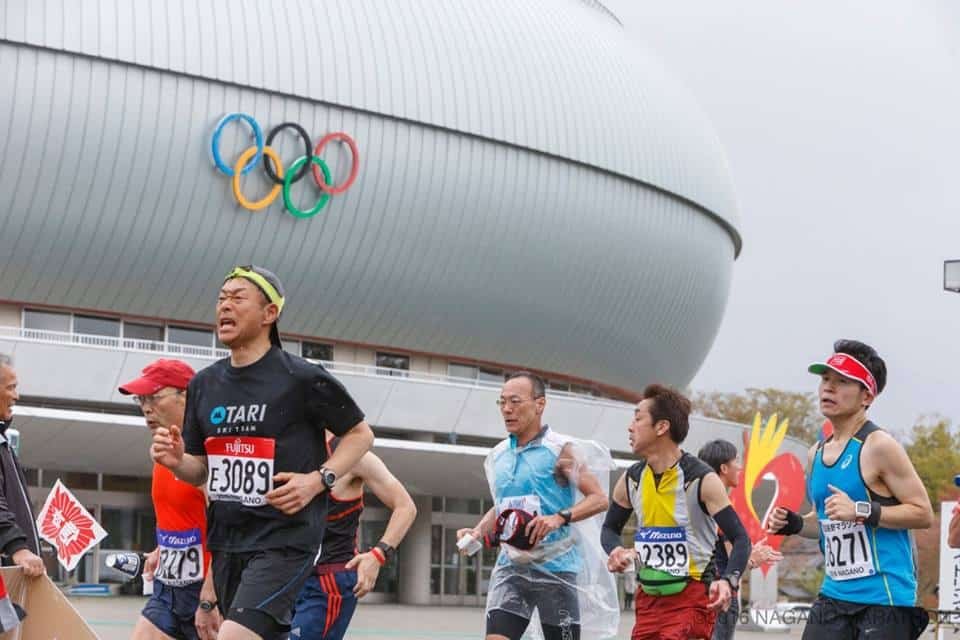
Olympic Heritage Marathon: Nagano Marathon is officially named the Nagano Olympic Commemorative Marathon and was created to uphold the ideals of the 1998 Winter Olympics. It is the only marathon in Japan where you run past four former Olympic venues and finish inside the actual Olympic Stadium used for the opening and closing ceremonies. The course is called the Nagano Olympic Memorial Course and is certified by both Japan Association of Athletics Federations and AIMS.
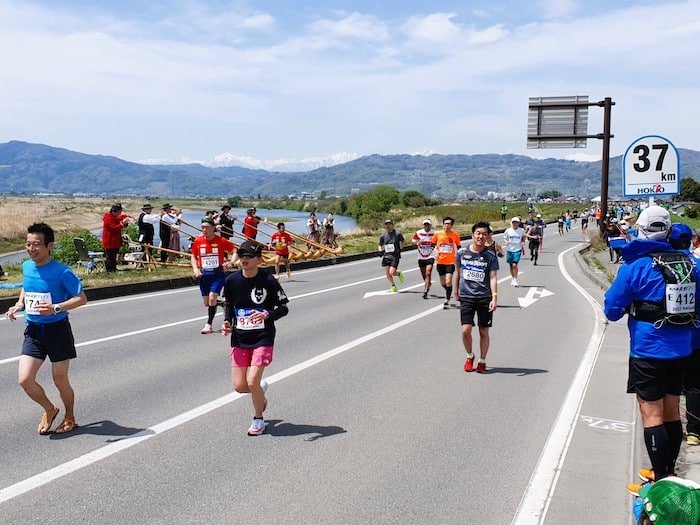
Cherry Blossom and Snow Mountains: Held in mid-April, the race has a high chance of coinciding with cherry blossom season while the surrounding Japanese Alps remain snow-capped. Runners pass Zenkō-ji Temple, founded in 642 and one of Japan’s most important pilgrimage sites, Big Hat ice hockey arena, M-Wave speed skating venue with its Olympic Museum, White Ring figure skating arena, and finally enter Minami Nagano Sports Park. The contrast of pink sakura, alpine scenery and Olympic infrastructure makes it one of the most photogenic marathons in Japan.
Flat and Demanding: The course is point-to-point with about 10 kilometers between start and finish as the crow flies. Elevation gain and loss is only around 133 meters caused by a few road bridges and river banks, making it one of the world’s flattest marathons. There are a few short out-and-back sections but they are relatively short. The surface is fully closed to traffic, mostly smooth asphalt, with riverbank sections from around 32 km to 39 km that are narrower and more exposed. The final 400 meters is loose gravel before entering the stadium to run on grass for the final 195 meters to the finish line.
Enjoy Your Event Stress-Free with Japan Travelo
Do you know? Planning events, festivals, concerts, and cultural experiences in Japan can be overwhelming. Japan Travelo brings everything together in one place, helping you manage your itinerary, transport, and accommodation with ease—so you can enjoy Japan without the stress of planning.
Authentic Japanese Organization: Sanctioned by JAAF and a member of AIMS, formerly a World Athletics Bronze Label Road Race, the event is organized by Japanese Olympic Committee, JAAF, Nagano Prefecture, Nagano City and Shinano Mainichi Shimbun. It caps at 10,000 runners and is known for excellent marking with kilometer markers, large Seiko clocks every 5 km, timing mats every 5 km plus start, halfway and finish, and English signage at aid stations.
Match/event dates
Event Dates:
- Nagano Marathon 2027 Full Marathon: April 18, 2027
- Race Pack Collection for Foreign Runners: Two days option, Saturday April 17 and Sunday April 18, 2027 near start line and at Nagano Wakasato Tamokuteki Sports Arena Big Hat area. Opening hours announced by end of March.
- Domestic Runners: Race pack mailed in advance, no expo collection needed.
- Gun Start: 8:30 AM JST
All date information is contained only in this section.
Visiting this event? Don’t miss out on these amazing activities and local experiences while you’re here.
Stadium & sports venue
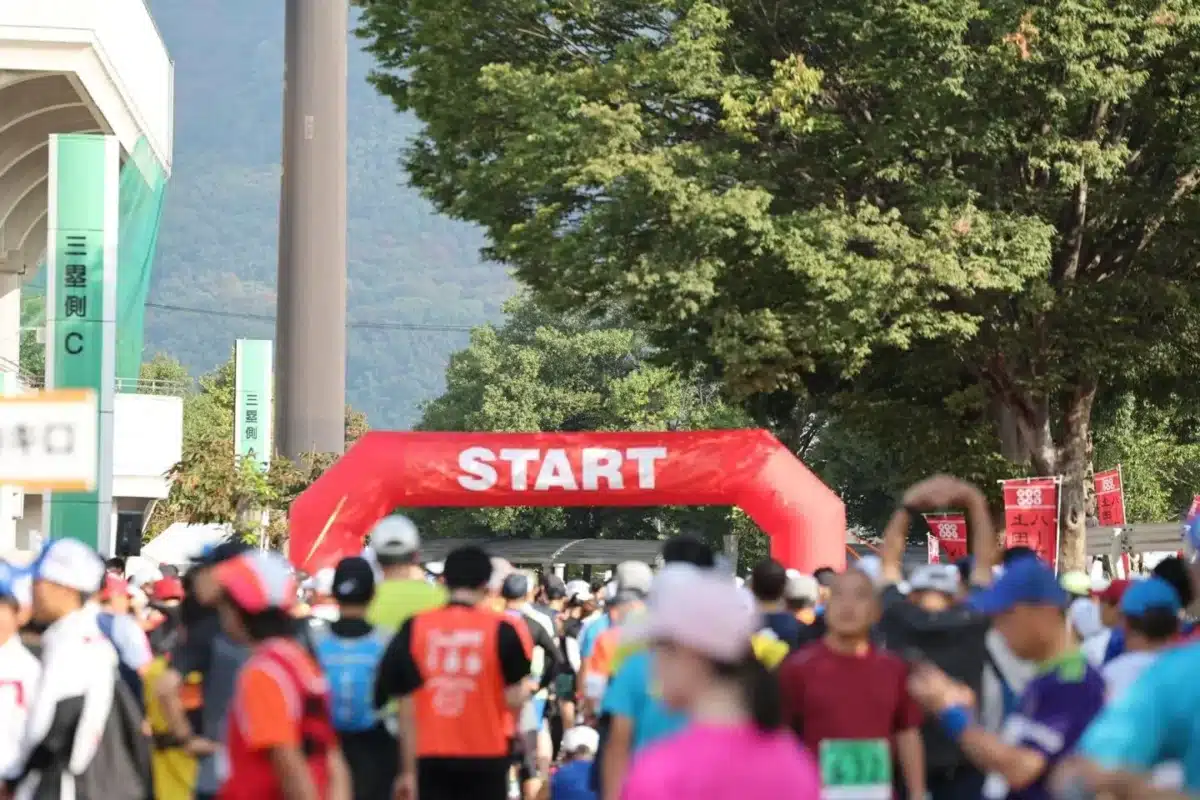
Start Venue: Nagano Sports Park, Nagano City, Yoshida area. Officially Nagano City Athletic Park. This is a key venue for 1998 Olympic ice hockey events and offers wide staging areas for 10,000 runners, luggage drop, registration desks for foreign runners and shuttle bus access. Address area is 5-1-19 Yoshida, Nagano-shi.
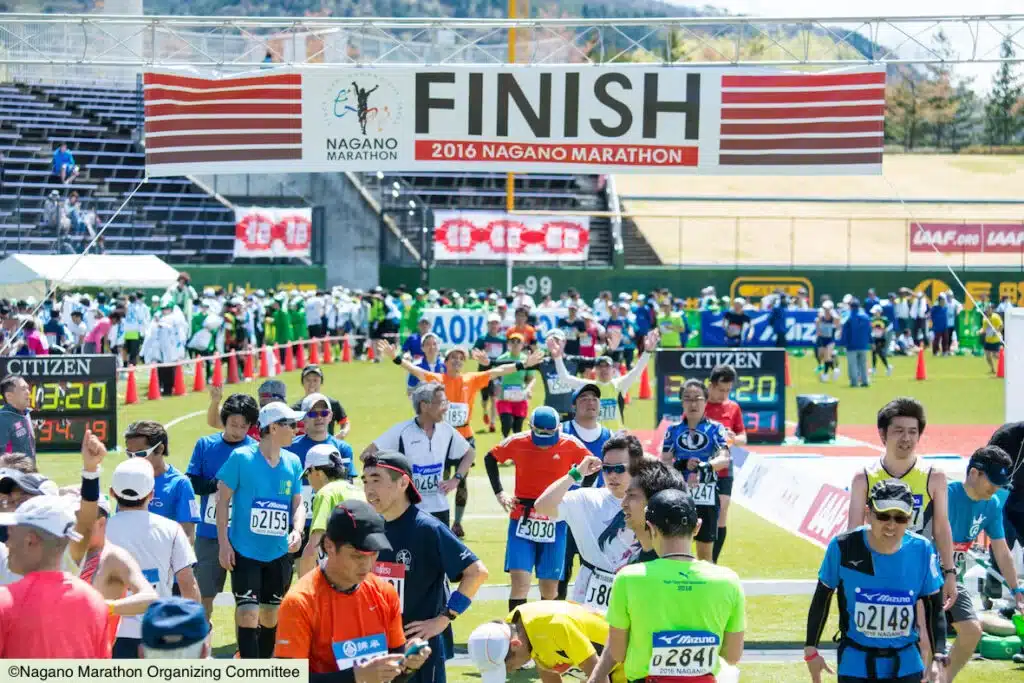
Finish Venue: Nagano Olympic Stadium, also known as Minami Nagano Sports Park, Nagano City, Shinonoi. This stadium hosted the opening and closing ceremonies of the 1998 Winter Olympics and provides a dramatic grass finish inside the stadium. The vista at the end is considered worth the effort, with grandstand seating for supporters.
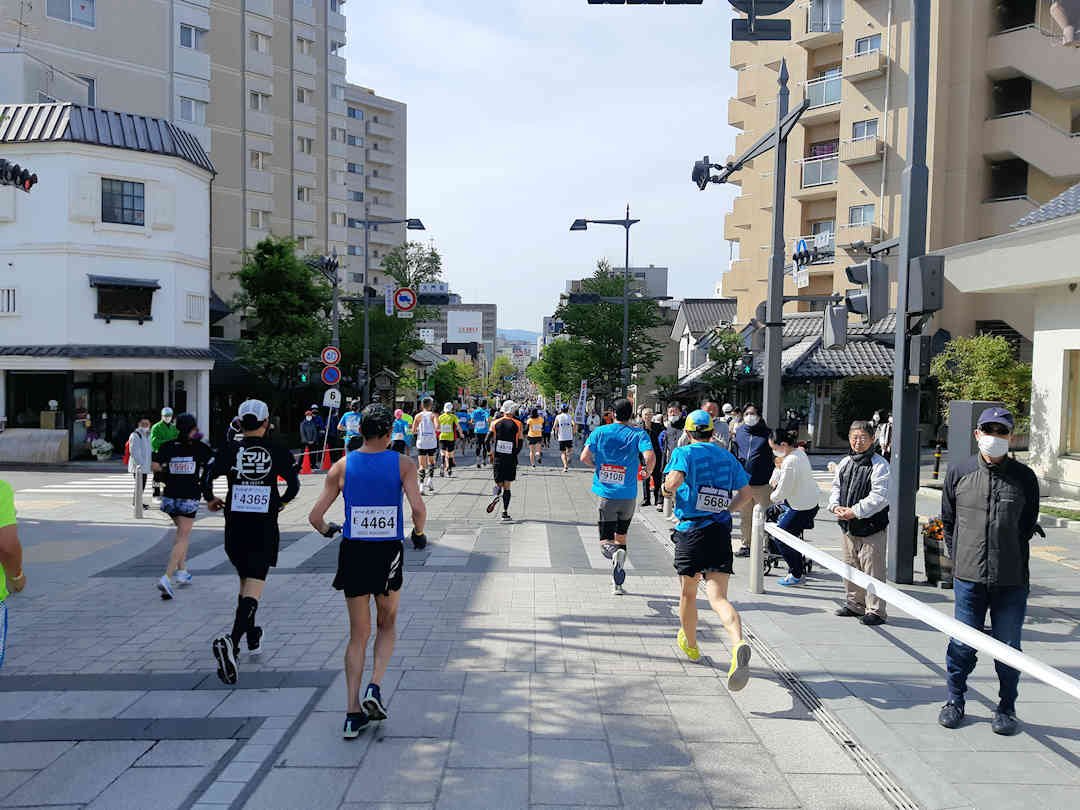
Course Connection: The course links start and finish in a generally southern direction. Major points include Zenkō-ji Temple around 6 km, Big Hat around 10 km, M-Wave around 17 km, White Ring Arena around 23 km, then riverbank sections leading to Olympic Stadium. Distance between venues creates a true point-to-point journey through the city.
Facilities: At Nagano Sports Park, registration, luggage drop, changing areas and toilets. At Olympic Stadium, baggage reclaim, medal and towel distribution, medical tents, family meeting zones and shuttle bus boarding to JR Nagano Station East Exit. Free bus ticket handed to athletes on race day for return.
Full fixture or event schedule
Pre-Race:
- Mail Delivery: Athletes based in Japan receive race pack by mail containing printed t-shirt, two race numbers for front and back, official program booklet in Japanese, participant guide in English and A4 calendar with previous year’s images.
- Foreign Runner Collection: Pick up at designated location on the two days before and including race morning. Required items include email from Inquiry Desk with subject IMPORTANT Final Information, printed or screenshot, and signed oath form printed and signed. No large sports expo planned for this edition, a change from previous years.
Race Day:
- 6:30 AM to 8:00 AM: Foreign runner registration at Nagano Sports Park near luggage drop, final baggage drop, toilet access and warm-up.
- 8:30 AM: Gun start for full marathon from Nagano Sports Park. Start areas assigned by estimated finish time. For example, estimated 3 hours 15 minutes gives race number starting with 2000 and places you in start area D.
- Along Course: Fifteen aid stations well spaced, ten pace groups, timing mats every 5 km, large clocks, cooling spray at checkpoints.
- Finish Window: 5-hour overall limit from gun start. After finishing inside Olympic Stadium, transponder attached to race number is removed by volunteers.
- Post-Race: Medal and commemorative towel for all finishers, awards for first to sixth in each age group, certificates with official net times available for download five days after event, including 5 km splits for non-finishers.
Teams, athletes & participants
Field Size: Cap of 10,000 participants, with 500 places reserved for overseas runners selected in order of application receipt. In the previous edition, 10,847 registered, 9,295 started and 7,381 finished, a completion rate of 79.4 percent, showing the strictness of the 5-hour limit.
Foreign Participation: 292 overseas runners registered in the last edition, 227 men and 65 women. The event is relatively easy for foreign athletes to attend due to English website, overseas entry via official site and JTB as official accommodation coordinator. Foreign entry fee is $95.33 USD.
Eligibility: Full marathon only, male and female age 18 years or older. No wheelchair category for full marathon. Costumes or disguises not allowed officially, though funny hats, wigs or lightweight costumes that do not interfere with running are often tolerated.
Athlete Mix: The field includes Japanese citizen runners, corporate team runners, Boston Qualifier seekers, overseas visitors and charity runners who donate to Japanese Red Cross. The average level is higher than many fun-run heavy marathons because of the 5-hour cut-off and lack of half or 10 km options.
Tournament format & competition structure
Single Distance Format: Only full marathon 42.195 km. No half, 10 km or 3 km concurrent races. This focus keeps organization simple and roads fully closed for the marathon.
Point-to-Point Structure: Start and finish are about 10 km apart as the crow flies, requiring baggage transport and shuttle bus return. The course has a few out-and-back sections to manage distance within valley.
Start Area Assignment: Upon entry, each athlete must provide estimated finish time. Race number and start area are assigned based on it. This determines your physical position at start line and helps avoid congestion on early narrow roads around Zenkō-ji.
Pace Guide System: Ten pacers support goal times of 2h50m, 3h00m, 3h15m, 3h30m, 3h45m, 4h00m, 4h15m, 4h30m, 4h45m and 5h00m. Pacers are seasoned athletes and wear clear signage.
Certification: JAAF and AIMS certified course, Boston Qualifier eligible, elevation 90m to 133m gain depending on measurement, uphill 305m downhill 292m on some GPS, but officially flat. Results published on RunNet and World Athletics for top finishers, with full net times downloadable after five days.
Match/event times
Gun Start: 8:30 AM JST for full marathon from Nagano Sports Park.
Overall Limit: 5 hours from gun start. This is stricter than many Japanese marathons and requires average pace of 7:06 per km.
Cut-Off Points: Multiple checkpoints where participants who are unlikely to finish within 5 hours are removed from course and directed to collection buses. The riverbank sections from 32 km to 39 km are critical cut-off zones.
Aid Station Timing: Fifteen aid stations from early kilometers onward, with sports drinks first and water last at each station. Food from around 19 km onward. Timing mats every 5 km, at start, halfway and finish.
Finish Operations: Finisher processing inside Olympic Stadium with gravel and grass sections at end. Medal and towel distribution, transponder collection and shuttle bus boarding until early afternoon.
Ticket types
General Entry: $95.33 USD. Based on official 14,300 Japanese Yen tax included. Includes souvenir kit, finisher towel and medal for finishers, web certificate, baggage transport, aid stations and shuttle bus ticket to JR Nagano Station East Exit. This is the standard category for most runners.
Charity Entry: $102.00 USD. Based on official 15,300 Japanese Yen tax included, where $6.67 USD is donated to Japanese Red Cross Society. Includes same kit as general entry plus charity recognition.
Overseas Entry: $95.33 USD for foreign runners, same as general entry but with English guide and collection at separate desk. Up to 500 entrants selected in order of application receipt. Payment by credit card required by early December.
Past Edition Reference: Entry was $80.67 USD in 2020 based on 12,100 yen including souvenir kit and certificate, $72.00 USD in earlier editions based on 10,800 yen. Current pricing reflects increase to 14,300 yen.
Included Items: Printed t-shirt, two race numbers, official program booklet in Japanese, participant guide in English, calendar, timing chip attached to number, finisher medal and towel.
Ticket release phases
Registration Period: Opens at 10:00 AM JST on October 18 and remains open until 23:59 on December 1 or until capacity of 10,000 is reached. For the recent edition, field filled on October 9, well before closing date.
Foreign Runner Phase: Same window as domestic, but overseas allocation of 500 places filled quickly. Early application recommended. Payment deadline is December 1 at latest.
Resident Priority: No separate city resident priority lottery, all entries are first-come first-served via official website only at www.naganomarathon.gr.jp. No lottery system like Tokyo.
Transfer and Cancellation: No official Yuzure-ru transfer service like some other marathons. No refunds for personal reasons after payment. Changes to estimated finish time allowed until certain deadline via official site.
JTB Accommodation Package: Official accommodation coordinator JTB offers hotel plus entry packages, but entry itself must still be done via official site. Hotel options through JTB tend to be higher budget.
VIP & hospitality options
No Paid VIP Grandstand: Nagano Marathon does not sell VIP tickets. Hospitality is through functional services.
Charity Entry Hospitality: Charity entrants receive same race services plus donation certificate and occasional access to charity reception.
Pacer Hospitality: Access to ten goal-time pacers is included for all runners at no extra cost, functioning as performance hospitality.
Shuttle and Baggage Hospitality: Free shuttle buses from finishing point at Olympic Stadium to JR Nagano Station East Exit with free bus ticket handed to athletes. Luggage transport from Nagano Sports Park to finish is included.
JTB Official Accommodation: JTB as official coordinator offers packages including hotel near Nagano Station, early breakfast, shuttle to start and baggage handling. Options range from $100.00 USD per night business hotels to $250.00 USD premium hotels directly connected to station.
Olympic Stadium Finish Hospitality: Finishing inside the Olympic Stadium with grass run-in, grandstand cheering and medal ceremony area provides premium experience without extra fee.
Stadium & event rules
Costume Rule: No costumes or disguises allowed officially to maintain safety and competitive integrity. Lightweight hats, wigs or non-obstructive accessories tolerated but large costumes that interfere with other runners prohibited.
Number Card Rule: Two numbers must be worn front and back, with transponder attached. No folding or covering sponsor logos. Transponder removed by volunteers after finish.
Cut-Off Enforcement: Participants who do not reach checkpoints by specified time are removed from course. No continuation after being stopped. Collection buses return to station area.
Conduct: No accompanied running except authorized guides for visually impaired with prior approval. No bicycles, pets, strollers on course. Music players allowed but must allow hearing instructions.
Refund and Weather: Race held rain or shine except extreme conditions. In case of cancellation due to earthquake, snow, incidents or safety issues, organizer decides refund amount after deducting expenses. No refund for personal absence.
Data Use: Names, ages, genders, records, portraits may be published in newspapers, TV, magazines, internet and official programs. Rights belong to organizers. Distribution of race footage without permission prohibited.
How to get there
By Train: Nagano is located northwest of Tokyo and can be reached from Tokyo on Hokuriku Shinkansen in just under 1 hour 30 minutes. From Nagoya, Shinano Limited Express takes around 3 hours to reach Nagano. From Kyoto, Osaka or further west, travel via Tokyo, Nagoya or Kanazawa takes around 4 hours 15 minutes to 4 hours 30 minutes. For travelers without JR Pass, route via Tokyo is often most expensive but fastest.
By Plane: Closest airport is Shinshu-Matsumoto near Matsumoto with regional services from Sapporo, Fukuoka, Osaka and Kobe, but still requires 2 to 2.5 hours bus and train to Nagano city center. For most travelers, train is simpler and more practical than flying.
To Start: From JR Nagano Station East Exit, take shuttle bus or local bus to Nagano Sports Park, about 20 to 30 minutes. Taxi also available. From Nagano Station, some runners use rental bicycles to warm up.
To Finish: From Olympic Stadium finish, free shuttle buses to JR Nagano Station East Exit. Bus ticket handed on race day.
Public transport & parking
Public Transport Strongly Recommended: Nagano city has excellent train and bus network and road closures around Zenkō-ji, Big Hat and riverbanks make car access difficult.
Shuttle Buses: Official shuttle buses from finishing point at Olympic Stadium to JR Nagano Station East Exit operate continuously after finish. Free bus ticket handed to athletes. Buses from Nagano Station to Nagano Sports Park start area operate early morning on race day.
Local Buses: City buses run on detour routes during closures. Check official detour maps published in participant guide.
Parking: No official runner parking at Nagano Sports Park start area due to Olympic venue restrictions. Limited paid parking near Wakasato and Big Hat area fills early. Use of public transport or official shuttle recommended. Hotel parking near Nagano Station available but expensive during marathon weekend.
Bicycle: Bicycle parking near both start and finish, but not inside closed course. Some hotels offer free bicycle rental.
Accommodation areas
Near Nagano Station: Most recommended area due to public transport connections to both start and finish. Accommodation books out many months in advance, even before marathon date officially announced, and prices multiply for one night before marathon. Options include Hotel Metropolitan Nagano directly connected to station, Sotetsu Fresa Inn Nagano about 2 minutes from station with coin laundry, Hotel Livemax Premium Nagano Ekimae with natural hot spring bath and sauna, and Backpackers Dorms Miwa in quiet residential location with free parking and bicycle rental. Prices from $60.00 USD to $200.00 USD per night, with premium rising to $300.00 USD on pre-race night.
Near Start and Finish: Very few hotels near Nagano Sports Park start or Olympic Stadium finish. Not recommended due to limited food options and transport.
JTB Official Coordination: JTB is official accommodation coordinator for foreign entrants, offering packages including hotel and shuttle. All options provided through JTB tend to be higher budget but include English support and guaranteed shuttle.
Booking Tips: Book accommodation near Nagano Station as soon as registration confirmed. Use Agoda, Booking.com and Rakuten Travel for familiar platforms, but compare with JTB official options. Consider staying two nights to enjoy Zenkō-ji and post-race hot springs.
Food & drink at the venue
On Course: Fifteen aid stations with sports drinks first and water last. Food and snacks from 19 km onward include energy jelly, bananas, sports yokan, chestnut steamed buns, salt candy, castella cake, sports caramel and rice balls. Aid station signage in English. Cooling spray provided at checkpoints, a unique feature.
At Start: Limited food at Nagano Sports Park, with tea, water and light snacks. Convenience stores near station recommended for pre-race breakfast.
At Finish: Light nutrition, water and tea at Olympic Stadium. No large food market inside stadium due to grass protection, but food stalls outside near shuttle bus boarding.
In City: Nagano famous for soba noodles, oyaki dumplings, miso and apple products. Restaurants around Nagano Station offer early morning breakfast sets for runners. Post-race, many runners enjoy onsen and soba.
For International Runners: Convenience stores and station eateries have English menus. Sports Yokan and rice balls are safe for most diets.
Accessibility
Course Accessibility: Flat profile with elevation gain and loss of 133 meters, fully closed to traffic, smooth asphalt except final gravel section. Relatively accessible for visually impaired with guide, but not for wheelchair full marathon category.
Venue Accessibility: Both Nagano Sports Park and Olympic Stadium have barrier-free toilets, accessible seating and medical tents. Shuttle buses have low-floor options.
Guide Support: Visually impaired runners allowed one guide with prior application. No wheelchairs for full marathon, but visually impaired guide system supported.
Language Accessibility: Official website now available in English, participant guide in English, aid station signage in English. Social media updates on Facebook and X.
Family Accessibility: Family meeting zones at finish with clear signage, but finish area on grass may be difficult for strollers.
Best matches/events to attend
Full Marathon: The only distance and main event. Best for runners seeking Olympic heritage, cherry blossom timing and Boston Qualifier flat course. Ideal for those who have completed other Japanese marathons and want authentic local atmosphere rather than mega-city race.
Start Area Morning: Best for experiencing community support and Olympic venue atmosphere at Nagano Sports Park, with ice hockey stadium visible.
Zenkō-ji Temple Section: Best for spectators wanting cultural experience. Temple approach lined with cherry blossoms and traditional shops, around 6 km point.
Olympic Stadium Finish: Best for supporters. Entering actual Olympic Stadium and running on grass for final 195 meters is unique in Japan and provides great photo opportunity.
Post-Race: Best to attend onsen baths and Zenkō-ji night illumination during cherry blossom season.
Previous year’s highlights
2026 Edition: 28th edition held with 10,847 registrations, 9,295 starters and 7,381 finishers. Started cloudy and mild with temperatures rising from 19.0 degrees at start to 23.8 degrees by early afternoon, humidity dropping from 60 percent to 22 percent, making hydration important for later finishers. Foreign runners totaled 292. Course included minor change around M-Wave area but remained flat. Live broadcast on YouTube available for replay.
2025 Edition: 27th edition with schedule starting at 8:30 AM, JAAF and AIMS certified course from Nagano Sports Park to Olympic Stadium. Scenic flat route with historic 1998 venues and Zenkō-ji, ending at Olympic Stadium. Results published via RunNet and World Athletics for top finishers.
Common Highlights: Every year features snow-capped mountain views, blooming cherry blossoms along Chikuma River banks, drum and alphorn musical entertainment, chestnut buns and castella at aid stations, and finish inside Olympic Stadium. Completion rate around 79 percent shows challenge of 5-hour limit.
Official tickets
Official Entry Only: Athletes can register only via official website www.naganomarathon.gr.jp. No other portal offers guaranteed entry. Beware of resale.
Entry Fees in USD: General entry $95.33 USD based on 14,300 yen tax included, Charity entry $102.00 USD based on 15,300 yen tax included with 1,000 yen donation to Japanese Red Cross. Foreign runner fee same as general. Past fees from 12,100 yen $80.67 USD and 10,800 yen $72.00 USD show gradual increase.
Payment: Credit card payment required by December 1 at latest. No convenience store payment for overseas.
Contact: Organizer contact via info@naganomarathon.gr.jp and phone +81 26-217-2490. Accommodation inquiries via JTB official coordinator.
Important: Estimated finish time must be provided at entry, as race number and start area assigned based on it. No costume rule enforced. Web certificates only.
Video
Location
FAQ
What is special about the Nagano Marathon course compared to other Japanese marathons?
The Nagano Marathon course is called the Olympic Memorial Course and takes you past four major 1998 Winter Olympic venues including Big Hat, M-Wave, White Ring and the Olympic Stadium where you finish. It is point-to-point from Nagano Sports Park to Olympic Stadium, almost completely flat with only 133 meters gain from bridges and river banks. The final 400 meters is loose gravel before you enter the stadium to run on grass for the last 195 meters, which is unique in Japan.
How strict is the 5-hour time limit and what happens if I am slow?
The 5-hour limit is strictly enforced with multiple checkpoints where runners deemed unlikely to finish in time are removed from the course. In the last edition only 79.4 percent of starters finished, with 7,381 finishers out of 9,295 starters. Ten pace groups from 2h50m to 5h00m help you stay on pace. If you miss a cut-off you are directed to collection buses that return you to the station area, and you still receive a certificate with your 5 km times five days later.
How do I get my race pack as a foreign runner and what is included?
Domestic runners receive their pack by mail, while foreign runners must pick up in person on the two days before and including race morning near the start line and at Big Hat area. You need the email titled IMPORTANT Final Information and signed oath form. The pack includes printed t-shirt, two race numbers, official program in Japanese, participant guide in English and A4 calendar. There is no large sports expo in the latest edition, so plan gear shopping elsewhere.
Where should I stay and how do I travel between start and finish?
Accommodation near Nagano Station is most recommended because it has good public transport to both start and finish and many restaurants. Hotels book out months in advance and prices triple the night before the race, so book early via Booking.com, Agoda or JTB official coordinator. On race morning take early shuttle or local bus from Nagano Station to Nagano Sports Park start, and after finishing inside Olympic Stadium take free shuttle buses back to Nagano Station East Exit using the free ticket handed to you.
What food and support is provided on the course?
There are fifteen aid stations with sports drink first and water last, plus cooling spray at checkpoints, which is a unique feature. Food from 19 km onward includes energy jelly, bananas, sports yokan, chestnut steamed buns, salt candy, castella, sports caramel and rice balls with English signage. Timing mats every 5 km, large Seiko clocks and distance markers every kilometer keep you informed, and all finishers receive a medal and commemorative towel with awards for top six in each age group.

Leave a Reply