
-
October 17, 2026
Event date:
-
November 15, 2026
Event end:
What to expect in 2026
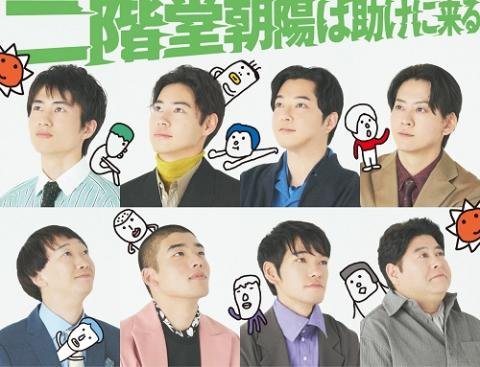
Nikaido Asahi Will Come to Help is a new stage production written and directed by Toru Hosokawa and presented by Mochiron Produce in collaboration with TV Asahi. The production is a fast-moving workplace comedy about eight men whose ordinary professional lives become increasingly chaotic as they encounter the extraordinary behaviour of one unusually determined employee.
The story centres on Nikaido Asahi, an ordinary-looking salaryman working in sales for Every Water, a company that operates in the water-server industry. Despite having a poor reputation within the company and little prospect of promotion, Asahi has one defining characteristic: he cannot ignore someone who needs help.
Whether the person is a colleague, a stranger or even an animal, Asahi instinctively reaches out to help. He does not expect recognition and rarely explains his actions. His straightforward approach often creates new problems, but his energy gradually begins to influence the people around him.
Enjoy Your Event Stress-Free with Japan Travelo
Do you know? Planning events, festivals, concerts, and cultural experiences in Japan can be overwhelming. Japan Travelo brings everything together in one place, helping you manage your itinerary, transport, and accommodation with ease—so you can enjoy Japan without the stress of planning.
Hosokawa describes the production as taking place in a setting where nothing particularly dramatic should happen and then asking how dramatic that workplace can become. The result is a combination of workplace comedy, ensemble performance, music, movement and emotional storytelling.
The production brings together eight male performers: Yudai Chiba, Junki Totsuka, Hikaru Makishima, Aito Sakamoto, Yushin Shinohara, Yukito Hidaka, Yosuke Omizu of Rubber Girl and Sarutoki Minagawa. The creative team includes music by Souichiro Yamauchi, set design by Toshimichi Kurokawa, lighting by Yuta Watanabe, sound by Takeshi Shima and choreography by air.
The Tokyo performances also include a series of special post-show talks featuring members of the cast and invited guests. These events give audiences an opportunity to see the performers in a more informal setting after the main production.
Event dates
Nikaido Asahi Will Come is presented as a three-city Japanese tour running from October 17 through November 15, 2026.
- Tokyo: October 17–November 1, 2026
- Osaka: November 7–9, 2026
- Toyama: November 14–15, 2026
The Tokyo engagement is the longest section of the tour, with performances at EX THEATER ROPPONGI. The production then moves to COOL JAPAN PARK OSAKA WW Hall for four Osaka performances before concluding at Toyama Prefectural Hall.
The Tokyo run contains 15 scheduled performances, including afternoon and evening shows on selected weekends. Osaka has four performances, while Toyama has two afternoon performances.
Visiting this event? Don’t miss out on these amazing activities and local experiences while you’re here.
Venue & performance locations
EX THEATER ROPPONGI, Tokyo
The Tokyo performances take place at EX THEATER ROPPONGI, 1-2-9 Nishi-Azabu, Minato-ku, Tokyo 106-0031. The theatre is one of Tokyo’s major live entertainment venues and is located close to Roppongi’s entertainment district.
The venue is convenient for visitors combining the performance with sightseeing, dining or nightlife around Roppongi, Azabu and nearby Tokyo districts.
COOL JAPAN PARK OSAKA WW Hall
The Osaka performances are held at WW Hall within COOL JAPAN PARK OSAKA, 3-6 Osaka Castle, Chuo-ku, Osaka 540-0002.
WW Hall has 1,138 seats plus six wheelchair spaces and is designed for theatre, musical productions, concerts, dance and other stage entertainment.
Toyama Prefectural Hall
The final performances are held at Toyama Prefectural Hall, 4-18 Shinsogawa, Toyama City, Toyama 930-0006.
The venue is located in central Toyama and is approximately 10 minutes on foot from JR Toyama Station, Toyama Chihō Railway Toyama Station and Ainokaze Toyama Railway Toyama Station.
Full programme
The production follows Nikaido Asahi, a sales employee at Every Water, a company ranked second in its sector. Although he is not considered particularly successful inside the company, Asahi possesses an unusual determination to help people.
He does not carefully assess whether helping someone is sensible. Instead, he simply acts.
This habit frequently causes complications. Because Asahi intervenes without considering the consequences, his colleagues can find themselves caught up in situations that appear much bigger than the original problem.
The story gradually becomes a portrait of the people surrounding him. Asahi’s actions begin to affect colleagues who initially have different personalities, priorities and attitudes toward work.
The workplace setting allows Hosokawa to build comedy from ordinary professional situations while gradually introducing increasingly dramatic circumstances. The production’s central question is how one person’s straightforward kindness can alter the people around him.
Rather than presenting Asahi as a conventional superhero, the production describes him as an ordinary man whose behaviour resembles that of a hero. His greatest characteristic is his willingness to help without expecting anything in return.
The eight performers create the workplace ensemble together, with the production combining dialogue with singing, dancing, physical comedy and energetic group scenes. The creative concept has been described as having the atmosphere of a school festival performed with maximum energy, while also allowing the story to develop into an unexpectedly emotional human drama.
Featured productions & performers
Yudai Chiba
Yudai Chiba plays the title character, Nikaido Asahi. Asahi’s unusual sense of responsibility and his tendency to help others regardless of the consequences provide the foundation of the story.
Chiba leads an eight-person ensemble in a role requiring both comic timing and an energetic physical presence.
Junki Totsuka
Junki Totsuka is part of the central eight-man cast and participates in the production’s workplace comedy and ensemble sequences. He also appears in the October 28 post-show talk with comedian Jiro of Sissonne.
Hikaru Makishima
Hikaru Makishima joins Chiba and the other performers in the main ensemble. He also appears in a special October 27 after-talk with actor and dancer Hiroki Miura, with whom he previously appeared in Kingdom.
Aito Sakamoto
Aito Sakamoto is another member of the central cast. His October 23 after-talk features Sadao Abe, with whom he previously worked on the television drama Unfit for Human Consumption.
Yushin Shinohara
Yushin Shinohara contributes to the eight-person ensemble, helping build the workplace environment and the production’s fast-moving group scenes.
Yukito Hidaka
Yukito Hidaka is part of the main cast and participates in the energetic ensemble style that defines the production.
Yosuke Omizu
Yosuke Omizu, known as a member of the comedy duo Rubber Girl, brings his comedy background to the stage. His presence adds another layer to the production’s workplace humour.
Sarutoki Minagawa
Sarutoki Minagawa completes the eight-member principal cast. His extensive stage and comedy experience contributes to the ensemble’s mixture of humour and dramatic interaction.
Shows & performances
Nikaido Asahi Will Come is structured as an ensemble stage comedy rather than a conventional solo-led workplace story.
The production’s eight performers share a large amount of stage activity, allowing the workplace to become increasingly chaotic as Asahi’s attempts to help others affect the people around him.
The performance incorporates several theatrical forms:
- Workplace dialogue and situational comedy
- Ensemble movement
- Singing and dance
- Physical comedy
- Fast-paced group scenes
- Character-based dramatic moments
- Emotional scenes developing from the comedy
The creative team includes Souichiro Yamauchi on music, Toshimichi Kurokawa on set design, Yuta Watanabe on lighting, Takeshi Shima on sound, Ayumi Tachibana on costumes, Kazumi Owada on hair and makeup, Yasuhiro Omi on video and air on choreography.
The combination of these elements gives the production a deliberately energetic style. The performers are expected to sing, dance, move rapidly through scenes and maintain the comic momentum of an eight-person ensemble.
The production is therefore aimed at audiences who enjoy contemporary Japanese theatre, workplace comedies, actor-driven ensemble productions and stage shows that combine comedy with a more emotional story.
Performance schedule
Tokyo – EX THEATER ROPPONGI
- October 17 – 6:00 PM
- October 18 – 1:00 PM
- October 19 – No performance
- October 20 – 6:00 PM
- October 21 – 1:00 PM
- October 22 – 1:00 PM
- October 23 – 1:00 PM
- October 24 – 1:00 PM and 6:00 PM
- October 25 – 1:00 PM
- October 26 – No performance
- October 27 – 6:00 PM
- October 28 – 1:00 PM
- October 29 – 1:00 PM
- October 30 – 1:00 PM
- October 31 – 1:00 PM and 6:00 PM
- November 1 – 1:00 PM
Doors open 45 minutes before each performance at EX THEATER ROPPONGI.
Osaka – COOL JAPAN PARK OSAKA WW Hall
- November 7 – 1:00 PM
- November 7 – 6:00 PM
- November 8 – 1:00 PM
- November 9 – 1:00 PM
The Osaka performances are presented as four shows across three days.
Toyama – Toyama Prefectural Hall
- November 14 – 1:00 PM
- November 15 – 1:00 PM
Both Toyama performances begin at 1:00 PM, with the tour concluding on November 15.
Ticket types
Tokyo reserved seat
The standard Tokyo reserved seat is approximately $70. This is the main general ticket category for the EX THEATER ROPPONGI performances.
Tokyo Young Ticket
The Young Ticket is approximately $35 and is available to audience members aged 22 or younger. It is handled through Ticket Pia and functions as a same-day reserved-seat exchange ticket. Eligible visitors must show identification proving their date of birth.
Osaka reserved seat
The Osaka reserved seat is approximately $75. All Osaka performances use reserved seating.
Osaka Young Ticket
The Osaka Young Ticket is approximately $35 for audience members aged 22 or younger and is handled through Ticket Pia.
Toyama reserved seat
The Toyama reserved seat is approximately $67.
Toyama Young Ticket
The Toyama Young Ticket is approximately $35 for audience members aged 22 or younger.
The dollar figures are approximate conversions using a September 20, 2026 reference rate of ¥156.50 per US$1. Actual card or payment-provider exchange rates may differ.
Ticket release & booking
Tokyo general ticket sales began on August 22, 2026 at 10:00 AM. Tickets are available through Tele-Asa Ticket, Ticket Pia, ePlus and Lawson Ticket.
The Tokyo Ticket Pia listing also shows general-sale availability for the October 17–November 1 run, while earlier premium and advance lotteries have already been conducted.
Osaka and Toyama general sales are scheduled to begin October 10, 2026 at 10:00 AM. Ticket Pia has also offered advance sales for both regional stops.
Visitors travelling from outside Japan should check the individual ticketing platform’s purchase and collection requirements before booking flights or accommodation.
VIP & premium seating
There is no publicly announced VIP lounge, backstage tour, meet-and-greet or hospitality package for Nikaido Asahi Will Come.
The principal Tokyo ticket categories are reserved seating and the discounted Young Ticket. The Osaka and Toyama performances similarly use standard reserved seating with Young Ticket options.
The most distinctive premium-style experience is instead the series of Tokyo post-show talks. These are included for people holding tickets to the designated performances and take place from their original seats after the main performance.
The October 29 event is particularly different because all eight performers participate in an audience-participation consultation session.
Event rules
Preschool children are not permitted to attend the production.
Young Ticket holders must meet the age requirement and present valid identification showing their date of birth when exchanging their same-day seat voucher.
Tickets cannot normally be refunded except when a performance is cancelled or when the organiser determines that a refund is appropriate. Unauthorised paid resale is prohibited.
Audience members using wheelchair spaces should contact the relevant venue no later than three days before the performance to allow the venue to prepare appropriate assistance.
Post-show talk guests may change without prior notice. The after-talk is only available to ticket holders of the relevant performance and takes place after the main show from the audience member’s original seat.
How to get there
Tokyo
EX THEATER ROPPONGI is located in Nishi-Azabu near Roppongi. Roppongi Station on the Tokyo Metro Hibiya Line and Toei Oedo Line is approximately five minutes away on foot. Nogizaka Station is approximately eight minutes away, while Azabu-Juban Station is around 11 minutes away.
Osaka
COOL JAPAN PARK OSAKA WW Hall is located in Osaka Castle Park. The venue is approximately five minutes from Morinomiya Station on the Osaka Metro Chuo and Nagahori Tsurumi-ryokuchi lines. JR Morinomiya Station is around seven minutes away, while JR Osaka-Jokoen Station is around six minutes away.
Toyama
Toyama Prefectural Hall is approximately 10 minutes on foot from JR Toyama Station, Ainokaze Toyama Railway Toyama Station and Toyama Chihō Railway Toyama Station. The venue is also served by local buses stopping at Toyama City Hall.
Public transport & parking
Tokyo
Public transport is recommended for the Tokyo performances because EX THEATER ROPPONGI is close to several railway and subway stations. The venue does not function as a large destination parking facility, so visitors arriving by car should investigate nearby paid parking before travelling.
Osaka
WW Hall does not have a dedicated customer parking lot. The venue advises visitors arriving by car to use nearby coin-operated parking facilities around the WW Hall area.
The venue is much easier to reach by rail, with Morinomiya and Osaka-Jokoen stations both within walking distance.
Toyama
Toyama Prefectural Hall has an on-site parking facility operating from 8:00 AM to 10:30 PM. The standard parking charge is approximately $2.11 for the first hour, followed by approximately $0.70 for each additional 30 minutes, based on the September 2026 exchange rate. Visitors using the prefectural hall receive the first-hour basic charge free under the venue’s parking discount arrangement.
Accommodation areas
Roppongi and Azabu, Tokyo
Roppongi is the most convenient area for visitors attending the Tokyo performances. It offers hotels, restaurants, cafés, bars and extensive late-evening transport connections.
Akasaka and Shibuya
Akasaka provides another central accommodation option with convenient access to Roppongi, while Shibuya is useful for visitors combining the theatre with broader Tokyo sightseeing.
Osaka Castle and Morinomiya
For the Osaka performances, Morinomiya is the closest practical accommodation area. Visitors can also stay around Osaka Station, Umeda or Namba and travel to Osaka Castle Park by train.
Toyama Station
Toyama Station is the most practical accommodation base for the final two performances. The station area has hotels, restaurants and direct rail connections, while the prefectural hall is approximately 10 minutes away on foot.
Dining & refreshments
Nikaido Asahi Will Come is a theatre production, so food and refreshments are primarily available around the individual venues rather than as part of the event itself.
In Tokyo, Roppongi and nearby Azabu offer a large selection of restaurants, cafés, Japanese dining and international cuisine. Visitors attending the 6:00 PM performances may wish to dine after the show because the surrounding district remains active in the evening.
In Osaka, the WW Hall is located within Osaka Castle Park. The venue has a HOOP Café where visitors can purchase drinks and refreshments, while the wider Morinomiya and Osaka Castle areas provide additional dining choices.
Toyama Station and the central Toyama area provide a broad selection of restaurants. Visitors can also explore Toyama’s local cuisine before or after the afternoon performances.
Because several performances are scheduled at 1:00 PM, visitors attending daytime shows can have lunch either before arriving at the theatre or after the performance.
Accessibility
Wheelchair seating is available for the production, but spaces are limited and advance arrangements are recommended.
For Tokyo, visitors planning to attend in a wheelchair are asked to contact the organiser after purchasing their ticket. The production requests advance contact to make arrival and seating arrangements as smooth as possible.
At Osaka’s WW Hall, the venue has six wheelchair spaces within its 1,138-seat configuration. The venue also provides accessible routes through the surrounding Osaka Castle Park area.
At Toyama Prefectural Hall, visitors can contact the venue in advance regarding accessibility and seating requirements. The venue is centrally located and can be reached from Toyama Station by a relatively short walk.
Visitors should make accessibility arrangements before travelling because wheelchair spaces and assistance may be limited for individual performances.
Best performances to attend
October 17 Tokyo opening night
The October 17 performance at 6:00 PM is the opening performance of the production. It provides the earliest opportunity to see Hosokawa’s new work and the eight-person cast together at EX THEATER ROPPONGI.
October 20 Tokyo with Yudai Chiba and Kayoko Noro
The October 20 performance at 6:00 PM includes a post-show talk featuring lead performer Yudai Chiba and actress Kayoko Noro. Their conversation follows the main performance and is available to ticket holders of that show.
October 23 Tokyo with Aito Sakamoto and Sadao Abe
The October 23 performance at 1:00 PM features a post-show conversation between Aito Sakamoto and Sadao Abe. The two previously worked together on the television drama Unfit for Human Consumption.
October 27 Tokyo with Hikaru Makishima and Hiroki Miura
The October 27 evening performance includes an after-talk with Hikaru Makishima and Hiroki Miura, who previously worked together on the stage production Kingdom.
October 28 Tokyo with Junki Totsuka and Jiro
The October 28 afternoon performance features Junki Totsuka in conversation with Jiro of the comedy duo Sissonne. The event provides a different perspective on the cast’s personalities after the main production.
October 29 Tokyo all-cast consultation
The October 29 afternoon performance is followed by an all-cast consultation session. Audience members can submit concerns or questions at the venue, with the eight performers responding as part of the special event.
November 15 Toyama finale
The November 15 afternoon performance at Toyama Prefectural Hall is the final scheduled performance of the 2026 national tour.
Previous year’s highlights
There is no previous annual edition of Nikaido Asahi Will Come to use as a direct comparison. The 2026 production is a new stage work written and directed by Toru Hosokawa and presented by Mochiron Produce with TV Asahi.
The production’s significance therefore comes from its first staging rather than from an established annual festival or recurring tour.
The creative concept combines Hosokawa’s interest in creating dramatic stories from apparently ordinary environments with an ensemble of eight male performers. The setting of a water-server company provides the everyday workplace environment, while Asahi’s unusual behaviour gradually transforms it into the centre of a much larger human story.
The 2026 run also introduces a distinctive series of post-show events. These are not simply standard cast greetings but specially arranged conversations with guests connected to the performers, followed by an all-cast audience consultation on October 29.
Official tickets
The primary official ticket information is available through Ticket Pia and the production’s official ticketing partners.
Ticket Pia: https://t.pia.jp/pia/event/event.do?eventBundleCd=b2669672
Ticket availability can change by performance, particularly for the special Tokyo shows with after-talk events. Visitors should confirm the exact performance date and ticket conditions before arranging travel.
Location
FAQ
What is the primary comedic premise of the theatrical production?
The play follows an eccentric crew of eight men navigating the chaotic and absurd pressures of a high-stress workplace. Written and directed by Toru Hosokawa, it blends fast-paced physical farce with sharp office satire. Characters struggle against impossible deadlines and administrative disasters, creating continuous laughter for the audience.
Who are the leading creative forces and cast members involved?
The production is masterminded by acclaimed writer and director Toru Hosokawa, known for his unique comedic voice. It stars Yudai Chiba in the lead role of Asahi Nikaido, supported by a talented ensemble including Junki Totsuka and Sarutoki Minagawa. Together, this cast delivers high-energy physical comedy and brilliant character dynamics.
What are the details regarding the special after-talk sessions?
Select performances feature exclusive post-show conversation sessions with special guest luminaries like Kayoko Noro, Hiroki Miura, and Sadao Abe. These unscripted segments offer behind-the-scenes anecdotes, industry reflections, and nostalgic cast reunions for attending fans. Dates for these special sessions are scheduled across late October 2026.
What venues are hosting the multi-city tour performance run?
The production kicks off its flagship run at EX THEATER ROPPONGI in Tokyo before touring regional venues. Performances will also be staged at Toyama Prefectural Civic Center Hall and COOL JAPAN PARK OSAKA WW Hall. This extensive schedule ensures fans across multiple regions can experience the stage comedy live.
What entry rules apply regarding age restrictions and ticket resales?
Children under school age are strictly prohibited from entering the auditorium to maintain an undisturbed viewing environment. Ticket transfers or unauthorized commercial resales are strictly banned under current Japanese anti-resale legislation. Patrons are advised to check official booking channels for specific venue admission guidelines.
How does the production blend physical comedy with workplace realism?
While utilizing exaggerated slapstick and cartoonish office disasters, the play remains grounded in authentic human frustration. Characters grapple with relatable professional insecurities, making their absurd workplace struggles feel strangely believable. This balance allows the comedy to resonate deeply with anyone who has ever survived a difficult job.

Leave a Reply