
1,000 Samurai Warrior Procession
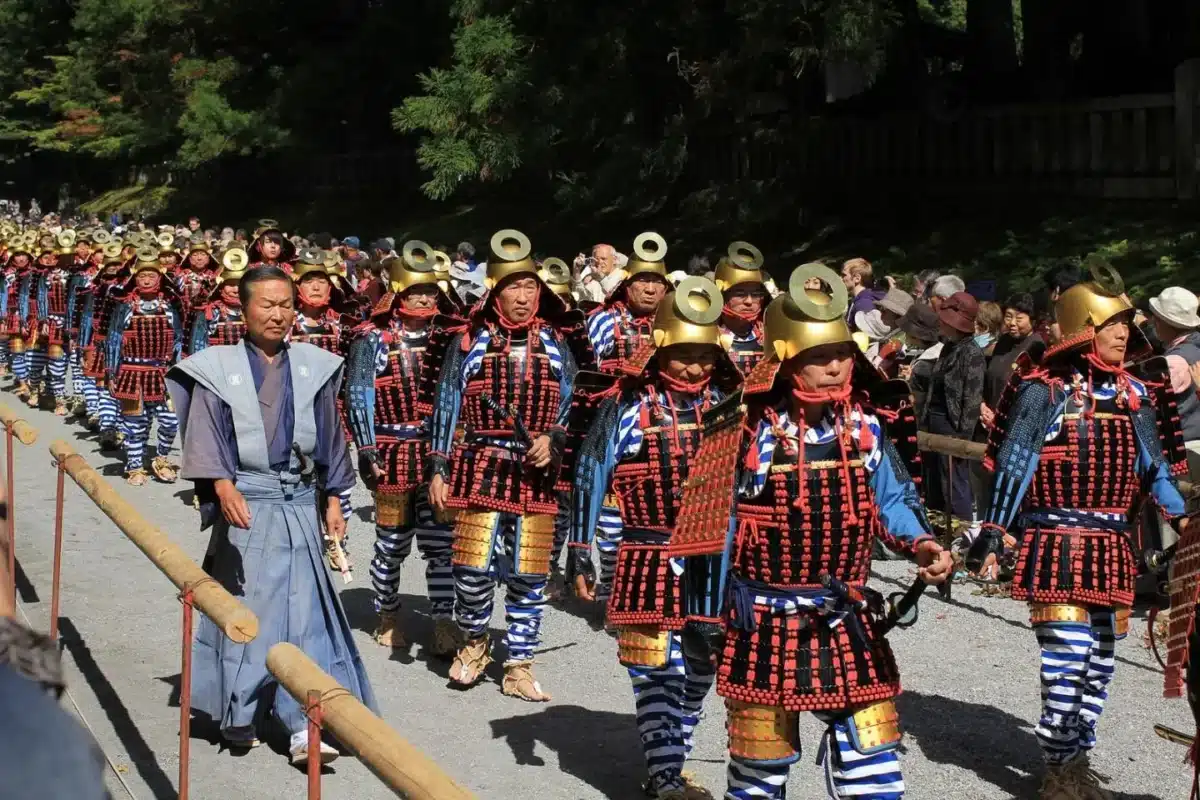
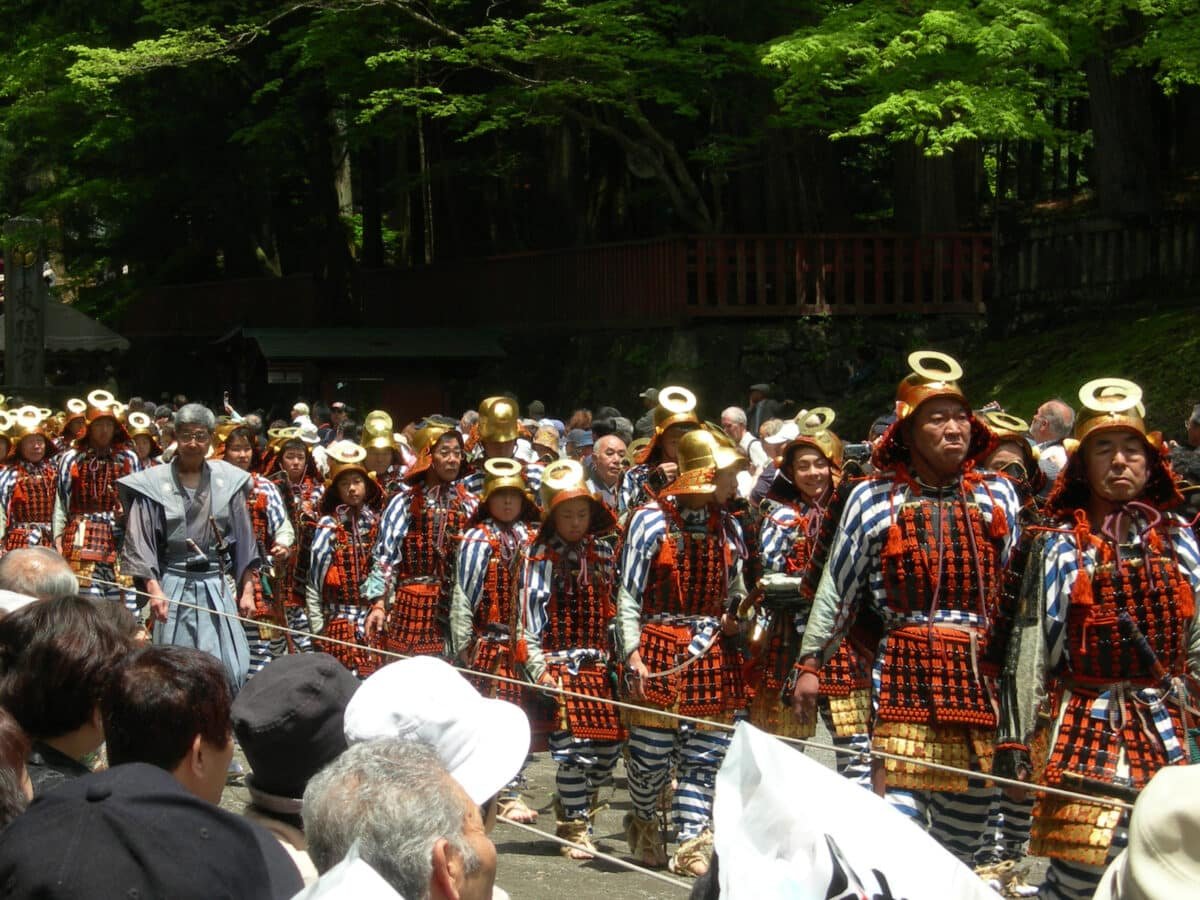
The legendary Hyakumono-Senninmusha Parade represents the visual pinnacle of the autumn festival, reenacting the grand historical escort of Tokugawa Ieyasu’s spirit. Over a thousand participants dressed in full historical armor, feudal uniforms, and court garments march in precise formation through the mountain streets.
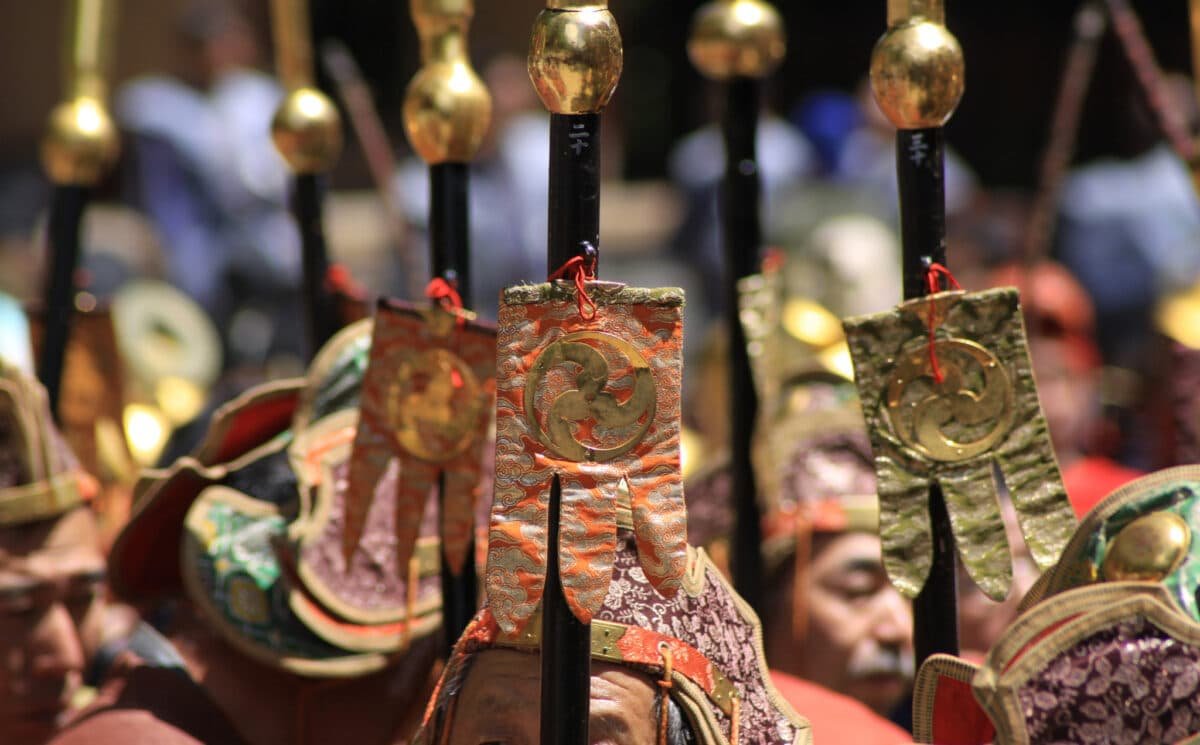
The massive procession creates an incredible living scroll of history, featuring spear carriers, matchlock gunners, shrine priests, and banner bearers moving to solemn flute music. Every element of the parade reflects meticulous historical research, capturing the strict social hierarchy and military might of the Edo period.
As the vibrant parade winds its way from the shrine down toward the sacred resting places, thousands of spectators line the historic avenues in rapt silence. The rhythmic trample of sandals, the gleaming metallic sheen of armor, and fluttering ceremonial flags combine to deliver an unforgettable spectacle.
Enjoy Your Event Stress-Free with Japan Travelo
Do you know? Planning events, festivals, concerts, and cultural experiences in Japan can be overwhelming. Japan Travelo brings everything together in one place, helping you manage your itinerary, transport, and accommodation with ease—so you can enjoy Japan without the stress of planning.
This grand mobilization of community volunteers and historical preservationists requires months of meticulous preparation to ensure authentic execution. It stands out as one of Japan’s most authentic historical pageants, offering an unmatched window into the nation’s feudal past.
Date & Duration
- Event Date: Mid October 2026 (Dates TBD)
- Event Duration: Multi-day autumn grand festival celebration featuring major weekend processions
Visiting this event? Don’t miss out on these amazing activities and local experiences while you’re here.
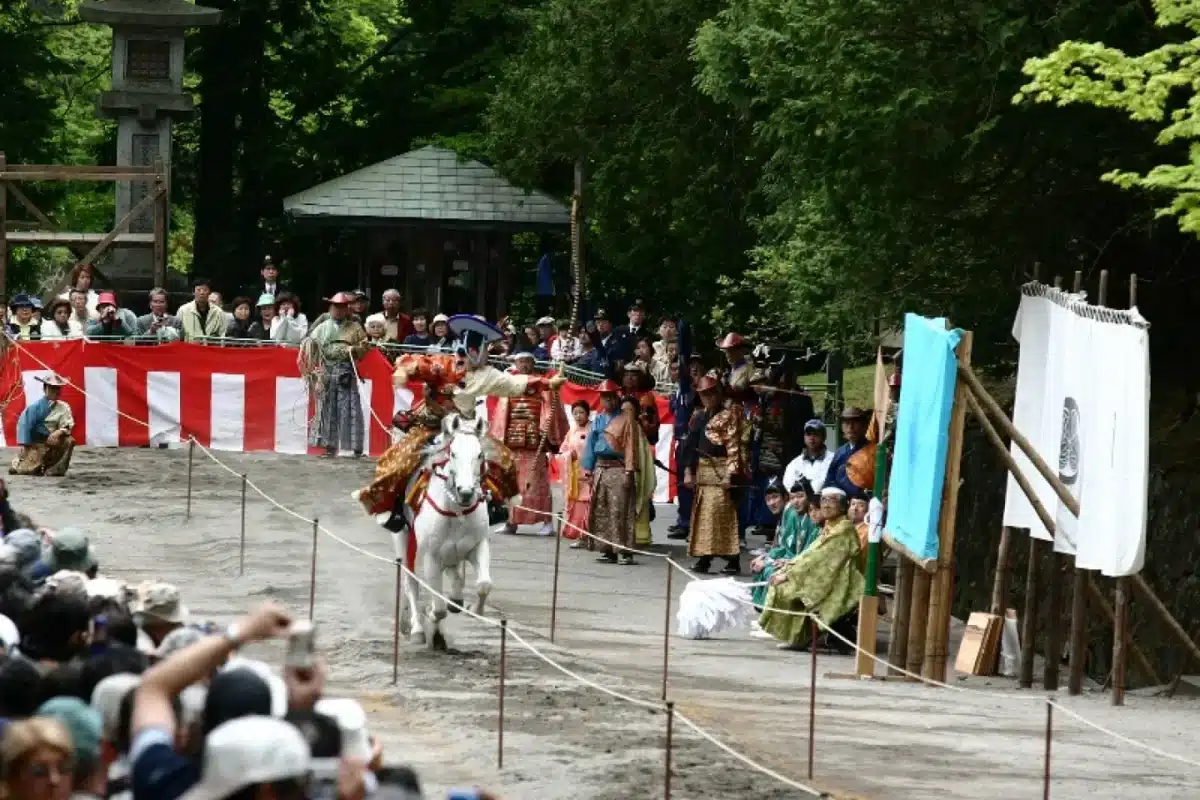
Yabusame Horseback Archery Ritual
- Sacred Shinto Prayers conducting preliminary purification rites before archers mount their trained steeds
- Galloping Horse Tracks setting up a specialized straightaway course lined with sand and wooden target barriers
- Traditional Samurai Attire dressing riders in authentic hunting robes worn by medieval Japanese warriors
- Rapid Arrow Release loosing sharp wooden-tipped arrows at high speeds toward sequential wooden targets
- Equestrian Skill Mastery demonstrating exceptional balance, focus, and horsemanship passed down through generations
- Resonant Target Impact producing loud cracking echoes as arrows strike bullseyes to the roar of crowds
- Historical Accuracy adhering strictly to ancient Kamakura-period military training traditions and protocols
- Ritual Blessing of Steeds offering sacred salt and prayers for safety and success before the competition begins
- Spectator Viewing Lines packing deep crowds along the designated turf boundaries to watch the thunderous action
- Preservation Society Guidance relying on master archer lineages to keep this rare martial art alive authentically
Traditional Costumes, Music & Court Performances
- Edo Period Wardrobe showcasing authentic silk robes, lacquered helmets, and hand-stitched feudal uniforms
- Imperial Court Attire featuring flowing garments worn by high-ranking nobles and traditional musicians
- Gagaku Live Ensembles performing ancient court music using traditional wind and string instruments
- Flute and Taiko Duets maintaining steady ceremonial rhythms throughout the lengthy street processions
- Shrine Maiden Dances presenting sacred kagura choreography using flowing fans and twig branches
- Historical Accuracy Standards ensuring every textile pattern and weapon accessory matches historical archives
- Costumed Child Participants including young community members dressed in traditional historical pageantry roles
- Acoustic Resonance bouncing traditional melodies against massive cedar trees and stone lantern rows
- Artisan Craft Preservation utilizing traditional textile dyeing and metalworking techniques for costumes
- Intergenerational Transmission passing down rare musical notes and dance steps to younger local performers
Ticket Information
- How Tickets Are Sold: General shrine grounds and street viewing areas are open to the public without advance ticket purchases
- Admission Type: Free Admission for public street viewings and shrine courtyards
- Ticket Pricing: Free Admission to $0.00 for general access (Minimum $0.00 to Maximum $0.00 for public areas)
- Special Seating Options: Unreserved public sidewalks and designated open-air spectator viewing zones along the historic parade route
- VIP Options: No official VIP seating or exclusive ticketed packages provided by the primary shrine organizers
Festival Background & Historical Origins
The Nikko Toshogu Shrine Autumn Grand Festival stands as one of the most prestigious cultural events in the Kanto region, drawing history enthusiasts from across the globe. Established centuries ago, the grand festival commemorates the sacred enshrinement and historical transfer of Tokugawa Ieyasu’s spirit to the majestic mountain sanctuary of Nikko.
Rooted in deep spiritual reverence, the autumn celebration serves as an expression of national gratitude, peace, and continuity, echoing the architectural grandeur of the shrine itself. Generations of shrine keepers and local residents have preserved these sacred rites, maintaining an unbroken link to Japan’s feudal governance history.
Set against the breathtaking backdrop of autumn foliage turning brilliant shades of crimson and gold, the festival grounds provide a vivid living museum experience. Ornate gates, gilded carvings, and towering cedar trees create an awe-inspiring atmosphere that transports every visitor directly back to the height of the Tokugawa shogunate.
The festival acts not only as a religious observance for the Toshogu deity but also as a vital cultural touchstone for modern Japanese heritage preservation. Traditional arts, ancient music, and meticulous historical reenactments combine to offer an immersive journey into the classical aesthetic and martial discipline of early modern Japan.
Contact Information
- Phone Number: +81 288-22-1525
- Website: https://en.japantravel.com/tochigi/nikko-toshogu-shrine-autumn-grand-festival/31990
Visitor Experience, Photography & Etiquette
- Optimal Vantage Points securing roadside spaces early along the procession routes to guarantee clear lines of sight
- Quiet Reverence Rules maintaining respectful silence during sacred Shinto rituals and deity transfers
- Flash Photography Bans avoiding artificial lighting when instructed during solemn shrine ceremonies
- Sturdy Footwear Selection wearing comfortable walking shoes suitable for gravel paths and stone stairs
- Weather Layering Preparedness packing warm jackets to counter crisp mountain air during autumn afternoons
- Crowd Management Patience navigating dense tourist clusters politely during peak parade hours
- Public Transit Planning utilizing local buses from Nikko Station efficiently to bypass road congestion
- Tripod Restrictions refraining from using bulky camera supports in tight pedestrian corridors
- Staff Instruction Compliance following directions from festival marshals and security personnel immediately
- Trash Disposal Mindfulness carrying personal waste bags since public trash bins are limited on shrine grounds
Venue / Location
- City and Country: Nikko, Japan
- Venue Name: Nikko Toshogu Shrine
- Google Maps Address: 2301 Sannai, Nikko, Tochigi 321-1431, Japan
Mikoshi Procession & Otabisho Ceremony
The sacred portable shrine, known as a mikoshi, serves as the divine vehicle carrying the spirit of Tokugawa Ieyasu during the festival’s central religious journey. Escorted by priests and attendants in traditional ceremonial robes, the heavy golden shrine travels from Toshogu Shrine down to the designated Otabisho resting location.
Upon arrival at the Otabisho, solemn Shinto rituals are performed to honor the deity and offer prayers for regional peace, safety, and national prosperity. This temporary sanctuary becomes the focal point of spiritual devotion, surrounded by sacred offerings of mountain produce and artistic performances.
The solemnity of the transfer ceremony highlights the profound religious core underlying the festival’s more colorful public pageantry. Visitors witnessing the serene rituals gain a deeper understanding of Shinto theology and the enduring spiritual heritage anchored within the sacred hills of Nikko.
Video
Location
FAQ
What are the primary dates when the Nikko Toshogu Shrine Autumn Festival takes place annually?
The grand autumn festival is held consistently every year during mid-October, with core events concentrated on October 16th and 17th. These specific dates ensure optimal autumn foliage conditions across the mountain shrine complex for visitors. Planning your travel itinerary around mid-October guarantees you witness the major samurai parades and rituals.
How can travelers easily reach Nikko Toshogu Shrine using public transportation?
Visitors can take a comfortable train ride from Tokyo to either JR Nikko Station or Tobu-Nikko Station via regional rail lines. From the stations, local World Heritage sightseeing buses run frequently, dropping passengers off just a short walk from the shrine gates. Walking from the station to the shrine is also an option for those wanting to enjoy the scenic town approach.
Is it necessary to purchase admission tickets to view the festival parades and shrine grounds?
General public viewing of the samurai procession and street parades along designated routes is entirely free of charge for all travelers. While entering the main Toshogu Shrine complex requires standard admission fees, the outdoor festival events can be enjoyed openly. Arriving early to secure a good viewing spot along the public sidewalks is strongly advised.
What are the key highlights that make this autumn festival uniquely spectacular?
The main highlights include the breathtaking yabusame horseback archery displays and the massive Parade of 1,000 Samurai Warriors in full armor. These grand spectacles recreate authentic Edo-period pageantry against a stunning backdrop of vibrant autumn maple leaves. It remains the largest and most historically significant festival event hosted in the Nikko region.
What weather conditions and clothing preparations should visitors anticipate in October?
October temperatures in the mountain town of Nikko can drop sharply, particularly during afternoon shade and late-day hours. Visitors should pack warm layers, windproof jackets, and comfortable walking shoes suitable for gravel paths and stone stairs. Being well-prepared for cool mountain weather ensures an enjoyable and comfortable festival experience.

Leave a Reply