
What to expect in 2027
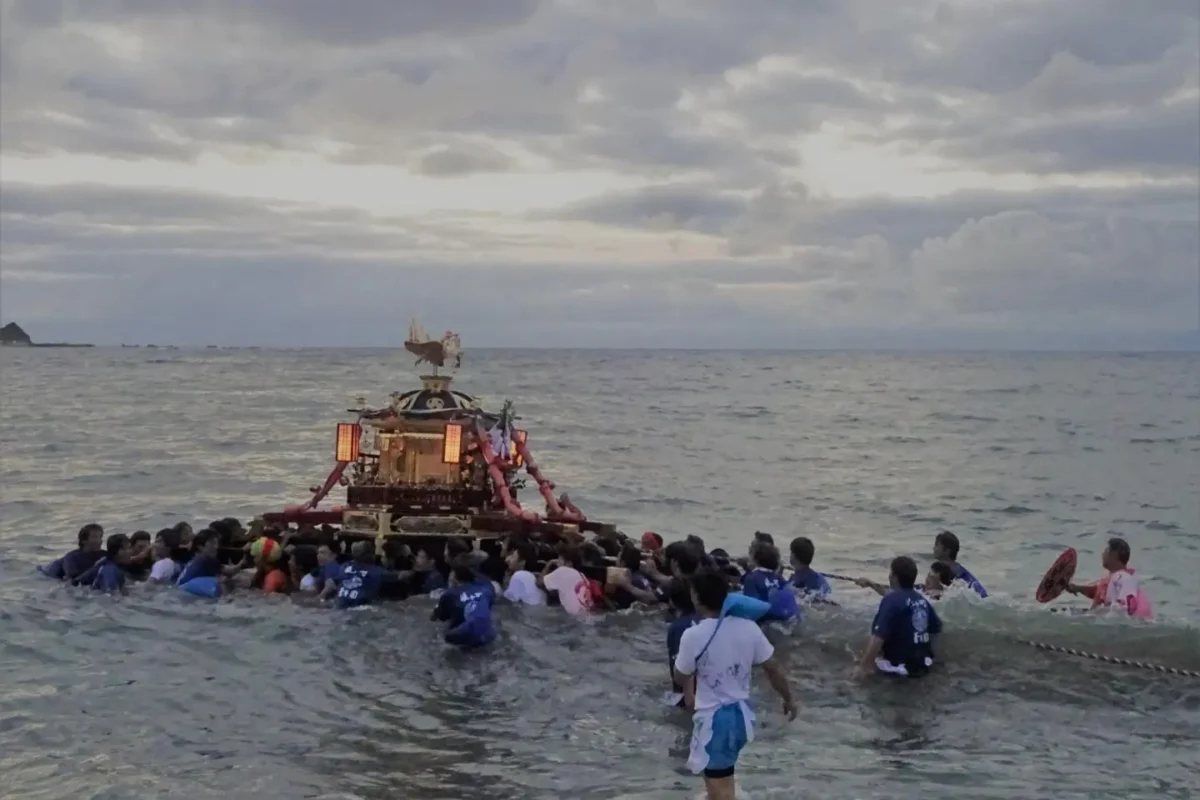
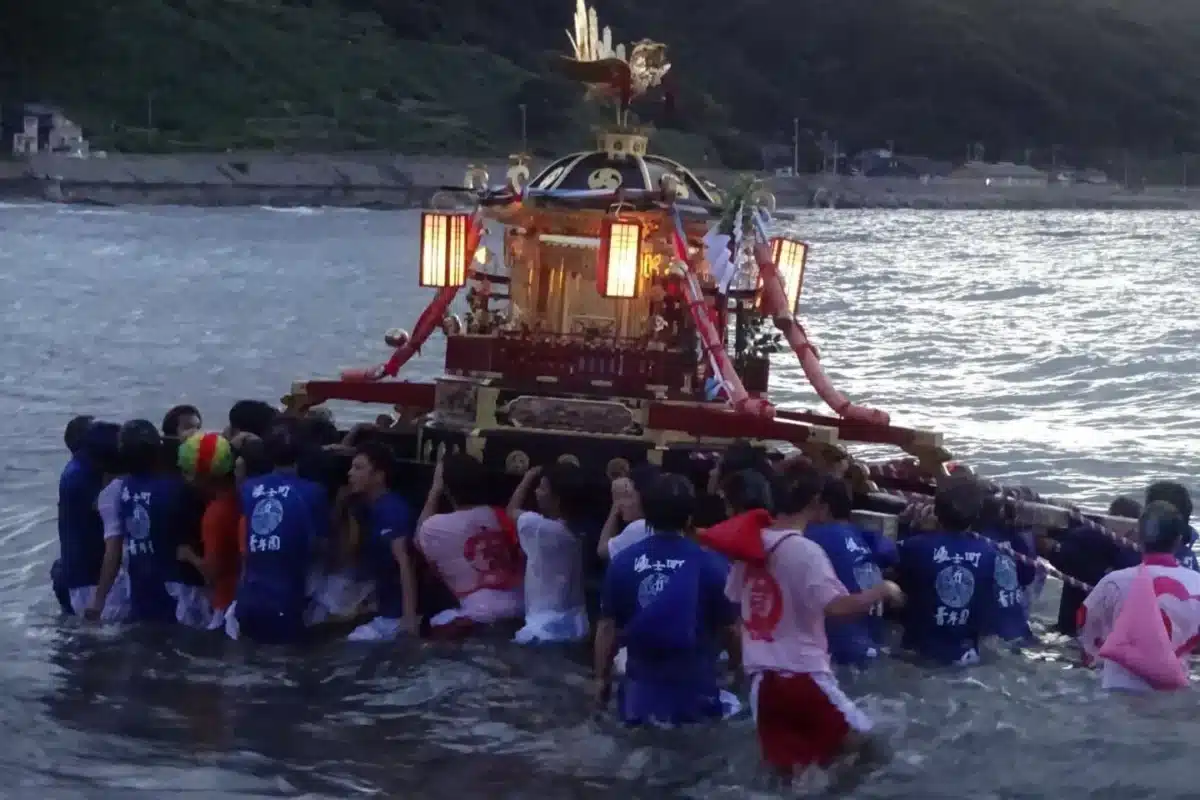
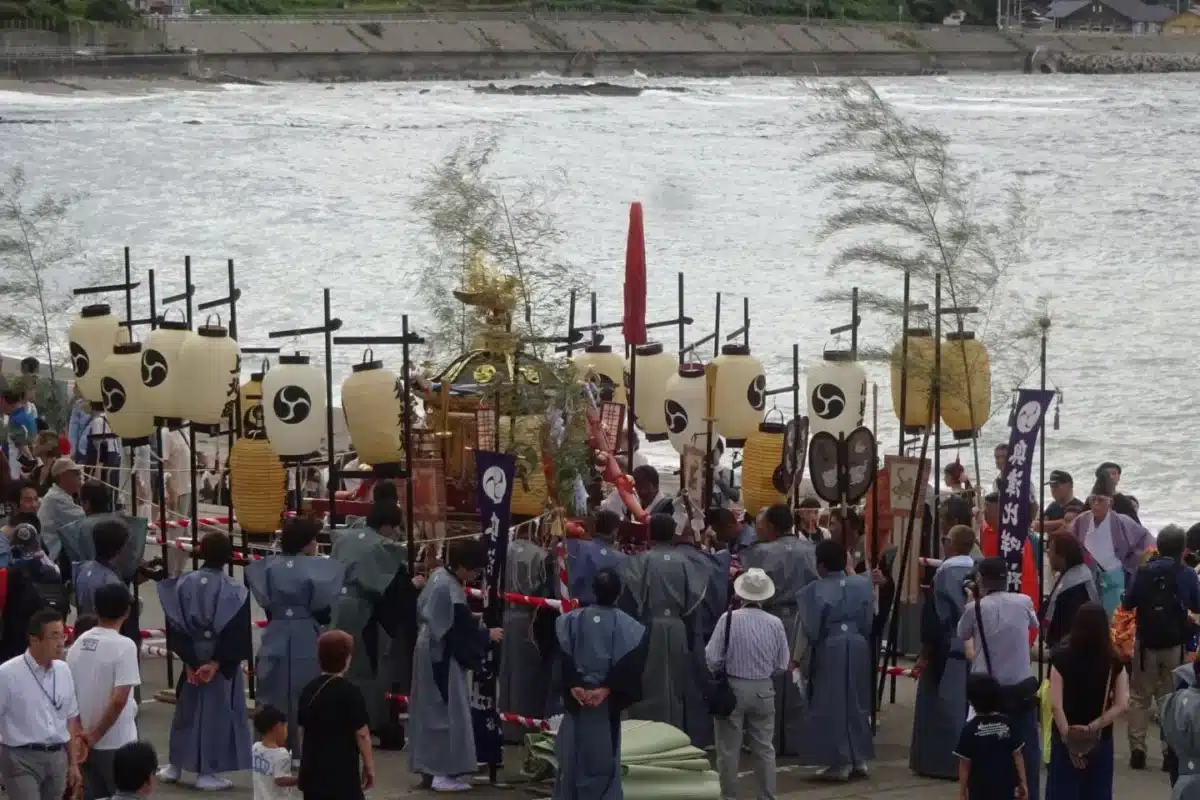
The Okutsuhime Shrine Festival is one of the traditional summer festivals that make up the Wajima Grand Festivals on the Noto Peninsula. Held in the Ama-machi area of Wajima, the celebration combines Shinto rituals, a portable shrine procession, traditional costumes, taiko drumming and a dramatic ceremony in which the mikoshi is carried into the sea at Sodegahama Beach.
The festival has a strong connection with the fishing communities of Wajima and with Okutsuhime Shrine, whose main shrine is located on Hegura Island. The local tradition reflects the relationship between the people of the Noto coast and the sea, with prayers and ceremonies associated with fishing, safety and good fortune.
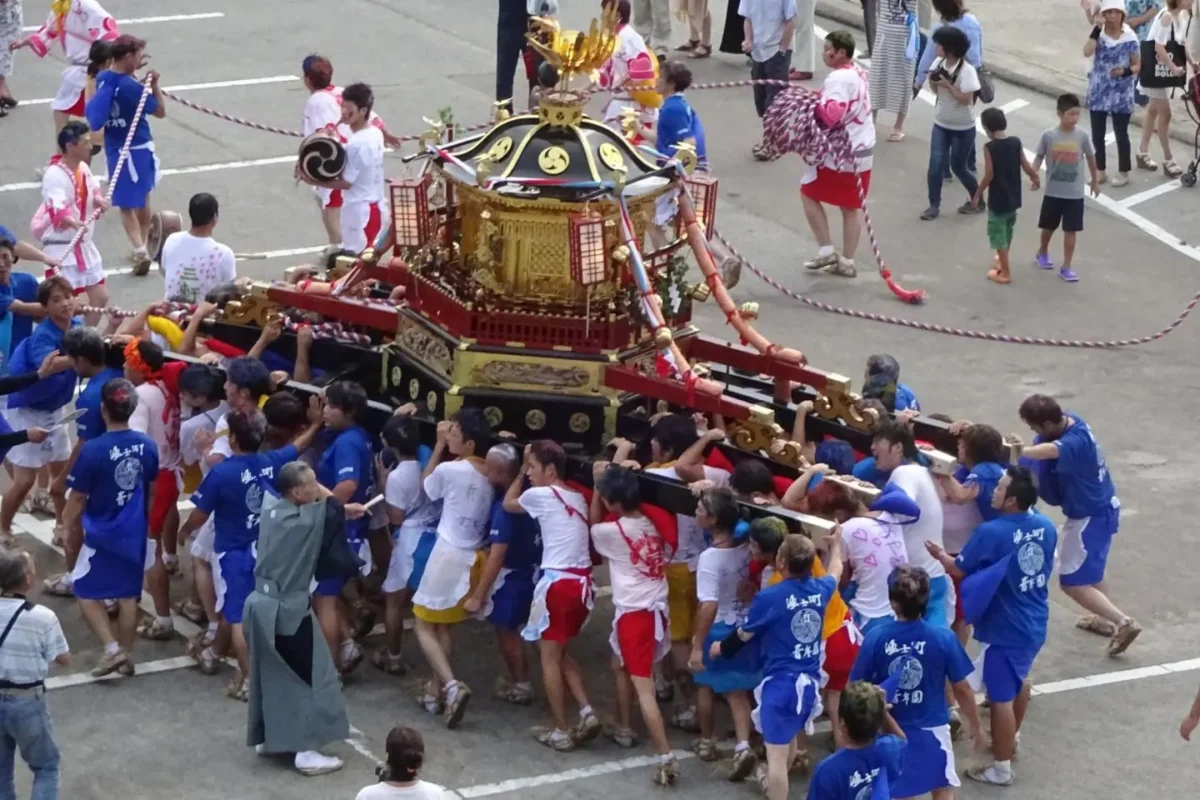
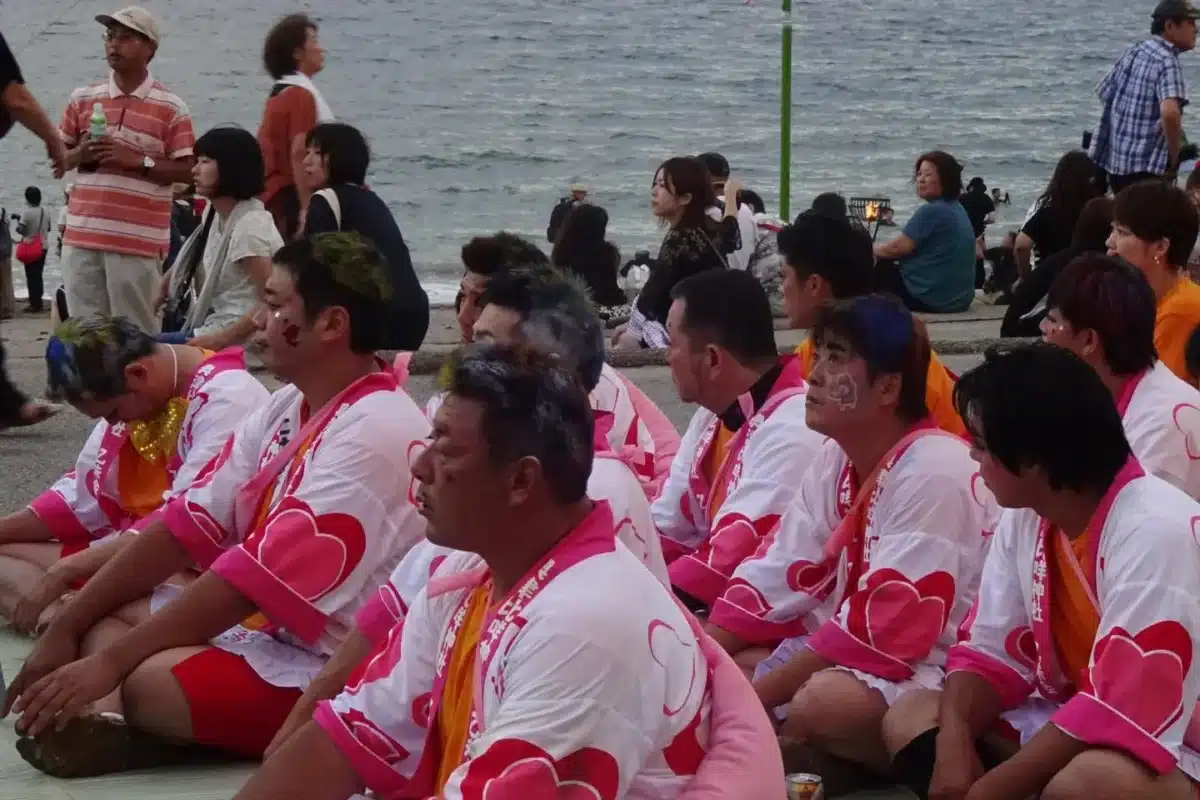
One of the most distinctive sights is the group of young men carrying the portable shrine while dressed in colorful women’s clothing and wearing makeup. According to the traditional story, this custom developed from a legend involving the divine princess Okutsuhime and her divine prince on the Noto mainland.
Enjoy Your Event Stress-Free with Japan Travelo
Do you know? Planning events, festivals, concerts, and cultural experiences in Japan can be overwhelming. Japan Travelo brings everything together in one place, helping you manage your itinerary, transport, and accommodation with ease—so you can enjoy Japan without the stress of planning.
Another unusual feature is the interaction between the mikoshi and local children. Once the shrine reaches the beach, ropes attached to it are held by children, who pull the shrine back and forth as the bearers attempt to carry it into the sea. Tradition holds that the longer this struggle continues, the better the fishing catch will be.
For visitors, the festival offers a rare opportunity to experience a local religious celebration that has retained a strong community character. It is not simply a staged cultural performance. The procession, rituals, costumes, music and sea ceremony are connected to the beliefs and traditions of Wajima’s fishing communities.
Event dates
Okutsuhime Shrine Festival 2027 is expected to take place in August 2027, with the exact calendar date still to be confirmed.
The festival traditionally forms the opening celebration of the Wajima Grand Festivals, a sequence of four summer shrine festivals in central Wajima. The official Noto Kiriko information identifies Okutsuhime Shrine Festival as the first of these celebrations.
For this 2027 listing:
- Event period: August 2027
- Exact date: To be confirmed
- Location: Wajima City, Ishikawa Prefecture
- Festival area: Ama-machi and Sodegahama Beach
- Festival status: Traditional Shinto shrine festival
- Admission: Public festival with no general admission ticket
Visitors planning a trip should check the official festival information close to the event period because local conditions, restoration work and community arrangements may affect the programme.
Visiting this event? Don’t miss out on these amazing activities and local experiences while you’re here.
Venues & festival locations
The main festival activity takes place in the Ama-machi area of Wajima, where the Satomiya of Okutsuhime Shrine is located. Although the principal shrine of Okutsuhime is on Hegura Island, the mainland festival is now conducted at the shrine’s Satomiya in Wajima.
Important locations include:
- Okutsuhime Shrine Satomiya: The religious starting point of the festival and the place where important Shinto rites are performed.
- Ama-machi: The local neighborhood through which the procession takes place.
- Sodegahama Beach: The coastal setting for the festival’s most distinctive ceremony, when the portable shrine is carried toward and into the sea.
- Temporary shrine area: The mikoshi is eventually brought ashore and placed at a temporary sacred location.
- Local streets and gathering areas: These provide opportunities to watch the procession and experience the atmosphere of the surrounding community.
The coastal setting is an important part of the festival. Rather than being confined to a shrine courtyard, the celebration moves through the local settlement and toward the sea, connecting the religious ceremony with Wajima’s maritime traditions.
Full cultural programme
The cultural programme centers on the portable shrine, Shinto purification and the relationship between the community and the sea.
The celebration generally includes:
- Shinto ceremonies at the shrine
- Preparation and procession of the mikoshi
- Young men wearing traditional women’s costumes
- Traditional makeup and festival clothing
- Local taiko drumming
- Procession toward Sodegahama Beach
- Purification rituals near the sea
- The dramatic carrying of the mikoshi into the water
- Children pulling ropes attached to the portable shrine
- Repeated movement of the shrine toward and away from the sea
- Transfer of the mikoshi to a temporary shrine
- Community participation and prayers for fishing prosperity and safety
The combination of solemn religious elements and lively physical activity gives the festival its unusual character. Visitors can see formal Shinto ceremonies followed by energetic participation around the beach.
The festival is also closely associated with the wider Wajima Grand Festival tradition, in which different communities celebrate their own shrine festivals during the late-summer period. The four festivals are connected by their use of portable shrines, lanterns and local maritime traditions.
Featured traditions & performances
The most recognizable tradition is the procession of the mikoshi by young men dressed in women’s clothing. Their costumes and makeup are intended to connect with the traditional legend of the divine lovers associated with Okutsuhime Shrine.
Mikoshi procession
The portable shrine is carried from the shrine area toward Sodegahama Beach. The procession allows visitors to see the mikoshi moving through the local community before the ceremony reaches the coast.
Traditional costumes
The young male bearers wear colorful women’s-style clothing and makeup. This is one of the festival’s most distinctive customs and is directly connected to the local legend.
Taiko performance
Local children and teenagers perform vigorous taiko drumming as part of the festival atmosphere. The sound of drums adds a lively musical element to the religious proceedings.
Sea ceremony
The mikoshi is brought to the beach for a purification ceremony before being taken into the water. This creates one of the most memorable visual scenes of the celebration.
Rope-pulling tradition
Children on the shore hold ropes attached to the mikoshi and pull against the men carrying it. The back-and-forth movement is traditionally associated with hopes for a good fishing season.
Historical & heritage highlights
Okutsuhime Shrine has a particularly strong relationship with Hegura Island and the maritime culture of Wajima. The principal shrine is located on Hegura Island, an island situated offshore from the Noto Peninsula, while the mainland community maintains a Satomiya for worship and festival activities.
Wajima City records also identify the former Okutsuhime Shrine worship facility in Ama-machi as a local cultural property. It was historically used by people who returned to the mainland after the fishing season on Hegura Island so that they could continue worshipping the island’s guardian deity.
The festival’s traditional story describes Okutsuhime as a divine princess associated with Hegura Island and her divine prince on the mainland. The legend says that the two could meet only once a year. Local fishermen are said to have helped illuminate their meeting with large lanterns, eventually contributing to the festival traditions associated with Wajima’s summer celebrations.
The festival also reflects the historical importance of fishing to Wajima. Its ceremonies express hopes for safe fishing, successful catches and the protection of the community.
Events & activities schedule
The detailed 2027 programme is expected to be confirmed by the organizers closer to the festival. The traditional sequence can be understood as follows:
Shrine preparations
Festival participants gather around the shrine and prepare the mikoshi, costumes and ceremonial elements.
Shinto ceremony
A religious ceremony takes place before the procession begins. Visitors should remain respectful and follow any instructions from shrine officials.
Mikoshi procession
The portable shrine is carried through the local area toward Sodegahama Beach.
Taiko performance
Local young participants provide energetic traditional drumming as part of the festival atmosphere.
Arrival at the beach
The procession reaches the coastal area, where a purification ritual takes place.
Sea ceremony
The mikoshi is carried toward and into the sea while spectators gather along the beach.
Rope-pulling activity
Children pull the ropes connected to the shrine, creating a dramatic back-and-forth movement between the bearers and the people on shore.
Return to land
The mikoshi is eventually brought back ashore and taken to a temporary shrine.
The exact running order and timing may change according to weather, local conditions and the organizers’ arrangements.
Ticket types & entry options
The Okutsuhime Shrine Festival is a traditional local shrine festival rather than a commercial ticketed event. General public viewing is not normally structured around paid admission categories. Japan Travel describes the festival as a public cultural spectacle centered on the local shrine, procession and sea ceremony.
There are therefore no standard festival ticket types such as general admission, VIP or reserved seating.
General viewing
Visitors can watch the public parts of the festival from appropriate areas along the procession route and beach.
Shrine ceremonies
Some religious activities may be restricted to participants or worshippers. Visitors should observe from designated public areas and follow instructions from shrine representatives.
Beach ceremony
The sea procession can be viewed from the shore, but spectators should maintain a safe distance from the mikoshi, ropes and participating groups.
Because the festival is a community religious event, visitors should treat the ceremonies as cultural and spiritual activities rather than as an entertainment performance.
Guided tours & cultural experiences
There is no standard paid guided-tour programme specifically included with the festival. Visitors can nevertheless build a cultural itinerary around the event by exploring Wajima and the wider Noto Peninsula.
Useful cultural experiences include visiting Wajima’s traditional festival sites, learning about Noto Kiriko lantern traditions and exploring the relationship between local communities and the sea.
The Wajima Grand Festivals are particularly useful for understanding the wider context of Okutsuhime Shrine Festival. The four connected festivals use different forms of lanterns, portable shrines, fire ceremonies and local performances.
Visitors can also explore Hegura Island-related heritage through museums, local cultural facilities and historical information in Wajima. The island itself has a particularly strong connection with Okutsuhime Shrine.
For independent visitors, arriving early and spending time in Ama-machi can provide a better understanding of the community setting before the main procession begins.
Special ceremonies & celebrations
The central ceremony is the purification of the portable shrine before it enters the sea. A Shinto priest performs the purification ritual at Sodegahama Beach before the mikoshi is taken into the water.
The movement of the shrine into the ocean is both symbolic and physically demanding. The young men carrying the mikoshi have to keep the portable shrine elevated while the children on shore pull the ropes attached to it.
This creates a striking ceremony in which the sea itself becomes part of the religious celebration.
The tradition is associated with hopes for a successful fishing season. According to the festival tradition, keeping the mikoshi moving in and out of the water for longer is considered favorable for the fishing catch.
The event also celebrates the relationship between Okutsuhime, Hegura Island and the Wajima fishing community. Visitors should understand that the ceremony has religious significance for local participants.
Festival rules
Visitors should treat Okutsuhime Shrine Festival as a religious and community event.
Respect the shrine
Follow instructions from shrine officials and avoid entering restricted religious areas.
Keep away from the mikoshi
Do not touch, block or interfere with the portable shrine or its bearers.
Stay clear of ropes
The ropes used during the beach ceremony can move suddenly. Spectators should remain behind designated viewing areas.
Respect performers
Do not interrupt participants while they are carrying out ceremonies, processions or performances.
Follow photography guidance
Photography may be possible in public areas, but visitors should avoid intrusive photography during sacred ceremonies.
Protect the beach
Do not leave rubbish behind or disturb the coastal environment.
Follow local instructions
Weather, crowd levels, reconstruction work and other local conditions can affect arrangements, so visitors should follow current instructions from organizers and local authorities.
How to get there
Okutsuhime Shrine Festival takes place in Wajima City on the Noto Peninsula in Ishikawa Prefecture. The festival area is relatively remote compared with major Japanese tourist centers.
Japan Travel identifies rental cars as a practical option for reaching the festival area and notes that the festival takes place around Ama-machi and Sodegahama Beach.
By car
Driving is one of the most convenient ways to explore Wajima and the surrounding Noto Peninsula, particularly if you want to combine the festival with other attractions.
From Kanazawa
Visitors arriving from Kanazawa can travel toward the Noto Peninsula by road. The journey requires planning because Wajima is considerably farther from central Kanazawa than many of Ishikawa’s major attractions.
From Wajima
The festival locations are within the Wajima area, making Wajima a useful base for visitors who want to attend the festival and explore the city.
Road conditions and access routes should be checked before travel because the Noto Peninsula has experienced significant earthquake-related disruption and ongoing reconstruction.
Public transport & parking
Public transportation options to Wajima are more limited than in larger Japanese cities. Visitors relying on public transport should check current services before travelling.
Local buses and regional transport can provide access to parts of the Noto Peninsula, but festival-night transportation may be more limited than daytime services.
Public transport planning
Check the final return service before attending evening activities, particularly if staying outside Wajima.
Parking
Visitors travelling by car should use official or designated parking areas where available. Avoid parking on narrow residential roads, near the procession route or in areas that could obstruct emergency access.
Because the festival involves a moving procession and a beach ceremony, temporary traffic restrictions may be introduced. Follow signs and directions from local staff.
Accommodation areas
Wajima is the most practical base for visitors who want to experience Okutsuhime Shrine Festival without making a long journey after the event.
Wajima city area
Staying in central Wajima provides access to restaurants, shops, cultural attractions and other festival locations.
Ama-machi area
Accommodation close to the festival area can reduce travel time, although availability may be limited.
Wajima coastal area
Coastal accommodation provides a convenient base for visitors interested in the maritime character of the Noto Peninsula.
Anamizu
Anamizu can be considered by visitors travelling through the northern part of Ishikawa and looking for another base on the Noto Peninsula.
Kanazawa
Kanazawa offers a much larger selection of accommodation but requires substantially more travel to reach Wajima.
Because summer festival periods can increase demand for accommodation, booking early is advisable.
Food & traditional specialties
Food is not the central focus of Okutsuhime Shrine Festival, but visiting Wajima provides an opportunity to experience the food culture of the Noto Peninsula.
The region is particularly associated with seafood because of its long fishing tradition. Visitors can look for locally prepared fish, sushi, sashimi and seafood rice dishes.
Fresh seafood
Wajima’s coastal setting makes seafood an important part of the regional food culture.
Grilled fish
Simple grilled seafood is a natural choice when exploring the local cuisine.
Sushi and sashimi
Restaurants around Wajima and the wider Noto region offer preparations based on locally available seafood.
Noto vegetables
The region is also known for locally grown vegetables and traditional agricultural products.
Local sweets
Traditional Japanese sweets and regional snacks can provide an easy option for visitors exploring the city between festival activities.
Visitors should not expect the event itself to operate like a large food festival. The main attraction is the religious ceremony and local cultural tradition.
Accessibility
The festival takes place across outdoor public spaces, local streets, a beach and shrine surroundings. This means accessibility can vary significantly depending on the location.
The beach ceremony may involve uneven ground, sand, slopes and crowded viewing areas. These conditions can be challenging for wheelchair users and visitors with limited mobility.
Visitors with accessibility requirements should consider contacting local tourism authorities or the event organizers before travelling to confirm the conditions at specific viewing locations.
The wider Noto Peninsula is also a rural region, so accessible transport, accommodation and facilities may be more limited than in major Japanese cities.
During the festival, visitors should avoid standing in the path of the mikoshi and should use any designated accessible viewing areas where provided.
Best cultural experiences
The most meaningful way to experience the festival is to understand its connection with Wajima’s fishing culture rather than simply watching the sea ceremony.
Watch the mikoshi procession
Following the public procession provides an opportunity to see how the festival moves from the shrine through the community toward the coast.
Experience the sea purification
The purification ritual at Sodegahama Beach is central to the festival’s religious character.
See the traditional costumes
The colorful women’s-style costumes worn by the young male mikoshi bearers are one of the festival’s most recognizable traditions.
Listen to the taiko
The energetic drumming performed by local young participants adds a strong community atmosphere.
Observe the rope-pulling ceremony
The interaction between the children holding the ropes and the mikoshi bearers is an unusual local tradition connected with hopes for good fishing.
Explore Wajima’s festival heritage
The Okutsuhime festival is the first of the four Wajima Grand Festivals. Learning about the other festivals helps visitors understand the broader Kiriko and shrine-festival traditions of the city.
Previous year’s highlights
Recent editions have demonstrated the continuing importance of the Okutsuhime Shrine Festival to the Wajima community. The festival returned in 2026 after a period in which the portable shrine had been away for repairs, with the procession taking place again as part of the Wajima Grand Festivals. A contemporary report from the 2026 celebration documented the return of the portable shrine and the resumption of the procession.
The traditional highlights remained centered on the portable shrine, the distinctive costumes of the bearers and the sea ceremony at Sodegahama Beach.
The festival’s wider historical significance also remains connected to Hegura Island and Wajima’s fishing communities. The official Noto Kiriko information explains that the mainland festival is now held in Satomiya in Ama-machi even though the principal Okutsuhime Shrine is located on Hegura Island.
Previous editions have therefore offered visitors a combination of religious ceremony, community participation, traditional music and maritime heritage. The festival’s unusual sea procession continues to be its defining visual feature.
Official tickets
Okutsuhime Shrine Festival is a traditional shrine festival rather than a conventional ticketed event. There is no standard online ticketing system for general admission.
Visitors can attend the publicly accessible parts of the celebration without purchasing a festival admission ticket. However, access to particular shrine areas or ceremonies may be limited according to religious customs and organizer instructions.
For 2027, visitors should rely on the official Wajima and Noto Kiriko information for final arrangements, access guidance and any temporary changes.
https://en.japantravel.com/ishikawa/okutsuhime-shrine-festival/27149
Location
FAQ
Do visitors need to purchase tickets to watch the beach festival?
No admission tickets or advance bookings are required since the entire festival takes place outdoors in public coastal areas. Spectators can freely walk along Sodegahama Beach and the shrine grounds to watch the rituals.
What is the significance of carrying the shrine into the ocean?
Wading the portable shrine into the sea is a sacred Shinto purification ritual dedicated to honoring marine deities. It asks for safety on the water and successful fishing seasons for the local community.
How should travelers travel to the Wajima and Nanao festival area?
Reaching the coastal Noto Peninsula typically involves utilizing regional express buses or rental cars from major Ishikawa transit hubs. Planning transportation schedules well ahead of time is recommended due to rural route limits.
Is the event suitable for families and young children?
Families find the festival highly entertaining because kids actively participate in pulling the ropes on the beach. The colorful costumes, splashing water, and dynamic performances offer an engaging cultural spectacle for all ages.
What weather preparations should attendees keep in mind?
Late August in Japan is typically hot, humid, and bright under summer sun conditions. Bringing hats, sunscreen, and plenty of drinking water ensures a comfortable experience while watching outdoor events.

Leave a Reply