
Overview
Rice is Japan’s staple crop and there is no better way to celebrate that crucial relationship than at the annual Otaue Rice Planting Festival at Sumiyoshi Shrine. Shinto priests oversee the symbolic planting of the shrine’s flooded rice paddy, while entertainment in the form of dancing, singing and play sword-fighting accompanies the proceedings. It’s a unique event that is definitely worth seeking out if you are in the region in June.
The Otaue Rice Planting Festival, formally called Otaue Shinji, is held at Sumiyoshi Taisha in Osaka and is recognized nationwide as the largest and most celebrated rice planting ceremony in Japan. While Otaue festivals are performed throughout the country, the edition at Sumiyoshi Taisha is famous for being bigger than other rice planting festivals held nationwide, with many people from all over joining every year.
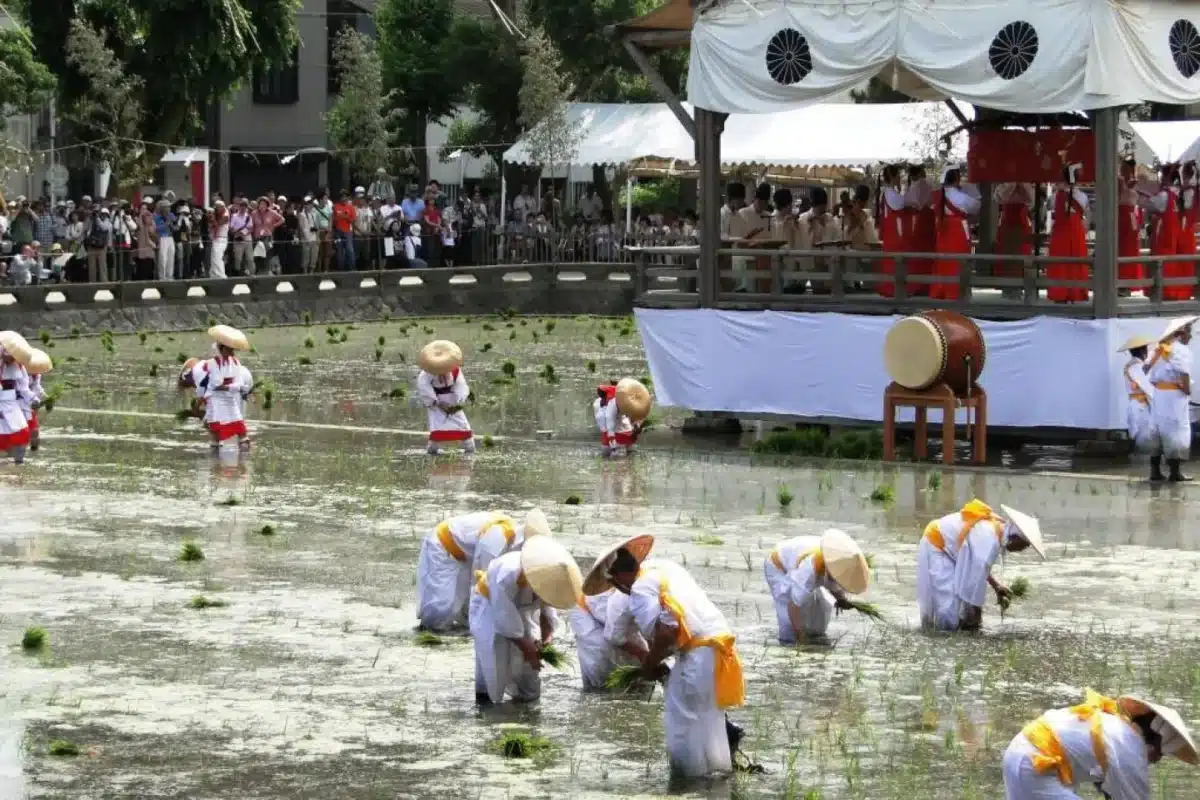
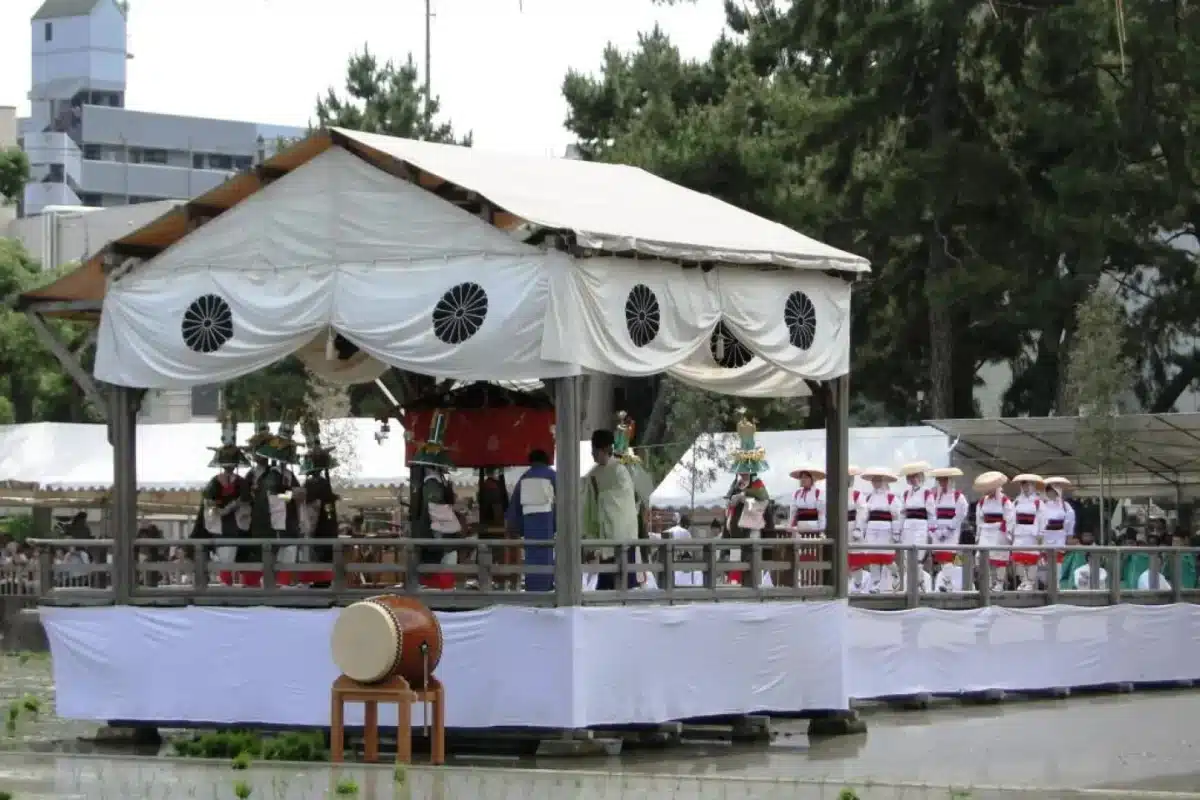
The festival is staged around a sacred paddy called Ota, located within the shrine precincts. A stage is erected in the center of the flooded field for sacred performances, and the entire ritual is designated as a National Intangible Folk Cultural Property, designated in 1979 as an Important Intangible Folk Cultural Property. It is considered one of Japan’s top three rice planting festivals. The event is free to attend and attracts a mix of local families, school groups, Shinto devotees, cultural researchers, and international travelers seeking an authentic encounter with living agrarian heritage.
Enjoy Your Event Stress-Free with Japan Travelo
Do you know? Planning events, festivals, concerts, and cultural experiences in Japan can be overwhelming. Japan Travelo brings everything together in one place, helping you manage your itinerary, transport, and accommodation with ease—so you can enjoy Japan without the stress of planning.
Visitors experience a ceremony where planting itself becomes a Shinto rite. The sacred seedlings are planted by hand in the ancient manner while prayers for favorable climate conditions and a rich harvest are offered. For first-time visitors to Osaka who want to move beyond the modern cityscape of Namba and Dotonbori, this festival offers a rare window into the spiritual foundations of Japanese agriculture.
Cultural Significance & Origins
Rice is more than food in Japan; it is a vessel of spiritual life, and Otaue is the ritual embodiment of that belief. The word Otaue means honorable rice planting, regarded as a very important event for Japan as a whole, with rice being the staple food.
Sumiyoshi Taisha itself is one of the oldest shrines in the nation. The Kojiki, the oldest written record of Japan, states that the shrine was founded in the 3rd century after an oracle was given to Empress Jingu on her return from conquering Silla. In 2011, the shrine celebrated the 1800th anniversary of its establishment, placing its founding in the year 211. Empress Jingu is believed to have summoned planters from Nagato Province to pray for a good harvest, and that act is cited as the origin of the Otaue ritual.
For several centuries, Sumiyoshi Taisha was the Ichinomiya or First Shrine of what was then Settsu Province. Whenever significant events happened in Japan, the Emperor would despatch messengers to inform the Kami of all the Ichinomiya. As a kanpei taisha or Great Imperial Shrine after the Meiji Restoration, its agrarian rites carried national weight. The shrine was built to enshrine the guardian gods of seafarers and sailors, but its association with rice reflects the wider Shinto view that sea, land, and harvest are interconnected.
Little by little, those planting songs folded into prayers for a good harvest, and what started as plain fieldwork grew into something sacred: a Shinto ceremony in its own right. Today it is recognized as an Important Intangible Cultural Folk Asset, and watching it feels like stepping back in time. The rice grown in the sacred field is not commercial; it is cultivated as an offering to the shrine’s deity, linking the act of planting directly to divine gratitude.
Traditions, Rituals & Customs
The Otaue Shinji faithfully recreates ancient Shinto rituals for planting rice seedlings for a bountiful harvest. The program follows a strict order that has remained largely unchanged.
Purification and Blessing: The ceremony opens with Shinto priests performing purification to bless the seeds and the field. This ritual ensures the paddy is spiritually clean and worthy to receive sacred seedlings. The purification ritual to bless the seeds is considered a central element of Otaue celebrations.
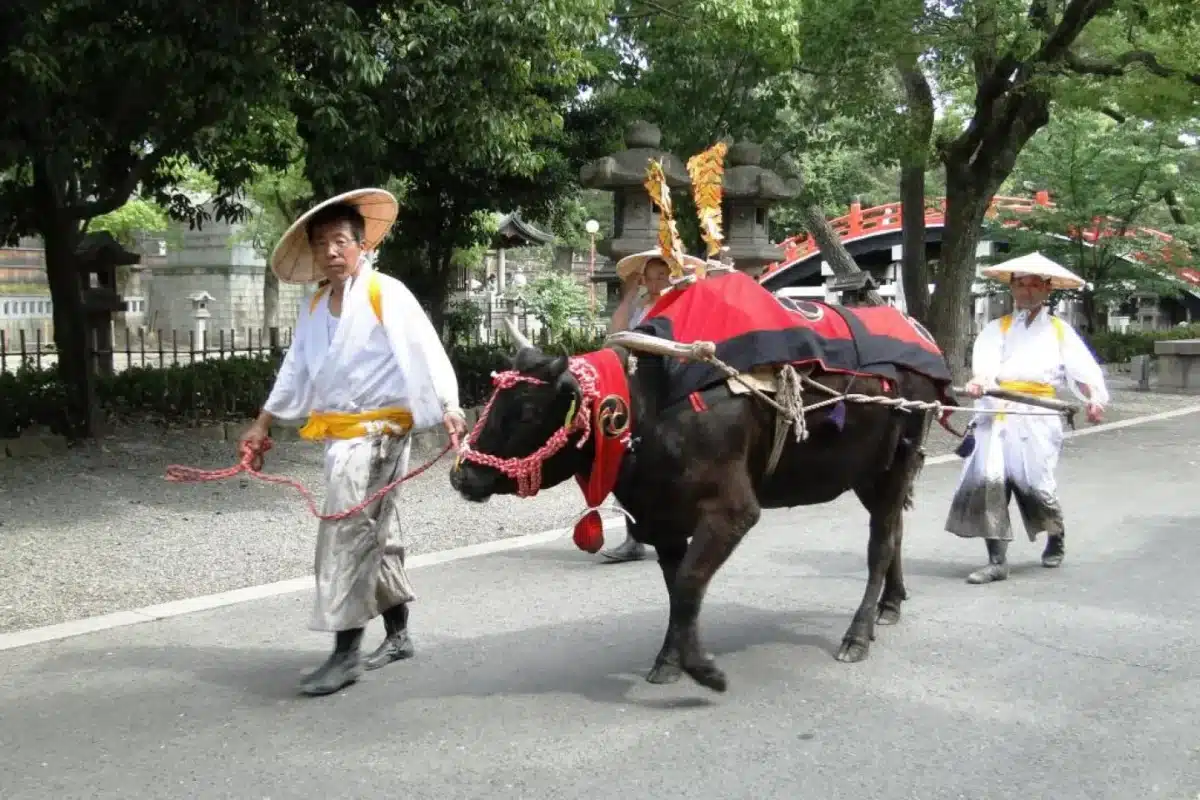
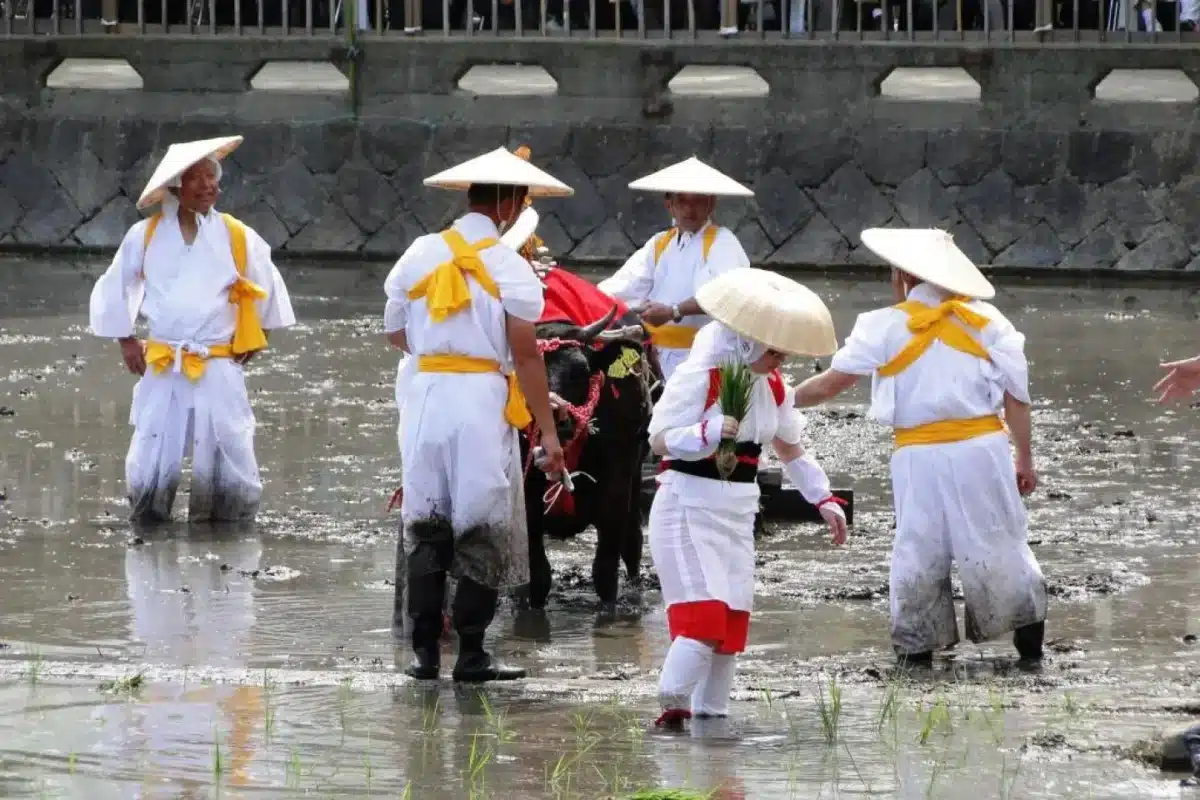
Plowing with Oxen: Before any seedling touches the mud, the field is tilled. The festival features oxen tilling the fields, recalling an era when all cultivation relied on human and animal power. Plowing rice fields with bulls is part of the impressive display where each of the ancient practices is faithfully executed.
Procession of Samurai and Priests: A procession of Samurai warriors in full armour and priests enters the grounds. The parade includes helmeted samurai, shrine maidens, and court-attired performers, symbolizing the historical protection of the shrine’s agricultural lands.
Yaotome-mai Sacred Dance: On a stage set up in the center of the paddy field, Kagura-jo performs Yaotome-mai. This Shinto dance is performed by eight young women and is one of the most elegant offerings. The women dancers perform the Yaotomemai dance in kimono.
Rice Planting Dance and Sumiyoshi Odori: Local children dedicate the rice planting dance and the Sumiyoshi Odori. The Sumiyoshi Odori is a dance performed at the time of the Otaue matsuri and has been handed down at Sumiyoshi Taisha for generations. It is performed by schoolgirls from the local area, sometimes by as many as 150 girls.
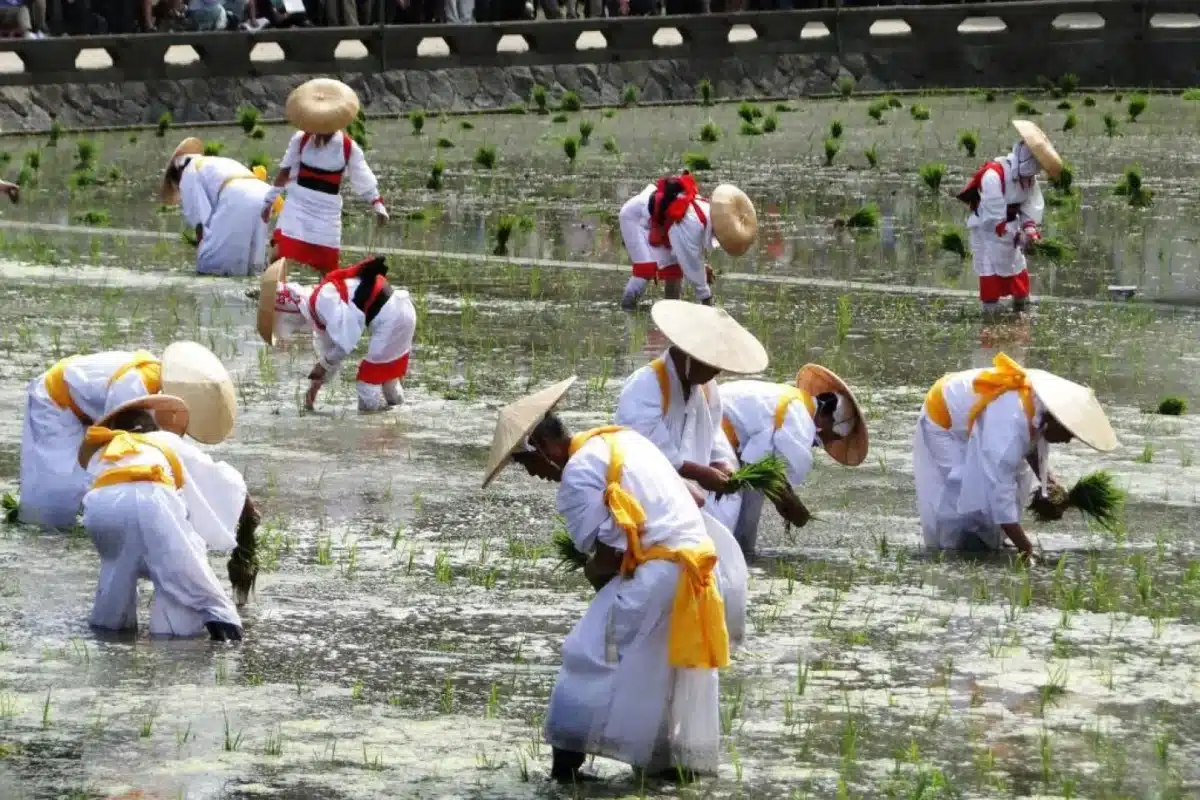
Symbolic Planting with Song: The most crucial part is the rice seedling planting by Shinto priests in traditional clothes and planting maidens, accompanied by traditional songs and ritual dances. Towns and villages gather to watch the first few rows of rice shoots being planted as a symbolic start to the growing season, accompanied by celebratory singing.
What to Expect at the Festival
Expect a reverent yet lively atmosphere inside one of Osaka’s most historic sacred spaces. As the sacred rice seedlings are planted, performers in a myriad of traditional costumes, from Heian Period maidens to samurai, carry out various dances and rituals to pray for a bountiful harvest.
The main viewing area surrounds the flooded Ota field. You will see bright kimono against dark mud, the glint of samurai armor, and the movement of dancers on the central stage. The ceremony includes a Shinto dance performed by eight young women and a parade of people dressed as helmeted samurai.
The experience is auditory as well as visual. Drum music, flutes, and planting songs fill the air. Performers dance to the drum music for blessings. Visitors often describe the mood as both solemn and celebratory, with periods of silent prayer followed by energetic martial demonstrations and folk dances.
There are no grandstands; viewing is standing around the paddy. The whole ceremony takes about 2 to 3 hours from procession to final dance. Crowds can be dense near the front, but the shrine precincts are large and allow for movement. The market stalls built into the walls of the main square will be staffed with shrine maidens from whom you can buy fortunes, omamori good luck charms and ema prayer tablets.
Date & Schedule
Event Dates: Mid June 2027 (Dates TBD)
Official Timing Note: Notice: The dates for this event are not yet confirmed. This page will be updated once the official date(s) are announced by the event organizers. Please check the official event site for the latest info.
Traditional Schedule Reference: Historically, the Otaue Rice Planting Festival is held every year on June 14th at Sumiyoshi Taisha Shrine, and this Shinto ceremony is performed at Sumiyoshi Taisha in Osaka on June 14 to pray for an abundant grain harvest. For 2027, the listing is currently presented as Mid June 2027 pending official confirmation.
Typical Day Program:
- 12:00 – 13:00: Shrine preparations, purification of tools and field
- 13:00 – 13:30: Formal procession from main precinct to Ota field
- 13:30 – 14:00: Opening prayers, Yaotome-mai dedication
- 14:00 – 14:40: Bull plowing demonstration and samurai ritual parade
- 14:40 – 15:20: Central sacred rice planting with songs
- 15:20 – 16:00: Rice planting dance, Sumiyoshi Odori by local schoolchildren, closing rites
Visitors should arrive at least 60 to 90 minutes before the listed start time to secure a good viewing position near the central stage.
Visiting this event? Don’t miss out on these amazing activities and local experiences while you’re here.
Main Events & Programme
The program at Sumiyoshi Taisha is regarded as the most elaborate Otaue program in Japan and is divided into dedication, cultivation, and celebration.
Processional and Opening Rites: Priests in white robes lead the procession, followed by Heian-period maidens, planting maidens, and samurai in armor. The opening includes prayers at the four main halls which are constructed in Sumiyoshi-zukuri style.
Yaotome-mai and Kagura: The Kagura-jo performance of Yaotome-mai on the paddy stage is the first major artistic dedication. Eight young women perform in unison, offering sacred dance to the kami.
Samurai Performance in Armor: A samurai performance in armor is performed as part of the dedication. This includes choreographed sword movements and mock combat that symbolize the protection of the harvest from pests and evil spirits.
Bull Plowing Ritual: Oxen are led into the field to demonstrate traditional plowing. This act of plowing rice fields with bulls is a rare sight in modern Japan and underscores the labor-intensive origins of rice farming.
Sacred Planting Ceremony: The highlight where shrine maidens enter the muddy water and plant seedlings in systematic rows while singing Otaue folk songs. The planting is overseen by Shinto priests and performed to live traditional music.
Rice Planting Dance and Sumiyoshi Odori: The final performances include the rice planting dance performed by local children and the Sumiyoshi Odori, a unique folk dance handed down at the shrine. It is a grand ceremonial display of ancient Japanese ritual and a must-see for any visitor in this season.
Closing and Dispersal: After final prayers, the procession exits the field, and visitors are free to explore the shrine grounds, purchase charms, and visit auxiliary shrines.
Traditional Dress, Arts & Crafts
The festival is a living museum of Japanese textile arts and ceremonial attire.
Planting Maidens: Wear bright, layered farm kimono with wide-brimmed sugegasa hats, white gloves, and sashes tied for practical work. Their faces are lightly powdered, and their sleeves are secured with tasuki cords to allow movement in the mud.
Yaotome Dancers: Wear Heian period court kimono with long trailing outer robes in symbolic color combinations representing seasons and harvest. Their hair is styled in traditional oshiroi style with kanzashi ornaments.
Samurai Attire: Full reproduction armor including kabuto helmets with family crests, do chest armor lacquered in black and red, and hakama trousers. The armor reflects the shrine’s historical connection to protection of estates.
Sumiyoshi-zukuri Architecture: The shrine’s buildings themselves are a craft treasure. The main halls are built in Sumiyoshi-zukuri style characterized by the shape of the buildings, the position of the entrance and the unique colour combination of black, white and red. The thatched roofs are marked with decorative poles called chigi that look like a pair of crossed swords and katsuogi blocks said to resemble dried bonito fish.
Folk Crafts and Charms: Within the grounds, visitors find omamori charms, ema wooden tablets, and the unique Goshogozen custom. This is a small, raised altar surrounded by a stone wall made of numerous small pillars where people search for lucky stones marked with characters.
Traditional Food & Local Specialties
The festival’s culinary focus is rice itself, but the surrounding area offers a deep dive into Osaka’s food culture.
Sacred Rice: The rice planted in the Ota field is considered shinsen, a divine offering. After months of tending, it will be harvested and offered to the kami, and a portion may be shared as blessed grain. This embodies the Shinto concept that rice carries spiritual power.
Shrine Festival Snacks: During festivals, stalls are staffed with shrine maidens and local vendors offering street foods such as dango rice dumplings, sekihan red bean rice, and amazake sweet fermented rice drink, all celebrating rice in different forms.
Sumiyoshi Area Specialties: Nearby restaurants offer distinctive local flavors.
Osaka Soul Food: After the ceremony, many visitors head toward Namba for okonomiyaki savory pancakes, takoyaki octopus balls, kushikatsu fried skewers, and kitsune udon, which is said to have originated in Osaka.
Seasonal Sweets: Wagashi shops create confections shaped like rice shoots and samurai helmets to coincide with the planting season, often served with matcha.
Location & Festival Areas
Address: Sumiyoshi Taisha, 2 Chome-9-89 Sumiyoshi, Sumiyoshi Ward, Osaka
Sumiyoshi Taisha is one of the largest, oldest and most prestigious Shinto shrines in Osaka Prefecture. It may seem inland today, but for much of its history, Sumiyoshi Taisha was very near the coast, with Japan’s oldest international port, Suminoe-no-Tsu, only a short distance to the south.
Key Areas to Explore:
- Nishi-ootorii Gate and Sori-bashi Bridge: The huge west grand shrine gate marks the main entrance, and the famous bright red arched wooden bridge spanning the kami-ike divine pond is one of the most recognizable symbols of the shrine. Crossing is made deliberately difficult as part of purification before entering the shrine proper.
- Main Precinct Square: A large square containing the four halls laid out in a unique pattern. Surrounding buildings include a prayer hall, dance hall, purification hall and library.
- Ota Sacred Paddy: The central flooded field with stage where Yaotome-mai and samurai rituals are performed.
- Auxiliary Shrines and Ancient Trees: Leaving the square by the back gates takes you along a path passed numerous small auxiliary shrines built around very old, large trees said to be home to tree spirits called kodama.
- Goshogozen Stone Altar: The small raised altar surrounded by a stone wall where visitors search for lucky stones.
Getting to the Festival
Access is straightforward and highly convenient from central Osaka and Kansai International Airport.
Nankai Main Line: Take the Nankai Main Line to Sumiyoshi Taisha Station. It is a 3-minute walk on foot from the station. Nankai Namba to Sumiyoshi Taisha-eki train services, operated by Nankai Electric Railway, depart from Namba station. From Namba, the ride is about 9 minutes to Sumiyoshi Taisha Station. You can access Sumiyoshi Taisha directly from Swissotel Nankai Osaka by taking the Nankai Line from the station below.
Hankai Tramway: The retro Hankai Railway, popular with a retro atmosphere, has excellent access to the Tennoji area and stops at Sumiyoshi Torii-mae, directly in front of the shrine.
From Kansai International Airport: Take the Nankai Airport Line bound for Namba from Kansai International Airport Station, get off at Tengachaya Station and transfer to the Nankai Main Line. Nankai Line directly to Kansai International Airport is available from Sumiyoshi Taisha Station.
Practical Tips: Use ICOCA or other IC cards for faster boarding. On festival days, expect crowds on the Nankai Main Line; avoid large luggage as the paddy viewing area is standing-only.
Where to Stay Nearby
Staying in the Sumiyoshi or Namba areas provides easy festival access while keeping you close to Osaka’s dining and nightlife.
Luxury – Namba Hub: Swissotel Nankai Osaka puts Dotonbori’s neon, canals, and izakayas at your doorstep and offers direct train access to the shrine. Previous early-summer rates range from 280 USD to 450 USD per night for a standard room.
Mid-Range Business Hotels: Around Sumiyoshi Taisha Station and Tengachaya, business hotels such as APA Hotel and Hotel Chuo Selene offer compact, clean rooms from 70 USD to 130 USD per night. Many are within a 5-minute walk of Sumiyoshi Taisha Shrine, known as headquarters of 2,300 shrines nationwide.
Budget Apartments and Vacation Rentals: Spacious 84 sqm apartments with free amenities are available from 50 USD to 95 USD per night, located a 4-minute walk to Nankai Main Line stations and 8 minutes to Namba Station by train, accommodating up to 4 people.
Traditional Stay in Sakai: The historic city of Sakai just to the south, reachable via the Chin Chin Densha tram line, offers ryokan and guesthouses from 110 USD to 180 USD per night with tatami rooms and kaiseki breakfast.
What Visitors Can Participate In
Although the core planting is performed by designated participants, visitors are not passive observers.
Prayer and Observation: You can join locals in bowing, clapping twice, and offering silent prayers for a bountiful harvest alongside the priests.
Charm and Fortune Purchase: In the market stalls of the main square, purchase omamori good luck charms and ema prayer tablets from shrine maidens.
Goshogozen Lucky Stone Hunt: Participate in the unique custom of searching through thousands of tiny white or grey rounded stones for ones with dai, go, or ryoku written on them to bring good luck when you find the full set.
Learning the Sumiyoshi Odori: After formal dedications, local volunteers sometimes teach simple steps of the Sumiyoshi Odori to children and interested visitors.
Purification Ritual: Pass through the Sori-bashi bridge and purify hands at the temizuya basin as part of entering the sacred space.
Things to Do Before or After the Festival
Sumiyoshi Taisha is an interesting shrine well worth visiting for those looking to get away from the busier sights of central Osaka.
Explore the Shrine Complex: Spend time examining the four main halls, auxiliary shrines, and ancient camphor trees. Several other buildings surround the square including a prayer hall, dance hall, purification hall and library.
Sumiyoshikoen Park: On the opposite side of Sumiyoshi Station is Sumiyoshikoen, a small but attractive park popular during cherry blossom season.
Sakai City Exploration: Take the tram to Sakai to see Mozu Kofun burial mounds, a UNESCO World Heritage site, and visit traditional Sakai knife workshops where blades are forged using techniques dating back centuries.
Osaka City Highlights: Return to central Osaka for Osaka Castle, Kuromon Ichiba Market, and the Umeda Sky Building. The shrine is one of the most popular spots for Hatsumode with festive food stalls and lively crowds, but the planting festival offers a quieter, more agricultural perspective.
Namba Nightlife: Enjoy Dotonbori canal cruises, street food tours, and shopping in Shinsaibashi just a short train ride from the shrine.
Local Food & Restaurants
The area around Sumiyoshi Taisha offers authentic, local eateries away from heavy tourist crowds.
Near the Shrine:
- Sumiyoshi Taisha Mae Hirofumi: A traditional Japanese restaurant near the shrine, offering set meals and local specialties in a calm setting.
- Aisawa Udon: A highly-rated udon shop a short walk from the shrine, known for chewy noodles and flavorful broth.
- Sumiyoshi Kappo Okawa: A local restaurant known for exquisite Japanese cuisine and seasonal dishes.
In Suminoe Ward:
- Yoshinoya Udon: Famous for flavorful broths and perfectly cooked noodles, with meals around 8 USD to 12 USD.
- Wakana Okonomiyaki: Offers customizable savory pancakes, with prices from 9 USD to 15 USD.
Namba and Dotonbori Options:
Meals range from 5 USD for takoyaki to 18 USD for kushikatsu sets, and up to 60 USD to 120 USD for kaiseki at hotel restaurants. Local historical restaurants around Sumiyoshi Taisha area offer lunch around 7 USD and dinner 7 USD to 14 USD, where you can feel traditional Japanese atmosphere once you come to Sumiyoshi area.
Ticket Information & Access
Price of Admission: FREE
The Otaue Rice Planting Festival is listed with Tickets: 0 JPY, which converts to 0 USD. There is no entry fee, reservation, or ticket required. The Price of Admission is FREE and has been consistent across previous editions.
Seating and Viewing: Standing only around the Ota field. No reserved seating or VIP tickets are sold. The best views are along the eastern and southern edges of the paddy.
Accessibility: The main precinct is largely flat, but the Sori-bashi bridge has very steep narrow steps and may be difficult for those with mobility issues. Alternative side entrances provide easier access to the paddy field.
Weather Policy: The ceremony is held outdoors and proceeds in light rain, which is considered auspicious for rice planting. In case of heavy rain or storm, the ritual may be shortened and moved partially indoors.
Official Event Information
Event: Otaue Rice Planting Festival 2027 – Osaka, Japan
Venue: Sumiyoshi Taisha, 2 Chome-9-89 Sumiyoshi, Sumiyoshi Ward, Osaka
Organizer: Sumiyoshi Taisha Shrine
Official Website for Latest Information: https://en.japantravel.com/osaka/otaue-sumiyoshi-rice-planting-festival/5028
Additional Details: Description: Japan reaffirms its deep connections with its staple crop at the annual Sumiyoshi Shrine rice-planting festival in Osaka. The shrine is one of the most important shrines in Osaka and hosts some of the oldest and most spectacular festivals in the prefecture.
Contact: Please check the official event site for the latest info as dates are not yet confirmed.
Video
Location
FAQ
Is the Otaue Rice Planting Festival suitable for international tourists who do not speak Japanese?
Yes, the festival is highly visual and does not require language comprehension to enjoy. The dances, samurai parade, bull plowing, and planting itself are self-explanatory, and the atmosphere of prayer and celebration is universal. While announcements are in Japanese, shrine staff and local volunteers often provide simple English guidance, and printed explanations are sometimes available at the information stall near the main gate.
What is the best time to arrive and how crowded does it get?
You should plan to arrive 60 to 90 minutes before the scheduled start to secure a front-row spot around the Ota paddy, as the area fills quickly once the procession begins. Although it is one of Osaka's most famous festivals, it remains a local religious ceremony rather than a massive street festival, so crowds are manageable compared to Hatsumode which attracts two million visitors. Early arrival also allows time to cross the Sori-bashi bridge and explore the main precinct before the ceremony.
Can I take part in the actual rice planting?
The sacred planting in the Ota field is performed only by designated shrine maidens, priests, and selected local participants who have undergone purification and training. Visitors cannot enter the flooded paddy during the ceremony to preserve its sacred status and the seedlings. However, you can participate in related activities such as purchasing lucky charms, writing ema tablets, searching for stones at Goshogozen, and joining the audience for the Sumiyoshi Odori folk dance after the formal rites.
What should I wear and bring to the festival?
Wear comfortable walking shoes that can handle light mud near the field edge and modest, breathable clothing suitable for warm, humid weather. Bring a hat, sunscreen, water, and a small towel, as there is little shade around the paddy. If you plan to photograph, bring a zoom lens rather than a tripod, as tripods can obstruct views. A portable stool is useful if you want to sit during the longer segments, and cash in small denominations is helpful for purchasing charms and street snacks.
Are there any rules or etiquette I should follow at Sumiyoshi Taisha during the festival?
As a sacred Shinto site, visitors should observe basic shrine etiquette: bow before passing through torii gates, purify hands and mouth at the temizuya basin, and avoid entering roped-off sacred areas. During prayers, remain quiet, avoid flash photography, and do not use drones or selfie sticks that could disturb performers. The Sori-bashi bridge is part of the purification ritual, so cross it respectfully and avoid sitting or eating on its steps, following the guidance of shrine attendants throughout the ceremony.

Leave a Reply