
-
October 2, 2026
Event date:
-
October 4, 2026
Event end:
What to expect in 2026
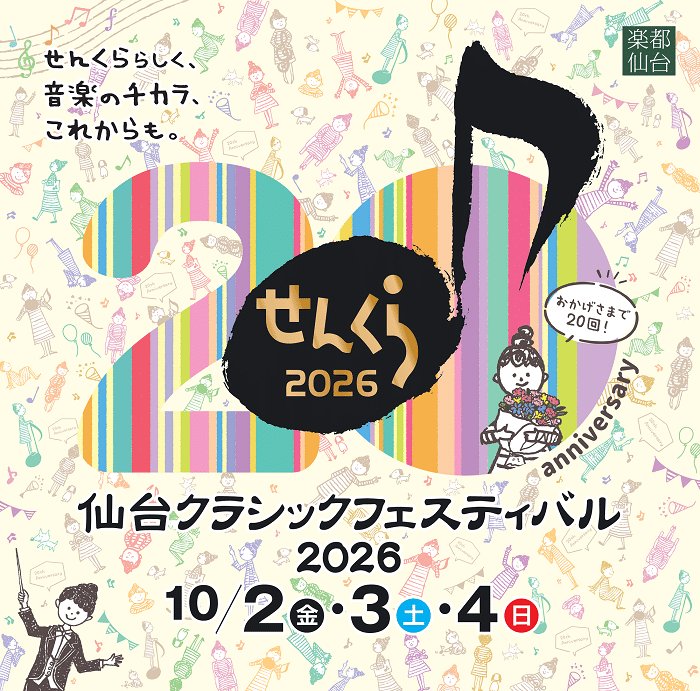
Sendai Classical Music Festival 2026, Japan, known as Sencla, returns to Sendai for its 20th edition, bringing a large programme of classical concerts across several major cultural venues. The festival is designed to make classical music approachable for a wide audience, with short concerts, affordable admission, family-friendly performances, orchestral programmes, chamber music, solo recitals, opera, vocal performances and special collaborations.
The 2026 festival presents 77 concerts across three days, making it possible for visitors to build their own programme and attend several different performances during a single visit. Many concerts last either 45 or 60 minutes, allowing audiences to move between venues and experience different artists without committing to an entire evening-length concert.
20th-anniversary programme
Enjoy Your Event Stress-Free with Japan Travelo
Do you know? Planning events, festivals, concerts, and cultural experiences in Japan can be overwhelming. Japan Travelo brings everything together in one place, helping you manage your itinerary, transport, and accommodation with ease—so you can enjoy Japan without the stress of planning.
The 2026 edition celebrates the festival’s 20th anniversary with a particularly broad lineup of Japanese and international performers. The programme includes returning artists, newly appearing artists, established soloists, ensembles and musicians connected with Sendai.
Classical music for different audiences
Sencla is not limited to advanced classical-music listeners. The programme includes introductory concerts, children’s performances, family concerts and shorter performances intended to make the genre easier to enjoy.
Wide range of musical styles
Visitors can hear Bach, Beethoven, Chopin, Ravel, Tchaikovsky, Debussy, opera repertoire, chamber music, piano works, violin recitals, guitar, early music, brass ensemble and other forms of classical and crossover performance.
Festival atmosphere
Because concerts are spread between several venues along Sendai’s subway network, Sencla feels more like a citywide music festival than a single concert series. Visitors can plan a full day around performances, cafés, restaurants and sightseeing in Sendai.
Special anniversary performances
Major highlights include the Special Evening Gala, performances by Bach Collegium Japan, concerts with the Sendai Philharmonic Orchestra, an opera gala and the Grand Finale featuring Miyu Shindo, vocal soloists, a large festival chorus and the Sendai Philharmonic Orchestra.
Event dates
Sendai Classical Music Festival 2026 will take place from October 2, 2026 to October 4, 2026.
The festival runs across three consecutive days, with concerts scheduled from morning through evening. The compact format of most performances allows visitors to attend multiple concerts during the same day.
The official programme contains 77 numbered performances, with individual concerts generally lasting 45 or 60 minutes. This short-concert format is one of the defining characteristics of Sencla and allows visitors to create a personalized schedule.
Opening day
The first day introduces audiences to the anniversary programme with piano recitals, Bach Collegium Japan performances, orchestral concerts, chamber music and other presentations.
Second day
The middle day provides one of the busiest selections of performances, including the Special Evening Gala and a wide range of chamber, solo, vocal and orchestral programmes.
Final day
The closing day includes family-oriented programming, Siena Spirits, additional chamber and solo performances and the Grand Finale featuring Chopin and Beethoven’s Ninth Symphony.
Visiting this event? Don’t miss out on these amazing activities and local experiences while you’re here.
Venue & performance locations
Sencla 2026 uses several major cultural venues in Sendai. The principal locations are connected to Sendai’s subway system, making it practical to travel between performances.
Hitachi Systems Hall Sendai
The venue contains several performance spaces:
- Concert Hall – 796 seats
- Performance Plaza – 200 seats
- Theatre Hall – 494 seats
- Exchange Hall – 250 seats
The venue is located near Asahigaoka Station on the Sendai Subway Namboku Line and is approximately a three-minute walk from the station’s East Exit.
Sendai Bank Hall Izumity21
This major venue includes:
- Main Hall – approximately 1,450 seats for most festival days
- Small Hall – 403 seats
The hall is located near Izumi-Chuo Station and is connected to the station by an underground pedestrian route.
Taihaku Ward Cultural Center
This venue includes:
- Raku Raku Raku Hall – 544 seats
- Exhibition Hall – 120 seats
It is located close to Nagamachi Station on the Namboku subway line, making it another practical location for visitors attending several concerts.
The festival’s multi-venue structure means visitors should check the venue letter and hall carefully when booking. A ticket for one performance does not automatically provide access to another concert at a different venue.
Full programme
The 2026 programme contains 77 concerts covering a wide variety of classical music styles and performance formats. Rather than presenting one continuous concert series, Sencla divides the festival into individual numbered performances, allowing visitors to select their preferred artists and repertoire.
Bach Collegium Japan
The festival presents Bach Collegium Japan under conductor Masaaki Suzuki, with programmes focused on Bach’s Brandenburg Concertos, harpsichord works and other repertoire. The performances are among the festival’s major early-music highlights.
Piano programmes
The programme includes solo piano performances from artists such as Kotaro Fukuma, Miyu Shindo, Izumi Tateno, Niu Niu and other pianists.
Chamber music
String, piano and mixed-instrument chamber performances are spread across the smaller halls, giving audiences opportunities to experience more intimate concerts.
Opera
The festival’s opera programme includes the “Kanpai! Sencla Opera Gala,” featuring soprano Miku Yasukawa, mezzo-soprano Akiko Goke, tenor Kohei Yamamoto and baritone Toru Kaku with pianist Maho Ishino.
Sendai Philharmonic Orchestra
The Sendai Philharmonic appears in several major programmes, including collaborations with Tomohiro Ushida, Gen Yokosaka, Hina Maeda, Shinsuke Fukuda and other featured artists.
Siena Spirits
The 16-member Siena Spirits ensemble presents a large-scale wind and percussion programme during the closing day.
Grand Finale
The festival closes with “Miyu Shindo’s Chopin & Beethoven’s Ninth,” featuring pianist Miyu Shindo, conductor Gen Ohta, four vocal soloists, a large Sencla Festival Chorus and the Sendai Philharmonic Orchestra.
Featured productions & performers
The 2026 edition introduces numerous artists to the Sencla audience while also bringing back established performers.
Mayuko Kamio
Violinist Mayuko Kamio is among the highlighted artists appearing in the 20th-anniversary edition.
Izumi Tateno
Pianist Izumi Tateno is another featured artist, contributing to the festival’s piano programme and its broad representation of Japanese classical musicians.
Kotaro Fukuma
Pianist Kotaro Fukuma appears in multiple programmes, including a transcription-focused piano concert and a programme devoted to Liszt’s “Années de pèlerinage: Deuxième année – Italie.”
Miyu Shindo
Miyu Shindo plays a central role in the festival’s Grand Finale, performing Chopin with the Sendai Philharmonic before the closing Beethoven programme.
Niu Niu
Pianist Niu Niu appears in the Special Evening Gala alongside violinist Sumire Hirotsuru and The Rev Saxophone Quartet.
Sendai Philharmonic Orchestra
The Sendai Philharmonic is closely associated with Sencla and has accompanied the festival throughout its history. Its musicians participate in major orchestral and collaborative performances throughout the programme.
Shows & performances
Sencla offers considerably more variety than a conventional orchestral festival.
Orchestral concerts
Large orchestral performances provide the traditional symphonic experience, including programmes featuring the Sendai Philharmonic.
Piano recitals
Solo piano concerts range from major Romantic repertoire to modern interpretations and thematic programmes.
Chamber music
Smaller ensembles perform in more intimate halls, allowing audiences to concentrate closely on individual instruments and musical interaction.
Opera performances
The Opera Gala introduces well-known operatic arias and ensembles in a compact concert format rather than requiring audiences to attend a complete staged opera.
Early music
Bach Collegium Japan provides historically informed performances of Baroque repertoire, including Bach’s concertos and keyboard works.
Family concerts
The festival also includes programming suitable for children and families. The orchestra concert designed for audiences from age zero is specifically structured to make orchestral music accessible to young listeners.
Unusual instrumental combinations
The programme also features guitar, traditional instruments, saxophone, percussion, brass and other combinations, giving visitors opportunities to hear classical music outside the standard symphony format.
Performance schedule
The complete 77-performance schedule covers morning, afternoon and evening sessions across the festival’s venues.
Morning sessions
Morning concerts are particularly useful for families and visitors who want to start a full day of music. The family orchestra performance on the final day is scheduled as a morning presentation.
Afternoon sessions
Afternoon performances provide the greatest opportunity for concert-hopping because many are 45 minutes long. Visitors can leave one venue and travel by subway to another performance.
Evening sessions
Evening programming includes larger orchestral performances, gala presentations and major anniversary concerts.
Special Evening Gala
The Special Evening Gala combines Sumire Hirotsuru, Niu Niu and The Rev Saxophone Quartet in a featured anniversary concert.
Grand Finale
The Grand Finale brings together Miyu Shindo, four vocal soloists, conductor Gen Ohta, the Sencla Festival Chorus and Sendai Philharmonic Orchestra.
Visitors should check the official timetable immediately before attending because performer changes and programme adjustments can occur.
Ticket types
All main festival performances use reserved seating, with prices depending on the concert duration, venue and programme.
45-minute concerts
General admission is approximately $10, while the U-18 ticket is approximately $5.
60-minute concerts
The standard 60-minute ticket is approximately $13 for general admission and approximately $7 for U-18.
Major 60-minute concerts
Selected major concerts, particularly certain large-hall performances, are approximately $17 for general admission and approximately $10 for U-18.
The official U-18 category applies to children and young people from age three through 18. Children aged three and older generally require tickets, although the permitted age varies between individual performances.
Same-day tickets
When seats remain, same-day general tickets are approximately $1.30 more than the advance general price. Availability is not guaranteed.
The dollar figures are approximate conversions of the officially published Japanese prices.
Ticket release & booking
The 2026 ticket programme uses several sales channels, including Ticket Pia, convenience stores and designated venue counters.
Advance sales
The festival’s official ticket system provides an advance-sales period before general admission begins. The Ticket Pia listing also provides online booking for individual performances.
General sales
General ticket sales are available through Ticket Pia and other authorized channels. Online purchases allow seat selection for applicable performances.
Convenience-store sales
Tickets can also be purchased through participating convenience-store ticket services. Seat selection may differ from online purchasing.
Venue counters
Designated festival venues provide in-person ticket sales during the specified sales period. These counters can be useful for visitors who prefer selecting seats directly.
Sold-out performances
Some performances can sell out before the festival begins. The official Sencla website publishes remaining-seat updates and identifies performances where scheduled ticket sales have ended.
VIP & premium seating
Sencla does not operate like a commercial pop festival with a separate VIP area or backstage-access package.
Reserved seating
All principal festival venues use reserved seating. The premium experience therefore comes primarily from selecting the preferred seat and choosing one of the festival’s larger headline performances.
Best concert-hall seating
For orchestral performances, central seating with a balanced view of the conductor, orchestra and stage can provide a strong listening and viewing experience.
Large anniversary performances
The Special Evening Gala and Grand Finale are among the most prominent performances and can provide a more substantial concert experience than the shorter recital programmes.
No conventional VIP package
The official 2026 ticket information does not list a separate VIP ticket tier, backstage package or meet-and-greet programme.
Event rules
Visitors should follow the instructions of each individual venue and the festival organizers.
Reserved seating
Tickets correspond to specific seats, so visitors should sit in the location printed on their ticket.
Age restrictions
Entry ages differ by performance. Some concerts allow babies and young children, some permit audiences from age three, while others require elementary-school-age children or older. Visitors should check the individual programme before booking.
Programme changes
Performers and musical programmes can change. The festival advises visitors to check official announcements for updates.
Photography and media
Festival venues may be photographed or filmed for television, newspapers, magazines, promotional materials and official websites. Visitors should be aware that they may appear in background footage or photographs.
Mobile phones
Mobile phones should be switched to silent mode during performances. Visitors should avoid activities that could disturb musicians or other audience members.
Late arrival
Latecomers may be required to wait for an appropriate point before entering the auditorium, depending on the performance and venue.
How to get there
Sendai Classical Music Festival is particularly convenient for visitors using public transportation because its main venues are located near Sendai subway stations.
From Sendai Station
Visitors can use the Sendai Subway Namboku Line to reach the main festival venues.
To Hitachi Systems Hall Sendai
Take the Namboku Line toward Asahigaoka and get off at Asahigaoka Station. The venue is approximately three minutes from the East Exit.
To Sendai Bank Hall Izumity21
Travel on the Namboku Line toward Izumi-Chuo and get off at Izumi-Chuo Station. The venue is connected to the station by an underground route and is approximately three minutes from the relevant exit.
To Taihaku Ward Cultural Center
Take the Namboku Line to Nagamachi Station. The cultural center is approximately two minutes from the station’s South Exit.
The subway makes it possible to combine multiple concerts in different parts of Sendai without relying on a private vehicle.
Public transport & parking
Public transportation is the preferred way to travel between Sencla venues.
Sendai Subway
The Namboku Line is particularly important because it connects Asahigaoka, Sendai, Nagamachi and Izumi-Chuo, placing the principal festival venues within easy reach of subway stations.
Hitachi Systems Hall parking
The venue has approximately 92 dedicated parking spaces. The published rate is approximately $0.70 for the first hour and approximately $0.35 for each additional 30 minutes, based on the official Japanese rate converted to USD. Parking may become crowded during popular concerts.
Izumity21 access
Izumity21 is also accessible by bus from the Izumi-Chuo area. Drivers can approach from the Izumi interchange, although public transport is generally easier during busy festival periods.
Between concerts
Because several concerts can be scheduled close together, visitors should allow sufficient transfer time between venues. The subway is generally more predictable than driving and searching for parking.
Accommodation areas
Sendai Station
The area around Sendai Station is the most convenient base for visitors attending several festival venues. It offers extensive hotel choices, restaurants, shopping and direct subway access.
Aoba-dori and central Sendai
Central Sendai provides easy access to restaurants, cafés and evening entertainment while remaining convenient for subway travel.
Asahigaoka
Staying around Asahigaoka can be useful for visitors whose programme is concentrated at Hitachi Systems Hall Sendai.
Izumi-Chuo
This area is convenient for performances at Sendai Bank Hall Izumity21 and provides a quieter alternative to the city centre.
Nagamachi
Nagamachi is useful for visitors attending performances at Taihaku Ward Cultural Center and also provides convenient subway connections into central Sendai.
For visitors attending concerts at several different venues, central Sendai generally provides the easiest overall transport options.
Dining & refreshments
Sendai offers a strong food scene, making it easy to combine concerts with meals between performances.
Sendai beef tongue
Gyutan is one of Sendai’s best-known specialties and is widely available around Sendai Station and central dining districts.
Zunda
Zunda, a sweetened green soybean preparation, appears in desserts, drinks and traditional-style sweets throughout the city.
Local Japanese cuisine
Visitors can find sushi, soba, ramen, seafood, Japanese set meals and regional dishes near the main stations.
Cafés between concerts
The shorter Sencla performances make cafés particularly useful for filling gaps between concerts. Visitors can have a light meal or coffee before travelling to the next venue.
Venue refreshments
Refreshment availability varies by individual hall, so visitors should not assume that every performance venue has the same food or beverage facilities.
Planning meals in advance is useful when attending several concerts because some performances may finish shortly before another begins.
Accessibility
The festival provides accessibility arrangements for visitors who use wheelchairs.
Wheelchair seating
Wheelchair seats are available at the principal designated-seat venues. The official festival information lists six wheelchair positions in both the Concert Hall and Theatre Hall at Hitachi Systems Hall Sendai, six in the Izumity21 Main Hall and five in its Small Hall, and four in the Taihaku Ward Cultural Center’s Raku Raku Raku Hall.
Advance arrangements
Wheelchair seating is not normally sold through the standard advance-sales process. Visitors should contact the Sencla office in advance to arrange wheelchair access and seating.
Venue assistance
Visitors who transfer from a wheelchair to an auditorium seat can ask staff to store the wheelchair near the audience entrance where applicable.
Family accessibility
Several concerts are specifically designed for young children, including a concert allowing audiences from age zero, making Sencla suitable for families as well as experienced classical-music audiences.
Visitors with specific mobility, hearing or visual requirements should contact the individual venue before attending to confirm the available facilities.
Best performances to attend
Sencla has enough programming that choosing performances depends heavily on individual musical interests.
Special Evening Gala
The Special Evening Gala combines violinist Sumire Hirotsuru, pianist Niu Niu and The Rev Saxophone Quartet. It provides one of the festival’s distinctive anniversary programmes and brings several performers together in one concert.
Bach Collegium Japan
The Bach Collegium Japan concerts are strong choices for visitors interested in Baroque music and historically informed performance. The programme includes Bach’s Brandenburg Concertos and keyboard repertoire.
Sendai Philharmonic collaborations
The concerts combining the Sendai Philharmonic with major soloists offer the traditional large-scale orchestral experience.
Opera Gala
The Opera Gala features four vocal soloists and pianist Maho Ishino in a selection of famous operatic works, making it particularly suitable for visitors interested in opera without attending a full staged production.
Siena Spirits
The large 16-member Siena Spirits concert provides a different sound from a conventional symphony orchestra, featuring woodwinds, brass and percussion.
Family Orchestra Concert
The orchestra concert designed for audiences from age zero is a useful choice for families introducing children to live classical music.
Grand Finale
The closing concert brings together Miyu Shindo, four vocal soloists, the Sencla Festival Chorus and Sendai Philharmonic Orchestra for a programme featuring Chopin and Beethoven’s Ninth Symphony. It is one of the festival’s largest productions.
Previous year’s highlights
The previous editions of Sencla have established the festival as a recurring autumn classical-music event in Sendai. The 2026 edition marks the festival’s 20th anniversary and continues its long-running relationship with the Sendai Philharmonic Orchestra.
Sendai Philharmonic connection
The Sendai Philharmonic has participated in Sencla throughout its history, making the orchestra an important part of the festival’s identity. The anniversary programme continues this relationship through several major collaborations.
Growing artist programme
The 2026 edition introduces 19 individual artists and two groups to the Sencla audience, expanding the festival’s artistic roster while continuing to feature established performers.
Short-concert concept
The 45- and 60-minute format remains one of Sencla’s defining features. It allows visitors to hear multiple musicians and styles within a single day and makes classical concerts more approachable for newcomers.
Family programming
Family concerts have continued to be part of the festival’s effort to reach younger audiences. The 2026 programme includes a performance specifically welcoming audiences from age zero.
20th anniversary
The 2026 festival represents the 20th edition and brings together major soloists, chamber musicians, orchestral ensembles, opera singers and the Sendai Philharmonic across 77 performances.
Official tickets
Tickets for Sendai Classical Music Festival 2026 are available through the official Sencla ticket system and authorized Ticket Pia channels.
Official festival website
https://sencla.com/
Official Ticket Pia page
https://t.pia.jp/pia/events/sencla/
Advance and general ticket sales are offered through Ticket Pia, participating convenience stores and designated venue counters. Seat selection is available through applicable online and in-person channels.
Visitors should check the official festival programme before purchasing because performances can sell out and artist or programme changes may occur. The official Sencla site publishes remaining-seat information and notices for sold-out performances.
Video
Location
FAQ
What is the primary concept behind the festival structure?
The event relies on short, highly focused performance blocks lasting around an hour to make classical music approachable and easy to sample. This format allows attendees to construct custom schedules by hopping between different instrumental and orchestral showcases throughout the day.
Are the concert venues located close to each other?
Primary performance halls are spread across the city but remain conveniently connected via the local subway network and major transit lines. Visitors can easily travel between venues in minutes using clear underground pedestrian walkways and direct station exits.
Is the event suitable for children and first-time listeners?
A welcoming environment, affordable youth pricing, and concise concert lengths make the festival exceptionally friendly for younger audiences and beginners. Parents should check specific program age guidelines before booking individual performance tickets.
How should attendees choose between the numerous daily concerts?
Guests typically browse the master schedule ahead of time to select performances matching their favorite instruments, composers, or featured guest artists. Planning a balanced itinerary with short transit breaks between halls ensures a smooth and stress-free festival experience.
Can international visitors easily navigate the ticketing process?
Overseas fans can secure entries through online ticket reservation platforms or authorized Japanese convenience store ticketing kiosks prior to arrival. Planning ahead is strongly advised because individual star-studded recital blocks tend to reach full capacity very quickly.
What is the general dress code for concert attendees?
Most visitors wear neat, comfortable smart-casual attire suited for walking between urban transit stops and sitting through indoor hall performances. There are no overly rigid fashion requirements, allowing guests to prioritize personal comfort throughout the busy weekend.
Where can visitors find food and refreshment between shows?
All main festival venues feature surrounding plaza districts equipped with local restaurants, cafes, and convenience stores offering regional delicacies. The generous gaps scheduled between consecutive concert blocks provide plenty of time to enjoy a relaxed meal.

Leave a Reply