
Overview
Suimu Shrine Festival, locally known as Suimu Jinja Matsuri and more widely referred to as the Fight Festival, is one of the most authentic masculinity-testing festivals in the mountain village of Kashimo in Nakatsugawa City, Gifu Prefecture. This is not a large, famous tourist spectacle but a deeply local, physically intense purification ritual centered on the concept of yakudoshi, unlucky ages.
The festival is held at Kashimo Suimu Shrine and transforms a quiet shrine approach into a battleground of strength, sake, and community bonding. It belongs to a category of Japanese festivals that prove bravery and endurance, alongside riding sacred logs down mountains, holding live fireworks, or mud wrestling. In Kashimo, the test is deceptively simple, slowly pulling highly decorated wooden floats up a hill while elders deliberately stop them, causing opposing teams to crash into each other.
Core identity: It is a purification festival for men in their yakudoshi years, designed to drive away bad spirits through physical exertion, collision, and communal drinking. Though focused on men, it functions like a class reunion where women of the same age come to support and at times participate.
Enjoy Your Event Stress-Free with Japan Travelo
Do you know? Planning events, festivals, concerts, and cultural experiences in Japan can be overwhelming. Japan Travelo brings everything together in one place, helping you manage your itinerary, transport, and accommodation with ease—so you can enjoy Japan without the stress of planning.
What makes it unique: The combination of sacred Shinto blessing, puppetry and flute music on top of the floats, rice-straw ropes, and repeated crashing over a distance of only 50 meters creates a festival that is both sacred and chaotic. Participants often emerge with cuts and bruises, and stories of broken arms are part of local lore.
Scale: The festival is village-scale, with participants drawn from former Kashimo Village residents now part of greater Nakatsugawa. Spectators include families, elders who control the action, and visitors seeking an unfiltered glimpse of rural Japanese folk belief.
Cultural Significance & Origins
The festival is rooted in the Japanese concept of yakudoshi, unlucky ages that require spiritual attention. Every culture has unlucky numbers, in America it is 13, in Italy 17, in Japan it is 4. Japan also has unlucky ages. For men the yakudoshi are 25, 42, and 61 with 42 being considered the most critical, and for women the years are 19, 33, and 37 with 33 being the most critical. During these years it is recommended that a person visit shrines, pray extensively, and conduct acts that drive away bad spirits. A folk example suggests that major life events during these years help dispel spirits.
Suimu Jinja’s role: Suimu Shrine is the guardian shrine of the Kashimo area, located in the former village that was known for protecting the sacred Kiso hinoki forest. The shrine serves as the spiritual center for purification and protection from misfortune.
Fight festival archetype: Japan has many kenka matsuri or fight festivals where male energy is harnessed to demonstrate vitality to the kami. The Kashimo version uses the physical act of pulling floats uphill against resistance as a symbolic battle against evil spirits. The repeated crashing is believed to shake off bad luck.
Community cohesion: The festival also functions as a rite of passage and reunion. Men who may have left Kashimo for work in cities return for their yakudoshi year, reconnecting with classmates and community elders. The shared sake, bruises, and exertion create bonds that reinforce village identity long after the former village merged into Nakatsugawa in 2005.
Traditions, Rituals & Customs
Eve procession: The night before the main event, a small portable shrine is carried by yakudoshi men, supported by yakudoshi women, from the southern end of Kashimo to the middle district of Nakagiri. There it is handed over to the elders of the festival. From there it is carried to Suimu Jinja Shrine where a blessing of the men is held and the location is prepared.
Purification ceremony: The main day begins with a formal Shinto ceremony at Suimu Jinja involving clapping, bowing, and drinking sake. Priests offer prayers for protection during yakudoshi, and participants receive a blessing to ensure safety despite the physical nature of the event.
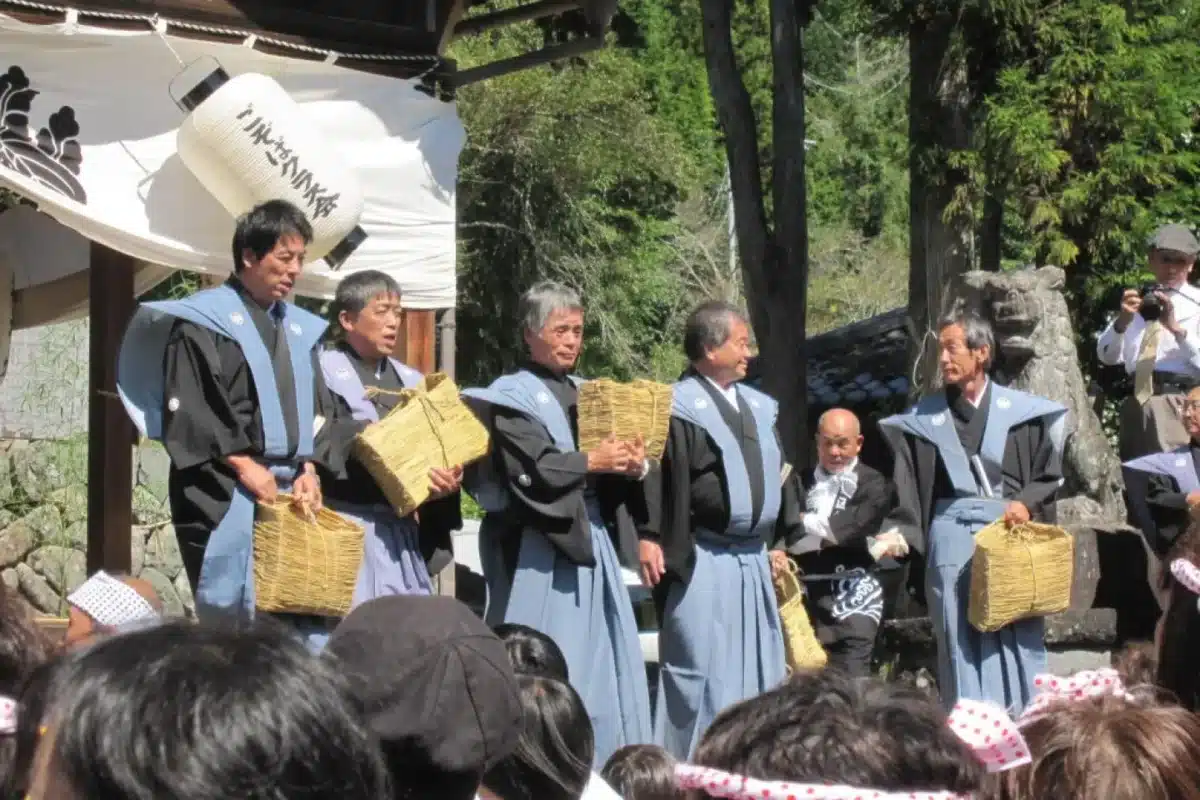
Mochi and candy shower: Before the float pulling begins, villagers and participants assemble at the base of the shrine to be blessed by a Shinto priest. Then the elders shower the crowd with mochi rice cakes and candies, a tradition called mochi-maki that shares good fortune and marks the launch of the main event.
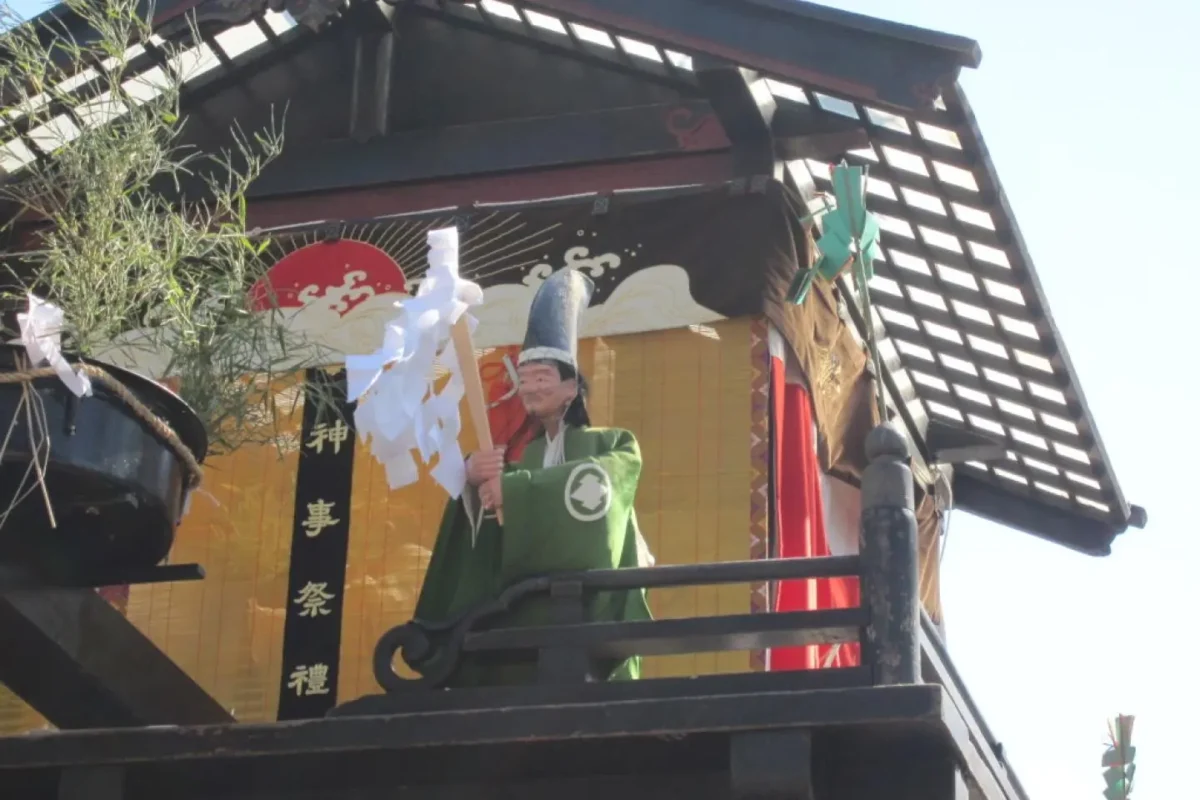
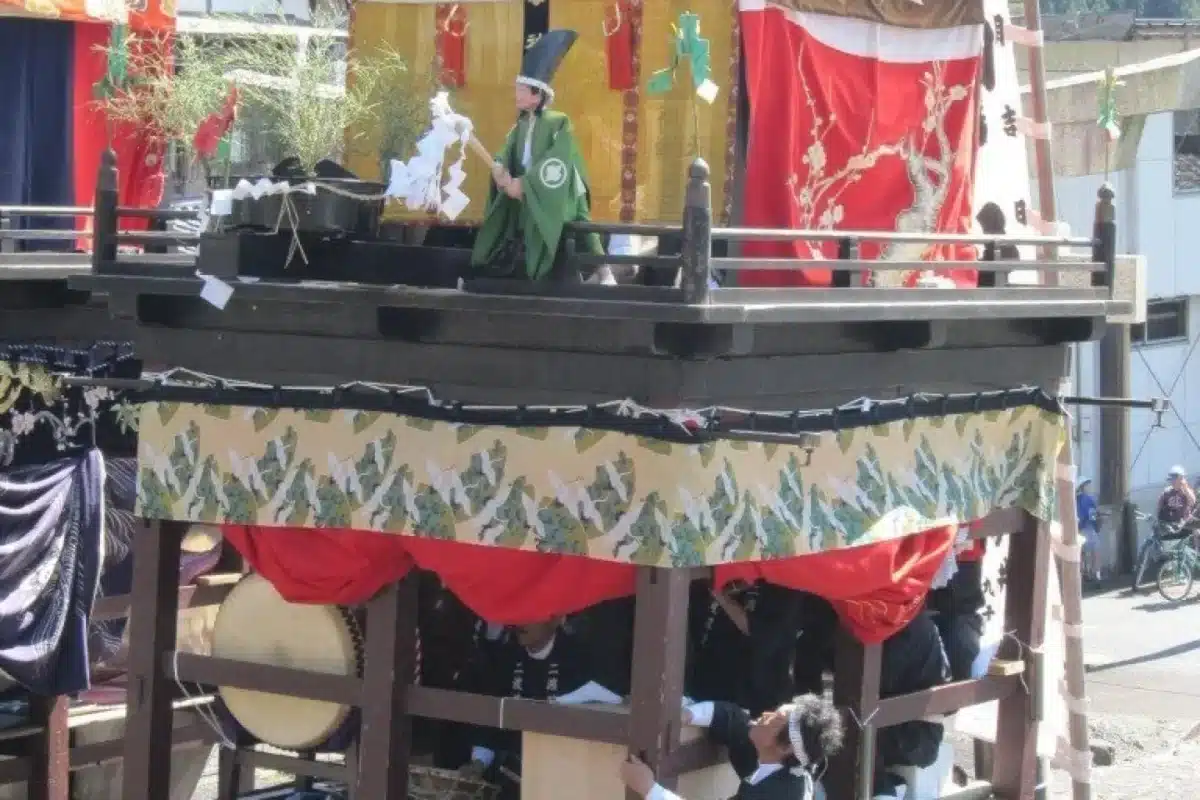
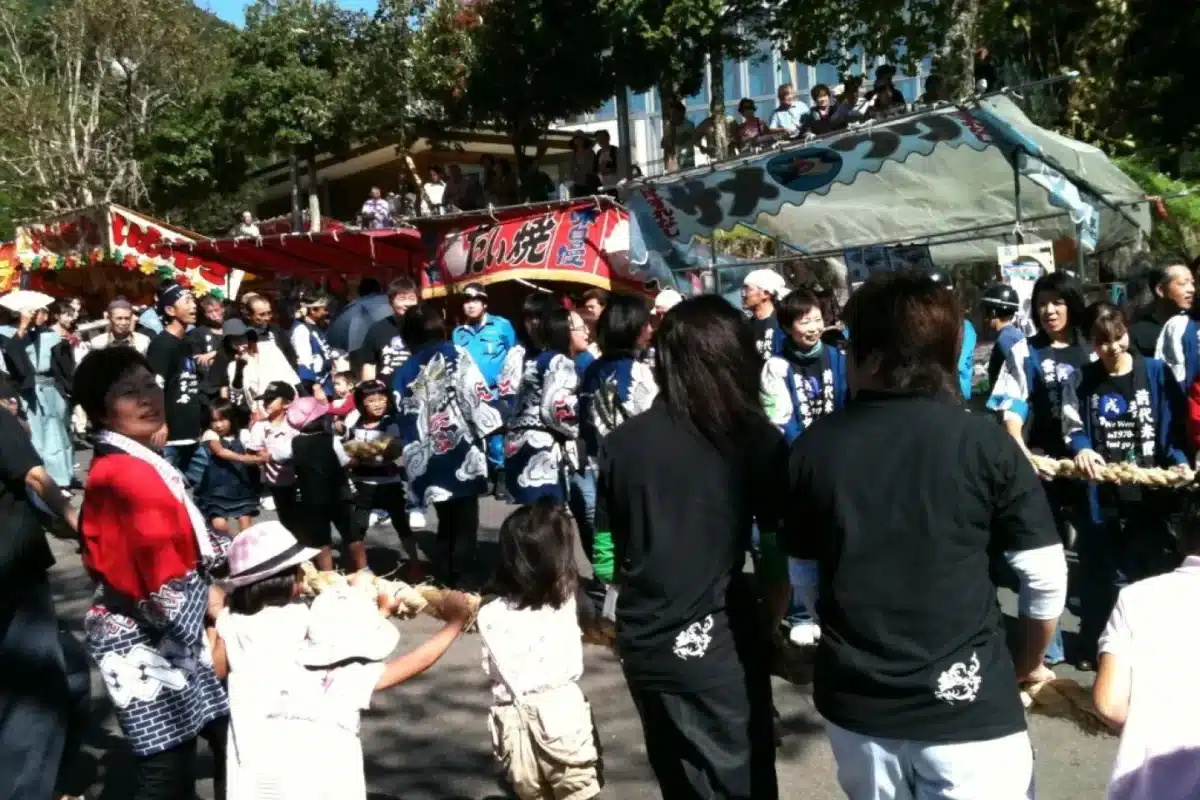
Float structure: The floats are large, highly decorated wooden structures. Inside, a small group of men play flutes and drums, while another group controls a puppet that dances on top of the float. The floats are tied with two thick ropes made of dried rice stalks, symbolizing the agricultural heritage of Kashimo.
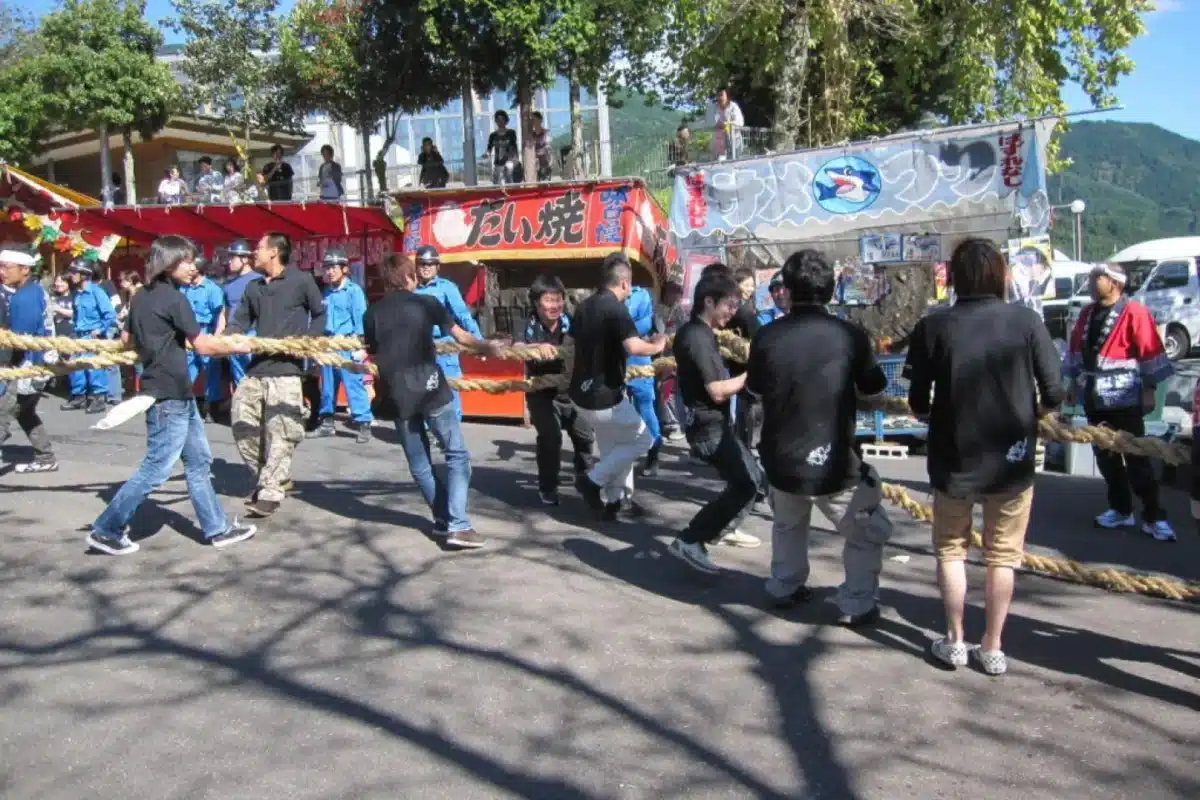
Pulling and crashing ritual: Participants line up on either side of the ropes and begin to pull. Elders positioned along the route deliberately stop the float from moving, causing the two lines of men to crash into each other in the middle. After each crash, sake is distributed to everyone. This process of pulling, crashing, and drinking is repeated over and over until the float is hauled the whole 50 meters to the front of the shrine. Then the process is repeated with another float.
What to Expect at the Festival
Expect a festival that is loud, physical, joyous, and slightly dangerous. The shrine approach is steep and narrow, lined with spectators who cheer and dodge as men collide.
Atmosphere: The morning begins solemnly with shrine ritual and quickly becomes convivial as sake and beer flow in the waiting area. By the time of the main event, participants are fairly sloshed, which is considered part of the spirit-driving tradition. The mood is boisterous, supportive, and filled with laughter even when collisions are hard.
Physical intensity: This is not a performance for spectators alone. The crashing is real. Participants are thrown off balance, pushed into food stalls like yakisoba stands, and often emerge with small cuts on brows and bruised elbows. The community accepts this as proof that bad spirits have been physically knocked away.
Sound and sight: Flute and drum music from inside the floats provides a rhythmic backdrop, while the dancing puppet on top adds a theatrical element. The rice-straw ropes creak under strain, and the decorated floats sway as they are yanked uphill.
Inclusivity: Though centered on yakudoshi men, women of the same ages attend as supporters, and elders control the proceedings with authority. Children watch from safe distances, learning the traditions that will one day be theirs.
Date & Schedule
Event Dates: Late September 2027 (Dates TBD)
Traditional timing: The festival is traditionally held on the autumn equinox, a seasonal turning point in the Japanese calendar that marks a time for ancestral remembrance and spiritual balance. For 2027 the observance falls in Late September, and the official day will be confirmed as Late September 2027 (Dates TBD).
Detailed schedule based on previous editions:
The night before the main event: Small shrine carried by yakudoshi men supported by yakudoshi women from southern Kashimo to Nakagiri middle district, handover to elders, then carried to Suimu Jinja Shrine for blessing and site preparation.
Main day morning: 9:30 AM ceremony and blessing at Suimu Jinja involving clapping, bowing, and drinking sake. Waiting period with additional sake and beer for participants.
Main day midday: Noon assembly at base of shrine for blessing by Shinto priest, followed by mochi and candy shower by elders to launch main event.
Main event: Float pulling ritual repeated over 50 meters to front of shrine, with intentional stops causing crashes, sake distribution after each crash, then repeat with second float. Duration is several hours with breaks.
Visiting this event? Don’t miss out on these amazing activities and local experiences while you’re here.
Main Events & Programme
Eve mikoshi transfer: The small shrine transfer is the opening ritual, symbolizing the movement of the kami from the community into the protection of Suimu Shrine. The participation of both men and women in this transfer emphasizes the family aspect of yakudoshi.
Blessing ceremony: The formal blessing at Suimu Jinja is conducted by Shinto priests and includes purification with sake, an essential element of Shinto ritual that also serves to embolden participants.
Mochi-maki: The showering of mochi and candies by elders is both a blessing and a signal. Catching mochi is considered lucky and many villagers bring bags to collect them for family members who cannot attend.
Float pulling competition: The main program features two large floats. Each float requires dozens of men pulling on rice-straw ropes. The elders’ role in stopping the float is crucial, they ensure maximum collision and effort. The puppet dancing on top is controlled by skilled puppeteers and is believed to entertain the kami.
Sake sharing: After each crash, sake is offered to all participants. This is not merely drinking but a ritual sharing called o-miki, sacred sake that has been blessed and is believed to carry purifying power.
Closing and dispersal: Once both floats have reached the front of the shrine, a final blessing is given, and participants, now tired, bruised, and bonded, disperse to local homes and inns for recovery and celebration.
Traditional Dress, Arts & Crafts
Festival workwear: Participants wear traditional hapi coats or simple work clothes with headbands, often bearing the crest of Suimu Shrine. The clothing is designed to allow free movement and to be easily washed after sake spills and ground contact.
Rice-straw rope craft: The ropes used to pull the floats are made from dried rice stalks, woven using traditional agricultural techniques. The weaving of shimenawa-style ropes is a craft preserved by elder farmers in Kashimo.
Float decoration: The floats are highly decorated wooden structures featuring carvings, lacquer, and colorful fabrics. The decorations include motifs of Hachiman and mountain deities, reflecting Kashimo’s history of protecting sacred cypress forests.
Puppetry: The dancing puppet on top of each float is a traditional karakuri-style puppet, controlled by strings and rods from inside the float. The puppet’s dance is a folk art performed by a small guild of local artisans.
Flute and drum music: Musicians inside the floats play fue flutes and taiko drums using rhythms specific to Kashimo, passed down orally without written scores. The music serves both as entertainment and as a cadence for pulling.
Traditional Food & Local Specialties
Festival stall food: During the main event, small stalls set up near the shrine base sell yakisoba fried noodles, grilled skewers, and sweets. These stalls are often run by local women’s associations to support the yakudoshi participants.
Mountain cuisine: Kashimo’s location in the former Ena District means its cuisine emphasizes mountain vegetables, river fish, and preserved foods. Gohei mochi, pounded rice coated with walnut miso and grilled on cedar sticks, is a signature of the area, priced around 3 USD to 5 USD.
Sake and amazake: Sake is central to the ritual and is provided freely during the event. Local Gifu sake made with mountain water is used, with bottles available for purchase at 10 USD to 20 USD. Amazake sweet low-alcohol sake is served to spectators for 2 USD to 4 USD.
Chestnut sweets: Nakatsugawa is nationally famous for kuri kinton chestnut sweets, made from local chestnuts. Shops in Kashimo and central Nakatsugawa sell kuri kinton for 8 USD to 15 USD per box and kuri yokan jelly for 5 USD to 10 USD.
Hearty meals: After the physical exertion, participants traditionally eat hearty meals of kei-chan chicken, a Gifu specialty of miso-marinated chicken with cabbage, and Hida beef dishes, with restaurant prices ranging from 10 USD to 25 USD.
Location & Festival Areas
Main venue: Kashimo Suimu Shrine, located in the former village of Kashimo, now part of Nakatsugawa City, Gifu Prefecture, 508-0421, Japan. The shrine sits on a hillside with a 50-meter approach that forms the pulling course.
Kashimo district: Kashimo is a mountain hamlet that was merged into Nakatsugawa on February 13, 2005, along with Tsukechi, Fukuoka, Sakashita, Hirukawa, Kawaue, and Yamaguchi from Nagano. It retains a strong village identity, surrounded by sacred Kiso hinoki forests.
Procession routes: The eve route runs from the southern end of Kashimo to Nakagiri middle district. The main day route is the 50-meter shrine approach from base to front of Suimu Jinja.
Surrounding area: The area includes the sacred forest that was once protected from Takayama and Naegi daimyo, the Nakagiri district community center where the handover occurs, and small family shrines that support Suimu Jinja.
Getting to the Festival
By car: Kashimo is approximately 40 to 50 minutes by car from central Nakatsugawa via Route 19 and mountain roads. Parking is provided at community centers and along mountain roads with volunteer guidance. Arrive early as spaces are limited.
By public transport: Take the JR Chuo Main Line to Nakatsugawa Station, then Kita-Ena Kotsu bus to Kashimo. Buses are infrequent, so check timetables in advance. Taxi from Nakatsugawa Station costs approximately 40 USD to 55 USD.
From Nagoya: Limited express trains from Nagoya to Nakatsugawa take about 90 minutes, making day trips possible though overnight stay is recommended due to sake consumption and mountain road conditions after dark.
Within Kashimo: The festival areas are walkable within the hamlet. The walk from Nakagiri to Suimu Jinja is uphill and takes about 15 minutes.
Where to Stay Nearby
Kashimo minshuku: Family-run minshuku inns in Kashimo offer tatami rooms and home-cooked mountain meals, priced from 60 USD to 110 USD per night including dinner and breakfast. Staying here allows participation in the eve event.
Nakatsugawa city hotels: Business hotels near Nakatsugawa Station offer Western-style rooms from 55 USD to 90 USD per night, with easy access to restaurants and onsen.
Magome and Tsumago: The preserved Nakasendo post towns of Magome and Tsumago, 30 minutes from Kashimo, offer historic ryokan from 80 USD to 200 USD per night, combining festival attendance with heritage tourism.
Ena and Gero onsen: For relaxation after the physical festival, nearby Ena Gorge and Gero Onsen offer hot spring resorts from 100 USD to 250 USD per night, ideal for soothing bruises and muscle soreness.
What Visitors Can Participate In
Eve shrine carrying: Visitors who are of yakudoshi age may request to join the eve small shrine carrying, supported by local women. This requires advance contact with the festival elders through Nakatsugawa City tourism.
Main float pulling: If you are 25, 42, or 61 for men, or 19, 33, or 37 for women, you are considered yakudoshi and are welcome to jump in and pull. The festival report from 2012 notes that even a foreign resident who had only been in Japan two months was able to participate fully after the morning blessing.
Mochi catching: All spectators can participate in catching mochi and candies showered by elders. Bring a bag to collect them and share with family.
Sake sharing: Accepting sake after crashes is part of the ritual. Even spectators are often offered sake as a gesture of inclusion.
Photography and support: Non-pulling visitors can support by cheering, taking photos, and helping with crowd safety. Women of yakudoshi ages often support by providing towels, water, and encouragement.
Things to Do Before or After the Festival
Kiso hinoki forest exploration: Walk the sacred forest trails that Kashimo’s historic garrison protected. The forest is one of the few places where Kiso hinoki grows naturally and is managed as a national treasure.
Nakasendo hiking: Hike the preserved stone path between Magome and Tsumago, experiencing the same mountain scenery that travelers have used for centuries.
Chestnut picking: The Nakatsugawa area offers chestnut picking experiences at local farms, where you can harvest the chestnuts used to make kuri kinton.
Iwamura Castle Town: Visit Iwamura, one of Japan’s three great mountain castle towns, with a well-preserved samurai district and sake breweries.
Ena Gorge cruise: Take a boat cruise through Ena Gorge, with dramatic cliffs and seasonal foliage, located a short drive from Kashimo.
Local Food & Restaurants
Kashimo eateries: Small local restaurants serve soba made with mountain water, gohei mochi, and set meals of grilled river fish, with lunch sets from 8 USD to 12 USD.
Nakatsugawa specialties: In central Nakatsugawa, try kei-chan chicken for 7 USD to 12 USD, Hida beef sushi, and chestnut-based desserts. Many restaurants offer all-you-can-eat chestnut sweets buffets for 15 USD to 20 USD.
Sake breweries: Nakatsugawa has several sake breweries using Kiso mountain water. Tasting sets cost 5 USD to 10 USD, with bottles to take home.
Cafes in post towns: Cafes in Magome serve coffee and chestnut Mont Blanc with views of the Kiso Valley, drinks from 3 USD to 6 USD.
Ticket Information & Access
Admission: The Suimu Shrine Festival is free to view and participate in as a spectator. No tickets are required for any part of the eve or main day events. Official listings consistently show Tickets 0 JPY.
Participation cost: Pulling floats as a yakudoshi participant is free, though participants traditionally contribute to sake and shrine maintenance funds, typically 20 USD to 30 USD. This contribution is voluntary.
Food and drink: Festival stalls sell yakisoba and snacks for 3 USD to 6 USD, sake for 2 USD to 5 USD. Local restaurants range from 10 USD to 25 USD for meals.
Transport: Bus fare from Nakatsugawa Station to Kashimo is approximately 7 USD one way. Taxi costs 40 USD to 55 USD. Parking at community centers is free with volunteer guidance.
Safety: The festival involves real physical contact. Participants should wear sturdy shoes, avoid loose clothing, and be prepared for minor injuries. Spectators should stand clear of ropes and follow elders’ instructions.
Official Event Information
Event name: Suimu Shrine Festival, Suimu Jinja Matsuri, locally called Fight Festival, Kenka Matsuri
Venue: Kashimo Suimu Shrine, Kashimo, Nakatsugawa-shi, Gifu-ken, 508-0421, Japan
Organizer: Suimu Jinja, Kashimo Community Association, Festival Elders Committee, Nakatsugawa City
Official website: https://en.japantravel.com/gifu/suimu-shrine-festival/1019
Contact: Nakatsugawa City Tourism Division, Kashimo General Office
Access: Kita-Ena Kotsu bus from JR Nakatsugawa Station to Kashimo, then 15-minute walk uphill to shrine. Car access via Route 19 with volunteer parking guidance.
Note: The festival is held on the autumn equinox and is considered a class reunion for yakudoshi ages. If you are of unlucky age, you are welcome to join the pulling after receiving the morning blessing.
Location
FAQ
What is yakudoshi and why does it matter for this festival?
Yakudoshi are unlucky ages in Japanese belief, for men 25, 42, and 61 with 42 being most critical, and for women 19, 33, and 37 with 33 being most critical. During these years people are advised to visit shrines, pray, and perform acts that drive away bad spirits. The Suimu Shrine Festival serves as a communal purification where physical exertion and collision are believed to shake off misfortune and prove vitality to protective kami.
What happens during the Fight Festival float pulling?
Participants line up on both sides of two ropes made of dried rice stalks tied to large decorated wooden floats containing flute and drum players and a dancing puppet on top. They pull the float 50 meters uphill toward the shrine while elders deliberately stop it, causing the two lines to crash into each other, after which sake is shared. This pull-crash-drink cycle repeats until the float reaches the shrine front, then repeats with a second float, creating a physically demanding and joyous purification.
Can women and visitors participate or is it only for men?
Though yakudoshi technically applies differently to men and women, the event functions like a class reunion where women of yakudoshi ages come to support and even at times participate. Foreign residents and visitors who are of yakudoshi age have participated after receiving the morning blessing involving clapping, bowing, and sake drinking. Spectators of all genders can join mochi catching, sake sharing, and supportive cheering.
Is the festival dangerous and what should I wear?
The festival involves real physical contact and minor injuries are common, such as cuts from being thrown into food stalls or bruised elbows, and more serious injuries like broken arms have occurred in some years. Participants should wear sturdy closed-toe shoes, durable work clothes that can get dirty and torn, and headbands to keep sweat away. Spectators should stand clear of ropes and follow elders' instructions to avoid being caught in collisions.
What is the significance of the eve shrine procession?
The night before the main event a small portable shrine is carried by yakudoshi men supported by yakudoshi women from the southern end of Kashimo to the middle district of Nakagiri where it is handed to festival elders. From there it is carried to Suimu Jinja Shrine where a blessing of the men is held and the location is prepared for the next morning. This transfer symbolizes community responsibility for the kami and sets the spiritual foundation for the purification to follow.

Leave a Reply