
Overview
What it is: The Tanabe Festival takes place every summer in Tanabe City. It is the grand annual festival of Tokei-jinja Shrine, also written as Tokei Jinja or Tokei Shrine, and is regarded as one of the Three Great Festivals of Kishu alongside the Waka Festival and the Kokawa Festival. It is considered the largest festival in the Kinan region.
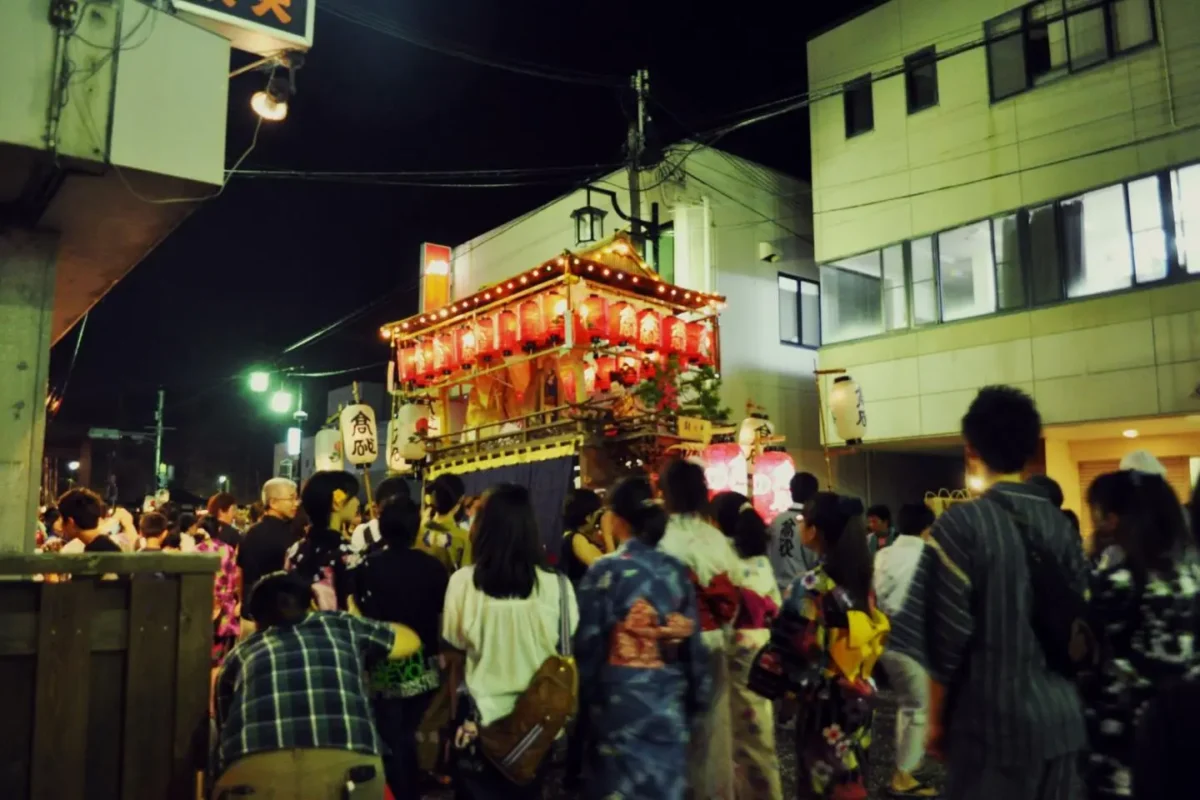
Scale and atmosphere: Every year the festival attracts as many as 100,000 people to the small port city that serves as the gateway to the Kumano Kodo pilgrimage. The city center near the commercial area is filled with color, music, and movement as eight Kasahoko floats parade through the town.
Core actions: On two days a series of processions are carried out in the city from the earliest hours of the day. These are called Mikoshi-togyo, which usually end in Egawa Port. In the evening the surroundings of Tokei Jinja shrine get filled with food and toy stalls. During the festival most boys and girls go out to enjoy the festivities dressed in their best summer kimonos.
Enjoy Your Event Stress-Free with Japan Travelo
Do you know? Planning events, festivals, concerts, and cultural experiences in Japan can be overwhelming. Japan Travelo brings everything together in one place, helping you manage your itinerary, transport, and accommodation with ease—so you can enjoy Japan without the stress of planning.
Heritage status: The Tanabe Festival has a history of over 460 years, with documentation from the 17th century indicating it began around 1600 and its present day form dating from the 1670s. The year 2009 marked the 450th anniversary. In 1969 it was designated as an intangible folklore cultural asset of Wakayama Prefecture.
Cultural Significance & Origins
Origins of Tokei-jinja: Tokei-jinja Shrine was established in 419 A.D and derives from Kumano Hongu Taisha. In the times of abdicated Emperor Shirakawa, the Kumano deities were enshrined here. Many imperial and aristocratic pilgrims paid homage here praying for safe passage into the realm of Kumano. Because the Kumano deities were manifested here, some pilgrims did not make the voyage into the heart of Kumano, but prayed here, subsequently worshipping the Kumano Sanzan from afar.
Cockfighting legend: In the Tales of Heike, the Kumano Betto turned to the gods to decide which side to join during the historic sea battle of Dan-no-ura in 1185 between the Heike and Genji clans by holding a divinatory cockfight here. By order of the gods the Kumano Navy supported the Genji, turning the tide of war. During shrine consolidations in the Meiji era this shrine was renamed Tokei-jinja or cockfighting shrine because of this event.
Castle town festival: During the Edo period there were nine districts in Tanabe related to the old castle and merchant towns: Hon-machi, Fukuro-machi, Kata-machi, Konya-machi, Kaminaga-machi, Shimonaga-machi, Minami-shin-machi, Kita-shin-machi and Egawa. Each possesses one Kasahoko except Egawa which has two. The festival embodies the pride of these merchant districts.
Kishu heritage: Regarded as one of the Three Great Festivals of Kishu, the Tanabe Festival is reminiscent of the Gion Festival in Kyoto, with its elegant floats and sacred processions. It represents the prosperity of Tanabe as an important junction for both land and ocean transportation routes before pilgrims continued onto the Kumano Sanzan.
Traditions, Rituals & Customs
Kasahoko floats: You can see eight Kasahoko from the eight traditional districts. Locals call the Kasahokos Okasa. Kasahoko is a sort of Dashi which broadly means an attraction of an event, but specifically performs a sacred role. The kanji characters for Dashi mean mountain and wheel or vehicle. Literally, Dashi are large elegant floats elaborately decorated and related to local history and Kami deities.
Structure of Kasahoko: Every Kasahoko is composed of one Oni Japanese demon, Sakibayashi children who play traditional festival music, three men to play Japanese style drums, three men to play Japanese style flute, several facilitators, 4 to 15 guards, 9 to 20 men who move Kasahoko, and around 10 people to carry a large paper lantern. Only Hon-machi’s Kasahoko has two Tengu instead of Oni. Music called Ohayashi sounds similar to ancient Japanese court music.
Sumiya purification: Egawa-cho possesses two Kasahokos and one Sumiya, an umbrella-like form which performs the extremely important duty of purifying. A designated participant runs as fast as possible carrying the sacred implement to expel evil spirits and cleanse the city. It also purifies the festival procession route by leading other floats. The Sumiya can never retrace its path or turn right. Its deity spirit is a nut pine, and every year the best branch of healthy Japanese red pine is chosen for its top as a divine receptor.
Mikoshi-togyo and Shiogori: The Kami depart Tokei-jinja Shrine in portable Mikoshi shrine followed by Kasahokos while Sumiya cleanses the way. The procession continues to Egawa Port for Shiogori saltwater purifying ritual and Otabisho worship. The procession returns to the shrine in early evening.
What to Expect at the Festival
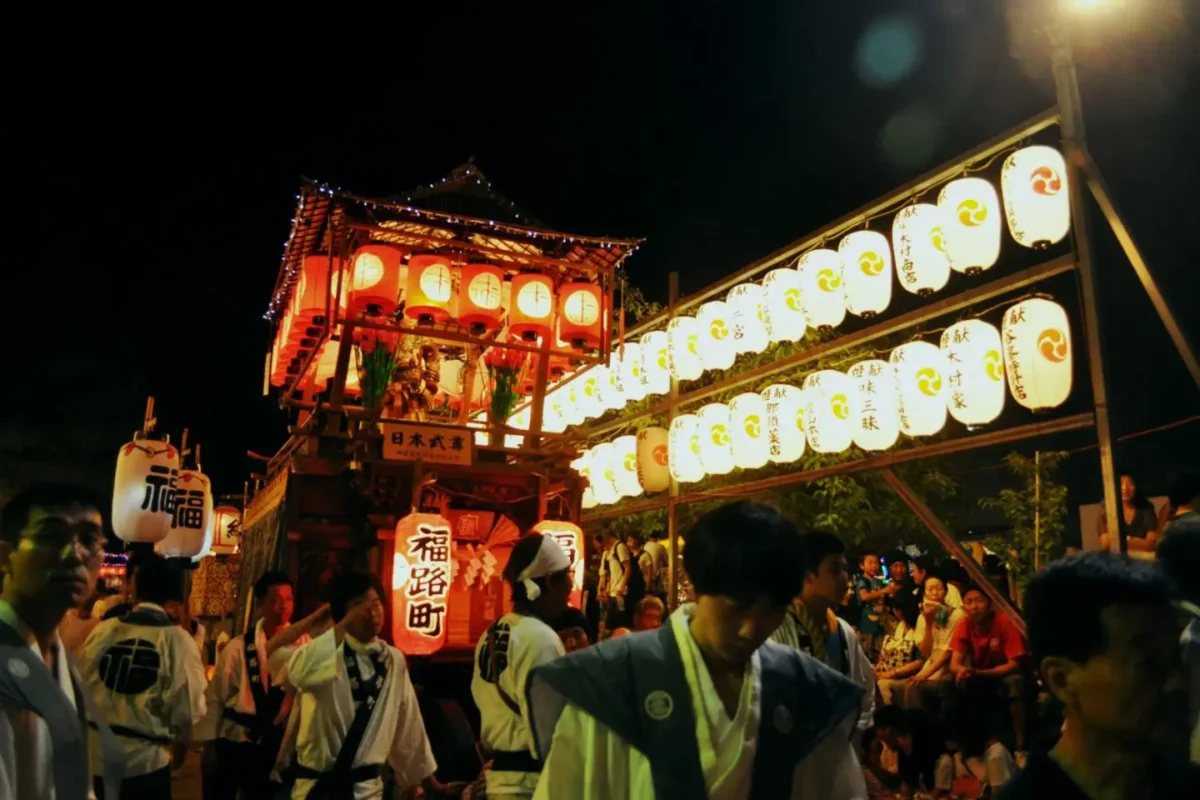
Procession energy: Expect powerful, slow-moving floats pulled and pushed by teams of men in traditional happi coats, accompanied by flutes, drums, and children’s chanting. The floats are tall, decorated with characteristic dolls and mochi flowers from each town, and carry children musicians.
Day and night contrast: Daytime is focused on sacred processions to the port and back, with formal rituals at bridges and shrines. Evenings are festive, with the surroundings of Tokei Jinja shrine near the commercial area filled with food and toy stalls from 7 pm to 9 pm, and illuminated floats creating reflections on the Aizu River.
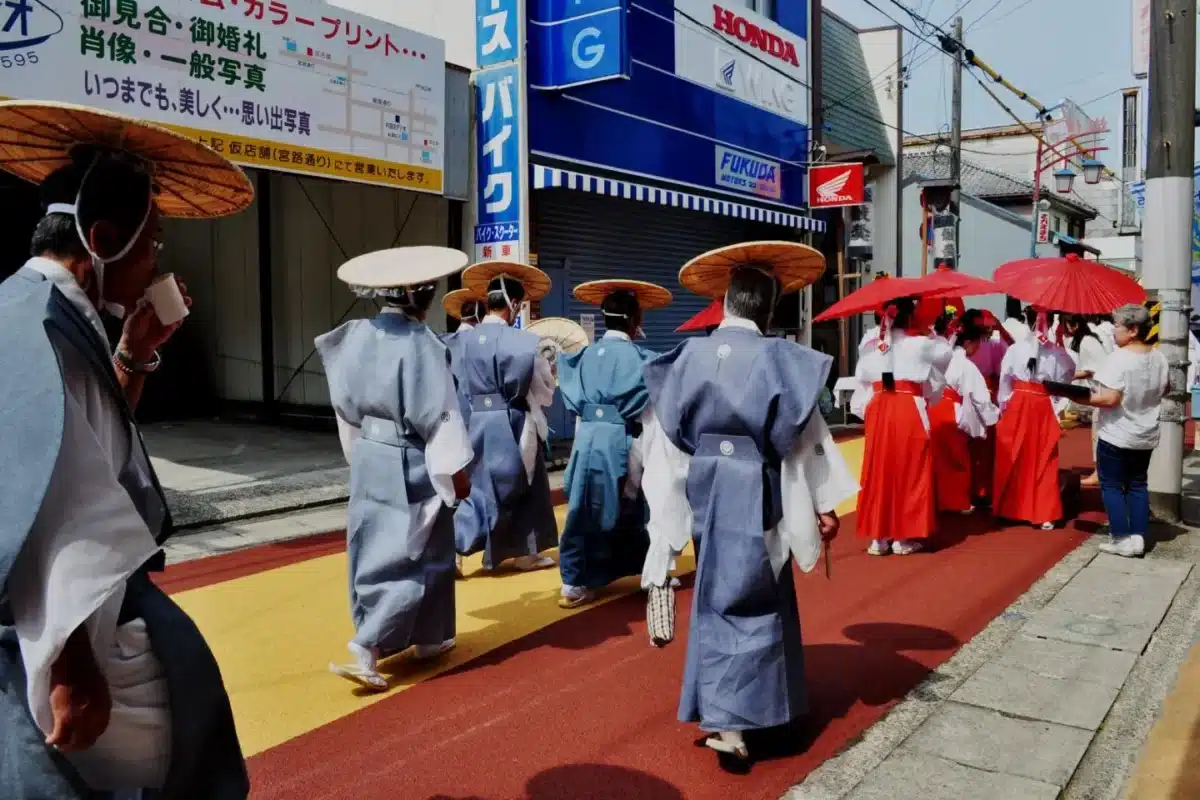
Yukata culture: During the festival most boys and girls go out to enjoy festivities dressed in their best summer kimonos. Adults also wear light cotton yukata, creating a colorful crowd along Ginza shopping district and around the shrine.
Crowd size: As the largest festival in Kinan, it draws up to 100,000 spectators over two days. The area around Tokei-jinja and Aizu-bashi Bridge becomes very lively, with families lining streets and balconies.
Date & Schedule
Event timing: Late July 2027 (Dates TBD)
Historical pattern: Based on previous editions, the main festival is held on July 24 as Eve Festival Yoinomiya and July 25 as Main Festival Hon-matsuri, while preliminary events such as first float pulling are carried out by each parish town from early in the month. The 2026 edition was listed as July 24 to 25 2026. For 2027, the organizer indicates Late July 2027 with exact dates to be announced.
Typical two-day schedule:
Day 1 – Eve: Mikoshi Togyo from Tokei-jinja Shrine at 9:00, Kasahoko assemble in Hon-machi, procession in Egawa-cho, gathering at Egawa Port at 10:25, Otabisho worship at 10:40, return procession afternoon, assembly in front of shrine at 18:00, greeting ritual and Sumiya running at 19:00, fire torches in Ginza shopping district at 21:00, assembly on Aizu-bashi Bridge at 21:30, Modori Chigo separation ritual at 21:55.
Day 2 – Main: Akatsuki-no-saiten dawn ritual at 4:30, Seven and half times welcome on Aizu-bashi Bridge at 12:30, Shiogori purification at 12:50, afternoon assemblies, Omiya-iri entering shrine ritual from 19:30 to 21:00 where carriages enter sanctuary through sacred gate, Yabusame horseback archery demonstration at 21:10, farewell at 21:40.
Visiting this event? Don’t miss out on these amazing activities and local experiences while you’re here.
Main Events & Programme
Mikoshi-togyo: The sacred transfer of Kami in portable shrine from Tokei-jinja to Egawa Port and back. This ritual usually ends in Egawa Port and includes Shiogori saltwater purification to cleanse participants and floats.
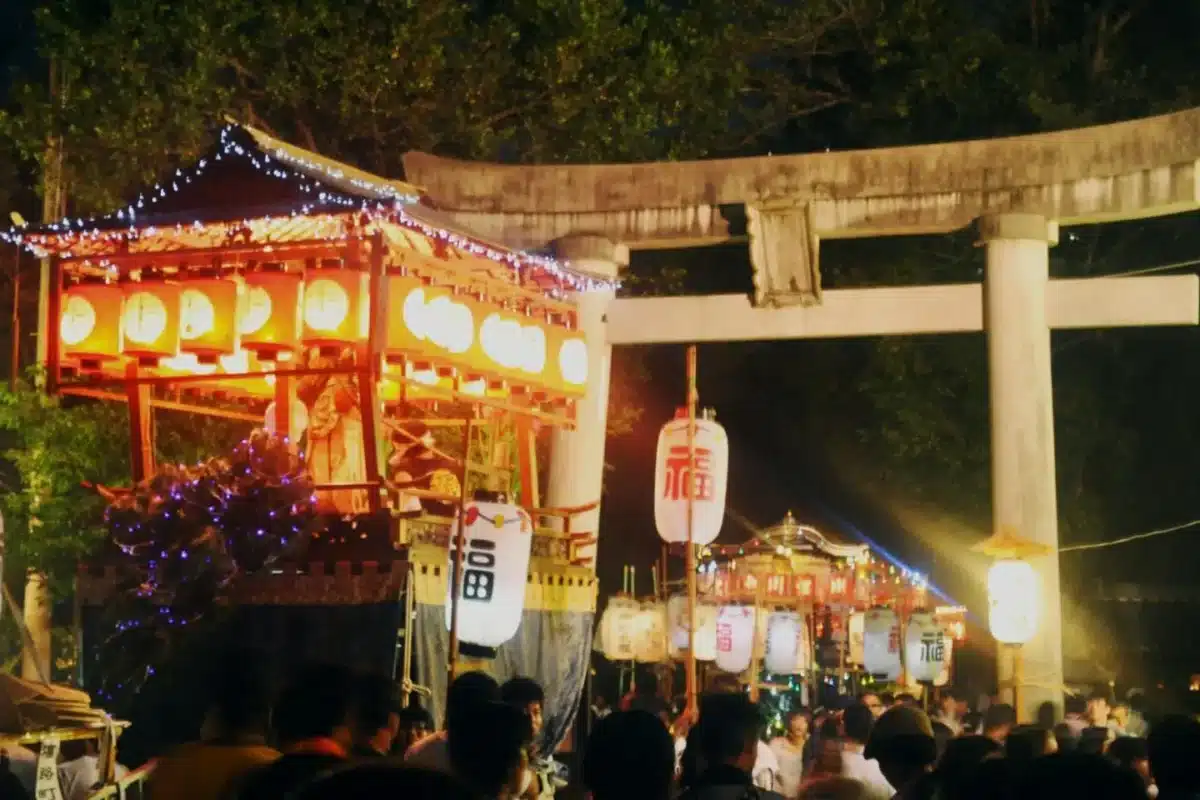
Omiya-iri ritual: The climax on the night of the second day, in which carriages enter sanctuary through a sacred gate. All Kasahoko gather in front of Torii gate, Sumiya enters to greet Kami, then each Kasahoko enters shrine grounds and greets Kami in front of pavilions. This takes place from 7:30 pm to 9:00 pm with Sumiya running ritual Kasa-yabuchi.
Aizu-bashi Bridge rituals: Two key bridge ceremonies. On the eve, Kasahoko assemble on the bridge creating reflections on the river. On main day, the enigmatic Nana-do-han no Tsukai seven and half times welcome ritual where two men cross bridge to request presence of Sumiya seven times, on eighth attempt Sumiya appears and group finally crosses to east side, followed by Shio-aka-ri cleansing.
Yabusame: Final ritual performed by three Kami escort boys arriving on horseback, each shooting three arrows at a target in front of Torii gateway. After nine shots, Horagai conch shell horns are blown to mark end of festival. Farewell and return of floats to neighborhoods.
Traditional Dress, Arts & Crafts
Festival attire: Participants wear traditional happi coats of their district with distinctive colors and crests, white tabi socks, and straw sandals. Guards wear eboshi hats. Children Sakibayashi wear colorful kimono and headbands. Spectators wear summer kimono yukata.
Kasahoko doll art: Each float is decorated with dolls representing historical and legendary figures. Examples include Hon-machi’s elderly couple from Noh drama Takasago by Zeami symbolizing happiness and long life, Konya-machi’s Kinugasa giant umbrella with gold fabric curtains embroidered with Yatagarasu three-legged crow, Sakae-machi’s Shojo ocean spirit who loves sake, Minami-shin-machi’s Yoshisada Nitta samurai who prayed to Ryujin dragon god, Fukuro-machi’s Yamato Takeru hero who turned into white swan, and Kata-machi’s Kanu Guan Yu god of business and war.
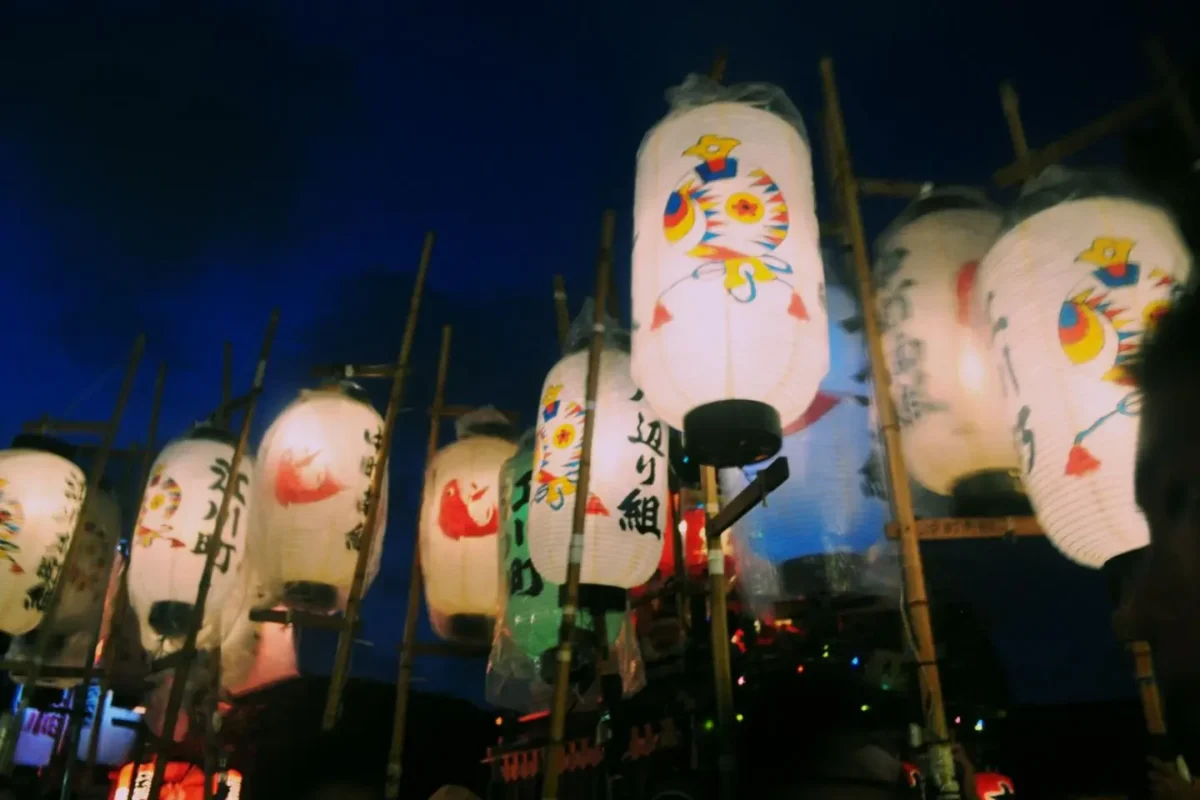
Craft details: Kasahoko decorated with mochi flowers, pine branches, and paper lanterns. Konya-machi lost its Kasahoko in severe flood in 1889 and uses Kinugasa umbrella from 1926, with fresh pine branches on top. Sumiya top uses best branch of Japanese red pine as divine receptor.
Ohayashi music: Traditional festival music played by children inside float, similar to ancient court music, using flute and drums. This musical heritage is passed down within each district.
Traditional Food & Local Specialties
Yatai stalls: From 7 pm to 9 pm surroundings of Tokei Jinja shrine near commercial area get filled with food and toy stalls. Based on previous editions, stalls offer yakisoba, okonomiyaki, karaage, takoyaki, yakitori, and shaved ice kakigori.
Tanabe specialties:
Mehari sushi: Local specialty of Tanabe and Kumano region, vinegared rice wrapped in pickled takana mustard leaves, typically 3 USD to 5 USD per piece.
Sanma fish: Pacific saury from nearby fishing ports, grilled with salt, 6 USD to 10 USD per serving at stalls and restaurants.
Kumano beef and citrus: Kumano area beef croquettes and local mikan mandarin juice, 3 USD to 7 USD.
Mochi and sweets: Mochi flower shaped sweets reflecting Kasahoko decoration, and local plum ume products from Wakayama, 2 USD to 5 USD.
Location & Festival Areas
City context: Tanabe City is in Wakayama Prefecture, Kii Peninsula, gateway to Kumano Kodo UNESCO World Heritage Sacred Sites and Pilgrimage Routes. Population around 70,000, with historic merchant towns and fishing port.
Main shrine: Tokei-jinja Shrine located near commercial area, short distance from Kii-Tanabe Station. Established in 419 A.D, derives from Kumano Hongu Taisha. During peak Kumano pilgrimage Tanabe prospered as entrance to Kumano region.
Key festival areas:
Tokei-jinja Shrine precinct: Starting point for Mikoshi and final Omiya-iri entry. Torii gate is focal point for greeting rituals.
Hon-machi and Ginza shopping district: Traditional merchant streets where Kasahoko assemble and fire torches performance takes place.
Egawa Port and fishing port: Western district where Mikoshi and Kasahoko gather for Otabisho worship and Shiogori purification. Two Kasahoko belong to Egawa.
Aizu-bashi Bridge over Aizu River: Sacred bridge for welcome rituals and reflection views. Connects Egawa west side and east side city.
Kinan Cultural Hall area: Assembly point for floats during afternoon processions.
Getting to the Festival
By train: Kii-Tanabe Station is main access, served by JR Kisei Main Line Kinokuni Line from Wakayama City and Shingu. From Osaka, take limited express Kuroshio from Shin-Osaka or Tennoji to Kii-Tanabe, about 2 to 2.5 hours, fare approximately 30 USD to 45 USD one way based on previous pricing. From station, Tokei-jinja Shrine is about 10 to 15 minute walk or short bus ride.
By bus: Local buses from Kii-Tanabe Station to city center and Egawa area. Meiko Bus and Ryujin Bus operate in area. Temporary shuttle may operate on festival days.
By car: Access via Hanwa Expressway to Nanki-Tanabe Interchange, then local roads. Parking near shrine is limited on festival days due to road closures. Use municipal parking at Tanabe City Hall or Ogigahama Beach area and walk.
On foot within festival: All main venues are within 1 kilometer radius in central Tanabe. Flat terrain, walkable between shrine, Hon-machi, Egawa Port, and Aizu-bashi Bridge.
Where to Stay Nearby
Central Tanabe: Business hotels near Kii-Tanabe Station such as Hotel Kamenoi Kii Tanabe and other city hotels offer rates from 50 USD to 90 USD per night. Good for walking to festival.
Ogigahama Beach area: Resorts and guesthouses near beach, about 10 minutes by car from shrine, rates from 60 USD to 120 USD per night, combining beach and festival.
Shirahama: Famous hot spring resort town 20 minutes by train, with many onsen hotels and beach resorts ranging from 80 USD to 200 USD per night. Popular base for Kumano area.
Kumano Kodo lodges: Traditional guesthouses and minshuku along pilgrimage routes, 40 USD to 80 USD per night, for those combining festival with hiking.
Booking tip: Festival draws up to 100,000 people and summer is peak for Kumano Kodo and Shirahama beach. Book at least two months in advance.
What Visitors Can Participate In
Watch Omiya-iri: The most important spectator moment is Omiya-iri on evening of second day when carriages enter sanctuary through sacred gate. Stand in front of Tokei-jinja Torii to see Sumiya running and each Kasahoko greeting Kami.
Bridge viewing: Watch Aizu-bashi Bridge rituals, especially seven and half times welcome and evening illuminated assembly where floats reflect on Aizu River.
Yukata wearing: Join locals by wearing summer kimono. Most boys and girls go out in best summer kimonos. Rental shops near station offer yukata rental for around 25 USD to 40 USD.
Food stall hopping: Enjoy evening stalls around shrine from 7 pm to 9 pm, trying Mehari sushi, grilled fish, and shaved ice.
Photography: Photography allowed from public areas. Best spots are Aizu-bashi Bridge for reflections, front of Torii gate for Omiya-iri, and Hon-machi for close-up doll details. Ask permission before photographing children musicians.
Things to Do Before or After the Festival
Kumano Kodo pilgrimage: Tanabe is gateway to Nakahechi Route of Kumano Kodo UNESCO World Heritage. Hike from Takijiri to Kumano Hongu Taisha, or short walks to nearby shrines. Buses depart Tanabe for Takijiri early morning.
Ogigahama Beach: Tanabe’s city beach, sea opening in early summer, good for swimming and sunset views. About 15 minutes walk from city center.
Tokei-jinja Shrine exploration: Visit shrine outside festival to see its history related to Kumano deities and cockfighting legend.
Kii-Tanabe Station area: Local tourism bureau at station provides maps and information about Kumano Sanzan and Benkei Matsuri Yosakoi dance festival held in October featuring fireworks and dance performances.
Wakayama day trips: Shirahama Onsen, Adventure World, and Kumano Hongu Taisha are accessible by bus and train for extending trip.
Local Food & Restaurants
Around Kii-Tanabe Station: Izakaya and restaurants serving Kumano beef, fresh seafood from Egawa and nearby ports, and Mehari sushi. Lunch sets 8 USD to 15 USD, dinner 15 USD to 30 USD.
Ginza shopping district: Traditional shops and cafes along festival route, offering light meals and sweets during festival. Good for rest between processions.
Egawa Port area: Fishing port restaurants serving fresh sanma, mackerel, and tuna, with views of port where Mikoshi gathers.
Kumano specialties: Try mehari sushi, mehari means to widen eyes due to large size, Kumano beef, and local mikan mandarin products. Ramen shops and udon shops also popular.
Convenience: Convenience stores and supermarkets near station provide affordable options and drinks for hot summer days.
Ticket Information & Access
Admission: The Tanabe Festival is free to watch. No tickets required for processions, bridge rituals, Omiya-iri, or Yabusame. Based on previous editions, tickets remain 0 JPY, approximately 0 USD.
Seating: No paid reserved seating. Viewing is standing or sitting on curb and shrine steps. Arrive early for front row at Torii gate for Omiya-iri and at Aizu-bashi Bridge for welcome ritual.
Participation costs: For spectators, only food, drinks, and crafts cost money. Float participation is limited to district members. Team registration fees handled internally.
Access notes: Road closures around Tokei-jinja, Hon-machi, Ginza, and Aizu-bashi Bridge during procession times. Follow police and volunteer guidance. Festival held rain or shine, but some rituals may be adjusted in severe weather.
Cost reference: Food stall items from previous editions range 2 USD to 7 USD, drinks 1 USD to 4 USD, yukata rental 25 USD to 40 USD. Train from Osaka to Kii-Tanabe around 30 USD to 45 USD.
Official Event Information
Event name: Tanabe Festival 2027 – Japan
Venue: Tokei-jinja Shrine, Tanabe City, Wakayama Prefecture, and surrounding areas including Hon-machi, Ginza shopping district, Egawa Port, Aizu-bashi Bridge
Organizer: Tokei-jinja Shrine and Tanabe Festival Executive Committee, Tanabe City Kumano Tourism Bureau
Access: Short distance from Kii-Tanabe Station, JR Kisei Main Line. Walk 10 to 15 minutes to shrine.
Official website text: en.japantravel.com/wakayama/tanabe-festival/5927 and Tanabe City Kumano Tourism Bureau site www.tb-kumano.jp/en/activities/festivals-events/tanabe-festival/
Designation: Intangible Folk Cultural Property of Wakayama Prefecture since 1969, one of Three Great Festivals of Kishu
Contact: Tanabe City Kumano Tourism Bureau at Kii-Tanabe Station area
Video
Location
FAQ
What are Kasahoko floats and how many can I see at Tanabe Festival?
Kasahoko are large elegant Dashi floats elaborately decorated with dolls representing historical and legendary figures, mochi flowers, pine branches, and paper lanterns. During Tanabe Festival you can see eight Kasahoko from eight traditional districts related to old castle and merchant towns, plus a Kinugasa umbrella from Konya-machi and Sumiya purification float from Egawa. Each float has musicians and guards and is pulled through city to pay homage at shrines.
What is Omiya-iri and why is it the climax of the festival?
Omiya-iri means entering the shrine and is the most sacred moment when all Kasahoko gather in front of Torii gate of Tokei-jinja Shrine and finally enter the shrine grounds to greet the Kami. It starts with Sumiya entering to greet Kami and performing Kasa-yabuchi ritual, followed by each Kasahoko entering one by one. This ritual on the evening of the second day marks the successful return of Kami and completion of purification of city.
Can visitors participate in pulling Kasahoko or carrying Mikoshi?
Pulling Kasahoko and carrying Mikoshi is traditionally limited to members of the eight districts and shrine parishioners, as it involves sacred duties and long training. Visitors can participate as spectators by wearing yukata, following processions between shrine and Egawa Port, watching Aizu-bashi Bridge rituals, and enjoying food stalls. Some districts welcome volunteers for carrying large paper lanterns if you ask at local community centers in advance.
What is the significance of Tokei-jinja Shrine's name?
Tokei-jinja means cockfighting shrine and derives from a legend in Tales of Heike where Kumano Betto held a divinatory cockfight here to decide which side to support during sea battle of Dan-no-ura in 1185. By order of gods, Kumano Navy supported Genji clan, turning tide of war. During Meiji era shrine consolidations it was renamed Tokei-jinja because of this event. The shrine was established in 419 A.D and derives from Kumano Hongu Taisha.
How does Tanabe Festival connect to Kumano Kodo pilgrimage?
Tanabe was an important junction and prospered as entrance to Kumano region during peak of Kumano pilgrimage, as it was key location for both land and ocean transportation routes. Many imperial and aristocratic pilgrims paid homage at Tokei-jinja praying for safe passage into realm of Kumano, and some worshipped Kumano Sanzan from afar without making voyage into heart of Kumano. Today visitors often combine Tanabe Festival with hiking Nakahechi Route of Kumano Kodo World Heritage trail starting from nearby Takijiri.

Leave a Reply