
Overview
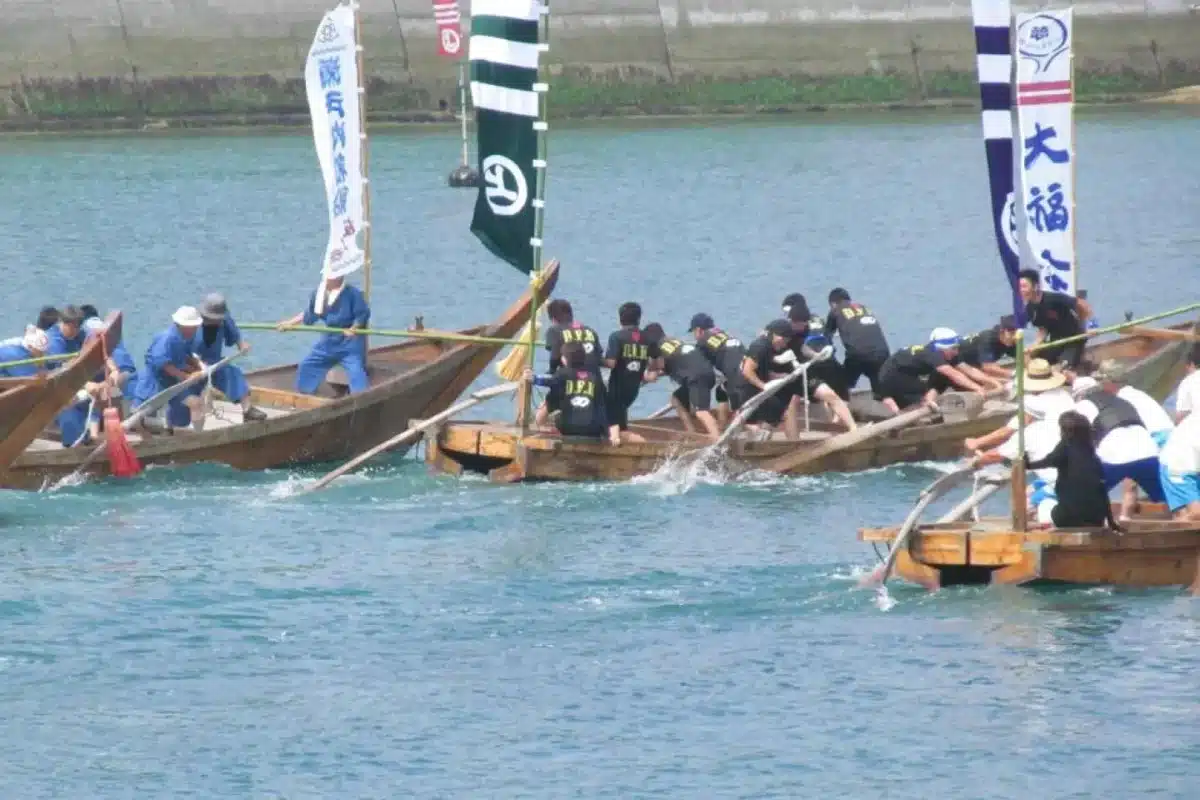
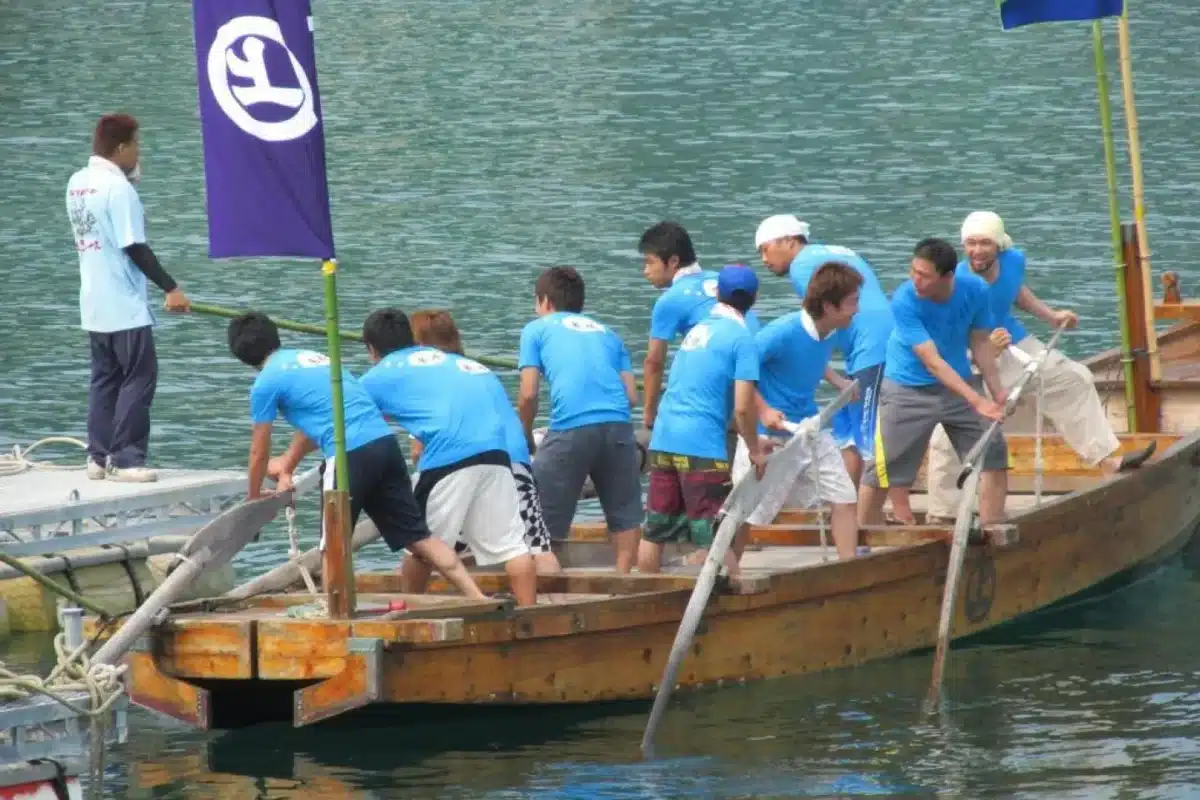
The Murakami Suigun Boat Race is one of Ehime Prefecture’s most distinctive cultural celebrations, held in the coastal community of Miyakubo on Oshima Island in Imabari. This high-energy waterside festival revives the maritime legacy of the Murakami Suigun, the powerful feudal navies who once controlled the Seto Inland Sea. The central spectacle takes place directly in front of the Imabari City Murakami Kaizoku Museum, where the sea becomes a racetrack for replica wooden war boats.
More than sixty teams from across Ehime and neighboring prefectures gather to compete in these unusual vessels. Each boat carries a crew of ten, rowing standing up with an asymmetrical oar arrangement that makes straight-line navigation exceptionally difficult. The result is a thrilling, noisy, and deeply physical contest that honors seamanship, teamwork, and local identity.
Beyond the racing itself, the festival is a full community celebration. Visitors experience pounding taiko drums performed by local children, food stalls showcasing Imabari’s beloved specialties, live tuna filleting demonstrations, and a grand finale fireworks display of approximately 3,000 fireworks over the Inland Sea. The event is free to attend and draws families, history enthusiasts, cyclists riding the Shimanami Kaido, and travelers seeking an authentic encounter with Japan’s pirate heritage.
Enjoy Your Event Stress-Free with Japan Travelo
Do you know? Planning events, festivals, concerts, and cultural experiences in Japan can be overwhelming. Japan Travelo brings everything together in one place, helping you manage your itinerary, transport, and accommodation with ease—so you can enjoy Japan without the stress of planning.
Cultural Significance & Origins
The Seto Inland Sea is a rugged environment of islands separated by channels that are roiled by strong currents when the tide changes. From the 13th to 16th centuries various suigun—feudal navies—arose and developed their unique livelihoods and culture around this inland sea. With their intimate familiarity with the swirling currents and their prowess at fighting from boats, these sea dogs were pirates, coast guards, and local governments as time went on.
The Murakami clan was the most prominent of these forces, divided into three houses: the Noshima Murakami, the Innoshima Murakami, and the Kurushima Murakami. The Noshima Murakami, based on tiny Noshima Island just off Oshima, were described by the Portuguese missionary Luis Frois as the greatest pirates in Japan. They were not merely raiders. They operated a sophisticated system of maritime control, collecting tolls for safe passage, piloting ships through dangerous whirlpools like Funaori Seto, known as the Shipwreck Channel, and providing naval support to powerful warlords during the Sengoku period.
In 2016, the story of the Murakami Kaizoku was officially designated as Japan Heritage by the Agency for Cultural Affairs. The Imabari City Murakami Kaizoku Museum in Miyakubo exists to preserve this legacy, displaying reconstructions of kobaya fast boats, armor, documents, and navigational tools. The Suigun Boat Race was created as a living extension of that museum, transforming historical knowledge into physical experience and ensuring that the techniques of rowing and commanding these unique boats are not lost.
Traditions, Rituals & Customs
The festival follows a ritual structure that mirrors a traditional naval gathering. The day begins with an opening ceremony that is intentionally community-led rather than formal.
Taiko Opening: Local elementary and junior high school children perform wadaiko drumming on a stage near the museum pier. The drumming is believed to awaken the sea and summon good fortune for the racers, echoing the war drums once used to coordinate fleets.
Purification and Safety Prayer: Representatives from the teams and the museum offer a brief prayer for safe passage on the water, a custom borrowed from fishermen’s festivals across the Seto Inland Sea.
The Kobaya Formation: The boats used are called kobaya or ko-bune, small, shallow-draft war boats designed for speed and maneuverability in tidal rapids. The crew structure is strictly traditional. There are four main oars, each driven by two crew members, plus a fifth oar at the stern driven by a single crew member that also serves as a rudder. A coxswain stands in the bow, shouting commands and maintaining rhythm. All rowers row standing up, facing forward, using their entire body weight.
Class-Based Competition: Teams are divided into several classes based on previous performance and category, including General, Women’s, Junior, and Senior divisions. Advanced teams demonstrate extraordinary speed, often reaching speeds comparable to a small outboard motor, a testament to months of training.
Closing Fireworks as Offering: The evening concludes with a fireworks display launched over the water in front of the museum. Historically, fireworks over the sea were used to guide ships and celebrate naval victories.
What to Expect at the Festival
Visitors should expect a loud, informal, and highly participatory atmosphere rather than a silent historical reenactment. The racecourse is set close to shore, so spectators lining the seawall and the museum plaza can hear the coxswains shouting, the oars splashing, and the crowd cheering.
The competition is fierce. Because the oars are arranged asymmetrically, boats do not naturally go straight. The stern oarsman must constantly correct, while the bow coxswain balances the power of eight rowers. Capsizes are rare but dramatic near-misses and sudden changes in lead are common. Using binoculars is highly recommended to follow the teams to the distant turnaround buoy.
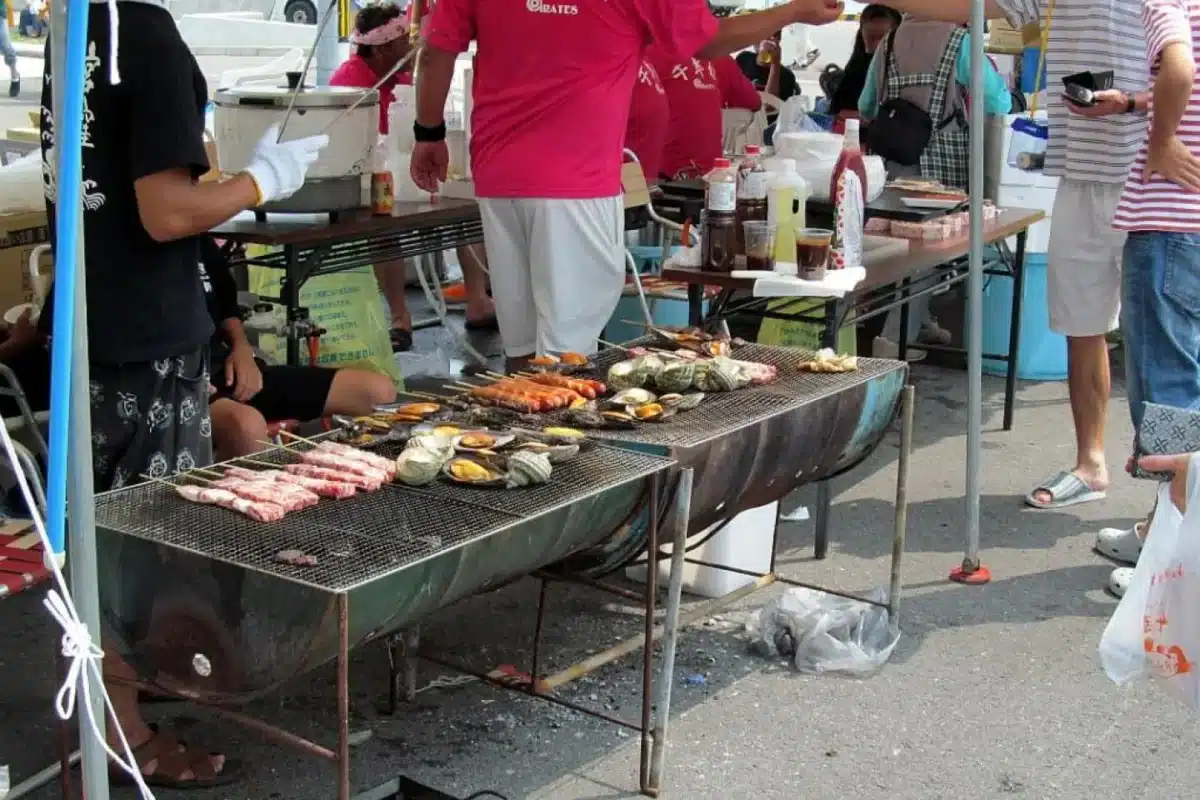
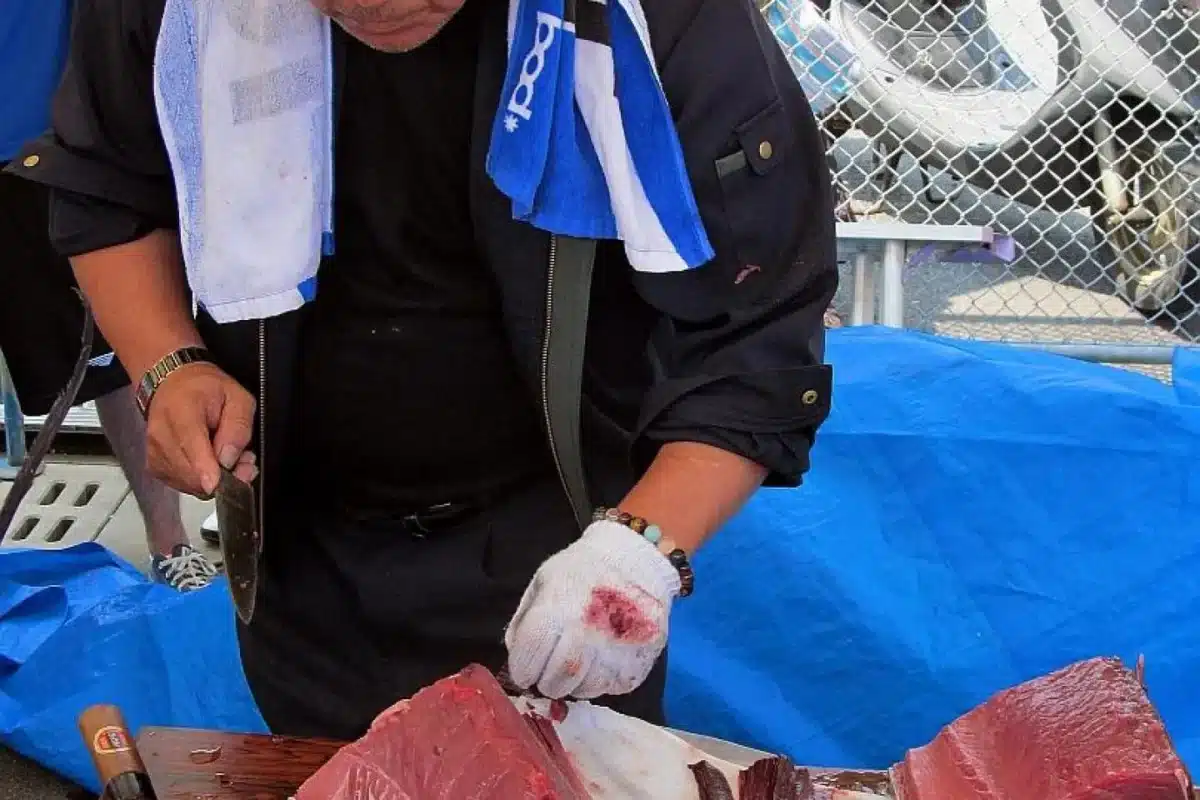
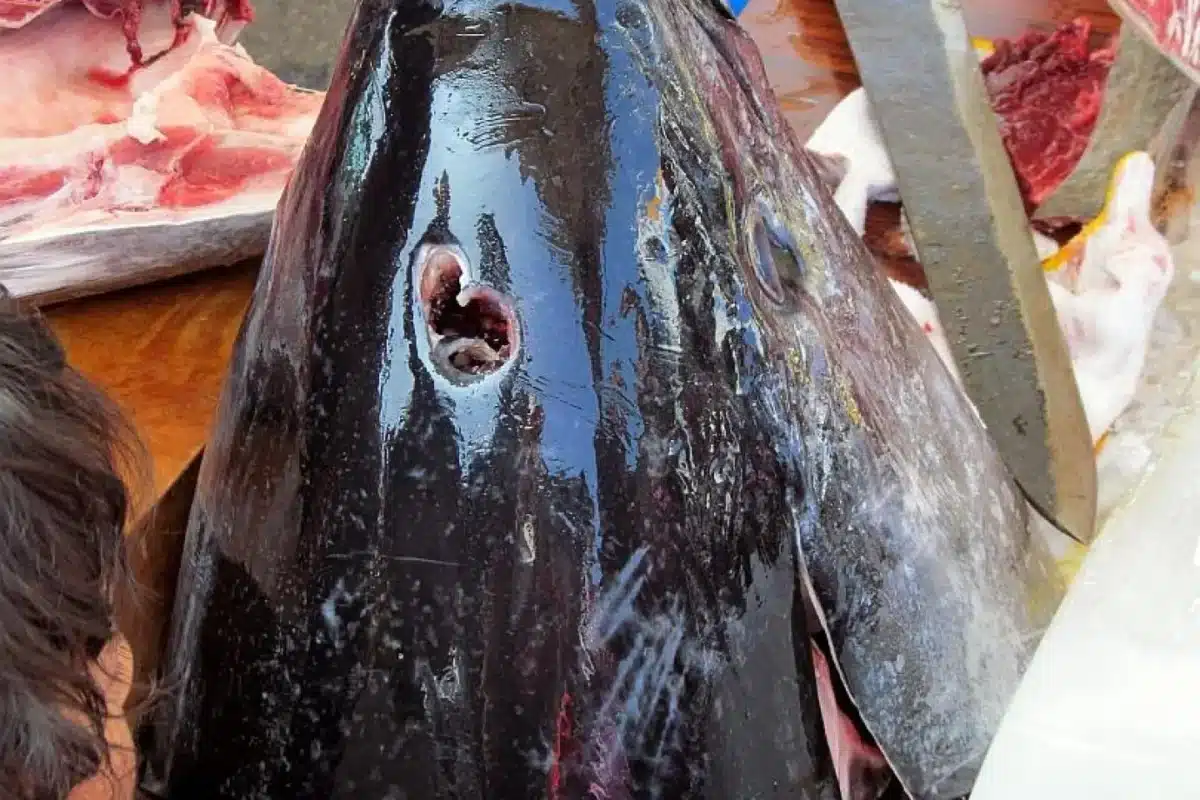
Between heats, the festival grounds function as a local matsuri. Food stalls line the approach to the museum, selling yakitori, pan-fried chicken skewers, grilled seafood, and Imabari yakibuta tamago meshi, a local pork and egg rice dish. Live demonstrations, such as maguro kaitai shows where a whole tuna is expertly filleted, draw large crowds. The freshly cut sashimi is then sold on site.
The museum itself remains open during the festival, and many visitors combine watching one or two heats with a tour of its three floors, including the observation room overlooking Noshima Island. The adjacent Noshima Suigun Current Experience boats operate special services, offering 45-minute cruises into the actual whirlpools for approximately 7 USD for adults and 3.50 USD for children based on previous edition pricing.
Date & Schedule
Event Dates: Late July 2027 (Dates TBD)
Typical Daily Schedule Based on Previous Editions:
Morning Session: Museum opens at 9:00 AM. Opening ceremony and taiko performance begin around 9:30 AM.
Racing Block 1: Qualifying heats for junior, women’s, and general classes begin around 10:00 AM and continue until midday.
Lunch Break: Local food market and tuna filleting demonstration around 12:00 PM to 1:00 PM. Museum cruise boats depart hourly.
Racing Block 2: Semi-finals and advanced class heats from 1:30 PM to 3:30 PM.
Finals: Championship races for each class from 3:30 PM to 4:30 PM.
Evening Program: Awards ceremony at 5:00 PM. Fireworks display begins after sunset, typically around 8:00 PM to 8:30 PM, with approximately 3,000 fireworks launched over approximately 45 minutes.
Please note that final timings are subject to tidal conditions and official announcement by the organizer.
Visiting this event? Don’t miss out on these amazing activities and local experiences while you’re here.
Main Events & Programme
Kobaya Boat Race Heats: The core program features more than 60 teams competing in elimination rounds. Each heat typically involves four boats racing side by side over a straight course of approximately 400 to 500 meters. The short distance is deceptively demanding due to the physical effort required.
Women’s and Junior Divisions: Special categories highlight community participation, with all-female teams and school-based teams competing in identical boats but over slightly shorter courses.
Noshima Suigun Current Cruise: Departing from the pier directly in front of the museum at 1293-2 Miyakubo, Imabari, these boats take visitors around Noshima Castle Ruins, through Futanori Seto and Okinoshima, experiencing first-hand the currents that reach up to 10 knots.
Taiko Drum Performance: Performed by children from Miyakubo district, this is a highlight for photographers and a powerful auditory introduction to the festival.
Tuna Filleting and Seafood Market: A master chef demonstrates traditional maguro kaitai techniques. The demonstration emphasizes knife mastery developed from samurai-era blade skills.
Grand Fireworks Display: The festival finale features 3,000 fireworks launched from a barge offshore. The reflections over the Seto Inland Sea and the Kurushima Kaikyo Bridge in the distance create exceptional photo opportunities.
Traditional Dress, Arts & Crafts
While the rowers wear modern athletic uniforms adapted for rowing, the festival preserves several visual traditions.
Rowing Attire: Teams often wear matching hachimaki headbands and happi coats before and after racing, with their team name in kanji on the back. The coxswain traditionally wears a more colorful vest to be visible from shore.
Murakami Kaizoku Museum Crafts: Inside the museum, visitors can see authentic reconstructions of oars, sails, and armor lacing. The museum shop sells replica goshuin stamps, miniature kobaya models handcrafted from local hinoki cypress, and indigo-dyed tenugui towels featuring whirlpool patterns representing the Naruto-like currents.
Shimanami Craft Market: During the festival, local artisans from Oshima and Imabari set up stalls selling Imabari towel products, famous for their softness and water absorption, pottery with wave motifs, and woodwork made from reclaimed boat timber.
Traditional Food & Local Specialties
Food is central to the Suigun Race experience, reflecting Imabari’s position as a port city.
Yakitori and Yakibuta Tamago Meshi: Imabari yakitori is distinguished by being served without skewers on a plate with a raw egg dip. Yakibuta tamago meshi, the city’s soul food, features sliced char siu pork on rice topped with a soft-boiled egg and special sauce.
Seafood: Being on Oshima Island, the stalls emphasize fresh catch from the Inland Sea. Expect grilled anago sea eel, octopus tempura, and tai sea bream rice. The tuna filleting show offers freshly cut otoro and chutoro sashimi packs for approximately 7 USD to 14 USD.
Citrus and Sweets: Ehime is Japan’s citrus kingdom. Look for mikan orange juice, Iyokan soft serve, and Jakoten, a deep-fried fish cake specialty of Ehime that is a popular snack.
Museum Restaurant: The restaurant across from the museum serves a Suigun Gozen set meal featuring local fish, small dishes, and miso soup for approximately 8 USD to 10 USD.
Location & Festival Areas
Primary Venue: The waterfront plaza and sea area directly in front of the Imabari City Murakami Kaizoku Museum, located at 1285 Miyakubo, Miyakubo-cho, Imabari City, Ehime 794-2203, Japan. The pier at 1293-2 Miyakubo serves as the official departure point for cruises and the start line for races.
Festival Zones:
Race Viewing Seawall: A 300-meter stretch of seawall with free standing room and limited portable seating.
Museum Plaza: Stage for taiko, food stalls, and craft market.
Museum Interior: Three floors of exhibitions, observation deck, and air-conditioned rest area.
Miyakubo Port Area: 1 kilometer south of the main venue, offering parking and shuttle bus access.
The natural backdrop includes views of Noshima Island, the former fortress island of the Noshima Murakami, Hakata-Oshima Bridge, and the swirling currents of Miyakubo Seto.
Getting to the Festival
From Imabari Station: Take the Setouchi Bus bound for Oshima Eigyojo. Travel time is approximately 35 minutes to Oshima Eigyojo bus stop, then approximately 20 minutes on foot to the museum. During festival days, a free shuttle bus typically operates from the bus terminal to the venue.
By Car: From Imabari Interchange on the Nishiseto Expressway Shimanami Kaido, drive approximately 25 minutes to Miyakubo. Festival parking is available at Miyakubo Port and Oshima South Elementary School grounds with shuttle service. Parking fee from previous editions was approximately 3.50 USD per vehicle.
By Bicycle: The festival site lies directly on the Shimanami Kaido Blue Line cycling route. From JR Imabari Station, it is approximately 18 kilometers with some climbs. Ample bicycle parking is provided at the museum. Many cyclists combine the festival with a full Shimanami Kaido crossing.
By Boat Cruise: The Noshima Suigun Rapid Current Experience boats depart from the museum pier every hour between 9:00 AM and 4:30 PM. Cost is approximately 7 USD for adults and 3.50 USD for children. Advance reservation is recommended during festival weekend.
Where to Stay Nearby
Imabari City on Shikoku offers the widest range of accommodation, with Oshima Island offering more intimate stays.
Imabari City Hotels: Business hotels near JR Imabari Station such as Imabari Kokusai Hotel and JR Clement Inn Imabari charge approximately 60 USD to 90 USD per night. They offer easy bus access to the festival and are ideal for those combining the event with other Shikoku attractions.
Oshima Island Guesthouses: Minshuku and guesthouses in Miyakubo, such as Guesthouse Noshima and Oshima House, offer tatami rooms and home-cooked breakfast for approximately 40 USD to 65 USD per night. Booking early is essential as capacity is limited to fewer than 100 beds on the island.
Cycling-Friendly Hotels: Several hotels along the Shimanami Kaido, including WAKKA on Omishima Island and Cyclo no Ie on Oshima, cater to cyclists with bike storage and early breakfast.
Camping: The nearby Oshima Namikata area has designated camping sites for approximately 10 USD to 15 USD per night, popular with touring cyclists.
What Visitors Can Participate In
The Suigun Race is designed for spectator participation rather than passive viewing.
Free Rowing Experience: Outside the official heats, typically around 11:00 AM, organizers offer a free kobaya rowing experience for visitors. Participants can board a boat with an instructor and attempt the standing rowing technique for a short distance. Life jackets are provided and no prior experience is required.
Taiko Workshop: After the opening performance, children are often invited to try the drums under supervision.
Museum Quizzes and Stamp Rally: The museum distributes English and Japanese quiz sheets for children to complete while viewing exhibits, with small prizes such as pirate stickers.
Photo Contest: The city tourism board runs an annual Instagram photo contest using official hashtags. Winning photos are displayed in the museum.
Voting for Favorite Team: Spectators receive a ballot to vote for the most spirited team, not necessarily the fastest, with results announced at the awards ceremony.
Things to Do Before or After the Festival
Murakami Kaizoku Museum: Allow at least 90 minutes to explore. The museum covers all three Murakami houses, displays a full-scale replica kobaya, and offers bilingual explanations since its 2024 renovation. Admission is approximately 2 USD for adults and 1 USD for children.
Kurushima Kaikyo Bridge: The world’s first triple suspension bridge and the gateway to the Shimanami Kaido. The bridge has a pedestrian and cycling path with panoramic views of the currents below.
Noshima Island View: Although landing on Noshima is restricted to protect archaeological remains, the current cruise boats circle the island closely enough to see stone walls and ruins.
Oyamazumi Shrine on Omishima: A short ride further along the Shimanami Kaido, this shrine houses Japan’s largest collection of samurai armor and weapons, many dedicated by Murakami warriors.
Imabari Towel Museum: Learn why Imabari towels are considered Japan’s finest, with factory tours and shopping.
Local Food & Restaurants
Restaurant Noshima Suigun: Located directly across from the museum, this is the most convenient option during the festival. It specializes in Kaisen-don seafood bowls and the Suigun Gozen set. Open 11:00 AM to 3:00 PM.
Miyakubo Seafood Markets: Small family-run shops near Miyakubo Port sell grilled shellfish and Jakoten fresh from the fryer for approximately 2 USD to 4 USD.
Imabari City Center: For dinner after the fireworks, return to Imabari for restaurants specializing in Yakibuta Tamago Meshi. Popular spots include Haku Raku and Tamaya, where a full meal costs approximately 8 USD to 12 USD.
Cafes for Cyclists: Blue Line cafes such as Shimanami French Toast and Oshima Bakery offer coffee and light meals with sea views.
Ticket Information & Access
Festival Admission: The Murakami Suigun Boat Race is free to enter. No ticket is required to watch the races, taiko performance, or fireworks from the seawall and plaza areas. This free entry policy has been consistent in all previous editions.
Museum Admission: Separate from the festival, the Murakami Kaizoku Museum charges approximately 2 USD for adults, 1 USD for high school and university students, and free for junior high and younger. This includes access to the observation deck.
Current Experience Boat Cruise: Approximately 7 USD for adults over 16 years, 3.50 USD for children. Operated by Noshima Suigun, booking via http://www.noshima.jp/choryu.
Parking: Designated festival parking lots charge approximately 3.50 USD per car. Shuttle buses from parking to venue are free.
Accessibility: The museum is fully wheelchair accessible with elevators. The seawall viewing area is paved but can be crowded. Accessible toilets are available at the museum and port.
Official Event Information
The event is organized by Imabari City and the Noshima Suigun Tourism Association in cooperation with the Imabari City Murakami Kaizoku Museum.
Official Website URL as text: https://en.japantravel.com/ehime/the-murakami-suigun-boat-race/2683
Museum Official Website URL as text: https://www.city.imabari.ehime.jp/museum/suigun/
Museum Address: 1285 Miyakubo, Miyakubo-cho, Imabari, Ehime 794-2203, Japan
Contact Email: kaizoku-m@imabari-city.jp
Phone: +81 897-86-1365
For current boat cruise information, refer to http://www.noshima.jp/choryu as text.
Video
Location
FAQ
Is the Murakami Suigun Boat Race suitable for children and families?
The race is very family friendly and was designed with local families in mind. Children can enjoy the taiko drumming, stamp rally in the museum, and the free rowing experience. The viewing area is safe with guardrails, and food stalls offer kid-friendly options.
Do I need to reserve a spot to watch the boat race and fireworks?
No reservation is needed for general viewing as the festival operates on free entry along the public seawall. Arrive early in the morning if you want front-row standing spots, especially for the final heats. For the fireworks, bringing a small picnic mat is recommended to sit comfortably.
Can international visitors understand the museum exhibits and race announcements?
Yes, the Murakami Kaizoku Museum completed bilingual renovations in 2024 and now offers English explanations throughout. Race announcements are primarily in Japanese, but the visual nature of the competition makes it easy to follow. Staff at the tourist information desk speak basic English.
What should I bring to comfortably enjoy the festival day?
Bring binoculars to follow the boats to the finish line, sunscreen and a hat as there is little shade on the seawall, and cash as many food stalls do not accept cards. A bicycle is useful if you plan to explore Oshima Island. Light rain gear is advisable since the event continues in light rain.
How physically demanding is the kobaya boat and can tourists really row it?
The kobaya is surprisingly difficult because rowers stand up and oars are placed asymmetrically, requiring constant balance correction. The tourist experience version uses a shorter course with an instructor steering, so anyone with moderate fitness can try. Life jackets are mandatory and staff assist you when boarding.

Leave a Reply