
-
December 6, 2026
Event date:
-
December 12, 2026
Event end:
What to expect in 2026
The New National Theatre, Tokyo presents Mozart’s “The Marriage of Figaro” from December 6 to December 12, 2026, bringing one of the best-known comic operas in the classical repertoire back to the Opera Palace. The production combines Mozart’s music with Andreas Homoki’s established staging, a Japanese cast led by conductor Tetsuro Saka, the New National Theatre Chorus and the Tokyo Philharmonic Orchestra.
“The Marriage of Figaro,” or “Le Nozze di Figaro,” is an opera in four acts with a libretto by Lorenzo Da Ponte. Set around the wedding of Figaro and Susanna, the story follows a single chaotic day filled with romantic misunderstandings, attempted deception, class tensions and competing relationships.
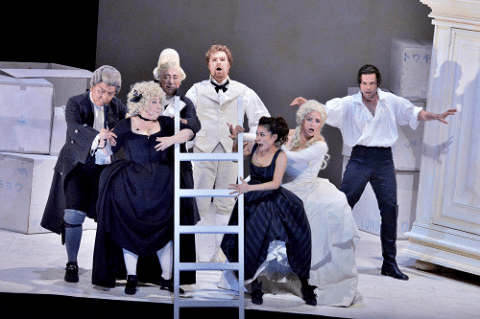
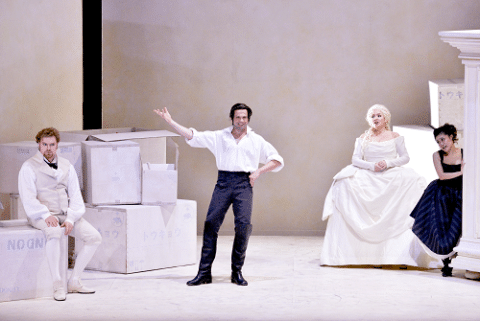
The 2026 production uses Andreas Homoki’s monochrome staging, in which the characters move dynamically around the stage as the established social order gradually becomes less important than the characters’ personal desires and emotions. The New National Theatre describes this production as one of its signature works.
Enjoy Your Event Stress-Free with Japan Travelo
Do you know? Planning events, festivals, concerts, and cultural experiences in Japan can be overwhelming. Japan Travelo brings everything together in one place, helping you manage your itinerary, transport, and accommodation with ease—so you can enjoy Japan without the stress of planning.
The musical programme includes Mozart’s famous overture and a succession of celebrated arias and ensembles. Among the best-known moments are Cherubino’s “Voi che sapete,” Figaro’s “Non più andrai,” and the Countess’s “Porgi, amor” and “Dove sono.”
The 2026 revival is conducted by Tetsuro Saka, who will also personally perform the harpsichord accompaniment for the recitatives, creating a closer connection between the stage action and the orchestral performance.
The principal cast includes Yoshiaki Kimura as Figaro, Shingo Sudo as Count Almaviva, Tamayo Yoshida as the Countess, Kanae Kushima as Susanna and Yuka Yamashita as Cherubino. Several of the featured Japanese singers have established careers connected with Germany and European opera, bringing considerable international experience to the production.
The opera is performed in Italian with both Japanese and English surtitles, making the production accessible to Japanese and international audiences. The planned running time is approximately three hours and 25 minutes including an interval.
Event dates
The 2026 Tokyo production has four performances:
- Sunday, December 6, 2026: 2:00 PM
- Tuesday, December 8, 2026: 2:00 PM
- Thursday, December 10, 2026: 6:00 PM
- Saturday, December 12, 2026: 2:00 PM
The official schedule confirms that there are four performances during the December 6–12 period rather than performances every day. The December 8 performance is eligible for the venue’s childcare service, while December 10 is one of the performances included in the New National Theatre’s 18-and-under free admission programme.
The December 12 performance has a specific seating note: school groups are scheduled to occupy some seats on the second through fourth floors. Visitors choosing that performance should therefore review the latest seating availability before purchasing.
The planned running time is approximately three hours and 25 minutes, including the interval. The exact end time can vary slightly depending on performance conditions.
Visiting this event? Don’t miss out on these amazing activities and local experiences while you’re here.
Venue & performance locations
New National Theatre, Tokyo – Opera Palace
1-1-1 Hon-cho, Shibuya-ku, Tokyo 151-0071, Japan
All four performances take place at the Opera Palace, the main opera theatre of the New National Theatre, Tokyo. The Opera Palace is a purpose-built proscenium theatre designed for opera and ballet and contains four stage areas of the same size: the main stage, rear stage and two side wings. This configuration allows large-scale opera productions to be staged with extensive scenery and rapid scene changes.
The theatre has a total capacity of 1,806 seats:
- First floor: 860 seats
- Second floor: 354 seats
- Third floor: 292 seats
- Fourth floor: 300 seats
Eight additional wheelchair spaces are provided on the first floor.
English and Japanese surtitles are displayed on both sides of the proscenium during opera performances, allowing audiences to follow the Italian-language text while watching the stage action.
The Opera Palace also has an orchestra pit capable of accommodating a full orchestra of up to 120 musicians. This is particularly important for “The Marriage of Figaro,” where the orchestra plays an essential role in supporting the singers and the rapid comic exchanges on stage.
Full programme
The 2026 production presents Mozart’s complete four-act “The Marriage of Figaro.”
The opera follows Figaro and Susanna as they prepare for their wedding while Count Almaviva attempts to interfere with their relationship. The Countess, Susanna, Figaro and Cherubino become involved in a series of schemes, disguises and misunderstandings designed to expose the Count’s behaviour and protect the people around him.
The principal musical highlights include:
- Overture: Mozart’s energetic opening establishes the comic momentum immediately.
- Cherubino’s “Voi che sapete”: One of the opera’s most recognizable melodies, expressing the young page’s confused feelings about love.
- Figaro’s “Non più andrai”: A famous aria in which Figaro teases Cherubino.
- Countess’s “Porgi, amor”: A lyrical opening aria expressing the Countess’s longing.
- Countess’s “Dove sono”: A reflective aria in which she remembers happier times.
- Major ensembles: The opera’s complicated situations frequently develop through large ensemble scenes in which multiple characters sing different musical lines simultaneously.
The production is sung in Italian with Japanese and English surtitles. The programme and cast may be changed because of unavoidable circumstances, so visitors should check the official production page before attending.
Featured productions & performers
Conductor – Tetsuro Saka
Tetsuro Saka leads the Tokyo Philharmonic Orchestra and the New National Theatre Chorus. For this production, Saka will also play the harpsichord accompaniment for the recitatives, an element specifically highlighted by the New National Theatre as part of the musical concept.
Director – Andreas Homoki
Andreas Homoki is responsible for the production direction. His “Marriage of Figaro” staging has been part of the New National Theatre’s repertoire and was previously presented at the theatre in 2021. His approach uses a monochrome stage and highly mobile character direction to emphasize the human relationships at the heart of the comedy.
Figaro – Yoshiaki Kimura
Yoshiaki Kimura takes the title role of Figaro, the clever servant preparing to marry Susanna while becoming increasingly involved in the Count’s schemes.
Count Almaviva – Shingo Sudo
Shingo Sudo plays Count Almaviva, whose attempts to assert his authority over the household become one of the central sources of conflict.
Countess – Tamayo Yoshida
Tamayo Yoshida appears as the Countess, whose emotional and musical journey provides some of the production’s most lyrical moments.
Susanna – Kanae Kushima
Kanae Kushima plays Susanna, Figaro’s bride and one of the cleverest characters in the opera. Her ability to respond quickly to the Count’s schemes is central to the plot.
Cherubino – Yuka Yamashita
Yuka Yamashita portrays Cherubino, the young page whose romantic confusion drives several of the opera’s comic situations.
The supporting cast includes Ikuko Nakajima as Marcellina, Hidekazu Tsumaya as Bartolo, Hideyuki Aochi as Basilio, Yu Mizuno as Don Curzio, Masahiko Hare as Antonio, Yui Nanazawa as Barbarina, and Mari Iwamoto and Akiko Kosakabe as the two daughters.
Shows & performances
The production follows the complete four-act opera rather than presenting selected excerpts. The approximately three-hour-25-minute presentation includes an interval.
Act I
The opening act establishes Figaro and Susanna’s upcoming wedding and immediately introduces the Count’s interest in Susanna. Figaro begins to understand that the Count’s intentions could threaten the wedding, setting the main conflict in motion.
Act II
The Countess becomes increasingly involved in the plan to expose and outwit her husband. Cherubino’s presence adds another layer of confusion, while disguises and mistaken identities begin to drive the comedy.
Act III
The various schemes become increasingly complicated as the characters attempt to control what the others know. The Count and Countess’s troubled marriage becomes more prominent, while Figaro and Susanna work to protect their own future.
Act IV
The final act brings the disguises and misunderstandings toward resolution. The nighttime setting creates further confusion before the characters finally recognize what has happened and the opera reaches its comic conclusion.
Performance schedule
The four performances are scheduled as follows:
December 6: 2:00 PM matinee
December 8: 2:00 PM matinee
December 10: 6:00 PM evening performance
December 12: 2:00 PM matinee
The New National Theatre categorizes these dates within its season ticket and mini-series options. December 6 is presented as a Sunday afternoon performance, December 8 as a weekday matinee, December 10 as an evening performance and December 12 as a Saturday holiday/weekend performance.
The December 10 performance is also the designated performance for the New National Theatre’s 18-and-under free invitation programme. Eligible children born on or after April 2, 2008, and aged 18 or younger on the performance date can apply during the stated application period, subject to availability and the programme’s conditions.
Ticket types
The official ticket categories for “The Marriage of Figaro” are:
- S Seat: Approximately $181
- A Seat: Approximately $153
- B Seat: Approximately $108
- C Seat: Approximately $66
- D Seat: Approximately $45
- Z Seat: Approximately $13
The standard S through D prices are converted from the official published ticket amounts using an approximate exchange rate of ¥158.05 per US dollar. The Z seat is a special low-cost category with extremely restricted visibility.
The New National Theatre warns that Z seats provide little visibility of the stage, while Z “sound only” seats provide no view of the stage. Z seats are therefore primarily intended for visitors who want to experience the live sound at a very low ticket price rather than watch the full production visually.
The venue also offers discounts for selected groups, including students, seniors aged 65 and over, people with disabilities and junior visitors, subject to the relevant requirements.
Ticket release & booking
The ticket sales schedule was structured in several stages.
Advance sales: Club J Atre member advance sales ran from August 22 through September 8, 2026.
New National Theatre Members: Member advance sales also ran from August 23 through September 8.
General sale: General ticket sales began Saturday, September 12, 2026, at 10:00 AM.
Tickets are available through the New National Theatre Box Office, Ticket Pia, ePlus and Lawson Ticket, with additional travel and ticket agencies also handling sales.
Z seats are handled separately and are released on the morning of each performance from 10:00 AM through the New National Theatre Web Box Office and Seven-Eleven ticket terminals. These are first-come, first-served and limited to one ticket per person.
Because availability differs by date and seat category, visitors should check the official seating chart and ticket system before booking.
VIP & premium seating
No separate VIP hospitality package, backstage experience or meet-and-greet has been announced for the 2026 production.
The premium seating structure is based on the five standard categories from S through D, with S providing the highest standard ticket level. Visitors can use the official Opera Palace seating plan to compare locations before purchasing.
For audiences who prioritize the strongest overall view of the stage, central seating in the main auditorium can provide a useful perspective on the full production, particularly because Homoki’s staging uses substantial movement across the monochrome stage.
The theatre also warns that some seats near walls, handrails, balconies and upper levels may have reduced visibility. Visitors should therefore consider the exact seat position rather than selecting only by ticket category.
Event rules
Important admission and performance conditions include:
- Preschool children are not permitted to attend.
- Every audience member, including children, requires a ticket.
- The opera is performed in Italian with Japanese and English surtitles.
- The programme, staff and cast may change because of unavoidable circumstances.
- Tickets are not refundable or exchangeable except when the performance itself is cancelled.
- Some seats may have limited views.
- Z seats have extremely restricted or no stage visibility.
- Visitors should follow theatre instructions concerning mobile phones, photography and recording.
The New National Theatre specifically asks visitors not to bring preschool children and notes that tickets cannot be changed or refunded except in the event of cancellation.
The theatre also recommends checking the latest performance information before visiting because cast and staff changes can occur.
How to get there
The New National Theatre is located at 1-1-1 Hon-cho, Shibuya-ku, Tokyo 151-0071.
The simplest route is from Hatsudai Station on the Keio New Line.
From Shinjuku: Take the Keio New Line one stop from Shinjuku to Hatsudai.
From Hatsudai: The New National Theatre is directly connected to the station. Follow the signs for the New National Theatre and use the Central Exit for the standard route.
Visitors using wheelchairs or requiring a step-free route should use the East Exit at Hatsudai Station, which provides elevator access and a more accessible route toward the theatre.
The venue is also close to Tokyo Opera City, making the surrounding Hatsudai area easy to navigate once visitors arrive at the station.
Public transport & parking
Train: Hatsudai Station on the Keio New Line is directly connected to the New National Theatre. The theatre specifically warns that the regular Keio Line does not stop at Hatsudai; visitors should use the Keio New Line.
Bus: The nearest bus stop is “Shin Kokuritsu Gekijo.” Keio Bus services include routes from Shibuya, while Toei Bus also operates a service serving the area.
Parking: The shared New National Theatre/Tokyo Opera City underground parking facility operates from 7:00 AM to 11:30 PM. The published standard rate is approximately $1.90 per 30 minutes after conversion to USD.
The car park has a maximum vehicle height of 2.1 metres. Dedicated accessible parking spaces are located near elevators on both basement levels. New National Theatre spectators can also receive a parking discount under the theatre’s applicable conditions.
For an evening performance such as December 10, visitors driving should allow additional time for parking and entering the theatre.
Accommodation areas
Shinjuku
Shinjuku is one of the most convenient areas for visitors attending the opera. It has extensive railway connections, a large selection of hotels and direct access to Hatsudai via the Keio New Line.
Nishi-Shinjuku
Nishi-Shinjuku is close to Hatsudai and offers numerous hotels, restaurants and business facilities. It is useful for visitors who want to stay relatively close to the theatre.
Hatsudai
Hatsudai provides the shortest journey to the New National Theatre. Staying nearby can be particularly convenient for visitors attending the evening performance on December 10.
Shibuya
Shibuya is another practical option, particularly for visitors who want to combine the opera with shopping and sightseeing. Bus connections link Shibuya with the New National Theatre area.
For visitors arriving from outside Tokyo, Shinjuku generally provides the broadest combination of accommodation and transportation options.
Dining & refreshments
The New National Theatre complex and surrounding Tokyo Opera City area provide several dining choices before and after performances.
Visitors attending the afternoon performances can have lunch in the Hatsudai, Shinjuku or Tokyo Opera City area before entering the theatre. Those attending the December 10 evening performance can arrange dinner before the 6:00 PM curtain or eat afterward in Shinjuku.
Because the opera lasts approximately three hours and 25 minutes including the interval, visitors should plan refreshments before the performance or use the theatre’s available foyer services where applicable.
The wider Hatsudai and Nishi-Shinjuku districts provide Japanese restaurants, cafés and casual dining options, while Shinjuku offers a substantially larger selection for visitors looking for dinner after the opera.
The interval is also an important part of the visit. Because “The Marriage of Figaro” is a long four-act production, audiences should use the interval for refreshments and facilities rather than waiting until the end of the performance.
Accessibility
The New National Theatre is designed as a barrier-free venue, with slopes, steplifts and elevators throughout the complex.
Wheelchair spaces are available for public performances at the Opera Palace. The venue’s accessibility information normally lists eight wheelchair spaces for the Opera Palace, although the number can change depending on the production.
Visitors using wheelchairs should contact the New National Theatre Box Office when arranging tickets. For New National Theatre-produced performances, wheelchair spaces are available at a special discounted price and one accompanying helper can be admitted free of charge under the applicable conditions.
Accessible toilets are available within the theatre, including wheelchair-friendly facilities and an ostomate facility. Wheelchairs can also be borrowed from the main entrance area, subject to availability.
The venue provides usher assistance for visitors with visual or hearing impairments, and assistance dogs are permitted.
Best performances to attend
December 6
The opening Sunday matinee is a natural choice for visitors who prefer an afternoon performance and want to experience the production at the beginning of its four-performance run.
December 8
The Tuesday matinee is convenient for visitors who prefer a weekday schedule. This performance is also marked as eligible for the New National Theatre’s childcare service, subject to reservation and availability.
December 10
The Thursday evening performance begins at 6:00 PM and is the designated performance for the theatre’s 18-and-under free invitation programme. Eligible young visitors can apply through the official programme during the published application period.
December 12
The Saturday afternoon performance is suitable for visitors who prefer a weekend date. However, some second- through fourth-floor seats are scheduled to be occupied by school groups, so seat availability and location should be checked before booking.
Since the same production and principal cast are scheduled across all four performances, the main differences are the date, time and seat availability rather than a fundamentally different programme.
Previous year’s highlights
The current production has an important connection with the New National Theatre’s earlier staging of “The Marriage of Figaro.” Andreas Homoki’s production was previously presented at the theatre in February 2021, with a different cast and conductor.
The 2021 production was conducted by Ryusuke Numajiri and featured Andreas Homoki as director, Frank Philipp Schlössmann as set designer, Mechthild Seipel as costume designer and Franck Evin as lighting designer. The production featured the New National Theatre Chorus and Tokyo Symphony Orchestra.
The 2026 staging therefore represents a return of an established New National Theatre production rather than a completely new staging. The creative concept remains associated with Homoki’s monochrome visual approach, while the 2026 musical team introduces Tetsuro Saka and the Tokyo Philharmonic Orchestra.
Another useful recent reference is the New National Theatre Opera Studio’s 2025 production of “The Marriage of Figaro.” That separate production was presented in February 2025 at the Playhouse with young singers from the Opera Studio and was designed as a training production rather than the main Opera Palace staging.
The 2026 Opera Palace production is therefore distinct in scale and presentation, using the main theatre, a full orchestra, the New National Theatre Chorus and an established professional production.
Official tickets
General ticket sales for “The Marriage of Figaro” began on September 12, 2026, at 10:00 AM. Advance sales were available to Club J Atre and New National Theatre members during August and early September.
Tickets are distributed through the New National Theatre Box Office, Ticket Pia, ePlus and Lawson Ticket, as well as selected travel and ticket agencies.
Ticket Pia: https://t.pia.jp/pia/event/event.do?eventBundleCd=b2669685
The standard ticket categories range from approximately $45 for D seats to approximately $181 for S seats, while the special Z category is approximately $13. Z seats have extremely limited visibility, and Z “sound only” seats have no view of the stage.
The New National Theatre also offers various discounts and special programmes, including selected student, junior, senior and disability discounts. The December 10 performance additionally participates in the theatre’s 18-and-under free invitation programme.
Location
FAQ
What are the specific age guidelines and entry policies enforced by the venue for this opera production?
Children under school age are strictly prohibited from entering the main auditorium to maintain an undisturbed listening environment for all patrons. This guideline preserves the absolute acoustic silence required for delicate vocal passages and orchestral nuances.
How can ticket buyers inquire about or secure various available discount options for the performances?
Patrons seeking details regarding various seating discounts, student concessions, or senior rates should contact the official box office telephone numbers directly. Venue staff can provide comprehensive guidance on applicable promotional windows and eligibility criteria.
Are program contents, creative staff, and cast members subject to modification prior to show dates?
Performance contents, artistic staff, and cast lineups remain subject to change due to unavoidable operational or health circumstances managed by organizers. Ticket holders are advised to monitor the official venue website for any real-time scheduling updates.
How are ticket purchases processed and fulfilled for performances at the New National Theatre?
Tickets can be secured through authorized online platforms, telephone reservations, or the physical box office counter using standard payment methods. Buyers should carefully review delivery options, including local collection methods or digital ticket issuance.
What steps should attendees take if they require accessibility assistance upon arrival at the venue?
Visitors requiring wheelchair spaces or specific accessibility accommodations should notify the box office ticket desk during the initial booking process. Ushers are readily available on-site to assist patrons with barrier-free entry and elevator navigation.
Can ticket holders transfer or resell their admission vouchers if their personal schedules unexpectedly change?
Ticket holders must adhere strictly to the terms and conditions outlined by the venue regarding ticket transfers and anti-scalping policies. Unauthorized commercial resales or secondary market markups risk immediate invalidation without refund or entry privileges.

Leave a Reply