
-
March 14, 2027
Event date:
-
March 14, 2027
Event end:
What to expect
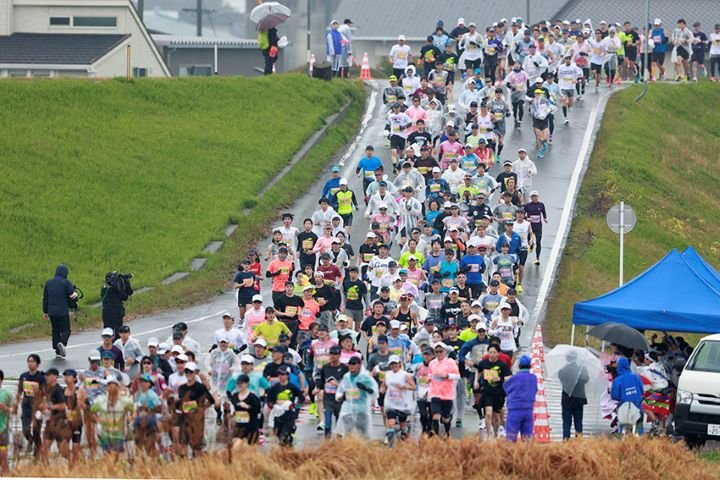
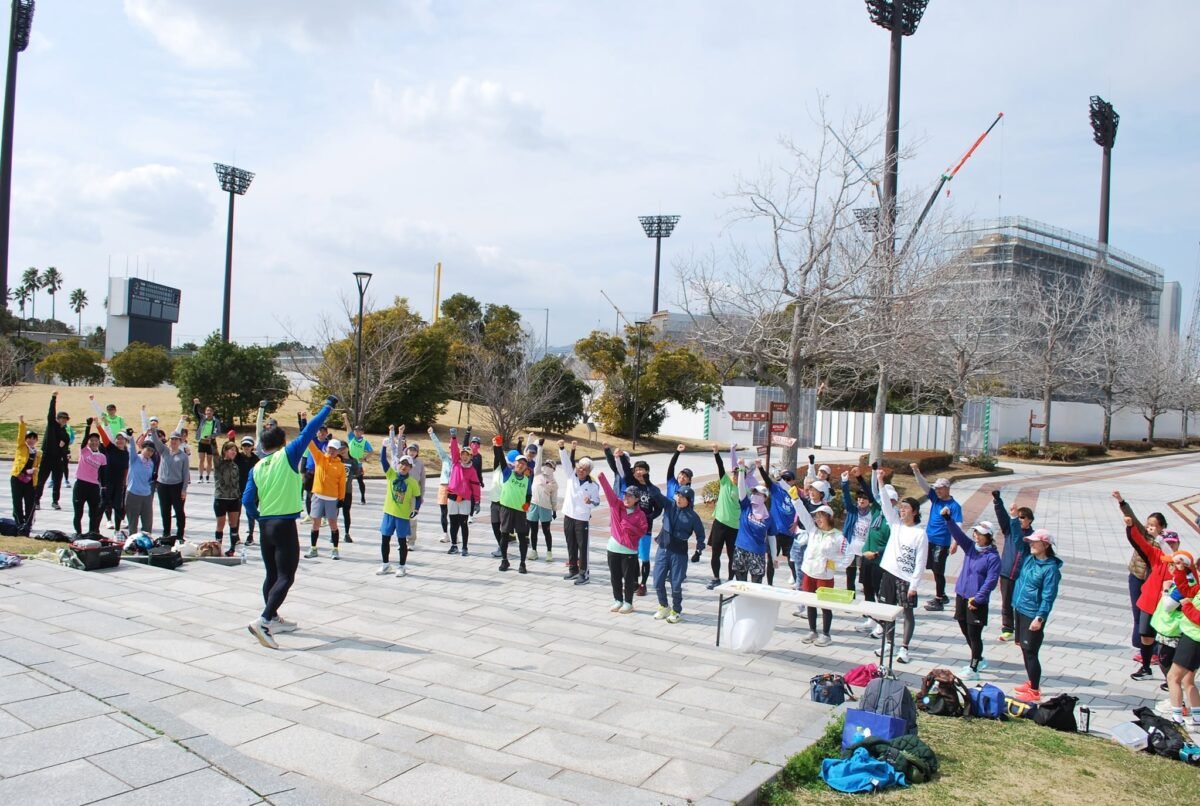
Tokushima Marathon 2027 marks a historic turning point for Shikoku’s largest citizens’ marathon. This edition will be run on a completely renewed course for the first time, replacing the long-used Yoshino River levee route with a more urban, spectator-rich design. Organizers have intentionally cut the wind-exposed embankment sections that made the old course challenging and expanded the city center streets so that every kilometer is supported by local communities.
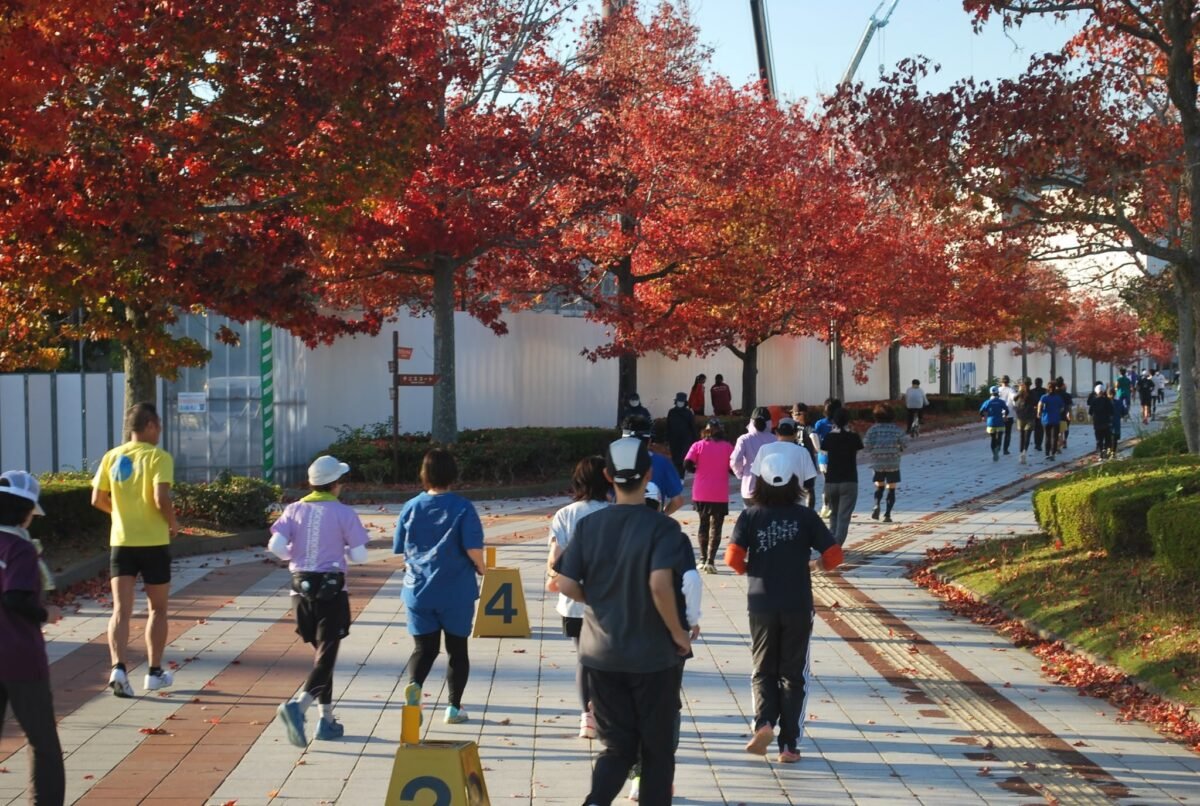
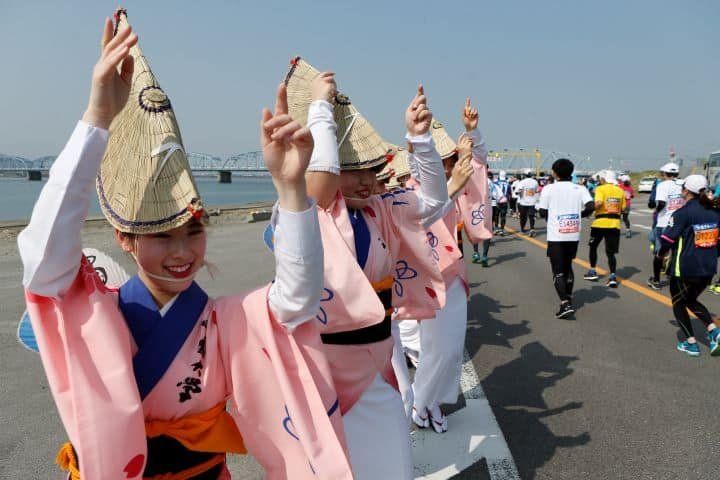
The atmosphere is what sets this marathon apart in Japan. It is officially promoted as a fun-to-run event that blends nature, culture and warm hospitality, and that is exactly how it feels. You will run under the gentle, eyebrow-shaped ridge of Mount Bizan, cross historic bridges over the crystal-clear Yoshino River, and pass spring fields colored by yellow rapeseed blossoms. At 22 official cheer stations, residents gather under the theme of Magic Hour to lift runners with Awa Odori dance, taiko drum performances, Japanese traditional instruments, live bands and local mascot greetings.
For international runners, the event has become increasingly accessible. The previous edition welcomed a record 181 overseas participants, and English entry support, dedicated guides, generous aid and medical services make it one of the most welcoming marathons in Japan for first-time visitors. After finishing, the unique Runner’s Cruise takes you from the finish area back toward the central plaza by free shuttle boat, a calm river ride that many runners describe as their best memory of the day.
Enjoy Your Event Stress-Free with Japan Travelo
Do you know? Planning events, festivals, concerts, and cultural experiences in Japan can be overwhelming. Japan Travelo brings everything together in one place, helping you manage your itinerary, transport, and accommodation with ease—so you can enjoy Japan without the stress of planning.
Match/event dates
Event Dates:
- Tokushima Marathon 2027 Full Marathon: March 14, 2027
- Tokushima Marathon 2027 Challenge Run approx. 2km: March 14, 2027
- Bib Collection and Expo: Day before race, 10:00 AM to 6:00 PM. Race day check-in is not available.
All calendar date information is contained only in this section.
Visiting this event? Don’t miss out on these amazing activities and local experiences while you’re here.
Stadium & sports venue
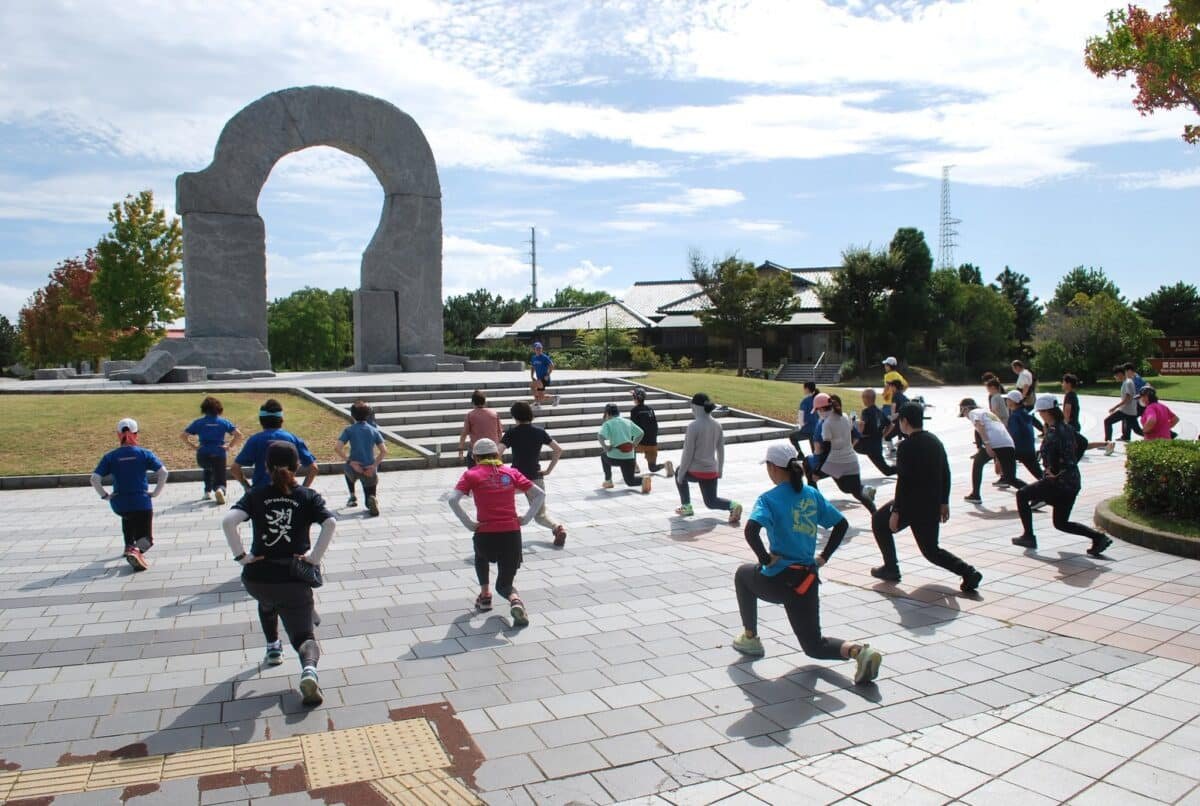
The start and finish venues have been renewed to match the new course concept. The start is set at Tokugin Tomony Arena, located at 6-banchi Tokushimacho Jonai in Tokushima City. This arena is in the heart of the city, close to the traditional start area in front of Tokushima Prefectural Office, and offers wide roads for orderly block staging for 8,500 runners, baggage trucks, warm-up spaces and opening ceremony facilities.
The finish is at Pocari Sweat Stadium in Naruto, Tokushima. Officially named Naruto Otsuka Sports Park Pocari Sweat Stadium, it is a multi-purpose stadium located at 4-mai Muya-cho Tateiwa. It is the home of Tokushima Vortis soccer club, with a capacity of 17,924 seats, a tartan athletics track, and is owned by Tokushima Prefecture. The stadium provides grandstand seating for families, a full recovery zone, medical tents, baggage reclaim, souvenir and local food booths, and direct access to shuttle boat and bus services.
The course itself is point-to-point, road surface, rolling profile, AIMS certified and fully traffic-controlled. The renewal focuses on reducing isolated sections and bringing runners through central commercial and residential areas where support is continuous.
Full fixture or event schedule
The event flows over two days with a clear structure for runners and spectators.
On the day before the race, athlete bib pickup is held at Aibahama Park. This is the only opportunity to collect your bib number, timing chip for single use and event guide. The venue also hosts an expo with sponsor booths, official merchandise, local specialty tastings and tourism information for Mount Bizan Ropeway and Naruto whirlpool cruises.
Race day begins early with opening of start blocks and baggage drop. An opening ceremony is held at the start venue around mid-morning, featuring greetings from organizers and local performances. The Challenge Run approx. 2km starts first, with a relaxed and inclusive atmosphere. After that, the full marathon begins with a staggered wave start system. Athlete category runners including the SS Block start at the very front, followed by general blocks organized by predicted finish times.
Along the course, cut-off points are managed to keep runners safe and roads reopening on schedule. Aid stations with drinks, nutrition, toilets and medical teams are placed at regular intervals. Once you finish at Pocari Sweat Stadium, you receive a finisher medal, e-certificate access, drinks and light nutrition, and can use the free Runner’s Cruise shuttle boat to return toward the central event plaza where stage events and food markets continue into the afternoon.
Teams, athletes & participants
The total field is capped to balance city capacity and runner comfort. For the full marathon, 1,500 spots are reserved for priority allocation for prefectural residents with an address in Tokushima Prefecture, 800 spots for the athlete category for competitive runners, 6,100 spots for the general category, and 100 spots for the hometown tax donation quota. The Challenge Run offers 600 spots in the general category.
Eligibility for the full marathon requires being 18 years or older on race day, excluding high school students at the time of application, and being able to complete within the time limit. For the Challenge Run, participants must be in first grade of elementary school or older, with elementary grades 1 to 3 and daily life wheelchair users required to be accompanied by a guardian aged 18 or older.
The participant mix is very diverse. You will run alongside dedicated citizen runners chasing personal bests, first-time marathoners attracted by the generous limit, sightseeing runners combining racing with travel, international runners from Hong Kong, the United States, Europe and across Asia, and charity runners who entered through the Furusato Nozei hometown tax donation system.
Tournament format & competition structure
Tokushima Marathon is a single-day mass participation road race with two distances offered on the same day. The main distance is the full marathon of 42.195 km, certified for records. The secondary distance is the Challenge Run of approximately 2 km, designed as an inclusive fun run.
The competition structure uses a block start system to ensure smooth flow. The SS Block is the most forward block, reserved for athlete category entrants who can prove a finish within 3 hours on a certified course. The athlete category itself requires a certificate showing under 3 hours 30 minutes for men and under 4 hours for women on a Japan Association of Athletics Federations or AIMS certified course from April 1, 2023 onward. Net times are valid, and past Tokushima Marathon editions from 2024 to 2026 are accepted without additional upload.
General blocks are assigned based on past performance and predicted finish time, regardless of whether the runner is a registered JAAF athlete. The hometown tax donation system adds a community support dimension. Runners donate to Tokushima Prefecture, Tokushima City, Naruto City, Kitajima Town or Aizumi Town, with the condition that donors cannot donate to their own municipality of residence, then complete entry via a dedicated RUNNET link sent by email.
Timing is managed with a single-use chip, results are published online, and web-based certificates are issued. The Challenge Run has no award ceremony or official record measurement, keeping the focus on participation.
Match/event times
Start times are organized to separate short and long distances and to ease congestion.
The Challenge Run starts around mid-morning from the same start zone as the full marathon, with a single cut-off point until one hour after its start. This allows families and children to finish, cheer and then watch the main marathon.
The full marathon opening ceremony is held shortly before the first wave. After the ceremony, waves are released in staggered intervals. The athlete category and SS Block go first, followed by general blocks. This staggered start helps reduce crowding on the early city streets and improves safety.
The time limit for the full marathon is generous, previously 7 hours on the old course and expected to be maintained between 6.5 and 7 hours on the new course, making it friendly for beginners. Aid stations remain open in line with cut-off times, and medical and toilet facilities are available throughout. Final finish line closure marks the end of official timing and shuttle services begin for return.
Ticket types
Ticket types are structured by category and all converted to USD for international understanding.
Full Marathon Ticket: The standard participation fee is $86.67 USD. This fee covers finisher medal for finishers, e-certificate, single-use timing chip, drink stations, nutrition stations, medical assistance, bag drop service and toilet access. This applies to prefectural resident priority, athlete category and general category.
Participation Souvenir: The official original T-shirt is optional for an additional $20.00 USD. Sizes range from XS to XXL, covering height 155 to 190 cm and chest circumference 82 to 113 cm. Size changes are not possible after ordering.
Hometown Tax Donation Ticket: This category requires a donation of $333.33 USD to one of the eligible municipalities, plus an optional $20.00 USD for the souvenir T-shirt and applicable bank transfer fees. The donation alone does not complete entry, a separate RUNNET registration via dedicated URL is required.
Challenge Run Ticket: Entry is free for the approx. 2 km run. Optional participation gift is available for an additional $20.00 USD. This run has no awards ceremony and no official timing ranking, focusing on experience.
Insurance covering death, permanent disability, hospitalization or outpatient treatment due to injury or illness such as heatstroke or dehydration during the competition is included in all tickets.
Ticket release phases
Entry is managed on a first-come, first-served basis and requires a free RUNNET account. Runners should ensure their registered address and personal information are up to date before applying.
The release phases include priority allocation for Tokushima residents, which offers 1,500 spots for those living in the prefecture. The athlete category offers 800 spots and requires uploading a record certificate image in PDF or JPEG format, maximum 10 MB, via My Page Entry History within the deadline notified to applicants. Runners who qualified in Tokushima Marathon 2024, 2025 or 2026 are exempt from uploading.
The general category provides the largest allocation with 6,100 spots and is open to everyone who meets eligibility. The hometown tax donation quota provides 100 spots through the Furusato Nozei system. Applicants first select marathon entry as a return gift on the municipality donation page, complete donation payment, then receive a dedicated entry link to finalize registration.
For overseas runners, two official portals exist. Run Japan offers both full marathon and Challenge Run with English support, while JTB Sports Station offers only the full marathon. Payments by credit card are accepted, with PayPal availability varying by country. Once payment is completed, registration is final, with convenience store payment counted on the day paid at the store and credit card or bank transfer counted on the day procedure is completed.
VIP & hospitality options
While there is no separate paid VIP grandstand, several categories function as hospitality.
The athlete category and SS Block provide front-of-pack hospitality with less congestion, smoother start and ability to run at target pace from the beginning. This is ideal for runners aiming for personal bests.
The hometown tax donation category offers community-based hospitality. Donors receive local return gifts from their chosen municipality in addition to guaranteed entry, supporting local revitalization while enjoying the race.
Official tour packages provide hospitality for international and domestic travelers. Based on previous editions listed on World’s Marathons, basic packages including entry support and 2-night hotel stay with breakfast start from around $382.91 USD, while premium packages with guaranteed entry, better hotel locations and assistance services are around $659.57 USD. These packages often include early breakfast on race day, collection support and late check-out.
At Pocari Sweat Stadium, family and supporters can enjoy grandstand viewing, heated rest areas and a food court featuring Tokushima specialties. The free Runner’s Cruise boat shuttle for finishers is itself a premium hospitality experience, offering scenic river views and a relaxing return.
Stadium & event rules
Event rules are designed for safety and fairness and must be agreed to during entry.
Proxy participation or transfer of rights is not permitted. False declarations of age, gender or substitution of another runner will lead to disqualification, revocation of awards and possible ban from future editions. Organizers assume no responsibility for medical assistance or refunds in such cases.
Health and training are the runner’s responsibility. Participation is limited to those without heart disease or other serious illnesses, who are in good health and have trained sufficiently. During the race, runners must immediately follow instructions from organizers to stop if continuation is deemed dangerous.
Cancellation and refund policy states that changes or cancellations after registration are not permitted and no refunds are given for personal reasons such as illness or absence. In case of reduction or cancellation due to earthquakes, floods, heavy snowfall, incidents, accidents or illness, organizers will decide case by case whether to refund and the amount after deducting expenses incurred.
Personal information including names, ages, genders, records and portraits may be used in newspapers, television, magazines, internet, brochures and official videos. Rights to publish belong to organizers. Use of tournament footage by third parties without permission, including distribution on the internet, is prohibited. Only web-based certificates are issued, no paper certificates.
Wheelchair users are not permitted in the full marathon, but daily life wheelchair users including caregivers may participate in the Challenge Run. Individuals with disabilities who have difficulty running alone may be accompanied by one guide, guide dogs not permitted, and this must be indicated on the entry form.
How to get there
Access to Tokushima is straightforward for domestic and international visitors.
By air, Tokushima Awaodori Airport is only about 30 minutes by car from central Tokushima City, with direct flights from Tokyo Haneda and Fukuoka. Airport limousine buses connect to JR Tokushima Station. From Kansai International Airport, you can take a limousine bus to Osaka and then a highway bus to Tokushima in about 2.5 to 3 hours, or transfer to a domestic flight.
By train, JR Tokushima Station is the main hub. The start area near Tokugin Tomony Arena and bib pickup at Aibahama Park are a short walk from JR Awa-Tomida Station and easily reachable from Tokushima Station. For the finish area in Naruto, take the JR Naruto Line to Muya Station and a short bus to Naruto Otsuka Sports Park.
By car, the start is about 5 km from Tokushima IC on the Tokushima Expressway. However, road closures on race day make public transport strongly recommended.
Public transport & parking
Public transport is the recommended option for both runners and spectators.
To the start, city buses increase frequency on race morning, and walking from nearby stations is easy. Between the start in Tokushima City and the finish in Naruto, regular buses operate, but for finishers the organizer provides free shuttle boats and buses from Pocari Sweat Stadium back toward the central event plaza, which also helps avoid traffic.
Parking requires prior application and is limited. After the entry deadline, applications open from noon on a designated date via the tournament website, allocated first-come first-served. Designated lots include the former school for the deaf site at 2-104-1 Nakatokushima-cho in Tokushima City, Yoshino River South Bank at Otsubo Kamijonincho, Boat Race Naruto Parking Lot at 48-1 Nukuiwahama Okushima Muya-cho in Naruto City, and Naruto City Hall Parking Lot at 170 Higashihama Minamihama Muya-cho.
A small parking fee of around $3.67 USD may apply in some lots. Due to limited spaces and closures, runners are encouraged to use trains and buses or official shuttles.
Accommodation areas
Choosing where to stay depends on your race plan.
Tokushima City Center is ideal for pre-race. Hotels around JR Tokushima Station put you within walking distance of bib pickup at Aibahama Park, the start at Tokugin Tomony Arena and the central event plaza. Budget business hotels start around $60 USD per night, mid-range around $100 to $150 USD.
The Naruto area near the finish is convenient post-race and for sightseeing. Resort hotels near Naruto Otsuka Sports Park are close to Pocari Sweat Stadium, the Otsuka Museum of Art and boat tours for Naruto whirlpools. This area is quieter and good for extended stays.
The airport area offers options for late arrivals or early departures.
Accommodation fills quickly because 8,500 runners plus families and supporters visit at once. Booking through official travel partners like JTB and Run Japan is recommended, as their packages often include 2 nights with breakfast, early race day breakfast and late check-out options. Many runners extend their stay to enjoy the Mount Bizan Ropeway, Awa Odori Kaikan museum and local hot springs.
Food & drink at the venue
On the course, aid is well organized. Drink stations offer water and Pocari Sweat sports drink, reflecting the title sponsor of the finish stadium. Nutrition stations provide bananas, breads, salt candies and occasionally local specialties. Toilets and medical points are placed at regular intervals.
At the event plaza and finish stadium, the food experience is a highlight. You will find Awa-odori chicken oyakodon rice bowls, Tokushima ramen with rich pork and soy broth, sudachi citrus drinks made from Tokushima’s famous citrus, sweet potato confectionery and other Shikoku specialties. Food trucks offer Japanese festival staples, warm soups and coffee.
For international runners, rice-based dishes are widely available and generally suitable for various diets. Vegetarian options are more limited but can be found at the expo and nearby restaurants with English menus. Finisher area provides free drinks and light snacks, plus official souvenir shops selling Awa Odori themed goods and marathon apparel.
Accessibility
The renewed course improves accessibility by reducing isolated levee sections and keeping runners in urban areas with better access to support.
The Challenge Run is designed for inclusion. Daily life wheelchair users including caregivers can participate, and children from first grade of elementary school can join, with grades 1 to 3 requiring a guardian aged 18 or older. The emphasis is on experiencing the marathon atmosphere rather than competition.
Both venues, Tokugin Tomony Arena and Pocari Sweat Stadium, have barrier-free toilets, accessible seating and medical tents with staff assistance. Shuttle boats have staff to assist boarding.
For runners with disabilities who have difficulty running independently, one guide is permitted per participant, with prior indication on the entry form. Guide dogs are not allowed on the course. For specific needs, contacting the organizer via the official entry email is advised. English entry support and dedicated guides for overseas participants also improve accessibility for international visitors.
Best matches/events to attend
The full marathon is the core event and best for anyone wanting an AIMS certified, scenic yet fast marathon with exceptional cultural support. It suits first-time marathoners thanks to its flat profile and generous limit, and also suits competitive runners using the athlete category and SS Block to chase personal bests.
The Challenge Run approx. 2km is best for families, children aged 7 and up, beginners and supporters who want to feel the real marathon atmosphere. Starting from the same location as the main race, it offers a taste of the event without the distance, and its free entry makes it very accessible.
For spectators, the 22 cheer stations are the best places to experience Tokushima’s hospitality, with Awa Odori dancing, taiko and live music turning fatigue into smiles. The expo and Character Road debut, where local mascots greet attendees, are best for families and photographers. The Runner’s Cruise shuttle boat after finishing is consistently rated as a unique highlight and is not to be missed.
Previous year’s highlights
The 2026 edition was the last run on the current course, with 8,500 runners sprinting through the spring Awa-road along Yoshino River from in front of Tokushima Prefectural Office to Tamiya Athletic Stadium. Organizers and runners celebrated the history of the old course before the renewal.
The 2025 edition set a new record with 181 international runners from Hong Kong, the United States and other countries. The course was praised for its flat, enjoyable layout along Yoshino River, with yellow rapeseed blossoms lining the route and 22 cheer stations featuring musical instruments and Awa Odori. New attractions included the debut of Tokushima Character Road and expanded scale of Awa Odori performances, adding vibrancy.
Across recent years, common highlights include the amazing spectator support motto of Magic Hour, the post-finish boat cruise, the warm local cheers and specialties like Awa-odori chicken, and many runners noting they felt completely safe and supported. The event has also seen invited Kenyan athletes and competitive performances due to its fast profile.
Official tickets
Official entry should only be purchased through authorized channels to avoid issues.
Domestic runners should use RUNNET via the official website en.tokushima-marathon.jp. International runners should use Run Japan for both full marathon and Challenge Run or JTB Sports Station for full marathon only. Both provide English guidance and secure payment. A free RUNNET account is required.
Pricing in USD based on official fees is $86.67 USD for full marathon participation, $20.00 USD optional for the original T-shirt souvenir, $333.33 USD donation plus $20.00 USD optional souvenir for hometown tax donation quota, and free entry for Challenge Run with $20.00 USD optional gift. These conversions are based on 13,000 yen, 3,000 yen and 50,000 yen.
Tour operators listing packages from around $382.91 USD to $659.57 USD include hotel and entry assistance but always verify that entry is included. For any entry questions, use the official contact channels listed on en.tokushima-marathon.jp.
Video
Location
FAQ
What makes the new 2027 course different from previous years?
The 2027 course is the first renewal in many years, shifting from a long, wind-exposed Yoshino River embankment route to a more urban design. Starting at Tokugin Tomony Arena and finishing at Pocari Sweat Stadium in Naruto, it reduces isolated levee sections and expands city streets to increase crowd support. It remains AIMS certified and rolling, with improved spectator access and 22 official cheer stations.
How does the athlete category and SS Block work?
The athlete category allows regularly training runners aiming for personal bests to start from front blocks. Qualification requires a certificate from April 1, 2023 onward on a JAAF or AIMS certified course showing under 3 hours 30 minutes for men and under 4 hours for women. Those within 3 hours who register in this category and upload their certificate can start from the very front SS Block, ensuring a smooth start.
Can overseas runners easily join and what support is provided?
Yes, overseas runners are welcomed with English-language online entry via Run Japan and JTB Sports Station, dedicated guides and English information at the expo. Bib pickup is at Aibahama Park the day before, with no race day pickup, so early arrival is needed. The course offers generous water, nutrition, toilet and medical support, and the city is only 30 minutes from Tokushima Awaodori Airport and accessible from JR Tokushima Station.
What are the parking and transport recommendations for race day?
Public transport is strongly recommended due to road closures. JR Awa-Tomida Station is a short walk to the start and bib pickup, while buses connect Tokushima City to Naruto finish area. Finishers can use the free Runner's Cruise shuttle boat and bus back to the central plaza. Parking requires prior application after entry deadline and is limited to four designated lots, allocated first-come first-served.
Is the marathon suitable for beginners and families?
The marathon is known for being beginner friendly due to minimal elevation changes, a flat and rolling profile and a generous time limit. Extensive aid, medical and toilet support helps first-timers finish comfortably. The Challenge Run of approximately 2 km is free and designed for children from age 7, families and daily life wheelchair users, with no awards ceremony or record pressure, allowing everyone to experience the real marathon atmosphere.

Leave a Reply