
-
November 8, 2026
Event date:
-
November 8, 2026
Event end:
What to expect in 2026
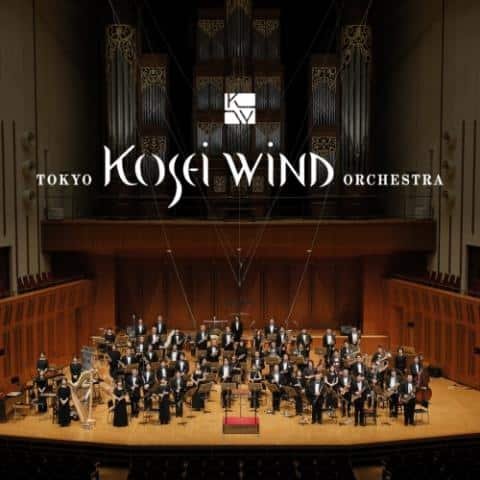
The Tokyo Kosei Wind Orchestra will present its 176th Regular Concert on Sunday, November 8, 2026, at the Tokyo Metropolitan Theatre Concert Hall in Ikebukuro, Tokyo. The programme forms part of the orchestra’s ongoing “Maslanka Cycle Vol. 5,” with Resident Conductor Takeshi Oi leading an afternoon performance built around Toshio Mashima, Itaru Sakai and David Maslanka.
The concert combines three works with distinctly different musical personalities. Toshio Mashima’s Quiet Call opens the programme, followed by Itaru Sakai’s Timpani Concerto featuring Tokyo Kosei Wind Orchestra percussionist Yuki Sakamoto as soloist. The second half is devoted to David Maslanka’s Symphony No. 8, the central work of this fifth stage of the orchestra’s Maslanka cycle.
The concert also places two members of the orchestra in the spotlight. Trombonist Takeshi Imamura is the featured soloist for Quiet Call, while timpanist Yuki Sakamoto performs Sakai’s Timpani Concerto. The orchestra’s own programme notes describe the concert as bringing together two concertos and highlighting the individual colours and possibilities of the featured instruments.
Enjoy Your Event Stress-Free with Japan Travelo
Do you know? Planning events, festivals, concerts, and cultural experiences in Japan can be overwhelming. Japan Travelo brings everything together in one place, helping you manage your itinerary, transport, and accommodation with ease—so you can enjoy Japan without the stress of planning.
Maslanka’s Symphony No. 8 provides the major closing work. According to the composer’s programme notes published by the Tokyo Kosei Wind Orchestra, the symphony is concerned with themes including continuity, hope, faith, joy and the creative force of life. The work incorporates references to older sacred musical traditions, including material connected with Maslanka’s Mass and traditional chorale and hymn melodies.
The concert is therefore particularly suited to listeners interested in modern wind-band repertoire, large-scale symphonic works for wind orchestra, percussion and brass soloists, and the continuing development of the Maslanka Cycle.
Event dates
The 176th Regular Concert takes place on Sunday, November 8, 2026.
Date: November 8, 2026
Day: Sunday
Doors open: 1:00 PM
Concert starts: 2:00 PM
Venue: Tokyo Metropolitan Theatre Concert Hall
City: Tokyo, Japan
The official Tokyo Kosei Wind Orchestra schedule confirms the 1:00 PM opening time and 2:00 PM performance start.
The orchestra notes that performers, programme details and performance times may change because of unavoidable circumstances, so visitors should check the latest information before travelling.
Visiting this event? Don’t miss out on these amazing activities and local experiences while you’re here.
Venue & festival site
The performance will be held at the Concert Hall of Tokyo Metropolitan Theatre, one of Tokyo’s major dedicated performing-arts venues.
Tokyo Metropolitan Theatre Concert Hall
1-8-1 Nishi-Ikebukuro, Toshima-ku, Tokyo 171-0021, Japan
The Concert Hall accommodates 1,999 people and features an open stage with a large pipe organ positioned centrally at the rear of the stage. The hall is designed primarily for musical performance and provides a substantial acoustic environment for orchestral and wind-ensemble concerts.
The building is located directly beside Ikebukuro Station, making it particularly convenient for visitors travelling from other parts of Tokyo.
This is a single indoor concert rather than an outdoor festival. There are no separate festival grounds, camping areas or outdoor stages associated with the event.
Full lineup
The announced lineup consists of the Tokyo Kosei Wind Orchestra and the featured artistic team.
- Tokyo Kosei Wind Orchestra
- Takeshi Oi — Resident Conductor
- Takeshi Imamura — Trombone
- Yuki Sakamoto — Timpani
Takeshi Oi serves as the resident conductor and leads the complete programme. Takeshi Imamura is the trombone soloist associated with Quiet Call, while Yuki Sakamoto is the timpani soloist for Itaru Sakai’s Timpani Concerto.
The orchestra’s official announcement does not list additional guest ensembles or guest performers for this concert.
Headliners & featured artists
Takeshi Oi
Takeshi Oi is the Tokyo Kosei Wind Orchestra’s Resident Conductor and will conduct the 176th Regular Concert. He is responsible for guiding the orchestra through the contrasting musical styles of Mashima, Sakai and Maslanka.
Takeshi Imamura
Takeshi Imamura is the featured trombone soloist. His appearance is connected to Toshio Mashima’s Quiet Call, giving the opening work an individual solo voice within the larger wind-orchestra sound.
Yuki Sakamoto
Yuki Sakamoto is the featured timpani soloist in Itaru Sakai’s Timpani Concerto. The concert’s official commentary highlights the unusual opportunity to focus closely on percussion and the expressive possibilities of the timpani within a concerto setting.
Tokyo Kosei Wind Orchestra
The Tokyo Kosei Wind Orchestra is the principal performing ensemble throughout the concert. The programme is structured so that the orchestra supports the two featured soloists before taking on the large-scale Symphony No. 8 by David Maslanka.
Stages & performance areas
This is a single-stage concert, so there are no multiple festival stages or separate performance areas.
Concert Hall stage
The entire programme takes place on the main stage of the Tokyo Metropolitan Theatre Concert Hall. The hall’s open-stage configuration is particularly appropriate for a large wind orchestra, allowing the ensemble to occupy a substantial performance area.
Soloist performance area
During Quiet Call, the trombone part performed by Takeshi Imamura will provide a featured solo voice within the orchestra. During Timpani Concerto, Yuki Sakamoto will take the spotlight as the principal soloist.
Symphonic performance
Maslanka’s Symphony No. 8 forms the large-scale concluding portion of the concert, bringing the complete wind orchestra together for the final work.
Stage-by-stage schedule
Because this is a traditional concert rather than a multi-stage festival, there is one principal performance area.
Main Concert Hall
The programme begins with Toshio Mashima’s Quiet Call, followed by Itaru Sakai’s Timpani Concerto. The concert then moves to David Maslanka’s Symphony No. 8.
The official programme does not currently publish an exact minute-by-minute running order beyond the listed sequence of works. The orchestra also states that programme and performance times may change.
The Maslanka work is expected to provide the main large-scale symphonic experience of the afternoon. The composer’s notes describe Symphony No. 8 as a three-movement work with a broad, panoramic musical design and recurring connections to older sacred musical material.
Set times
The confirmed public schedule is:
- 1:00 PM — Doors open
- 2:00 PM — Concert begins
- End time — Not officially specified
The orchestra has not published a definitive end time for the performance. Because the programme includes three substantial works, visitors should avoid making tight onward travel arrangements immediately after the concert.
The organisers specifically note that performance times can change.
Ticket types
The 176th Regular Concert uses reserved seating, with five standard ticket categories.
S Seat: approximately $41.53
A Seat: approximately $31.95
B Seat: approximately $25.56
C Seat: approximately $19.17
U25: approximately $15.97
The prices are converted from the official ticket prices using an approximate exchange rate of ¥156.50 to US$1. The official prices are ¥6,500 for S seats, ¥5,000 for A seats, ¥4,000 for B seats, ¥3,000 for C seats and ¥2,500 for U25. All seats are reserved and the listed prices include tax.
The U25 category is available to people aged 25 or younger. An age-identification document must be presented on the performance day.
Same-day tickets are subject to an additional approximately $3.19 for the regular categories, while the U25 category is excluded from this same-day increase.
VIP & premium options
No VIP package, backstage pass, meet-and-greet or hospitality package has been announced for the 176th Regular Concert.
The closest equivalent to premium seating is the S-seat category, which is the highest standard reserved seating tier listed by the orchestra. The event does not advertise a separate VIP experience.
The orchestra also offers season subscription tickets for its 2026–27 regular-concert season. These allow subscribers to retain the same seat across the relevant regular concerts, subject to the subscription terms.
Event rules
Several important conditions apply to the concert.
Age restriction: Children under school age are not permitted to enter this performance.
Reserved seating: All seats are assigned, so visitors should sit in the seat shown on their ticket.
U25 identification: Visitors using a U25 ticket must bring documentation proving their age.
Changes: Performers, programme and performance times may be changed when necessary.
Cancellations: Tickets cannot generally be changed or cancelled after purchase. The orchestra states that refunds are not available except when the performance itself is cancelled.
Concert etiquette: Audience members should silence mobile devices and avoid activities that could disturb performers or other listeners.
Recording: Photography, video and audio recording should only be carried out when permitted by the organisers and venue.
How to get there
Tokyo Metropolitan Theatre is located in Nishi-Ikebukuro, Toshima-ku, immediately beside Ikebukuro Station.
The venue is approximately a two-minute walk from the West Exit of Ikebukuro Station. It is served by JR lines, Tokyo Metro lines, the Tobu Tojo Line and the Seibu Ikebukuro Line.
The theatre is also directly connected to Exit 2b of Ikebukuro Station’s underground passage, providing a convenient option in poor weather.
For visitors travelling across Tokyo, the theatre’s official access information gives approximate rail travel times of eight minutes from Shinjuku, 15 minutes from Shibuya, 16 minutes from Tokyo Station and 28 minutes from Shinagawa.
Public transport & parking
Train
Ikebukuro Station is the primary transport hub for the concert. JR, Tokyo Metro, Tobu and Seibu services all serve the station, giving visitors numerous routes from different parts of Tokyo.
Underground access
The theatre is connected to Exit 2b of the underground passage at the West Exit. The accessible route includes a wheelchair lift, which can be accessed with assistance from station security or theatre staff.
Parking
Tokyo Metropolitan Theatre operates a toll parking facility with approximately 100 flat parking spaces. The garage operates from 7:00 AM until midnight, with final entry at 11:30 PM.
The standard parking charge is approximately $1.98 per 30 minutes, converted from ¥310. The maximum daily charge is approximately $15.97, converted from ¥2,500. Vehicle restrictions include a maximum height of 2.1 metres, width of 1.9 metres and length of 6 metres.
Because the theatre is next to a major railway station, public transportation is a practical alternative to driving.
Accommodation areas
Ikebukuro
Ikebukuro is the most convenient area for visitors attending the concert because the theatre is only a short walk from the station. Staying nearby also provides access to restaurants, shopping and multiple railway connections.
Shinjuku
Shinjuku offers a large selection of hotels and is directly connected to Ikebukuro by rail. The theatre’s official access information places the journey from Shinjuku at approximately eight minutes by train.
Shibuya
Shibuya is another practical choice for visitors who want to combine the concert with sightseeing in western-central Tokyo. The journey to Ikebukuro is approximately 15 minutes by rail according to the theatre’s access information.
Tokyo Station area
Visitors arriving through Tokyo Station can also stay around Marunouchi or Tokyo Station and travel to Ikebukuro by rail. The theatre estimates approximately 16 minutes between Tokyo Station and Ikebukuro.
Food & drink
The Tokyo Metropolitan Theatre complex includes visitor facilities such as cafés, snacks and restaurants, making it possible to find refreshments within the building or immediately around the theatre.
Ikebukuro itself has a particularly large selection of restaurants, cafés, department-store dining areas and casual food options. Visitors arriving early can therefore plan lunch or an early afternoon meal before the 2:00 PM concert.
Because doors open at 1:00 PM, allowing time for a meal before entering the hall can make the visit more comfortable. Visitors should follow the theatre’s rules regarding food and drinks inside the auditorium.
For audiences staying after the performance, Ikebukuro’s surrounding commercial area provides many options for dinner without requiring another long journey.
Accessibility
Tokyo Metropolitan Theatre provides a range of accessibility facilities.
The Concert Hall has eight designated wheelchair spaces. The theatre notes that the exact number available for an individual performance can vary, so wheelchair users should contact the organiser before purchasing or attending.
The building also provides wheelchair-accessible toilets, elevators, courtesy wheelchairs and accessible routes from the underground station connection. Assistance dogs are permitted inside the building and performance halls.
The theatre’s visitor-support facilities also include hearing-loop services for selected performances and support for visitors with hearing or visual impairments, depending on the specific programme.
Visitors requiring accessible seating should make arrangements in advance because wheelchair spaces are limited.
Best days to attend
The 176th Regular Concert is a single-day event, taking place only on Sunday, November 8, 2026.
The Sunday afternoon schedule is convenient for visitors who want to make the concert part of a weekend Tokyo itinerary. Doors open at 1:00 PM and the performance begins at 2:00 PM, leaving time for visitors to have lunch before entering the theatre.
For visitors particularly interested in the Maslanka Cycle, this concert represents Vol. 5 of the series and features Symphony No. 8 as its principal large-scale work. The orchestra describes this point in the cycle as moving into the latter half of its exploration of Maslanka’s symphonies.
Previous year’s highlights
The closest comparable previous-year regular concert was the Tokyo Kosei Wind Orchestra’s 171st Regular Concert, held on November 23, 2025, at Tokyo Metropolitan Theatre Concert Hall. That performance was conducted by Douglas Bostock and featured works by Ralph Vaughan Williams, Gustav Holst, Gordon Jacob, Guy Woolfenden and Philip Sparke.
The 171st concert included Flourish by Vaughan Williams, Hammersmith: Prelude and Scherzo by Holst, William Byrd Suite by Jacob, Firedance by Woolfenden and Philip Sparke’s Symphony No. 3 “Color Symphony.”
This previous concert provides useful context for the regular-concert format: a full wind-orchestra programme presented in Tokyo Metropolitan Theatre’s Concert Hall, with a major symphonic wind-band work forming an important part of the programme.
The 176th concert differs in musical focus by placing the Maslanka Cycle at its centre and adding two featured orchestra-member soloists.
Official tickets
Tickets for the 176th Regular Concert are available through the Tokyo Kosei Wind Orchestra’s official ticket service and authorised ticketing outlets.
Official Tokyo Kosei Wind Orchestra concert page:
https://t.pia.jp/pia/event/event.do?eventCd=2624973
The orchestra lists Ticket Pia, Lawson Ticket, e+, and the Tokyo Metropolitan Theatre Box Office among the official playguide options.
General ticket sales began on July 29, 2026, following the member advance period that began on July 22.
Visitors should use the orchestra’s official concert page to confirm the latest availability, seating information, programme changes and any announcements issued before the performance.
Location
FAQ
What major ongoing concert series does the Tokyo Kosei Wind Orchestra 176th Regular Concert feature?
The concert represents the fifth volume of the ensemble's celebrated Maslanka Cycle. It highlights major symphonic wind works composed by David Maslanka alongside complementary contemporary pieces.
Who serves as the conductor leading the orchestra for this November subscription event?
Resident Conductor Takeshi Oi leads the ensemble from the podium. His visionary direction ensures precise execution and deep emotional resonance across the challenging repertoire.
Who are the featured guest soloists performing featured concertos during the afternoon?
The concert features Takeshi Imamura on the trombone and Yuki Sakamoto on the timpani as guest soloists. They deliver virtuosic performances on works by Toshio Mashima and Itaru Sakai.
Are children under school age permitted to enter the Tokyo Metropolitan Theatre Concert Hall?
Children under school age are strictly prohibited from entering the concert hall for this subscription event. This standard venue rule ensures a focused, undisturbed listening environment for all patrons.
What major symphonic masterpiece anchors the second half of the concert program?
David Maslanka’s monumental Symphony No. 8 serves as the massive structural centerpiece of the afternoon. The work tests the absolute expressive limits of the full symphonic wind orchestra.
How can classical music enthusiasts secure their tickets for this Tokyo engagement?
Tickets can be purchased through official online ticketing platforms, authorized playguides, and venue boxes. Early booking is strongly advised due to high demand among loyal subscription followers.

Leave a Reply