
-
January 15, 2027
Event date:
-
January 15, 2027
Event end:
Overview
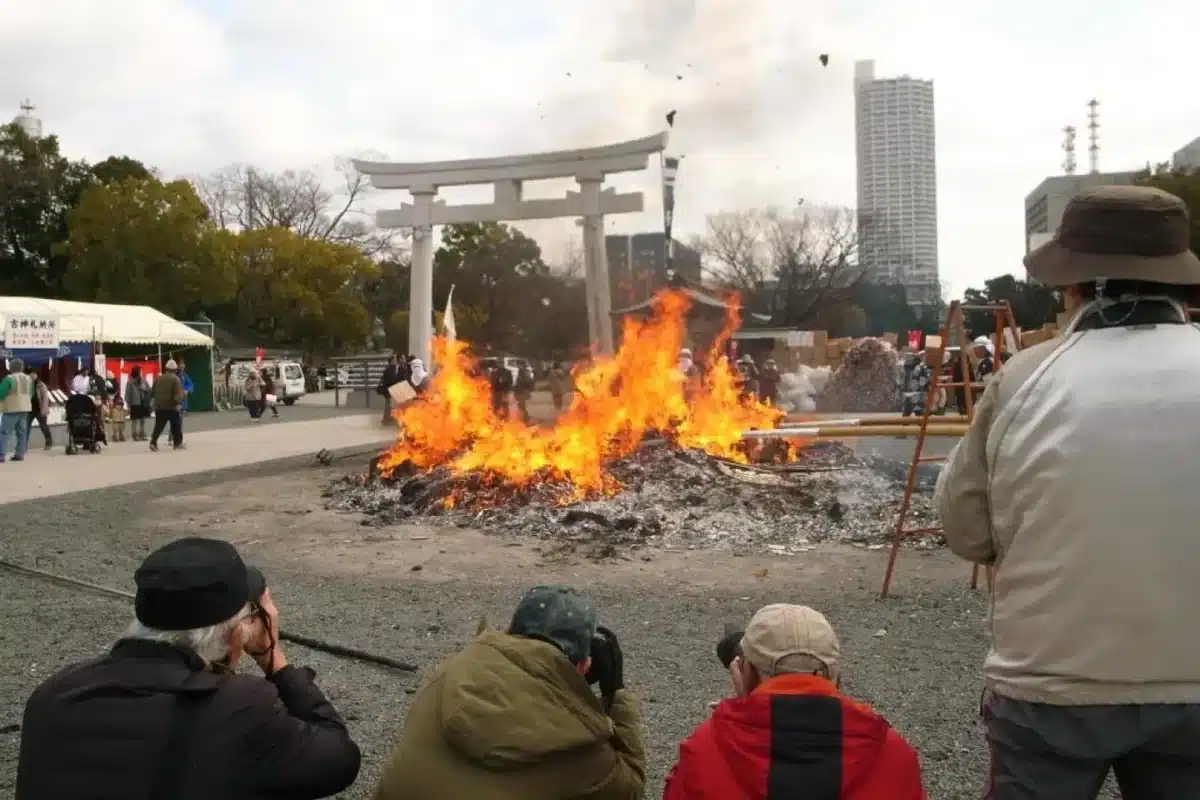
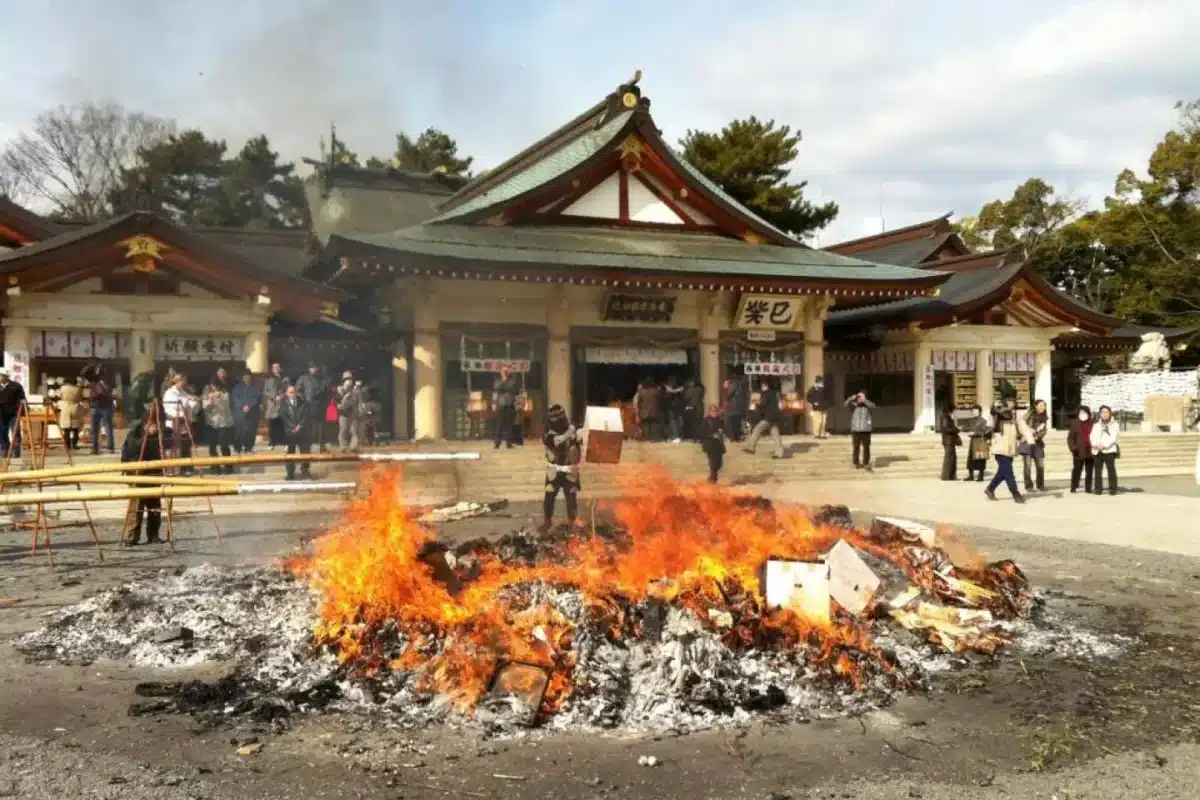
In mid-January, dramatic bonfire festivals are held at shrines all across Japan. The previous year’s talismans, ceremonial arrows, and lucky charms are burnt and people pray for good fortune in the year to come. In Hiroshima, these festivals are known as Tondo-matsuri and the Gokoku Shrine in Hiroshima city holds an impressive one every year on January 15th.
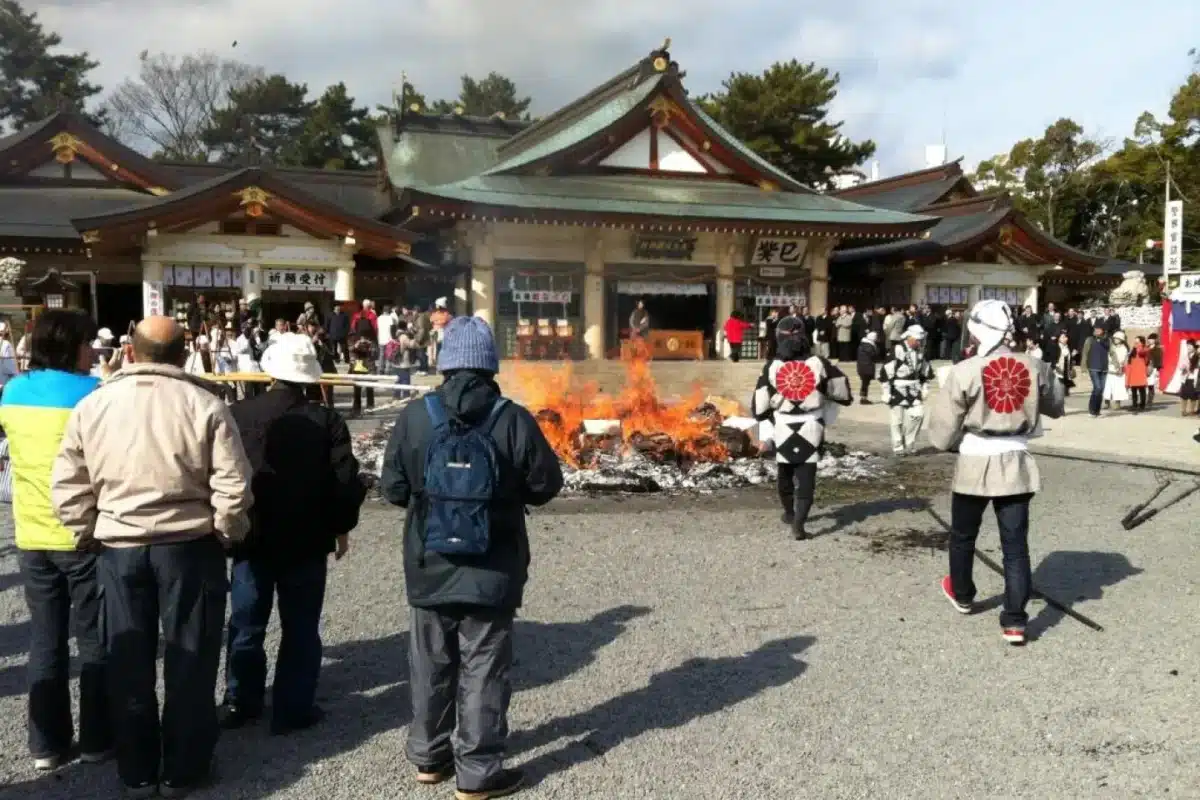
You can hear the cheers of onlookers and the snap, crackle, pop of the bamboo as it is set alight, flames rising above the rooftops. In ritual fashion, everyone gathers in a circle around the fire to watch, snapping photos furiously, gobbling up grilled mochi, and praying for a fortuitous year ahead.
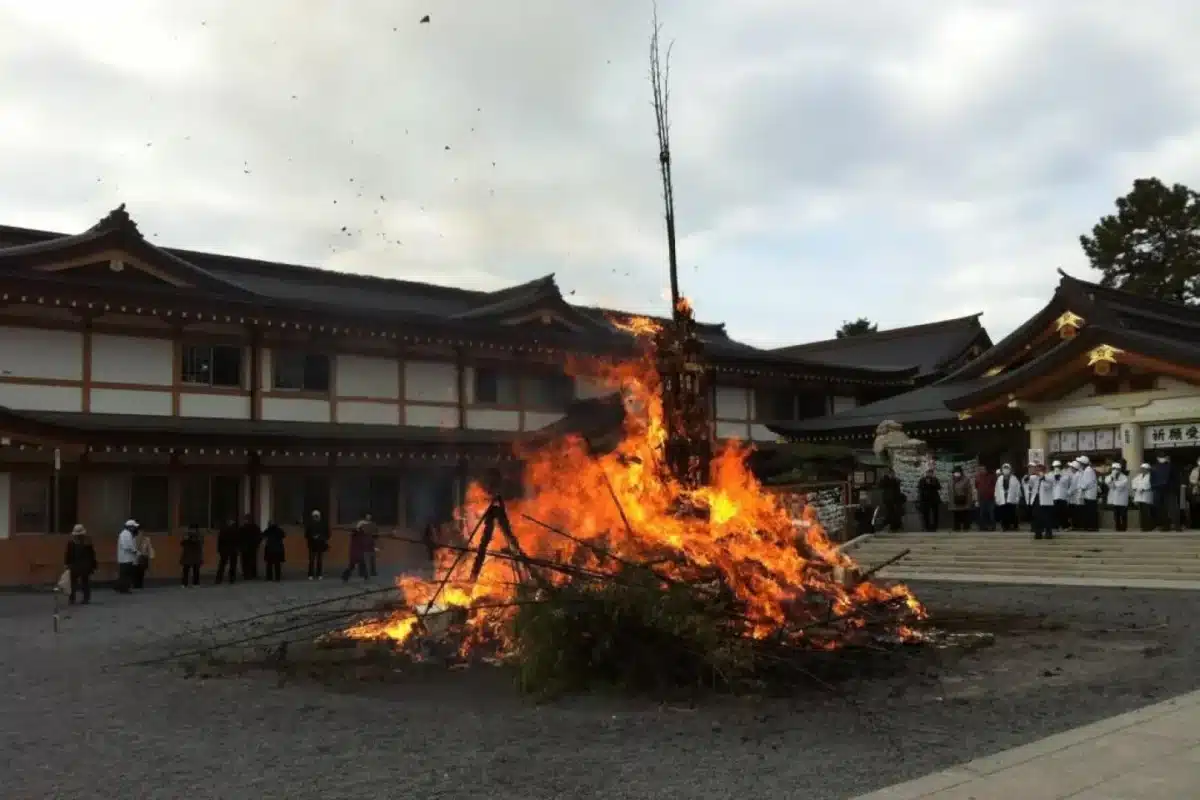
Tondo is always an impressive affair, but driving snow in some years made for even more memorable, if chilly, experience. The huge, carefully constructed bonfire of bamboo on which the previous year’s lucky talismans would be burnt stands in shrine’s forecourt. Maiko shrine maidens shelter priests with umbrellas during ceremonial lighting of bonfire. Lucky talismans, their job now done, go up in smoke.
Enjoy Your Event Stress-Free with Japan Travelo
Do you know? Planning events, festivals, concerts, and cultural experiences in Japan can be overwhelming. Japan Travelo brings everything together in one place, helping you manage your itinerary, transport, and accommodation with ease—so you can enjoy Japan without the stress of planning.
Tondo-yaki is Shinto ritual where lucky charms displayed at home during New Year and last year’s amulets are burned and sent back to gods. At Hiroshima Gokoku Shrine, a 10-meter tower is built from lucky charms collected from worshippers and burned all at once. At end, mochi roasted along with Tondo-yaki is distributed.
The Gokoku Shrine’s annual tondo bonfire festival next to Hiroshima Castle is the one always recommended to visitors who want to experience this fiery regional new year celebration but who don’t have local connections.
Cultural Significance & Origins
Tondo is ancient Japanese fire purification rite marking end of New Year season.
Sending Off Toshigami: The Tondo Festival is longstanding, deep-rooted event celebrated across Japan. It involves sending off deities welcomed during New Year by igniting Tondo fires. It is believed that being exposed to Tondo fire grants safety of household, good health, and abundant harvests. Additionally, it is said that if one’s kakizome, paper with one’s first calligraphy of year, is lifted up high in air by flames and smoke, one’s calligraphy skills will improve.
Shinto Purification: Tondo-yaki is Shinto ritual where lucky charms displayed at home during New Year and last year’s amulets are burned and sent back to gods. Burning removes impurity of old year and returns Toshigami New Year deity to heavens with smoke. In Hiroshima, these festivals are known as Tondo-matsuri.
Regional Name: In mid-January, dramatic bonfire festivals are held at shrines all across Japan. Previous year’s talismans, ceremonial arrows, and lucky charms are burnt. In Kanto called Dondo-yaki, in Kansai called Sagicho, in Hiroshima called Tondo-matsuri.
Hiroshima Gokoku Shrine: Hiroshima Gokoku Shrine enshrines spirits of war dead from Hiroshima Prefecture, located next to Hiroshima Castle in central park area. Its Tondo is one of most accessible for visitors. The prefectural bon dance festival originally known as War Victims Memorial Bon Dance Festival held at former site of Gokoku Shrine in area of Motomachi present-day Naka Ward. Shrine’s Tondo continues tradition of purification after war.
Community Role: While Tondo Festival is celebrated throughout various regions in Hiroshima Prefecture, some note they never came across like event in Tokyo, because organizing such event with soaring flames could be challenging in confined spaces. In Hiroshima, unique events are held in different areas before and after main ceremony, and children eagerly look forward to these activities, such as fathers crafting large octopus kite specifically for day.
Traditions, Rituals & Customs
The ritual follows precise Shinto procedure centered on giant bamboo tower.
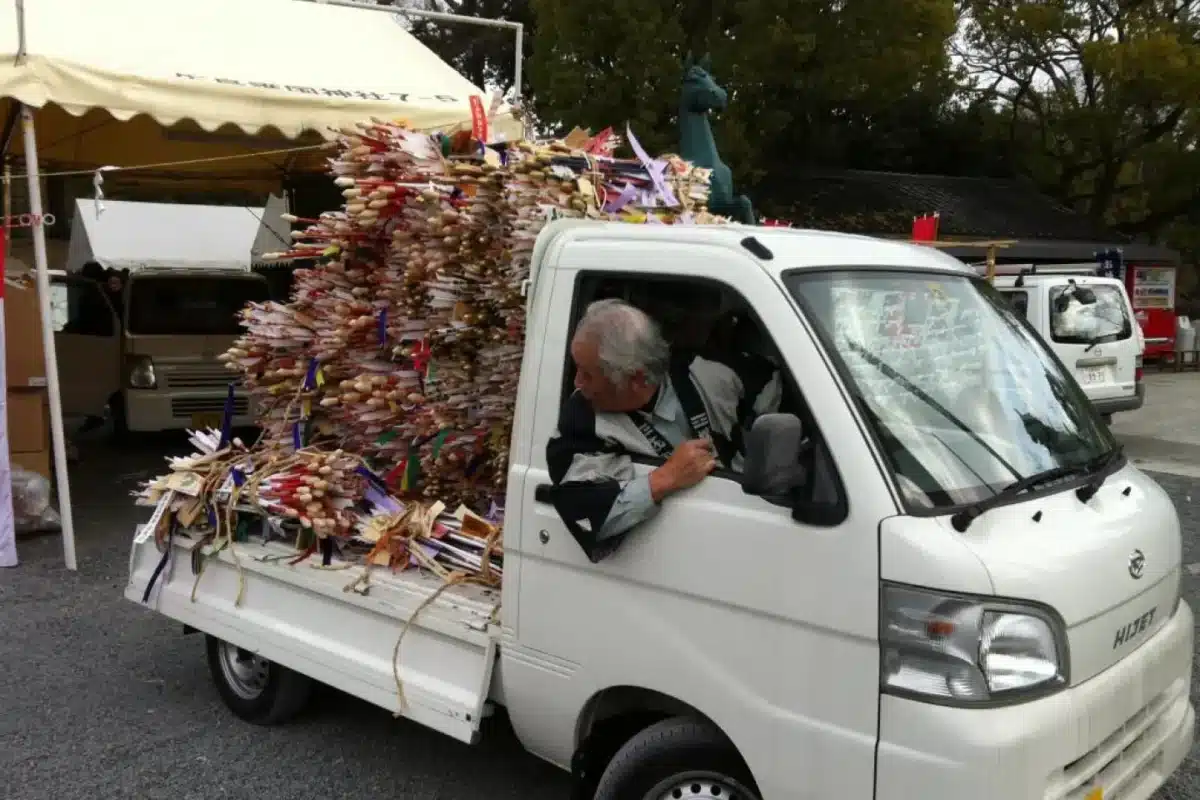
10-Meter Tower Construction: At Hiroshima Gokoku Shrine, 10-meter tower is built from lucky charms collected from worshippers and burned all at once. Huge, carefully constructed bonfire of bamboo on which previous year’s lucky talismans would be burnt stands in shrine’s forecourt. Tower built from bamboo poles, with interior filled with shime-nawa sacred ropes, kadomatsu New Year pine decorations, daruma dolls, hamaya ceremonial arrows, omamori lucky charms, ofuda talismans.
Ceremonial Lighting: Maiko shrine maidens shelter priests with umbrellas during ceremonial lighting of bonfire. Snow made it trickier to get things going, but bonfire soon popping and crackling. You can hear cheers of onlookers and snap, crackle, pop of bamboo as it is set alight, flames rising above rooftops.
Circle Gathering: In ritual fashion, everyone gathers in circle around fire to watch, snapping photos furiously, gobbling up grilled mochi, and praying for fortuitous year ahead. Specialists in garb traditional and non-traditional keep flames under control and sharpshooters with water guns skillfully douse hot debris flying towards onlookers.
Mochi Roasting: At end of event, mochi roasted along with Tondo-yaki is distributed. Finally, as flames started to die down it was time to roast mochi rice cakes over red hot embers. Eating mochi baked on tondo fire believed to bring good health, prevent colds, and ensure safety of household. Tondo Festival is fire festival where you eat mochi, rice cakes baked on tondo fire. Mochi will be served at this festival.
Kakizome Lifting: Tradition that if one’s kakizome, first calligraphy of year, is lifted high by flames and smoke, one’s calligraphy skills will improve. Children bring their calligraphy to throw into fire.
Octopus Kite Tradition: In Hiroshima area, fathers craft large octopus kite specifically for Tondo day, event from previous year where fathers participated. Kite flying before fire.
What to Expect at the Festival
Expect dramatic, roaring bonfire in heart of Hiroshima with community warmth in winter cold.
The Gokoku Shrine’s annual tondo bonfire festival next to Hiroshima Castle is impressive affair. The huge, carefully constructed bonfire of bamboo stands in shrine’s forecourt. You can hear cheers and snap, crackle, pop of bamboo as it is set alight, flames rising above rooftops.
In ritual fashion, everyone gathers in circle around fire to watch, snapping photos furiously, gobbling up grilled mochi, and praying for fortuitous year ahead. Lucky talismans, their job now done, go up in smoke. Box after box of charms and votive goods tossed onto flames.
Maiko shrine maidens shelter priests with umbrellas during ceremonial lighting, even in driving snow when festival coincided with biggest snowfall to hit city in generation. Snow had been coming down steadily before festival started at 10am. Snow made it trickier to get things going, but bonfire was soon popping and crackling.
Specialists in garb keep flames under control and sharpshooters with water guns skillfully douse hot debris flying towards onlookers. There may be break in weather and skies clear for while as charms burn.
Finally, as flames die down, it is time to roast mochi rice cakes over red hot embers. Mochi roasted along with Tondo-yaki is distributed to all comers. Tondo is always impressive, overseas visitors don’t stick out like sore thumb and they dish out roasted mochi rice cakes to all comers.
Atmosphere is both sacred and festive, with families bringing previous year’s charms from home to return to gods.
Date & Schedule
Event Dates: Friday – January 15th 2027
Official Timing: In mid-January, dramatic bonfire festivals are held at shrines all across Japan. The previous year’s talismans, ceremonial arrows, and lucky charms are burnt and people pray for good fortune in year to come. In Hiroshima, these festivals are known as Tondo-matsuri and Gokoku Shrine in Hiroshima city holds an impressive one every year on January 15th.
Annual festival held around January 15th all across country to burn old talismans and charms and pray for good luck in year to come. It is always held on same date, January 15, no matter what day of week on which that may fall.
For 2027: Friday – January 15th 2027, at Gokoku Shrine, Hiroshima city. Based on previous editions:
- Festival starts at 10am, as noted when snow had been coming down steadily for some time before festival started at 10am
- Bonfire lighting ceremony with maiko shrine maidens sheltering priests with umbrellas
- Burning of 10-meter tower built from lucky charms collected from worshippers, burned all at once, with huge carefully constructed bonfire of bamboo
- Box after box of charms and votive goods tossed onto flames
- Roasting of mochi rice cakes over red hot embers as flames die down, mochi roasted along with Tondo-yaki distributed
- Event typically ends by early afternoon
Venue: Gokoku Shrine, Hiroshima city, next to Hiroshima Castle, Motomachi, Naka-ku, Hiroshima. Address: Hiroshima Gokoku Shrine, 2-1-18 Futabanosato, Higashi-ku for some listings, but main shrine in Motomachi, Naka Ward, Hiroshima.
Note: Tondo Festival is fire festival held on January 15. You eat mochi, rice cakes baked on tondo fire. Mochi will be served at this festival.
Visiting this event? Don’t miss out on these amazing activities and local experiences while you’re here.
Main Events & Programme
Programme is single bonfire ceremony with participatory elements.
Tower Construction Viewing: Huge, carefully constructed bonfire of bamboo on which previous year’s lucky talismans would be burnt stands in shrine’s forecourt before lighting. Visitors can see 10-meter tower built from lucky charms collected from worshippers.
Ceremonial Lighting: Maiko shrine maidens shelter priests with umbrellas during ceremonial lighting of bonfire. Snow made it little trickier to get things going, but bonfire was soon popping and crackling. You can hear cheers of onlookers and snap, crackle, pop of bamboo as it is set alight, flames rising above rooftops.
Burning of Talismans: Lucky talismans, their job now done, go up in smoke. Tondo-yaki is Shinto ritual where lucky charms displayed at home during New Year and last year’s amulets are burned and sent back to gods. At Hiroshima Gokoku Shrine, 10-meter tower built from lucky charms and burned all at once. Box after box of charms and votive goods tossed onto flames.
Fire Control Performance: Specialists in garb traditional and non-traditional keep flames under control and sharpshooters with water guns skillfully douse hot debris flying towards onlookers, ensuring safety as flames rise above rooftops.
Mochi Roasting and Distribution: Finally, as flames started to die down it was time to roast mochi rice cakes over red hot embers. Mochi roasted along with Tondo-yaki is distributed. Everyone gathers in circle around fire to watch, snapping photos furiously, gobbling up grilled mochi, and praying for fortuitous year ahead.
Octopus Kite Event: Unique events held in different areas before and after main ceremony, such as fathers crafting large octopus kite specifically for Tondo day, where fathers from Hiroshima crafted large octopus kite.
Kakizome Throwing: Participants throw kakizome paper with first calligraphy of year into flames, believing if lifted high by smoke, calligraphy skills will improve.
Traditional Dress, Arts & Crafts
Dress is Shinto priestly attire and traditional winter wear.
Priest and Miko Attire: Maiko shrine maidens shelter priests with umbrellas during ceremonial lighting. Priests wear joue white robes and eboshi hats, miko wear white kimono with red hakama.
Fire Specialists Garb: Specialists in garb traditional and non-traditional keep flames under control, wearing fire-resistant happi coats and helmets, some in traditional firefighter hanten.
Bamboo Tower Craft: Tower is craft itself, carefully constructed bonfire of bamboo, built by shrine staff over days, with precise stacking to ensure stable 10-meter height and proper burn.
Daruma and Talismans: Previous year’s daruma dolls, hamaya ceremonial arrows, ofuda talismans, shimenawa ropes, kadomatsu pine decorations collected and stacked. Lucky charms displayed at home during New Year.
Octopus Kite Craft: Large octopus kite crafted by fathers specifically for Tondo day, traditional kite making using washi paper and bamboo.
Mochi Making: Mochi rice cakes roasted over embers, traditional method using bamboo skewers, with art of roasting without burning.
Calligraphy – Kakizome: First calligraphy of year written on washi paper, thrown into fire as art and prayer.
Traditional Food & Local Specialties
Food centers on mochi roasted over sacred fire.
Tondo Mochi: Mochi, rice cakes baked on tondo fire, will be served at this festival. At end, mochi roasted along with Tondo-yaki is distributed. Eating mochi baked on tondo fire believed to grant safety, good health, prevent colds, abundant harvests. Roasted over red hot embers after flames die down, with crispy outside and soft inside.
Amazake: Often served at shrines during winter festivals, sweet rice wine served warm, for 2 USD to 4 USD, to warm visitors.
Oshiruko: Sweet red bean soup with mochi, common at winter shrine events, for 3 USD to 5 USD.
Grilled Mochi Variations: Gobbling up grilled mochi includes isobe-maki with nori seaweed, kinako roasted soybean powder, for 2 USD to 4 USD per piece at stalls.
Hiroshima Local Foods at Stalls: Around Gokoku Shrine, stalls may sell:
- Okonomiyaki: Hiroshima style for 8 USD to 13 USD
- Oysters: Grilled Hiroshima oysters for 6 USD to 12 USD
- Yakitori: For 3 USD to 6 USD
Mochi for Good Luck: Tradition of gobbling up grilled mochi while praying for fortuitous year ahead.
Location & Festival Areas
Venue: Gokoku Shrine, Hiroshima, Japan
Exact Location: Hiroshima Gokoku Shrine, Motomachi, Naka-ku, Hiroshima City, Hiroshima Prefecture, next to Hiroshima Castle. Also listed as 2-1-18 Futabanosato, Higashi-ku, Hiroshima City for some administrative listings, but main shrine for Tondo is Motomachi, Naka Ward, next to castle. Hiroshima Gokoku Shrine address: 21 Motomachi, Naka-ku, Hiroshima 730-0011.
Shrine Forecourt: Huge, carefully constructed bonfire stands in shrine’s forecourt. Everyone gathers in circle around fire to watch. Shrine located in central park area next to Hiroshima Castle, with open forecourt suitable for large bonfire.
Castle Proximity: Next to Hiroshima Castle, allowing combined visit to castle and shrine. Castle’s clay walls and moats visible from shrine.
Surrounding Area: Located in Motomachi area, central Hiroshima, near Peace Memorial Park, 10 minute walk from Hiroshima Castle, 15 minute walk from Hondori shopping street.
Snow Scenario: When festival coincided with biggest snowfall to hit city in generation, snowbound tondo festival created memorable experience with snowbound shrine.
Inquiries: Hiroshima Gokoku Shrine, Phone 082-221-5590, HP https://www.h-gokoku.or.jp/
Getting to the Festival
Gokoku Shrine is centrally located and easily accessible.
By Streetcar: Take Hiroden streetcar lines 1, 2, or 6 to Kamiyacho-higashi or Kamiyacho-nishi stops, then 5 minute walk to shrine and Hiroshima Castle. Fare about 2 USD.
By Bus: Hiroshima Bus and JR Bus to Kamiyacho or Hiroshima Castle area, fare about 2 USD to 3 USD.
On Foot: From Hiroshima Station, 20 minute walk or streetcar ride to central area. From Peace Memorial Park, 10 minute walk north to Gokoku Shrine. From Hondori shopping arcade, 10 minute walk.
From Airport: Hiroshima Airport limousine bus to Hiroshima Bus Center, 50 minutes fare about 11 USD, then 5 minute walk to shrine.
Parking: No parking at shrine during festival due to bonfire, traffic restrictions in front of shrine, use public transport.
During Festival: It is always held on same date January 15 no matter what day of week, so weekday or weekend same. Expect crowds gathering in circle around fire.
Accessibility: Shrine forecourt is paved but may be snowy or icy, wear warm boots. Maiko shelter priests with umbrellas during ceremonial lighting, so bring umbrella.
Where to Stay Nearby
Central Hiroshima offers many options within walking distance to Gokoku Shrine.
Near Gokoku Shrine and Hiroshima Castle:
- Rihga Royal Hotel Hiroshima: Near Peace Park, 10 minute walk to shrine, rooms from 100 USD to 180 USD per night
- ANA Crowne Plaza Hiroshima: On Peace Boulevard, 8 minute walk, from 110 USD to 200 USD
- Hotel Granvia Hiroshima: At Hiroshima Station, 15 minutes by streetcar, from 120 USD to 220 USD
- Mitsui Garden Hotel Hiroshima: Near Hondori, 10 minute walk, from 90 USD to 160 USD
Business Hotels:
- APA Hotel Hiroshima Ekimae: From 60 USD to 95 USD
- Hotel Sunroute Hiroshima: Near Peace Park, from 70 USD to 110 USD
Budget:
- K’s House Hiroshima Hostel: Near Peace Park, dorm beds from 25 USD to 40 USD, private rooms from 60 USD to 90 USD
- J-Hoppers Hiroshima Guesthouse: Popular with backpackers, dorm from 25 USD to 40 USD
For Tondo Experience: Since festival starts at 10am, staying central allows easy morning access even in snow, as festival goes ahead even during biggest snowstorm to hit city center in generation, with shrine confirming by phone that event proceeds.
What Visitors Can Participate In
Tondo is participatory purification event.
Bring Old Talismans: Bring previous year’s talismans, ceremonial arrows, lucky charms, daruma, ofuda, shime-nawa, kadomatsu to be burnt. Lucky charms collected from worshippers and burned all at once. Visitors can bring own from home, place into tower before lighting.
Gather in Circle: In ritual fashion, everyone gathers in circle around fire to watch, snapping photos furiously, gobbling up grilled mochi, and praying for fortuitous year ahead. Join circle, pray for good fortune.
Mochi Roasting: As flames die down, time to roast mochi rice cakes over red hot embers. Mochi roasted along with Tondo-yaki is distributed to all comers. Gobble up grilled mochi while praying.
Kakizome Throwing: Bring kakizome paper with first calligraphy of year to throw into flames, believing if lifted high by smoke, calligraphy skills will improve. Children eagerly participate.
Octopus Kite Making: Participate in unique events held in different areas before and after main ceremony, such as crafting large octopus kite specifically for Tondo day, event where fathers crafted large octopus kite.
Photo Taking: Snap photos furiously as flames rise above rooftops, with snap, crackle, pop of bamboo.
Exposure to Fire: It is believed being exposed to Tondo fire grants safety of household, good health, abundant harvests. Stand close enough to feel warmth and be blessed by smoke.
Things to Do Before or After the Festival
Gokoku Shrine location allows combining with Hiroshima’s main sights.
Hiroshima Castle: Next to Gokoku Shrine, Hiroshima Castle, also called Carp Castle, with museum, entry about 3 USD. Castle grounds with clay walls and dry moats.
Peace Memorial Park: 10 minute walk south, visit Peace Memorial Museum entry about 2 USD, A-Bomb Dome UNESCO site, Children’s Peace Monument.
Shukkeien Garden: Traditional Japanese garden near Hiroshima Station, entry about 3 USD, beautiful even in winter with snow.
Hondori and Okonomimura: Shopping arcade 10 minute walk, with 20 okonomiyaki stalls.
Other Tondo Festivals: While Tondo Festival celebrated throughout various regions in Hiroshima Prefecture, Gokoku Shrine one is most accessible. If have local connections, visit neighborhood Tondo festivals in other shrines.
Winter Hiroshima: Enjoy oysters in winter, Hiroshima is famous for oysters, grilled oysters for 6 USD to 12 USD.
Setsubun Preparation: Setsubun traditions, archery and lucky bean toss event at Gokoku-jinja annually on February 3rd, next major shrine event after Tondo.
Local Food & Restaurants
Hiroshima’s winter food scene complements fire festival.
At Festival:
- Mochi: Mochi rice cakes baked on tondo fire distributed free, or roasted over embers, with tradition of eating for good health
- Amazake and Oshiruko: Warm sweet drinks at shrine stalls for 2 USD to 5 USD
Near Gokoku Shrine and Castle:
- Oyster Restaurants: Grilled, fried, raw oysters from Hiroshima Bay for 6 USD to 12 USD, winter is peak season
- Okonomiyaki: Hiroshima style with cabbage, pork, noodles, egg for 8 USD to 13 USD at Okonomimura building downtown
- Anago-meshi: Conger eel rice for 12 USD to 18 USD
- Hiroshima Ramen: With pork bone broth for 7 USD to 11 USD
Central Hiroshima:
- Cafes: Near Hondori, coffee for 3 USD to 5 USD, cakes for 4 USD to 7 USD
- Izakaya: Small izakaya with sake and small dishes for 15 USD to 30 USD per person
Souvenirs: Momiji manju maple leaf cakes for 2 USD to 4 USD each.
Ticket Information & Access
Price of Admission: FREE
Tickets are listed as 0 JPY. Tondo Festival at Gokoku Shrine is free to watch and participate. Annual festival held around January 15th all across country to burn old talismans and charms and pray for good luck in year to come. Gokoku Shrine event is free, with roasted mochi distributed to all comers.
Costs:
- General Viewing: Free, gather in circle around fire
- Mochi Distribution: Free mochi roasted along with Tondo-yaki distributed, or small fee for extra mochi at stalls for 2 USD to 4 USD
- Talisman Burning: Free to bring previous year’s talismans to burn, no fee
- Shrine Offerings: Optional offering at shrine for good fortune, typically 1 USD to 5 USD
- Food Stalls: Amazake, oshiruko, okonomiyaki for 2 USD to 13 USD
Hours: Based on previous editions, festival starts at 10am, with snow had been coming down steadily for some time before festival started at 10am. Tower construction visible before, burning lasts 1 to 2 hours, mochi roasting as flames die down, ending by early afternoon.
Access: Hiroshima Gokoku Shrine, Motomachi, Naka-ku, Hiroshima, next to Hiroshima Castle, 5 minute walk from Kamiyacho-higashi streetcar stop.
Contact: Hiroshima Gokoku Shrine, 082-221-5590, HP https://www.h-gokoku.or.jp/ and https://www.hgokoku.or.jp/
Official Event Information
Event Name: Tondo Festival 2027 – Hiroshima, Japan, also called Tondo Matsuri, Hiroshima Gokoku Tondomatsuri, Hiroshim Gokoku Tondo Festival
Venue: Gokoku Shrine, Hiroshima, Motomachi, Naka-ku, Hiroshima City, Hiroshima Prefecture, Japan, next to Hiroshima Castle, 21 Motomachi, Naka-ku, Hiroshima 730-0011, and 2-1-18 Futabanosato, Higashi-ku for administrative listing
Organizer: Hiroshima Gokoku Shrine, Gokoku Shrine Office, Phone 082-221-5590
Official Website: https://en.japantravel.com/hiroshima/tondo-festival/3643
Additional Official Site: https://www.h-gokoku.or.jp/ official Hiroshima Gokoku Shrine site and https://pcf.city.hiroshima.jp event listing
Description: In mid-January, dramatic bonfire festivals are held at shrines all across Japan. Previous year’s talismans, ceremonial arrows, and lucky charms are burnt and people pray for good fortune in year to come. In Hiroshima, these festivals are known as Tondo-matsuri and Gokoku Shrine in Hiroshima city holds impressive one every year on January 15th. You can hear cheers of onlookers and snap, crackle, pop of bamboo as it is set alight, flames rising above rooftops. In ritual fashion, everyone gathers in circle around fire to watch, snapping photos furiously, gobbling up grilled mochi, and praying for fortuitous year ahead. Tondo-yaki is Shinto ritual where lucky charms displayed at home during New Year and last year’s amulets are burned and sent back to gods. At Hiroshima Gokoku Shrine, 10-meter tower is built from lucky charms collected from worshippers and burned all at once. At end, mochi roasted along with Tondo-yaki is distributed.
Contact: Hiroshima Gokoku Shrine, 082-221-5590
Video
Location
FAQ
What is Tondo Festival and why is it held on January 15th?
Tondo Festival is longstanding deep-rooted Shinto fire festival celebrated across Japan involving sending off deities welcomed during New Year by igniting Tondo fires with huge bamboo bonfire. It is believed being exposed to Tondo fire grants safety of household, good health, and abundant harvests, and that if kakizome first calligraphy is lifted high by flames, calligraphy skills improve. In Hiroshima these festivals are known as Tondo-matsuri, and Gokoku Shrine holds impressive one every year on January 15th, date known as Koshogatsu little New Year marking end of New Year season, always held same date no matter day of week.
What can I bring to burn at Gokoku Shrine Tondo?
You can bring previous year's talismans, ceremonial arrows hamaya, lucky charms omamori, ofuda talismans, daruma dolls, shime-nawa sacred ropes, kadomatsu New Year pine decorations, and kakizome calligraphy paper. Tondo-yaki is Shinto ritual where lucky charms displayed at home during New Year and last year's amulets are burned and sent back to gods, with 10-meter tower built from collected items. Lucky talismans whose job now done go up in smoke as box after box of charms tossed onto flames, so bring items from home to return to gods for purification.
What happens to mochi roasted over Tondo fire?
At end of Tondo, mochi roasted along with Tondo-yaki is distributed to all comers, with tradition that as flames die down it is time to roast mochi rice cakes over red hot embers. Everyone gathers in circle around fire to watch, gobbling up grilled mochi while praying for fortuitous year ahead, as eating mochi baked on tondo fire believed to bring good health, prevent colds, and ensure safety. Mochi will be served at this festival, with specialists keeping flames under control and sharpshooters with water guns dousing hot debris, so you can safely roast mochi on bamboo skewers.
Is the festival held even in snow and how should I dress?
Yes, Tondo is always impressive affair but driving snow can make even more memorable, as festival coincided with biggest snowfall to hit city in generation and snow had been coming down steadily before festival started at 10am, yet shrine confirmed event proceeds. Maiko shrine maidens sheltered priests with umbrellas during ceremonial lighting, and snow made trickier to get things going but bonfire soon popping and crackling with cheers and snap crackle pop of bamboo. Dress extremely warm with boots, as you will stand in shrine forecourt in winter, and bring umbrella, as flames rising above rooftops provide warmth but snow may fall.
Can tourists without Japanese connections enjoy Gokoku Shrine Tondo?
Yes, Gokoku Shrine's annual tondo bonfire festival next to Hiroshima Castle is the one always recommended to visitors who want to experience fiery regional New Year celebration but don't have local connections. It is always held on same date January 15 no matter day of week, overseas visitors don't stick out like sore thumb, and they dish out roasted mochi rice cakes to all comers, with free viewing in circle around fire. While Tondo Festival celebrated throughout various regions in Hiroshima Prefecture, Gokoku Shrine event in central Motomachi next to castle is most accessible, just 5 minute walk from Kamiyacho-higashi streetcar stop, with inquiries at 082-221-5590.

Leave a Reply