
-
August 4, 2027
Event date:
-
August 4, 2027
Event end:
What to expect in 2027
Tsuribashi Festival 2027, also known as Tsuribashi Festival “Yuredaiko,” is a distinctive summer cultural celebration held at Tanize Suspension Bridge in Totsukawa Village, Nara Prefecture. Its main attraction is a spectacular taiko performance staged on the suspension bridge, where powerful Japanese drums reverberate through the surrounding mountain valley.
The festival is closely associated with August 4, which is recognized in Japan as “Bridge Day” because the Japanese pronunciation of the date resembles the word for bridge. Totsukawa celebrates its famous Tanize Suspension Bridge with music, local performances and community festivities. The official Nara Travel Guide confirms that the festival features taiko performers on the bridge, while Japan Travel describes additional entertainment including rock music, ukulele, Tsugaru shamisen and local dance performances.
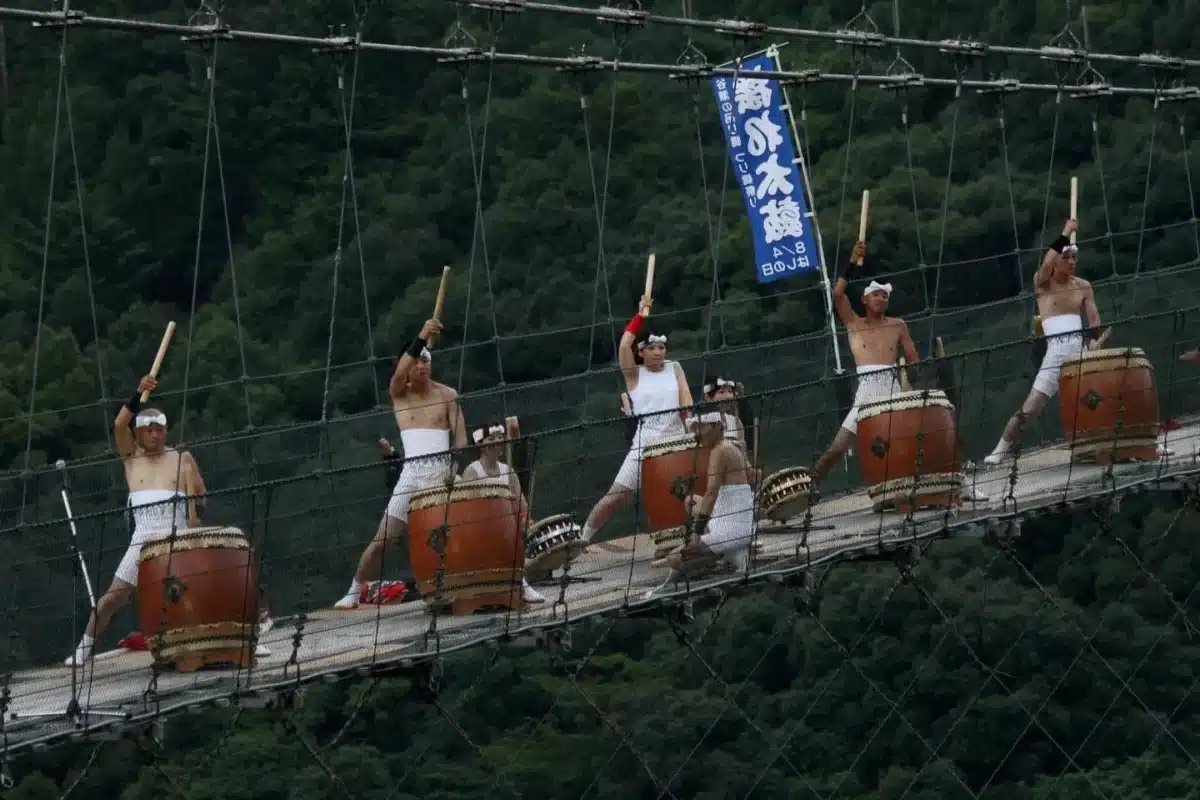
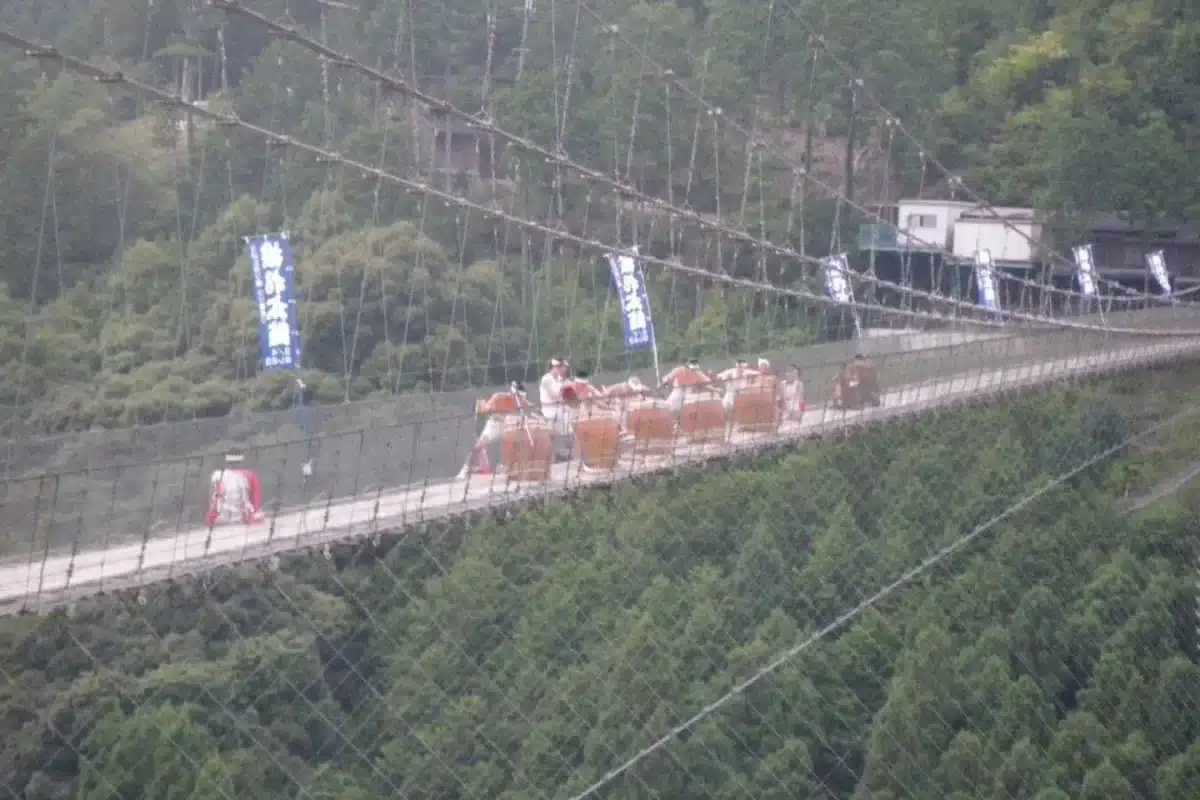
The most dramatic moment is Yuredaiko, meaning “swaying” or “swinging taiko.” Drummers perform on the narrow bridge high above the Totsukawa River, creating a combination of traditional music, mountain scenery and the natural movement of the suspension bridge.
Enjoy Your Event Stress-Free with Japan Travelo
Do you know? Planning events, festivals, concerts, and cultural experiences in Japan can be overwhelming. Japan Travelo brings everything together in one place, helping you manage your itinerary, transport, and accommodation with ease—so you can enjoy Japan without the stress of planning.
The established festival programme can include:
- Yuredaiko taiko performances on Tanize Suspension Bridge
- Traditional Japanese drumming
- Local dance performances
- Rock music
- Ukulele performances
- Tsugaru shamisen
- Community entertainment
- Festival food and refreshments
- Local cultural activities
- Evening celebrations
- Fireworks as the traditional closing highlight
The official 2027 performer list and detailed timetable should be checked with the organizers when released. Japan Travel currently lists the 2027 event as an upcoming festival, while the official Nara Travel Guide confirms the established annual format.
Event dates
The Tsuribashi Festival 2027 is scheduled for August 4, 2027, at Tanize Suspension Bridge in Totsukawa.
The festival is traditionally associated with August 4 every year, making it a particularly distinctive date for the community because of its connection with “Bridge Day.” The official Nara Travel Guide identifies August 4 as the annual occasion when the Tanize Suspension Bridge hosts Yuredaiko.
Japan Travel currently describes the 2027 event as an early-August festival and notes that the event date should be checked against the official organizers’ information.
The festival programme traditionally develops toward an evening celebration, with the taiko performance on the bridge forming the signature cultural attraction and fireworks providing a memorable conclusion.
Visiting this event? Don’t miss out on these amazing activities and local experiences while you’re here.
Venue & festival site
The primary venue is Tanize Suspension Bridge in the Uenoji/Tanize area of Totsukawa Village.
Tanize Suspension Bridge
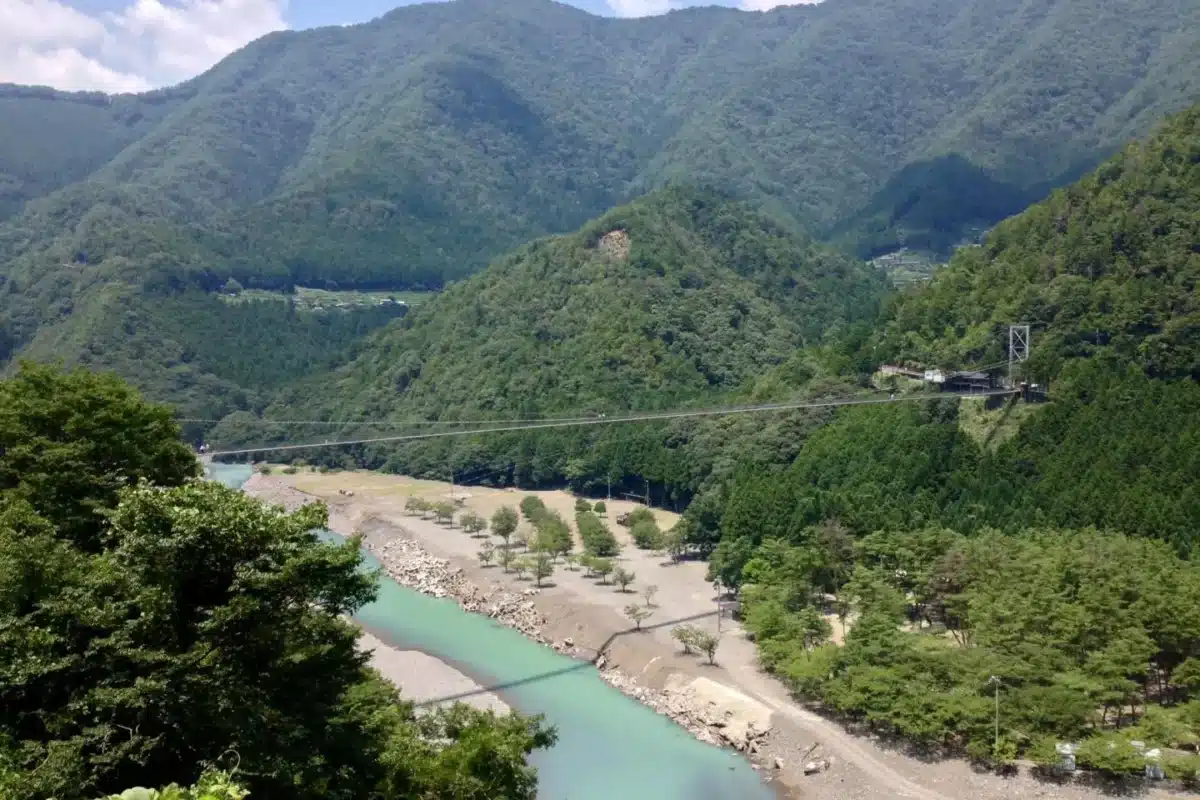
The bridge is approximately 297 meters long and rises about 54 meters above the Totsukawa River. It connects the communities around Uenochi and Tanize and is one of the best-known landmarks in Totsukawa.
Address: Uenoji, Totsukawa, Yoshino District, Nara Prefecture, Japan.
The bridge was constructed in the mid-20th century after the local community contributed funds toward its construction. It became an important everyday connection between communities as well as a major tourist attraction.
Kaminoji Kasen Hiroba
The official Nara Travel Guide identifies Tanize Suspension Bridge and Kaminoji Kasen Hiroba as the event locations. The riverside area provides a more spacious environment for festival activities and allows visitors to experience the celebration away from the narrow bridge itself.
The surrounding mountain valley is an important part of the experience. The sound of taiko travels across the valley, while the bridge provides views over the river and surrounding forested mountains.
Full lineup
Tsuribashi Festival is a local cultural festival rather than a commercial music festival, so it does not normally publish a conventional artist lineup comparable to large ticketed music festivals.
The established performance programme includes several types of performers:
Yuredaiko taiko drummers
The signature performers are the Japanese taiko drummers who take their instruments onto Tanize Suspension Bridge. Their performance is the defining feature of the festival.
Local dance teams
Local dance groups can form part of the wider entertainment programme, bringing community-based performances to the festival site.
Rock performers
Previous descriptions of the festival have included rock bands as part of the entertainment programme.
Ukulele performers
Ukulele music has also been included in descriptions of the established festival entertainment.
Tsugaru shamisen performers
Traditional Tsugaru shamisen performances provide a contrast to the large taiko drums and contemporary entertainment.
The specific names of the 2027 groups and performers have not been published in the available official information, so visitors should not expect a confirmed artist-by-artist lineup until the local organizers announce the programme.
Headliners & featured artists
The festival’s principal featured performance is Yuredaiko rather than an individual celebrity headliner.
Yuredaiko
The taiko performance on the suspension bridge is the cultural centerpiece of the event. The drums are positioned on the bridge, allowing the sound to resonate through the surrounding valley. The unusual performance location is what makes the festival particularly distinctive.
Traditional musicians
Tsugaru shamisen and other traditional music performances can contribute to the cultural programme.
Local performers
Community dance groups and other regional performers help create the wider festival atmosphere.
Contemporary entertainment
Rock and ukulele performances have previously formed part of the festival’s broader entertainment programme.
No confirmed 2027 celebrity headliners or commercial touring artists have been announced in the available event information.
Stages & performance areas
The festival uses several naturally different performance environments rather than a conventional concert-stage layout.
Tanize Suspension Bridge
The bridge itself is the most important performance area. The Yuredaiko drummers perform directly on the bridge, creating the festival’s signature visual and musical experience.
The bridge’s height and narrow construction make this a highly unusual setting for a traditional taiko performance. The bridge rises roughly 54 meters above the river and stretches approximately 297 meters across the valley.
Riverside festival area
Kaminoji Kasen Hiroba provides the principal ground-level festival environment. This area is associated with the wider festival programme and gives visitors a place to enjoy performances and activities without standing on the bridge.
Local entertainment stage
Rock, ukulele, dance and other performances can form part of the entertainment programme around the festival site. The exact 2027 arrangement of these performances should be confirmed once the detailed programme is released.
Stage-by-stage schedule
The exact 2027 stage schedule has not yet been published, so the following reflects the established festival structure rather than a confirmed minute-by-minute programme.
Riverside festival area
The wider festival activities traditionally begin before the major evening entertainment. Visitors can explore the festival site, enjoy local refreshments and watch community performances.
Community entertainment
Local dance groups and musical performers contribute to the atmosphere before the main taiko attraction.
Traditional music
Traditional instruments, including taiko and shamisen, provide a connection to Japanese performing arts and regional culture.
Yuredaiko performance
The main cultural highlight takes place on Tanize Suspension Bridge, with drummers performing directly on the suspended structure.
Evening entertainment
The programme continues into the evening with additional entertainment and community activities.
Fireworks
Japan Travel describes fireworks as the traditional concluding highlight of the festival, creating a final spectacle over the mountain valley.
Set times
Specific 2027 set times have not been published.
Japan Travel’s established description places the festival’s main programme in the afternoon and evening, with the event traditionally beginning around the later part of the day and continuing toward an evening fireworks finale.
Visitors should allow plenty of time before the headline taiko performance because Tanize Suspension Bridge is a popular attraction even outside the festival.
A useful planning approach is:
- Arrive during the afternoon to explore the festival area
- Allow time to see local performances
- Visit the bridge before crowd levels become particularly high
- Position yourself for the Yuredaiko performance
- Remain for the evening entertainment
- Stay for the fireworks if weather and programme conditions allow
The official event timetable should be checked before travelling because performance times can change.
Ticket types
Tsuribashi Festival is generally presented as a free community event rather than a ticketed commercial music festival. Japan Travel currently lists the festival as free, while Tanize Suspension Bridge itself is also listed as free to access by the official Nara Travel Guide.
General festival admission
Free.
Tanize Suspension Bridge access
The bridge itself is generally free to cross.
Festival viewing
There is no established general admission ticket comparable to a concert ticket.
Parking
Parking is separate from festival admission and may carry a fee. Current published tourism information lists paid parking near the bridge.
Because the festival is held in a mountainous rural area, visitors should focus on transportation and arrival planning rather than expecting a conventional ticketing system.
VIP & premium options
There is no established VIP ticket programme associated with Tsuribashi Festival.
The festival is a community-oriented cultural event centered around the Tanize Suspension Bridge and local performances rather than a commercial concert with VIP hospitality packages.
There may be differences in viewing conditions depending on where visitors stand, particularly because the bridge is narrow and the festival attracts people specifically to see the taiko performance.
Visitors seeking the best experience should arrive early, follow staff instructions and avoid attempting to occupy restricted or unsafe areas.
The bridge is an important community infrastructure feature as well as a tourist attraction, so visitor access may be managed for safety when crowds increase.
Event rules
Because the festival involves a suspension bridge high above a river, safety is especially important.
Follow crowd-control instructions
Visitors must follow instructions from festival staff and local authorities. Temporary restrictions may be introduced if the bridge becomes crowded.
Do not push or shake the bridge
The suspension bridge naturally moves as people walk across it. Visitors should not deliberately create additional movement or interfere with performers.
Respect the performance area
The bridge becomes a performance environment during Yuredaiko, so visitors should remain in designated areas and avoid obstructing performers.
Keep the bridge clear
The bridge is narrow and should not be treated as an ordinary open space for standing indefinitely.
Follow photography instructions
Photography is generally part of the festival experience, but visitors should avoid obstructing performers or other spectators.
Observe weather restrictions
Rain, strong winds or other adverse conditions can affect outdoor performances and bridge access.
How to get there
Totsukawa is located in the mountainous southern part of Nara Prefecture and is considerably more remote than the major tourist centers of Nara and Kyoto.
From JR Gojo Station
The official Nara Travel Guide recommends taking a bus toward the Totsukawa area and getting off at Uenochi bus stop, followed by a walk to Tanize Suspension Bridge.
From Kintetsu Yamato-Yagi Station
Long-distance bus services connect Yamato-Yagi Station with Totsukawa and continue toward Shingu. Official tourism information gives the journey to Uenochi as approximately three hours.
From Shingu
Travelers approaching from Wakayama can use the bus network toward Totsukawa and Uenochi. The journey is lengthy but provides access to one of the more remote cultural destinations in southern Nara.
By car
Driving is a practical option for visitors who want flexibility in rural Totsukawa, although festival traffic can increase congestion around Tanize Suspension Bridge.
Public transport & parking
Public transportation requires more planning than travel to major Japanese cities because Totsukawa has no railway station.
The principal access is by long-distance bus.
JR Gojo Station connection
Buses connect Gojo with the Totsukawa area and Uenochi.
Yamato-Yagi connection
Buses from Kintetsu Yamato-Yagi Station provide a longer direct route into the Totsukawa area.
Uenochi bus stop
The official Nara Travel Guide identifies Uenochi as the relevant stop for Tanize Suspension Bridge, followed by a walk to the bridge.
Parking
A village-managed parking area is available near Tanize Suspension Bridge. Current tourism information lists approximately 70 ordinary-car spaces and a charge of about $5.40 for two hours, based on the published local fee of ¥800.
Parking availability can become limited during the festival, so arriving early is advisable.
Accommodation areas
Because Totsukawa is remote, staying locally can make the festival experience considerably easier.
Totsukawa Onsen
Totsukawa Onsen is one of the area’s best-known accommodation bases. Visitors can combine the festival with traditional Japanese hot-spring experiences.
Uenochi and Tanize
Accommodation around the bridge area is useful for visitors who want to remain close to the festival site.
Central Totsukawa
Staying elsewhere in the village gives access to additional hot springs, mountain scenery and local attractions.
Totsukawa Onsen Hotel Subaru
The official Nara Travel Guide lists this as one of the accommodation options in the Totsukawa area.
Kosenkaku Yoshinoya
This is another traditional accommodation option listed by the regional tourism guide.
Because transport services are limited, staying overnight in Totsukawa is particularly useful for visitors who want to remain for the evening programme and fireworks.
Food & drink
Festival visitors can combine the event with Totsukawa’s local food and hot-spring-town dining culture.
Local Japanese food
Small restaurants and accommodation facilities around Totsukawa provide opportunities to sample regional dishes and seasonal Japanese meals.
Festival refreshments
Temporary festival vendors may offer snacks, drinks and casual Japanese festival food around the event site.
Mountain-region specialties
The surrounding area is known for its mountainous environment, local agricultural products and traditional rural cuisine.
Hot-spring accommodation meals
Ryokan and traditional inns can provide multi-course Japanese meals, making an overnight stay part of the cultural experience.
Local drinks
Visitors can look for regional Japanese beverages and locally produced refreshments at restaurants and accommodation facilities.
Because the festival takes place in a relatively remote village, visitors should not expect the same concentration of restaurants and convenience stores found in larger Japanese cities.
Accessibility
Tanize Suspension Bridge is an unusual venue from an accessibility perspective because it is a long, narrow suspension bridge with natural movement underfoot.
The bridge is approximately 297 meters long and 54 meters above the river.
Bridge crossing
The bridge requires visitors to walk across a suspended walkway, which may be challenging for people with limited mobility, balance difficulties or anxiety around heights.
Festival viewing
Visitors who cannot comfortably cross the bridge may prefer to watch the performance from ground-level areas around the festival site, subject to the official viewing arrangements.
Crowds
Large festival crowds can make movement more difficult, particularly around the bridge entrance.
Public transport
The nearest bus stop is Uenochi, with the official Nara Travel Guide describing a walking connection to the bridge.
Visitors with specific accessibility requirements should contact the Totsukawa tourism authorities before travelling.
Best days to attend
Tsuribashi Festival is a single-day annual event, so there is no choice between different festival days.
The best experience is to arrive early enough to explore Tanize Suspension Bridge and the surrounding area before the main programme becomes busy.
Afternoon arrival
This allows time to see the venue, explore the surrounding valley and settle into the festival atmosphere.
Before Yuredaiko
Arriving well before the bridge performance is important because the signature taiko performance attracts visitors specifically for the unusual setting.
Evening programme
Remaining into the evening provides the fullest festival experience, combining music, local entertainment and the traditional closing atmosphere.
Fireworks
Visitors who stay until the end can experience the fireworks described in the established festival programme.
Previous year’s highlights
The previous edition continued the distinctive format that has made Tsuribashi Festival one of Totsukawa’s most unusual annual cultural events.
The central attraction remained Yuredaiko, with Japanese taiko performers using Tanize Suspension Bridge as their stage. The performance takes advantage of the bridge’s dramatic location high above the Totsukawa River, allowing the sound of the drums to travel through the surrounding valley.
The wider entertainment programme has traditionally extended beyond taiko. Festival descriptions include rock bands, ukulele performers, Tsugaru shamisen musicians and local dance groups, creating a combination of traditional and contemporary entertainment.
The festival also maintained its connection with the local community and the bridge itself. Tanize Suspension Bridge is not simply a tourist attraction; it was built as an important connection between local communities and remains one of Totsukawa’s most recognizable landmarks.
The evening programme traditionally concludes with fireworks, providing a visual finale after the music and performances.
Official tickets
Tsuribashi Festival is generally a free public cultural event, so visitors do not normally need to purchase an admission ticket. Japan Travel currently lists the 2027 festival as free, and the official Nara Travel Guide also lists Tanize Suspension Bridge admission as free.
There is therefore no standard 2027 general admission ticket, VIP ticket or premium festival pass currently listed.
The main costs visitors should plan for are transportation, accommodation, food and parking. Current published information lists paid parking near the bridge, while the bridge itself remains free to access.
https://en.japantravel.com/nara/taiko-on-a-bridge/22212
Location
FAQ
What makes the taiko performance at the Tsuribashi Festival uniquely challenging for musicians?
Performers must execute complex rhythmic taiko drumming directly on the deck of Japan's longest pedestrian suspension bridge while it continuously sways and moves underfoot. This rare performance style, known as Yuredaiko, demands exceptional physical balance and intense concentration to maintain precise timing on an unstable stage.
How do travelers without private cars reach the remote mountain venue of Totsukawa-Mura?
Visitors typically take specialized long-distance bus routes operated by Nara Kotsu connecting railway hubs like Yamato-Yagi Station in Nara with Shingu Station in Wakayama Prefecture. Because only a few daily buses service the route, planning schedules meticulously or staying overnight in the village is essential.
What safety precautions should attendees keep in mind while walking across the suspension bridge?
Visitors must respect posted capacity limits, maintain steady footing on the wooden planks, and follow instructions from local safety staff managing pedestrian traffic flow. Due to the bridge's significant height and swaying motion, individuals sensitive to heights should prepare accordingly and avoid sudden movements.
What other cultural performances complement the main taiko drumming during the evening event?
In addition to the dramatic suspension bridge drumming, the festival features energetic rock bands, melodic ukulele sets, and traditional Tsugaru shamisen performances. Local community dance teams also present regional folk numbers that entertain the gathering crowds until the final fireworks show.
Why is overnight accommodation in Totsukawa-Mura strongly recommended for festival attendees?
Because the mountain village is situated deep in the Kii Peninsula far from any train stations with very limited bus connectivity, staying overnight eliminates stressful transit timelines. Furthermore, staying locally allows travelers to relax in the village's renowned natural hot springs and explore regional historical sites at a leisurely pace.

Leave a Reply