
Overview
What it is: Tsuruse Yosakoi Matsuri is a fantastic traditional dance festival with a small-town vibe. It is held in Fujimi City, Saitama, and brings together 56 different teams from across the region and beyond for a full day of high-energy street performance.
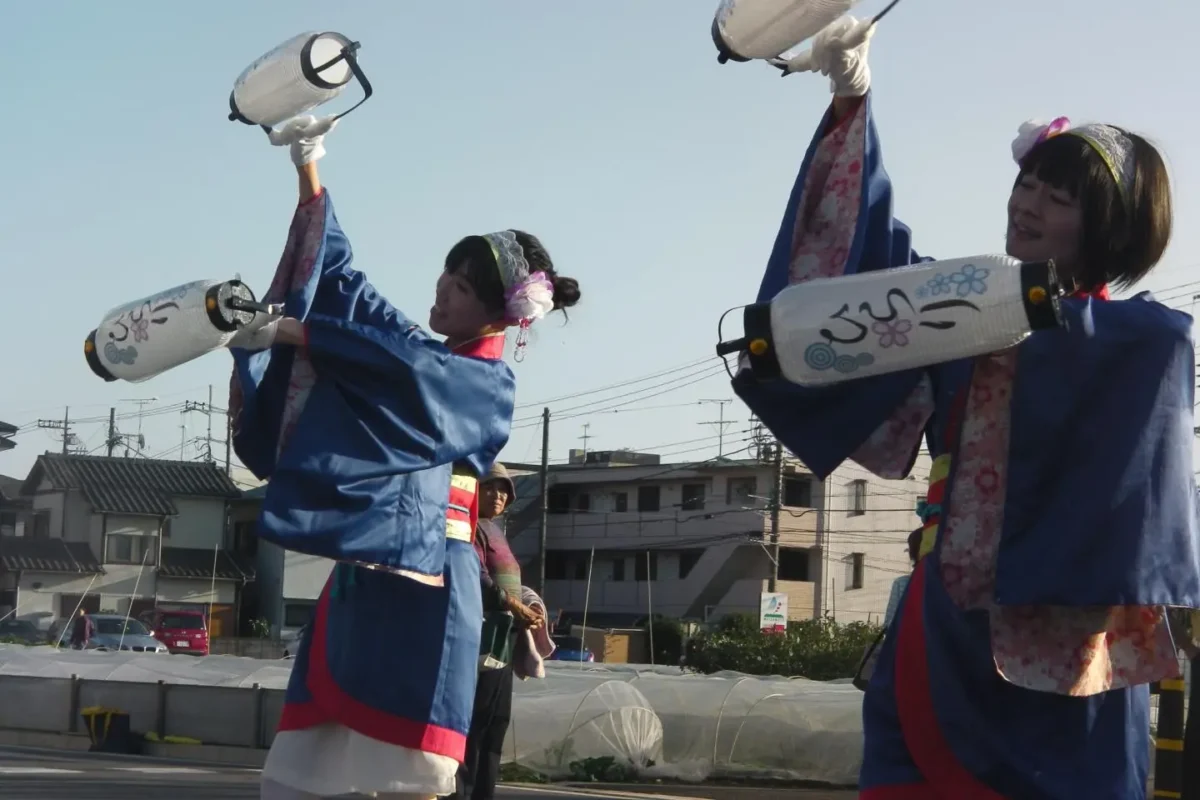
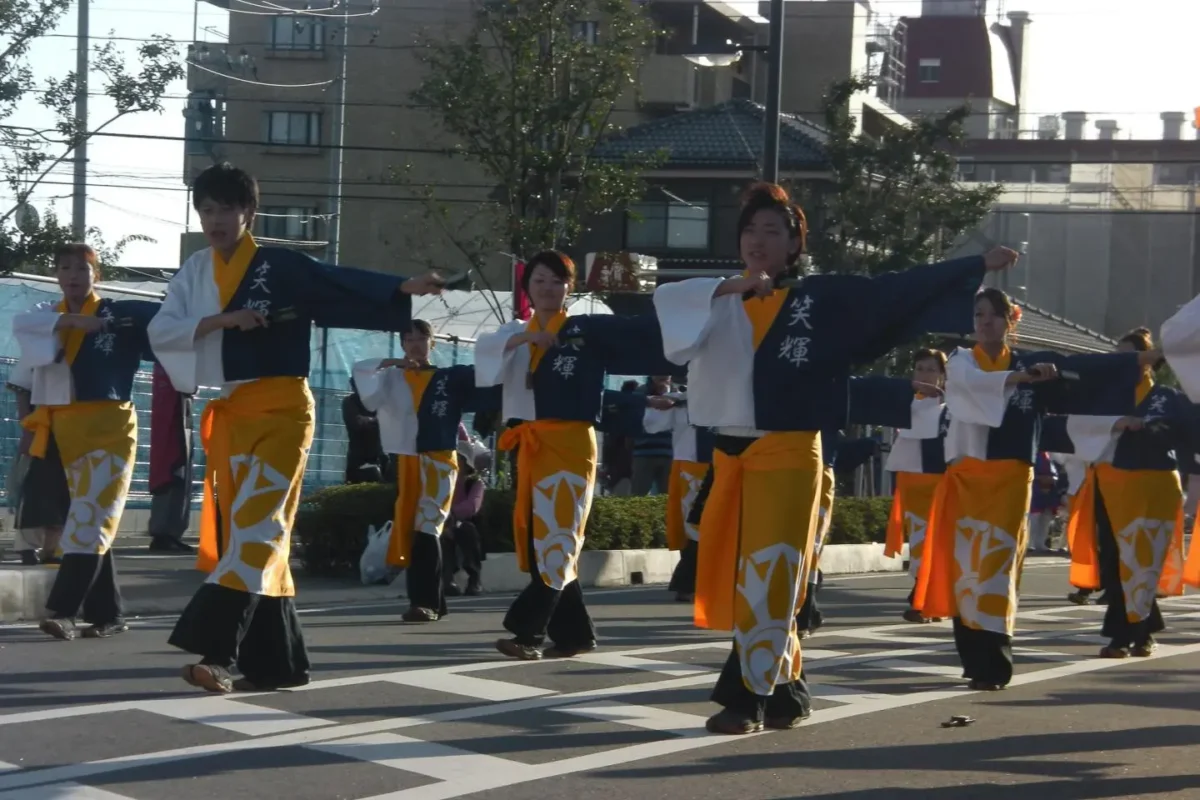
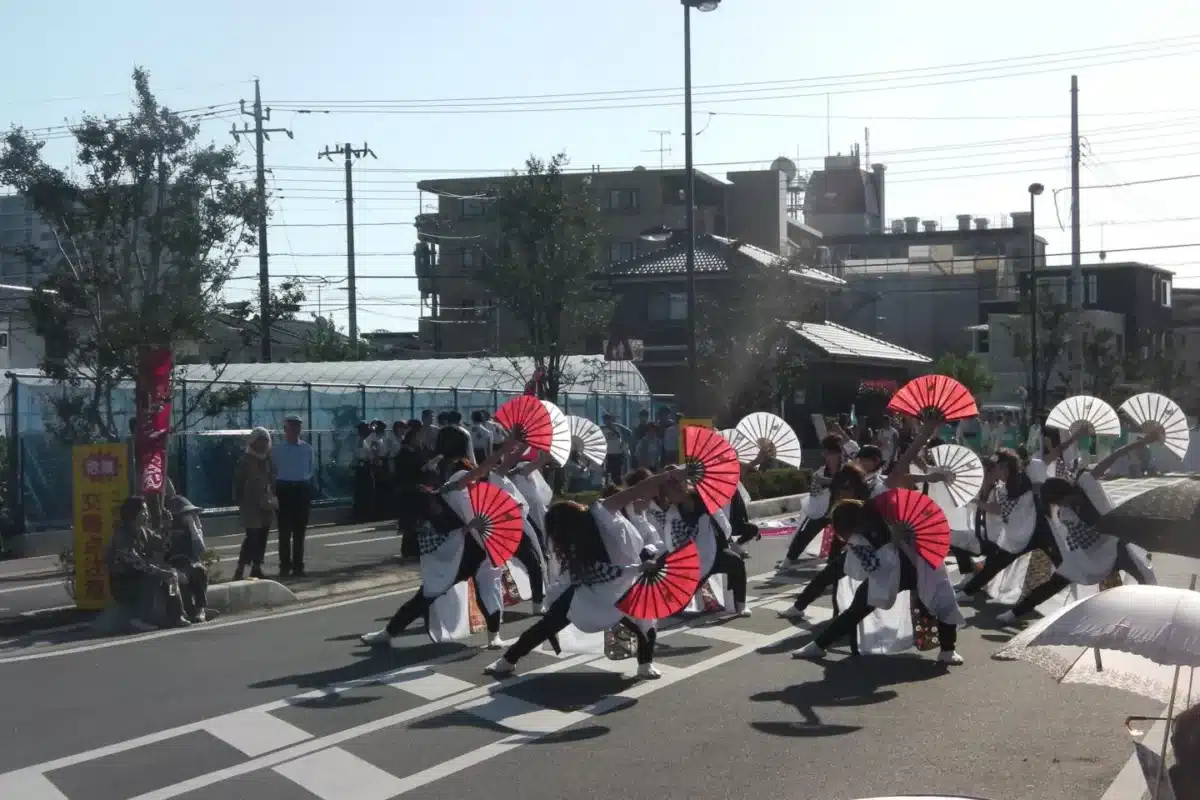
For those not familiar with this kind of event, yosakoi is a type of festival that welcomes dance teams from across the area and even the country. Teams often comprise the residents of a particular neighborhood, or one university’s students, or so on. There are even teams made up of young children, or senior citizen groups. Teams dress in matching costumes that are beautiful, colorful and bold, and march down the street performing an intricately synchronized routine.
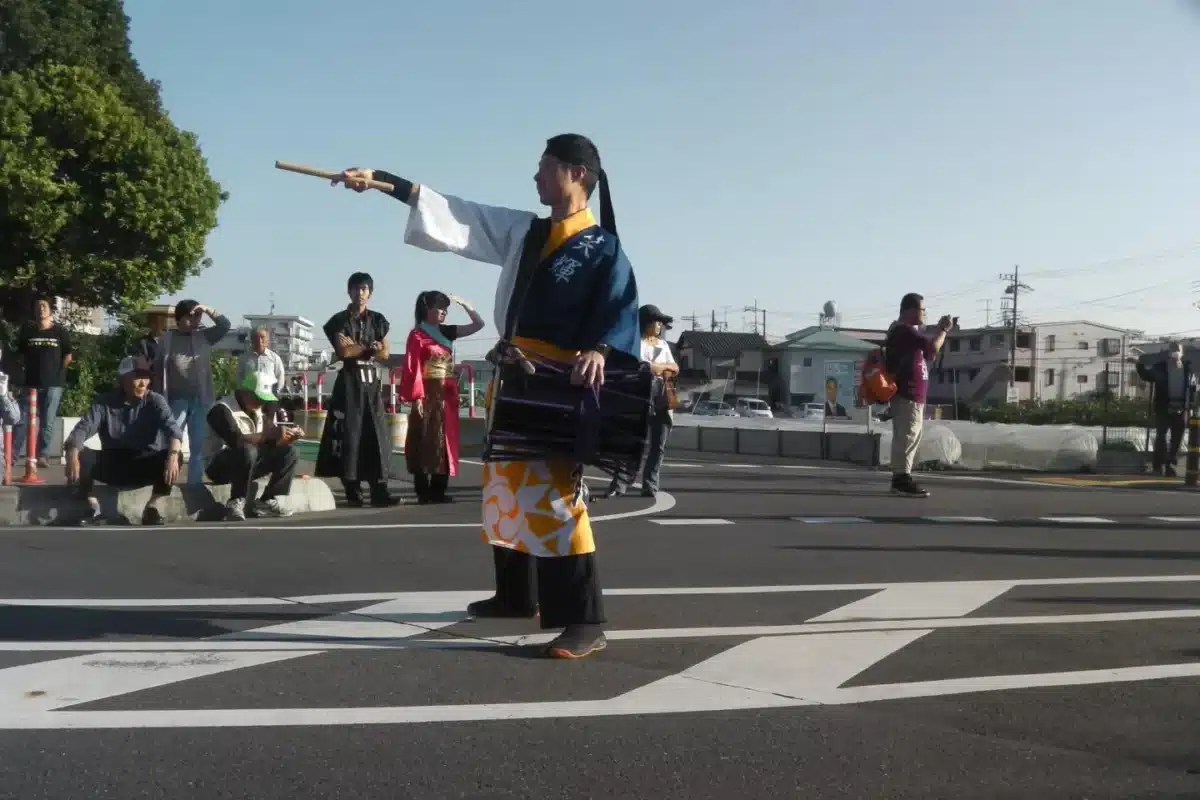
The format: Teams parade down the road in 3 sections, and only perform for a few minutes at a time before moving to another point. So, once you’ve found a good spot to stand or sit on the curb, you can just relax and watch the show pass by. With so many teams performing, it’s an entire day’s worth of fun.
Enjoy Your Event Stress-Free with Japan Travelo
Do you know? Planning events, festivals, concerts, and cultural experiences in Japan can be overwhelming. Japan Travelo brings everything together in one place, helping you manage your itinerary, transport, and accommodation with ease—so you can enjoy Japan without the stress of planning.
The charm: Part of the charm of the Tsuruse Yosakoi Festival is its small-town feel. This is a solid, entertaining show without the crowds and commercialized feel of the larger yosakoi festivals in Tokyo. The food vendor stands set up along the route seem to be run by local organizations rather than professionals who move from one festival to the next. The people are friendly, and there are plenty of opportunities to get a front-row spot. It’s definitely a family-friendly atmosphere.
Combination idea: Though Tsuruse Station is a bit rural and out-of-the-way, this yosakoi festival is traditionally held on the same day as the incredible Kawagoe Festival, which is just a few stations away and really gets cooking after sunset. The Kawagoe Festival brings in many thousands of people from all over. So, why not check out the Tsuruse Yosakoi during the day before heading down the Tobu Tojo Line to Kawagoe in the evening? It makes for a great 1-2 punch.
The Tsuruse Yosakoi Festival is free. The beginning of the route is less than a 1-minute walk from the West Exit of Tsuruse Station on the Tobu Tojo Line, which becomes the Fukutoshin Line in Tokyo. It is located on the road running directly away from the station.
Overview
Festival scale: The Tsuruse Yosakoi Matsuri features 56 teams, making it a mid-sized but densely packed yosakoi event. Each team has between 20 and 80 dancers, meaning over 2,000 performers pass through Fujimi in a single day. The parade route is short enough to be walkable but long enough to host three distinct performance zones.
Community roots: Unlike metropolitan yosakoi events organized by large corporations, Tsuruse is run by local community groups, the Fujimi City merchant association, and volunteer committees. This local ownership is visible in the food stalls, handmade decorations, and the warm interaction between dancers and residents.
Audience experience: Because it is not overcrowded, visitors can secure front-row curb seating with ease. Children can sit at the edge of the road, close enough to hear the naruko clappers and see costume details. The atmosphere is supportive rather than competitive, with constant cheering from neighbors who know many of the dancers.
Free and accessible: The entire festival is held on public roads with no ticket barriers, making it one of the most accessible cultural festivals in Saitama for families, photographers, and international visitors.
Cultural Significance & Origins
Yosakoi origins: Yosakoi was created in 1954 in Kochi Prefecture on Shikoku Island as a modern, energetic interpretation of traditional dance to revitalize the local economy after the war. The only fixed rules are to dance with naruko wooden clappers and include a phrase from the folk song Yosakoi Bushi, leaving music, choreography, and costume open to innovation.
Spread to Kanto: Yosakoi-style dancing has spread throughout much of Japan. Saitama Prefecture has become one of the strongest yosakoi regions in Kanto, with cities like Sakado, Soka, and Fujimi each hosting their own festivals. Tsuruse’s festival preserves the original community-based spirit that larger Tokyo events have lost.
Fujimi City identity: Fujimi City, located on the Tobu Tojo Line between urban Kawagoe and suburban Fujimino, is a residential city with strong neighborhood associations. The festival was created to give local youth groups, senior clubs, school teams, and neighborhood associations a stage, and to bring commercial activity to the Tsuruse Station West Exit shopping street.
Intergenerational link: Teams include young children groups, high school dance clubs, university teams, adult neighborhood teams, and senior citizen groups. This wide age range makes the festival a living archive of how yosakoi is passed between generations.
Traditions, Rituals & Customs
Naruko clappers: Every dancer must carry naruko, small wooden clappers originally used to scare birds from rice fields in Kochi. The sharp clicking sound provides the rhythmic backbone of every performance and must be heard in the music.
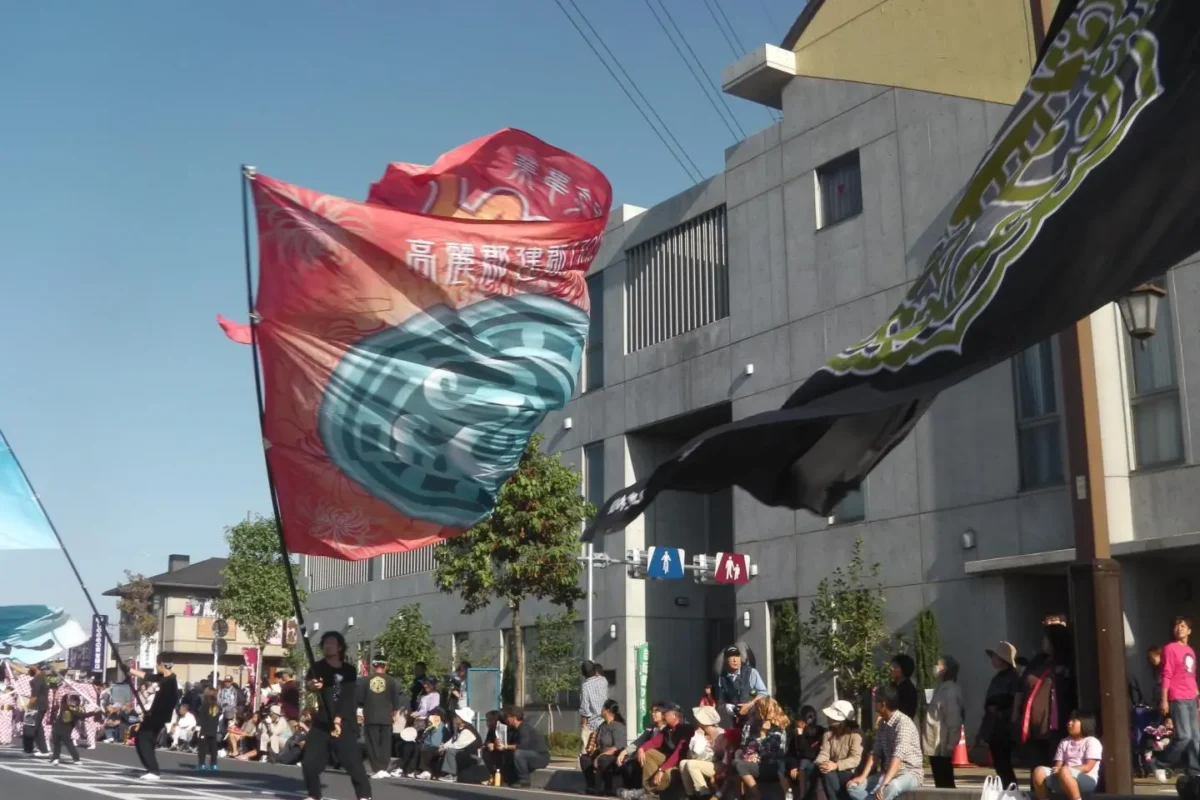
Costume and flag: Teams design matching costumes each year that are beautiful, colorful and bold. Many teams also include flag bearers waving large fishermen’s flags called hata, with hand-painted crests and team names, adding vertical drama to the street-level dance.
Formation dance: Groups perform to original music that blends traditional minyo folk, rock, samba, and hip-hop, often with live chanting of Soran and Kakumei calls. Performances are up tempo, athletic and flashy for youth teams, while others are more subtle and controlled, focusing on precise hand movements.
Street etiquette: Teams parade down the road in sections, performing for a few minutes at a fixed point before bowing to the audience and moving to the next point. Spectators clap in time, shout encouragement, and clear space for the next team. This rotating system ensures continuous action.
What to Expect at the Festival
Continuous flow: Expect non-stop dance from morning until late afternoon. With 56 teams rotating through three zones, there is rarely a quiet moment. Once you find a spot on the curb, teams will come to you.
Variety: The variance is what makes this kind of event so worth watching. You will see kindergarten teams in animal costumes, university teams with acrobatic lifts, and senior groups performing elegant, restrained choreography. Some groups include taiko drums, others include elaborate props and giant fans.
Local food village: Food vendor stands are run by local organizations rather than professional festival vendors. Expect home-style flavors, local agricultural products from Fujimi, and family-run stalls offering handmade snacks.
Friendly crowd: The crowd is primarily local families, with many spectators knowing dancers by name. It is easy to strike up conversation, ask about costumes, and get recommendations for the best viewing spot. English is limited but hospitality is high.
Date & Schedule
Event timing: October 2027 (Dates TBD)
Typical schedule based on previous editions:
Morning opening: Opening ceremony and first team parades begin around 10:00 AM near Tsuruse Station West Exit, with local officials and community leaders welcoming teams.
Midday rotations: Teams perform in three sections along the road running directly away from the station. Each team performs for approximately 4 to 6 minutes per zone, then moves to the next zone. The rotation continues throughout the day with short breaks.
Afternoon peak: The most energetic university and adult teams typically perform between 1:00 PM and 3:30 PM when crowds are largest. Family and children’s teams often perform earlier.
Late afternoon finale: Final parades and closing remarks occur in late afternoon, around 4:00 PM to 5:00 PM, followed by informal gatherings at local shops. Many visitors then head to Kawagoe Festival for the evening.
Visiting this event? Don’t miss out on these amazing activities and local experiences while you’re here.
Main Events & Programme
West Exit main street parade: The core program takes place on the road running directly away from Tsuruse Station West Exit. This is divided into three sections, each acting as a performance spot with volunteer marshals and sound systems.
Three-zone system: Teams are assigned to start in Zone 1, 2, or 3 and rotate sequentially. This means if you stay in one zone, you will eventually see all 56 teams. If you walk with a favorite team, you can follow them through all three zones.
Community stage: Between parade sections, a small stage near the station hosts opening speeches, local school band performances, and award announcements for costume design and team spirit.
Kawagoe connection: The unofficial second half of the program is the move to Kawagoe Festival in the evening. Organizers encourage visitors to enjoy Tsuruse during the day and take the Tobu Tojo Line a few stations to Kawagoe for the famous float festival after sunset, making a full day cultural itinerary.
Social media: You can follow the Tsuruse Yosakoi on Twitter at @tsuruseyosakoi for Japanese-only updates on team lineups and weather information.
Traditional Dress, Arts & Crafts
Costume design: Yosakoi costumes are entirely original each year. At Tsuruse, you will see happi coats reimagined with neon colors, kimono sleeves paired with modern dance pants, and bold matching headbands. Teams often incorporate local Fujimi motifs like keyaki tree leaves or local flower patterns.
Naruko and props: Local craft tables near the station sell naruko clappers in various colors for around 5 USD to 10 USD, as well as tenugui towels printed with yosakoi patterns. Some teams make their own fans, umbrellas, and small flags as props.
Flag art: The large hata flags, some up to 4 meters long, are hand-painted by team members and require strength training to wave. Flag bearers often perform synchronized routines behind dancers, creating wind and visual excitement.
Hair and makeup: Children’s teams use colorful face stickers and ribbons, while adult teams use dramatic eye makeup and traditional hair ornaments designed to stay secure during athletic dance.
Traditional Food & Local Specialties
Local organization stalls: Unlike large festivals with professional vendors, Tsuruse stalls are operated by neighborhood associations, PTA groups, and local shops. This means lower prices and home-style taste.
What to try:
Yakisoba and okonomiyaki: Grilled noodles and savory pancakes cooked on iron plates, typical price 3 USD to 5 USD per serving.
Karaage and yakitori: Fried chicken and grilled chicken skewers from local butcher shops, 3 USD to 6 USD for a cup or set.
Imagawayaki and taiyaki: Sweet red bean filled cakes, popular with children, 2 USD to 4 USD.
Fujimi vegetables: Seasonal produce from Saitama farms, sometimes sold as fresh skewers or in miso soup, 2 USD to 5 USD.
Drinks: Canned coffee, Ramune soda, and local tea, 1 USD to 3 USD.
Location & Festival Areas
City context: Fujimi City is in southeastern Saitama Prefecture, part of the Greater Tokyo area. Tsuruse is its eastern district, centered around Tsuruse Station on the Tobu Tojo Line, TJ-17.
Festival geography: The entire festival is concentrated within a 500-meter stretch starting less than a 1-minute walk from the West Exit of Tsuruse Station. The road running directly away from the station is closed to traffic and becomes the parade route.
Three performance sections:
Zone 1 – Station front: Immediately outside West Exit, best for arrival viewing and community stage.
Zone 2 – Mid shopping street: Lined with local shops and food stalls, with shaded areas and convenience stores.
Zone 3 – Far end: Quieter, more residential, with more space for large flag performances and family seating.
Nearby landmark: Tsuruma district address is Tsuruma, Fujimi-shi, Saitama, with festival activities centered at Tsuruse Station West area.
Getting to the Festival
By train: The easiest access. From Ikebukuro Station in Tokyo, take the Tobu Tojo Line express to Tsuruse Station. The ride takes about 35 to 45 minutes depending on service. Fare is approximately 4 USD to 6 USD one way based on previous pricing. The line becomes the Fukutoshin Line and Toyoko Line in Tokyo, allowing through service from Shibuya and Yokohama without transfer.
From Kawagoe: Tsuruse is just a few stations from Kawagoe on the same line. Travel time to Kawagoe Station is about 10 to 15 minutes, making the Tsuruse daytime and Kawagoe evening combination very convenient. Fare between Tsuruse and Kawagoe is around 2 USD to 3 USD.
On foot: Once you exit West Exit, you are at the festival. No shuttle or additional walking needed. The route is flat and paved.
By car: Not recommended due to road closures. If driving, use nearby municipal parking at Fujimi City Hall area and walk. The area around Tsuruse Station has limited coin parking that fills early.
Accessibility: The parade route is flat, accessible for wheelchairs and strollers. Curb seating is available throughout.
Where to Stay Nearby
Fujimi and Fujimino: Business hotels near Fujimino Station and Tsuruse offer rates from 45 USD to 80 USD per night. Limited availability, so book early.
Kawagoe: Staying in Kawagoe offers many more options, from traditional ryokan to modern business hotels, ranging from 60 USD to 130 USD per night. Ideal if you plan to attend both Tsuruse Yosakoi during the day and Kawagoe Festival at night.
Ikebukuro and central Tokyo: Many visitors base in Ikebukuro for direct Tobu Tojo Line access. Hotels there range from 70 USD to 150 USD per night, with easy morning departure to Tsuruse.
Booking tip: Since Tsuruse coincides with Kawagoe Festival, which attracts thousands, hotels in Kawagoe and along the Tobu Tojo Line sell out quickly. Book at least two months ahead.
What Visitors Can Participate In
Watch front-row: No participation ticket needed. Sit on the curb, cheer, and clap. Teams appreciate vocal encouragement and will often smile and interact with front-row children.
Buy naruko: Purchase a pair of naruko clappers from craft stalls and try clapping along with the rhythm. Volunteers sometimes teach basic clapper patterns to children.
Support local stalls: Buying food from local association stalls directly supports the community groups that organize the festival.
Photography: Photography and video are allowed from the sidewalk. Front-row spots offer excellent close-up shots of costumes and synchronized movements. Ask permission before photographing individual children up close.
Combine festivals: Participate in the unique local tradition of doing both festivals in one day. Enjoy Tsuruse Yosakoi during the day, then ride to Kawagoe for the evening float festival with lanterns and traditional music.
Things to Do Before or After the Festival
Kawagoe Festival: The main recommended after-event. Just a few stations away, this UNESCO Intangible Cultural Heritage festival features massive dashi floats with intricate carvings, traditional hayashi music, and lantern-lit evening parades that really get cooking after sunset.
Fujimi City parks: Mizuhara Park and Nanbata Castle Park offer seasonal flowers and walking paths, good for a quiet morning before the festival starts.
Shopping at Tsuruse West: Local shopping street offers 100-yen shops, bakeries, and cafes where you can rest between parade rotations.
Saitama day trips: If extending your stay, nearby places include John Lennon Museum site area, Saitama’s Saitama Stadium area, and Tokyo’s Ikebukuro for shopping and dining.
Local Food & Restaurants
Around Tsuruse Station West: The immediate festival street has ramen shops, curry houses, and family-run izakaya. Many offer special festival bentos during event day, priced 5 USD to 8 USD.
Fujimi specialty: Saitama is known for sweet potato, negi green onion, and river fish. Local restaurants serve tempura with local vegetables, and udon noodles with deep broth.
Izakaya evening: After daytime festival, many locals head to izakaya near Fujimino and Tsuruse for yakitori and beer. Budget 12 USD to 25 USD per person for dinner and drinks.
Kawagoe dining: If heading to Kawagoe in the evening, try Kawagoe’s famous sweet potato snacks, unagi eel, and craft beer. Kawagoe’s warehouse district has many renovated restaurants.
Ticket Information & Access
Admission: The Tsuruse Yosakoi Festival is free. No tickets required for any viewing area. Based on previous editions, tickets remain 0 JPY, approximately 0 USD.
Seating: General viewing is free curb seating. No reserved or paid seating. Arrive 30 minutes before peak afternoon for best front-row spot. Bring a small mat or foldable stool for comfort.
Participation costs: For spectators, only food, drinks, and crafts cost money. Team participation is handled by team registration, with dancer fees typically 20 USD to 40 USD for costume and logistics.
Access notes: The festival is outdoors on public roads. In case of heavy rain, the event may be delayed or shortened. Updates are posted on Twitter account @tsuruseyosakoi. The festival is family-friendly with no age restrictions.
Cost reference: Food stall items from previous editions range 2 USD to 6 USD, craft naruko 5 USD to 10 USD, drinks 1 USD to 3 USD. Train fare from Ikebukuro to Tsuruse around 4 USD to 6 USD.
Official Event Information
Event name: Tsuruse Yosakoi Festival 2027 – Fujimi, Japan
Location: Tsuruse Station West Exit, road running directly away from station, Tsuruma, Fujimi-shi, Saitama 354-0024, Japan
Organizer: Tsuruse Yosakoi Matsuri Executive Committee, Fujimi City local merchant and community associations
Access: Less than 1-minute walk from West Exit of Tsuruse Station, Tobu Tojo Line TJ-17, which becomes Fukutoshin Line in Tokyo
Official website text: https://en.japantravel.com/saitama/tsuruse-yosakoi-festival/6060 and social updates at twitter.com/tsuruseyosakoi
Facilities: Three parade sections, community stage, local organization food stalls, public toilets at station, convenience stores along route
Additional note: Traditionally held on same day as Kawagoe Festival, allowing a combined day-evening cultural itinerary via Tobu Tojo Line
Location
FAQ
What makes Tsuruse Yosakoi different from larger yosakoi festivals in Tokyo or Saitama?
Tsuruse Yosakoi is prized for its small-town vibe and lack of commercialization, with only 56 teams compared to hundreds at major city festivals. Food stalls are run by local organizations rather than professional vendors, and you can easily get front-row curb seating without crowds. The community feel, friendly locals, and direct interaction with dancers make it more intimate and family-friendly than large urban events.
Can I attend both Tsuruse Yosakoi and Kawagoe Festival on the same day?
Yes, this is a popular and recommended combination among locals and visitors, as the two festivals are traditionally held on the same day just a few stations apart on the Tobu Tojo Line. Tsuruse runs during the daytime, while Kawagoe Festival becomes most spectacular after sunset with illuminated floats. You can watch Tsuruse in Fujimi during the day and take a 10 to 15 minute train to Kawagoe for the evening, creating a great cultural double experience.
Is the festival suitable for international visitors who do not speak Japanese?
The festival is very welcoming to international visitors despite Japanese-only announcements, as dance is visual and music is energetic and easy to follow. Locals are friendly and will often gesture to share the best viewing spots or explain team names. The location less than one minute from Tsuruse Station West Exit makes navigation simple, and food stalls use picture menus and samples.
How long should I stay and where should I stand?
With 56 teams performing in three rotating sections, you can enjoy a full day from morning to late afternoon without moving much, as teams will come to you. If you stay in one zone, you will eventually see all teams, while walking between zones gives different perspectives. Arrive in the morning for opening and children's teams, stay through early afternoon for peak performances, and leave mid-afternoon if heading to Kawagoe.
Do I need tickets or reservations for the Tsuruse Yosakoi Festival?
No tickets or reservations are needed, as the festival is completely free and held on open public roads. There is no reserved seating, so all viewing is first-come front-row curb seating that is easy to obtain due to the small-town crowd size. You only need money for train fare, food stall purchases, and any crafts like naruko clappers you wish to buy as souvenirs.

Leave a Reply