
Overview
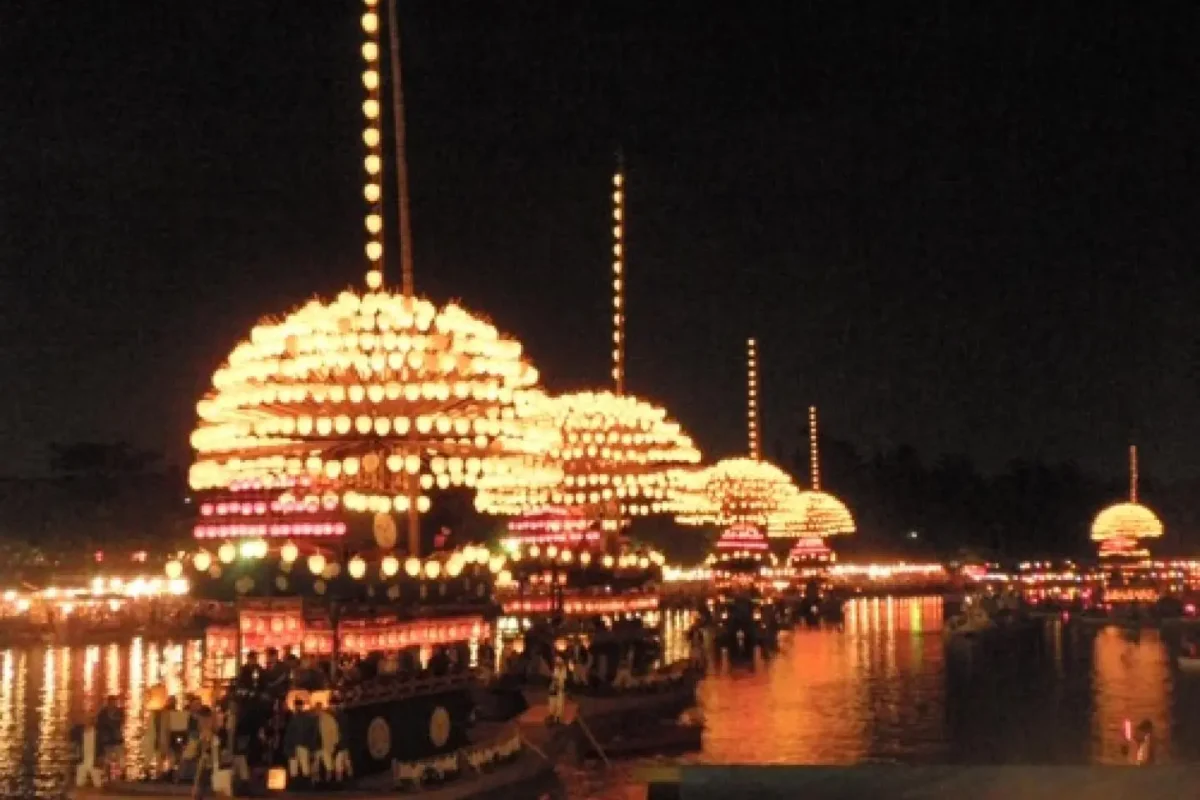
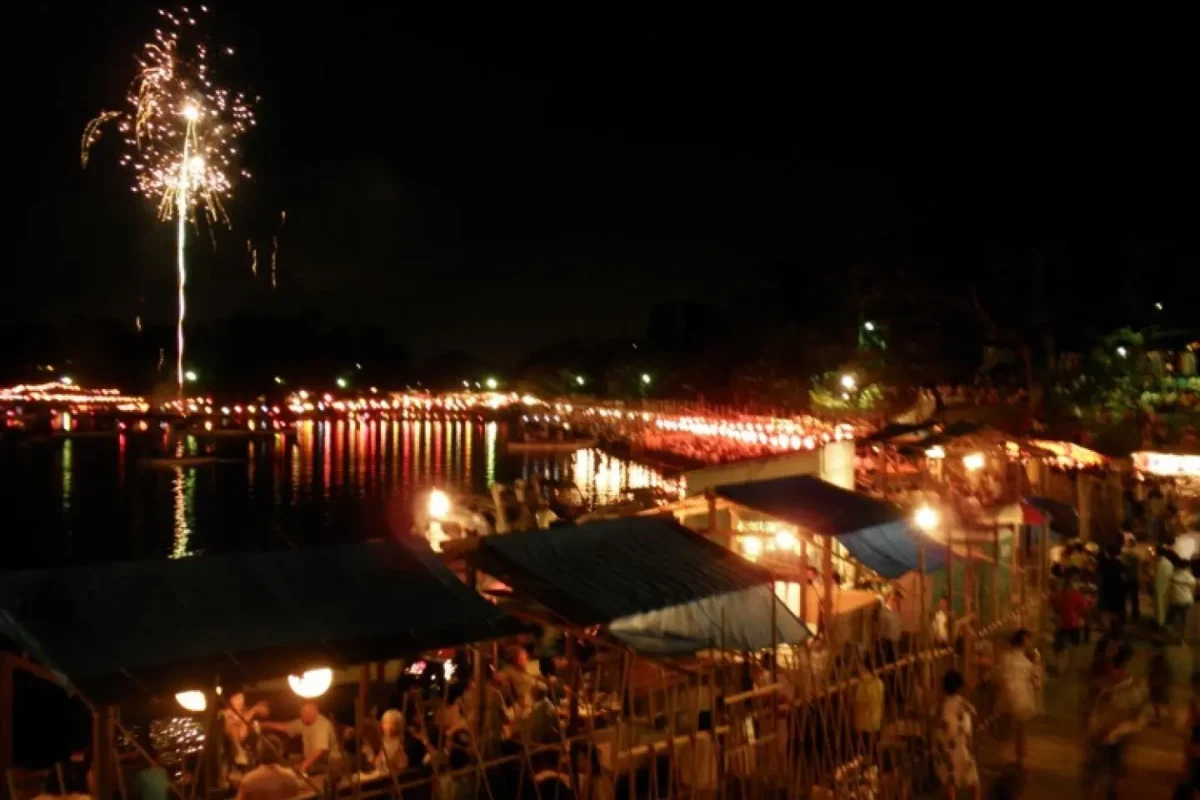
The Tsushima Tenno Festival, known locally as Owari Tsushima Tenno Matsuri, is one of Japan’s three great river festivals, alongside Osaka’s Tenjin Matsuri and Hiroshima’s Kangen-sai at Itsukushima Shrine. For more than five centuries, the people of Tsushima City in Aichi Prefecture have gathered along the banks of the Tenno River to witness an ethereal spectacle of light floating on water.
The festival is divided into two distinct parts that showcase two completely different artistic traditions. The first is the Yoimatsuri, the Night Festival, famous for its fleet of illuminated Makiwara boats that glide across the dark water like floating mountains of light. The second is the Asamatsuri, the Morning Festival, where the same boats are transformed into floating stages for Noh theatre, decorated with exquisite hand-woven tapestries and mechanical Karakuri dolls.
Tsushima itself is a small city of around 66,000 people located just west of Nagoya City, sitting on the flood plain of the old Tenno River. The city is known for having an extraordinary number of historic temples, more than even Kyoto by local count, and for its long traditions of Wisteria and Autumn festivals. Yet it is the Tenno Festival that has earned it national fame. Designated as a National Important Intangible Folk Cultural Asset and recognized by UNESCO as part of Japan’s Intangible Cultural Heritage, the festival was said to have been a favorite of local warlord Oda Nobunaga and Toyotomi Hideyoshi. The latter was so enamored that he reportedly considered replicating the festival near his Fushimi Castle.
Enjoy Your Event Stress-Free with Japan Travelo
Do you know? Planning events, festivals, concerts, and cultural experiences in Japan can be overwhelming. Japan Travelo brings everything together in one place, helping you manage your itinerary, transport, and accommodation with ease—so you can enjoy Japan without the stress of planning.
Visitors experience not only the boats but also matchlock gun demonstrations, handheld fireworks that resemble upright bazookas, traditional singing and dancing, flute music played from the boats, and grand fireworks that roar like thunder above the river. Most spectators dress in light summer kimono called yukata, watch from the riverside, or take to small pleasure boats to enjoy meals and entertainment on the water.
Cultural Significance & Origins
The precise origin of the Tsushima Tenno Festival is unknown, which adds to its mystique. Historical records confirm its existence back to 1459, making it over 500 years old, but scholars debate its founding narrative.
One widely accepted theory traces it to the Jinryo ritual of Tsushima Shrine during the Muromachi period. At that time, Tsushima consisted of five economically powerful villages named Komenoza, Imaichiba, Raftaba, Shimomizo, and Tsutsumishita. Their prosperity allowed the festival to be held on a grand scale. Another theory connects it to a ritual to honor and appease the deity Gozu Tenno, a protective deity believed to ward off epidemics and evil spirits that thrive in the hot and humid season. This concept, known as Kami-mukae, is the welcoming of the gods to seek protection from disease.
A more dramatic legend dates to the period of the Northern and Southern dynasties. It tells that Prince Ryo, grandson of Southern Emperor Go-Daigo, had escaped to Tsushima. Local warriors of Tsushima invited his Northern pursuers to a boating excursion on the Tenno River as a ruse to subdue them. The boating ritual is said to commemorate that strategic invitation.
Regardless of origin, the festival’s cultural importance is undisputed. It served as a demonstration of community cohesion among the five villages, each responsible for one of the five Makiwara boats. It also became a festival of the samurai elite. Oda Nobunaga, Toyotomi Hideyoshi, and the feudal lords of Owari were among its notable patrons. The celebrated ukiyo-e woodblock artist Utagawa Hiroshige, famed for his Fifty-Three Stages of the Tokaido, also made a print depicting the stunning night scenes of the lantern-laden Makiwara boats, cementing its place in Japanese art history.
Today, its designation as a UNESCO Intangible Cultural Heritage property acknowledges its role in preserving traditional craftsmanship, music, and community ritual.
Traditions, Rituals & Customs
The festival is built around water purification and community representation.
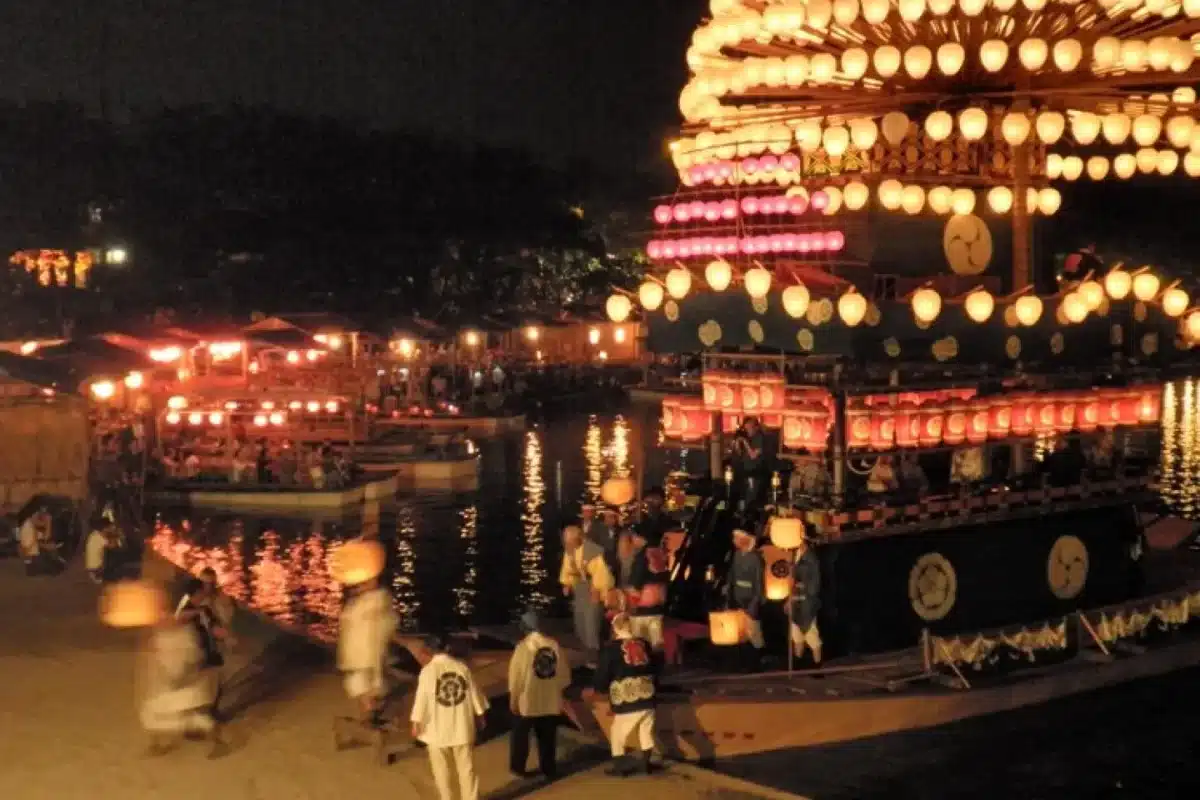
The Five Makiwara Boats: The heart of the festival is the fleet of five Makiwara-bune boats. Each boat represents one of the former five villages of Tsushima. For the night event, each boat is constructed from two boats strapped together with purified straw ropes called shimenawa and built upward to represent a mountain. The structure is unlike any other festival float in Japan.
The Lantern Symbolism: The lantern arrangement is deeply symbolic. On each boat, 365 large paper lanterns are arranged in a dome shape resembling a flying saucer or a glowing mushroom cap, one for each day of the year. Above this dome, an antenna-like pole holds 12 or 13 lanterns to represent the months of the year, with the 13th accounting for leap years. Under the main dome hang 30 red lanterns called miyoshi-nagashi, representing the days of the month. Additional lanterns decorate the bow. In total, each boat carries nearly 500 lanterns, creating a reflection in the calm dark water that is both sacred and ethereal.
Tsushima Flutes and Music: On board each Makiwara boat, musicians play the Tsushima flute, a local folk instrument with a haunting tone. Their music accompanies the slow gliding of the boats.
The Morning Transformation: For the morning event, the same five boats are completely redecorated. The lantern domes are removed and replaced with gorgeous red, black, and gold hand-woven tapestries. On deck, Karakuri Ningyo mechanical dolls dressed in Noh costumes are displayed. These dolls represent characters from Japan’s traditional Noh performing arts and are operated with intricate clockwork mechanisms.
The Ichieguruma and Halberd Ritual: The five boats are joined by a sixth boat, the Ichieguruma from neighboring Higashiho-cho. This boat is also decorated with Noh dolls. On board are ten specially chosen men armed with cloth-covered halberds called nagemono. As part of the ritual, they dive from the boat with the halberd, then swim or walk to shore before presenting the broad-bladed pole-arm to Tsushima Shrine as an offering. This act symbolizes the delivery of protection to the shrine.
What to Expect at the Festival
Expect a festival that moves between thunderous energy and serene beauty.
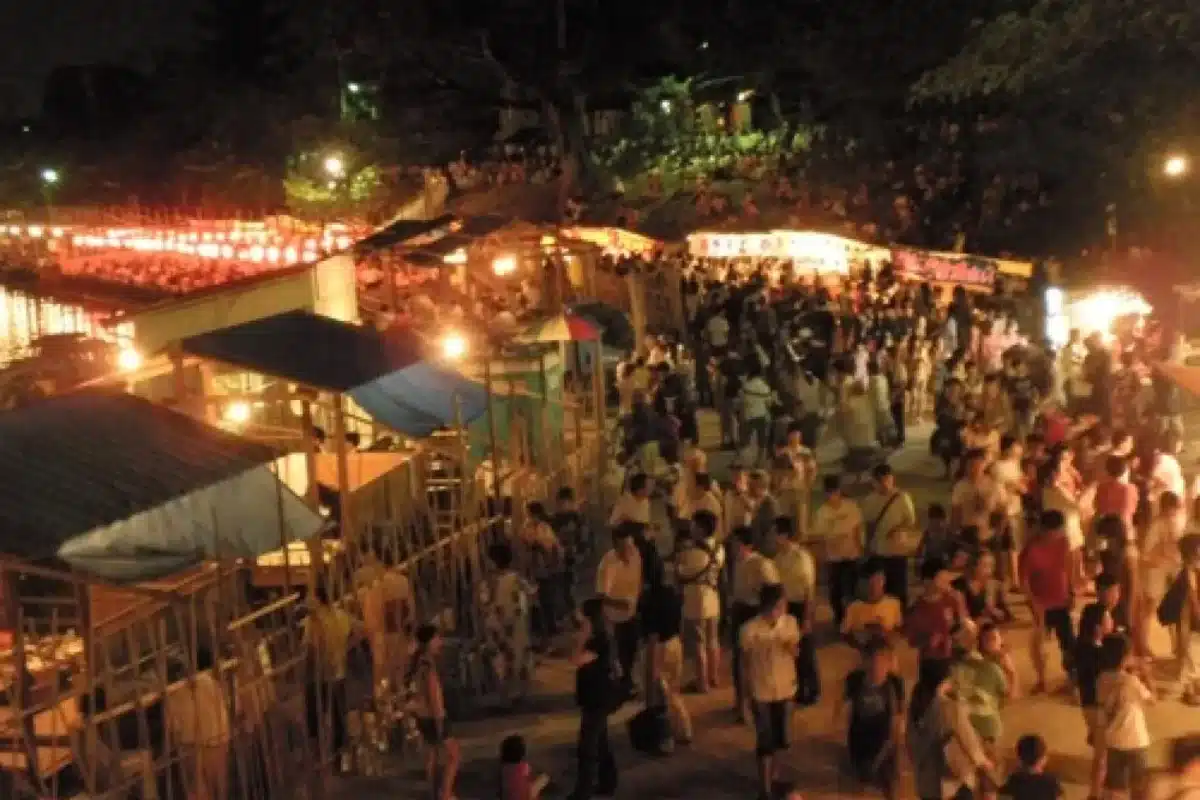
In the evening, the atmosphere begins with lively street entertainment. You will hear the sharp cracks of matchlock gun firing demonstrations, see handheld fireworks shooting sparks into the sky, and encounter singing and dancing groups along the riverbank. Food stalls called yatai line the approaches to Tennogawa Park, serving local specialties and drinks. As darkness falls, the crowd, many in yukata, falls silent in anticipation. Teams then begin lighting the lanterns on the boats one by one. When the boats set sail amid a fireworks display, they float serenely toward Tennogawa Park and then return, their hundreds of orange-yellow lights reflected perfectly in the water. Cameras click constantly, but the true experience is watching the reflection ripple as the boats move.
During the morning segment, the mood is more theatrical and colorful. The boats, now in their tapestry-clad form, process up the river as bands play traditional music from their decks. The sight of the Noh dolls in full costume, with their elaborate embroidered robes, is remarkably detailed even from the riverbank. The halberd diving ritual draws gasps and cheers as the participants plunge into the river and make their way ashore. The rest of the day is filled with various displays, kagura music performances at the shrine, and community events.
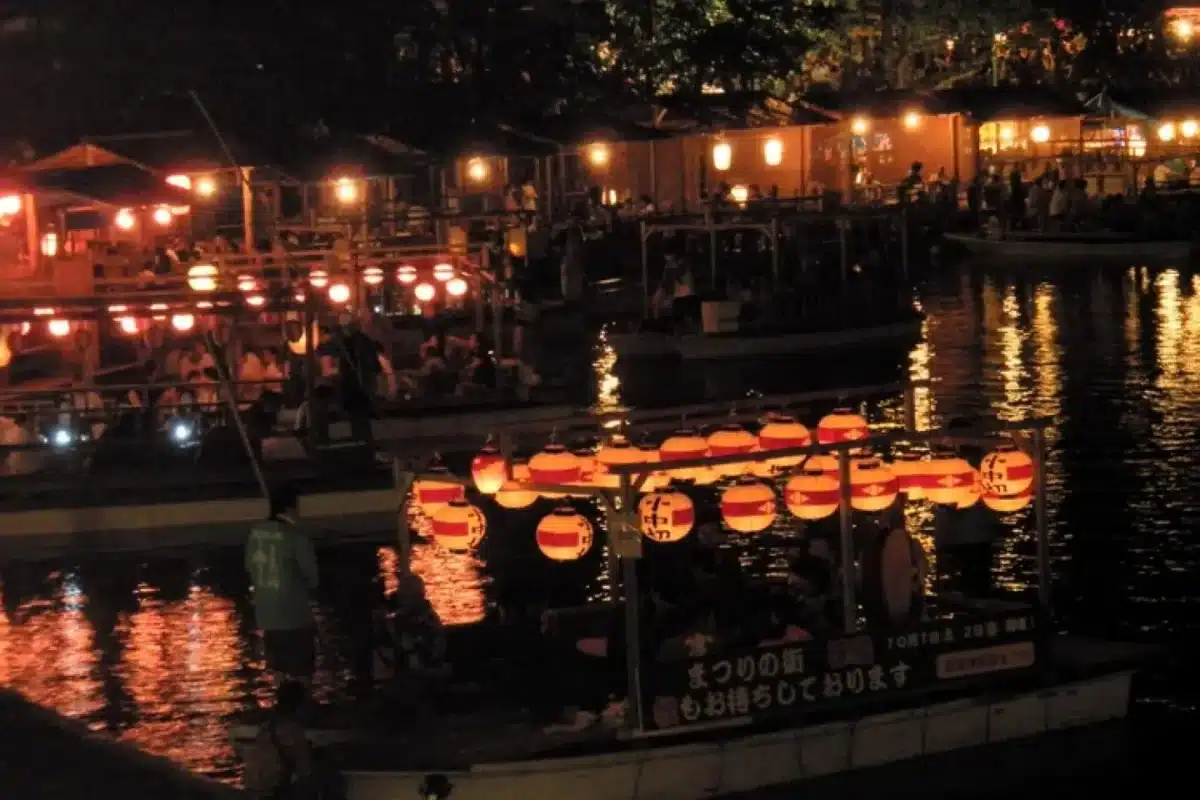
Small private boats dot the river during both segments, with families enjoying meals and drinks aboard, continuing a tradition of river-borne entertaining that has lasted for centuries.
Date & Schedule
Location: Tennogawa Park
Official Period: Late July 2027 (Dates TBD)
The Tsushima Tenno Festival is traditionally held over two days, centered on the last weekend of the hot season. While exact times for the 2027 edition will be announced closer to the event, the program consistently follows this historic structure.
Day One – Yoimatsuri Night Festival: The formal start typically begins in the morning when portable Mikoshi shrines are moved from Tennogawa Park to Tsushima Shrine. Throughout the afternoon, people gather along the riverbanks, staking claims on viewing spots and enjoying food stalls. At around 18:00, demonstrations of traditional arts begin, including matchlock weapons, shamisen performances, and folk music. At approximately 19:00, the lighting of the lanterns begins. The five Makiwara boats set sail down the Tenno River from Maru Pond, float toward Tennogawa Park accompanied by fireworks, and then return. This is the highlight of the entire festival.
Day Two – Asamatsuri Morning Festival: The second day begins at around 09:00 when six Danjiri-bune boats, five from the previous night plus the Ichieguruma, sail from the starting point. The boats are now decorated with tapestries and Karakuri dolls. The procession takes approximately 45 minutes. Upon arrival, the halberd diving ritual takes place. At around 11:30, kagura music is performed at Tsushima Shrine after the boats have returned. Various other displays and festivities continue throughout the afternoon at Tsushima Shrine and Tennogawa Park.
Visiting this event? Don’t miss out on these amazing activities and local experiences while you’re here.
Main Events & Programme
Yatai and Folk Performances: Scattered around Tennogawa Park and Tsushima Shrine grounds are food stalls and stages for local folk singing and dancing that entertain the crowds before the main boating events.
Matchlock Gun and Tezutsu Fireworks: Traditional gunners in period attire demonstrate antique matchlock rifles. Alongside them, performers handle tezutsu, a type of handheld firework that looks like an upright bazooka, shooting showers of sparks into the air. This gets festival-goers in the mood for the evening spectacle.
Makiwara Boat Night Procession: The centerpiece. Five boats, each carrying around 400 to 500 lanterns arranged in a dome, glide along the Tenno River to the accompaniment of Tsushima flute players on board. The reflections of hundreds of lanterns in the dark, calm waters create an ethereal effect that is considered one of the most beautiful scenes of all Japanese summer festivals.
Fireworks Display: A major fireworks show is launched above the Tenno River during the night procession, with explosions roaring like thunder and reflecting in the water alongside the lanterns.
Danjiri Boat Morning Procession: The morning transformation where six boats decorated with hand-woven tapestries and Karakuri Ningyo mechanical dolls in Noh costumes parade on the river. Bands play traditional music from the decks.
Nagemono Halberd Offering: The ritual dive by ten men from the Ichieguruma boat, carrying cloth-covered halberds, swimming or walking to shore to present them to Tsushima Shrine.
Kagura and Noh Dedication: After the boats return, sacred kagura dance and music are performed at Tsushima Shrine, along with displays of the Noh dolls.
Traditional Dress, Arts & Crafts
This festival is a living museum of Owari region craftsmanship.
Tapestries: The most prized art is the hand-woven tapestries used for the morning festival. These are made using traditional Nishijin-ori techniques with gold thread, depicting dragons, phoenixes, and scenes from Noh plays. Each tapestry can take years to complete and is treated as a community treasure, stored carefully and only displayed during the festival.
Karakuri Ningyo: The mechanical dolls are masterpieces of Edo-period automaton technology. Dressed in authentic Noh costumes made from silk and gold brocade, they can move their heads and arms through intricate clockwork mechanisms hidden beneath their robes. Local artisans maintain these dolls throughout the year.
Lantern Craft: The large paper lanterns are handmade with washi paper stretched over bamboo frames. Calligraphy and family crests are painted on some, while others remain plain to maximize light. Creating and maintaining 2,500 lanterns for the fleet requires months of work by community volunteers.
Costumes: Participants wear traditional attire appropriate to their role. Flute players wear summer kimono, the ten halberd bearers wear white purification robes with headbands, and the mikoshi carriers wear happi coats bearing the crest of Tsushima Shrine. Spectators traditionally wear light yukata, and you will see many locals in elegant summer kimono watching from the riverside.
Traditional Food & Local Specialties
Festival food is centered on Aichi and Owari specialties.
Hitsumabushi and Unagi: Tsushima is near the eel farming areas of Aichi. Grilled eel served over rice in three different styles is a local favorite.
Miso Katsu: A Nagoya specialty available at stalls, pork cutlet covered in a rich, sweet red miso sauce that is unique to the region.
Tenmusu: Small rice balls with tempura shrimp, a famous Nagoya snack perfect for eating while watching the river.
Kishimen and Miso Nikomi Udon: Flat noodles in a light broth or thick noodles stewed in miso, both warming dishes served at yatai despite the heat.
Cold Beers and Kakigori: Due to the steaming hot evening atmosphere, ice-cold local beers from Aichi breweries and kakigori shaved ice flavored with matcha, strawberry, and local wisteria honey are extremely popular.
Wisteria-themed Sweets: Tsushima is famous for its Wisteria Festival, and wisteria-inspired sweets like fuji manju bean buns are sold year-round as souvenirs.
Location & Festival Areas
The festival is centered on two interconnected locations in Tsushima City, Aichi Prefecture.
Tennogawa Park: This is the main viewing area and where the Makiwara boats depart and arrive. The park surrounds Maru Pond, a wide section of the old Tenno River that has been preserved as a park lake. The park has permanent bleachers and open lawns for viewing. The address is broadly Tennogawa Park, Tsushima City. The night illumination is best seen from the western bank.
Tsushima Shrine: Located at 1 Shinmeicho, Tsushima City, about a 15-minute walk from Meitetsu Tsushima Station. The shrine is the spiritual home of the festival, where mikoshi are housed and where the halberds are presented and kagura is performed. The shrine itself is open every day from 9:00 AM to 4:30 PM and admission is free.
Tenno River Course: The boats travel along a defined course on the Tenno River between Maru Pond and Tsushima Shrine, allowing viewing from both banks and from bridges.
Getting to the Festival
Tsushima is easily accessible from Nagoya, making it a popular day trip or overnight stay.
By Train from Nagoya: The most convenient route is via Meitetsu Line. Take the Meitetsu Nagoya Main Line from Meitetsu Nagoya Station through Sukaguchi to Tsushima Station. It is then a 20-minute walk to Tennogawa Park and a 15-minute walk to Tsushima Shrine. Alternatively, take JR Kansai Main Line to Yatomi Station and change to the Meitetsu Tsushima Line to Tsushima Station. During the festival, extra trains are operated and signage is in English.
By Car: Approximately 15 minutes from Yatomi Interchange on Route 155. However, parking near Tennogawa Park is extremely limited and roads around the park are closed during the festival. Public transport is strongly recommended.
Local Transport: On festival days, shuttle buses often run from Tsushima Station to Tennogawa Park. The area is best explored on foot.
Accessibility: The park has paved paths, but riverbanks can be crowded and uneven. Arrive early to secure a spot with a clear view if you have mobility needs.
Where to Stay Nearby
Tsushima is a small city, so many visitors stay in nearby Nagoya, which offers a huge range of accommodation and is only 30 to 40 minutes away by train.
In Tsushima City: There are a few business hotels and ryokan near Tsushima Station. These sell out very quickly for the festival weekend, often a year in advance. Booking early is essential if you want to stay within walking distance and enjoy the evening festivities without worrying about the last train.
In Nagoya City: Nagoya Station and Sakae areas offer everything from luxury hotels to budget hostels. Staying in Nagoya allows you to combine the Tenno Festival with other attractions and provides more dining options after the festival ends.
In Yatomi and Kanie: Towns along the Meitetsu Line offer business hotels at slightly lower rates and easy train access.
Tips: If you plan to watch both the night and morning festivals, consider staying overnight in Tsushima or nearby Yatomi. The morning festival starts early, and traveling from central Nagoya requires an early departure.
What Visitors Can Participate In
While the boating rituals themselves are reserved for designated community members, visitors are warmly included in many aspects.
Yukata Dressing: Many locals wear yukata, and visitors are encouraged to do so as well. Kimono rental shops in Nagoya offer yukata sets, and wearing one adds to the festive atmosphere.
Pleasure Boats: Small private boats and paid sightseeing boats are available on Maru Pond during the festival. You can take to the water to enjoy a meal, drinks, and entertainment from the water level, close to the illuminated Makiwara boats. These need to be reserved in advance through the Tsushima City Tourist Association.
Photography: The festival is one of the most photogenic in Japan. Tripods are restricted in crowded areas, but handheld photography is encouraged. The reflection of lanterns on water is best captured with a fast lens.
Stalls and Games: Join in traditional festival games, buy local crafts, and enjoy the yatai food stalls with locals.
Shrine Visit: Visit Tsushima Shrine to see the mikoshi, make an offering, and watch the kagura performances after the boats return.
Things to Do Before or After the Festival
Tsushima and western Aichi offer many cultural stops.
Tsushima Shrine Exploration: Spend time at Tsushima Shrine outside of festival hours. The shrine has a history of warding off epidemics and houses important cultural properties. The grounds are peaceful and filled with old camphor trees.
Temple Hopping: Explore Tsushima’s many temples. The city claims to have more temples than Kyoto, and many are within walking distance of the shrine, including Hosenji Temple with its beautiful gardens.
Tennogawa Park Wisteria: If you visit in late spring, the park is famous for its wisteria trellises, which are illuminated at night during the Wisteria Festival. The same pond used for the Tenno Festival becomes a sea of purple flowers.
Nagoya Castle and Atsuta Shrine: Combine your trip with Nagoya’s main attractions. Nagoya Castle, home of the Owari Tokugawa, and Atsuta Shrine, one of Japan’s most important shrines, are both easily accessible.
Legoland Japan and SCMaglev Park: For families, the Nagoya area offers modern attractions that contrast nicely with the traditional festival.
Local Food & Restaurants
Tsushima City and Nagoya offer excellent dining.
Around Tennogawa Park: During the festival, yatai stalls are the main dining option, serving yakisoba, takoyaki, grilled squid, and local Aichi specialties. Permanent restaurants near the park serve Hitsumabushi and miso-based dishes.
In Tsushima Station Area: Small izakaya and family restaurants serve Owari specialties like miso nikomi udon, tebasaki chicken wings, and doteni stew. Many offer set meals at reasonable prices.
Nagoya Meshi: If staying in Nagoya, try Nagoya’s famous food culture known as Nagoya Meshi. Recommended dishes include miso katsu at Yabaton, hitsumabushi at Atsuta Horaiken, and kishimen noodles at Miya Kishimen in Atsuta Shrine.
Sake: Aichi has many sake breweries. Look for local brands like Kuheiji and Nito to accompany your meal.
Ticket Information & Access
The Tsushima Tenno Festival is a community festival that is free to watch for all visitors.
Admission: Viewing the Makiwara boat processions from the banks of Tennogawa Park and the Tenno River, as well as visiting Tsushima Shrine grounds, is free of charge. There is no ticket required for general standing areas. This applies to both the Yoimatsuri night festival and the Asamatsuri morning festival.
Paid Sightseeing Boats: The only paid element is the optional sightseeing boats on Maru Pond that allow you to view the lantern boats from the water. Pricing from previous editions is as follows. Sightseeing pier boat: from $15.00 to $25.00 per person for approximately 30 minutes. Private small boat rental for up to 4 people: from $60.00 to $100.00 per boat. Prices may vary slightly by operator and are paid on site or via advance reservation through the tourist association.
Access Information: Tennogawa Park is a 20-minute walk from Meitetsu Tsushima Station. The park opens early for visitors to secure spots. For the night festival, arrive at least two hours before the lantern lighting begins to get a good position on the western bank for photography. For the morning festival, arrive by 08:30 for the 09:00 departure.
Facilities: Temporary toilets, information booths, and first aid stations are set up in Tennogawa Park during the festival. English information pamphlets are usually available at the information booth.
Official Event Information
Festival Name: Owari Tsushima Tenno Festival, also known as Tsushima Tenno Matsuri
Shrine: Tsushima Shrine, 1 Shinmeicho, Tsushima City, Aichi Prefecture
Park: Tennogawa Park, Tsushima City
Designation: National Important Intangible Folk Cultural Asset, UNESCO Intangible Cultural Heritage
Inquiries: Festival inquiries at 0567-26-3216 Owari Tsushima Tenno Festival Supporter’s Association Office, Event inquiries at 0567-28-8051 Tsushima City Tourist Association, Tourism Promotion Section at 0567-55-9589 Tsushima City Hall
Official Website URL as Text: https://en.japantravel.com/aichi/the-floating-festival-floats-of-the-tsushima-tenno-matsuri/642
Video
Location
FAQ
What makes the Tsushima Tenno Festival one of Japan's three great river festivals?
The festival is considered one of the three great river festivals because of its scale, history of over 500 years, and unique water-based spectacle that cannot be seen elsewhere. Its five massive Makiwara boats, each covered in nearly 500 lanterns arranged to symbolize the calendar, create a floating mountain of light that reflects on the dark water. This combination of community craft, sacred ritual to appease Gozu Tenno, and dramatic night illumination, plus its UNESCO recognition, places it alongside Osaka Tenjin and Hiroshima Kangen-sai as a premier river festival.
What is the difference between the Yoimatsuri and Asamatsuri?
Yoimatsuri is the night festival, famous for its ethereal beauty where five Makiwara boats decorated with around 400 to 500 paper lanterns each glide across the Tenno River in darkness, accompanied by flute music and fireworks. Asamatsuri is the morning festival where the same five boats, plus a sixth called Ichieguruma, are completely redecorated with red, black, and gold tapestries and Noh mechanical dolls, and perform a daytime procession followed by a halberd diving and offering ritual to Tsushima Shrine.
What do the lanterns and boat decorations symbolize?
Each Makiwara boat's lantern arrangement is a calendar in light, with 365 lanterns representing days of the year in a dome, 12 or 13 lanterns on top for months, and 30 red lanterns below for days of the month. The boat structure itself, made of two boats lashed together with purified straw rope, represents a sacred mountain. For the morning festival, the tapestries and Karakuri Noh dolls represent high art forms of weaving and automaton craftsmanship preserved by the five original villages that once made up Tsushima.
Is the festival suitable for families and foreign visitors?
The festival is very welcoming to families and international visitors, with free viewing along the riverbanks and a festive atmosphere with food stalls and folk performances. The night festival is particularly magical for children due to the lantern reflections and fireworks, while the morning festival offers a more educational look at Noh theatre and traditional crafts. English pamphlets are often available, and the proximity to Nagoya makes it accessible without needing to navigate remote areas. Wearing yukata is encouraged for all visitors.
Where is the best place to watch the Makiwara boats?
The best viewing for the night festival is from the western bank of Maru Pond in Tennogawa Park, where you can see the boats depart and return with their reflections fully visible. Arrive early to secure a spot near the water, as crowds gather hours beforehand. For photography, a position slightly elevated on the park's slope captures both the boats and their reflections. For the morning festival, positions near Tsushima Shrine offer a close view of the halberd diving ritual and the detailed tapestries and dolls as the boats approach the shore.

Leave a Reply