
-
August 21, 2026
Event date:
-
September 27, 2026
Event end:
Girl with a Pearl Earring – Masterpiece Highlights
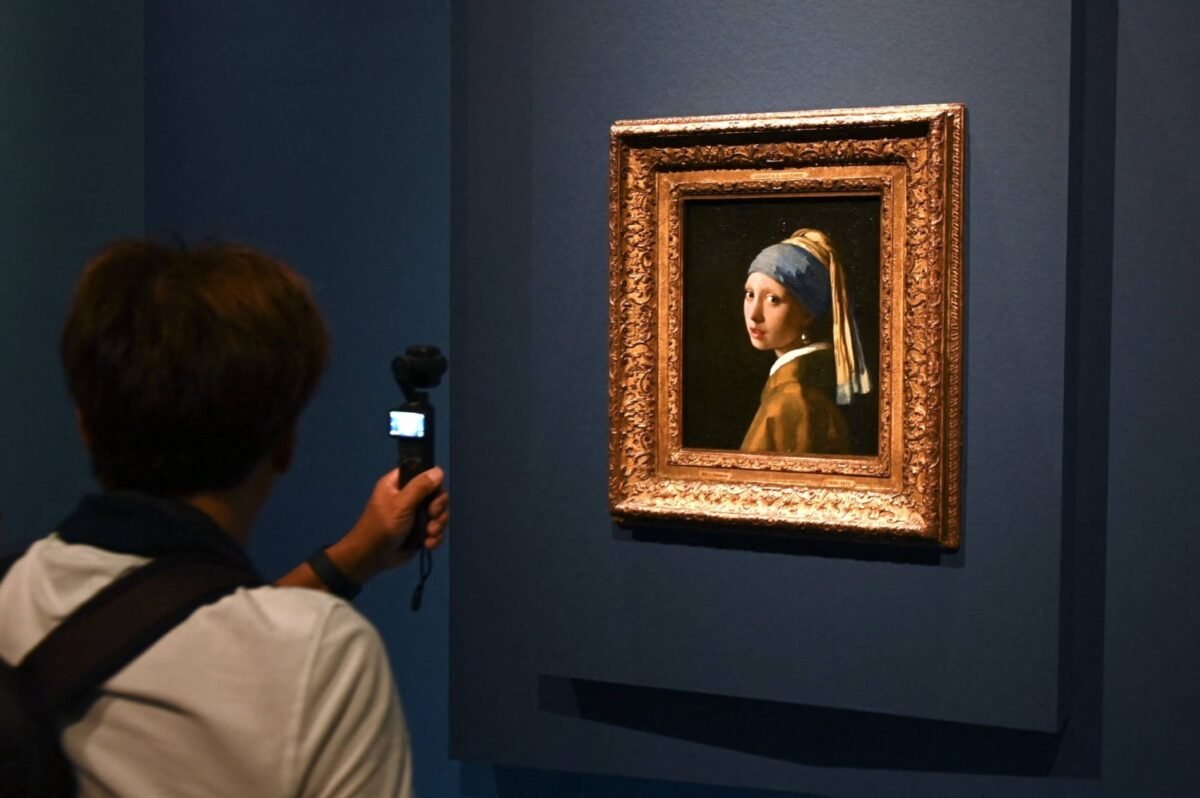
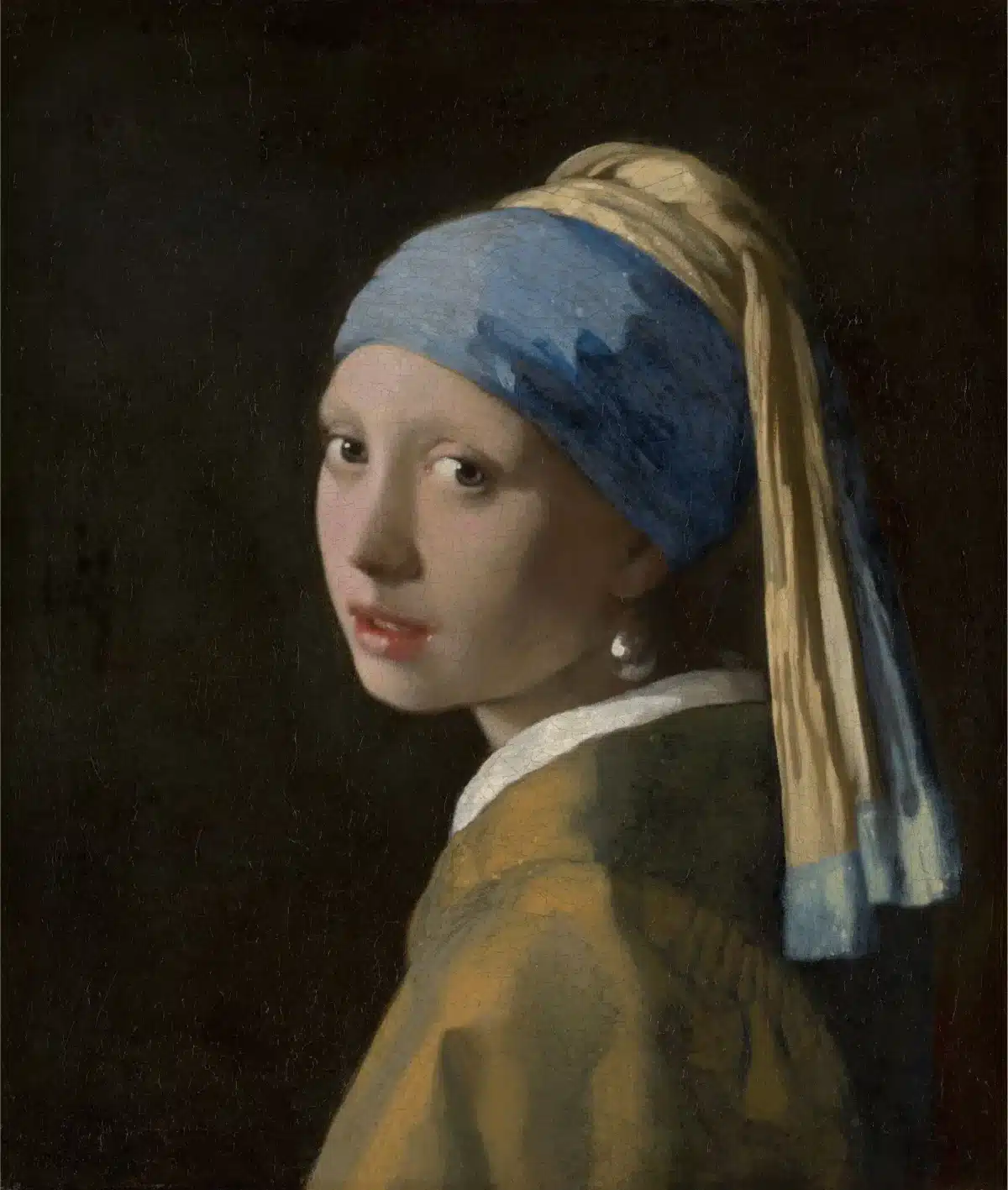
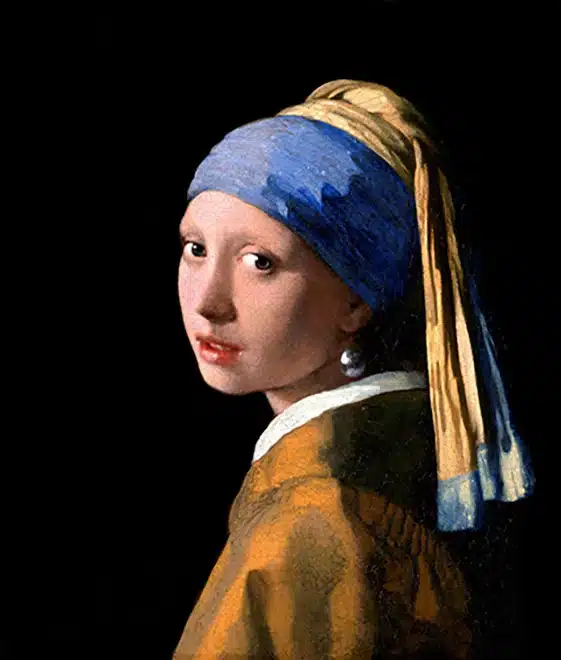
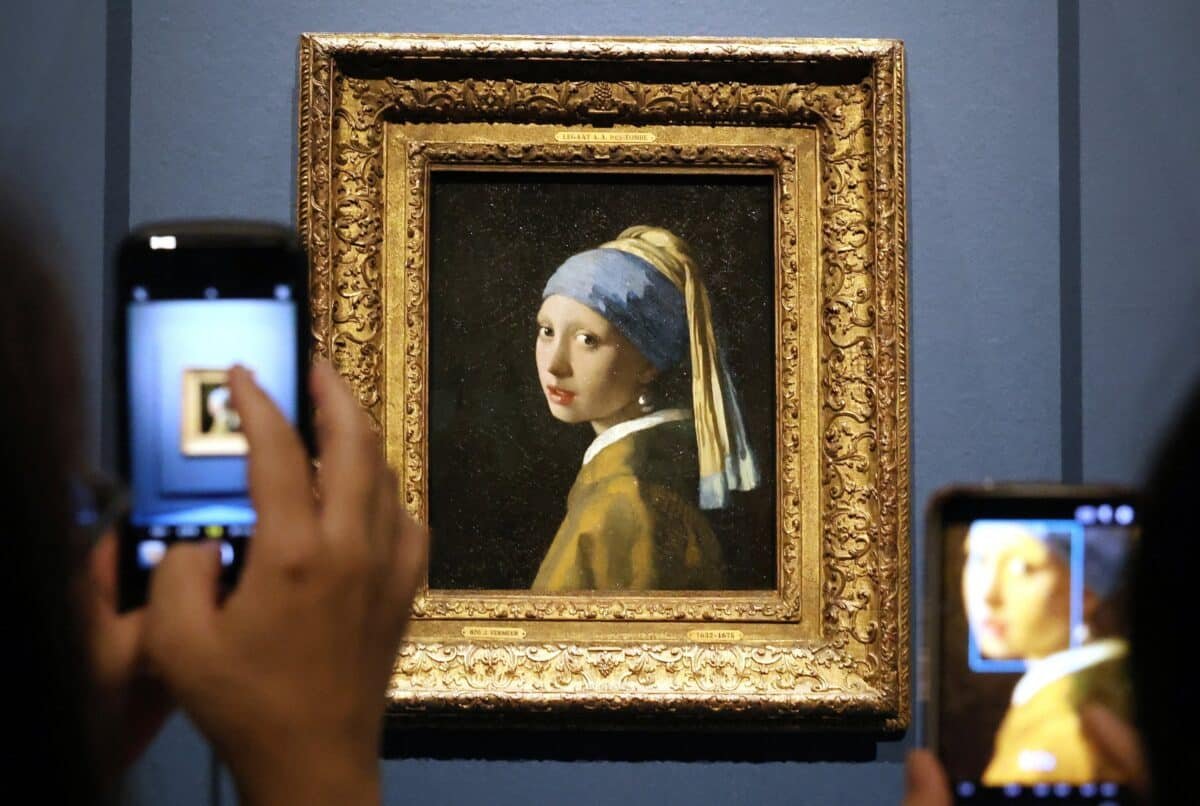
Johannes Vermeer’s iconic masterpiece stands as one of the most widely recognized and universally celebrated achievements in the history of Western art. Often referred to as the “Mona Lisa of the North,” the painting captures an enigmatic young woman turning toward the viewer with parted lips and an unforgettable gaze. The canvas relies on a masterclass of economy, using a stark, dark background to push the subject forward into vivid three-dimensional relief. Every element is calibrated to focus attention squarely on the subtle interplay of light and shadow across the girl’s face.
The centerpiece of the composition is, of course, the luminous pearl earring that dangles from the subject’s ear, rendered with just a few swift dabs of brilliant white pigment. This single optical illusion of reflected light anchors the emotional and visual weight of the entire painting, demonstrating Vermeer’s supreme confidence. The subject’s striking blue and yellow turban, painted with expensive ultramarine derived from lapis lazuli, adds an exotic vibrancy that elevates the portrait beyond conventional realism.
- Globally celebrated Dutch Golden Age masterpiece making a rare international loan appearance in Japan
- Captivating tronie format depicting an anonymous young woman in exotic costume with an enigmatic expression
- Brilliant use of expensive ultramarine lapis lazuli pigment forming the rich tones of the subject’s turban
- Masterful execution of the iconic pearl earring created through simple, highly effective brush strokes
- Intimate, direct psychological engagement establishing an eternal dialogue between the subject and viewer
- Exceptional preservation revealing delicate surface glazes and subtle tonal gradations unique to Vermeer
- Cultural touchstone that has inspired extensive modern literature, cinema, and global pop culture fascination
Event Schedule
- Event Date: August 21, 2026 (Fri) – September 27, 2026 (Sun)
- Event Duration: Approximately 1 to 2 hours for the complete gallery tour
Visiting this event? Don’t miss out on these amazing activities and local experiences while you’re here.
Dutch Golden Age Painting & 17th-Century Art
The seventeenth century represented an unprecedented era of economic prosperity, political independence, and cultural blossoming for the Netherlands, commonly known as the Dutch Golden Age. Freed from the religious constraints of Catholic patronage, Dutch artists began producing works tailored for a thriving middle-class merchant market. This shift led to a massive diversification of subject matter, moving away from grand religious narratives toward portraits, landscapes, architectural interiors, and moralizing still lifes.
Enjoy Your Event Stress-Free with Japan Travelo
Do you know? Planning events, festivals, concerts, and cultural experiences in Japan can be overwhelming. Japan Travelo brings everything together in one place, helping you manage your itinerary, transport, and accommodation with ease—so you can enjoy Japan without the stress of planning.
The artistic ecosystem of this period was remarkably competitive and specialized, encouraging painters to hone distinct subgenres to absolute perfection. While Rembrandt van Rijn explored deep psychological drama and chiaroscuro in Amsterdam, artists like Vermeer in Delft focused on intimate bourgeois interiority. Meanwhile, landscape painters captured the sprawling skies and flat horizons of the Dutch countryside, and still-life masters detailed the fragile beauty of fleeting luxury.
- Flourishing cultural and economic boom following Dutch independence in the seventeenth century
- Shift from grand religious art to accessible secular works catering to an emerging middle-class market
- Proliferation of specialized subgenres including portraiture, landscape, still life, and genre painting
- Unrivaled mastery of oil glazing techniques yielding hyper-realistic textures of fabric, glass, and metal
- Scientific approach to optical perspective, natural light behavior, and atmospheric spatial depth
- Direct cultural exchange and international trade fueling artistic wealth and stylistic innovation across Dutch towns
- Enduring global legacy establishing modern standards for private art patronage and gallery exhibition curation
Ticket Prices
- How Tickets Are Sold: Tickets are distributed exclusively through advance online reservation platforms and ticket lotteries managed via Ticket Pia, with no door sales available.
- Admission Type: Timed-entry general admission tickets tied to specific dates and entry time slots.
- Ticket Pricing: Prices range from a minimum of approximately $3.30 USD (JPY 500 for elementary and junior high school students) up to a maximum of approximately $20.00 USD (JPY 3,000 for adult general admission), based on current currency conversions.
- Special Seating Options: This is a walk-through museum exhibition rather than a seated theater event, featuring dedicated accessible pathways.
- VIP Options: Standard timed-entry configurations apply for this exhibition tour without separate VIP upgrade packages or exclusive fast-track tiers.
“Diana and Her Nymphs” & Other Featured Works
Alongside the exhibition’s star attraction, the inclusion of Vermeer’s Diana and Her Nymphs (c. 1653–54) offers visitors a fascinating look at the artist’s early career. Painted when Vermeer was in his twenties, this large-scale history painting represents his only known foray into classical mythology. Depicting the goddess Diana and her companions resting in a quiet forest glade, the work showcases a warmer, earthier palette and a more traditional narrative style compared to his later domestic interiors.
The presence of Diana and Her Nymphs alongside Girl with a Pearl Earring provides a rare chronological bookend within a single room, illustrating the vast trajectory of Vermeer’s artistic evolution. While the early mythological canvas leans on traditional Italian and Flemish compositional models, the later tronie demonstrates the radical distillation of focus that defined his mature genius. Visitors can trace how his brushwork transitioned from dramatic theatrical staging to hyper-focused intimacy.
Surrounding the two Vermeer canvases are ten additional masterworks from the Mauritshuis, establishing a rich contextual backdrop of seventeenth-century Dutch culture. These pieces include powerful portraiture and genre scenes by legendary contemporaries, showcasing the wide thematic scope of the Dutch Golden Age. Together, the collection transforms the gallery into a concentrated slice of seventeenth-century European artistic achievement.
This careful selection ensures that patrons understand Girl with a Pearl Earring not as an isolated anomaly, but as the brilliant apex of a vibrant national school of painting. The dialogue between the mythological early work, the famous mature tronie, and the supporting Dutch masterpieces creates an exceptionally well-rounded exhibition experience. Every canvas contributes to a deeper understanding of the cultural world that nurtured Vermeer’s unique vision.
Getting to the Venue
- City and Country: Osaka, Japan
- Venue Name: Osaka Nakanoshima Museum of Art, 5th Floor Exhibition Room
- Google Maps Address: Japan, 〒530-0005 Osaka, Kita Ward, Nakanoshima, 4 Chome−3−1 大阪中之島美術館
Johannes Vermeer & His Artistic Style
Johannes Vermeer remains one of the most enigmatic figures in art history, leaving behind a desperately small corpus of only around 34 surviving authenticated paintings. Operating quietly in Delft during the seventeenth century, he specialized in domestic interior scenes and character studies characterized by an extraordinary stillness and geometric harmony. His works rarely feature moments of frantic action; instead, they capture ordinary people caught in quiet moments of introspection, reading letters, playing music, or performing domestic chores.
The technical signature of Vermeer’s style rests on his obsessive study of natural light and optical physics. Rather than blending his brushstrokes into seamless invisibility, he frequently utilized tiny dots of paint—often referred to as pointillé—to capture the sparkling reflection of light on different surfaces. This meticulous attention to light diffusion gives his domestic spaces a startlingly photographic clarity long before the invention of the camera.
Vermeer’s color palette was both expensive and carefully curated, frequently featuring brilliant yellows, rich earthen browns, and his signature deep blues. He understood how contrasting temperatures of light could create depth and emotional resonance within a confined room. His compositions are anchored by rigid architectural lines, window frames, and floor tiles that provide a stable grid for the soft, organic figures inhabiting them.
Despite achieving moderate local recognition during his lifetime, Vermeer slipped into relative obscurity for centuries after his death until his rediscovery in the nineteenth century. Today, his paintings are treated as national treasures, heavily protected by the institutions that house them. His ability to freeze ordinary time and infuse everyday settings with a sacred, contemplative aura secures his place at the absolute pinnacle of Western painting.
- Extremely rare surviving body of work consisting of only about 34 authenticated paintings worldwide
- Signature focus on serene domestic interiors and contemplative character studies
- Pioneering manipulation of natural light sources, soft shadows, and brilliant optical highlights
- Utilization of pointillé techniques to render the sparkling texture of reflected light on various surfaces
- Meticulously balanced geometric compositions providing rigid structural frameworks for organic subjects
- Coveted, expensive pigment selections dominated by rich ultramarine blues and luminous yellows
- Posthumous rediscovery elevating him to global status as a master of seventeenth-century realism
Mauritshuis Masterpieces & Exhibition Collection
- Exclusive loan of twelve premier masterworks originating directly from the prestigious Mauritshuis in The Hague
- Rare pairing of two distinct paintings by Johannes Vermeer within the same gallery space
- Comprehensive thematic curation spanning history painting, portraiture, tronies, genre scenes, and landscapes
- Inclusion of Johannes Vermeer’s earliest known large-scale canvas, Diana and Her Nymphs
- Supporting masterpieces featuring legendary Dutch Golden Age creators such as Rembrandt van Rijn and Jan Steen
- Specialized 20-meter immersive digital video corridor exploring Vermeer’s complete life catalogue and motifs
- High-security curation designed to replicate the intimate viewing atmosphere of the historic Dutch palace museum
Light, Color, Perspective & Vermeer’s Technique
Johannes Vermeer’s manipulation of light stands as one of the most intensely studied phenomena in art history. Rather than illuminating his subjects with flat, even studio lighting, he positioned his figures near side windows, allowing soft daylight to wash across the scene while casting deep, transparent shadows. This deliberate management of illumination creates a palpable sense of atmosphere, making the air inside the painted room feel dense and breathable.
Color theory in Vermeer’s workshop was handled with extreme mathematical and chemical precision. He favored expensive natural pigments, applying them in thin, translucent glazes rather than thick, opaque impastos. This layering technique allowed light to penetrate the surface layers of paint and reflect back off the white ground beneath, generating an inner luminescence that gives his fabrics and skin tones their characteristic glow.
Perspective in his compositions is meticulously constructed, often utilizing vanishing points pinned down by subtle incisions in the canvas to anchor architectural lines. Yet, this rigid geometric framework never feels cold or mechanical; it is always softened by organic human postures and the gentle fall of draped textiles. The resulting harmony between mathematical rigor and sensory warmth is what gives his interiors their timeless poise.
Girl’s Gaze, Pearl & Symbolism
- Direct, psychological gaze breaking traditional artistic boundaries by engaging the viewer directly across centuries
- Iconic pearl ornament serving as a masterclass in optical reflection and economy of brushwork
- Historical ambiguity surrounding the sitter’s identity, allowing the portrait to transcend literal portraiture
- Subtle metaphorical undertones exploring themes of purity, wealth, and timeless feminine beauty
- Emotional tension captured in the parting of the lips and the sudden suspension of movement
- Cultural evolution transforming a simple seventeenth-century study into a universal modern icon of mystery
- Enduring power of visual silence to communicate complex emotional narratives without explicit storytelling elements
Event Information
- Website: https://tran.pia.jp/vermeer/
Location
FAQ
What are the specific ticket acquisition requirements and entry protocols enforced for this special exhibition?
Admission requires advance online reservations and timed-entry ticketing arranged through official lottery channels without door sales. Visitors must arrive strictly within their designated time window to ensure orderly crowd movement and gallery safety.
Are children and students eligible for discounted admission rates when visiting the exhibition galleries?
Elementary and junior high school students benefit from significantly reduced admission fees, while preschoolers enter completely free of charge. Valid identification or proof of age may be requested at the entrance checkpoints for concession verification.
What photography and recording policies apply to visitors inside the exhibition rooms?
Photography, video recording, and audio capturing are strictly prohibited within the special exhibition galleries housing the original paintings. Visitors are asked to keep mobile devices stored away to protect artwork security and maintain a quiet viewing atmosphere.
Can visitors exit and re-enter the exhibition spaces once their ticket has been scanned?
Re-entry to the exhibition floor is strictly not permitted once a visitor has exited the gallery security checkpoint. Guests should ensure they complete all gift shop purchases and restroom breaks before entering the main exhibition zones.
What accessibility accommodations are available for visitors with mobility impairments?
The Nakanoshima Museum of Art provides full wheelchair accessibility, elevators, and barrier-free pathways across all exhibition floors. Visitors requiring specific physical assistance can coordinate with on-site staff upon arrival at the main lobby.
What steps should attendees take if they misplace personal belongings during their museum visit?
Lost property items should be reported immediately to the nearest museum security officer or information desk assistant. Unclaimed items are securely logged at the main reception desk and held for designated retrieval periods following event closing.

Leave a Reply