
What to expect in 2026
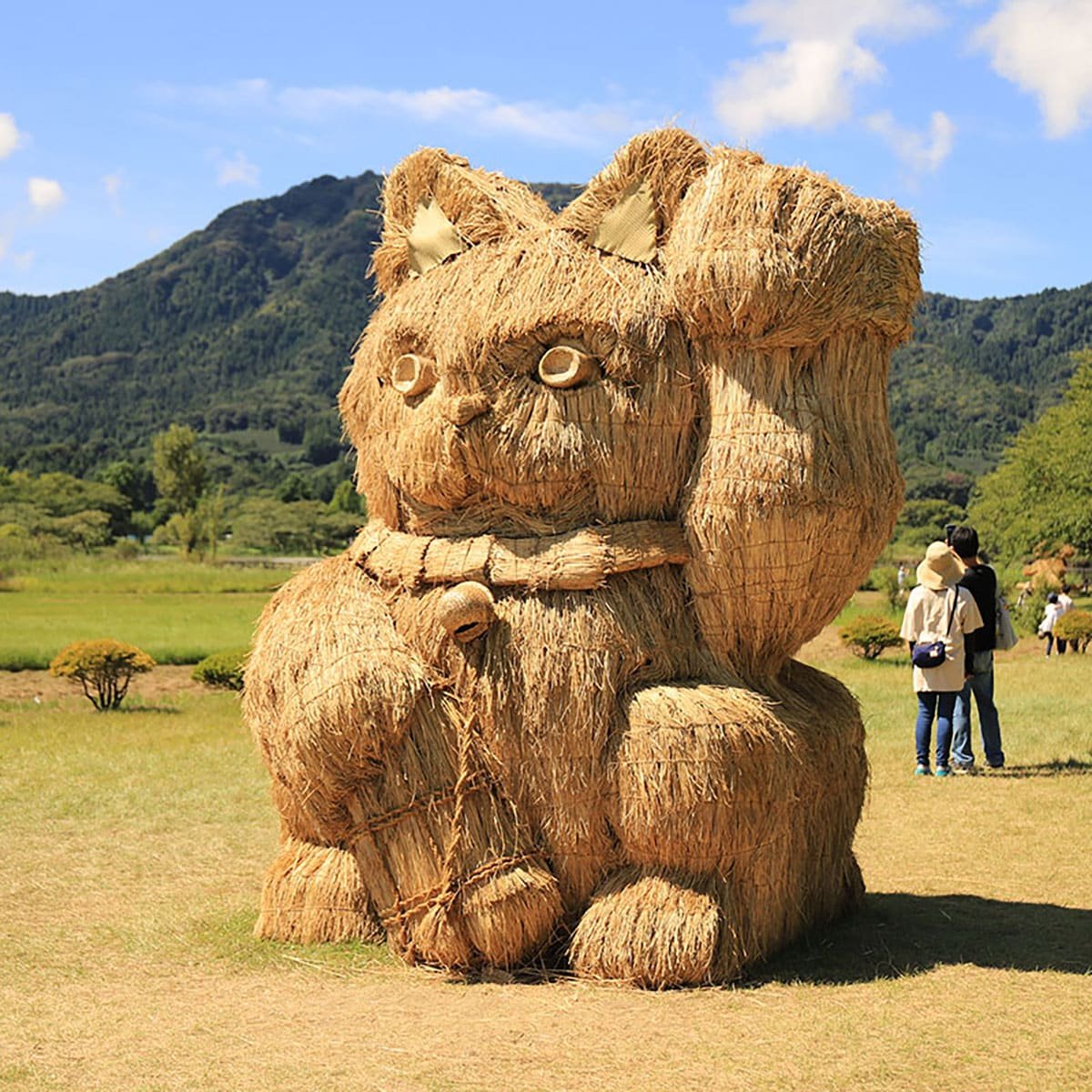
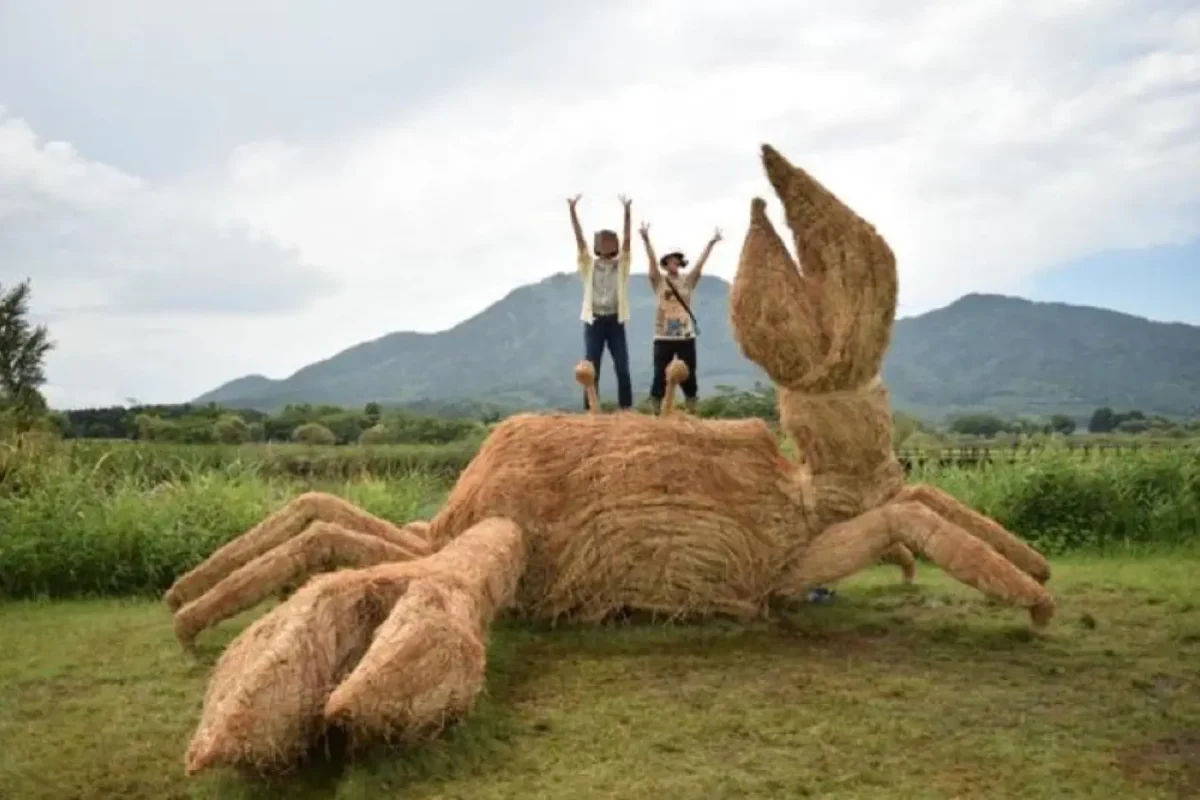
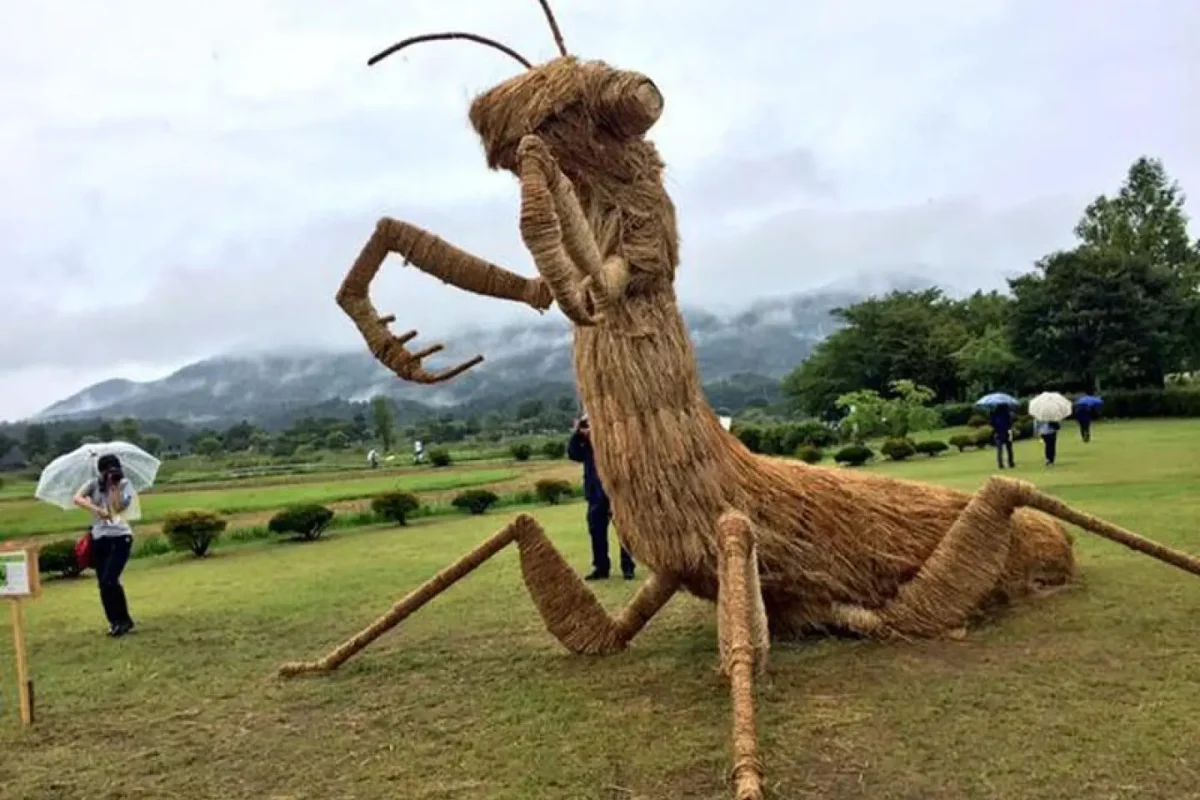
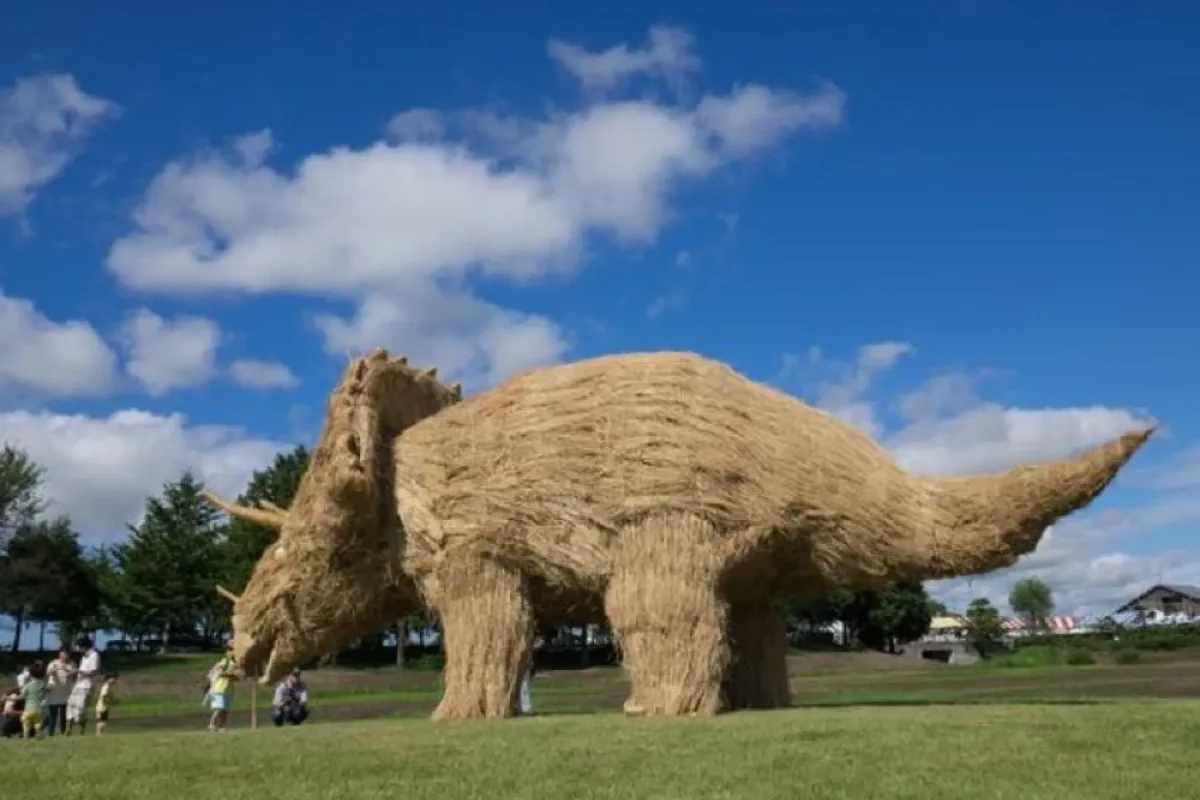
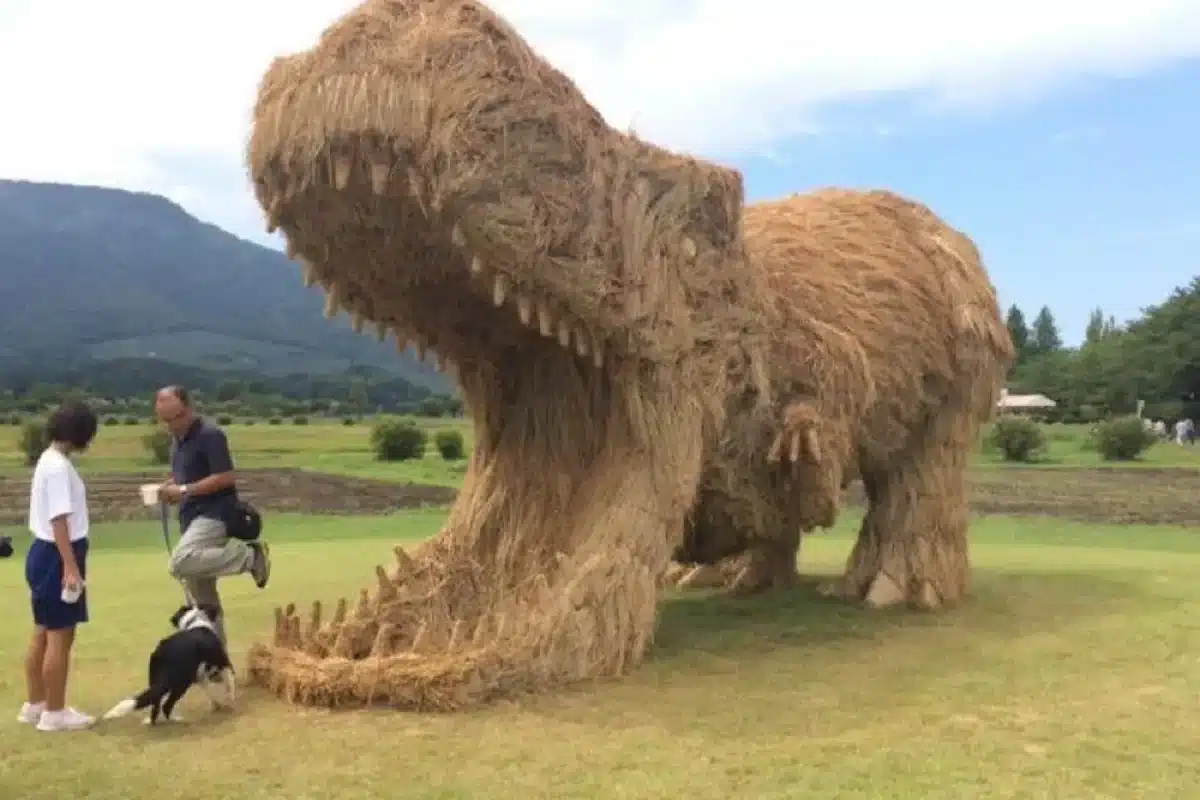
Wara Art Festival is an annual outdoor art event in Niigata City’s Nishikan Ward, where locally harvested rice straw is transformed into enormous sculptures and displayed in the natural surroundings of Uwasekigata Park. The festival is closely connected with Niigata’s identity as one of Japan’s major rice-producing regions and presents an unusual combination of contemporary art, agriculture, landscape and community participation.
The 2026 edition features the theme “Pokapoka Onsen Conference – Wetland Animals Gathering!” and presents five large straw artworks inspired by animals that live in wetlands. The concept also incorporates the area’s many hot springs, imagining the animals visiting different onsen and relaxing together.
The artworks are being created with participation from students of Musashino Art University and Nagaoka Institute of Design, together with local volunteers. This collaboration is an important part of the festival because the sculptures are not simply transported to the park as finished gallery pieces; they are connected to local community involvement and the agricultural landscape.
Enjoy Your Event Stress-Free with Japan Travelo
Do you know? Planning events, festivals, concerts, and cultural experiences in Japan can be overwhelming. Japan Travelo brings everything together in one place, helping you manage your itinerary, transport, and accommodation with ease—so you can enjoy Japan without the stress of planning.
Visitors can walk around Uwasekigata Park and view the sculptures from different angles. The surrounding landscape at the foot of Mount Kakuda provides an open-air setting that allows the enormous straw forms to be experienced as part of the countryside rather than inside a conventional exhibition hall.
The festival also includes related food and market activities. The Nishikan Market brings local agricultural products, sweets, handicrafts and other regional goods to the park during selected periods. Evening illumination gives the straw sculptures a different appearance from their daytime presentation.
Event dates
The 2026 Wara Art Festival is presented for late October 2026, with the exact event date requested for this listing treated as TBD. Visitors should check the official Niigata City or Nishikan tourism information before making travel arrangements because programme dates for associated activities can differ from the broader exhibition period.
The official 2026 programme describes the Wara Art works as being exhibited at Uwasekigata Park and available to view throughout the exhibition period.
The festival is designed as a seasonal outdoor exhibition rather than a single-day indoor art fair. This means visitors can experience the sculptures as part of a broader visit to Nishikan Ward and the rural landscape around Mount Kakuda.
The associated illumination and market programmes operate separately from the general artwork viewing period, so visitors interested in these activities should consult the latest official schedule.
Visiting this event? Don’t miss out on these amazing activities and local experiences while you’re here.
Venue & exhibition site
Uwasekigata Park
The main exhibition site is Uwasekigata Park, located at 1 Matsunoo, Nishikan Ward, Niigata City, Niigata Prefecture. The park sits at the foot of Mount Kakuda and provides a spacious natural environment for the large straw sculptures.
Unlike an indoor art museum, the park allows visitors to walk around the sculptures and view them against fields, trees, open lawns and the surrounding mountain scenery.
Open-air sculpture area
The five principal Wara Art works are displayed outdoors. Their scale is one of the defining characteristics of the festival, with rice straw transformed into large animal forms that can be appreciated from a distance as well as close up.
Park pathways
The pathways around the artworks become part of the exhibition experience. During the illumination programme, sections of the artwork and walking routes are lit after dark, creating a different visual atmosphere from the daytime exhibition.
Market and event area
The Nishikan Market occupies an associated area of the festival and introduces regional food, agricultural products, sweets and handicrafts. The exact vendors and layout can vary by edition.
Full exhibition programme
The central exhibition consists of five large rice-straw artworks based on the 2026 theme of wetland animals and hot springs.
Wetland animal sculptures
The sculptures interpret animals associated with wetlands while incorporating the visual idea of hot-spring bathing and relaxation. This connects the environmental theme with Nishikan’s local hot-spring culture.
Large-scale straw construction
The works demonstrate how an agricultural by-product can become monumental public art. Rice straw is traditionally associated with the region’s farming economy, while the festival gives it a contemporary artistic function.
Landscape exhibition
Rather than separating art from nature, the exhibition places the sculptures directly within Uwasekigata Park. Visitors can therefore experience the artworks together with the seasonal landscape.
Night illumination
Selected evenings feature lighting around the straw artworks and pathways. The illumination changes the appearance of the sculptures and creates a more atmospheric viewing experience. Official 2026 information specifies evening lighting during selected weekends and holidays within the earlier part of the exhibition season.
Nishikan Market
The related market introduces regional products, food, sweets and handmade goods. The market is designed to connect the artwork with the local community and food culture.
Featured artists & designers
Wara Art Festival has a distinctive educational and community-based production model.
Musashino Art University students
Students from Musashino Art University participate in the creation of the straw sculptures. Their involvement brings contemporary art education and large-scale sculpture techniques into the local agricultural setting.
Nagaoka Institute of Design students
The 2026 edition also includes students from Nagaoka Institute of Design. Their participation expands the festival’s connection with art and design education in Niigata and Japan.
Local volunteers
Residents and local volunteers work alongside the students during the creation of the artworks. This community participation is an important feature of the festival’s identity and helps connect the sculptures with Nishikan’s local culture.
The festival is therefore better understood as a collaborative art project than as a conventional commercial art fair featuring independent galleries and commercial artists.
Galleries & exhibitors
Wara Art Festival does not operate like a traditional indoor contemporary-art fair with rows of commercial galleries, booths and dealer stands. The principal exhibition consists of large-scale outdoor installations created specifically for the park.
Main Wara Art exhibition
The five 2026 sculptures form the principal exhibition. They are created around the wetland-animal and hot-spring theme and installed throughout Uwasekigata Park.
Educational art participation
The student teams from Musashino Art University and Nagaoka Institute of Design are central contributors to the artistic production.
Community participation
Local volunteers help with the creation and presentation of the works, making the exhibition a community-supported project.
Regional vendors
The Nishikan Market provides a complementary commercial element, with local producers and vendors offering agricultural products, sweets, handicrafts and other goods.
Exhibition halls & sections
There are no conventional exhibition halls at Wara Art Festival because the event is presented outdoors at Uwasekigata Park.
Straw sculpture zone
The principal section contains the five large straw artworks. Visitors can move between the sculptures while enjoying the surrounding landscape.
Wetland animal theme
The sculptures are connected by the 2026 theme, which focuses on animals living in wetland environments.
Hot-spring concept
The artworks incorporate the idea of animals enjoying local hot springs, reflecting the presence of numerous hot-spring areas in Nishikan and nearby communities.
Illuminated exhibition area
During the designated evening programme, the sculptures and selected paths are illuminated. This effectively creates a second presentation of the exhibition after dark.
Market section
The associated Nishikan Market introduces local products and crafts, giving visitors an opportunity to experience the region beyond the artworks.
Talks, workshops & special events
The festival’s programme is primarily focused on outdoor art rather than a conventional schedule of gallery talks and academic lectures.
Artwork production
The creation process itself is one of the most important special features. University students and local volunteers collaborate to construct the large straw sculptures.
Nishikan Market
The market provides a cultural programme centered on regional food, agricultural products, sweets and handicrafts.
Art, music and food programme
The 2026 programme also includes a related “Wara, You and Music” event, combining Wara Art with a performance stage and food trucks. The programme is intended to allow visitors to experience art, music and food within the natural setting of Nishikan.
Evening illumination
The illumination programme provides a special after-dark way to experience the artworks, with the sculptures and park paths lit to create a different visual environment.
Ticket types
General admission to Wara Art Festival is free. Previous festival information also identifies the exhibition as free to enter, meaning visitors do not need to purchase a standard museum-style admission ticket to see the outdoor artworks.
General entry
Visitors can walk through the park and view the straw sculptures without a general admission charge.
Night illumination
The illuminated artwork viewing is part of the festival programme and does not operate as a separately ticketed art exhibition.
Market
Food, drinks, agricultural products and handicrafts at the Nishikan Market are separate purchases.
Special activities
If individual workshops or special activities are introduced, their participation arrangements may be separate. Visitors should check the official programme for any activity-specific requirements.
VIP & collector access
Wara Art Festival does not operate a conventional VIP or collector programme.
The event is designed as a public outdoor art festival rather than a commercial art fair where collectors receive private previews, dealer access or exclusive viewing appointments.
Public viewing
All visitors experience the principal sculptures in the same open-air park environment.
Art production access
The artwork-making process is associated with student and community participation rather than private collector previews.
Photography
Visitors can photograph the large sculptures from the public park areas while following any posted restrictions and respecting other visitors.
For visitors interested in the artistic process, learning about how rice straw is transformed into monumental sculpture is likely to be more relevant than a conventional VIP experience.
Event rules
Respect the artworks
Visitors should not climb on, touch unnecessarily or damage the straw sculptures. The artworks are large but remain delicate natural-material structures.
Stay on appropriate paths
Follow designated walking routes and any temporary barriers around the sculptures.
Keep the park clean
Visitors should dispose of waste properly and help maintain the natural environment surrounding the exhibition.
Photography
Photography is encouraged as part of the public-art experience, but tripods and equipment should not obstruct paths or other visitors.
Weather conditions
Because the festival is outdoors, associated activities can be affected by rain or other weather conditions. The official information specifically notes that market events may be cancelled or shortened because of poor weather or sold-out products.
Fire safety
Visitors should not smoke or use flames near the straw sculptures except in officially designated areas.
How to get there
Uwasekigata Park is located in Matsunoo, Nishikan Ward, Niigata City.
The nearest railway access is JR Echigo Line’s Maki Station. Official tourism information indicates that the park is approximately 15 minutes by car from Maki Station.
Visitors travelling by car can reach the area from the Hokuriku Expressway via the Maki-Katahigashi Interchange, which is approximately 25 minutes from Uwasekigata Park by car.
During the seasonal operating period, the Nishikan sightseeing loop bus also serves Uwasekigata Park on weekends and public holidays. The official tourism information lists a park bus stop followed by approximately a three-minute walk to the exhibition site.
For international visitors, Niigata City can be used as the main base before continuing toward Nishikan Ward by train, bus or rental car.
Public transport & parking
JR Echigo Line
Maki Station is the closest major rail access point listed by the official tourism information. From the station, the park is approximately 15 minutes by car.
Nishikan sightseeing bus
The Nishikan sightseeing loop bus serves Uwasekigata Park during its seasonal weekend and public-holiday operating period. The bus stop is approximately three minutes on foot from the park.
Car access
Drivers can use the Hokuriku Expressway and exit at Maki-Katahigashi Interchange, followed by an approximately 25-minute drive to the park.
Parking
The park provides parking for ordinary cars and larger vehicles. The official tourism listing confirms both standard and large-vehicle parking availability.
Visitors attending during particularly busy associated events should arrive early because parking demand can increase when the market, illumination and performance programmes operate alongside the sculpture exhibition.
Accommodation areas
Nishikan Ward
Staying in Nishikan Ward is convenient for visitors who want to explore the Wara Art Festival as well as the surrounding rural and hot-spring areas.
Iwamuro Onsen
Iwamuro Onsen is particularly suitable for visitors interested in combining the art festival with a traditional Japanese hot-spring stay. The area’s connection with onsen culture also complements the 2026 festival theme.
Niigata City
Niigata City provides a wider range of hotels, restaurants and transport connections. Visitors can make day trips to Uwasekigata Park from the city.
Maki area
Accommodation around Maki can provide a practical compromise between the exhibition site and rail access.
Visitors staying outside Nishikan should consider their return transportation, especially if they want to attend an evening illumination programme.
Food & refreshments
Food is an important supporting element of Wara Art Festival, particularly during the associated Nishikan Market and special food events.
Local agricultural products
The market highlights products from Nishikan and Niigata, reflecting the area’s strong agricultural identity.
Rice-based foods
Niigata is one of Japan’s most important rice-producing regions, and rice culture provides the agricultural foundation for the festival’s straw sculptures.
Regional sweets
The Nishikan Market includes locally produced sweets alongside agricultural products and other regional goods.
Food trucks
The “Wara, You and Music” programme includes food trucks alongside performances and the straw-art exhibition.
Local dining
Visitors can also explore restaurants around Nishikan and nearby hot-spring areas for a broader taste of Niigata cuisine.
Accessibility
Uwasekigata Park provides an open outdoor environment where visitors can move between the large artworks. The absence of indoor gallery rooms makes the exhibition relatively flexible for visitors who prefer outdoor viewing.
Visitors should nevertheless consider that the festival is held in a park rather than a purpose-built museum. Conditions can vary with weather, ground conditions and temporary event infrastructure.
Walking routes
Visitors should allow sufficient time to move between artworks and use appropriate footwear, particularly after rain.
Mobility considerations
Anyone requiring specific accessible facilities should confirm the latest park and event arrangements with Niigata City before travelling.
Family access
The large-scale animal sculptures and open park setting make the exhibition suitable for family visits, while the market and food activities provide additional attractions beyond the artwork.
Must-see exhibitions
Wetland animal straw sculptures
The five 2026 works are the central attraction. Their wetland-animal theme gives the exhibition a recognizable connection to the environmental theme behind this year’s programme.
Hot-spring-inspired scenes
The combination of wetland wildlife and hot-spring culture is a distinctive feature of the 2026 concept, with the animals imagined relaxing at different onsen.
Night illumination
When scheduled, the evening illumination provides a completely different way to view the sculptures. Lighting emphasizes the texture and silhouettes of the straw structures against the darker park landscape.
Mount Kakuda landscape
The surrounding scenery is an important part of the exhibition experience. The artworks are positioned at the foot of Mount Kakuda, allowing visitors to combine public art with the natural environment.
Nishikan Market
The market is worth visiting for travelers interested in the connection between the artwork and local agriculture, with regional foods, sweets and handicrafts available during its scheduled operating periods.
Previous year’s highlights
The 2025 Wara Art Festival used the theme “Echigo’s Legendary Beasts,” presenting five large straw artworks inspired by mythical creatures associated with Echigo. The sculptures were displayed at Uwasekigata Park and were created around the region’s rice-straw tradition.
Among the 2025 works documented by Niigata City were a tiger-themed sculpture, a large turtle and a nine-tailed fox-inspired work. These examples demonstrate how the festival changes its artistic theme from one edition to another while maintaining its five-sculpture format.
Night illumination was again an important part of the previous programme, allowing visitors to see the sculptures under artificial lighting rather than only in daylight. The Nishikan Market also accompanied the exhibition with regional agricultural products, sweets and handmade goods.
The continuation of the student and volunteer production model into 2026 means the festival retains its emphasis on collaborative creation. For the 2026 edition, students from Musashino Art University and Nagaoka Institute of Design are participating alongside local volunteers.
The shift from legendary creatures in 2025 to wetland animals and hot-spring imagery in 2026 also shows how the festival uses new themes to reinterpret the same agricultural material each year.
Official tickets
Wara Art Festival is a free outdoor exhibition, so visitors do not need to purchase a general admission ticket to view the straw artworks. Previous festival information explicitly lists admission as free.
The official Niigata City information should be checked for the latest 2026 programme, associated market activities, illumination information and any changes caused by weather or local circumstances.
The supplied Japan Travel Wara Art Festival page (https://en.japantravel.com/niigata/wara-art-festival/22964) can also be used as a visitor-oriented reference
Video
Location
FAQ
What materials are used to construct the giant sculptures?
The sculptures are built primarily from dried rice straw left over after the autumn harvest season. This natural material is tightly bound over robust internal wooden and bamboo frameworks for stability.
Are visitors allowed to touch or climb onto the straw artworks?
Touching, pulling, or climbing on the giant straw sculptures is strictly prohibited to prevent structural damage. Guests must admire and photograph the delicate artwork safely from the surrounding ground pathways.
How long do the straw sculptures remain on display in the park?
The installations stay exhibited outdoors in Uwasekigata Park from late summer through the autumn season. They typically remain on public view until the beginning of November before being dismantled.
What is the best way to travel to Uwasekigata Park?
Travelers most commonly access the park by car or local taxi from central Niigata City stations. Public bus options are also available, though checking local regional timetables beforehand is recommended.
Is there any admission fee to enter the festival area?
Entering Uwasekigata Park and viewing the outdoor Wara Art exhibition is entirely free for all visitors. Guests only need to budget money if they wish to purchase food or local products from the market stalls.

Leave a Reply