
-
April 19, 2027
Event date:
-
April 19, 2027
Event end:
What to expect
Experience a part of the Samurai warrior culture and spirit by viewing yabusame horseback archery in Kamakura. On the third Sunday of April, yabusame is presented at the dirt road crossing below the Tsurugaoka Hachimangu Shrine. If you have committed to attending yabusame, plan to go significantly earlier than the scheduled start time as the event is attended by hundreds, if not thousands, of people.
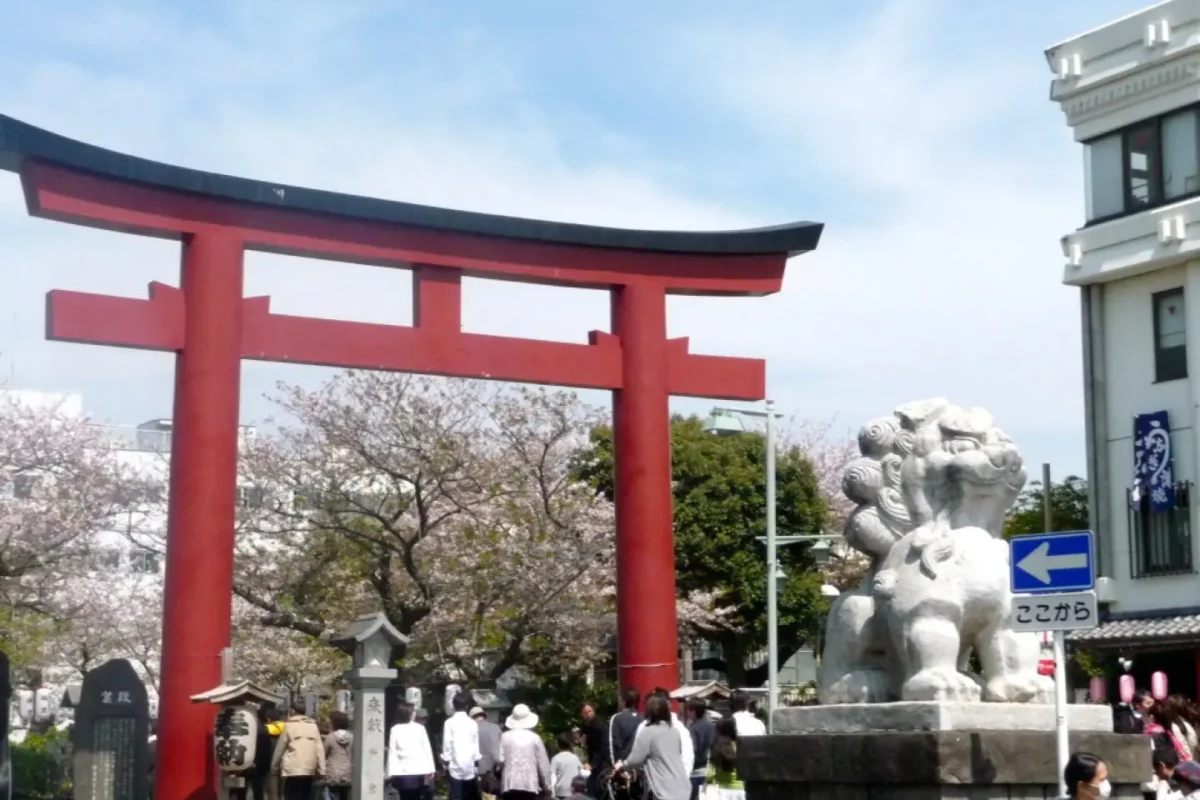
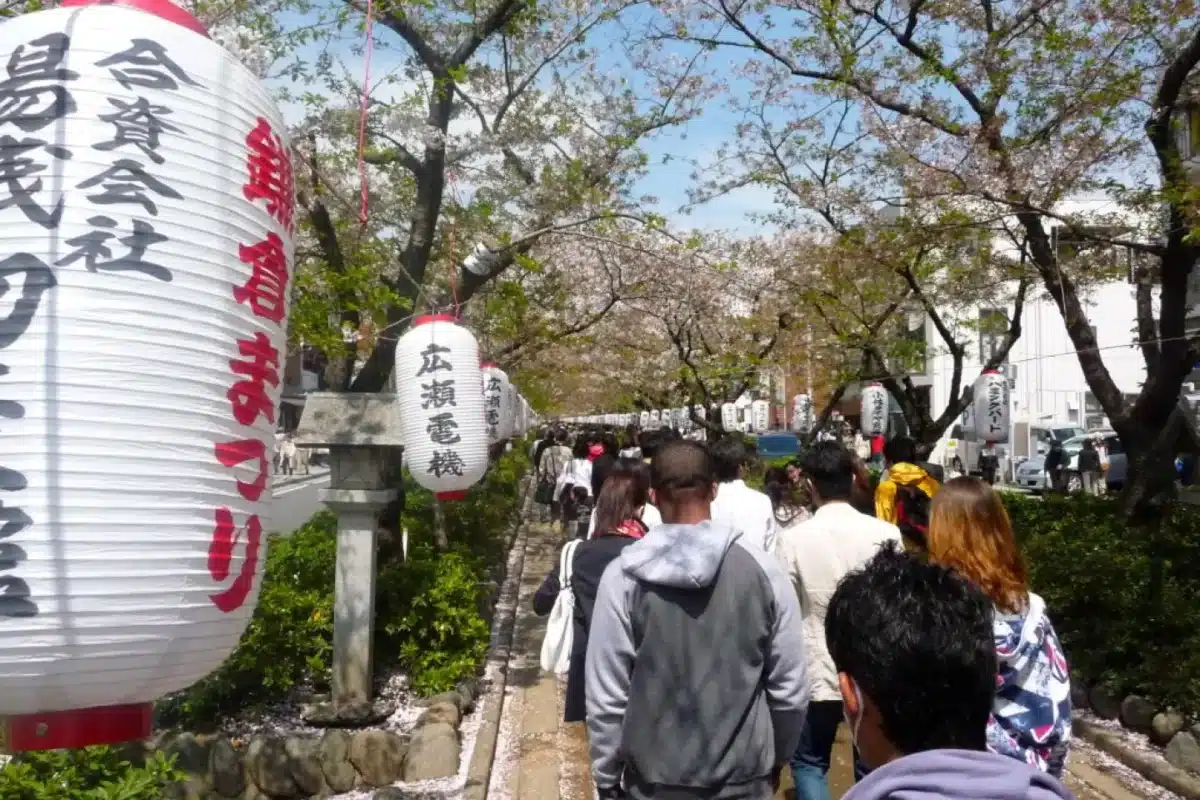
The experience starts once you exit Kamakura Station on the JR train line. You basically become part of the huge wave moving through an unending sea of people. You can transit to the Tsurugaoka Hachimangu Shrine via the shopping street, Komachi-dori, or via the pedestrian path dankazura running through the center of Wakamiya Oji Street. I recommend taking the dankazura as several hundred cherry trees will be in full bloom and the truly transient beauty of the cherry blossoms should not be missed. Despite the hundred or so new companions walking along with you, you quickly forget the noise and bustle as you are greeted by the two giant guardian dogs lion dogs before the equally impressive red torii gate that marks that beginning of the dankazura. Then you are quickly lulled by the white lanterns and cherry blossoms around you. Whether the cherry blossoms are floating against a clear blue sky, falling like snow to the ground with a gust of wind, or admired close up, they are all mesmerizing. Later you can look for drain covers with a cherry blossom design or buy a tenugui cotton printed cloth depicting the dankazura lanterns and cherry blossoms.
If you get to Tsurugaoka Hachimangu Shrine early, you want to line up as close as you can alongside the dirt road running east and west between the third torii gate and Ritual Dance Stage. I would be protective and not lose your spot as the ocean of people will just continuously fill in any open space. Descriptions of yabusame report that archers on horseback gallop down the path at full speed and draw and shoot their arrows at stationary targets at the end of the path. The roaring cheers and cries of the multitude of participants indicate whether the archers were victorious or not in hitting their targets.
Enjoy Your Event Stress-Free with Japan Travelo
Do you know? Planning events, festivals, concerts, and cultural experiences in Japan can be overwhelming. Japan Travelo brings everything together in one place, helping you manage your itinerary, transport, and accommodation with ease—so you can enjoy Japan without the stress of planning.
Fear not. If you do not get to Tsurugaoka Hachimangu Shrine early, there are other aspects of the event that you can view, which you may not have been able to if you were holding your viewing spot for the horseback archery contest. Prior to the archery demonstration, there is a ceremonial presentation of the archers dressed in resplendent traditional Samurai costumes.
Event dates
Event Dates: Monday – April 19th 2027
Typical Schedule Based on Previous Editions:
Morning Arrival: Gates to Tsurugaoka Hachimangu Shrine open early. Spectators advised to arrive 2 to 3 hours before scheduled start to secure viewing spot along dirt track between third torii gate and Ritual Dance Stage. The wave of people from Kamakura Station begins moving toward shrine from 9:00 AM.
Ceremonial Presentation:
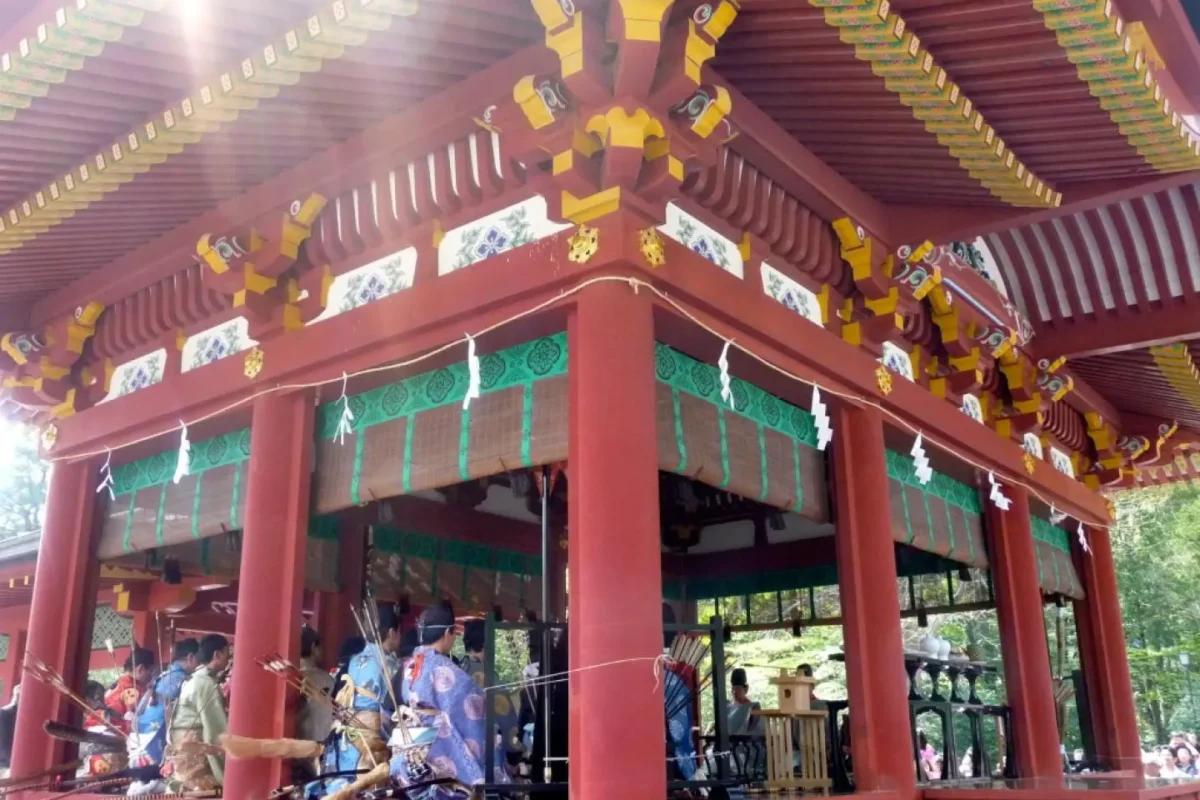
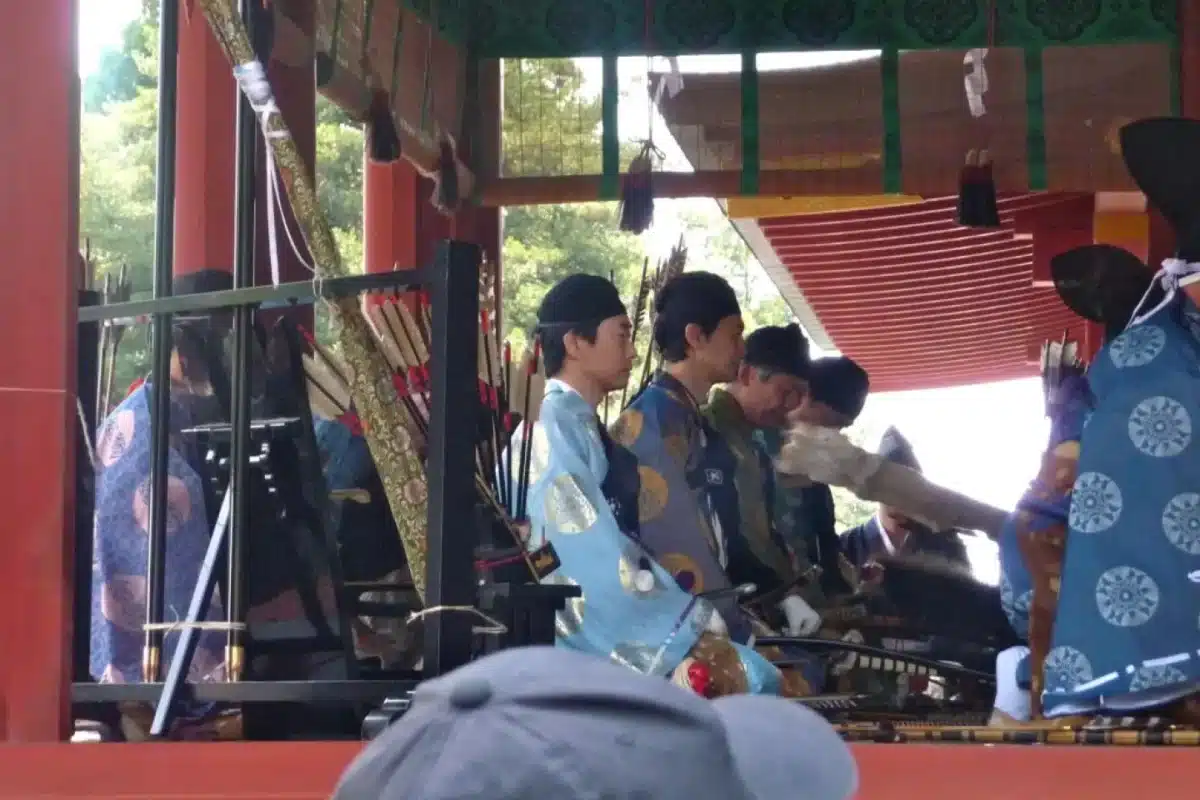
Start at the Ritual Dance Stage where you can observe the archers in vividly colored hunting attire presenting themselves to the gods to gain favor and blessings, and in thanks for the past for prosperity and a good harvest. You can catch a beautiful photograph of the archers in splendid blues, yellows, and other colors with feathered arrows and bows striking against the rich red pillars of the Ritual Dance Stage. This ceremony typically occurs late morning around 11:00 AM to 12:00 PM.
Procession and Demonstration:
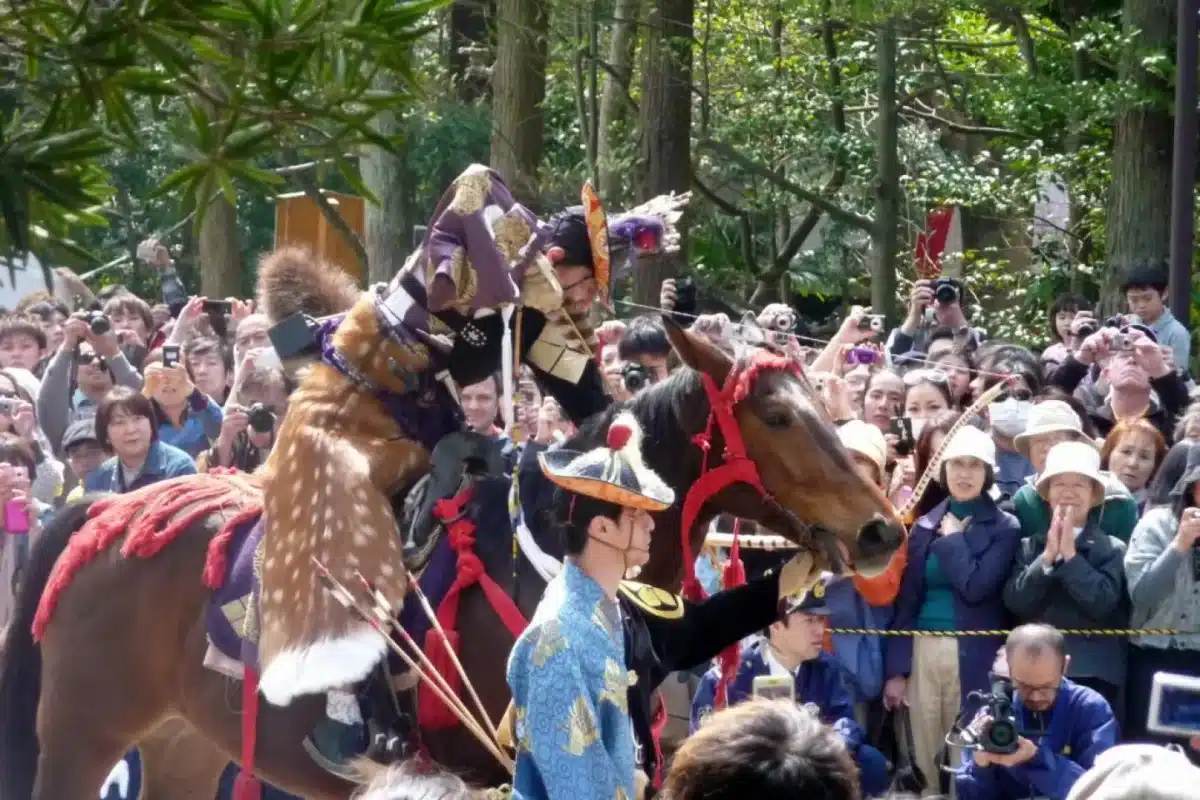
After the ceremony at the Ritual Dance Stage, all participants in the yabusame, including proud archers, flag bearers, and people carrying targets, march in stately procession toward a clearing closer to archery track. One of the archers mounts a horse and while sitting on horse demonstrates various positions and poses with bow and arrow, such as aiming arrow drawn in bow skyward or toward ground. After brief demonstration, procession then reforms and marches toward archery track and sets up for yabusame.
Main Yabusame Ritual: Archers on horseback gallop down 260 meter dirt track at full speed and shoot arrows at three stationary targets to their left. Event typically runs early to mid-afternoon, approximately 1:00 PM to 3:00 PM, with multiple archers taking turns.
Closing: Event concludes mid-afternoon with final blessings. Shrine remains open for visits.
Please note exact times are announced by Tsurugaoka Hachimangu Shrine and Kamakura City Tourism Association.
Visiting this event? Don’t miss out on these amazing activities and local experiences while you’re here.
Venue & racecourse
Primary Venue: Tsurugaoka Hachimangu Shrine, 2-1-31 Yukinoshita, Kamakura City, Kanagawa Prefecture 248-8588, Japan. The shrine is the most important Shinto shrine in Kamakura, founded in 1063 and moved to current location in 1180 by Minamoto no Yoritomo, who established first shogunate in Kamakura.
Racecourse Details: The yabusame archery track is a straight dirt road running east and west between the third torii gate and the Ritual Dance Stage, below main shrine approach. The track is 260 meters long, specially prepared with packed dirt for horse gallop. Three wooden targets are placed at intervals along left side of track at approximately 70 meter intervals, at shoulder height for mounted archer.
Ritual Dance Stage: Also known as Maiden, a vermilion-lacquered stage with rich red pillars where archers present themselves to gods. Located near third torii gate.
Dankazura Approach: The central pedestrian path running through Wakamiya Oji Street from Yuigahama Beach to shrine, lined with several hundred cherry trees and white lanterns, flanked by two giant guardian lion dogs and red torii gate marking beginning. This is recommended approach route for cherry blossom viewing.
Public Viewing Areas: Dirt track viewing areas are on both sides of track, standing areas free of charge, while seated spots may be available for donation, payable at entrance. Areas closest to Ritual Dance Stage offer best views of ceremonial presentation and target shooting portion.
Full event programme
Kamakura Festival Context: Yabusame in April is held as part of annual Kamakura Festival, also known as Kamakura Matsuri, which includes parades, traditional performances, and cultural events over one week in April.
Pre-Event Purification: Shinto priest of Tsurugaoka Hachimangu Shrine ritually purifies the yabusame competition arena before start of event, blessing track, horses, and archers.
Ceremonial Presentation at Ritual Dance Stage: Archers dressed in resplendent traditional Samurai costumes and vividly colored hunting attire present themselves to gods to gain favor and blessings, and in thanks for past prosperity and good harvest. Archers wear hunting attire called kariginu in splendid blues, yellows, reds, and other colors with feathered arrows and bows. Beautiful photography opportunity against rich red pillars.
Procession to Track: All participants including proud archers, flag bearers, and people carrying targets march in stately procession toward clearing closer to archery track, maintaining formal order.
Mounted Demonstration: One archer mounts horse and demonstrates various positions and poses with bow and arrow while stationary, such as aiming arrow drawn in bow skyward or toward ground, showing control and form.
Main Yabusame Horseback Archery: Archers on horseback gallop down path at full speed, draw and shoot arrows at three stationary targets. The gallop is full speed, arrow draw is rapid, and success is indicated by thunk sound when target is hit and roaring cheers and cries from multitude of participants. Failure results in cries of disappointment.
Victory Acknowledgment: Successful archers who hit all three targets receive special recognition and may be allowed to keep broken target as lucky charm.
Post-Event Shrine Visits: After archery, visitors can explore Tsurugaoka Hachimangu main shrine, purchase tenugui cotton printed cloth depicting dankazura lanterns and cherry blossoms, and look for drain covers with cherry blossom design.
Races, competitions & shows
Yabusame Sacred Ritual: The main competition is yabusame, a sacred ritual where archers shoot at three targets to their left from galloping horses. Yabusame was originally a martial pursuit and became ritual practice performed at Tsurugaoka Hachimangu since 1187, dedicated to Hachiman, guardian deity of warrior class. It traces its roots back to 6th century when Emperor Kinmei ordered three arrows shot from horseback at Usa Jingu shrine. Rules were codified in Heian era by Minamoto no Yoshiari on order of Emperor Uda, established 800 years ago.
Three Targets Competition: Each archer attempts to hit three targets along 260 meter track. Hitting all three is considered great achievement and brings good luck.
Takeda vs Ogasawara Schools: Events are conducted by members of Takeda School of Horseback Archery in April as part of Kamakura Festival, while Ogasawara School performs elaborate highly formalized ceremony on September 16 during Reitaisai festival. Rival schools have slightly different techniques for taking out arrows and bow cover handling. There are three different schools of yabusame, Nanbu, Ogasawara and Takeda, with Takeda and Ogasawara being big two.
Kasagake Variation: While main event is yabusame with shoulder-height targets, some demonstrations include kasagake variation where archers aim at five targets, three at shoulder-height and two closer to ground to simulate more realistic military maneuvers.
Cultural Show: Ritual Dance Stage presentation is cultural show in itself, with archers in period costume, flag bearers, and target carriers in procession.
Horses, riders & competitors
Horses: Horses are selected for speed, calmness, and training in yabusame. Typically Japanese native breeds or crossbreeds trained specifically for mounted archery, accustomed to loud cheers, flying arrows, and crowded conditions. Horses gallop at full speed down dirt track, approximately 30 to 40 km per hour.
Riders Archers: Archers are members of Takeda School of Horseback Archery and Ogasawara School, also known as Japan Equestrian Archery Association. They train for years to master horse control without reins, using legs to guide horse while both hands handle bow and arrow. Archers wear traditional hunting attire kariginu in vivid colors, including eboshi hats, with feathered arrows.
Training: Yabusame involves risk as it involves drawing bow while dashing at full speed atop horse, releasing whistling arrow. One disciplines legs and for ground archery one learns bow handling. Training includes 10 years of mounted archery practice for mastery.
Flag Bearers and Target Carriers: Supporting competitors include flag bearers carrying clan banners and attendants carrying replacement targets, dressed in traditional samurai attendant costumes.
Number of Archers: Typically 10 to 20 archers participate, each taking multiple runs down track.
Race/event schedule
Typical Schedule Based on Previous Editions:
Early Morning: Shrine purification by Shinto priest, track preparation.
Late Morning: Ceremonial presentation at Ritual Dance Stage, archers presenting to gods.
Midday: Procession from Ritual Dance Stage to archery track clearing, mounted demonstration of poses.
Early Afternoon: Main yabusame ritual begins, archers gallop down 260 meter track shooting three targets, with cheers indicating success. Quick flashes of color across opening, thunk depending on whether arrow hit target.
Mid-Afternoon: Final runs and closing blessings.
Duration: Main archery demonstration lasts approximately 60 to 90 minutes with multiple archers.
Public Viewing: Standing areas free of charge open from early morning, seated spots may be available for donation payable at entrance.
Ticket types
Standing Areas Free of Charge: Public viewing areas along dirt track between third torii gate and Ritual Dance Stage are free of charge. No ticket required but early arrival essential as ocean of people continuously fills open space. Viewing from these areas may be limited if not arriving early, with only quick flashes of color visible.
Seated Spots for Donation: Seated spots may be available for donation of approximately 7 USD, converted from 1,000 yen, payable at entrance. These provide elevated view of track and targets and are limited in number, first-come first-served.
No Advance Ticket: No advance ticketing system, all spots allocated on day on first-come basis. Donation for seated spots collected at entrance gate near third torii.
Shrine Admission: Tsurugaoka Hachimangu Shrine grounds are free to enter. Main shrine hall may have small offering box but no admission fee.
VIP & hospitality options
Reserved Seating Donation Area: The closest to VIP is donation-based seated area offering better vantage point along archery track, near Ritual Dance Stage with view of both ceremonial presentation and target shooting portion. These spots are not formally VIP but offer premium view.
Tea House Hospitality: Small tea houses near shrine approach offer paid rest areas with seating, green tea for approximately 3 USD to 4 USD, and wagashi sweets for approximately 3 USD to 5 USD, providing hospitality while waiting for event.
Kamakura Hotel Packages: Some hotels near Kamakura Station offer Kamakura Festival packages including early breakfast and guided walk to shrine via dankazura with cherry blossom explanation, priced at approximately 120 USD to 200 USD per night.
Private Photography Guides: Local guides offer paid photography tours securing good vantage points for photographing archers in splendid blues, yellows against red pillars, for approximately 50 USD to 80 USD per half day.
No Formal VIP Tent: Event is traditional Shinto ritual, not commercial festival, so no formal VIP tents or corporate hospitality. Hospitality is community-based with tarp sitting and sharing.
Exhibitors & animal-related activities
Horse Care Exhibitors: Members of Japan Equestrian Archery Association display horse tack, traditional saddles, and bows, explaining equipment used in yabusame. Bows are traditional Japanese yumi, approximately 2 meters long.
Tsurugaoka Hachimangu Shrine Stall: Shrine stall sells tenugui cotton printed cloth depicting dankazura lanterns and cherry blossoms for approximately 6 USD to 10 USD, omamori lucky charms for horse safety for approximately 4 USD to 6 USD, and ema votive plaques with horse designs for approximately 4 USD.
Komachi-dori Shopping Street Exhibitors: Shopping street connecting station to shrine has many shops selling Kamakura crafts, including Kamakura-bori lacquerware, cherry blossom themed goods, and local foods.
Animal Activities: While main horses are for archery, Kamine Zoo in nearby Kamine Park is separate attraction. No additional animal activities at yabusame site, but horses are central. Horses are well cared for, with water and rest areas behind Ritual Dance Stage.
Cherry Blossom Exhibits: Local groups exhibit information on several hundred cherry trees along dankazura, including variety names and transient beauty philosophy.
Event rules & dress code
Viewing Spot Etiquette: Line up as close as you can alongside dirt road running east and west between third torii gate and Ritual Dance Stage. Be protective and not lose spot as ocean of people will just continuously fill any open space. Do not push or cut in front.
Photography Rules: Photography allowed from public viewing areas, but flash prohibited as it may startle horses. Tripods may be restricted in crowded standing areas. For details on public viewing areas, contact shrine at phone number provided.
Horse Safety: Do not approach horses or touch them without permission from handlers. Do not make loud sudden noises near track that could startle galloping horses.
Dress Code: No formal dress code for spectators, but comfortable walking shoes recommended for long walk from station and standing for hours. Many spectators wear casual spring clothing with layers for unpredictable weather. Participants archers wear traditional hunting attire kariginu and eboshi hats, not to be imitated by spectators.
Shrine Manners: Bow before torii gates, purify hands at chozuya water basin, and maintain respectful silence during purification ritual by Shinto priest.
Litter: Carry trash out or use bins provided. Do not leave tarps or picnic sheets overnight.
Smoking: Smoking prohibited in shrine grounds and along dankazura during festival.
How to get there
From Tokyo: Take JR Yokosuka Line or Shonan Shinjuku Line from Tokyo Station or Shinjuku Station to Kamakura Station, approximately 55 to 65 minutes, cost approximately 6 USD to 8 USD. From Kamakura Station East Exit, become part of huge wave moving through unending sea of people toward shrine.
Approach Routes: You can transit to Tsurugaoka Hachimangu Shrine via shopping street Komachi-dori, which is lined with shops and cafes, approximately 10 minutes walk, or via pedestrian path dankazura running through center of Wakamiya Oji Street, recommended for cherry blossom viewing. Dankazura is several hundred cherry trees in full bloom, with white lanterns, two giant guardian lion dogs, and red torii gate marking beginning.
On Foot: From Kamakura Station to Tsurugaoka Hachimangu Shrine is approximately 10 to 15 minutes walk via either route. The dirt road crossing below shrine is located below main shrine steps, between third torii gate and Ritual Dance Stage.
From Yokohama: Take JR Yokosuka Line from Yokohama Station to Kamakura, approximately 25 minutes, cost approximately 4 USD to 5 USD.
Parking: No parking at shrine during festival. Use coin parking near Kamakura Station for approximately 3 USD to 5 USD per hour, fills early. Public transport strongly recommended.
Public transport & parking
Public Transport:
Train: JR Yokosuka Line and Shonan Shinjuku Line to Kamakura Station are main access. Trains run every 10 to 15 minutes from Tokyo and Yokohama. On festival day, trains are extremely crowded with huge wave of people.
Bus: Enoden Bus and Keikyu Bus from Kamakura Station to Hachimangu-mae stop, approximately 5 minutes, cost approximately 2 USD, but walking is often faster due to crowd.
Enoden Line: Enoshima Electric Railway from Fujisawa to Kamakura, scenic coastal route.
Parking:
Kamakura Station Area Parking: Coin parking lots near East and West Exits with capacity of 100 to 200 cars each, fee approximately 3 USD to 5 USD per hour, all-day maximum approximately 15 USD to 20 USD, fills by 9:00 AM on festival day.
Yuigahama and Zaimokuza Parking: Larger parking areas near Yuigahama Beach, approximately 15 minutes walk to shrine, fee approximately 5 USD to 8 USD per day.
No Shrine Parking: No parking at Tsurugaoka Hachimangu Shrine during yabusame event, road closures around Wakamiya Oji Street.
Traffic Advice: Public transport and walking via dankazura recommended. The ocean of people will fill any open space, including roads, so driving is not advisable.
Accommodation areas
Kamakura Station Area: Hotels such as Hotel Metropolitan Kamakura, Kamakura Prince Hotel, and Pearl Hotel Kamakura offer rooms for approximately 80 USD to 150 USD per night and are within walking distance to dankazura approach.
Komachi-dori and Wakamiya Oji Area: Guesthouses and boutique hotels such as Hotel KKR Kamakura Wakamiya, Kamakura Guest House, and WeBase Kamakura charge approximately 60 USD to 120 USD per night, located directly on route to shrine.
Yuigahama and Hase Area: Beachside hotels and ryokans including Kamakura Seaview Guesthouse and Hase area ryokans offer rooms for approximately 70 USD to 130 USD per night, approximately 15 minutes walk or short bus ride to shrine.
Fujisawa and Enoshima Area: Hotels near Enoshima including Enoshima Island Spa and Fujisawa area business hotels offer alternative with more availability, approximately 20 minutes by Enoden Line to Kamakura, rooms for approximately 60 USD to 100 USD.
Budget Options: Hostels such as Kamakura Hostel and Guesthouse Kamakura charge approximately 30 USD to 50 USD per night.
Yokohama Base: Many visitors stay in Yokohama and travel to Kamakura for day trip, with Yokohama business hotels for approximately 60 USD to 110 USD per night.
Early booking essential as Kamakura Festival and cherry blossom season attract thousands.
Food & drink
Komachi-dori Shopping Street: Street connecting Kamakura Station to Tsurugaoka Hachimangu Shrine is lined with food stalls and shops offering Kamakura specialties. Try Kamakura croquettes for approximately 3 USD to 4 USD, shirasu whitebait bowls for approximately 8 USD to 12 USD, and Kamakura beer for approximately 5 USD to 6 USD.
Dankazura Approach: Small tea houses along dankazura pedestrian path sell green tea for approximately 3 USD, dango rice dumplings for approximately 2 USD to 3 USD, and cherry blossom themed sweets.
Shrine Area: Food stalls near Tsurugaoka Hachimangu during festival sell yakisoba for approximately 5 USD, takoyaki for approximately 4 USD, and amazake sweet sake for approximately 3 USD.
Tsurugaoka Hachimangu Stall: Shrine stall sells traditional sweets and tea.
Restaurants Near Shrine: Restaurants near Hachimangu-mae intersection serve soba noodles for approximately 7 USD to 10 USD, tempura sets for approximately 10 USD to 15 USD, and kaiseki for approximately 20 USD to 40 USD.
Convenience Stores: Lawson and FamilyMart near Kamakura Station sell onigiri for approximately 1 USD to 2 USD and cold drinks.
Accessibility
Dankazura Path: Dankazura pedestrian path running through Wakamiya Oji Street is flat, paved, and wheelchair accessible, with benches for rest. Cherry trees and white lanterns provide shade. The path is accessible from Kamakura Station via gentle slope.
Shrine Grounds: Tsurugaoka Hachimangu main approach has many stone steps to main hall, but yabusame dirt road crossing below shrine is flat and accessible. Public viewing areas along dirt track are mostly flat dirt but may become muddy. Wheelchair accessible portable toilets available near third torii gate.
Komachi-dori: Shopping street is narrow and becomes extremely crowded during festival, making wheelchair movement difficult during peak hours. Early arrival recommended.
Transport: Kamakura Station has elevators and accessible platforms. Low-floor buses operate on some routes.
Viewing: Best wheelchair viewing is near third torii gate area where track begins, with flat access and slightly elevated position. Seated donation spots may offer better view but require navigating crowd.
Services: English maps available at Kamakura Tourist Information Center near station. Service dogs allowed in shrine grounds but must stay away from horse track.
Best races & events to attend
Main Yabusame Ritual: The main horseback archery where archers gallop down dirt road at full speed and shoot arrows at three stationary targets is best event to attend. Roaring cheers indicate successful hits. Arrive early to secure spot alongside dirt road between third torii gate and Ritual Dance Stage for view of target shooting portion.
Ceremonial Presentation at Ritual Dance Stage: Beautiful photography opportunity of archers in splendid blues, yellows, and other colors with feathered arrows and bows striking against rich red pillars of Ritual Dance Stage. Ceremony where archers present themselves to gods to gain favor and blessings, and in thanks for past prosperity and good harvest, is essential cultural part.
Mounted Pose Demonstration: Brief demonstration where one archer mounts horse and demonstrates various positions and poses with bow and arrow skyward or toward ground, showing skill and control, held after procession toward clearing.
Procession: Stately procession of all participants including proud archers, flag bearers, and people carrying targets marching from Ritual Dance Stage to archery track, offering close-up views of costumes.
Dankazura Cherry Blossom Walk: While not race, walking dankazura approach with several hundred cherry trees in full bloom before or after yabusame is best complementary experience, with transient beauty not to be missed.
Previous year’s highlights
2026 Festival Return: Traditional horseback archery returned to Kamakura for first time in four years after Covid-19 pause, as reported by NHK World Japan. Riders in samurai costumes galloped through precincts of Tsurugaoka Hachimangu shrine in display of yabusame as Kamakura Festival returned. Tradition said to have been started more than 800 years ago by samurai Minamoto no Yoritomo, who established first shogunate in Kamakura.
Ceremonial Purity: Shinto priest ritually purified yabusame competition arena before start, blessing track and horses, photographed by international media.
Crowd Enthusiasm: Despite large crowds, event drew hundreds if not thousands, with ocean of people filling open spaces along dirt track. Quick flashes of color across opening, thunk depending on whether arrow hit target, and cheers or cries of disappointment marked each run.
Cherry Blossom Synergy: Dankazura approach with several hundred cherry trees in full bloom provided mesmerizing backdrop, with cherry blossoms floating against clear blue sky and falling like snow with gust of wind. Visitors purchased tenugui depicting dankazura lanterns and cherry blossoms.
Takeda School Performance: April event featured Takeda School of Horseback Archery performing as part of Kamakura Festival, while September Reitaisai featured Ogasawara School elaborate ceremony, maintaining rivalry and tradition.
Official tickets
Free Standing Areas: Standing areas along dirt road are free of charge, no official ticket required. Contact for details on public viewing areas at phone number 0467-22-0315.
Donation Seated Spots: Seated spots may be available for donation of approximately 7 USD, payable at entrance. These are not formal tickets but donation-based reserved areas close to action.
No Online Ticket: Official tickets are not sold online, all access is on first-come basis at venue.
Official Website URL as text: https://en.japantravel.com/kanagawa/yabusame-in-kamakura/1442
Tsurugaoka Hachimangu Official URL as text: https://www.hachimangu.or.jp/
Kamakura City Tourism Official URL as text: https://www.city.kamakura.kanagawa.jp/
Location Address as text: Tsurugaoka Hachimangu Shrine, 2-1-31 Yukinoshita, Kamakura City, Kanagawa Prefecture 248-8588, Japan. Dirt road crossing below shrine between third torii gate and Ritual Dance Stage.
Phone Number as text: 0467-22-0315 Tsurugaoka Hachimangu Shrine and Kamakura City Tourist Information
Contact for Viewing Areas: For more details on public viewing areas, contact +81 467-22-0315.
Location
FAQ
Do I need to buy a ticket to watch Yabusame in Kamakura?
Standing areas along the dirt track between third torii gate and Ritual Dance Stage are free of charge with no ticket required. Seated spots offering better views may be available for a donation of about seven dollars payable at entrance on first-come basis. No advance online tickets are sold, so arriving significantly earlier than scheduled start is essential to secure good spot.
What is the best route to reach Tsurugaoka Hachimangu Shrine from Kamakura Station?
You can transit via Komachi-dori shopping street lined with shops or via dankazura pedestrian path running through center of Wakamiya Oji Street. Dankazura is recommended as several hundred cherry trees will be in full bloom with white lanterns, giant guardian lion dogs, and red torii gate marking beginning. Both routes take about ten to fifteen minutes walk and become crowded with huge wave of people.
What happens if I arrive late and cannot see the horseback target shooting?
If you do not get to shrine early, there are other aspects you can view which you may not have been able to if holding viewing spot for archery contest. Prior to archery, there is ceremonial presentation of archers in resplendent Samurai costumes at Ritual Dance Stage presenting to gods for blessings. Procession with flag bearers and target carriers and mounted pose demonstration are also viewable without fixed track spot.
What is the difference between Takeda and Ogasawara schools of yabusame?
There are three schools of yabusame, Nanbu, Ogasawara and Takeda, with Takeda and Ogasawara being main two maintaining tradition established eight hundred years ago. Ogasawara school performs elaborate highly formalized ceremony on September sixteenth during Reitaisai festival, while Takeda school takes to track in April as part of Kamakura Festival. Differences include way of taking out arrows, Inuoumono shooting style, and yumi bukuro bow cover handling.
Why is Yabusame performed at Tsurugaoka Hachimangu Shrine?
Yabusame was originally martial pursuit and became ritual practice performed at Tsurugaoka Hachimangu since eleven eighty seven, dedicated to Hachiman guardian deity of warrior class. Tradition was started more than eight hundred years ago by Minamoto no Yoritomo who established first shogunate in Kamakura. It is sacred ritual to pray for peace, health, good harvest, and to show thanks and respect to living creatures, originating from Hojo-e rite and release of captive animals ceremony.

Leave a Reply