
-
January 17, 2027
Event date:
-
January 17, 2027
Event end:
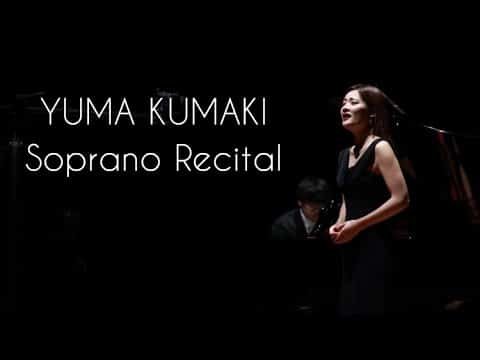
Yuma Kumaki’s Soprano Voice & Rising Career
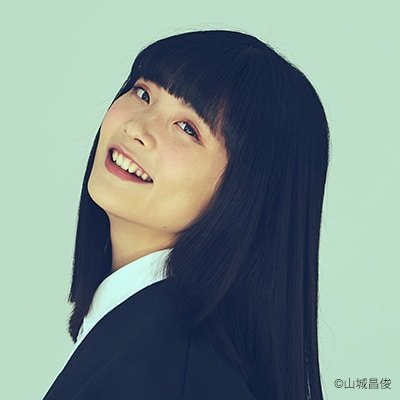
Yuma Kumaki stands brightly as a rapidly emerging star within the contemporary opera landscape, captivating classical music enthusiasts with her pristine tone and luminous stage presence. Her voice possesses a rare combination of crystal-clear upper registers, agile coloratura flexibility, and profound emotional warmth that draws listeners completely into her musical storytelling. With each new performance role, she continues to demonstrate artistic maturity far beyond her years, cementing her status as a major talent to watch.
As she steps onto the prestigious stage for this special recital, Kumaki brings an infectious youthful energy paired with rigorous technical discipline. Her vocal training and dedication to text-driven interpretation allow her to navigate complex operatic passages with effortless grace and emotional conviction. Critics and peers alike have praised her ability to infuse standard classical repertoire with fresh, contemporary vitality.
- Recognized widely as a brilliant rising star within the modern Japanese opera and classical music scene
- Possesses a luminous, highly flexible soprano voice celebrated for its pristine upper register and clarity
- Demonstrates exceptional technical mastery across demanding coloratura and bel canto vocal literature
- Combines youthful artistic passion with rigorous academic training and deep interpretive maturity
- Collaborates fluently with elite instrumental partners to achieve seamless musical synergy on stage
- Captivates listeners through sincere emotional delivery and precise attention to poetic nuances
- Commands deep respect from peers and critics for her adventurous and diverse program selections
Event Schedule
- Event Date: January 17, 2027
- Event Duration: Approximately 2 hours from 14:00 to 16:00 including standard intermission
Visiting this event? Don’t miss out on these amazing activities and local experiences while you’re here.
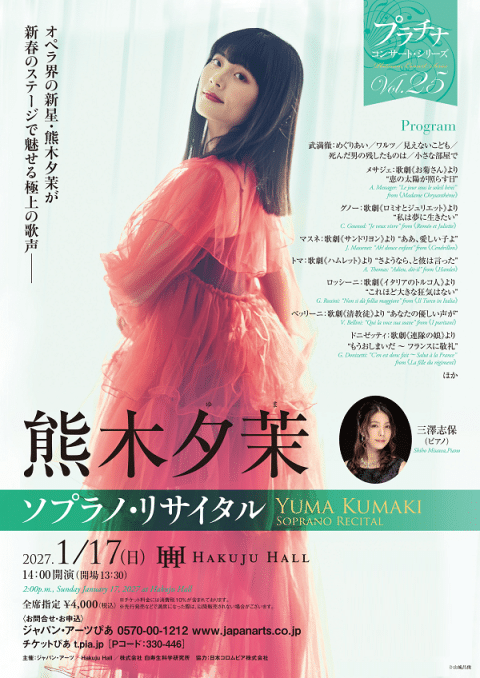
Platinum Concert Series Vol. 25
The Platinum Concert Series stands as a beloved cultural tradition hosted in the heart of Tokyo, offering intimate encounters with exceptional classical musicians. Volume 25 specifically invites audiences to experience artists presenting the personal programs they are most eager to share today. Held inside an acoustically pristine environment, the series curates luxury moments of musical reflection for devoted fans.
Enjoy Your Event Stress-Free with Japan Travelo
Do you know? Planning events, festivals, concerts, and cultural experiences in Japan can be overwhelming. Japan Travelo brings everything together in one place, helping you manage your itinerary, transport, and accommodation with ease—so you can enjoy Japan without the stress of planning.
This particular installment places a heavy emphasis on highlighting emerging brilliance, providing a grand platform for next-generation leaders like soprano Yuma Kumaki. The series framework is intentionally designed to strip away the overwhelming scale of massive orchestral halls, fostering a cozy atmosphere instead. Patrons are treated to an immersive, up-close viewing experience that highlights the delicate nuances of chamber-style recitals.
By focusing on carefully chosen thematic repertoires, the Platinum Concert Series consistently delivers unforgettable artistic statements. Volume 25 continues this proud legacy by pairing innovative contemporary Japanese art songs with timeless European operatic masterworks. It represents a vital cultural bridge connecting master musicians with passionate urban audiences seeking refined artistic expression.
- Operates as an esteemed, long-running recital series hosted in premier urban chamber music spaces
- Showcases Volume 25 with a special spotlight on rising operatic sensation Yuma Kumaki
- Features bespoke concert programs chosen directly by the performing artists themselves
- Cultivates an intimate, luxurious atmosphere designed for deep musical appreciation
- Prioritizes acoustic perfection and close physical proximity between the artist and listeners
- Bridges contemporary classical experimentation with timeless historical vocal masterworks seamlessly
- Offers Tokyo music lovers a reliable venue for high-caliber artistic exploration and discovery
Ticket Prices
- How Tickets Sold: Distributed online through major Japanese ticketing agencies like Japan Arts Pia and authorized regional ticket counters
- Admission Type: Fully reserved seating across the hall with strict policies barring pre-school children from entering
- Ticket Pricing: Fixed general seating price set at $26 based on standard currency conversion rates
- Special Seating Options: Standard hall seating arranged to provide optimal views toward the stage with excellent acoustic projection
- VIP Options: Premium seating zones located closer to the performers offering enhanced intimacy and immersion
Getting to the Venue
- City and Country: Tokyo, Japan
- Venue Name: Hakuju Hall
- Google Maps Address: Japan, 〒151-0063 Tokyo, Shibuya, Tomigaya, 1 Chome−37−5 株)白寿生科学研究所 本社ビル 7F
New Year Concert Atmosphere & Audience Experience
Stepping into Hakuju Hall at the start of January brings a distinct sense of renewal, elegance, and celebratory anticipation for Tokyo’s classical music community. New Year concert traditions in Japan emphasize fresh beginnings, pairing world-class musicianship with warm hospitality in pristine indoor environments. The intimate architectural design of the venue ensures that every single attendee shares a unified, cozy communal experience.
The gentle winter afternoon light filtering into the hall complements the introspective yet uplifting nature of the carefully curated afternoon program. Far from the roaring crowds of massive stadiums, this chamber recital invites patrons to sit back, breathe deeply, and surrender to pure acoustic beauty. It acts as a refined cultural sanctuary amidst the bustling energy of downtown Tokyo.
The shared appreciation between the performers on stage and the attentive listeners creates an electric yet peaceful atmosphere throughout the room. Patrons leave the hall feeling intellectually stimulated and emotionally restored, carrying the memory of pristine vocal artistry into the new year. This unique blend of luxury, intimacy, and artistic brilliance defines the essence of the Platinum Concert Series experience.
Toru Takemitsu’s “Encounter” & Japanese Music
The inclusion of Toru Takemitsu’s vocal works, notably “Encounter,” anchors the recital in the rich soil of modern Japanese composition and sonic philosophy. Takemitsu revolutionized twentieth-century music by blending traditional Japanese aesthetic sensitivities with avant-garde Western harmonic structures. His writing for voice treats melody as a drifting watercolor, where silence and sound hold equal structural weight.
Pieces like “Waltz,” “Invisible Child,” and “What a Dead Man Left Behind” showcase the haunting, atmospheric poetry characteristic of Takemitsu’s unique creative output. The sparse yet emotionally resonant piano accompaniment frames the vocal line like a delicate brushstroke on a minimalist canvas. These selections require a high degree of interpretive subtlety and tonal control from both singer and pianist.
Navigating Takemitsu’s musical universe demands an acute awareness of space, color, and emotional restraint that contrasts sharply with grand Italian opera. Kumaki approaches these Japanese art songs with profound reverence, capturing their ethereal beauty and psychological depth with striking precision. This segment of the program serves as a poetic meditation on memory, existence, and Japanese artistic identity.
- Features masterworks by legendary Japanese composer Toru Takemitsu such as Encounter and Waltz
- Blends traditional Japanese aesthetic philosophies with innovative twentieth-century Western harmonic languages
- Utilizes sparse, atmospheric piano accompaniments that treat silence and sound with equal importance
- Explores haunting psychological and poetic themes through pieces like Invisible Child and In a Small Room
- Demands exceptional interpretive subtlety, vocal color control, and emotional restraint from the performer
- Establishes a thoughtful bridge between contemporary Japanese art songs and European opera excerpts
- Showcases the profound versatility of the soprano voice in navigating complex modern musical idioms
Bellini’s “Your Gentle Voice” from I Puritani
Vincenzo Bellini’s timeless bel canto masterpiece I Puritani provides one of the absolute emotional peaks of the entire recital program. The famous aria “Your Gentle Voice” (Il dolce suono / Qui la voce) requires supreme vocal agility, breath control, and soaring legato phrasing. It stands as a ultimate test of technical stamina and dramatic vulnerability for any lyric soprano.
The music flows with an effortless, melancholic grace that captures the heartbreaking fragility of the character ELvira as she descends into madness. Bellini’s long, flowing vocal lines demand absolute mastery of pitch and an ability to spin endless, gossamer-thin phrases over the keyboard. Kumaki approaches this demanding vocal mountain with fearless precision and deep emotional empathy.
The collaboration with pianist Shiho Misawa provides a sensitive harmonic foundation that supports the soaring vocal flights without ever overpowering them. Every nuance of Italian poetic text is delivered with crisp diction and heartfelt yearning, bringing the tragic drama to vivid life. This performance highlights why Bellini remains the undisputed king of nineteenth-century bel canto melody.
Experiencing “Your Gentle Voice” within the intimate confines of Hakuju Hall allows listeners to appreciate every subtle tremor and dynamic gradation of the voice. It represents the glorious intersection of vocal athleticism and deep theatrical storytelling at its finest. Audiences are treated to a masterclass in Italian romantic singing that showcases Kumaki’s peak artistic capabilities.
- Highlights the iconic bel canto aria Your Gentle Voice from Bellini’s masterpiece opera I Puritani
- Demands legendary vocal agility, infinite breath support, and flawless legato phrasing techniques
- Portrays deep emotional fragility and tragic psychological turmoil through soaring melodic lines
- Showcases pristine Italian diction paired with sincere theatrical vulnerability and expression
- Benefits from sensitive, perfectly balanced piano accompaniment that enhances the vocal melody
- Represents the pinnacle of nineteenth-century romantic bel canto composition and style
- Delivers an unforgettable acoustic experience within an intimate chamber hall setting
Event Information
- Email: support@japanarts.co.jp
- Phone Number: +81 570-00-1212
- Website: https://t.pia.jp/pia/event/event.do?eventBundleCd=b2669916
Opera Arias & Classical Vocal Repertoire
- Weaves a stunning chronological tapestry spanning French, Italian, and German operatic masterpieces
- Incorporates dazzling French selections including Messager’s Madame Chrysanthème and Gounod’s Romeo and Juliet
- Features dramatic and colorful showpieces by Massenet, Thomas, and Rossini highlighting vocal versatility
- Showcases Donizetti’s sparkling writing through spirited excerpts from La Fille Défunte
- Balances light, sparkling coloratura fireworks with deeply tragic, soul-stirring lyrical prayer moments
- Emphasizes fluent multilingual performance capabilities across Italian, French, and Japanese texts
- Demonstrates the incredible breadth of the lyric soprano repertoire curated for specialized recitals
Location
FAQ
What makes the acoustic environment of Hakuju Hall ideal for a vocal recital of this scale?
Hakuju Hall is specifically engineered for chamber music, featuring premier acoustic wood paneling that projects the pure timbre of the voice without artificial amplification. This intimate design allows every subtle dynamic shift and delicate piano note to reach listeners with crystalline clarity.
Are pre-school aged children permitted to attend the Yuma Kumaki soprano recital?
Children under school age are strictly prohibited from entering the hall to maintain an undisturbed listening environment for all patrons. This policy ensures complete silence during quiet contemporary art songs and delicate bel canto vocal phrases.
How can international visitors secure tickets if they reside outside of Japan?
Overseas fans frequently utilize specialized bilingual ticketing assistance services or online Japanese ticket agency platforms supporting foreign credit cards. Securing tickets in advance is strongly recommended due to the limited seating capacity of the exclusive chamber venue.
What special collaborative dynamic does pianist Shiho Misawa bring to the stage?
Pianist Shiho Misawa provides expert collaborative accompaniment, serving as an equal musical partner rather than a simple background player. Her sensitive touch and precise timing create a seamless dialogue that elevates the emotional depth of every piece.
How does the program balance modern Japanese music with traditional European opera?
The concert thoughtfully alternates between the sparse, atmospheric soundscapes of Toru Takemitsu and the soaring emotional heights of Italian bel canto arias. This contrasting curation highlights the incredible stylistic versatility and technical range of soprano Yuma Kumaki.
What is the recommended arrival time for patrons attending the afternoon performance?
Concertgoers are strongly encouraged to arrive at least thirty minutes before the scheduled curtain time to complete ticket checks and find their seats. Arriving early ensures a stress-free entry and prevents late-arrival seating restrictions from interrupting the opening pieces.

Leave a Reply